Eric Clapton's Blackie: From Nashville Pawnshop to Legendary Status

By Gear Experts
.webp)
By Gear Experts
Table of Contents

Equipboard
Equipboard is the world's largest community of artists and their gear. Read our review process.
We are reader-supported. When you buy through links on our site, we may earn an affiliate commission. Learn more.
In the pantheon of iconic guitars, few instruments have achieved the legendary status of "Blackie," Eric Clapton's faithful black Stratocaster that shaped the sound of modern blues rock for over a decade. This isn't just another famous guitarist's tool of trade. Blackie represents something far more significant in the guitar world: a custom-built masterpiece that became an extension of one of rock's greatest guitarists.
What makes this particular guitar so special? The story begins not with a single, pristine vintage instrument, but with multiple guitars that would eventually become one. As Clapton himself once noted, Blackie was a "mongrel" guitar, assembled from the finest components of multiple vintage Stratocasters. This custom-built approach resulted in an instrument perfectly suited to Clapton's playing style and sonic preferences.
When Blackie was finally retired and auctioned for Clapton's Crossroads Centre in 2004, it set a world record for the highest price ever paid for a guitar at that time.
The Origin Story of Blackie

The birth of Blackie begins with a moment of serendipity that would change the course of Clapton's musical journey and, by extension, the sound of blues rock itself.
The Nashville Haul
Around 1970, Eric Clapton found himself browsing the back room of Sho-Bud guitar shop in Nashville, Tennessee. There, he discovered something that seems almost unbelievable by today's standards: a rack filled with vintage Stratocasters from the 1950s. In an era when these guitars had fallen out of fashion, these now-coveted vintage Strats were readily available and surprisingly affordable.
Clapton had recently become intrigued by the Stratocaster after seeing his future Blind Faith bandmate Steve Winwood playing a white Strat. As Clapton later wrote in The Stratocaster Chronicles (2004), "They were so out of fashion you could pick up a perfectly genuine Strat for two hundred or three hundred dollars - even less! So I bought all of them."
Sharing the Wealth
After acquiring this impressive haul of vintage Stratocasters, Clapton demonstrated remarkable generosity. He gave one of the guitars to The Who's Pete Townshend, another to Steve Winwood, and a third to his friend and former Beatles guitarist George Harrison.
Building the Perfect Beast
Rather than simply choosing one of the three remaining Stratocasters as his main instrument, Clapton decided to take the best components from each guitar and combine them into a single, ultimate Stratocaster.
To execute this vision, Clapton enlisted legendary Nashville luthier Ted Newman Jones. As Clapton told Christie's Auction House, "I kept two or three for myself and built this (Blackie) out of those. With pickups from one, scratchplate from another and the neck from another. It is such a personal thing. I almost made this guitar myself from different components."
The resulting instrument featured a black-finished 1956 Stratocaster body (hence the nickname "Blackie"), paired with a one-piece maple neck with a hard "V" shape from a 1957 Strat. The pickups were a mix of original 1950s units and one from 1970.
Blackie's Debut
Blackie made its live debut on January 13, 1973, at the Rainbow Concert in London. This concert, organized by Pete Townshend, marked Clapton's return to the stage after battling addiction issues and would be the beginning of Blackie's remarkable 12-year run as Clapton's main guitar.
Blackie's Specs

For guitar enthusiasts and tone chasers, the technical details of Blackie represent far more than simple specifications. They offer insight into the components that helped create Clapton's signature sound during his most commercially successful period.
Body
The foundation of Blackie was a 1956 Fender Stratocaster body made of alder wood. What made this body distinctive was its black lacquer finish, which stood in contrast to the more common sunburst finishes of that era.
The alder body provided the balanced tone that Stratocasters of this era are known for, with good midrange presence and adequate sustain. This particular body had the characteristic contours and curves of a mid-50s Strat, with comfort cuts that made it ideal for long performances.
Neck
While the body came from a '56 Strat, Clapton selected a neck from a 1957 model. This one-piece maple neck featured a hard "V" profile that fit Clapton's playing style perfectly. The distinctive V-shape was more pronounced than many modern Stratocaster necks, providing a unique feel that suited Clapton's thumb-over playing technique.
The fingerboard was maple (as it was part of the one-piece maple neck construction common in pre-1959 Stratocasters) with a vintage 7.25" radius. This more curved radius was typical of the era, though it might feel quite rounded to players accustomed to modern, flatter fingerboard radii.
Pickups and Electronics
Blackie's pickups have been a subject of particular interest among guitar tone aficionados. The guitar featured three single-coil pickups: two were original units from the mid-1950s Stratocasters, while the third was reportedly from 1970.
These vintage single-coils delivered the distinctive chime, quack, and bite that characterized Clapton's tone during this period. The electronics were relatively standard for a Stratocaster, though with some modifications over time. Originally, the guitar would have had a 3-way pickup selector switch, but was later upgraded with a 5-position switch.
Hardware and Modifications
Blackie featured a standard Fender synchronized tremolo bridge. However, according to Lee Dickson (Clapton's guitar tech since 1979), while Clapton didn't use a tremolo bar, they would "block the vibrato behind the bridge and tighten up the springs," effectively making it a fixed bridge while maintaining the tonal characteristics of the floating design.
Blackie's Role in Clapton's Career
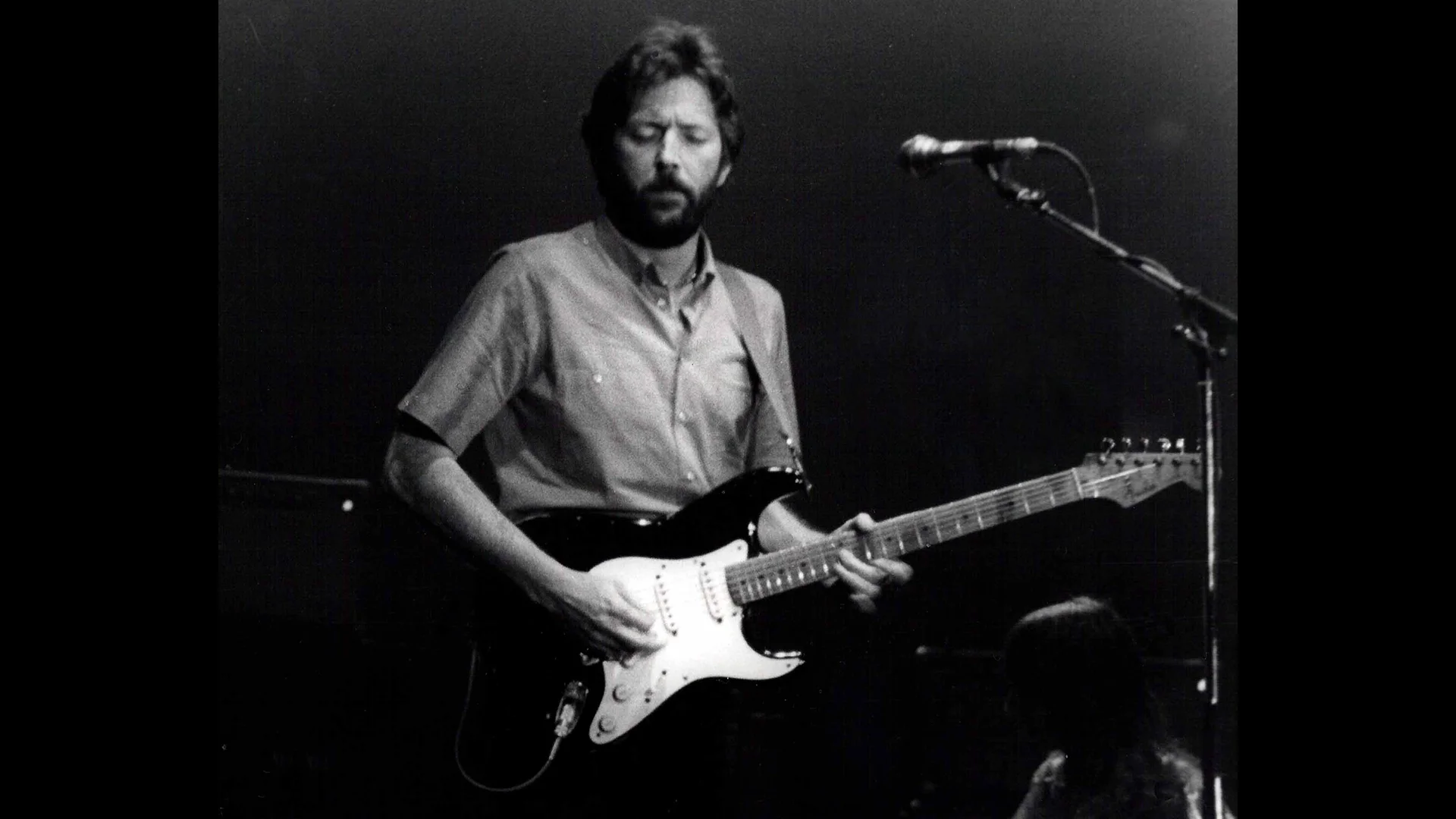
For over twelve years, Blackie served as Eric Clapton's primary guitar both on stage and in the studio. This period coincided with Clapton's transition from band member to established solo artist.
Studio Companion
In the recording studio, Blackie became Clapton's go-to instrument for creating some of his most commercially successful and enduring music. The guitar's distinctive tone can be heard throughout numerous albums that defined Clapton's solo career.
Perhaps most notably, Blackie was prominently featured on the 1977 album Slowhand, which contains some of Clapton's most beloved songs. The instantly recognizable shuffle of "Lay Down Sally," the emotive bends in "Wonderful Tonight," and the driving riffs of "Cocaine" were all coaxed from Blackie's distinctive maple neck and single-coil pickups. The warm yet cutting tone heard on these recordings has become a benchmark for blues-rock guitar sound.
Other studio albums featuring Blackie include Backless (1978), Another Ticket (1981), and Money and Cigarettes (1983), which represented a return to a more blues-oriented approach.
Live Performances
On stage, Blackie became as much a part of Clapton's visual identity as his beard and casual attire. The black Stratocaster could be seen in countless performances throughout the 1970s and early 1980s.
The live album Just One Night (1980), recorded in Japan, captures Clapton and Blackie in their element, delivering powerful live versions of both original material and blues standards. Other notable live appearances include The 1979 performance at The Secret Policeman's Ball benefit, the ARMS Charity Concerts in 1983, and Live Aid in 1985.
The Final Years
By the mid-1980s, Blackie had endured over a decade of constant use. The neck had worn dangerously thin from years of playing, refrets, and general wear and tear. As Clapton explained to Christie's, "I had so much affection for the guitar that I didn't want to work it anymore really. I think it was time to retire it, because it was getting thin."
Blackie's final regular appearance came on May 1, 1985, at the Hartford Civic Center in Connecticut during the U.S. leg of the Behind the Sun tour.
The Tone of Blackie

The distinctive sound of Blackie has become almost as legendary as the guitar itself. For many guitarists and tone aficionados, Clapton's sound during this period represents the ideal of electric blues tone: expressive, dynamic, and soulful.
The Blackie Sound
What made Blackie's tone so special? It began with the inherent qualities of a well-built vintage Stratocaster: the snappy attack and bell-like clarity that characterizes these instruments. The combination of an alder body with a maple neck and fingerboard provided a balanced tonal foundation, with enough warmth to support Clapton's blues playing but sufficient brightness to cut through a mix.
Perhaps most distinctive was what came to be known as Clapton's "woman tone" a smooth, vocal midrange quality achieved by rolling back the tone control. This technique, which Clapton had developed during his time with Cream, took on new dimensions with Blackie's single-coil pickups.
Amplification and Effects
While Blackie itself was central to Clapton's sound, his choice of amplification played an equally important role. During this period, Clapton often paired Blackie with Fender tube amps, particularly the Fender Twin Reverb, as well as Music Man HD-130 amplifiers.
These amplifiers, with their clean headroom and distinctive mid-scooped voicing, provided the perfect platform for Blackie's voice to shine through. When pushed hard, they offered a natural compression and subtle breakup that enhanced Clapton's playing dynamics.
Contrary to what some might expect, Clapton's effects chain with Blackie was surprisingly minimal. He occasionally employed a Fender Vibratone for a distinctive chorus effect and might use a Boss OD-1 or Tube Screamer for overdrive.
Playing Technique
Perhaps the most crucial element of the Blackie tone was Clapton's touch and technique. His finger vibrato, precise bending, and dynamic control elevated the guitar's voice beyond the sum of its components.
Clapton frequently employed volume knob manipulations, rolling back the guitar's volume to clean up the sound or swelling notes in with a violin-like quality. His picking attack, generally softer than many rock guitarists, allowed for greater nuance and expression.
Blackie's Retirement and Auction

After more than a decade of faithful service, Blackie's active duty came to an end. The retirement and subsequent auction of this iconic instrument marks another chapter in its storied history.
The Final Tour
By 1985, Blackie had been Clapton's primary guitar for twelve years. The wear and tear of constant use had taken its toll on the instrument, particularly on the maple neck, which had been refretted multiple times and was becoming dangerously thin.
During the U.S. leg of the Behind the Sun tour, Clapton made the difficult decision to retire his faithful companion. The final regular performance with Blackie took place on May 1, 1985, at the Hartford Civic Center in Hartford, Connecticut.
Life After Retirement
Though retired from regular use, Blackie wasn't completely put to pasture. The guitar still made occasional appearances on recordings and was brought out for special occasions, including a 1990 Honda commercial and during Clapton's 24-show residency at London's Royal Albert Hall in 1991.
The Crossroads Auction
In 2004, Clapton made the decision to auction Blackie, along with other guitars and amplifiers from his collection, to benefit the Crossroads Centre Antigua, the drug and alcohol treatment facility he had founded in 1997.
On June 24, 2004, at Christie's Auction House in New York, Blackie went under the hammer. The guitar sold to Guitar Center for $959,500, setting a world record for the highest price ever paid for a guitar at that time. The historic auction demonstrated not just the value of famous instruments but also the esteem in which Clapton and this particular guitar were held.
In his autobiography, Clapton reflected on parting with his longtime musical companion: "It was hard. We had traveled a lot of miles together."
The Fender Eric Clapton Strat

The impact of Blackie extends far beyond the original instrument itself. In 1988, Fender introduced the Eric Clapton Signature Stratocaster, a production model that drew inspiration from Clapton's beloved custom guitar while incorporating modern features.
Birth of a Signature Model
After retiring Blackie, Clapton needed a new main instrument that could capture the feel and tone he had come to rely on. Working with Fender, he helped develop what would become one of the company's most successful and longest-running signature models.
The Eric Clapton Signature Stratocaster was not a strict replica of Blackie. Instead, it was a modern interpretation that incorporated elements Clapton loved about his vintage instrument while adding features that addressed his current needs and preferences. Fender would also make a more accurate replica of Blackie later coming in at a more premium price point.
Key Features and Innovations
The Clapton Signature Stratocaster incorporated several distinctive features:
A soft "V" neck profile inspired by Blackie's 1957 neck, providing the comfortable feel Clapton preferred for his distinctive playing style.
A blocked tremolo, reflecting how Clapton had Blackie set up. This provided improved tuning stability and enhanced sustain.
Perhaps most significantly, the signature model featured a 25dB mid-boost circuit, an active electronics system powered by a 9-volt battery. This allowed Clapton to achieve overdriven tones at any volume level.
The original models featured Gold Lace Sensor pickups, which provided a noise-free alternative to traditional single-coils. Later versions would incorporate Fender's Vintage Noiseless pickups.
Legacy and Influence
The Eric Clapton Signature Stratocaster has become one of Fender's most successful signature models, remaining in continuous production since its introduction over three decades ago. Its popularity extends far beyond Clapton fans, attracting guitarists who appreciate its unique features and versatile tonal capabilities.
More importantly, the model has been Clapton's primary performance and recording instrument since 1988, appearing on numerous albums and countless live performances. The signature Stratocaster effectively became the successor to Blackie, carrying forward its legacy.
How to Build Your Own "Blackie"

For guitarists inspired by Clapton's tone and aesthetic, creating a Blackie-inspired instrument represents both a tonal quest and a tribute to a legendary guitar.
The Foundation: Body and Neck
The starting point for any Blackie-inspired build is selecting the right body and neck combination. For authenticity, an alder-bodied Stratocaster with a black finish provides the correct foundation.
For the neck, look for a one-piece maple neck with a soft to medium "V" profile, similar to 1957 Stratocaster necks. The fingerboard radius should ideally be 7.25" for vintage accuracy, though many players might prefer a slightly flatter 9.5" radius for improved playability with modern string gauges.
Pickups and Electronics
To capture Blackie's voice, focus on vintage-style single-coil pickups with moderate output and characteristic Stratocaster chime. Fender's Pure Vintage '57 pickup sets offer historically accurate specifications, while boutique manufacturers provide numerous options inspired by 1950s Stratocaster pickups.
For wiring, a standard Stratocaster configuration with a 5-way switch offers greater versatility than the original 3-way switch Blackie would have started with. Quality potentiometers with a smooth taper are essential for replicating Clapton's volume and tone control techniques.
Those seeking to incorporate features from the Eric Clapton Signature Stratocaster might consider adding a mid-boost circuit, available as an aftermarket kit from several suppliers.
Hardware and Setup
For the bridge, a vintage-style synchronized tremolo provides the correct look and feel. Consider installing it with the tremolo claw screws tightened and a wood block in the body cavity to prevent movement, replicating how Blackie was set up for Clapton.
For setup, Clapton typically used relatively light strings (often Ernie Ball Regular Slinky sets .010-.046), with medium action height, and minimal neck relief.
Amplification and Effects
To complete the Blackie-inspired rig, pair your guitar with the right amplification. A Fender Twin Reverb or similar clean, powerful Fender amp provides an authentic pedal platform. For a more compact option, a Fender Deluxe Reverb offers similar tonal characteristics at lower volume.
FAQ Section

Why did Clapton retire Blackie?
Clapton retired Blackie in 1985 primarily because the neck had worn dangerously thin after 12 years of constant use and multiple re-frets. As he explained, "I had so much affection for the guitar that I didn't want to work it anymore really. I think it was time to retire it, because it was getting thin." The final regular performance with Blackie took place on May 1, 1985, at the Hartford Civic Center during the U.S. leg of the Behind the Sun tour.
What pickups are in Blackie?
Blackie featured three single-coil pickups. Two were original units from mid-1950s Stratocasters, while the third was reportedly from 1970. These vintage single-coils delivered the distinctive chime, quack, and bite that characterized Clapton's tone during this period.
Why is it called Blackie?
The guitar earned its straightforward nickname "Blackie" simply because of its black finish. When Clapton purchased the collection of vintage Stratocasters from Sho-Bud in Nashville around 1970, he specifically wanted a black Stratocaster. The 1956 Strat body he selected for his custom build featured a black lacquer finish, which became the defining visual characteristic.
Can I buy a Blackie replica?
Yes, there have been several official Blackie replicas produced by Fender over the years. The Fender Custom Shop created a limited edition of meticulously detailed Blackie replicas in 2006. Additionally, the production Eric Clapton Signature Stratocaster, while not an exact replica, incorporates many features inspired by Blackie combined with Clapton's preferred modern specifications.
What amp did Clapton use with Blackie?
Throughout the Blackie era (1973-1985), Clapton used several different amplifiers. During the mid-1970s, he often paired Blackie with Fender Twin Reverb amplifiers, which provided clean headroom and a distinctive mid-scooped voicing. He also used Music Man HD-130 amplifiers during certain periods. His effects were minimal during this period, focusing on the natural interaction between guitar and amplifier.
Conclusion
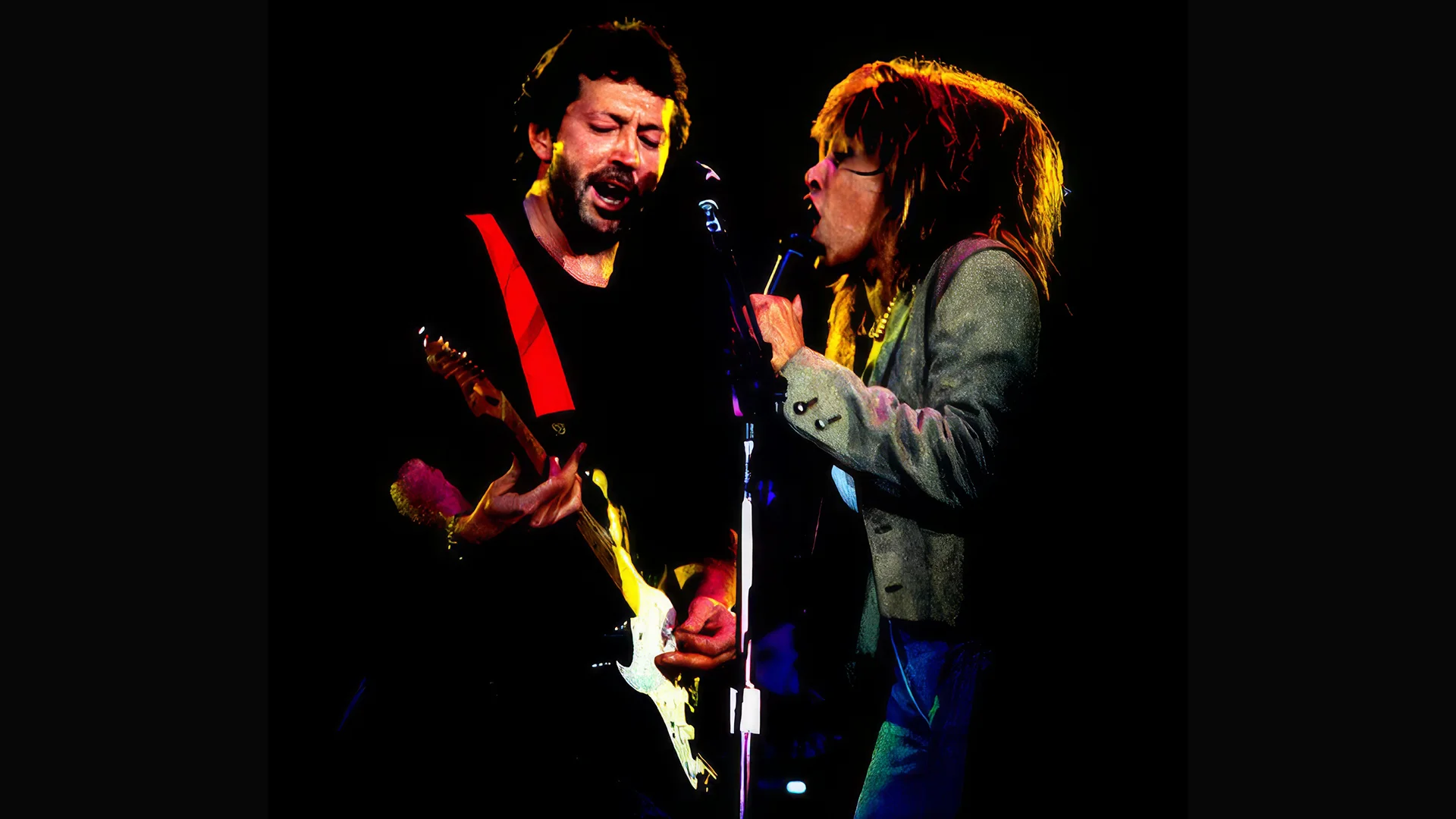
Blackie was far more than just Eric Clapton's guitar of choice for twelve crucial years. It represented the sonic foundation upon which he built his second act, transitioning from his earlier band-focused career to his identity as a successful solo artist. The distinctive voice of this custom-built Stratocaster became inextricably linked with Clapton's evolution as a musician during the 1970s and early 1980s.
What makes Blackie's story particularly compelling is its humble origins. Born from components of multiple "unfashionable" vintage Stratocasters at a time when such guitars were readily available and affordable, Blackie became one of the most valuable and influential instruments in rock history.
The legacy of Blackie lives on most directly through the Eric Clapton Signature Stratocaster, which has remained in continuous production since 1988. This modern interpretation incorporates elements Clapton loved about his vintage instrument while adding features that addressed his evolving needs.
Perhaps most importantly, Blackie's voice lives on through the recordings it helped create.
As guitar enthusiasts, we can appreciate Blackie not just as a valuable collectible or a piece of rock history, but as a reminder that sometimes the perfect instrument comes not from a factory, but from a musician's understanding of exactly what they need to express themselves fully. Eric Clapton found that voice in Blackie, and in doing so, helped define the sound of blues rock for generations to come.
About the authors
Michael R. Pierce is the co-founder of Equipboard and a lifelong musician with over 25 years of experience as a guitarist and gear enthusiast. He blends solid music theory chops (thanks to formal training in guitar, piano, and trumpet) with real-world experience, always exploring and experimenting across genres like rock, blues, and hip-hop. Michael launched Equipboard in 2013 after graduating from The University of Texas at Austin, leveraging his unique blend of musical passion, technological acumen, and community building. His current go-to rig features a Fender American Original ‘50s Telecaster, Analogman King of Tone, Strymon Flint, and a Fender ‘57 Custom Champ. Read more






.webp)