Tube Screamer Pedals That Define Legendary Guitar Tones in 2026


By Gear Experts

By Gear Experts
Table of Contents

Equipboard
Equipboard is the world's largest community of artists and their gear. Read our review process.
We are reader-supported. When you buy through links on our site, we may earn an affiliate commission. Learn more.
Our Picks

The TS808 reissue is a time machine that transports guitarists back to the golden era of overdrive, proving that true musical magic often lies in preserving the original sonic blueprint.
Read more


The EarthQuaker Devices Plumes boldly reimagines the Tube Screamer circuit with an innovative three-way clipping switch, offering guitarists unprecedented tonal flexibility while maintaining the essence of classic overdrive design.
Read more
The Maxon OD808 is the definitive Tube Screamer, made by its original designers with a refined approach that delivers superior dynamics, transparency, and musical responsiveness while honoring the classic overdrive circuit's legendary heritage.
Read more
The Joyo JF-01 Vintage Overdrive proves that exceptional Tube Screamer tone can be affordable, offering musicians an authentic, budget-friendly path to classic overdrive sounds with surprising musical integrity.
Read more

The Vemuram Jan Ray epitomizes boutique overdrive craftsmanship, offering an extraordinarily refined Tube Screamer-inspired experience with unparalleled dynamic response, exceptional component quality, and a tone that elevates every note's natural musicality.
Read more

The Wampler Clarksdale V2 represents a sophisticated modern interpretation of the Tube Screamer, offering musicians expanded tonal flexibility through carefully designed EQ controls and clipping options while preserving the circuit's beloved organic overdrive character.
Read more
The Keeley Red Dirt represents a masterful reinterpretation of the Tube Screamer, blending Robert Keeley's modification expertise with a circuit design that offers expanded tonal versatility, superior clarity, and a wider gain range for discerning guitarists.
Read more-l.webp?v=1784977217)
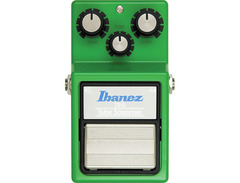
The TS9 proves that evolution in guitar tone isn't about replacing classics, but refining them. Where the TS808 whispers, the TS9 speaks with confidence, bridging vintage warmth and modern musical aggression.
Read more
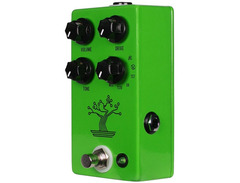
The JHS Bonsai is a masterpiece of guitar pedal engineering, offering nine distinct Tube Screamer circuits in a single, meticulously crafted stomp box that's perfect for tone enthusiasts and professional musicians seeking ultimate versatility.
Read moreIf there was a Mount Rushmore of guitar pedals, the Tube Screamer would definitely be on it. This pedal isn't just another overdrive - it's a piece of guitar history that has shaped the sound of countless legendary recordings and performances. From Stevie Ray Vaughan's searing Texas blues to John Mayer's contemporary virtuosity, this humble green box has earned its place as one of the most influential and sought-after guitar effects ever created. Whether you're looking to add warmth to your clean tone, push your amp into sweet sustain, or tighten up your high-gain sound, there's a Tube Screamer that's perfect for your pedalboard.
In this guide, we'll explore the best Tube Screamer pedals available, helping you understand what makes these pedals special and how to choose the right one for your playing style. From classic units to modern interpretations, we'll cover everything you need to know to make an informed decision.
What Makes Tube Screamers Special?
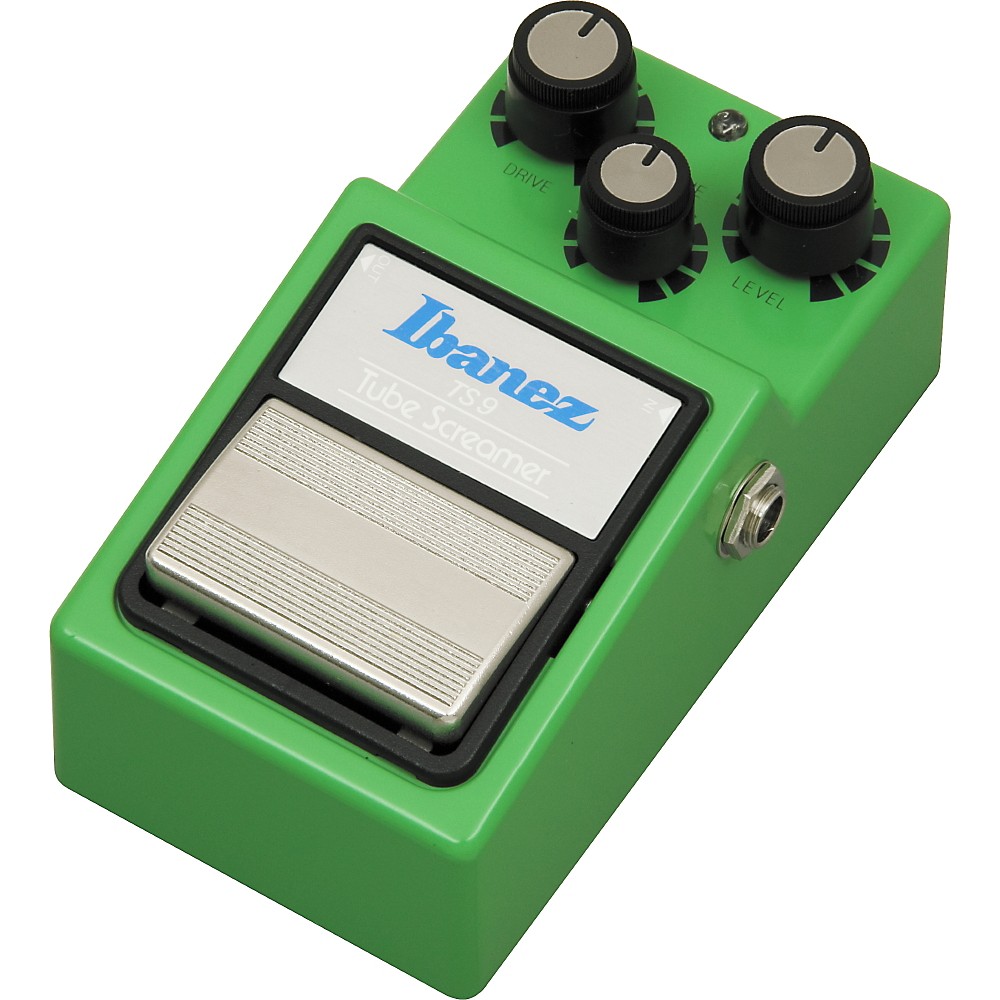
Before diving into specific models, it's essential to understand what sets Tube Screamers apart from other overdrive pedals. The Tube Screamer traces its roots back to the late 1970s. Developed by Susumu Tamura for Nisshin Onpa, the company that made Maxon and Ibanez pedals, the first Tube Screamer, the TS808, emerged in 1979. It aimed to compete with the popular Boss OD-1 and MXR Distortion+ pedals, utilizing a novel approach with a monolithic op-amp and diodes for smooth, symmetrical overdrive. Its unique circuit produced a distinct, warm, and harmonically rich overdrive tone.
Initially, the TS808 didn't achieve widespread popularity. However, its successor, the TS9 (released in 1982), gained significant traction. Featuring a slightly brighter tone and a larger footswitch, the TS9 became a staple for guitarists seeking a warm, vocal-like overdrive. Stevie Ray Vaughan's use of the pedal further propelled its fame.
Over the years, Ibanez has released numerous iterations of the Tube Screamer, including the TS10, TS9DX, TS7, and various reissues. Each model retains the core character of the original while offering subtle variations in tone and features. The Tube Screamer's enduring popularity lies in its versatility, affordability, and ability to enhance a guitar's natural tone, making it a mainstay on pedalboards across genres.
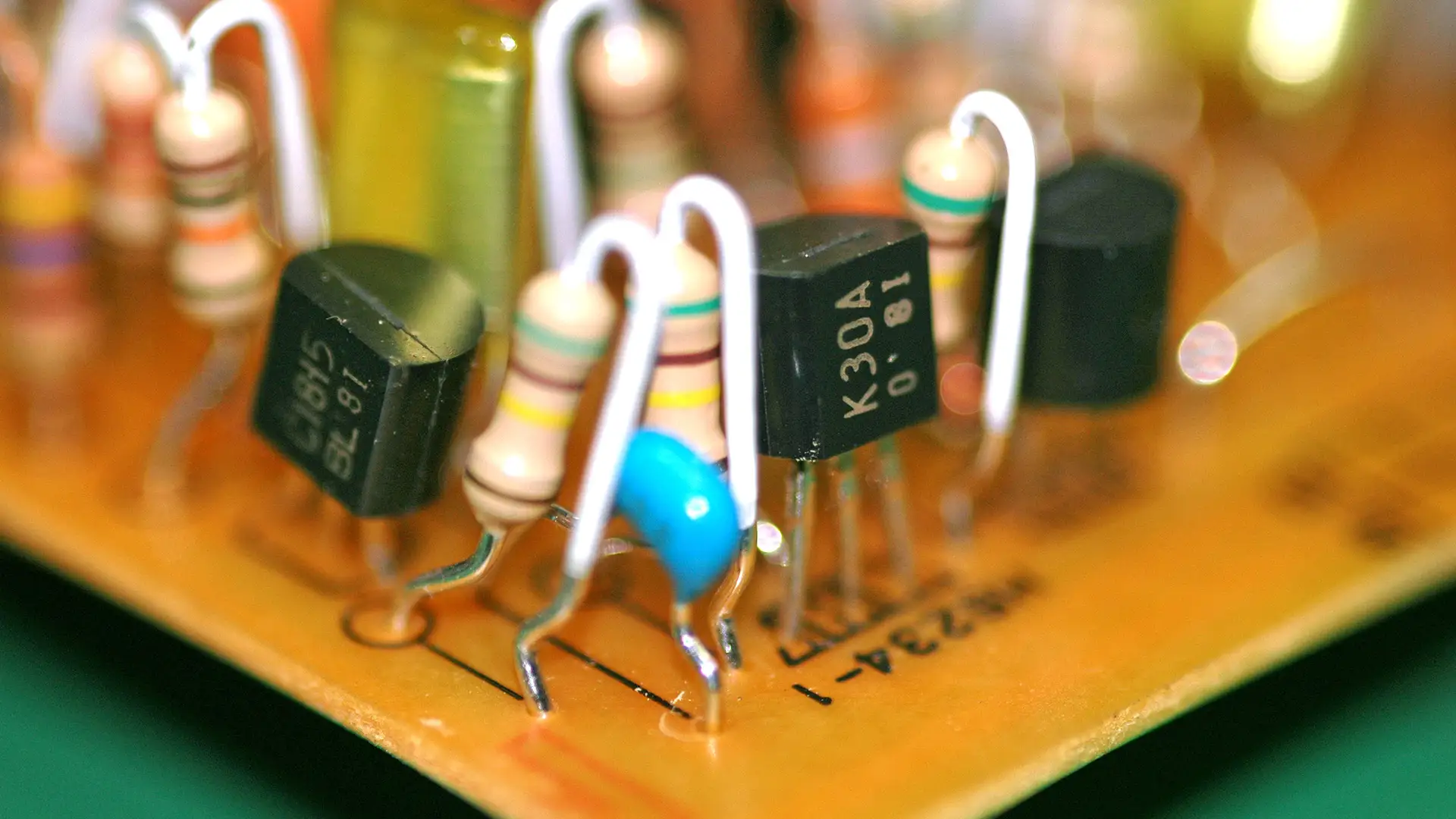
The magic of the Tube Screamer lies in its distinctive circuit design, which creates a unique combination of overdrive characteristics:
- Mid-Forward Character: The pedal's famous mid-frequency boost helps guitarists cut through dense mixes and band situations
- Touch-Sensitive Response: The circuit reacts dynamically to your playing intensity, cleaning up when you play softly and pushing harder when you dig in
- Smooth Compression: A natural compression that adds sustain without squashing your tone
- Amp-Like Feel: The way it interacts with tube amplifiers creates an organic, musical response that feels like an extension of your amp
The Tube Screamer's enduring popularity isn't just about its specs or circuit design - it's about how this pedal becomes an extension of a guitarist's creative voice. Whether it's Stevie Ray Vaughan's passionate Texas blues, The Edge's atmospheric rock soundscapes, or modern metal icons like Lamb of God's Mark Morton using it to sculpt high-gain precision, the Tube Screamer adapts to serve the player's vision.
What makes the Tube Screamer truly special is its musical transparency. Unlike many overdrive pedals that impose their character onto your tone, the Tube Screamer enhances what's already there. Its distinctive mid-range boost doesn't just help you cut through a mix - it adds authority and presence to your sound while maintaining the fundamental voice of your guitar and amp. The pedal's touch-sensitive nature means it responds to your playing dynamics, cleaning up when you play softly and pushing harder when you dig in, just like a great tube amp.
For metal players, the Tube Screamer has become an essential tool for an entirely different reason. When placed in front of a high-gain amp, it tightens the low end and adds focus to the distortion, creating that precise, aggressive sound that defines modern metal. This versatility - the ability to serve as both a subtle enhancer and a tone-shaping tool - has cemented the Tube Screamer's place in guitar rigs across all genres.
What to Look for in a Tube Screamer Pedal
Shopping for a Tube Screamer can feel overwhelming with the sheer number of options available today. From faithful recreations of vintage circuits to modern interpretations packed with additional features, understanding key differences will help you make an informed choice that matches your playing style and needs.
The Evolution: Classic to Modern Designs
The original Tube Screamer design was brilliantly simple: three knobs controlling drive, tone, and level. This straightforward approach created a pedal that simply worked, delivering warm overdrive that enhanced rather than overshadowed your guitar's natural voice. The classic circuit, built around the legendary JRC4558D op-amp, produced a sound that became the benchmark for overdrive pedals: smooth, musical, and incredibly responsive to playing dynamics.
Modern Tube Screamer variations have expanded upon this foundation in creative ways. Many contemporary designs offer additional EQ controls, allowing you to fine-tune the famous midrange bump that gives Tube Screamers their distinctive voice. Some feature multiple clipping modes, ranging from the traditional symmetric clipping of the original to asymmetric options that provide more headroom and different harmonic characteristics. Bass control modifications have become popular among metal players who need tighter low-end response, while output buffer options help maintain signal integrity in complex pedalboards.
Understanding the Tube Screamer Sound Profile
The magic of a Tube Screamer lies in its unique approach to overdrive. Unlike many distortion pedals that dramatically alter your tone, a Tube Screamer works more like an enhancer, emphasizing frequencies that make guitars sound their best. The pedal's characteristic midrange boost, centered around 720Hz-732Hz (depending on the model), helps your guitar slice through a dense mix without becoming harsh or overbearing.
This midrange emphasis explains why Tube Screamers pair so beautifully with Fender-style amplifiers, which typically have a more scooped midrange character. The pedal fills in these frequencies, creating that perfect "sweet spot" where notes bloom and sustain naturally. When paired with Marshall-style amps, which already emphasize midrange frequencies, Tube Screamers can create a focused, singing lead tone that maintains clarity even at higher gain settings.
The Role of Components in Tone Shaping
While the basic Tube Screamer circuit remains consistent across different models, component choices significantly impact the final sound. The op-amp is particularly crucial – the JRC4558D chip in original TS808s is famous for its warm, smooth characteristics, while other options like the RC4558P or TL072 can provide slightly different flavors of overdrive. Even subtle differences in component tolerances can affect how the pedal responds to your playing.
Clipping diodes play an equally important role. Traditional Tube Screamers use matched silicon diodes for symmetric clipping, creating that signature smooth compression. Some modern variants offer switchable or modified clipping sections using different diode types (germanium, LED, or asymmetric arrangements) to achieve various overdrive characteristics, from vintage warmth to more aggressive, open sounds.
Bypass Options: More Than Just an On/Off Switch
Bypass refers to how the pedal handles your guitar signal when it's switched off - either by completely removing the pedal's circuitry from your signal path (true bypass) or by routing the signal through a buffer circuit (buffered bypass). The choice between true bypass and buffered bypass isn't just a technical specification – it can significantly impact your tone, especially in complex pedalboard setups. True bypass sounds great in theory but can cause issues with long cable runs or multiple pedals. The high-frequency loss that occurs over longer cable lengths can make your tone sound dull and lifeless.
Buffered bypass, on the other hand, keeps a small preamp in your signal path even when the pedal is off. This helps maintain signal strength over long cable runs and through multiple pedals. Many modern Tube Screamers feature high-quality buffers that can actually improve your overall tone, especially if the pedal is positioned early in your signal chain.
Budget and Quality Considerations
Tube Screamer prices range from budget-friendly clones under $50 to boutique creations exceeding $300. While it's possible to get good sounds from less expensive units, investing in a higher-quality pedal often pays dividends in terms of reliability, noise performance, and tonal sophistication.
Entry-level Tube Screamers typically use less expensive components and simpler construction methods but can still capture the essential character of the circuit. Mid-range options ($100-200) often represent the sweet spot, offering excellent build quality and sound while remaining reasonably priced. Boutique pedals justify their higher prices through premium components, innovative features, and meticulous attention to detail in construction.
The good news is that the Tube Screamer circuit is remarkably forgiving – even modest versions can sound great in the right setup. The key is understanding what matters most for your specific needs. If you're mainly using the pedal as a clean boost or with high-gain amps, a simpler unit might serve you perfectly well. For players seeking the ultimate in touch sensitivity and harmonic richness, or those needing additional tonal options, investing in a premium model could be worthwhile.
The Best Tube Screamer Pedals of 2024
The world of Tube Screamers has evolved far beyond the original green stomp box, with modern interpretations offering everything from budget-friendly classics to premium boutique innovations. Whether you're looking for your first overdrive or adding to a carefully curated collection, our roundup covers the most compelling Tube Screamer-style pedals available today, from authentic reissues to creative reimaginings of this legendary circuit.
Ibanez TS808 Tube Screamer
5.0 (275)
The Gold Standard










Average Price: $160
Standard/Professional
$50
$176+
Budget
Standard
High-end
- Produces warm, smooth tonal quality
- Versatile, works well with various pickups and amps
- Provides iconic Stevie Ray distortion sound affordably
- Brighter, earlier distortion compared to original model
- See 6 more
- Higher price point compared to some competitors
- Activation pedal pad may eventually present issues
- On/bypass switch lacks tactile feedback
- LED indicator hard to see when on
- See 2 more
| Analog/Digital | analog |
| Power | 9V |
The Ibanez TS808 reissue stands as the definitive Tube Screamer experience, meticulously recreating the magic of the original late-70s units that changed the guitar world forever. At its heart lies the legendary JRC4558D op-amp chip, delivering the same warm, smooth, and incredibly musical overdrive that made the original TS808 a legend. This pedal excels at enhancing your amp's natural character rather than dominating it, producing rich harmonics and a perfectly voiced midrange boost that helps solos cut through any mix without becoming harsh or aggressive.
Where the TS808 truly shines is in its incredible touch sensitivity. Play softly, and notes bloom with a gentle, warm breakup; dig in harder, and the pedal responds with singing sustain that feels organic and amp-like. This dynamic response makes it particularly magical with clean or edge-of-breakup tube amps, where it can transform a modest Fender or Marshall into a soaring lead machine. The pedal's low-gain settings are especially noteworthy, offering a "barely there" enhancement that makes your tone feel bigger and more three-dimensional without obvious distortion.
Best For: Blues and rock guitarists seeking the definitive Tube Screamer experience. The TS808 excels at pushing clean amps into natural breakup and adding warmth to lead tones.
See how artists use this







EarthQuaker Devices Plumes
4.5 (54)
The Creative Reimagining

Average Price: $117
Standard/Professional
$50
$176+
Budget
Standard
High-end
- Offers a wide range of tones, from low gain grit to heavy distortion
- Three modes provide versatility for different playing styles
- High build quality with smooth, true-bypass switching
- Can function as a "set it and forget it" pedal due to its musicality
- See 6 more
- Some find the pedal overly bright, with harsh highs at certain settings
- Not a faithful Tube Screamer clone, disappointing some users
- Volume drop when switching modes may be inconvenient live
- Not as versatile for some, with a notable treble emphasis
- See 2 more
| Bypass | true bypass |
| Analog/Digital | analog |
| Power | 9V |
| Current Draw | 25ma |
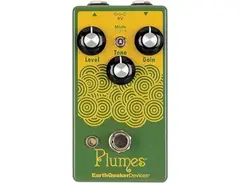
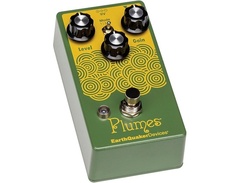
The EarthQuaker Devices Plumes represents a bold reimagining of the Tube Screamer platform, offering three distinct clipping modes that significantly expand its tonal palette. This innovative approach addresses common criticisms of traditional TS circuits while maintaining the fundamental character that makes Tube Screamers special. Built around low-noise JFET op-amps instead of traditional BJT buffers, the Plumes delivers improved headroom and lower noise than classic TS designs.
The pedal's three-way clipping switch is its standout feature, providing dramatically different overdrive characteristics: symmetrical LED clipping for crisp, defined drive; no clipping for clean boost operations; and asymmetrical silicon clipping that recalls classic TS tones with enhanced output and clarity. The modified tone control offers more effective bass and treble response while preserving the essential midrange focus that defines the Tube Screamer sound.
Best For: Experimental guitarists and tone seekers who want to explore multiple flavors of overdrive while maintaining the core Tube Screamer character.
See how artists use this





Maxon OD808 Overdrive
5.0 (76)
The Original Designer's Take

Average Price: $134
Standard/Professional
$50
$176+
Budget
Standard
High-end
- Enhances sound massively, especially on crunch channels
- Tightens up flubby low-end, perfect for metal guitarists
- Adds warmth and stands out with a mid-range boost
- Versatile across genres from blues to extreme metal
- See 5 more
- Not a true bypass, may not suit all signal chain preferences
- Some find it lacks a low-gain range
- May sound harsh to those expecting a creamy overdrive
- Pricey for casual musicians
- See 1 more
| Analog/Digital | analog |
| Power | 9V |
| Current Draw | 5ma |
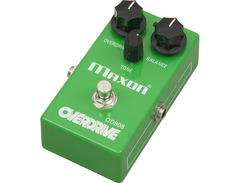
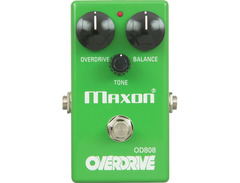
The Maxon OD808 holds a unique place in the Tube Screamer universe – it's created by the same company that designed the original circuit for Ibanez, and in many ways, it represents their vision of how the pedal should have evolved. This isn't simply a clone; it's a refined interpretation that maintains the soul of the original while incorporating subtle improvements gained from decades of experience. The OD808 delivers the classic Tube Screamer midrange voice but with noticeably better note separation and a more transparent low end that lets more of your guitar's natural character shine through.
What sets the OD808 apart is its exceptional dynamics and clarity. The pedal offers an ultra-low noise floor and a more sophisticated gain structure that results in better string-to-string definition, even with complex chords. The overdrive character is smooth and musical, but with a hint of extra headroom that gives it a more open, breathing quality compared to traditional TS circuits. This makes it particularly effective for players who want the classic Tube Screamer sound but find the traditional mid-hump a bit too pronounced.
Best For: Tone purists and players who want a more refined take on the classic Tube Screamer sound.
See how artists use this




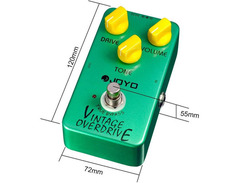
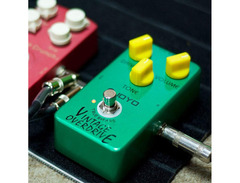
Joyo JF-01 Vintage Overdrive
4.0 (120)
The Budget Champion
- Budget-friendly Tube Screamer clone with comparable sound
- Versatile use as an overdrive or boost pedal
- Warm, vintage character with usable tones throughout
- True bypass keeps clean signal unaffected
- See 5 more
- Some find it too much overdrive for their needs
- Can be perceived as having a "cheap" appearance
- May lack the low-end presence for some users
- Slightly thinner and dirtier tone compared to original Tube Screamer
- See 1 more
| Bypass | true bypass |
| Analog/Digital | analog |
| Power | 9V |
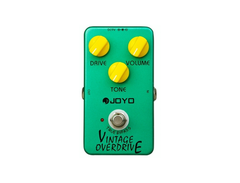
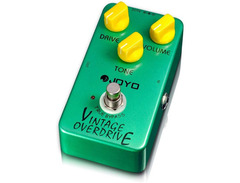
The Joyo JF-01 stands as living proof that great Tube Screamer tone doesn't have to cost a fortune. This remarkably affordable pedal has earned a devoted following by delivering surprisingly authentic TS808-style tones at a fraction of the price of boutique options. Built around a circuit that closely mirrors the original Tube Screamer architecture, the JF-01 captures the essential character that made the original pedal famous.
While it may lack the refined components and advanced features of premium models, the JF-01's core sound is impressively musical. It delivers that classic midrange punch and smooth overdrive character that works so well for blues and rock, with enough gain on tap for convincing SRV-style tones. The pedal's simple controls mirror the traditional Tube Screamer layout, making it an excellent choice for players new to the Tube Screamer world or those needing a reliable backup.
Best For: Budget-conscious players and beginners looking to explore the classic Tube Screamer sound without breaking the bank.
See how artists use this


.jpg)



Vemuram Jan Ray
5.0 (18)
The Premium Powerhouse


Average Price: $356
High-end/Boutique
$50
$176+
Budget
Standard
High-end
- Unique sound character, not a Timmy clone
- Excellent as both clean boost and medium/heavy overdrive
- Maintains clarity across volume adjustments
- Adds warmth and fullness without much treble loss
- See 6 more
- Price point may be high for some
- Can dominate signal chain, making it hard to stack with other pedals
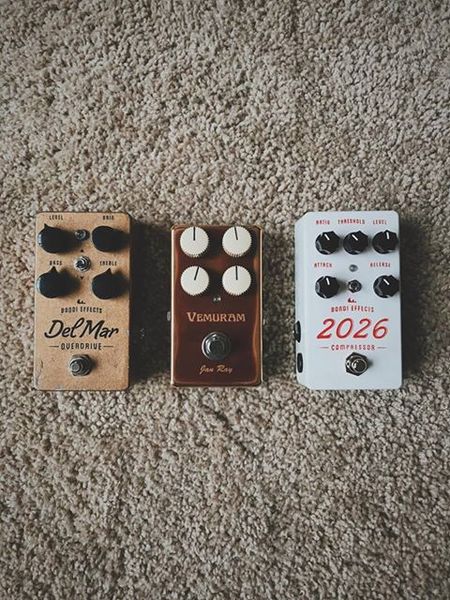
The Vemuram Jan Ray represents the highest echelon of Tube Screamer-inspired design, commanding a premium price that reflects its boutique Japanese craftsmanship and painstaking attention to detail. Each unit is hand-built using premium components, including custom-made capacitors and a proprietary op-amp that delivers exceptional headroom. What sets this pedal apart is its remarkable ability to enhance your guitar's natural voice while adding a level of richness and dimensionality that more affordable pedals simply can't match.
The Jan Ray offers an incredibly open and dynamic sound, maintaining exceptional note definition even at higher gain settings. Unlike traditional Tube Screamers, it preserves more low-end while adding a sophisticated high-end sheen that makes every note sparkle. The midrange focus is still present but more refined, allowing your guitar's fundamental character to shine through while still providing that essential cut-through-the-mix quality. For professional guitarists and serious tone enthusiasts, the Jan Ray represents the ultimate evolution of the Tube Screamer concept.
Best For: Professional guitarists and studio musicians who demand the absolute highest quality overdrive and are willing to invest in premium tone.
See how artists use this




.jpg)



.jpg)


Wampler Clarksdale V2
The Modern Evolution

Average Price: $148
Standard/Professional
$50
$176+
Budget
Standard
High-end
The Wampler Clarksdale V2 represents Brian Wampler's vision of what a modern Tube Screamer can be, building upon the classic circuit while adding carefully chosen enhancements that expand its versatility without sacrificing its essential character. This isn't just another TS clone with a few extra knobs – it's a thoughtfully redesigned overdrive that maintains the organic feel and dynamic response of a vintage Tube Screamer while offering significantly more tonal control and gain range.
At its core, the Clarksdale delivers the warm, smooth overdrive that Tube Screamer fans love, but its expanded control set allows you to shape the character of that overdrive with unprecedented precision. The bass control helps tailor the low end response, allowing you to achieve anything from tight, focused drive to fuller, more robust tones. The voice switch provides two distinct flavors of midrange character, with one position offering the classic TS mid-hump and the other providing a more modern, balanced EQ curve. Most importantly, these additional controls feel musical and intuitive, enhancing rather than complicating the pedal's operation.
Best For: Players who love the basic Tube Screamer sound but want more control over their tone.
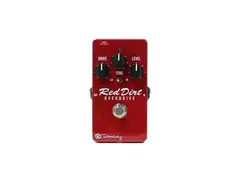
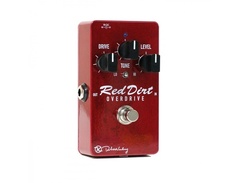
Keeley Red Dirt Overdrive
4.5 (5)
The Hot-Rodded Hero

- High-quality build and sound
- Provides smooth low overdrive to high gain
- Versatile, covering classic Screamer-type tones and beyond
- Punchier and adds more clarity compared to TS Mini
- See 2 more
| Bypass | true bypass |
| Analog/Digital | analog |
| Power | 9V |
| Current Draw | 14ma |
Robert Keeley built his reputation modifying Tube Screamers, and the Red Dirt represents the culmination of his expertise in a production pedal. It's a sophisticated evolution that maintains the soul of a classic Tube Screamer while addressing common criticisms of the original design. The Red Dirt offers expanded EQ control, increased headroom, and a more versatile gain structure that opens up new tonal possibilities.
The pedal's modified circuit provides exceptional clarity and touch response, with a carefully tuned midrange that can go from subtle enhancement to powerful cut-through-the-mix presence. The gain range is notably wider than a standard Tube Screamer, capable of everything from transparent boost to thick, sustaining lead tones. A carefully designed tone stack provides more control over the frequency response, allowing you to dial in traditional TS sounds or explore more modern voicings.
Best For: Versatile players who want a more modern take on the Tube Screamer with additional tonal flexibility, especially for blues and americana genres.
See how artists use this








Ibanez TS9 Tube Screamer
4.5 (671)
The Modern Classic
-s.webp?v=1784977217)


Average Price: $98
Standard/Professional
$50
$176+
Budget
Standard
High-end
- Enhances tube amp emulation effectively
- Versatile: can be used as a clean boost, for light to heavy overdrive, or even as a bass booster
- Adds a mid-range focus that cuts through in band settings
- Works well when stacked with other pedals
- See 6 more
- Can lack low-end, especially when used with certain guitars and amps
- Not everyone loves the characteristic mid-hump
| Bypass | buffered bypass |
| Analog/Digital | analog |
| Power | 9V |
| Current Draw | 8ma |
While the TS808 might be the vintage holy grail, the TS9 has arguably shaped more recordings and live performances than any other overdrive pedal in history. This pedal takes the fundamental Tube Screamer circuit and adds a more commanding voice, with slightly more pronounced upper-mids and a hint of extra gain on tap. The result is an overdrive that's more assertive than its predecessor, capable of everything from subtle blues grit to searing rock leads.
The TS9's slightly more aggressive character makes it particularly effective for heavier styles of music. Metal guitarists have long relied on its ability to tighten up high-gain amplifiers, adding focus and definition to even the most saturated tones. The pedal's frequency response, which is a bit more focused in the upper midrange compared to the TS808, helps craft lead tones that slice through dense mixes while maintaining note clarity. Even at extreme settings, the TS9 never loses its musical character, offering a natural compression that sustains notes without squashing their dynamic range.
Best For: Rock guitarists who want a more cutting lead tone and metal players looking to tighten up high-gain amps.
See how artists use this


.jpg)



JHS Bonsai
4.5 (14)
The Swiss Army Knife




Average Price: $235
High-end/Boutique
$50
$176+
Budget
Standard
High-end
- Multiple Tube Screamer variations in one pedal
- Conserves pedalboard space effectively
- High-quality construction ensures durability
- Versatile tones from clean boost to distortion
- See 6 more
- Some settings sound similar, limiting perceived versatility
- Price may be higher than some are willing to pay for an overdrive pedal
| Bypass | true bypass |
| Analog/Digital | analog |
| Power | 9V |
| Current Draw | less than 100ma |
The JHS Bonsai represents perhaps the most ambitious attempt to capture the complete evolution of the Tube Screamer in a single pedal. This isn't just another modified TS circuit – it's nine completely distinct variations of the Tube Screamer, each meticulously recreated through a sophisticated switching system. From the warm sophistication of the TS808 to the aggressive punch of the TS9 and the modern clarity of the TS10, each mode delivers an authentic recreation of these classic circuits.
What makes the Bonsai truly special is its attention to detail in recreating each circuit variation. JHS didn't simply approximate these sounds – they studied original units, measured component values, and recreated each circuit's specific characteristics, right down to the varying output levels and frequency responses. This includes popular modifications like the "808 mod" and "Ultra" modes, giving players access to sought-after boutique tones without needing multiple pedals. The Bonsai's switching system is completely analog, ensuring that each mode delivers the warmth and response of a true analog circuit.
Best For: Professional musicians and studio players who need access to multiple Tube Screamer variants. Also ideal for collectors who want to experience different TS circuits without buying multiple pedals.
See how artists use this


.jpeg?v=1784917540)
.jpeg?v=1784917540)




How to Choose the Right Tube Screamer for Your Setup
Matching with Different Amplifiers
The magic of a Tube Screamer often lies in how it interacts with your amplifier. Each amp type brings out different characteristics of these legendary pedals.
Fender-Style Amps
The classic American clean sound meets its perfect match in traditional Tube Screamers. These pedals excel at coaxing warm, natural overdrive from these amps' clean headroom. The Tube Screamer's signature mid-boost perfectly complements the scooped character of Fender-style amps, filling in that crucial midrange while maintaining the amp's pristine clean tone underneath. For best results, start with lower gain settings - just enough to push the amp into that sweet spot where notes bloom and sustain naturally.
Marshall-Style Amps
British-voiced amps form a powerful alliance with Tube Screamers, especially when you're chasing those singing lead tones. These amps can handle more aggressive settings on your Tube Screamer, particularly modern variants that offer expanded EQ control. The combination excels at creating soaring lead tones that cut through any mix while maintaining the amp's inherent character. Modern versions of the Tube Screamer, with their additional EQ flexibility, can help you dial in anything from classic rock crunch to searing blues leads.
High-Gain Amps
Modern metal and hard rock players have discovered that Tube Screamers are secret weapons for tightening up high-gain tones. When using these amps, think of your Tube Screamer more as a precision tool than an overdrive - minimal drive settings with maximized level work best. The pedal's midrange character and slight compression help focus the amp's natural gain, delivering articulate, crushing rhythms and defined leads. Modern Tube Screamer variants often include features specifically designed for high-gain applications, making them more suitable than vintage-spec models.
Stacking with Other Pedals
The Tube Screamer's versatility shines brightest when combined with other drive pedals. Understanding these interactions can unlock an entire universe of tones.
With Distortion
Think of your Tube Screamer as a precision sculptor when pairing it with distortion. Placing it first in the chain creates a tighter, more focused sound - perfect for modern metal and hard rock tones. Keep the Tube Screamer's drive low and focus on using its level control to push your distortion pedal harder. Pay special attention to matching output levels between pedals; too much level can create unwanted compression that might squash your playing dynamics.
With Fuzz
Fuzz pedals become remarkably versatile with a Tube Screamer in the mix. Placing the Tube Screamer after your fuzz helps tame wild harmonics and adds control to vintage-style fuzz tones. Alternatively, positioning it before the fuzz creates a more aggressive character - think early Jack White or modern stoner rock. Don't be afraid to experiment with drive settings on both pedals; sometimes unexpected combinations yield the most inspiring results.
Budget Considerations
The Tube Screamer market spans from affordable workhorses to premium boutique offerings, each with its own set of tradeoffs.
Entry-Level ($50-100)
Budget-friendly Tube Screamers focus on nailing the fundamental sound that made the original famous. While these pedals might not offer the refinements of their pricier cousins, many deliver surprisingly musical results. Look for solid construction that can withstand regular gigging, and don't be put off by simpler control layouts - sometimes less is more. Consider these pedals an excellent starting point for exploring the Tube Screamer sound.
Mid-Range ($100-200)
This price range often represents the sweet spot of features and quality. You'll find better components, more thoughtful circuit design, and robust construction that can handle years of touring. Many pedals in this bracket add useful features like additional EQ controls or clipping options while maintaining the core Tube Screamer character. For most players, these pedals offer the ideal balance of quality and value.
Premium ($200+)
Boutique Tube Screamers elevate every aspect of the design. Hand-selected components, precision assembly, and innovative circuit refinements create pedals that excel in professional applications. While these improvements might seem subtle, they become apparent in demanding situations - studio recording, complex pedalboards, or when using high-end amplifiers. These pedals often include unique features that help them stand out from the crowd.
Frequently Asked Questions
What Makes the Tube Screamer Sound Unique?
The Tube Screamer's legendary status isn't just marketing hype - it's rooted in clever circuit design that creates a truly musical overdrive. At its heart, the pedal uses soft-clipping diodes that round off signal peaks gradually, creating that smooth, organic overdrive that responds beautifully to playing dynamics. The secret sauce, however, lies in its midrange emphasis centered around 720Hz - exactly where a guitar needs to cut through a mix. This isn't just a simple EQ bump; it's created by an interactive tone control circuit that works in harmony with your playing dynamics. The careful input and output staging ensures your guitar's character shines through while adding that signature warmth and sustain.
How Do You Stack Tube Screamers with Other Pedals?
Success in stacking Tube Screamers comes down to understanding the nuances of gain staging and signal flow. Think of your signal chain as a conversation - each pedal needs to speak clearly without shouting over the others. Start by considering the order of your pedals carefully; this isn't just about following conventional wisdom but finding what works for your specific combination of gear. Output level matching becomes crucial here - small adjustments can make the difference between a muddy mess and a perfectly layered tone. Pay attention to how the pedals' EQ characteristics interact; sometimes backing off the tone control on one pedal lets another shine more effectively.
Is a Tube Screamer Good for Metal?
The Tube Screamer has become an essential tool in modern metal, though perhaps not in the way you might expect. Rather than providing the primary distortion, it excels at tightening up an already gained-out amp or distortion pedal. By cutting specific low frequencies and adding focused midrange punch, it transforms loose, boomy gain into articulate, crushing metal tones. The pedal's natural compression helps even out pick attack, making rapid-fire riffs more defined and consistent. When it comes to lead playing, that signature midrange helps solos slice through even the densest mix without becoming harsh or piercing.
Conclusion
The Tube Screamer's enduring legacy comes from its remarkable ability to enhance almost any rig. Whether you're a blues player seeking warm, singing sustain, a rock guitarist looking for that perfect lead boost, or a metal player trying to tighten up high-gain tones, there's a Tube Screamer variant that will elevate your sound.
When selecting your ideal Tube Screamer, consider its role in your broader tonal picture. Think about:
- How it will complement your existing gear and playing style
- Whether you need vintage authenticity or modern flexibility
- Your budget and build quality requirements
- Which additional features might enhance your specific application
Remember that while all Tube Screamers share common DNA, each model tells its own sonic story. Take time to experiment with different options. Listen to how they interact with your amp, how they stack with your other pedals, and most importantly, how they respond to your playing style. The perfect Tube Screamer doesn't just sound good - it inspires you to play better and helps translate your musical ideas more effectively.
We encourage you to explore the various models mentioned in this guide, but don't just take our word for it. If possible, try these pedals with your own setup. The right Tube Screamer won't just be another pedal on your board - it will become an integral part of your signature sound, ready to enhance your musical voice for years to come.
Top Ranked Overdrive Effects Pedals on Equipboard
-m.webp?v=1784977227)

-m.webp?v=1784905094)


About the authors
Kevin Daoust is a guitarist, guitar educator and writer based in Gatineau, Quebec, Canada. When not tracking guitars for artists around the world, or writing music-related articles around the internet, he can be seen on stage with Accordion-Funk legends Hey, Wow, the acoustic duo Chanté et Kev, as well as a hired gun guitarist around Quebec and Ontario. He holds a Bachelor of Music in Guitar Performance from Carleton University in Ottawa, Ontario, Canada. Read more
Michael R. Pierce is the co-founder of Equipboard and a lifelong musician with over 25 years of experience as a guitarist and gear enthusiast. He blends solid music theory chops (thanks to formal training in guitar, piano, and trumpet) with real-world experience, always exploring and experimenting across genres like rock, blues, and hip-hop. Michael launched Equipboard in 2013 after graduating from The University of Texas at Austin, leveraging his unique blend of musical passion, technological acumen, and community building. His current go-to rig features a Fender American Original ‘50s Telecaster, Analogman King of Tone, Strymon Flint, and a Fender ‘57 Custom Champ. Read more
New in Overdrive Pedals

$285.00 - $299.00


$179.00 - $229.00


.jpg?v=1784891948)





.jpg)


.jpg)

.jpg)