Table of Contents

Equipboard
Equipboard is the world's largest community of artists and their gear. Read our review process.
We are reader-supported. When you buy through links on our site, we may earn an affiliate commission. Learn more.
The Frankenstrat is the epitome of pure innovation born from necessity. In the hands of Eddie Van Halen, this cobbled-together creation didn't just produce music; it revolutionized the entire landscape of rock guitar. What began as a young musician's experiment in his garage would go on to inspire generations of guitarists and fundamentally change how electric guitars were designed, built, and played.
Born from Eddie's relentless pursuit of the perfect tone, the Frankenstrat was far more than just another modified guitar. It embodies the spirit of innovation that defined Van Halen's approach to music. Every scratch, every modification, and every layer of paint tells a story of constant evolution and refinement.
The tale of the Frankenstrat is intrinsically linked with the story of modern rock music itself. From the opening notes of "Eruption" to the soaring melodies of "Jump," this distinctive black, white, and red striped guitar became the voice through which Eddie Van Halen spoke to the world. Its influence extends far beyond its immediate impact on Van Halen's music, inspiring countless guitar manufacturers and spawning an entire industry of modified "superstrat" style instruments.
In this comprehensive guide, we'll explore every aspect of this legendary instrument. From its humble beginnings to its eventual status as one of the most recognizable guitars in rock history, we'll examine the technical innovations, the specific components, and the endless modifications that made the Frankenstrat not just a guitar, but a revolution in six strings.
The Origins of the Frankenstrat

Behind every legendary guitar, there's a story of what drove its creation. In Eddie Van Halen's case, it was pure frustration with the limitations of commercially available instruments in the mid-1970s.
The Search for the Perfect Sound
Eddie's quest began with a simple problem: he loved the meaty, powerful sound of Gibson guitars but preferred the feel and playability of Fender's bolt-on necks. In the early days of Van Halen, he found himself switching between guitars mid-song during shows, trying to get the best of both worlds. This constant swapping sparked the idea that would eventually lead to the Frankenstrat's creation.
Building on a Budget
In 1974, with only a few hundred dollars to his name, Eddie started his guitar-building journey. The timing couldn't have been better as the Charvel guitar parts factory had just opened its doors to the public. This gave him access to high-quality components at manufacturer prices, turning his limited budget from a constraint into an opportunity for innovation.
Early Experiments
Eddie's first attempts at creating his perfect guitar involved extensive trial and error. He spent countless hours at the Charvel factory, digging through their reject bins for usable parts. His breakthrough came when he discovered an unfinished factory second body made of northern ash wood, priced at just $50. The body's natural resonance and light weight would prove crucial to the Frankenstrat's eventual tone.
A Vision Takes Shape
Rather than following conventional wisdom, Eddie approached his project with a mix of intuition and experimentation. He wasn't trying to build a masterpiece - he simply wanted a guitar that could deliver the sounds he heard in his head. This freedom from traditional guitar-building rules allowed him to make choices that more experienced luthiers might have avoided, leading to innovations that would later become industry standards.
Building the Frankenstrat

The construction of the Frankenstrat represents one of the most significant moments in guitar-building history. Every component selection, modification, and innovation worked together to create an instrument that would revolutionize rock music.
The Foundation
The heart of the Frankenstrat began with a factory second body from Boogie Bodies, constructed from northern ash wood. The body's imperfections proved serendipitous, as its slight warp created unique resonant properties that contributed to Eddie's legendary tone. The $50 price tag made it attainable for the young guitarist, but the wood's natural lightweight properties and exceptional resonance made it priceless for his playing style.
The neck came from the same supplier, featuring a maple construction with a 12-inch radius fingerboard. This flatter radius differed significantly from typical Fender necks of the era, allowing for lower action and more aggressive string bending without fretting out. The neck remained deliberately unfinished, sealed only with gunstock oil and wax. This treatment required regular maintenance but provided the smooth, fast feel Eddie needed for his revolutionary playing techniques.
The neck mounting process involved sophisticated problem-solving. Eddie discovered that by shimming the neck pocket with a quarter, he could achieve the perfect neck angle. This modification improved string tension and playing action while contributing to the guitar's exceptional sustain.
Pickup Configuration and Electronics
Eddie's approach to the pickup configuration broke every convention of the time. He began by acquiring a Gibson PAF humbucker from an ES-335, but simply installing it wasn't enough. The pickup underwent extensive customization, starting with the removal of its copper tape and a complete rewinding process. While exact winding details aren’t publicly documented, estimates suggest the Frankenstrat pickup had a DC resistance of around 13-14k ohms (typical for an overwound pickup), compared to the ~8k ohms of a standard PAF. This resistance indicates a higher number of windings, correlating with its hot output.
The pickup installation process involved far more complex modifications than simply mounting a humbucker. The Boogie Bodies body came pre-routed for three single-coil pickups in the traditional Stratocaster configuration. Eddie had to significantly modify this route to accommodate the Gibson PAF humbucker, which was considerably wider and deeper than a single-coil pickup.
Using basic woodworking tools, he carefully widened and deepened the bridge pickup cavity. This modification required precise measurement and careful routing to ensure the pickup would sit at the correct depth for optimal string interaction. The process proved particularly challenging because Eddie needed to maintain enough wood around the cavity to securely mount the pickup while ensuring it wouldn't interfere with the tremolo springs underneath.
Once the cavity was properly sized, Eddie positioned the humbucker at a precise 15-degree angle, slanting toward the bridge. This strategic placement served multiple purposes: it strengthened the bass frequencies that might otherwise have been thin in a bridge position, added crucial treble clarity through altered string-to-pole-piece relationships, and created distinctive harmonic overtones as the strings passed through the magnetic field at varying angles. The angled mounting also helped reduce unwanted noise, as the pickup's coils were offset relative to potential interference sources.
The electronics cavity received extensive modification, being routed larger than standard to accommodate future experiments. Eddie lined it completely with copper tape for shielding, eliminating unwanted interference. In a move that would confound guitarists for years, he installed a single 500K volume potentiometer but labeled it "Tone." This deliberate misdirection protected his tone secrets while eliminating unnecessary components from the signal path. The internal wiring utilized premium braided shield cable, ensuring the cleanest possible signal reached the amplifier.
The Tremolo Evolution
The development of the Frankenstrat's tremolo system represents one of the most complex and crucial aspects of the guitar's evolution. The journey from a standard Fender unit to a customized Floyd Rose system involved years of experimentation and innovation.
The Initial Fender Setup
The original tremolo was a standard Fender six-screw synchronized tremolo system, similar to those found on Stratocasters of the era. Eddie quickly discovered its limitations during intense performances. The unit would frequently go out of tune during his aggressive dive bombs and vibrato techniques, particularly when combined with his custom-gauge string set (0.009, 0.011, 0.015, 0.024, 0.032, 0.040).
Eddie's first modification involved replacing the stock steel sustain block with a larger brass block. This change significantly improved sustain due to brass's superior mass and density. The new block measured approximately 40mm in width (compared to the standard 35mm) and extended 5mm deeper than the original.
Spring and Claw Innovations
The stock three-spring configuration proved inadequate for maintaining stable tuning under aggressive use. Eddie experimented extensively with spring tension, eventually developing a unique five-spring installation pattern. The outer springs were mounted at slight angles, creating additional tension while reducing the system's tendency to bind under extreme use. He also modified the spring claw, reinforcing it with additional metal bracing to prevent fatigue and maintain consistent tension.
The tremolo's knife edges, critical contact points where the bridge pivots, received special attention. Eddie had them carefully hardened and polished to reduce friction and wear. He also developed a unique lubricating mixture of graphite and petroleum jelly that he applied to these points before each performance.
String Tree and Retainer Evolution
Standard string trees created significant friction, causing tuning instability during tremolo use. Eddie crafted custom brass L-shaped string retainers that provided a smoother path for the strings. These retainers featured polished contact points and were precisely height-adjusted to maintain optimal break angle over the nut while minimizing friction.
The string trees underwent multiple iterations before Eddie achieved the perfect design. He experimented with different materials including stainless steel and various brass alloys before settling on a specific type of hardened brass. The final design incorporated tiny roller bearings at the contact points, virtually eliminating string binding.
The Floyd Rose Revolution
When Eddie encountered the early Floyd Rose prototype in 1977, it marked a turning point. However, the initial unit required extensive modification. He worked directly with Floyd Rose to develop improvements, including:
- Custom titanium saddle screws that replaced the original steel ones, providing better durability and smoother operation
- A modified baseplate with reinforced pivot points
- A unique string-locking system at the nut that predated Floyd's own design
- Special titanium string-clamping blocks with improved grip surfaces
- A custom-designed fine-tuner arrangement that allowed for more precise adjustments
The most significant innovation came with Eddie's string-locking system at the nut. Using aircraft-grade aluminum and hardened steel inserts, he created a clamping mechanism that would secure the strings without damaging them. This design later influenced Floyd Rose's development of the locking nut that became industry standard.
The final addition of the D-Tuna device in the late 1980s completed the tremolo's evolution. Eddie modified the unit to work seamlessly with his existing fine-tuner system, creating a mechanism that could drop the low E string to D without affecting the tremolo's stability or the tuning of other strings.
The Iconic Paint Job
The Frankenstrat's distinctive appearance emerged through a complex, multi-stage finishing process. Eddie began with a Schwartz black base coat, followed by precise applications of white primer in specific sections. The striping pattern required meticulous planning, using carefully cut electrical tape as masks. He applied bicycle paint for the white stripes, building up multiple clear coats between layers for depth and protection.
The famous red paint addition in 1979 added the final element to the guitar's iconic appearance. Eddie's technique of removing the masking tape while the paint remained wet created slightly raised edges that caught stage lighting in unique ways.
The Touring Years
Road use brought new challenges and solutions. The intense heat from stage lighting would sometimes affect the guitar's electronics, leading Eddie to develop a unique potting compound for his pickups. He also created a specialized maintenance routine, including regular fret polishing and neck conditioning to combat the effects of different climates. The wear patterns from extensive touring actually influenced his later modifications, as he learned which areas of the guitar needed reinforcement.
Final Form
By the early 1980s, the Frankenstrat had reached what many consider its definitive form, though Eddie never truly stopped modifying it. The final iteration featured:
- A highly refined Floyd Rose system with customized titanium parts
- A specially wound pickup with unique magnet configuration
- Quarter-inch copper shielding throughout the electronics cavity
- A custom-designed grounding scheme that eliminated virtually all noise
- Specialized fret wire that Eddie helped develop
- A pioneering string dampening system that would later influence numerous guitar manufacturers
Each change represented not just an improvement but an innovation that would influence guitar design for decades to come.
Key Features and Innovations

The Frankenstrat's significance lies not just in its unique construction but in how each feature innovated guitar design. These innovations created a blueprint that would influence generations of guitar builders and manufacturers.
Revolutionary Pickup Design
The pickup configuration of the Frankenstrat fundamentally changed how builders approached guitar electronics. The PAF humbucker installation went far beyond simply routing a larger cavity. Mounting the pickup directly to the body wood achieved unprecedented sustain and eliminated unwanted resonances. The precise 15-degree pickup angle proved to be a game-changing innovation.
The custom winding process Eddie developed for his pickups deserves special attention. The multiple paraffin wax treatments he pioneered became an industry standard for preventing microphonic feedback at high volumes.
Bridge Innovation and Stability
The tremolo system represented perhaps the most revolutionary aspect of the Frankenstrat's design. Eddie's early modifications to the standard Fender tremolo laid the groundwork for modern tremolo systems. His implementation of the Floyd Rose system, particularly, transformed what was possible with a tremolo-equipped guitar. The customized titanium components he developed in collaboration with Floyd Rose solved persistent issues with metal fatigue and string breakage.
The introduction of the D-Tuna device solved a fundamental problem in rock guitar: the need to quickly alternate between standard and drop-D tuning. His string-locking innovations at the nut predated Floyd Rose's own solutions.
Electronics and Signal Path
The Frankenstrat's electronic simplicity masked incredible innovation. The single volume control concept revolutionized guitar design philosophy, proving that fewer components could actually improve tone. Eddie's custom ground wiring scheme, which used a star-grounding configuration, eliminated the hum issues that plagued many modified guitars of the era.
His pioneering work with shielding techniques changed how manufacturers approached electronic noise reduction. The copper-lined control cavity, combined with braided shield wire for all connections, created an essentially noise-free instrument even under high-gain conditions.
Construction Techniques
The body construction introduced several innovations that would become industry standards. Eddie's experimentation with neck pocket shimming demonstrated how subtle adjustments to neck angle could dramatically improve playability and tone. The unfinished neck treatment, sealed only with gunstock oil and wax, influenced a generation of players who discovered the benefits of a natural wood feel.
His approach to wood selection challenged conventional wisdom. The use of lightweight ash, particularly a "reject" body, proved that tonal qualities weren't solely dependent on premium materials.
Ergonomic Innovations
The Frankenstrat's physical design incorporated several ergonomic innovations that would later become standard features. The carefully carved neck heel allowed unprecedented upper fret access. The body's subtle contours, though less obvious than its striking appearance, provided improved playing comfort during long performances. The placement of the single volume control proved optimal for volume swells and pinky control during complex passages.
Impact on Guitar Design and Music

The Frankenstrat didn't just influence guitar design; it fundamentally changed how people thought about electric guitars and their possibilities. Its impact rippled through both the manufacturing world and the music industry in ways that continue to resonate today.
Manufacturing Revolution
The Frankenstrat's influence on guitar manufacturing was immediate and profound. Major manufacturers quickly recognized that players wanted more than traditional designs could offer. The first commercial "superstrat" guitars appeared in the early 1980s, with companies like Kramer, Charvel, and Jackson leading the charge. These weren't mere copies; they were productions built on Eddie's innovations.
When Kramer became the first company to secure Eddie's endorsement, their design choices revealed just how deeply the Frankenstrat had influenced modern guitar thinking. The neck profiles, pickup configurations, and bridge systems all showed direct lineage to Eddie's original modifications.
Technical Influence on Guitar Building
The technical innovations of the Frankenstrat created entirely new standards in guitar manufacturing. Eddie's pickup mounting techniques led to manufacturers developing new routing templates and installation methods. His approach to ground shielding became standard practice, with companies like Fender and Music Man incorporating similar copper shielding techniques into their premium models.
The concept of direct-mounted humbuckers in traditionally single-coil guitars opened up new tonal possibilities that manufacturers rushed to explore. Eddie's experimental approach to neck pocket shimming influenced how companies approached neck joint design, leading to innovations in neck-through-body construction and improved bolt-on designs.
Evolution of Guitar Electronics
The Frankenstrat's simplified electronics changed how manufacturers approached guitar wiring. The minimalist control layout proved that complex switching systems weren't necessary for versatile tone. This influenced a generation of guitar designs focused on simplicity and direct signal path integrity. Companies began offering models with similar stripped-down control schemes, recognizing that fewer components often meant better tone.
The Rise of Modular Guitar Design
Perhaps one of the most significant impacts was how the Frankenstrat influenced the concept of modular guitar design. Guitar manufacturers began designing instruments with modification in mind, creating models specifically intended to be customized. The idea that a guitar could be a platform for ongoing modification rather than a finished product represented a fundamental shift in guitar design philosophy.
Cultural Impact
The Frankenstrat's influence extended beyond technical innovations. Its striking aesthetic inspired countless imitators and sparked a new era in guitar finish design. The striped pattern became so iconic that it started appearing on everything from guitar picks to stadium banners.
Educational Impact
The Frankenstrat sparked a revolution in guitar education and understanding. Players began studying electronics and guitar construction in unprecedented numbers. Technical magazines started publishing detailed analyses of guitar modifications, and the DIY guitar modification industry exploded. This led to a more technically educated generation of players who understood their instruments at a deeper level.
Modern Legacy
The modern guitar industry still reflects the Frankenstrat's influence. Contemporary manufacturers continue to build on Eddie's innovations, from refined tremolo systems to advanced pickup designs.
Legacy in Rock Music
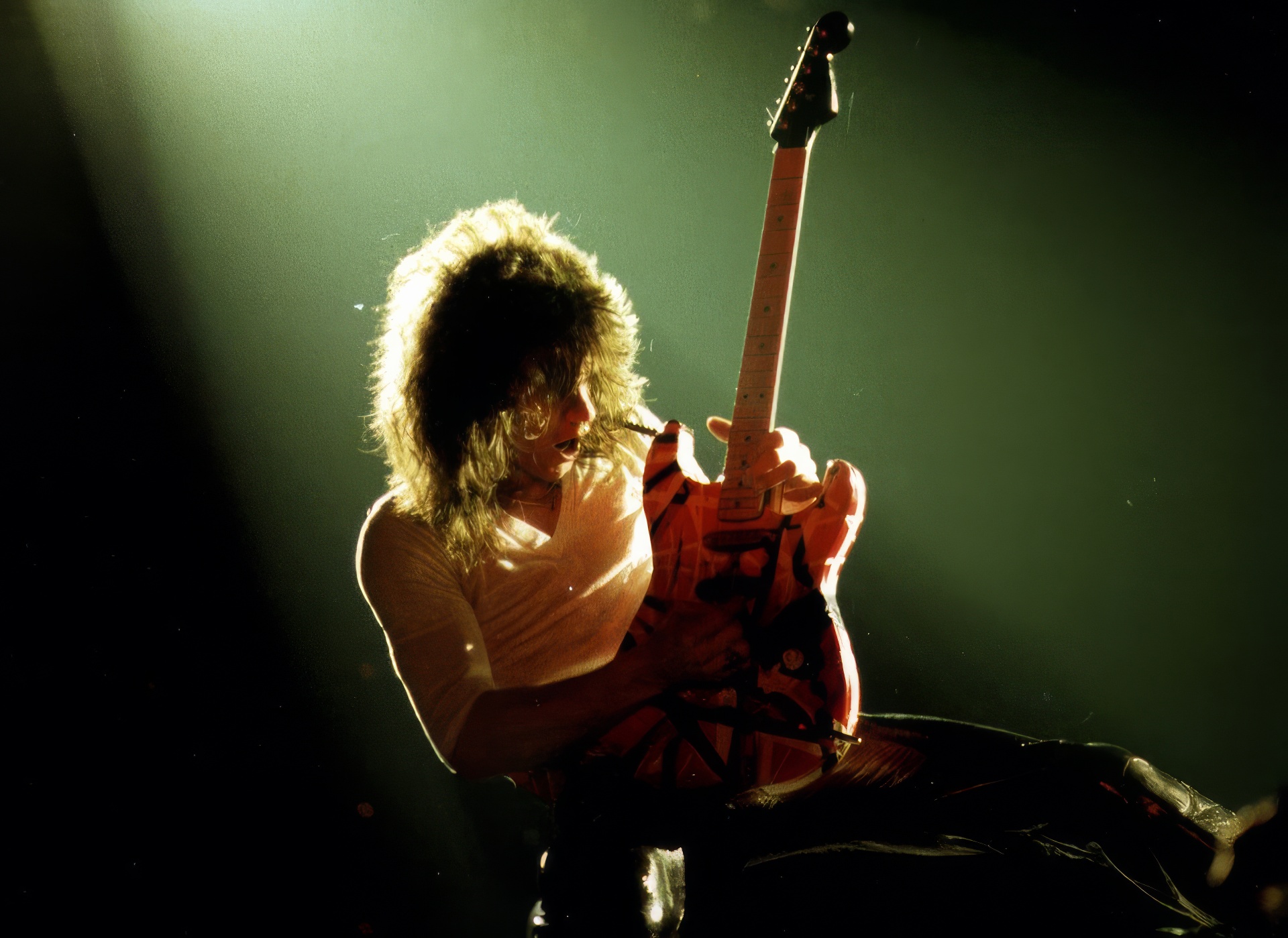
The Frankenstrat's impact on rock music went beyond its role as a musical instrument. It became the vehicle through which Eddie Van Halen revolutionized guitar playing and influenced generations of musicians.
Sonic Innovation
The Frankenstrat's unique sound defined an era of rock music. When listeners first heard "Eruption" in 1978, they encountered a guitar tone unlike anything before. The guitar’s unique characteristics created a sound that was simultaneously aggressive and articulate. This tone became the cornerstone of Van Halen's music and set a new standard for rock guitar sound.
The guitar's ability to produce controlled feedback and sustained notes while maintaining clarity made techniques like two-handed tapping and artificial harmonics more musical rather than mere effects. The balanced frequency response across all strings meant that complex chord voicings and single-note runs had equal presence in the mix, enabling Eddie to switch seamlessly between rhythm and lead playing.
Recording Legacy
In the studio, the Frankenstrat proved remarkably versatile. During the recording of Van Halen's debut album, producer Ted Templeman was astonished by how the guitar cut through the mix without requiring extensive processing. The instrument's natural sustain and harmonic richness meant that many of Eddie's most famous recordings used minimal effects beyond his trademark Phase 90 and Echoplex.
The guitar featured prominently on numerous legendary tracks. On "Ain't Talkin' 'Bout Love," its distinctive growl showcased the perfect marriage of pickup angle and ash body resonance. The song "Panama" demonstrated how the refined Floyd Rose system could handle aggressive dive bombs while maintaining perfect tuning.
Performance Impact
The guitar's innovative design allowed Eddie to perform seemingly impossible techniques night after night. His famous "Cathedral" effect, achieved through volume swells and natural harmonics, demonstrated how the simplified control layout could produce complex sounds. The stable tremolo system enabled him to incorporate dramatic pitch effects into his solos without worry about tuning issues.
Teaching and Technique Development
The Frankenstrat played a crucial role in developing new guitar techniques. Eddie's two-handed tapping technique, while not invented by him, reached new levels of sophistication thanks to the guitar's low action and responsive setup. The instrument's predictable feedback characteristics allowed him to develop controlled feedback techniques that became part of his signature style.
Musical Evolution
Throughout Van Halen's career, the Frankenstrat adapted to changing musical needs. In the early years, it excelled at high-gain rock tones. As the band's sound evolved in the 1980s, the guitar proved equally capable of handling cleaner passages and more sophisticated harmonic work. Songs like "Jump" and "Right Now" showed how the instrument could adapt to different musical contexts while maintaining its distinctive character.
Contemporary Influence
Today, the Frankenstrat's influence continues through modern guitarists who build upon Eddie's innovations. Contemporary players in genres from metal to fusion have adopted and adapted techniques that were first made possible by the Frankenstrat's design.
Related Gear and Equipment
While the guitar played a significant role in Van Halen’s tone, it needed the help of other gear. Understanding the complete signal chain reveals how each component contributed to his legendary sound.
The Amplification
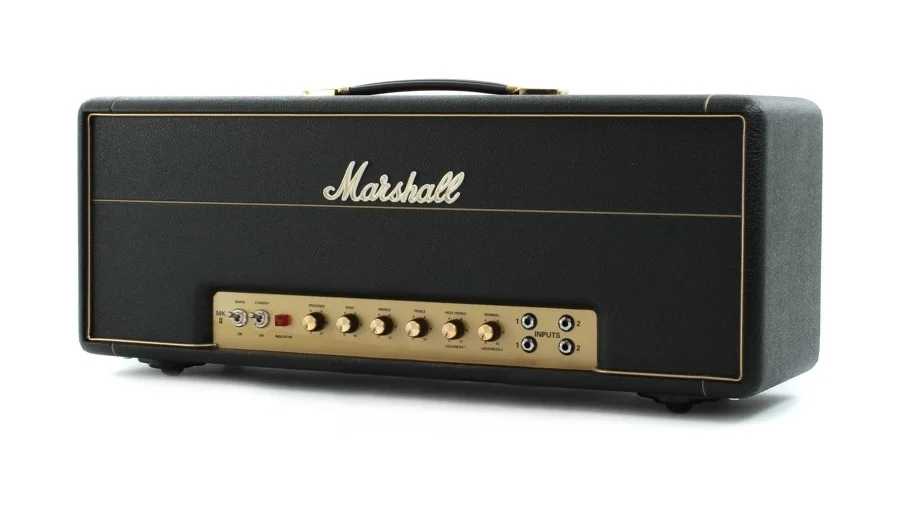
The story of Eddie's amplification begins with his first major amp: a Marshall 1959 Super Lead. The transformative moment came when he discovered that by using a Variac transformer to lower the voltage to around 89 volts, he could achieve power tube saturation at more manageable volumes. This setup allowed the power section tubes to run cooler while still producing the harmonically rich distortion he craved.
His particular Marshall underwent extensive modifications. The most significant change involved cascading the amplifier's channels, effectively turning channel 1 into a gain stage feeding into channel 2. This modification created the foundation of what would become known as the "brown sound." Eddie removed the bright cap from the second stage and installed larger coupling capacitors to enhance the low-end response.
Effects and Signal Processing

Contrary to popular belief, Eddie's effects chain remained relatively simple throughout most of his career. The MXR Phase 90 script logo pedal became an essential part of his sound, appearing on early Van Halen classics like "Eruption" and "Ain't Talkin' 'Bout Love." The key to his Phase 90 usage involved setting the rate just right to create movement without overwhelming the guitar's natural tone.
The Echoplex EP-3 tape delay served dual purposes in Eddie's rig. Beyond its obvious use for creating delay effects, the unit's preamp section colored his tone in a way that became integral to his sound. Even when the delay effect was bypassed, the signal passing through the Echoplex's circuitry added a particular character that enhanced the Frankenstrat's output.
Speaker Cabinets and Microphones
The often-overlooked component of Eddie's tone came from his speaker cabinet configuration. His 4x12 cabinets used specific Celestion G12M "Greenback" speakers, but the real magic lay in how he positioned and mic'd them. A particular secret involved placing the cabinet slightly off the ground and mic'ing it with a Shure SM57 slightly off-center from the speaker cone, capturing both the punch of the direct speaker sound and the cabinet's natural resonance.
The Evolution of Supporting Gear
As Van Halen's sound evolved, so did the supporting equipment. The integration of the first Peavey 5150 amplifier in 1992 marked a significant shift. Eddie worked closely with Peavey's engineers to create an amp that could deliver his signature tone without requiring extensive modifications. This collaboration revolutionized high-gain amplifier design, introducing features like footswitchable channels and modern noise gates that would become industry standards.
Modern Guitars for the Frankenstrat Sound
Finding the right guitar to replicate Eddie's tone requires understanding which modern instruments best capture the essential characteristics of the Frankenstrat. Here's a detailed look at current production guitars that can deliver those iconic tones.
Professional-Grade Options

The EVH Striped Series remains the most direct path to Eddie's tone. The Wolfgang Special stands out particularly, featuring an arched top basswood body, quarter-sawn maple neck, and a custom-designed EVH Wolfgang bridge humbucker. What makes this guitar especially suitable is its direct-mounted pickup and Floyd Rose with D-Tuna system, closely matching the Frankenstrat's core specifications.
The Charvel Pro-Mod DK24 offers another professional-grade option. Its resonant alder body and maple neck provide the fundamental tonal foundation Eddie sought. The Seymour Duncan Full Shred bridge humbucker delivers remarkable clarity under high gain, making it particularly effective for recreating early Van Halen tones. The Gotoh Custom 510 tremolo system provides excellent tuning stability while maintaining the organic feel of Eddie's modified Floyd Rose.
Mid-Range Solutions

The Ibanez RG550 Genesis Collection represents an excellent middle-ground option. Its Super Wizard neck profile allows for the fast playability Eddie was known for, while its Edge tremolo system provides decent stability. The stock V7 humbucker can be upgraded to a Seymour Duncan JB or DiMarzio Super Distortion for more authentic tones.
The Schecter Sun Valley Super Shredder is as another compelling choice. Its compound radius neck and Floyd Rose 1500 series tremolo system provide excellent playability. The Schecter USA Monstertone pickups deliver impressive articulation under high gain, though they lean slightly more modern than vintage in character.
Budget-Conscious Options

For players on a tighter budget, the Jackson X Series Soloist SL3X deserves serious consideration. Despite its modest price point, it includes a genuine Floyd Rose Special bridge and high-output ceramic humbucker.
The LTD EC-256 offers an interesting alternative approach. While it doesn't feature a tremolo system, its mahogany body and ESP-designed humbuckers deliver remarkably good high-gain tones within a budget. The set neck construction provides excellent sustain, making it particularly effective for Eddie's legato techniques.
Essential Upgrades
Regardless of which guitar you choose, certain upgrades can significantly enhance its ability to capture the Frankenstrat sound:
For pickup upgrades, the Seymour Duncan Custom Shop EVH Frankenstein is the premium choice. The DiMarzio Super Distortion offers a more affordable alternative while still capturing much of that character.
Modern Amplification and Effects for the Frankenstrat Sound
Here's how to build a complete modern rig that delivers those iconic tones across different budgets and needs.
Primary Amplification

The EVH 5150 III heads are the most direct path to Eddie's signature sound. The blue channel on these amps nails the early Van Halen tones, especially when paired with a noise gate in the effects loop. The 50-watt version proves particularly versatile, as it achieves power tube saturation at more manageable volumes than its 100-watt sibling.
For those seeking a premium alternative, the Friedman BE-100 Deluxe delivers remarkable "brown sound" characteristics. What makes this amp special is its response to picking dynamics and its ability to clean up with guitar volume adjustments - crucial aspects of Eddie's playing style. The internal load options allow for ideal power tube saturation at various volumes.
The PRS MT-15 Mark Tremonti signature amp offers an impressive middle-ground solution. Its lead channel captures much of the harmonic complexity that characterized Eddie's tone, particularly when pushed with an overdrive pedal. The amp's modern master volume implementation allows for better control over power amp saturation.
Essential Effects
Building an effective effects chain starts with the foundation of Eddie's sound: phase and echo. The MXR EVH 90 Phase Shifter provides the most authentic phase tones, featuring both Script and Block logo modes to capture different eras of Van Halen's sound. The secret lies in setting the speed control between 9 and 10 o'clock for that classic "Eruption" swirl.
For echo effects, the Strymon El Capistan stands out for its ability to replicate both the delay and preamp characteristics of the original Echoplex. The tape saturation control proves particularly useful in capturing that slight signal coloration that made the original EP-3 so special. For a more budget-conscious option, the MXR Carbon Copy delivers impressive analog-style delays that sit well in a mix.
Modern Innovations
Several modern pedals can enhance the classic Van Halen sound while maintaining its essential character. The Catalinbread Dirty Little Secret provides remarkable Marshall-style preamp tones at lower volumes. When placed before a clean amp, it delivers much of the harmonic complexity found in Eddie's modified Marshalls.
The JHS Angry Charlie offers another excellent option for achieving cranked-Marshall tones through a cleaner amp. Its three-band EQ allows for precise tone sculpting, particularly useful for dialing in specific Van Halen eras. The pedal responds exceptionally well to guitar volume changes, maintaining that crucial dynamic range.
Speaker Cabinets and Load Boxes
Modern speaker solutions have evolved significantly. The EVH 5150 III 2x12 cabinet, loaded with Celestion G12H Anniversary speakers, provides excellent projection and clarity. For home practice, the Two Notes Torpedo Captor X allows for power amp saturation while using impulse responses of classic cabinets.
The Universal Audio OX Box is another revolutionary solution for achieving classic tones at any volume. Its ability to replicate different power amp and speaker interactions proves invaluable for capturing that elusive "brown sound" without excessive volume.
Signal Chain Integration
Building the complete signal chain requires careful attention to gain staging. Here's an optimal modern setup:
Guitar > EVH Phase 90 > Catalinbread Dirty Little Secret > Amp Input > Effects Loop Send > MXR Smart Gate > Strymon El Capistan > Effects Loop Return
This configuration maintains the organic interaction between guitar and amp while providing crucial noise control and time-based effects at the optimal points in the signal path.
Frequently Asked Questions About the Frankenstrat
What exactly does "Frankenstrat" mean and who coined the term?
The name wasn't created by Eddie - it originated among fans and guitar technicians in the late 1970s. The term brilliantly captured both the guitar's assembled nature ("Franken" from Frankenstein) and its Stratocaster-style foundation ("strat"). Eddie initially just called it his "special," and only later embraced the Frankenstrat nickname when it became widespread in guitar magazines around 1978.
How much did it really cost Eddie to build the original Frankenstrat?
The initial build costs were remarkably modest: $50 for the factory second Boogie Bodies ash body, $80 for the maple neck, roughly $35 for the Gibson PAF humbucker (bought used), and approximately $15 for the original Fender tremolo system. The total cost came to around $180, with additional parts sourced from reject bins at the Charvel factory. However, over the years, Eddie invested thousands more in modifications and upgrades, including the early prototype Floyd Rose system which alone cost several hundred dollars.
Why did Eddie mount the pickup at that specific 15-degree angle?
This unique mounting angle emerged from extensive experimentation. Eddie discovered that the 15-degree angle created three crucial benefits: it captured different harmonic content from each string due to the varied distance from the bridge, it enhanced the bass frequencies normally weak in a bridge position humbucker, and it helped eliminate the harsh treble frequencies that often plagued high-gain sounds. The angle also reduced 60-cycle hum by putting the coils at an offset to the guitar's electrical field.
Is it true that Eddie used a quarter to shim the neck?
Yes, this is one of the more fascinating details of the Frankenstrat's construction. Eddie discovered that a U.S. quarter provided exactly the right thickness to achieve the optimal neck angle. This wasn't just about raising the neck - the specific angle created by the quarter's thickness improved string tension, enhanced sustain, and contributed to the guitar's playability. The quarter was carefully positioned in the neck pocket and remained a permanent part of the instrument.
How many different versions of the Frankenstrat's paint job existed?
The iconic paint scheme evolved through three major phases. The first version featured just black and white stripes, created in 1974. The second iteration came in 1977 with refined striping patterns and better edge definition. The famous red was added in 1979, creating the final and most recognizable version. Each paint stage was done by Eddie himself using masking tape and basic spray cans, contributing to the guitar's distinctive handcrafted appearance.
Did Eddie use the same Frankenstrat throughout his career?
While the original Frankenstrat remained his most famous guitar, Eddie actually created several versions over the years. The constant experimentation led to multiple iterations, each incorporating new ideas and refinements. The original underwent countless modifications but remained his primary instrument through the early Van Halen albums. Later versions incorporated lessons learned from the original, though none achieved quite the same legendary status.
What happened to the original Frankenstrat?
The original Frankenstrat now resides in the National Museum of American History at the Smithsonian Institution. Before its retirement, Eddie ensured it was documented in extraordinary detail, allowing for precise replicas to be created. The guitar underwent extensive restoration to preserve its condition, though all original modifications and wear marks were maintained to preserve its historical authenticity.
Conclusion: The Enduring Legacy of the Frankenstrat
The story of the Frankenstrat transcends that of a mere modified guitar. It represents a pivotal moment in music history where innovation, necessity, and creativity converged to create something truly revolutionary. The guitar's influence continues to resonate through modern instrument design, playing techniques, and the endless pursuit of perfect tone.
Looking back at the Frankenstrat's evolution reveals how Eddie Van Halen's relentless experimentation changed our understanding of what an electric guitar could be. From its humble beginnings as a parts-bin special to its status as one of the most recognizable instruments in rock history, the Frankenstrat embodies the spirit of innovation that drives music forward. Each modification, each refinement, and each breakthrough contributed to a legacy that guitarists still study and emulate today.
The modern gear we've explored offers new paths to these classic tones, making Eddie's sound more accessible than ever before. Yet the true lesson of the Frankenstrat lies not in exact replication, but in understanding the principles behind its creation. Eddie's approach to tone, his willingness to experiment, and his dedication to pushing boundaries continue to inspire guitarists to forge their own paths.
The Frankenstrat's greatest gift to music might be how it taught us to think differently about our instruments. It showed us that limitations often exist only in our minds, that convention should never stand in the way of innovation, and that sometimes the best solutions come from questioning everything we think we know about how things "should" be done.
As we look to the future, the spirit of the Frankenstrat lives on in every guitarist who dares to experiment, modify, and search for their own unique voice. The pursuit of tone continues to drive innovation in guitar design, electronics, and amplification. Eddie Van Halen's legacy, embodied in his famous striped guitar, reminds us that the most significant breakthroughs often come not from following the established path, but from having the courage to forge our own.
About the authors

S. Jino is an accomplished multi-instrumentalist and music producer based in Kolkata, India, distinguished by his self-taught mastery and unique blend of technical acumen and musical performance. His extensive experience was forged through hands-on dedication, starting with the full restoration of a broken guitar. Jino's capabilities span keyboards, pedals, and advanced digital production, reflecting a comprehensive skill set developed independently. As a significant contributor to the music scene, Jino regularly performs with worship bands and college ensembles. He has also established himself as a reliable and authoritative professional in freelance mixing, mastering, and original music creation. Inspired by the innovative sounds of Brian May and David Gilmour, and influenced by Kolkata's vibrant metal community, Jino is committed to the intricate art of vintage gear restoration and the continuous exploration of music and technology fusion. His current professional setup, featuring a meticulously restored nameless guitar, a Fender Player Strat, and a Boss Katana 50. Read more





.webp)


.webp)