The Five-String Wonder: Unvcovering Keith Richards' Legendary Micawber

By Gear Experts

By Gear Experts
Table of Contents

Equipboard
Equipboard is the world's largest community of artists and their gear. Read our review process.
We are reader-supported. When you buy through links on our site, we may earn an affiliate commission. Learn more.
It's a battle-scarred Telecaster named after a Dickens character... and it helped define the Rolling Stones' swagger. When Keith Richards steps onto any stage worldwide, fans instantly recognize the butterscotch blonde instrument slung low across his body. This isn't just any guitar; it's Micawber, perhaps the most famous Telecaster in rock history and certainly the instrument most associated with Keith Richards.
With its unique tuning, custom modifications, and mysterious tone that somehow combines twang, warmth, and rock attitude in equal measure, Micawber represents everything that makes Keith Richards such an innovative and influential guitarist.
What makes this particular Telecaster so special? How did a single instrument become so intertwined with the sound of the Rolling Stones? The answers lie in a combination of happy accidents, intentional modifications, and the distinctive playing style of a rock legend who found his perfect musical partner in a gift from a friend.
What Is Micawber?
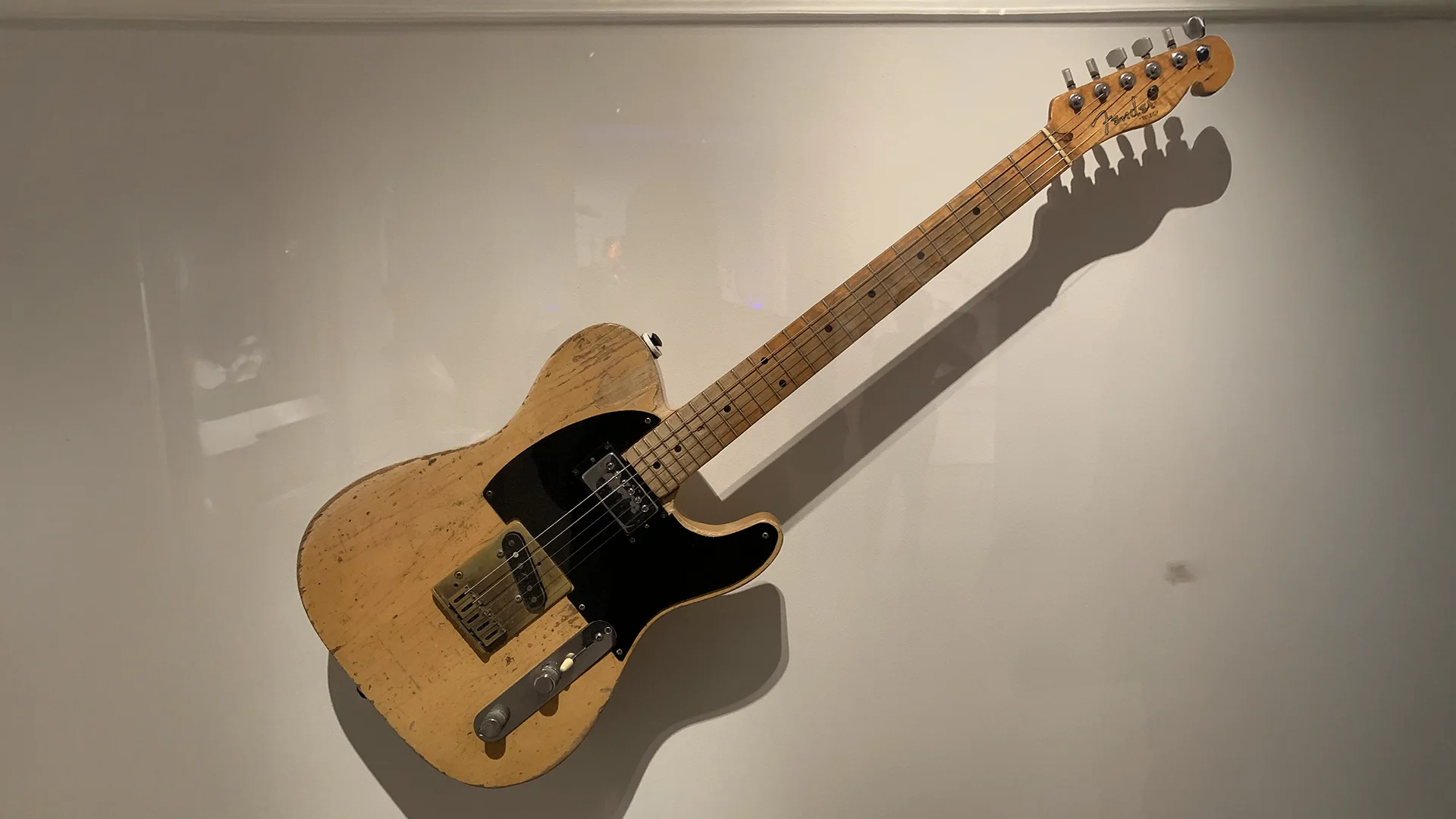
At its core, Micawber is a 1953 Fender Telecaster with a butterscotch blonde finish and a black pickguard. But this simple description hardly does justice to an instrument that has become legendary in rock circles. The guitar's origin story is almost as famous as the instrument itself.
According to rock lore, Eric Clapton gifted the 1953 Telecaster to Keith Richards around his 27th birthday, likely in late 1970 or early 1971, coinciding with the early recording sessions for the Rolling Stones' masterpiece album Exile on Main Street.
But why "Micawber"? The name comes from Wilkins Micawber, a character in Charles Dickens' novel David Copperfield known for his optimism despite constant financial troubles. This literary reference perfectly matches Richards' well-documented sense of humor and appreciation for English literature. Just as the character Micawber maintained hope that "something will turn up," Richards' Micawber has consistently delivered musical magic whenever needed.
The guitar has become such an icon that it's impossible to separate it from Richards' image and sound.
Keith Richards Telecaster Specs: Micawber’s Setup

While Micawber began life as a standard 1953 Telecaster, it has undergone numerous modifications over the decades to become the unique instrument it is today. Let's break down the specifics of what makes this guitar special.
Body
Micawber features the original 1953 ash body with its iconic butterscotch blonde finish. Over the years, the finish has worn significantly, especially on the top bout where Richards' playing has created natural "player relic" wear that no custom shop could authentically replicate. The guitar still sports its original black pickguard, though this too shows the signs of decades of use.
The ash body contributes significantly to Micawber's tone, providing a brightness and resonance that works perfectly with Richards' playing style.
Neck
The maple neck features the vintage 7.25" radius typical of early Fender instruments, with a V-profile that fits Richards' playing style perfectly. One interesting detail that guitar enthusiasts often note is the absence of the black inlay dot on the 17th fret, which is just one of many distinctive characteristics that make Micawber immediately identifiable.
The neck has remained remarkably stable despite decades of alternative tunings and international touring through various climates. This durability speaks to the quality of early Fender craftsmanship and perhaps a bit of luck that this particular instrument has withstood the test of time and rock and roll lifestyle.
Pickups
Perhaps the most significant modifications to Micawber involve its pickups. Originally equipped with standard Telecaster single-coils in both positions, Richards has transformed the guitar's electronics substantially:
Bridge Pickup: There has been considerable debate about exactly what pickup currently resides in Micawber's bridge position. Many sources believe Richards installed a Fender lap steel pickup, which would explain why it's held in by only two screws instead of the standard three. This modification likely contributes to the distinctive bite and twang that characterizes many Stones riffs.
Neck Pickup: Shortly after the Stones' 1972 tour, Richards replaced the original single-coil neck pickup with a 1950s Gibson PAF humbucker. What makes this modification even more interesting is that he installed it backwards, with the magnetic poles facing toward the tail end of the guitar rather than toward the neck as is conventional. This unusual orientation contributes to Micawber's unique tonal character, potentially adding unexpected harmonic content. Some speculate this was an intentional choice, while others suggest it might have been a happy accident during installation.
Bridge and Hardware
Micawber's bridge has been modified with brass saddles, replacing the original steel components. This change affects both tone and sustain, with brass generally thought to provide warmer tones and longer sustain than steel. The original three-saddle bridge configuration has been maintained, aligning with the guitar's vintage character.
Another significant hardware modification involves the tuning machines. The original tuners have been replaced with modern Sperzel locking tuners, which provide more reliable tuning stability. This upgrade makes practical sense given Richards' use of alternative tunings and the rigors of consistent touring.
Tuning and String Setup
Perhaps the most famous aspect of Micawber is how Richards has set it up for his preferred tuning. The guitar is almost exclusively played in Open G tuning (DGDGBD), but with a crucial modification: Richards removes the low E string entirely, turning Micawber into a five-string instrument.
This five-string Open G setup has become Richards' signature approach, allowing him to play those instantly recognizable riffs on songs like "Start Me Up" and "Brown Sugar."
Wiring
The exact details of Micawber's current wiring configuration remain somewhat mysterious, like many aspects of this legendary guitar. It's unclear whether Richards maintained a standard three-way switch setup or modified the electronics for custom blending options. What we do know is that the combination of the bridge pickup, the reversed PAF humbucker, and whatever wiring scheme is in place results in Micawber's distinctive voice.
The guitar's electronics have likely been serviced and potentially modified by various techs over the years, contributing to the instrument's evolution. In interviews, Richards has never been particularly forthcoming about the technical details of his instruments, preferring to focus on the music they help him create.
How Keith Uses Micawber

Richards has developed a unique relationship with Micawber, treating it as his primary instrument for certain sounds and styles. Understanding how he uses this guitar provides insight into his approach to music and his distinctive role within the Rolling Stones.
Open G Tuning
As Richards explained in a 2002 interview with Guitar World:
Most people used open tuning basically just for slide. Nobody used it for anything else. But I wanted to use it for rhythm guitar.
This approach transformed Richards' playing and, by extension, the Rolling Stones' sound. With Open G tuning, many chord shapes become simplified, allowing Richards to create driving rhythm patterns while freeing his fingers to add fills and embellishments. The tuning essentially turns the guitar into a different instrument, one perfectly suited to Richards' percussive style and the Stones' blues-rock foundations.
Signature Songs
Micawber has featured prominently on numerous Rolling Stones classics. Some of the most notable tracks where this guitar's distinctive voice can be heard include:
"Brown Sugar" - The instantly recognizable riff that opens this track showcases Micawber's ability to cut through a mix with clarity and attitude. The Open G tuning allows Richards to create a riff that's simultaneously rhythmic and melodic.
"Start Me Up" - Perhaps the quintessential Keith Richards Telecaster riff, the opening of "Start Me Up" demonstrates the perfect marriage of Micawber's tone with Richards' innovative approach to Open G tuning.
"Honky Tonk Women" - The country-tinged intro and the driving rhythm throughout this classic track bear all the hallmarks of Richards' Telecaster work.
"Before They Make Me Run" - This Some Girls track features Richards on lead vocals and prominently showcases his Telecaster tone and rhythmic sensibility.
Playing Style
Richards' approach to playing Micawber is as unique as the guitar itself. Rather than focusing on flashy lead work, he uses the instrument primarily for rhythm playing and signature riffs, creating what he calls the "ancient art of weaving" with fellow guitarist Ronnie Wood.
His technique often involves playing partial chords and leaving strings open to ring, taking full advantage of the Open G tuning. Richards' style is all about groove and feel rather than technical complexity, and Micawber's setup perfectly complements this approach. The five-string configuration encourages a focus on rhythm and allows Richards to use his thumb to fret the lower strings while his fingers handle the upper register.
Micawber’s Tone: What Makes It Sound Like Keith Richards

The sound of Micawber is instantly recognizable to Stones fans and guitar aficionados alike. It possesses a character that defies simple classification, combining elements that shouldn't theoretically work together but somehow coalesce into sonic perfection.
When Richards strikes Micawber's strings, what emerges is a woody twang with chewy mids, a top-end snap complemented by vintage warmth. It's simultaneously bright and rich, cutting and full. This seemingly contradictory tonal palette is precisely what makes Micawber such a perfect instrument for Richards' role in the Stones.
The Pickup Combination
A significant contributor to Micawber's unique voice is its unconventional pickup configuration. The bridge pickup (whether it's indeed a lap steel pickup or a modified Telecaster single-coil) delivers the characteristic Telecaster bite that allows Richards' riffs to slice through dense mixes.
Meanwhile, the reversed Gibson PAF humbucker in the neck position adds warmth and girth that a standard Telecaster typically lacks. This blend of Fender brightness and Gibson warmth creates a tonal hybrid that perfectly complements the Rolling Stones' fusion of blues, country, and rock influences.
The unusual orientation of the neck humbucker likely contributes unexpected harmonic content to the signal, as the pickup is sensing string vibrations from a different perspective than the manufacturer intended. This "happy accident" modification exemplifies Richards' intuitive rather than technical approach to his instruments.
The Material Difference
The combination of Micawber's ash body, maple neck, and brass bridge saddles further defines its sound. Ash provides a bright, resonant foundation with pronounced mids, while the maple neck adds snap and definition to the attack.
The brass saddles represent a significant departure from the original steel components, adding sustain and a smoother, warmer quality to the guitar's voice. Brass tends to mellow the sometimes harsh high end of a Telecaster while enhancing sustain, creating a more rounded sound that still maintains clarity.
Years of playing have also affected Micawber's tone. As wood ages and responds to decades of vibration, guitars often "open up" tonally.
The Five-String Factor
This modification also affects how the remaining strings vibrate and interact, as there's less overall tension on the neck. The result is a percussive clarity that makes Richards' parts function almost like a rhythm section instrument, bridging the gap between the drums and bass and the melodic elements of the Stones' arrangements.
The open G tuning further enhances this effect, as the open strings create natural drones and harmonics that enrich the tone.
The Open G Factor
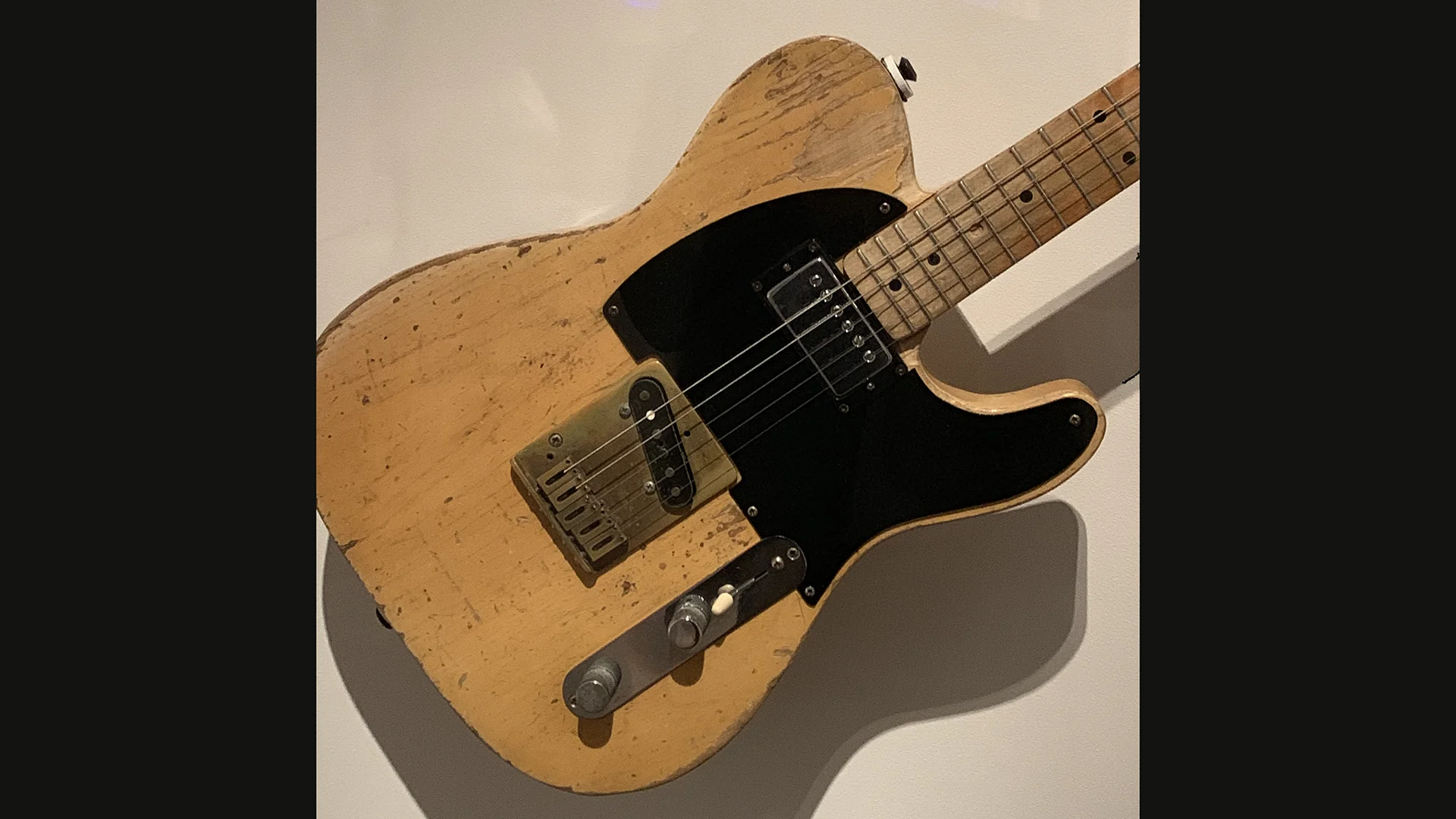
Open G tuning (DGDGBD) allows the guitar to sound a G major chord when strummed open without fretting any strings. While this tuning had been used in blues and particularly slide guitar playing before Richards adopted it, his application of it to create rhythm parts and iconic riffs was revolutionary.
Why Open G Works So Well
Open G tuning fundamentally changes the geography of the guitar neck, creating new possibilities while simplifying certain aspects of playing. For Richards, the tuning offered several advantages that perfectly suited his musical needs:
Simplified chord shapes: Many standard chord forms become accessible with just one finger in Open G.
Natural drone strings: The open D and G strings can ring while other notes change, creating a continuous harmonic foundation.
Intuitive root-fifth relationships: The repeating D-G pattern makes navigating the neck more intuitive for blues-based playing.
Perfect for hybrid picking: The tuning accommodates Richards' style of using his thumb to fret bass notes while fingers handle upper strings.
As Richards explained, the limitations of the tuning actually sparked creativity: "In a way that tuning kept me developing as a guitarist. 'Okay, now figure out a diminished sixth on it!' You've got so little to work with."
How Open G Changes Feel and Voicing
Playing in Open G fundamentally alters how chords voice and how the instrument responds to playing techniques. Standard chord shapes produce entirely different harmonies, leading to fresh musical ideas that might never emerge in standard tuning.
The removal of the lowest string creates a unique tonal foundation where chord voicings naturally emphasize their upper harmonics rather than root notes. This contributes to the distinctive sound of Richards' playing, where his parts often weave around the bass rather than doubling it.
The tuning also changes the physical feel of playing. String tension is different, responsiveness is altered, and certain techniques become easier while others become more challenging.
Richards' Approach to Open G
Richards' methodology with Open G typically involves playing moveable chord forms and using his freed-up fingers to add embellishments and fills. Rather than simply strumming open strings or playing slide (the typical applications of open tunings), he developed a sophisticated approach that combines rhythm and melodic elements.
His technique often involves muting certain strings while allowing others to ring, creating rhythmic patterns that drive songs forward. This percussive approach transforms the guitar from a purely melodic instrument into something closer to a rhythm section, perfectly complementing Charlie Watts' distinctive drumming style.
Richards frequently uses just two fingers to create complete musical parts, rolling a single finger across several strings to form chords while his other fingers add melodic touches.
Legacy and Influence

Few individual guitars have had as profound an impact on rock music as Micawber. Over more than five decades, this butterscotch Telecaster has helped shape the sound of the Rolling Stones and influenced generations of guitarists who followed in Richards' wake.
A Modder's Inspiration
Micawber has inspired countless guitar enthusiasts to modify their own Telecasters in pursuit of similar tones. The combination of a humbucker in the neck position with a bright bridge pickup has become a popular modification, sometimes referred to as a "Keith-style" setup in guitar circles.
The guitar's influence can be seen in numerous signature models and replicas offered by both Fender and boutique builders. While the original Micawber is inimitable due to its history and the wear patterns that come from decades of use, its basic template has proven endlessly inspiring to guitarists seeking to capture some of Richards' magic.
Guitar manufacturers now regularly offer brass saddle upgrades for Telecasters, a modification popularized in part by Richards' use of them on Micawber. Similarly, the popularity of Open G tuning among rock guitarists owes much to Richards' pioneering use of it with this guitar.
Micawber on Tour
For over 50 years, Micawber has remained a staple in Richards' live rig, appearing on virtually every Rolling Stones tour since the early 1970s. This remarkable longevity speaks to both the durability of vintage Fender construction and the special connection Richards feels with this particular instrument.
On stage, Micawber typically handles specific songs in the Stones' set, particularly those recorded with it originally. The guitar has been present for countless iconic live performances, from massive stadium shows to intimate venues, becoming an instantly recognizable visual symbol of the band almost as famous as the lips logo.
Cultural Impact
Beyond its musical significance, Micawber has achieved a cultural status that transcends guitar enthusiasm. The image of Richards playing this worn Telecaster has appeared on magazine covers, tour posters, and merchandise, becoming an instantly recognizable icon in rock history.
Micawber stands alongside instruments like B.B. King's "Lucille," Willie Nelson's "Trigger," and Eric Clapton's "Blackie" as guitars that have transcended their status as mere tools to become characters in music history. Like those other famous instruments, Micawber has a personality and history that makes it more than the sum of its parts.
How to Get the Micawber Sound
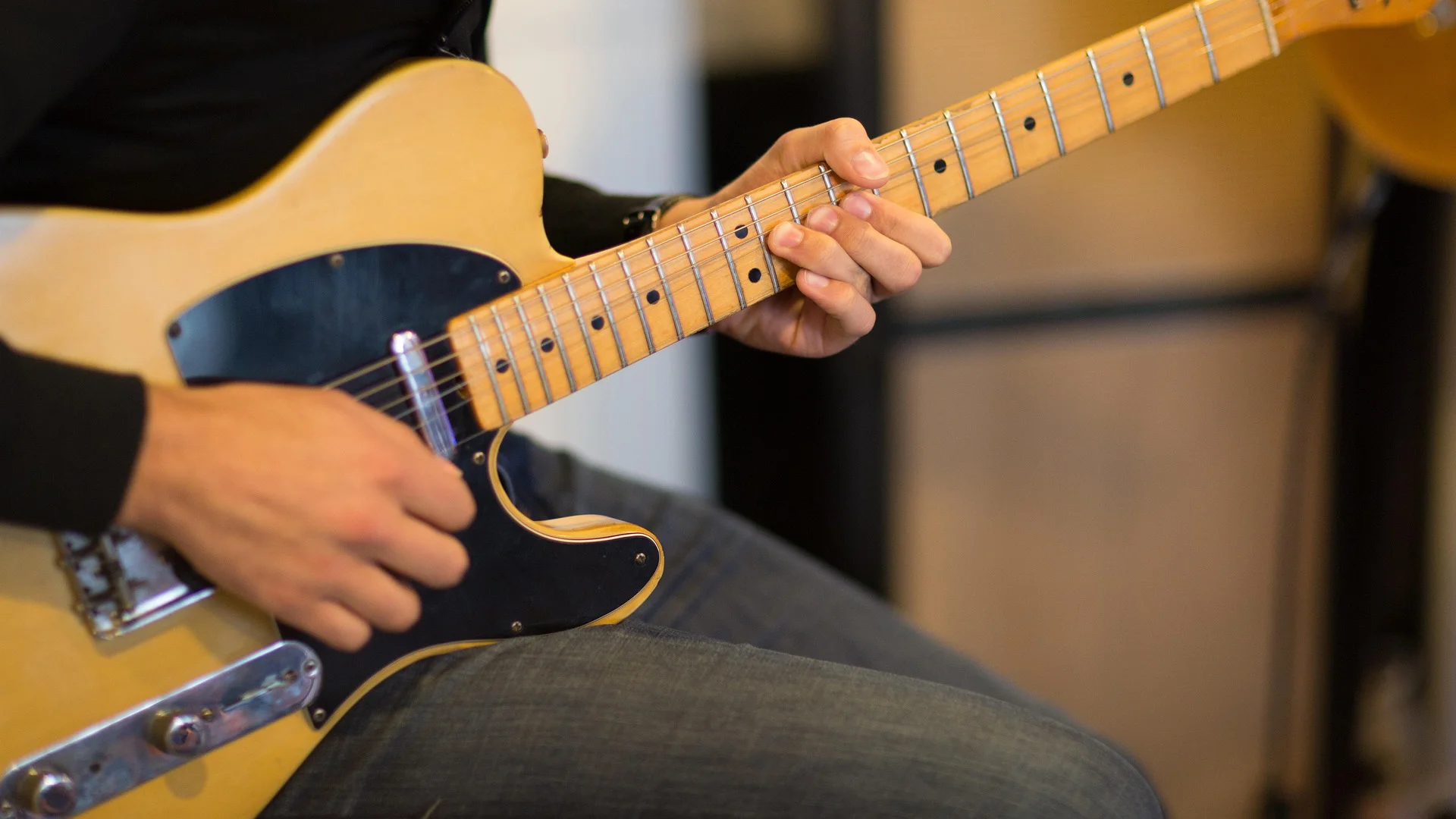
While no guitar setup can perfectly replicate the magic of the original Micawber (which has decades of playing, modifications, and history behind it), it's definitely possible to get into the tonal ballpark. Creating a Micawber-inspired guitar involves both hardware choices and playing approach.
The Guitar
Start with a Telecaster featuring an ash body and maple neck. While vintage instruments have their own special character, many modern Telecasters can serve as excellent platforms for a Micawber-inspired guitar.
Look for a guitar with a 7.25" fingerboard radius to match the vintage feel of Richards' instrument. The vintage-style radius contributes significantly to the playing experience, affecting everything from chord shapes to bending technique.
For maximum authenticity, a butterscotch blonde finish over ash provides both the look and tonal characteristics closest to the original.
Pickup Configuration
Install a Gibson-style humbucker in the neck position. For full Richards authenticity, angle it slightly and consider experimenting with reverse mounting, though this requires some technical knowledge to implement properly.
Maintain either the stock bridge pickup or consider a lap steel pickup if you're willing to modify your instrument more extensively. The key is achieving a bright, cutting bridge pickup tone that contrasts with the warmer neck position.
Wiring can remain standard with a three-way switch, though some players opt for additional switching options to blend the pickups or access different tonal variations.
Hardware Modifications
Replace standard saddles with brass alternatives, which are readily available from numerous aftermarket suppliers. This modification affects both tone and sustain, contributing to the characteristic warmth of Richards' sound.
Consider upgrading to locking tuners similar to the Sperzel units on Micawber. While not essential for tone, they provide tuning stability that's particularly helpful when using alternative tunings.
Strings and Tuning
For the full experience, set up for five-string Open G tuning by removing the low E string and tuning the remaining strings to DGDGB (from low to high). Use medium-gauge strings for the appropriate tension in this tuning.
If removing a string seems too radical, you can still tune to Open G with all six strings (DGDGBD), though you'll miss some of the percussive character that defines Richards' approach.
Amplification
Richards has used various amps throughout his career, but certain choices will get you closer to his classic tone:
- Fender Twin Reverb: The clean headroom and bright character of a Twin provide an excellent foundation for a Richards-style sound.
- Tweed-style amps: For a warmer, more vintage tone, smaller tweed amps like a Deluxe or Bassman can deliver excellent results.
- Mesa/Boogie: Richards has used Mesa amps for added punch and sustain, particularly in stadium settings.
The key with amplification is sufficient clean headroom to let the guitar's natural voice shine through. Richards generally prefers a relatively clean amp tone as the foundation, letting his playing dynamics and the guitar's natural character provide the expressiveness.
Effects
Richards' approach to effects is minimal, particularly when playing Micawber. For the most authentic sound, consider:
- A subtle boost pedal (like an Xotic EP Booster) to push the amp without coloring the tone too much.
- Light compression to enhance sustain and even out dynamics for rhythm playing.
- Minimal reverb, either from the amp or a simple reverb pedal, just to add dimension.
The most important aspect of Richards' tone comes from his hands and his approach to the instrument rather than from extensive effects. Focus on playing technique and guitar setup before adding effects to the chain.
FAQ Section

Why does Keith Richards remove the low E string?
Richards removes the low E string when playing in Open G tuning to eliminate potentially muddy low frequencies and focus on the midrange where his guitar parts typically sit in the Stones' mix. This modification also prevents accidentally hitting the low string when playing chord shapes in Open G, resulting in cleaner rhythm parts. The five-string setup forces a focus on the essential notes, contributing to Richards' distinctive, economical playing style.
What year is Micawber?
Micawber is a 1953 Fender Telecaster. This makes it an early example of the model, produced just a few years after the Telecaster's introduction in 1950 (when it was briefly known as the Broadcaster). The early 1950s Telecasters are particularly prized for their build quality and tonal characteristics.
What pickups are in Micawber?
Micawber features a bridge pickup that may be a Fender lap steel pickup or a modified Telecaster pickup, identifiable by its mounting with only two screws. In the neck position, Richards installed a 1950s Gibson PAF-style humbucker, unusually mounted with the pole pieces facing toward the bridge rather than the neck. This unique combination contributes significantly to Micawber's distinctive tone.
Why is it called Micawber?
Richards named the guitar after Wilkins Micawber, a character in Charles Dickens' novel "David Copperfield." Micawber is known for his optimistic outlook despite constant financial troubles, famously declaring that "something will turn up." The name reflects Richards' well-documented interest in literature and his characteristic humor.
Can I buy a Micawber replica?
While Fender has produced various Keith Richards signature Telecaster models over the years that incorporate some features of Micawber, there is no exact commercial replica that precisely matches all of the original's specifications and modifications. Several custom builders offer Micawber-inspired instruments, and many guitarists create their own versions by modifying standard Telecasters with similar pickups, brass saddles, and five-string setups.
Conclusion

Micawber is far more than just a guitar; it's a voice that has helped shape the sound of rock music for over five decades. This humble Telecaster, transformed through thoughtful modifications and played with Richards' distinctive approach, has become one of the most recognizable instruments in music history.
For guitarists looking to understand the essence of the Rolling Stones' sound, studying Micawber provides invaluable insights. The Open G tuning, the five-string configuration, and the unique pickup combination all contribute to a sound that prioritizes groove and feel over complexity. Richards found a way to make limitation a strength, focusing on what the instrument does best rather than trying to make it something it's not.
For Stones fans, vintage guitar enthusiasts, and musicians interested in exploring alternative approaches to the instrument, Micawber remains an endless source of inspiration. Its legacy is secure not in a museum display case but in the countless recordings it has appeared on and the generations of guitarists who have been influenced by its distinctive voice.
Ultimately, Micawber reminds us that the greatest instruments are the ones that inspire creativity and facilitate personal expression.
About the authors
Michael R. Pierce is the co-founder of Equipboard and a lifelong musician with over 25 years of experience as a guitarist and gear enthusiast. He blends solid music theory chops (thanks to formal training in guitar, piano, and trumpet) with real-world experience, always exploring and experimenting across genres like rock, blues, and hip-hop. Michael launched Equipboard in 2013 after graduating from The University of Texas at Austin, leveraging his unique blend of musical passion, technological acumen, and community building. His current go-to rig features a Fender American Original ‘50s Telecaster, Analogman King of Tone, Strymon Flint, and a Fender ‘57 Custom Champ. Read more




.webp)




.webp)