The Untold Story of Marshall Amps: From Drum Shop to Rock Icon

By Gear Experts
By Gear Experts
Table of Contents

Equipboard
Equipboard is the world's largest community of artists and their gear. Read our review process.
We are reader-supported. When you buy through links on our site, we may earn an affiliate commission. Learn more.
When you think of rock 'n' roll, chances are you conjure up images of leather-clad guitarists wielding their axes in front of a wall of Marshall amplifiers. That iconic stack of speakers, crowned with the gold Marshall logo, has become synonymous with rock music itself.
But how did a small drum shop in London become the amplifier of choice for some of the world's greatest guitarists? Let's crank it up to 11 and dive into the fascinating history of Marshall amps.
The Birth of a Legend: Jim Marshall and the Early Days
From Drummer to Amp Pioneer
Our story begins with a man named Jim Marshall. Born in London in 1923, Jim was a drummer and drum teacher who opened a music shop in 1960. Located at 76 Uxbridge Road in Hanwell, London, "Jim Marshall and Son" initially specialized in drums and accessories.
However, Jim soon noticed that many of his customers were guitarists looking for a particular sound they couldn't find in existing amplifiers.
The Quest for the "Marshall Sound"
In 1962, Jim decided to venture into the world of amplifier manufacturing. He assembled a team of engineers, including Ken Bran and Dudley Craven, to create an amplifier that would give guitarists the sound they were craving. The result was the JTM45, Marshall's first amplifier, which hit the market in 1963.
The JTM45 was inspired by the Fender Bassman, an American amp popular among blues guitarists. However, Marshall's version featured crucial modifications that would define the "Marshall sound":
- Different valves (tubes) were used, including KT66 output tubes instead of 6L6s.
- The speaker cabinet was closed-back, as opposed to the Bassman's open-back design.
- The speakers themselves were different, using Celestion speakers instead of Jensen.
These changes resulted in a tighter, more aggressive sound that would soon become the cornerstone of rock music.
The Golden Age: Marshall's Rise to Rock Royalty
The "Marshall Stack" Takes Center Stage
As rock music evolved and venues grew larger, guitarists needed more power and volume. In response, Marshall introduced the iconic "stack" configuration in 1965. This consisted of a 100-watt head sitting atop two 4x12 speaker cabinets (each containing four 12-inch speakers).
The Marshall stack quickly became a visual and sonic icon of rock music. Bands like The Who and Cream adopted the setup, with Pete Townshend and Eric Clapton helping to cement Marshall's reputation as the amplifier for serious rock guitarists.
The JMP Series and the Birth of Hard Rock
In 1967, Marshall introduced the JMP series, which would become one of their most famous and influential lines. The JMP (which stood for Jim Marshall Products) amps were known for their increased gain and sustain, characteristics that would help shape the sound of hard rock and early heavy metal.
Legendary guitarists like Jimi Hendrix, Jimmy Page, and Ritchie Blackmore all used JMP amps to create their groundbreaking sounds. The signature Marshall "crunch" offered by this setup became an integral part of rock music's DNA.
Signature Sounds: Marshall's Most Iconic Amplifiers
The Marshall Plexi: The Sound of the '60s and '70s
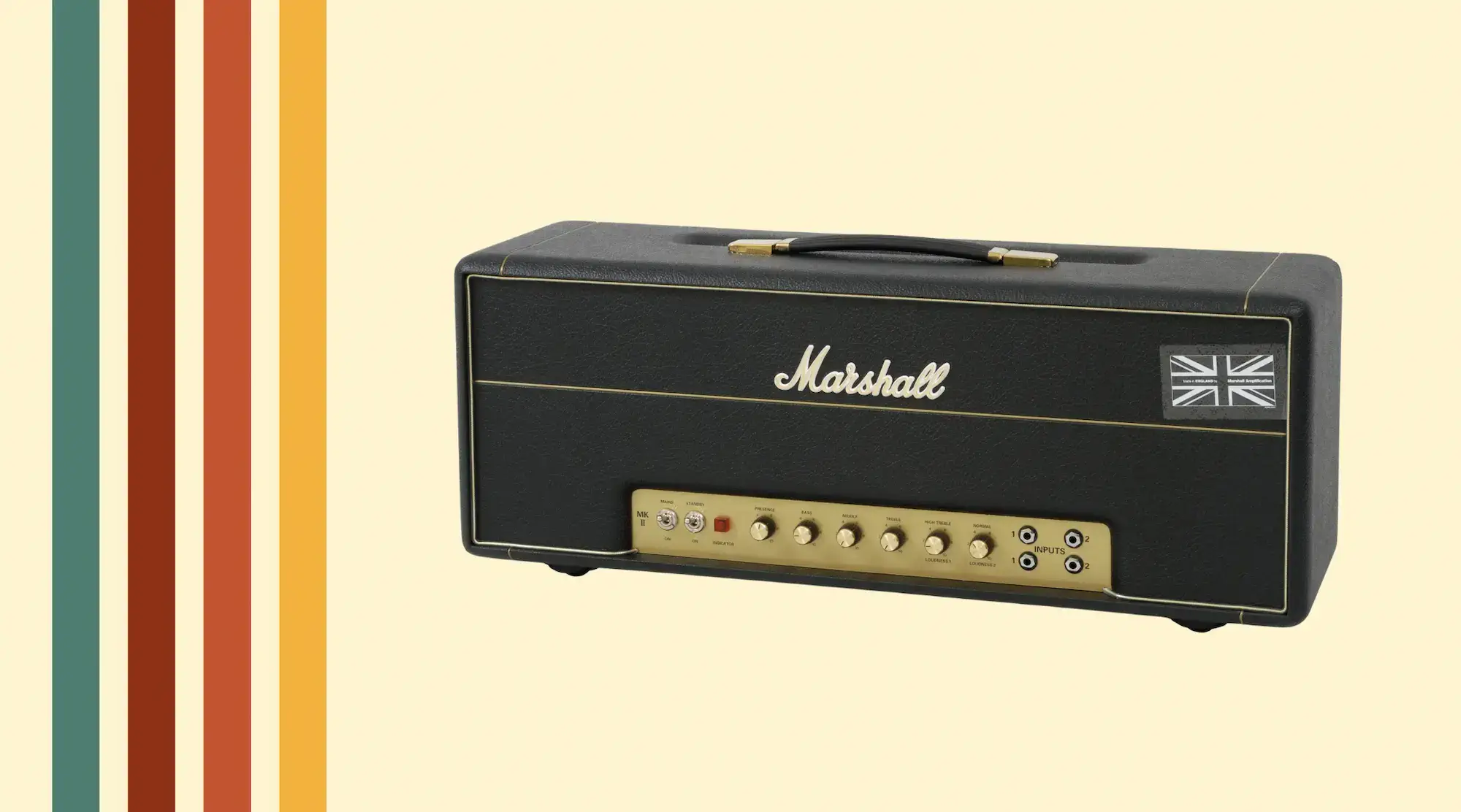
Perhaps the most revered of all Marshall amps is the "Plexi." Named for its plexiglass front panel, the Plexi was produced from 1965 to 1981. It's best known for its warm, rich overdrive when pushed to high volumes.
The Plexi's sound can be heard on countless classic rock recordings, from Led Zeppelin's "Whole Lotta Love" to AC/DC's "Back in Black." Its ability to go from clean to crunchy to full-on distortion with just a twist of the guitar's volume knob made it incredibly versatile and beloved by guitarists.
Key features of the Plexi include:
- 50 or 100-watt models
- KT66 or EL34 power tubes
- 4 inputs (2 channels with high/low sensitivity)
- No master volume control (volume is controlled by preamp gain)
The Plexi's lack of a master volume meant that to achieve its signature overdrive, it needed to be played at high volumes. This contributed to the loud, powerful sound of rock concerts in the late '60s and '70s.
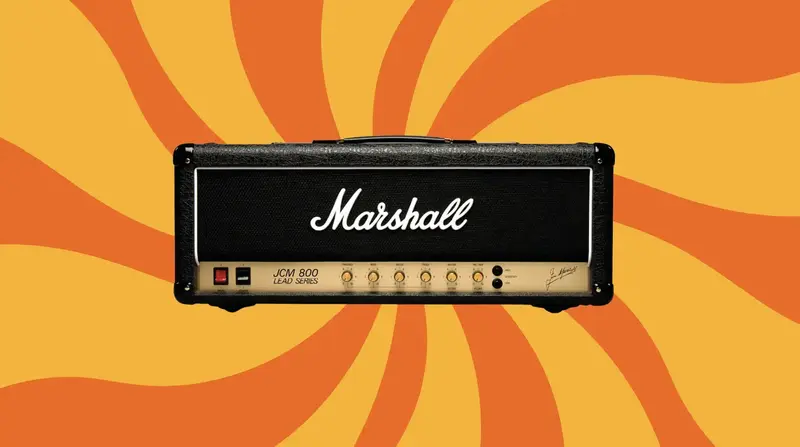
The JCM800: The Sound of the '80s
As rock music evolved into harder and heavier territory in the 1980s, Marshall responded with the JCM800 series. Introduced in 1981, the JCM800 offered more gain and a tighter low-end response than its predecessors.
The JCM800 became the amp of choice for hair metal bands and shred guitarists. Its aggressive sound can be heard on albums by Guns N' Roses, Slayer, and countless other '80s rock and metal acts.
Key features of the JCM800 include:
- Master volume control (allowing for high-gain sounds at lower volumes)
- Presence control for fine-tuning high frequencies
- Available in various wattages (50W, 100W, 2203, 2204 models)
- Both single-channel and dual-channel versions
The addition of a master volume control was a game-changer, allowing guitarists to achieve high-gain sounds without the need for ear-splitting volume levels. This made the JCM800 more versatile in studio settings and smaller venues.
The Marshall Silver Jubilee: A Collector's Dream
To celebrate Jim Marshall's 25th year in the amp business, Marshall released the Silver Jubilee series in 1987. These amps, with their distinctive silver covering, offered a unique tonal palette that combined elements of the Plexi and JCM800 sounds.
While only produced for a single year, the Silver Jubilee has become one of the most sought-after Marshall amps. Slash of Guns N' Roses famously used a Silver Jubilee, contributing to its legendary status.
Key features of the Silver Jubilee include:
- Switchable output power (100/50/25 watts)
- Pull-out gain boost
- Series effects loop
- Distinctive silver vinyl covering and chrome-plated chassis
The Silver Jubilee's versatility and unique sound made it a favorite among professional guitarists. Its limited production run has made it a highly prized collector's item.
The JCM2000: Y2K-Ready Rock
As the new millennium approached, Marshall introduced the JCM2000 series in 1997. This series aimed to combine the best features of its predecessors with modern amenities that guitarists were demanding.
Key features of the JCM2000 include:
- Dual channel design (Clean/Crunch and Lead)
- Multiple voicing options per channel
- Digital reverb
- Series/parallel effects loop
- Available in various models (DSL and TSL)
The JCM2000 series, particularly the DSL100 model, became popular with a new generation of rock and metal bands. Its versatility allowed it to cover everything from vintage Marshall tones to modern high-gain sounds.
The JVM Series: The Modern Marshall
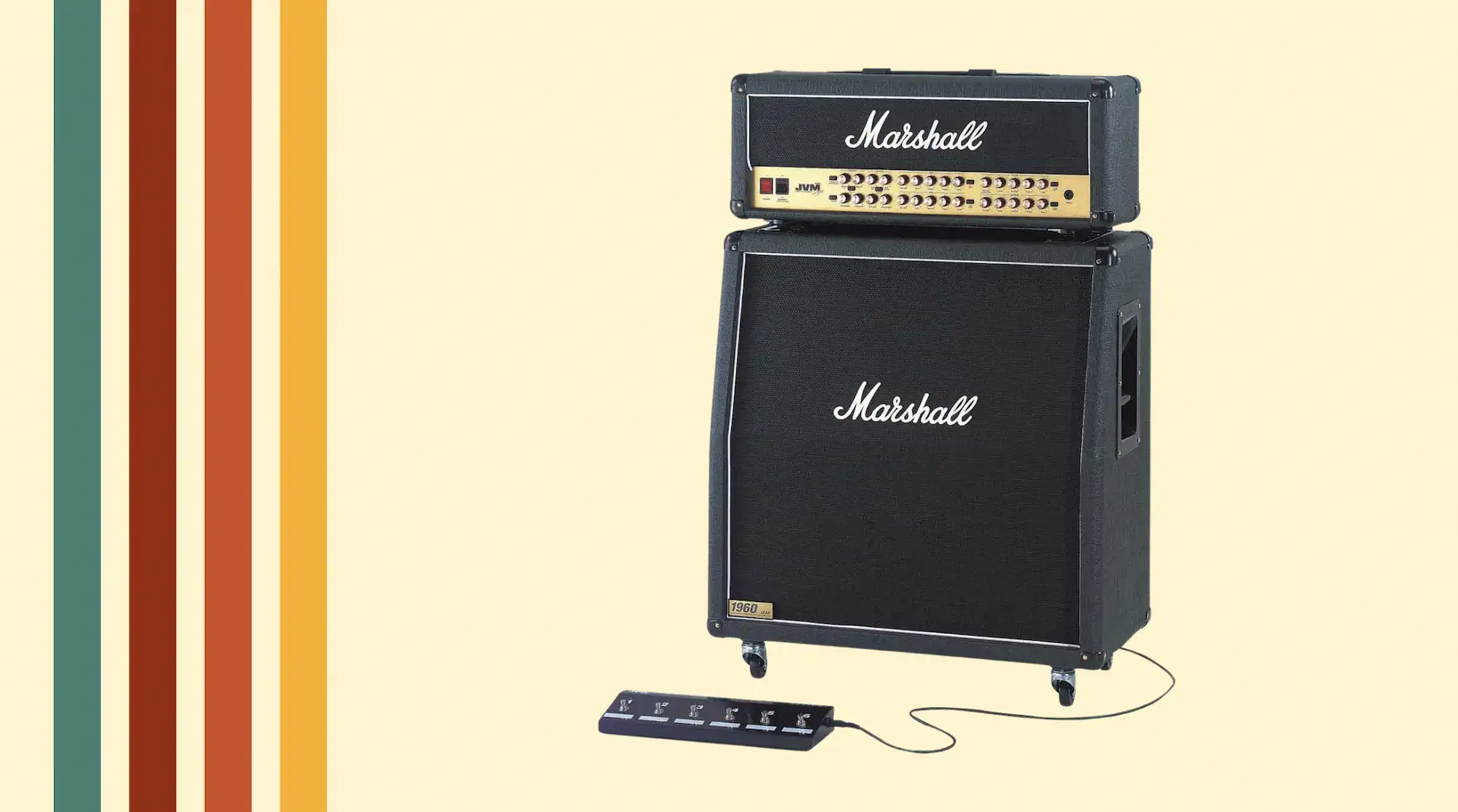
Introduced in 2007, the JVM (Jim Vincent Marshall) series represents Marshall's modern flagship amplifier line. These amps offer unprecedented versatility and control, aiming to provide every Marshall tone from a single amplifier.
Key features of the JVM series include:
- Four channels with three modes each (12 distinct voices)
- Programmable memory for channel settings
- Digital reverb with level control for each channel
- Mid-shift button for additional tonal options
- MIDI switching capability
The JVM series has been adopted by many contemporary guitarists who need a wide range of tones in a single amp. It's capable of producing everything from vintage Plexi sounds to modern high-gain tones.
Innovation and Adaptation: Marshall in the Modern Era
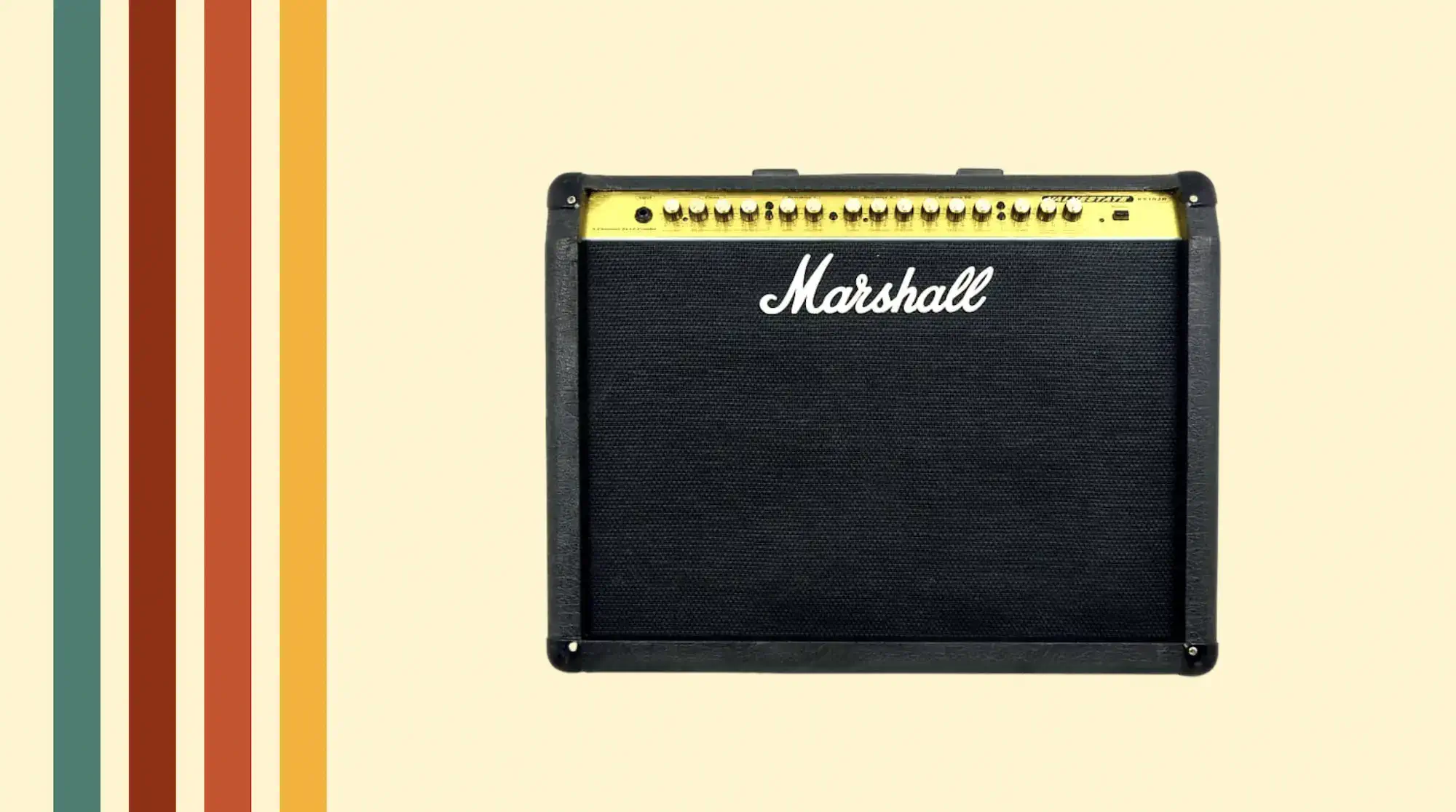
Solid-State and Modeling Amps
While Marshall built its reputation on tube amplifiers, the company has also embraced new technologies. In the 1980s and 1990s, Marshall introduced solid-state amplifiers like the Lead 12 and the Valvestate series, which combined transistor preamps with tube power amps.
More recently, Marshall has entered the world of digital modeling amplifiers with lines like the CODE series. These amps use digital technology to emulate the sounds of classic Marshall amps and effects, offering versatility and convenience for modern guitarists.
Collaborations and Signature Models
Marshall has also collaborated with famous guitarists to create signature amplifiers. Some notable examples include:
- The Slash Signature JCM2555SL: Based on the Silver Jubilee, this amp captures Slash's iconic tone.
- The Yngwie Malmsteen Signature YJM100: A 100-watt all-valve head with built-in booster and noise gate.
- The Joe Satriani Signature JVM410HJS: A modified version of the JVM410H with unique voicing options.
These collaborations have allowed Marshall to cater to the specific needs of professional guitarists while giving fans the opportunity to own amps with the exact specifications of their heroes.
The Marshall Legacy: More Than Just Amplifiers
Marshall Records and Live Music Venues
In recent years, Marshall has expanded beyond amplification. In 2016, the company launched Marshall Records, a record label aimed at supporting up-and-coming rock bands. They've also opened music venues, such as Marshall Arena in Milton Keynes, furthering their commitment to live music.
Marshall Headphones and Speakers
Recognizing the power of their brand, Marshall has also entered the consumer audio market. They now produce a range of headphones and Bluetooth speakers that carry the Marshall name and aesthetic, bringing the company's rock 'n' roll heritage to a wider audience.
Bands and Artists Known for Using Marshall Amps
Marshall amplifiers have been the choice of countless legendary musicians across various genres. Here's a look at some of the most notable artists associated with Marshall amps and the specific models they've used:
The Who
Pete Townshend, known for his powerful power chords and windmill strumming, was an early adopter of Marshall amps. He famously used a wall of Marshall stacks, contributing to The Who's reputation as one of the loudest bands in rock history. Townshend primarily used Marshall Super Lead 100-watt heads with 4x12 cabinets.
Jimi Hendrix
Hendrix's revolutionary guitar playing was amplified through Marshall amps, specifically the JTM45/100 and later the Marshall Super Lead 100. His use of Marshall amps at high volumes, combined with his innovative playing techniques, helped define the psychedelic rock sound of the late 1960s.
Eric Clapton
During his time with Cream, Clapton used Marshall amps to achieve his thick, sustaining "woman tone." He primarily used Marshall JTM45 2x12 combos and later Marshall Plexi heads with 4x12 cabinets.
Jimmy Page (Led Zeppelin)
Page used various Marshall amps throughout his career with Led Zeppelin. He famously used a Marshall SLP-1959 Super Lead, which contributed to the massive guitar sound on Led Zeppelin's albums and live performances.
Slash (Guns N' Roses)
Slash is perhaps most associated with the Marshall Silver Jubilee. He used this amp on Guns N' Roses' landmark album "Appetite for Destruction" and has continued to use Marshall amps throughout his career. He now has his own signature model based on the Silver Jubilee.
AC/DC
Angus and Malcolm Young's chunky, high-energy riffs were powered by Marshall amps. They primarily used Marshall Plexi Super Lead 100-watt heads, which were essential in crafting AC/DC's signature sound.
Eddie Van Halen
While Van Halen was known for heavily modifying his equipment, he often used Marshall amps as the base for his tone. He used Marshall Plexi and JMP models, often with added modifications to achieve his unique sound.
Zakk Wylde (Ozzy Osbourne, Black Label Society)
Wylde is known for his use of Marshall JCM800 2203 amps, which he pairs with his signature overdrive pedal to achieve his distinctive pinch harmonic-laden tone [17].
Joe Satriani
The virtuoso guitarist has used various Marshall amps throughout his career, including the JVM series. He now has his own signature model, the JVM410HJS, which is tailored to his specific tonal requirements.
Kerry King (Slayer)
King's aggressive, fast playing style in Slayer was amplified through Marshall JCM800 amps, contributing to the development of the thrash metal sound.
Yngwie Malmsteen
The neoclassical shred guitarist is known for his use of Marshall amps, particularly his signature YJM100 model, which is based on the classic Plexi design but with modern features added.
These artists, among many others, have not only used Marshall amps to craft their signature sounds but have also contributed to the evolution of the amps themselves. Their feedback and requirements have often led to new features and models, helping Marshall stay at the forefront of amplifier technology while maintaining their classic rock heritage.
Conclusion: The Enduring Impact of Marshall
From its humble beginnings in a London drum shop to its status as a global music icon, Marshall has played an integral role in shaping the sound of rock music. The company's willingness to listen to musicians and adapt to changing musical styles has kept it at the forefront of amplification technology for over half a century.
Whether it's the warm crunch of a Plexi, the high-gain roar of a JCM800, or the versatility of their modern digital amps, Marshall continues to provide the tools that guitarists need to express themselves. The long list of legendary artists who have relied on Marshall amps to craft their signature sounds is a testament to the company's impact on popular music.
So, the next time you see that iconic script logo or hear that unmistakable crunch, remember you're not just witnessing a piece of equipment, you're experiencing a piece of rock 'n' roll history. Long live Marshall, long live rock 'n' roll!
Top Ranked Guitar Amplifiers on Equipboard
-m.webp?v=1785063948)

$159.00 - $229.99
4.0 (1)
4.0 (1)

$729.00 - $1,099.00
5.0 (49)
5.0 (49)


About the authors
Juan Spinelli is a multi-instrumentalist musician, but more of a guitarist than anything else. Based in Buenos Aires, Argentina, he started playing at a very early age and learned various instruments such as flute, clarinet, percussion, didjeridoo, cavaquinho, bass and more. Today, he also works as a music producer and sound engineer, collaborating in several projects in his city and with artists from all over the world. Read more