Table of Contents

Equipboard
Equipboard is the world's largest community of artists and their gear. Read our review process.
We are reader-supported. When you buy through links on our site, we may earn an affiliate commission. Learn more.
When Leo Fender introduced his first amplifier in 1948, he likely never imagined he was launching what would become one of the most influential series of guitar amplifiers in music history. For over seven decades, Fender amplifiers have shaped the sound of modern music, from the earliest days of rock and roll through blues, country, and virtually every genre that followed.
Fender amplifiers are sonic landmarks that have defined entire musical movements. The story of these amplifiers parallels the evolution of popular music itself. What makes them particularly fascinating is how each era brought its own distinct character. From the raw, dynamic tones of the tweed models to the pristine cleans of the blackface series, each period represents a unique chapter in guitar amplification.
Understanding these different eras isn't just about historical appreciation. For modern guitarists, it provides invaluable insight into finding the right sound. Whether you're chasing the warm overdrive of a vintage Deluxe or the headroom of a Twin Reverb, knowing the characteristics of each period helps navigate both vintage and modern options.
The Birth of a Legend: The Tweed Era (1948-1960)

In the winter of 1948, out of a small California workshop, Leo Fender released an amplifier covered in the same sturdy tweed cloth used for luggage. These early designs, born from radio repair experience and practical engineering, would revolutionize the sound of popular music.
The Tweed Philosophy
Tweed-era amplifiers embodied elegant simplicity in their design. Built on simple circuits with minimal components, these amps produced rich, dynamic tones that became more complex as they were pushed harder. The magic lay in their interactive nature - volume, tone, and guitar controls all worked together in a musical dance that gave players unprecedented control over their sound.
The Champ
The 5-watt Champ became one of the most recorded amplifiers in history. Its single-ended design and 8-inch speaker created a focused, immediate sound that engineers loved. The earliest models used an octal 6SC7 preamp tube, while later versions switched to the miniature 12AX7, subtly changing the amp's character. Despite its humble size, the Champ's ability to produce rich overdrive at manageable volumes made it a studio staple for countless classic recordings.
The Princeton
Building on the Champ's foundation, the Princeton added a tone control and push-pull output stage. The 5F2-A Princeton became particularly sought after, offering 12 watts through a 10-inch speaker. Its larger output transformer and additional preamp gain stage created a fuller sound while maintaining excellent touch sensitivity. The Princeton struck a perfect balance between power and controllability.
The Deluxe
The 5E3 Deluxe is perhaps the most revered Tweed circuit. Its 15 watts and unique parallel/cathode-follower preamp design created an incredibly dynamic response. At lower volumes, it delivered warm, full-bodied clean tones. When pushed, it produced rich, harmonically complex overdrive that cleaned up beautifully with guitar volume adjustments. The internal circuit design allowed for unique interaction between the instrument volume and both of the amp's volume controls, creating a remarkably expressive range of tones.
The Professional Series
The Super, Pro, and Bandmaster models shared similar circuits but offered different speaker configurations. The Super combined a pair of 10-inch speakers with around 30 watts of power. The Pro used a single 15-inch speaker, while the Bandmaster employed three 10-inch speakers, each creating distinct sonic signatures. These amps provided enough power for larger venues while maintaining the organic compression and overdrive characteristics of their smaller siblings.
The Legendary Bassman
The 5F6-A Bassman became one of the most influential guitar amplifiers ever created. Its 40-watt output section and four 10-inch speakers delivered exceptional clarity and power. The presence control and complex preamp topology offered unprecedented tonal flexibility. This circuit would later inspire Jim Marshall to create his first amplifiers, essentially birthing the "British sound." The Bassman's distinctive feature set included separate bass, treble, and middle controls, along with two channels that could be optionally jumpered together for additional tonal options.
Studio and Stage Stories
Neil Young's iconic lead tone came from a Tweed Deluxe, most famously heard on "Cinnamon Girl" and "Down By The River." Eric Clapton's work on the Blues Breakers with Eric Clapton album showcased a Tweed Bassman pushed to perfection. Billy Gibbons crafted ZZ Top's early tones through a Tweed Deluxe, while Keith Richards relied on a Tweed Champ for many classic Rolling Stones recordings.
Evolution Begins: The Brownface & Blonde Era (1959-1964)
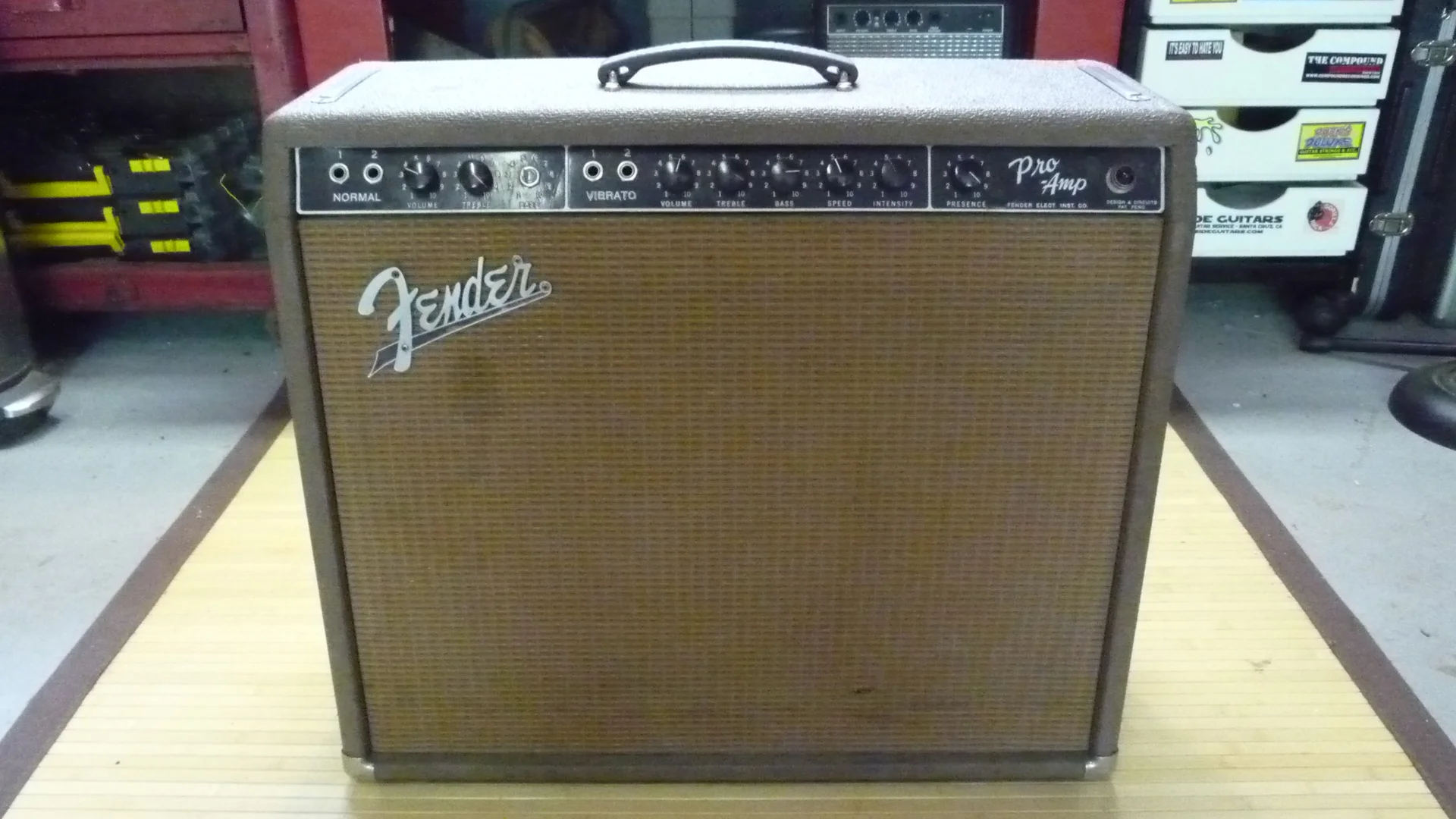
As rock and roll gained momentum, Fender began refining their amplifier designs with features that would shape the future of guitar tone. This brief but significant period bridged the raw character of Tweed amps with more sophisticated designs.
Technical Innovations
The most significant development was the introduction of the long-tailed pair phase inverter circuit, which increased headroom and provided tighter bass response. Fender also debuted their complex harmonic vibrato circuit during this period - a sophisticated modulation effect far more nuanced than traditional tremolo. This true pitch-shifting vibrato became highly sought after, particularly in the Vibrolux and Concert models.
The Blonde Bassman
The Blonde Bassman was a significant evolution from its Tweed predecessor. While maintaining the basic 4x10 speaker configuration, it featured revised circuitry that produced tighter bass response and increased headroom. The piggyback head and cabinet design became standard, setting a trend that many manufacturers would follow. These amps found particular favor with early rock and roll players who needed more clean headroom than Tweed models provided.
The Brown Deluxe
The Brown Deluxe refined the beloved Tweed Deluxe platform with several crucial updates. Its 6G3 circuit introduced a more sophisticated tone stack and phase inverter, resulting in improved clean headroom while maintaining excellent overdrive characteristics. The distinctive brown tolex covering and wheat grille cloth gave these amps their signature appearance. The output remained at around 15 watts, but the overall response became more focused.
The Concert Series
Fender's Concert amplifier represented their most ambitious design to date. The 6G12 Concert featured four inputs, complex tone-shaping options, and the new harmonic vibrato circuit. This 40-watt amp delivered exceptional clean headroom and became particularly popular with country players. The brown tolex Concert series also included the rare and desirable "Professional" model with additional features.
The Birth of Reverb
In 1961, Fender introduced the Vibroverb - their first amplifier to feature on-board reverb. This innovation would become a standard feature on future Fender amps and helped define the signature "wet" sound of surf music. The reverb circuit, designed by Dick Dale in collaboration with Fender, used a tube-driven spring reverb tank that produced a distinctively deep, splashing effect.
The Princeton Evolution
The Princeton received significant updates during this period. The 6G2 Princeton circuit retained much of its predecessor's character but added refined touch sensitivity and improved bass response. The later Brown Princeton featured the new long-tailed pair phase inverter, providing additional headroom while maintaining the amp's perfect balance of power and portability.
Notable Recordings and Players
Dick Dale's revolutionary surf guitar tone came from pushing these amps to their limits, particularly evident on "Misirlou." The Beach Boys' early recordings showcase the harmonic vibrato circuit's distinctive sound. Roy Orbison used a Blonde Bassman to craft his signature clean tone, while Johnny Cash's Tennessee Three relied on Brownface amps for their distinctive sound. James Burton's early work with Ricky Nelson demonstrated how these amps could deliver both twang and warmth.
The Golden Age: Blackface Era (1963-1967)

In 1963, Fender introduced what would become their most celebrated amplifier line. The Blackface series established the benchmark for professional guitar amplification, creating a template that manufacturers still follow today.
Circuit Design Philosophy
Fender completely redesigned their preamp and tone stack during this period. The new circuit featured a scooped midrange response, delivering pristine highs and tight bass with reduced middle frequencies. This created unprecedented clarity and headroom, while the tube rectifier models maintained natural compression when pushed. Each model incorporated a refined negative feedback circuit that tightened the low end and added headroom without sacrificing musicality.
The Twin Reverb
The 85-watt Twin Reverb became Fender's flagship amplifier. Using four 6L6 power tubes and dual 12-inch speakers, it delivered massive clean headroom with remarkable clarity. The AB763 circuit included separate Normal and Vibrato channels, each with dual inputs for different gain levels. The Twin's reverb and tremolo set industry standards, while its massive transformers provided exceptional dynamic response. Later "Master Volume" versions attempted to tame the Twin's substantial output for smaller venues.
The Deluxe Reverb
Perhaps the most recorded amp in history, the Deluxe Reverb struck a perfect balance of power, size, and tone. Its 22-watt output section and single 12-inch speaker created a sweet spot between clean headroom and power tube saturation. The Deluxe excelled at both pristine clean tones and musical overdrive, making it equally suitable for country, blues, and rock. The reverb circuit was particularly musical, benefiting from the lower power output that allowed it to blend more naturally.
The Super Reverb
The Super Reverb's unique 4x10 speaker configuration created a distinctive midrange character that set it apart from other Blackface models. Its 40-watt output section provided ample headroom, while the multiple speakers created complex phase interactions that added dimension to the tone. The Super became particularly popular with blues players who appreciated its powerful clean sound and distinctive breakup characteristics.
The Princeton Reverb
The Princeton Reverb became the studio ace of the Blackface line. Its 12-watt output section and 10-inch speaker delivered professional-grade tone at recording-friendly volumes. The AA964 circuit provided the same premium reverb and tremolo as its larger siblings. Despite its compact size, the Princeton Reverb's output transformer was generously specified, contributing to its full-bodied sound and excellent dynamic response.
The Professional Series
The Pro Reverb and Bandmaster Reverb offered unique alternatives to the more common models. The Pro combined 40 watts of power with dual 12-inch speakers, while the Bandmaster used the same power section with a piggyback 3x10 cabinet. The Showman topped the professional range, using the Twin's circuit in a head format designed for use with massive 15-inch JBL speakers.
Historic Recordings and Players
Dick Dale's surf guitar definition came through a Showman, while country players like Don Rich relied on the Twin Reverb's pristine cleans. Mike Bloomfield's work with Paul Butterfield showcased the Super Reverb's distinctive midrange, and Elvis Presley's guitarists often used Deluxe Reverbs in the studio. The Princeton Reverb can be heard on countless recordings, from Beatles sessions to Steely Dan's meticulous studio work.
Transitional Models
Late blackface models introduced subtle circuit changes that would carry into the Silverface era. The earliest "drip edge" Silverface amps were essentially Blackface circuits with cosmetic changes, making them equally desirable to collectors and players.
Corporate Changes: The Silverface Era (1968-1981)
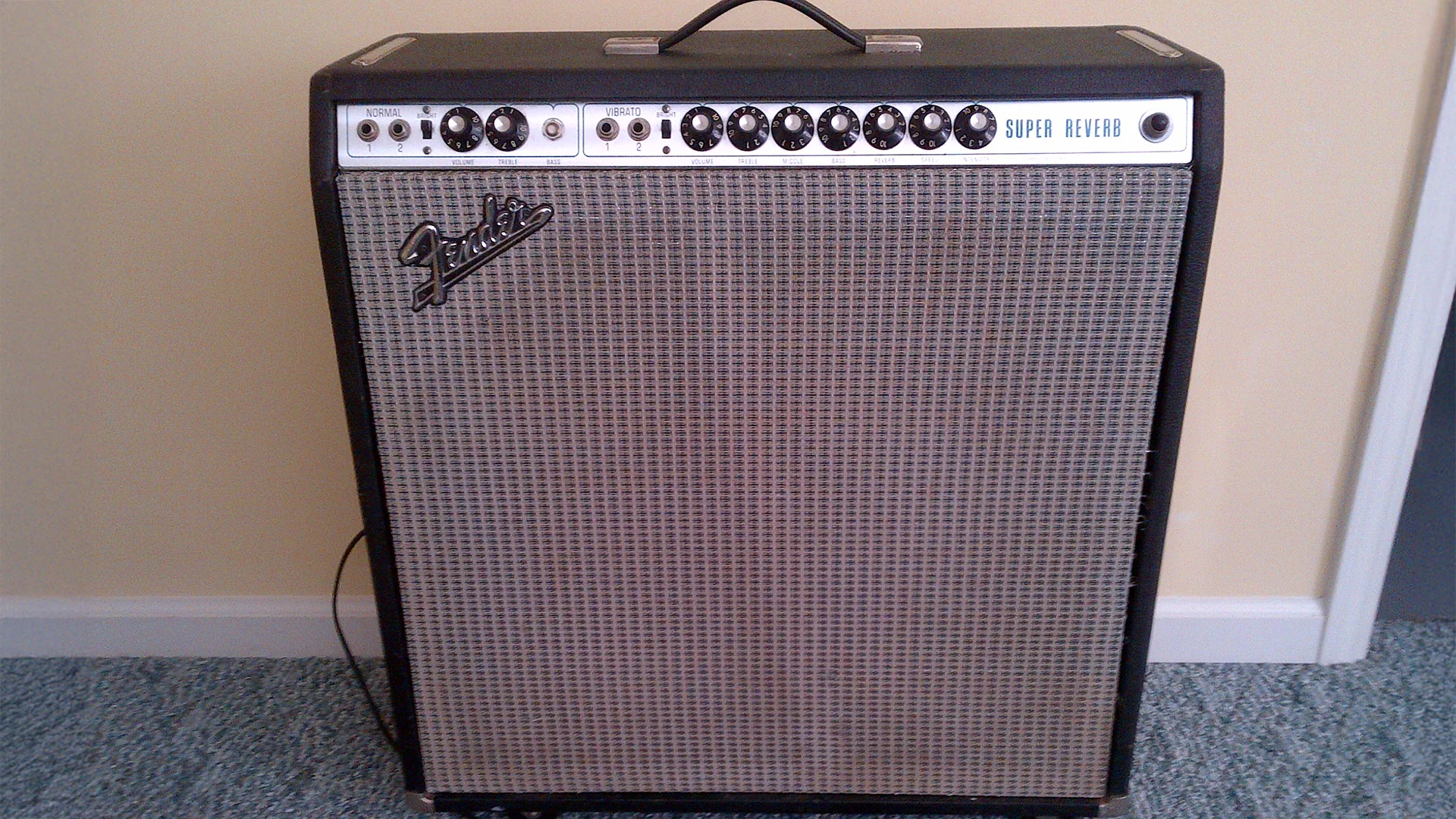
Following CBS's acquisition of Fender, the iconic black control panels transformed to silver aluminum trim. This era, while often controversial among purists, produced some of the most powerful and robust amplifiers in Fender's history.
Early Silverface (1968-1969)
The earliest Silverface amps, identifiable by their "drip edge" aluminum trim, were essentially Blackface circuits in new cosmetics. These transitional models maintained the same transformers, circuit layouts, and tone of their predecessors. The Twin Reverb from this period remains particularly sought after, offering Blackface tone with improved durability.
The CBS Influence (1970-1975)
By 1970, significant circuit changes emerged. The master volume feature appeared, allowing players to achieve power tube distortion at lower volumes. Engineers increased voltage throughout the circuits and added ultra-linear output stages, pushing for maximum clean headroom. These changes most notably affected the Twin Reverb, which gained substantial clean power at the expense of the earlier models' natural compression.
The Twin Reverb Evolution
The Silverface Twin underwent the most dramatic changes. Early 100-watt models used the traditional tube rectifier, while later versions switched to solid-state rectification. The master volume versions introduced in 1972 offered new gain-staging possibilities but changed the amp's fundamental character. Many players modified these amps to earlier specifications, creating a substantial market for "Blackface" conversions.
Professional Series Innovations
The Super Six Reverb marked Fender's most ambitious design, combining six 10-inch speakers with massive power to create one of the loudest combo amps ever produced. The Quad Reverb offered similar power through four 12-inch speakers. These amps found favor with country players and others who demanded maximum clean headroom.
The Vibrolux Reverb
Unlike many Silverface models, the Vibrolux Reverb maintained more of its predecessor's character. Its 35-watt output section and dual 10-inch speakers created a sweet spot between the Deluxe and Twin. The Vibrolux became particularly popular among blues players who appreciated its natural compression and earlier breakup compared to other Silverface models.
Deluxe and Princeton Evolution
The Deluxe Reverb retained much of its earlier character through the early Silverface years, though later models incorporated similar circuit changes as their larger siblings. The Princeton Reverb remained relatively unchanged, making late Silverface Princetons particularly desirable for players seeking traditional Fender tone.
The Solid-State Experiments
CBS pushed Fender to explore solid-state technology during this period. The Solid-State Twin Reverb and Yale Reverb represented attempts to modernize, though these models never gained the acceptance of their tube counterparts. However, these experiments laid groundwork for later modeling technology.
Notable Players and Recordings
Jerry Garcia used modified Silverface Twins throughout the 1970s, crafting his signature clean tone with substantial headroom for effects. Keith Richards relied on Dual Showmans for stadium tours, while Stevie Ray Vaughan occasionally used a Silverface Vibroverb alongside his Blackface amps. Country guitarists particularly embraced these amps, with players like Roy Clark using Super Six Reverbs for their exceptional clean headroom.
The Underrated Legacy
While initially dismissed by vintage purists, many Silverface amps have been reappraised. Their robust construction and unique characteristics, particularly the massive clean headroom, suit modern players using complex pedalboards. Early "drip edge" models offer excellent value for players seeking vintage Fender tone.
Modern Innovation: The Rivera Era (1981-1985)

Paul Rivera's brief but influential tenure at Fender marked a significant shift in their amplifier design philosophy. His work bridged the gap between traditional Fender clean tones and the higher-gain sounds players were increasingly demanding.
Design Philosophy
Rivera's primary innovation was introducing channel switching to Fender's tube amp line. He developed sophisticated preamp designs using cascading gain stages while maintaining Fender's renowned clean tones. This dual-personality approach would influence amplifier design well beyond his time at Fender.
The Concert Series
The Concert amplifier represented Rivera's flagship design. This 60-watt amp featured dual channels with independent EQ, sophisticated tone-shaping options, and a 4x10 speaker configuration. The clean channel maintained traditional Fender characteristics, while the lead channel offered previously unattainable high-gain tones from a Fender amp.
The Super Champ
The Super Champ would turn out to be one of Rivera's most successful designs. This 18-watt combo used two 6V6 power tubes and a 10-inch speaker, combining traditional Fender clean tones with a dedicated overdrive channel. Additional features included a switchable mid-boost and master volume, making it particularly attractive for recording and smaller venues.
The Professional Line
Rivera redesigned several classic Fender models, creating the "II" series: the Princeton Reverb II, Deluxe Reverb II, and Twin Reverb II. These amps maintained familiar Fender clean tones while adding modern features like channel switching and expanded tone controls.
Solid-State Development
While Rivera focused on tube amp designs, Fender's solid-state amplifiers during this period were developed by Bill Hughes and Bob Haigler. These included the Harvard Reverb II, though these solid-state models never achieved the acclaim of Rivera's tube designs.
Notable Players and Recordings
Steve Lukather used Rivera-era Fender amps during his work with Toto in the early 1980s, most notably on tracks from their album "Toto IV." David Lindley relied on a Concert amp during his tenure with Jackson Browne. Session guitarists particularly appreciated the Super Champ's versatility - its ability to deliver both traditional Fender cleans and modern high-gain sounds made it a popular studio choice. The Twin Reverb II found favor with touring professionals who needed both pristine clean headroom and reliable channel-switching capabilities.
Legacy
Rivera's tenure ended in 1985 when Fender underwent an ownership change. Though brief, his innovations in channel-switching and gain-staging techniques influenced amplifier design throughout the industry. After his departure, Fender made a deliberate break from his designs, leading to the development of the distinctly different "Red Knob" series by other designers.
Contemporary Classics: The Modern Era (1987-Present)
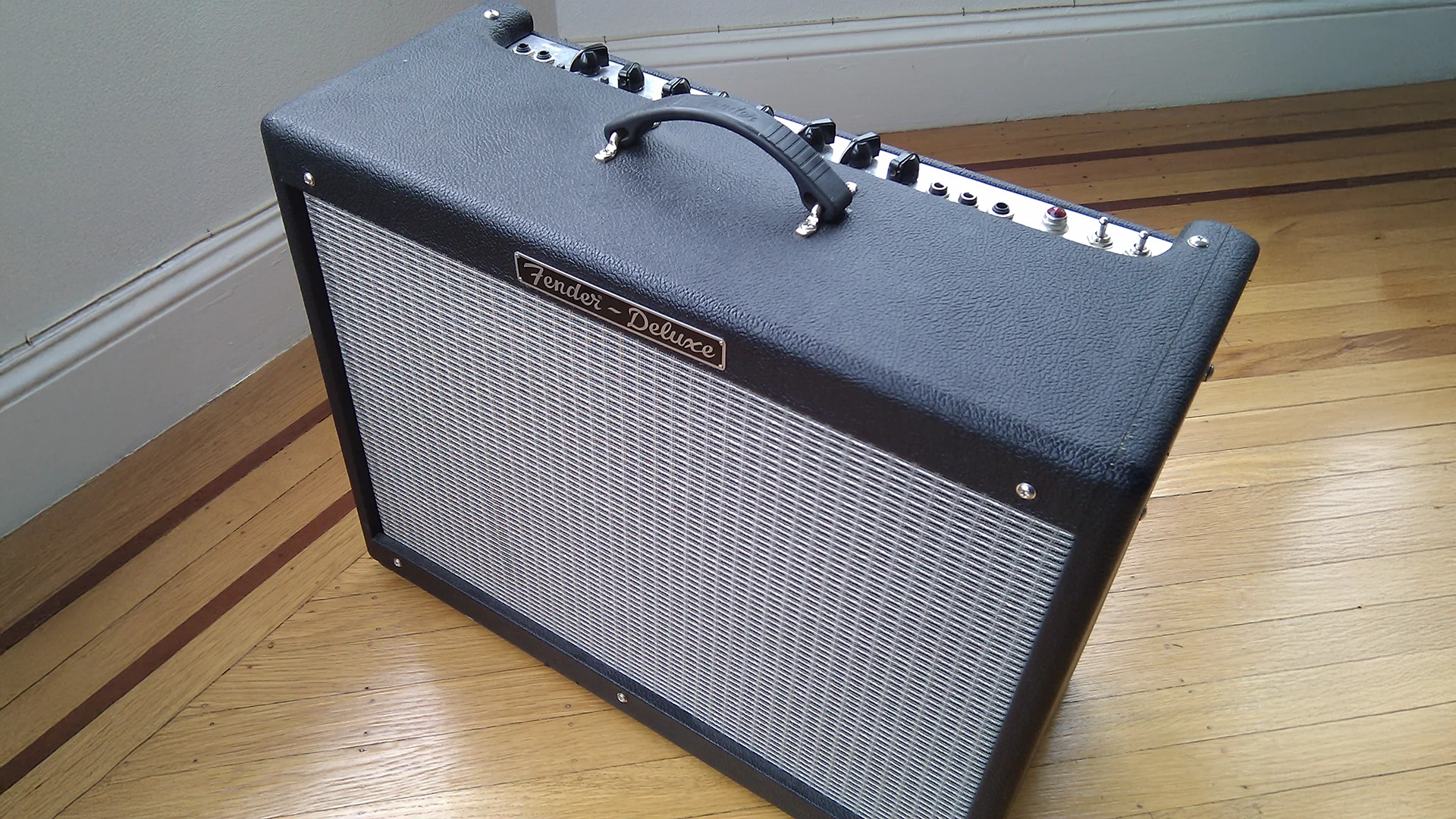
After Rivera's departure, Fender entered a new chapter marked by both bold experimentation and a return to tradition. This period has seen some of their most diverse offerings, from premium hand-wired reissues to cutting-edge digital technology.
The Red Knob Era (1987-1993)
Fender's first post-Rivera designs featured distinctive red control knobs, marking a clear break from previous eras. The The Evil Twin and The Twin introduced modern high-gain features while maintaining Fender's clean tone foundation. Though controversial among traditionalists, these amps developed a devoted following for their unique character and robust construction.
Manufacturing Evolution
In 1987, Fender established their Ensenada, Mexico facility, expanding production capabilities and creating new price points for tube amplifiers. The Pro Series amplifiers began production here, while premium models continued to be built in Corona, California. This dual-manufacturing approach allowed Fender to serve both budget-conscious players and premium markets effectively.
The Vintage Reissue Series
The '90s saw Fender return to their roots with meticulous reissues of classic designs. The '65 Twin Reverb reissue captured the essence of the Blackface era, while the '57 Custom series brought back hand-wired Tweed circuits. These amps satisfied players seeking authentic vintage tones without vintage amp maintenance concerns.
The Hot Rod Revolution
The Hot Rod series, introduced in 1996, became Fender's most successful amplifier line. The Hot Rod Deluxe offered three channels and modern features while maintaining familiar Fender clean tones. The Blues Deluxe provided similar features with more vintage-styled voicing, becoming a favorite among blues and roots players.
Digital Integration
The Tone Master series revolutionized Fender's approach to modeling technology, digitally recreating specific vintage amps while adding modern features. The Mustang series evolved from practice amps to sophisticated modeling platforms, culminating in the recent Mustang Micro Plus with its 25 amp models, 25 effect models, and 100 editable presets[4]. The integration with Fender's Tone app brought unprecedented customization to players.
Corporate Evolution
In January 2020, Servco Pacific became Fender's majority owner, bringing stability and renewed investment in product development. This transition has supported both traditional amp manufacturing and digital innovation.
Notable Contemporary Users
Eric Johnson relies on various reissue Deluxe Reverbs, often modified to his specifications. John Mayer's signature clean tone comes from modified Blackface designs. The Hot Rod series appears on countless stages, from local clubs to major venues. Brad Paisley combines vintage Fender amps with modern reissues for his complex clean tones.
Current State
Today's Fender amplifier line spans from entry-level practice amps to premium hand-wired reissues. While maintaining their tube amp heritage, Fender continues pushing boundaries with digital modeling and hybrid designs. Their dual approach of honoring tradition while embracing innovation has helped maintain their position as an industry leader.
Chasing Classic Fender Tones: A Modern Player's Guide

That sweet, singing Deluxe Reverb tone. The thunderous clean headroom of a Twin. The raw growl of a pushed Tweed Bassman. These legendary Fender amp sounds have shaped countless recordings, but getting your hands on the originals isn't always practical - or necessary. Let's explore your options for nailing those classic tones, whether you're playing small clubs or major venues.
Going All-In with Vintage
Nothing beats the real thing, but vintage amps aren't for the faint of heart. A good Blackface Deluxe can cost as much as a used car, and that's just the beginning. You'll need a trusted tech on speed dial, and get ready for the occasional "vintage moment" when something decides to act up mid-gig. But when they're working right? Pure magic. Just ask anyone who's played through a properly maintained '59 Bassman.
The Reissue Reality
Fender's reissues make a lot of sense for working musicians. No, they're not exactly the same as vintage amps - that hand-wired mojo isn't there. But modern '65 Twin and Deluxe Reverb reissues nail the fundamental tone and character of the originals. Plus, you can actually find replacement parts when something goes wrong. Many pro players quietly rely on these for touring while keeping their vintage amps safe at home.
The Boutique Route
Several builders are making incredible Fender-inspired amps that often improve on the originals. Victoria amps, for instance, capture that Tweed-era magic while adding modern reliability. Sure, they're not cheap, but compared to vintage prices? You might be surprised. Some even use old-school components and construction methods that Fender themselves abandoned decades ago.
The Digital Revolution
Digital modeling has come a long way from the thin, artificial sounds of the past. Tone Master amps from Fender are shockingly good - even hardcore tube amp fanatics are starting to come around. Kemper profiles and Neural DSP captures can be nearly indistinguishable from the real thing in a mix. For recording and live use, these options offer incredible flexibility without breaking your back (or the bank).
Mixing and Matching
Many players are finding smart ways to combine approaches. Maybe you use a reissue Twin for your clean tone but switch to a modeler for those cranked Tweed sounds that would be too loud for most venues. Some folks keep a vintage amp for studio work but rely on modern gear for touring. There's no rule saying you have to choose just one approach.
The DIY Scene
If you're handy with a soldering iron, there's a whole world of amp building and modding out there. Silverface to Blackface conversions are popular for a reason - they can get you close to those classic tones for a fraction of the cost. Companies like Weber make great kits if you want to build your own version of a classic circuit.
Frequently Asked Questions
What's the main difference between Blackface and Silverface Fender amps?
Early Silverface amps (1968-1969) are electronically similar to Blackface models, mainly differing in cosmetics. Later Silverface amps featured higher voltage design and ultralinear output stages, resulting in more headroom but less natural compression. Many players prefer early Silverface amps, particularly when modified to Blackface specs.
Are reissue Fender amps as good as vintage ones?
Current reissue amps are very well-made and tonally accurate, though they use modern components for reliability. While vintage amps have unique character from decades of aging and component interaction, quality reissues offer consistent performance and reliability that vintage amps can't always guarantee.
Which Fender amp is best for home use?
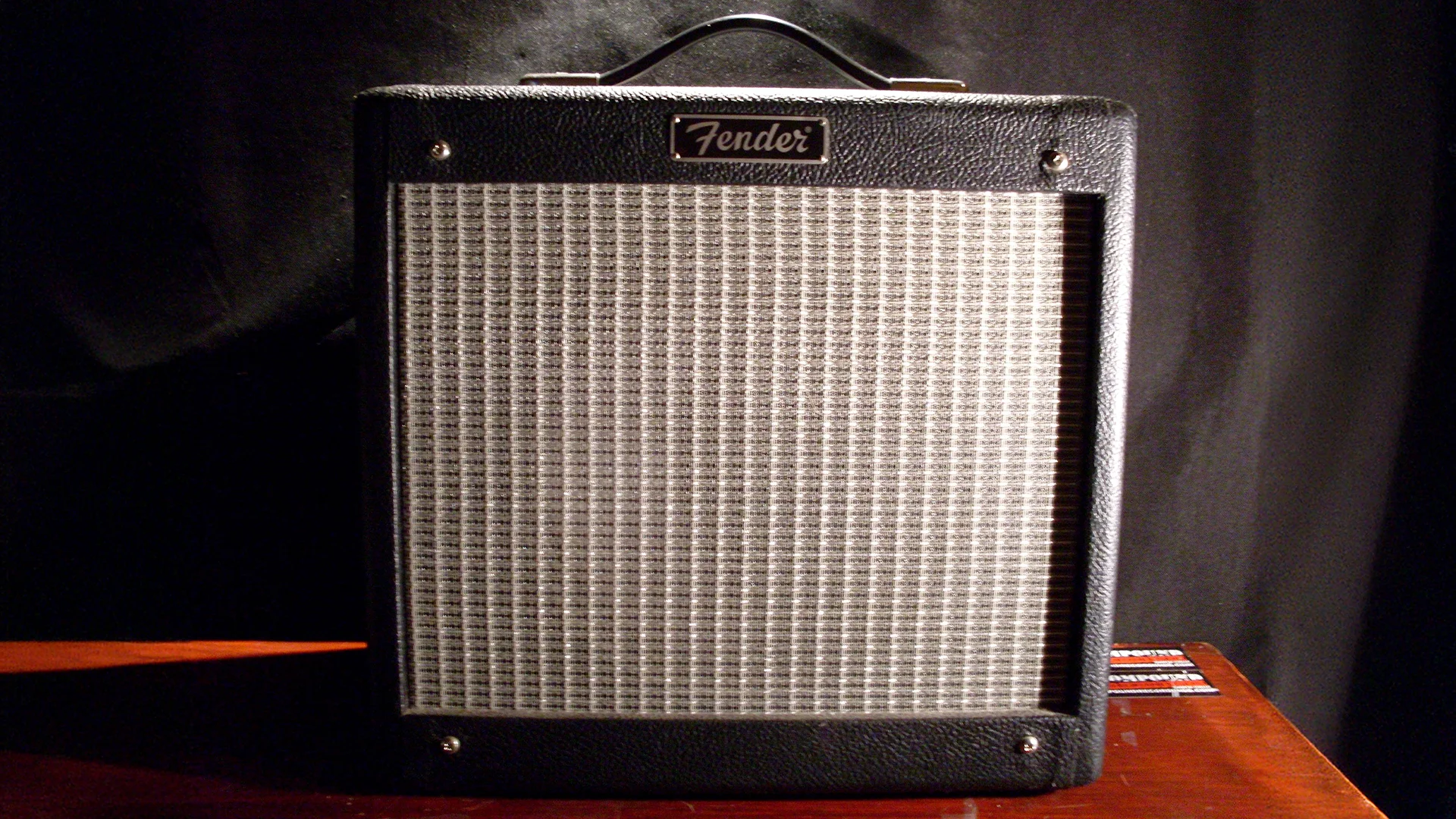
The Princeton Reverb, particularly in its lower-powered reissue form, excels in home environments. The Blues Junior and Pro Jr. also work well, offering classic Fender tone at manageable volumes. For even lower volumes, the Tone Master series provides authentic Fender sounds with adjustable power scaling.
What makes Tweed amps so special?
Tweed amps are celebrated for their organic, dynamic response and musical compression when pushed. Their simple circuits, point-to-point wiring, and specific output transformer designs create rich harmonics and natural overdrive that respond exceptionally well to playing dynamics.
How can I identify which era my Fender amp is from?
Serial numbers are the most reliable indicator, though cosmetics offer clear clues. Tweed amps use tweed covering, Brownface amps have brown tolex with wheat grille cloth, Blackface amps feature black panels with silver trim, and Silverface amps have silver-trimmed face plates. Each era also has distinct transformers and component layouts.
Are modern high-gain Fender amps comparable to their vintage clean amps?
While Fender's modern high-gain designs are capable, they excel most at clean and light overdrive tones. Players seeking high-gain sounds often prefer amps specifically designed for that purpose, while using Fenders for their legendary clean tones.
Conclusion

From Leo's first Tweed experiments to today's digital modeling marvels, each era has shaped the soundtrack of its generation. Yet what's truly remarkable isn't just how these amps have changed, but how their fundamental character has endured.
The Tweed era taught us about raw, dynamic tone and the magic of simplicity. Those early circuits revealed how an amplifier could be more than just a loudspeaker - it could be an instrument in its own right. The Brownface and Blackface periods refined these foundations, establishing the "American Clean" sound that countless manufacturers have tried to replicate.
Even during periods of corporate change and market pressure, Fender amps maintained their musical soul. The Silverface years, once dismissed by purists, gave us powerhouse amps that today's pedal enthusiasts particularly prize. Rivera's innovations bridged vintage and modern sounds, while recent years have seen Fender successfully balance tradition with innovation.
Today's players have unprecedented access to these historic tones. Whether through pristine vintage pieces, faithful reissues, boutique recreations, or digital modeling, the distinctive voice of a Fender amp remains as relevant as ever. What began in Leo's small radio repair shop has become a cornerstone of electric guitar tone, proving that great designs never goes out of style.
Perhaps that's the real legacy of Fender amplifiers - not just their impact on music history, but their continuing influence on music yet to be made.
About the authors

S. Jino is an accomplished multi-instrumentalist and music producer based in Kolkata, India, distinguished by his self-taught mastery and unique blend of technical acumen and musical performance. His extensive experience was forged through hands-on dedication, starting with the full restoration of a broken guitar. Jino's capabilities span keyboards, pedals, and advanced digital production, reflecting a comprehensive skill set developed independently. As a significant contributor to the music scene, Jino regularly performs with worship bands and college ensembles. He has also established himself as a reliable and authoritative professional in freelance mixing, mastering, and original music creation. Inspired by the innovative sounds of Brian May and David Gilmour, and influenced by Kolkata's vibrant metal community, Jino is committed to the intricate art of vintage gear restoration and the continuous exploration of music and technology fusion. His current professional setup, featuring a meticulously restored nameless guitar, a Fender Player Strat, and a Boss Katana 50. Read more