
By Gear Experts
Table of Contents

Equipboard
Equipboard is the world's largest community of artists and their gear. Read our review process.
We are reader-supported. When you buy through links on our site, we may earn an affiliate commission. Learn more.
Ever felt like your guitar pick has a mind of its own, flying out of your hand mid-solo? Or maybe you've wondered why your favorite guitarist's tone sounds so different from yours, even when you're playing the same licks?
Well, my friend, it might just come down to how you're holding that little piece of plastic.
So, let's dive into the world of guitar picks and uncover the secrets to wielding them like a pro!
The Basics: Getting a Grip
Before we start shredding, let's talk about the fundamentals.
Holding a guitar pick might seem simple, but there's more to it than meets the eye. Here are some common techniques to get you started:
1. The Standard Grip
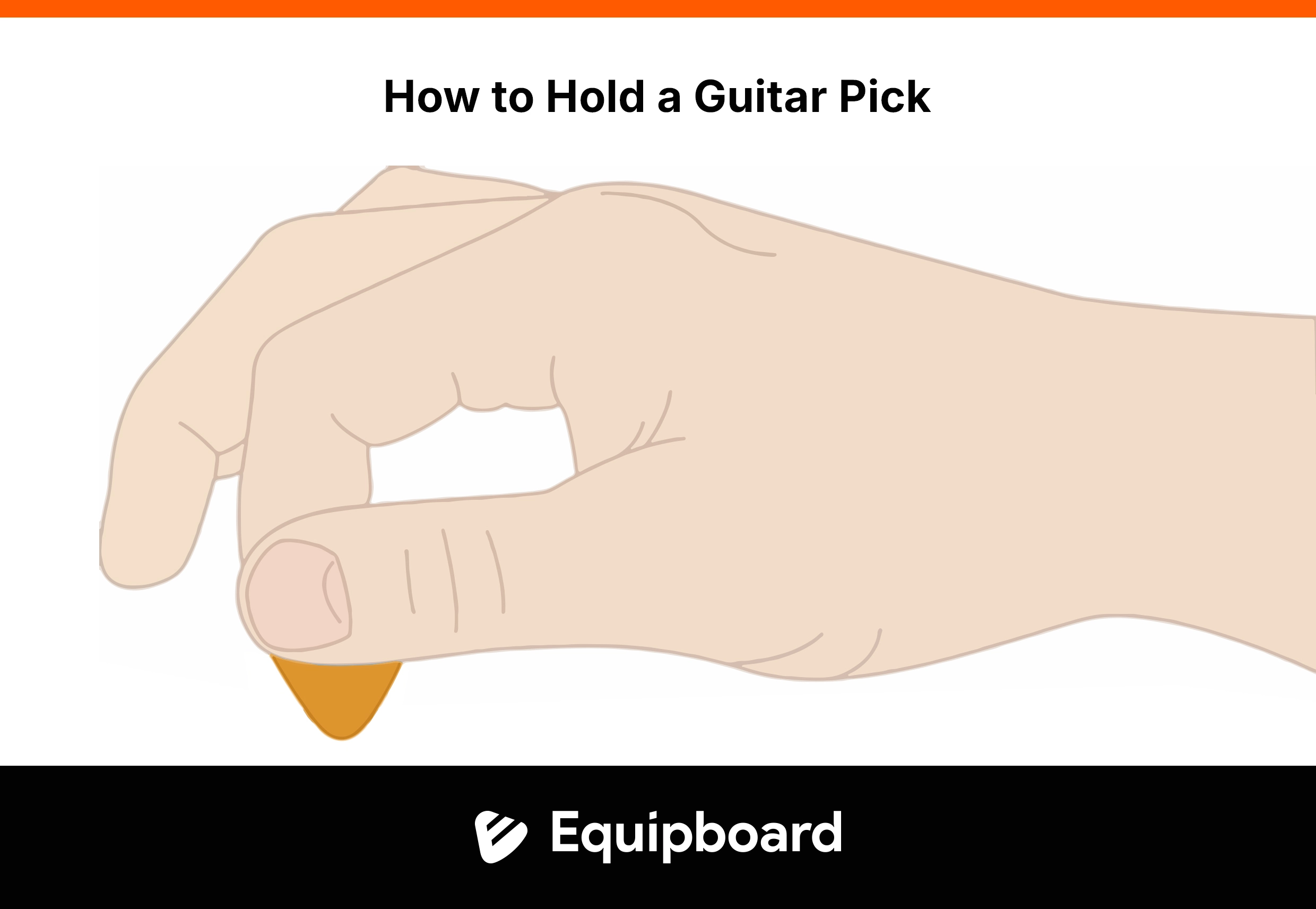
This is your bread-and-butter pick hold, perfect for beginners and seasoned players alike:
- Hold your hand out, palm facing up, as if you're about to shake someone's hand.
- Place the pick on your index finger, about halfway between the tip and the first knuckle.
- Gently curl your thumb over the pick, applying light pressure.
- Adjust until you find a comfortable position with the pointed end of the pick sticking out about 1/4 to 1/2 inch.
Voila! You've got the standard grip.
It's like a firm handshake between you and your pick – confident, but not crushing.
2. The Pinch Grip
For those times when you need a bit more control and precision:
- Start with the standard grip.
- Slide your thumb and index finger towards the tip of the pick, "pinching" it closer to the pointy end.
This grip gives you more accuracy for intricate playing but sacrifices some power. It's great for complex lead work and arpeggios.
3. The Three-Finger Grip
Want to channel your inner Steve Vai? Try this one:
- Hold the pick between your thumb and index finger (standard grip).
- Rest your middle finger alongside your index finger on the pick.
This grip offers extra stability and control, perfect for those lightning-fast alternate picking runs.
The Goldilocks Zone: Finding the Right Grip Pressure
When it comes to holding your pick, think Goldilocks – not too tight, not too loose, but just right.
Gripping too tightly can lead to tension in your hand and wrist, resulting in stiff, unnatural playing and potential discomfort or injury over time. On the flip side, a grip that's too loose might send your pick flying across the room mid-solo (talk about a showstopper!).
The sweet spot? Firm enough to maintain control but relaxed enough to allow fluid movement. Your pick should feel secure, yet able to flex slightly against the strings. Remember, a relaxed grip promotes better technique, smoother playing, and ultimately, better tone.
Keep Your Pick in Play: Tips to Avoid Mid-Performance Pick Loss

We've all been there – you're in the middle of a blistering solo, the crowd is going wild, and suddenly your pick decides to make a break for it. Talk about a mood killer! But fear not, fellow guitarists, for there are ways to keep your pick loyal to your fingers.
First, consider picks with textured grips or holes in the middle. They're like little hand-holding devices for your fingers. Buildup a slight callus on your picking fingers to increase friction.
Secondly, during performances, keep a few backup picks within easy reach. Stick them on your mic stand, on your guitar, or even in your hair if you're feeling particularly rock 'n' roll.
Lastly, some players swear by pick-holding techniques like curling their ring and pinky fingers into their palms for extra security.
And if worst comes to worst? Learn to play with your fingers or nails. It's a skill that might just save your solo one day. Remember, a prepared guitarist is a confident guitarist, so practice these techniques until they become second nature.
Pick Your Poison: Types, Sizes, and Thickness
Now that we've got a handle on holding picks let's talk about the picks themselves. Choosing the right pick is like finding the perfect dance partner – it can make all the difference in your performance.
Types of Picks
- Plastic Picks: The most common type, available in various materials like nylon, celluloid, and acetal. They're affordable, flexible, and come in a rainbow of colors.
- Metal Picks: Made from materials like steel or brass, these picks offer a brighter tone and more attack. They're durable but can be hard on your strings.
- Wood Picks: Yes, wood! These picks provide a warm, mellow tone and are popular among acoustic players.
- Stone Picks: Made from materials like agate or jasper, these picks offer unique tonal characteristics and incredible durability.
- Felt Picks: Super thick and soft, these are mainly used for strumming nylon string guitars or ukuleles for a gentle sound.
Size Matters (Sometimes)
Picks come in various shapes and sizes, from tiny jazz picks to oversized triangles. Here are some common sizes:
- Standard: Around 30mm long, this is the most common size and a good starting point for most players.
- Jazz: Smaller (about 25mm) and often more pointed, these picks offer precision for intricate playing.
- Jumbo: Larger picks (35mm+) that provide more surface area to grip, popular among players with larger hands.
Thickness: From Paper-Thin to Brick-Thick
Pick thickness can dramatically affect your playing and tone. Thickness is usually measured in millimeters (mm):
- Thin (0.40-0.60mm): Flexible and great for strumming, especially on acoustic guitars. They produce a brighter tone but can be floppy for lead work.
- Medium (0.60-0.80mm): The Goldilocks of picks – not too thick, not too thin. Versatile for both strumming and lead playing.
- Thick (0.80-1.20mm): Offer more control and a fuller tone. Favored by many electric guitarists for lead playing.
- Extra Thick (1.20mm+): Provide maximum control and a strong attack. Popular among metal and hard rock players.
Remember, there's no "right" thickness – it's all about personal preference and playing style. Also, check out our full guide to the finding the best pick for your needs. Experiment to find what works best for you!
Pick Attack: How Your Technique Shapes Your Tone
Now, let's talk about how your picking technique can influence your sound. It's not just about what pick you use, but how you use it.
Angle of Attack
The angle at which your pick strikes the strings plays a big role in shaping your tone. A flat attack, where you hold the pick parallel to the strings, tends to produce a fuller, rounder sound, making it ideal for rhythm playing and strumming chords.
On the other hand, an angled attack, with the pick tilted slightly (around 45 degrees), results in a brighter and more defined tone. This approach is commonly used in lead playing and for single-note lines, where clarity and articulation are key.
Pick Depth
How much of the pick you expose to the string can have a big impact on your tone. Shallow picking, where you use just the tip of the pick, creates a thinner, brighter sound that can cut through a mix more easily. In contrast, deep picking, where more of the pick’s surface strikes the strings, results in a fuller, more robust tone, adding extra warmth and body
Pick Direction
The direction of your pick stroke can introduce subtle but noticeable variations to your tone. Downstrokes typically create a stronger, more aggressive sound, giving your playing more punch. On the other hand, upstrokes tend to produce a slightly brighter and less forceful tone.
When you combine both in alternate picking, using down and upstrokes in rapid succession, it results in fast, even-sounding notes, making it a go-to technique for speed and precision in lead playing.
Genre-Specific Techniques: Picking Across Musical Styles
Different genres often favor particular picking techniques. Let's explore how picking styles vary across some popular genres:
Rock and Metal
- Heavy use of downstrokes for power chords
- Alternate picking for fast lead lines
- Palm muting combined with precise pick control for tight rhythm playing
Blues
- Light touch for expressive bends and vibrato
- Use of fingerpicks or hybrid picking (combining pick and fingers) for a more organic sound
- "Raking" technique: dragging the pick across muted strings for a percussive effect
Jazz
- Hybrid picking for complex chord melodies
- Light touch with a jazz-style pick for fast, clean single-note lines
- Use of the pick's edge for a softer attack on chords
Country
- “Chicken picking" or Hybrid picking for that classic Chet Atkins sound
- Precise alternate picking for fast, twangy lead lines
- Use of thumb picks for a strong bass note while fingerpicking
Classical and Flamenco
- While these styles traditionally use fingerpicking, some modern players incorporate picks
- Very light touch with thin picks for delicate, nuanced playing
- Rasgueado technique (strumming with individual fingers) can be mimicked with a pick for a unique sound
Pro Tips for Pick Mastery
Mastering the pick is about fine-tuning your technique to unlock better tone, control, and speed. Below are some tried-and-true tips to help you get the most out of your pick, so you can improve your technique and elevate your playing.
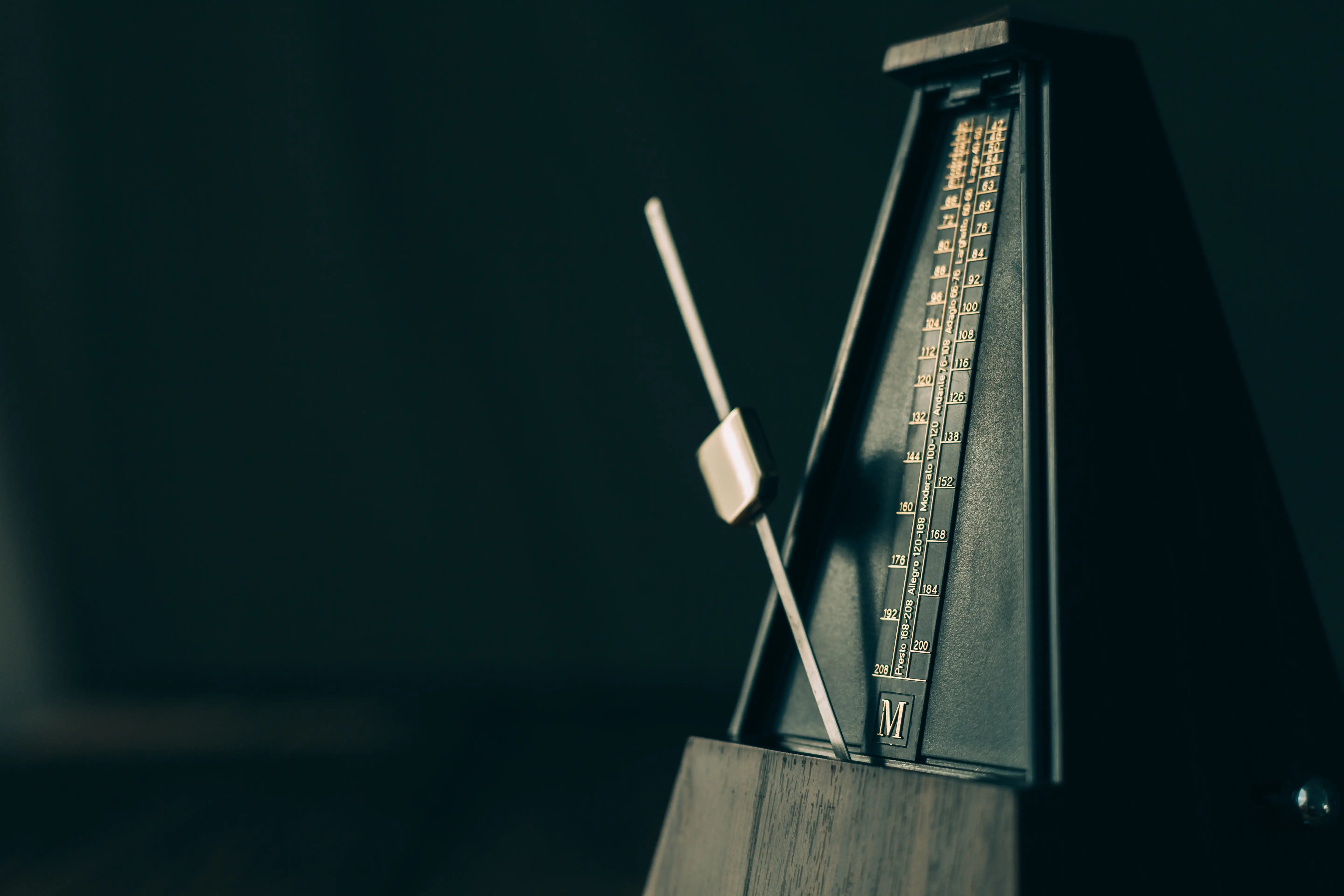
- Practice with a metronome: This helps develop consistent pick control and timing (See our guide to metronomes for more).
- Experiment with different picks: Try various materials, shapes, and thicknesses to find what suits you best.
- Work on your grip strength: A relaxed but secure grip is key to preventing fatigue and dropped picks.
- Use textured picks: If you struggle with picks slipping, try ones with a textured grip area.
- Practice pick slides: Sliding your pick along a string can add cool effects to your playing.
- Learn to palm mute: This technique, where you rest the side of your picking hand on the strings near the bridge, is essential for many styles of music.
- Don't death-grip the pick: A relaxed hold allows for more fluid playing and a better tone.
Conclusion: The Pick of Destiny
Mastering how to use a guitar pick is an ongoing process. As you grow as a guitarist, you’ll naturally adjust your technique and experiment with different picks to match your style and sound.
There’s no single "right" way to hold a pick.
Whatever feels comfortable and helps you play your best is the way to go. So grab a few picks, test out these tips, and find what works for you. And remember, picking with confidence is key. Just try not to launch your pick into the crowd mid-solo (unless that's your thing).
Top Ranked Picks & Pick Holders on Equipboard


About the authors
Juan Spinelli is a multi-instrumentalist musician, but more of a guitarist than anything else. Based in Buenos Aires, Argentina, he started playing at a very early age and learned various instruments such as flute, clarinet, percussion, didjeridoo, cavaquinho, bass and more. Today, he also works as a music producer and sound engineer, collaborating in several projects in his city and with artists from all over the world. Read more















.webp)