Table of Contents

Equipboard
Equipboard is the world's largest community of artists and their gear. Read our review process.
We are reader-supported. When you buy through links on our site, we may earn an affiliate commission. Learn more.
Think about the moment when letters on a page first transformed into words that carried meaning. Before you could read, books were just mysterious collections of symbols that held secrets you couldn't access. Other people could look at those same marks and instantly understand stories, ideas, and entire worlds of knowledge, while you remained locked out.
That's exactly where many musicians find themselves with sheet music. You hear other players casually mention "that beautiful melody in the second movement" or watch them sight-read a song they've never heard before, and it feels like they possess some magical ability. The truth is, reading music is just literacy in another language – and like learning to read English, it opens up an entire universe of possibilities once you crack the code.
When you can read sheet music, you gain access to centuries of musical knowledge that's been carefully preserved in notation. You're no longer limited to the songs you can learn by ear or find in tab form online. Want to play a Bach invention? It's right there waiting for you. Curious about how Radiohead constructs their complex arrangements? The sheet music reveals every detail.
The transformation goes deeper than just accessing more songs. Reading music makes you a more complete musician in ways that might surprise you. You'll understand why certain chord progressions work, how rhythms create tension and release, and why some melodies stick in your head while others don't. You become fluent in the universal language that lets musicians from different countries, backgrounds, and genres communicate instantly.
This isn't about abandoning the skills that got you this far or turning you into a classical snob. Whether you're a guitarist who's been rocking out with power chords, a singer who's always trusted your ear, or a producer who works primarily with loops and samples, notation is simply another tool that makes everything else you do more powerful and intentional.
The Basics: The Layout of Sheet Music
Let's start by getting familiar with the basic architecture of sheet music. Think of it as learning the layout of a new city before you start navigating the streets.
The Staff: Your Musical Foundation
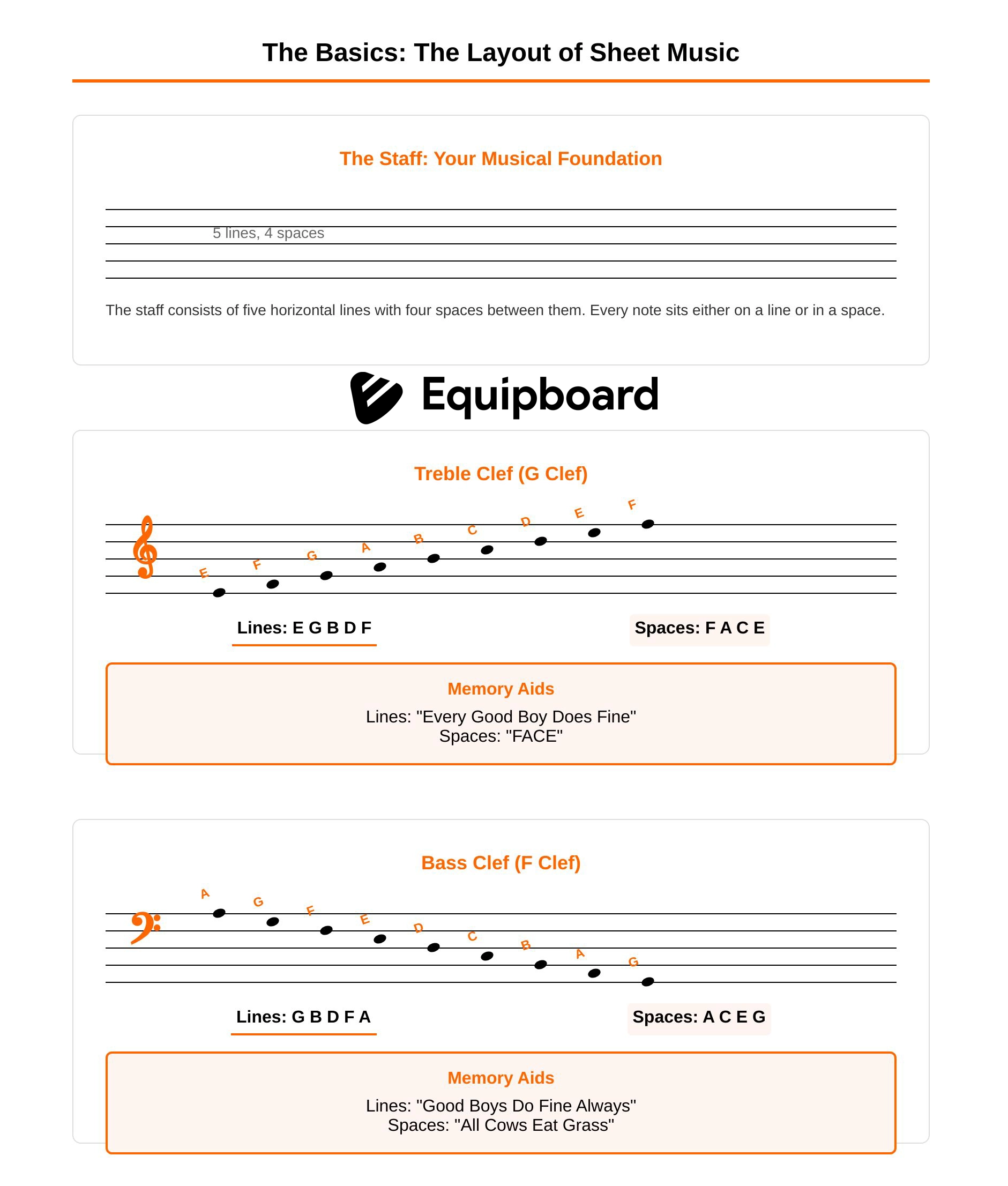
The staff is the foundation of all written music. It consists of five horizontal lines with four spaces between them, and every note you'll ever read sits either on a line or in a space. These aren't just random positions; each line and space represents a specific pitch.
The staff by itself doesn't tell you which notes are which, though. That's where clefs come in to give the staff its meaning and context.
Understanding Clefs
Clefs are symbols that appear at the beginning of each staff to tell you which notes correspond to which lines and spaces. Think of them as the key to unlocking the staff's meaning.
The Treble Clef (also called the G clef) is probably the most familiar symbol in music. It curls around the second line of the staff, designating that line as the note G above middle C. Most melody instruments use treble clef: guitars, violins, flutes, and the right hand of piano music. If you sing in a higher register, your vocal parts will likely be written in treble clef too.
The Bass Clef (or F clef) looks like a backwards C with two dots. Those dots surround the fourth line of the staff, marking it as the note F below middle C. This clef is home to lower-pitched instruments like bass guitars, cellos, and the left hand of piano music. Lower vocal parts often use bass clef as well.
Note Names and Memory Aids
Music uses seven letter names: A, B, C, D, E, F, and G. After G, the pattern repeats back to A. Middle C serves as a crucial reference point because it sits right between the treble and bass clef staves.
For treble clef, the lines from bottom to top are E, G, B, D, F. The classic mnemonic "Every Good Boy Does Fine" helps you remember this sequence. The spaces spell out F, A, C, E, which you can remember as "FACE."
Bass clef lines from bottom to top are G, B, D, F, A ("Good Boys Do Fine Always"), while the spaces are A, C, E, G ("All Cows Eat Grass").
Ledger Lines: Extending Your Range
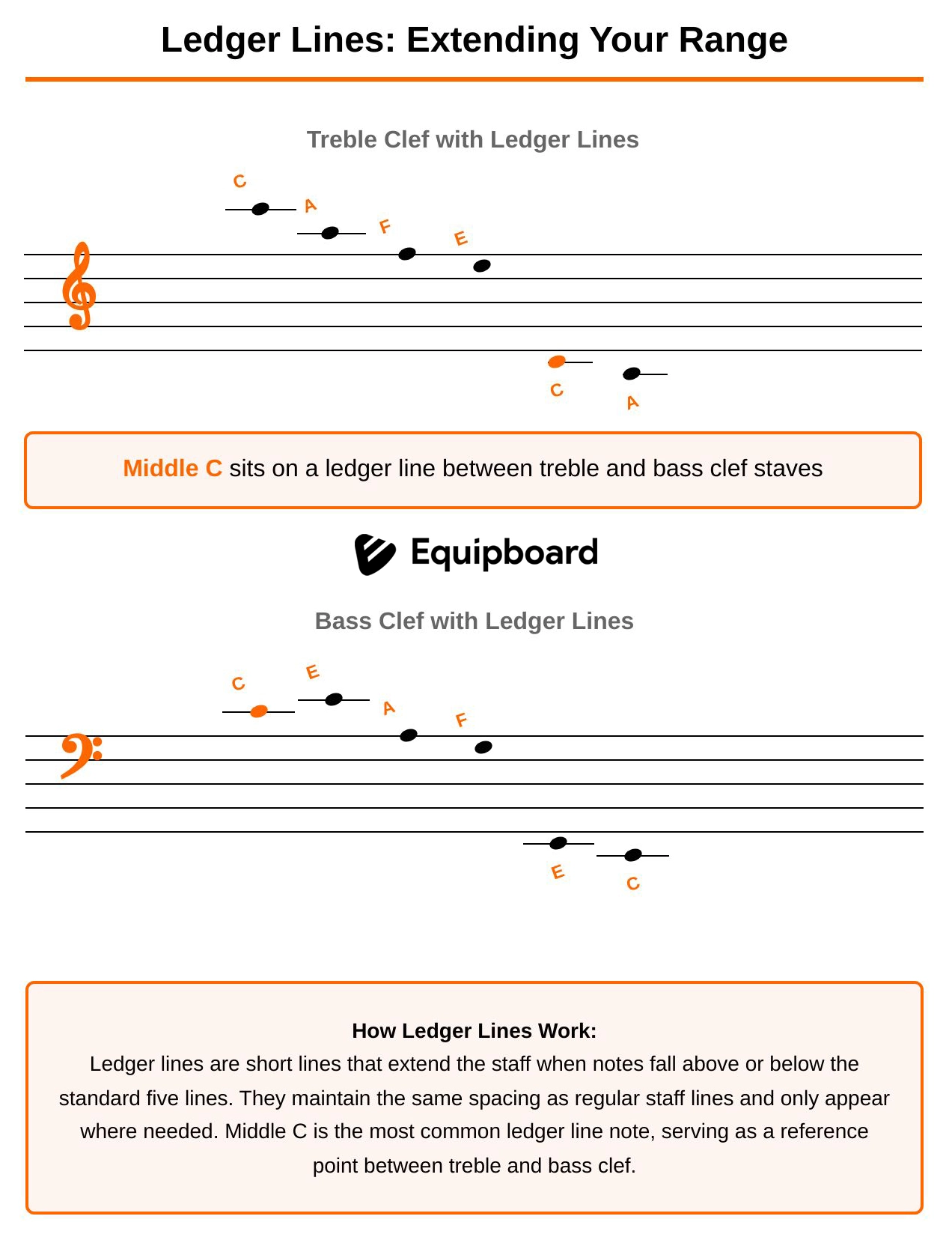
Sometimes notes fall above or below the staff. Rather than create giant staves, music uses ledger lines to extend the range temporarily. These short lines appear only where needed, maintaining the same spacing as the staff lines. Middle C, for example, sits on a ledger line between the treble and bass clef staves.
Rhythm and Time: How Long and When to Play
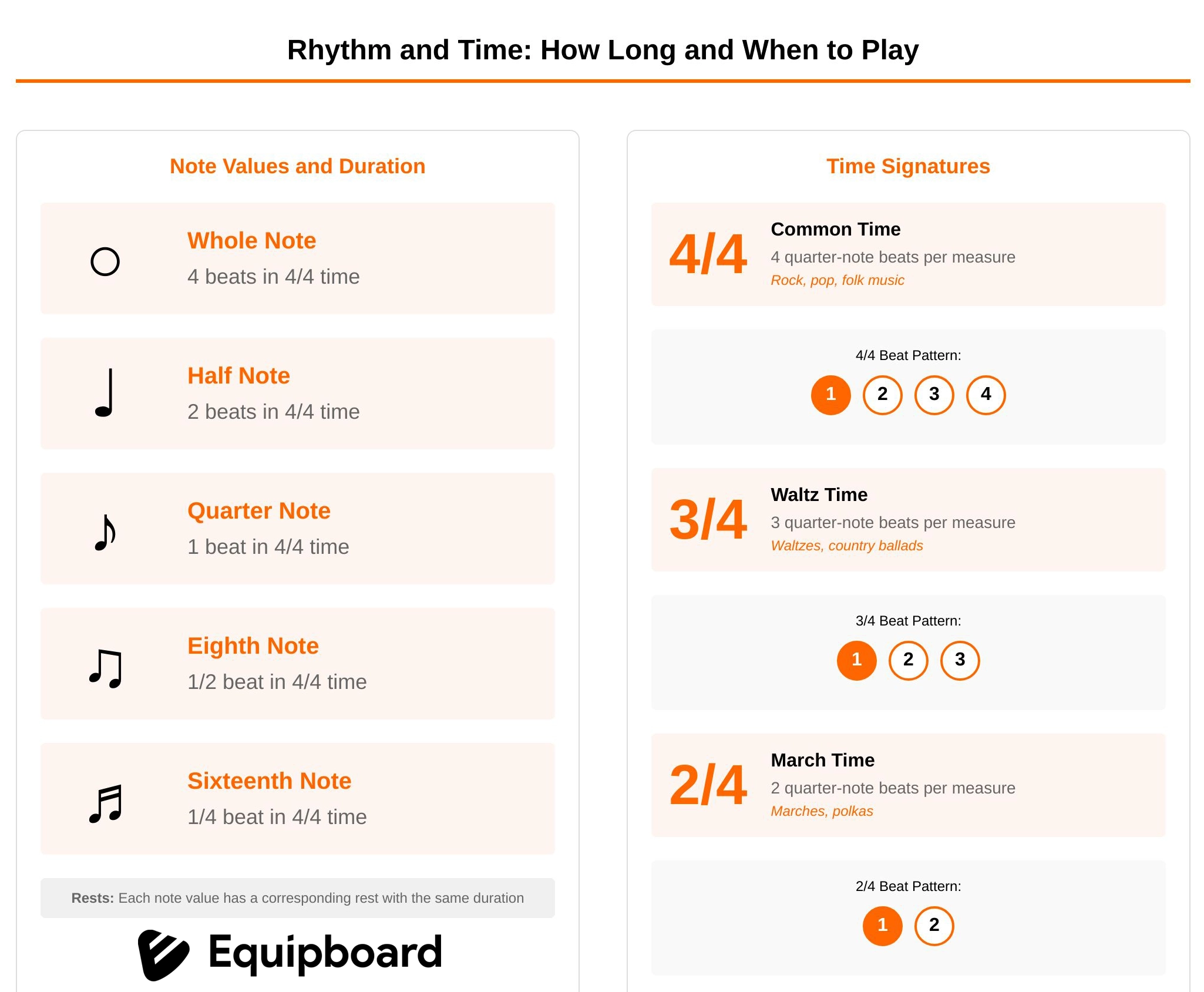
Reading pitches is only half the story. Understanding rhythm and timing transforms those static notes into living, breathing music that moves through time.
Note Values and Duration
Note values tell you how long to hold each sound. Think of them as different sized containers for time. A whole note is like a large bucket that holds four beats in common time. It looks like an empty oval and gets sustained for quite a while.
Half notes are half the duration of whole notes, lasting two beats. They look like whole notes but with stems attached. Quarter notes get one beat each and have filled-in note heads with stems. These are the workhorses of most popular music.
Eighth notes are half the length of quarter notes, often appearing with flags when single or connected with beams when grouped. Sixteenth notes are even faster, with two flags or beams, creating the rapid-fire rhythms you hear in many contemporary styles.
Each note value has a corresponding rest with the same duration. Rests represent silence, and they're just as important as the notes themselves. Music breathes through its rests.
Time Signatures: The Rhythmic Framework
The time signature appears at the beginning of a piece as two numbers stacked vertically. The bottom number tells you what type of note gets one beat, while the top number tells you how many beats fit in each measure.
4/4 time is by far the most common time signature. The bottom 4 means quarter notes get one beat, and the top 4 means there are four beats per measure. Most rock, pop, and folk songs use 4/4 time. Think of songs like "Sweet Caroline" by Neil Diamond or "Don't Stop Believin'" by Journey.
3/4 time creates the waltz feel you hear in songs like "The Tennessee Waltz" or "My Favorite Things." Here, there are three quarter-note beats per measure, giving music that lilting, circular motion.
2/4 time has two quarter-note beats per measure and often appears in marches and polkas. You might also encounter cut time (2/2), which looks like a C with a vertical line through it and feels like a fast 2/4.
Measures and Musical Organization
Measures (also called bars) are the boxes that organize music into manageable chunks. Bar lines are the vertical lines that separate measures, while a double bar line indicates the end of a section or piece.
Ties connect notes of the same pitch across bar lines or within measures, combining their durations. Dots after notes increase their length by half. A dotted half note, for example, lasts three beats instead of two.
Tempo: The Speed of Music
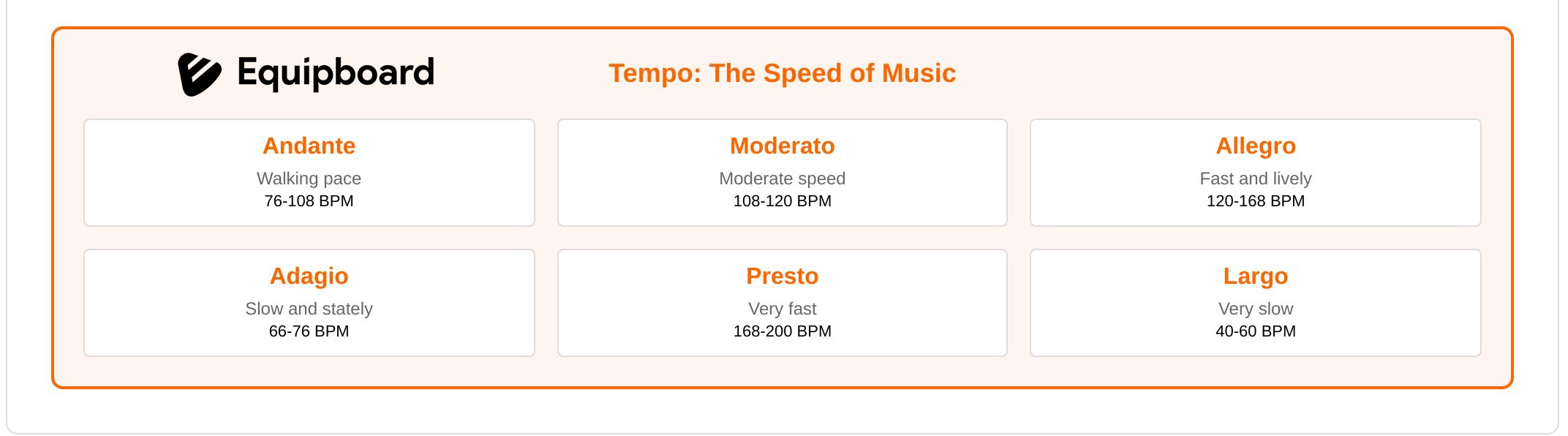
Tempo tells you how fast or slow to play. Traditional Italian terms like Andante (walking pace), Allegro (fast and lively), and Presto (very fast) give general speed indications. Modern sheet music often includes BPM (beats per minute) numbers for precision.
The fermata symbol (a dot under a curved line) tells you to hold a note longer than written, usually at the performer's discretion.
Pitch Alterations: Sharps, Flats, and Naturals
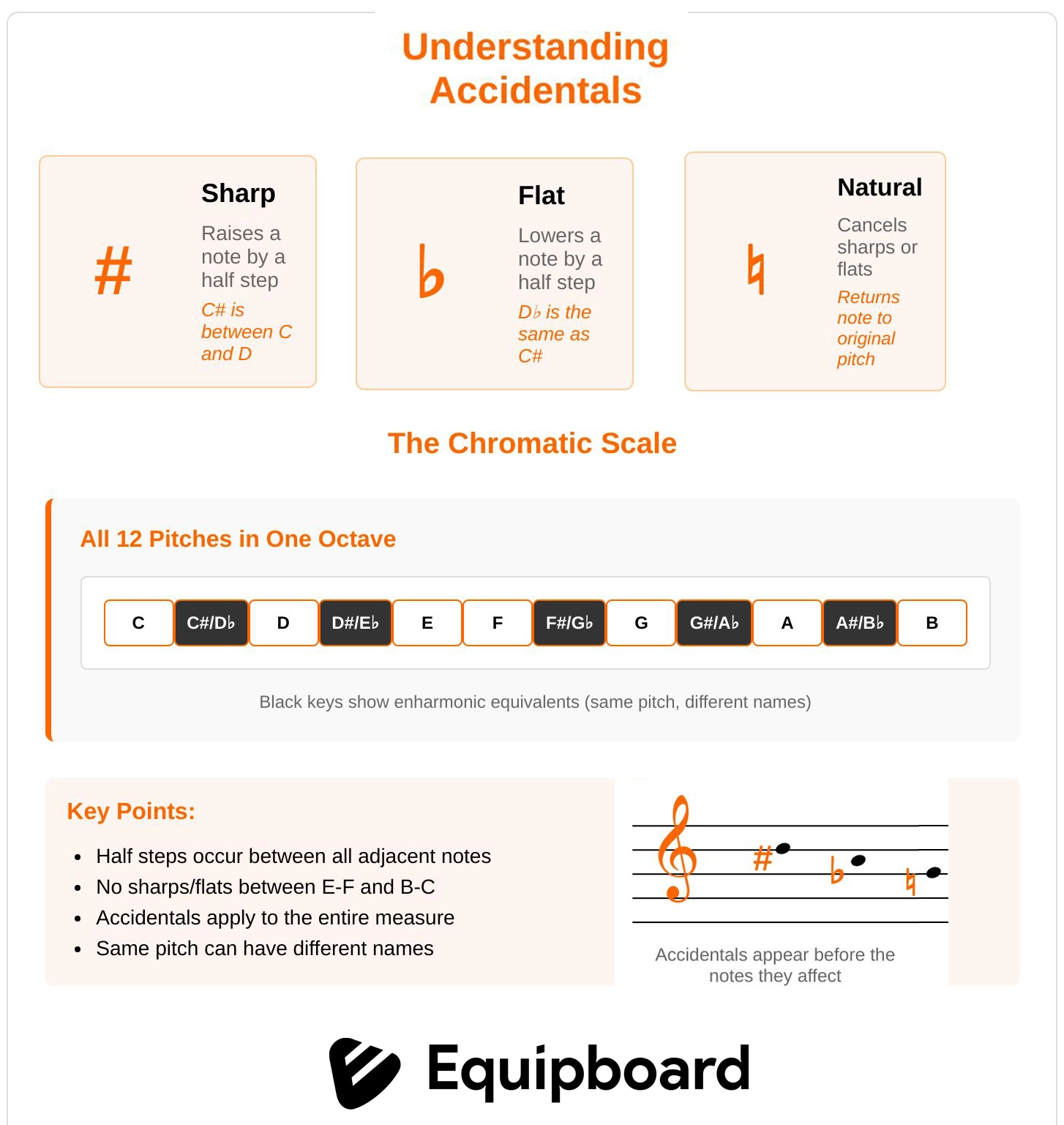
Not all music uses just the seven basic note names. Accidentals modify pitches to access the notes that fall between the natural notes, expanding your tonal palette.
Understanding Accidentals
A sharp (#) raises a note by a half step. C-sharp sits between C and D on a piano keyboard, played on the black key. A flat (♭) lowers a note by a half step. D-flat is the same key as C-sharp, just named differently depending on musical context.
The natural sign (♮) cancels out previous sharps or flats, returning a note to its original pitch. These symbols apply to every occurrence of that note within the same measure.
Key Signatures: Setting the Tonal Framework
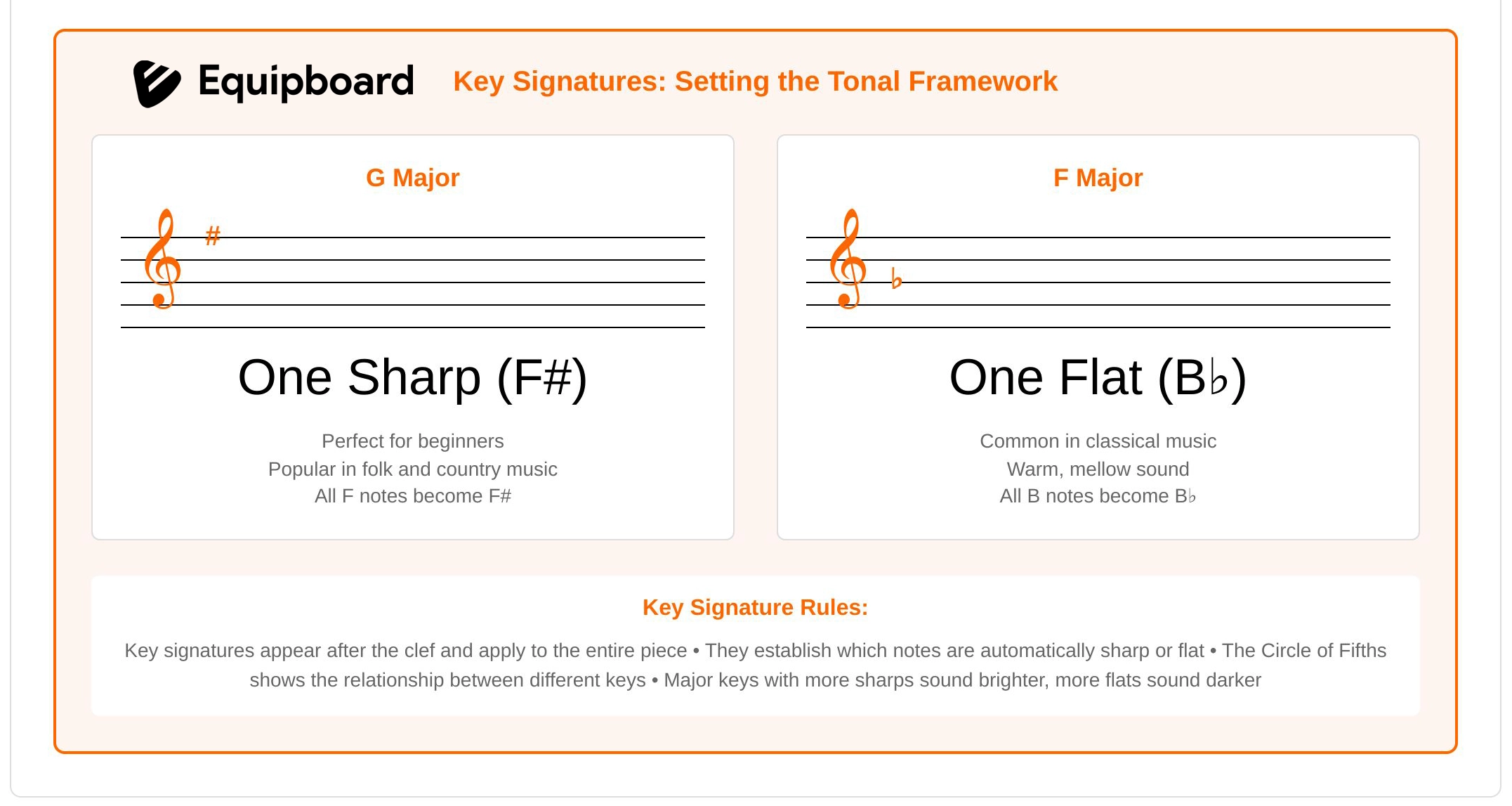
Key signatures appear right after the clef and tell you which sharps or flats to play throughout the entire piece. Instead of writing accidentals before every note, the key signature establishes the tonal center upfront.
G major has one sharp (F-sharp), while F major has one flat (B-flat). These are excellent keys for beginners because they're common and relatively simple. As you encounter more complex key signatures, you'll start to see patterns in how they're organized.
The Circle of Fifths is a helpful tool for understanding key signature relationships, though you don't need to master it immediately. Focus first on recognizing common keys and understanding how key signatures affect the notes you play.
Chromatic Possibilities
Understanding accidentals opens up chromatic movement in music. Many popular songs use occasional sharps and flats to create interesting harmonic progressions or melodic lines that wouldn't be possible with just natural notes.
Dynamics, Articulation, and Musical Expression
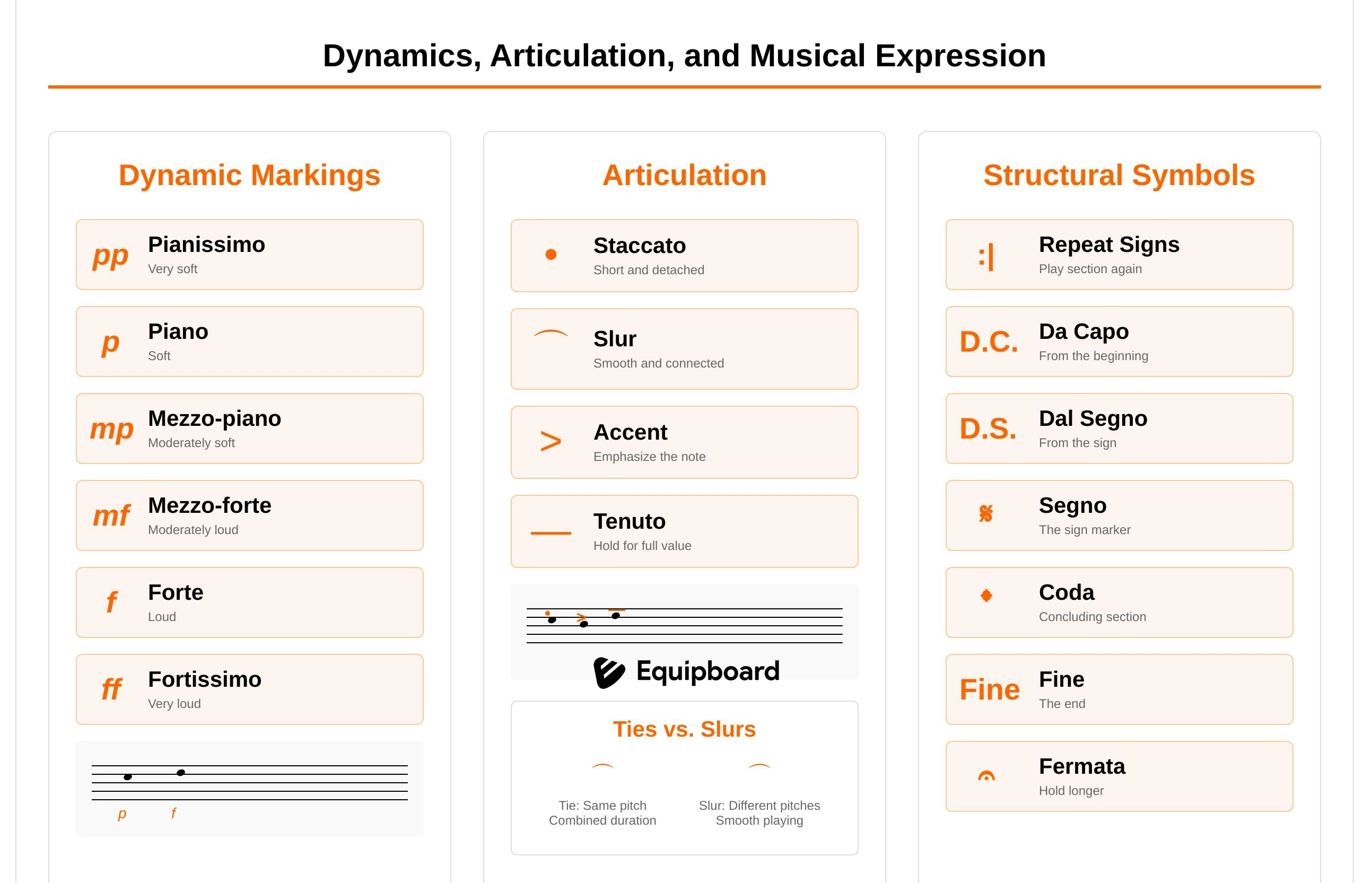
Sheet music captures more than just pitches and rhythms. It also conveys the emotional character and expressive qualities that bring music to life.
Dynamic Markings: Volume and Intensity
Dynamics tell you how loud or soft to play. The system uses Italian abbreviations: pp (pianissimo) means very soft, p (piano) means soft, mp (mezzo-piano) means moderately soft, mf (mezzo-forte) means moderately loud, f (forte) means loud, and ff (fortissimo) means very loud.
Crescendos (<) tell you to gradually get louder, while decrescendos or diminuendos (>) indicate getting softer. These dynamic changes create the ebb and flow that makes music emotionally engaging.
Articulation: How to Attack and Release Notes
Articulation markings tell you how to start and end notes. Staccato dots above or below notes mean to play them short and detached, like raindrops. Legato playing connects notes smoothly, often indicated by curved slur lines.
Accent marks (>) tell you to emphasize certain notes by playing them with extra force or attack. Tenuto lines indicate holding notes for their full value with slight emphasis.
It's important to distinguish between ties and slurs. Ties connect two notes of the same pitch, combining their durations. Slurs connect different pitches and indicate smooth, connected playing.
Structural and Navigational Symbols
Repeat signs (:| |:) tell you to go back and play a section again. The opening repeat sign shows where to start repeating, while the closing repeat sign indicates where the repeated section ends.
Da Capo (D.C.) means "from the beginning," instructing you to return to the start of the piece. Dal Segno (D.S.) means "from the sign," telling you to jump back to a special segno symbol.
Coda marks indicate jumping to a concluding section, while Fine marks the actual end of a piece when repeats and jumps are involved. These symbols help composers create efficient notation for songs with complex structures.
Practice Tips and Tools: Putting It All Together
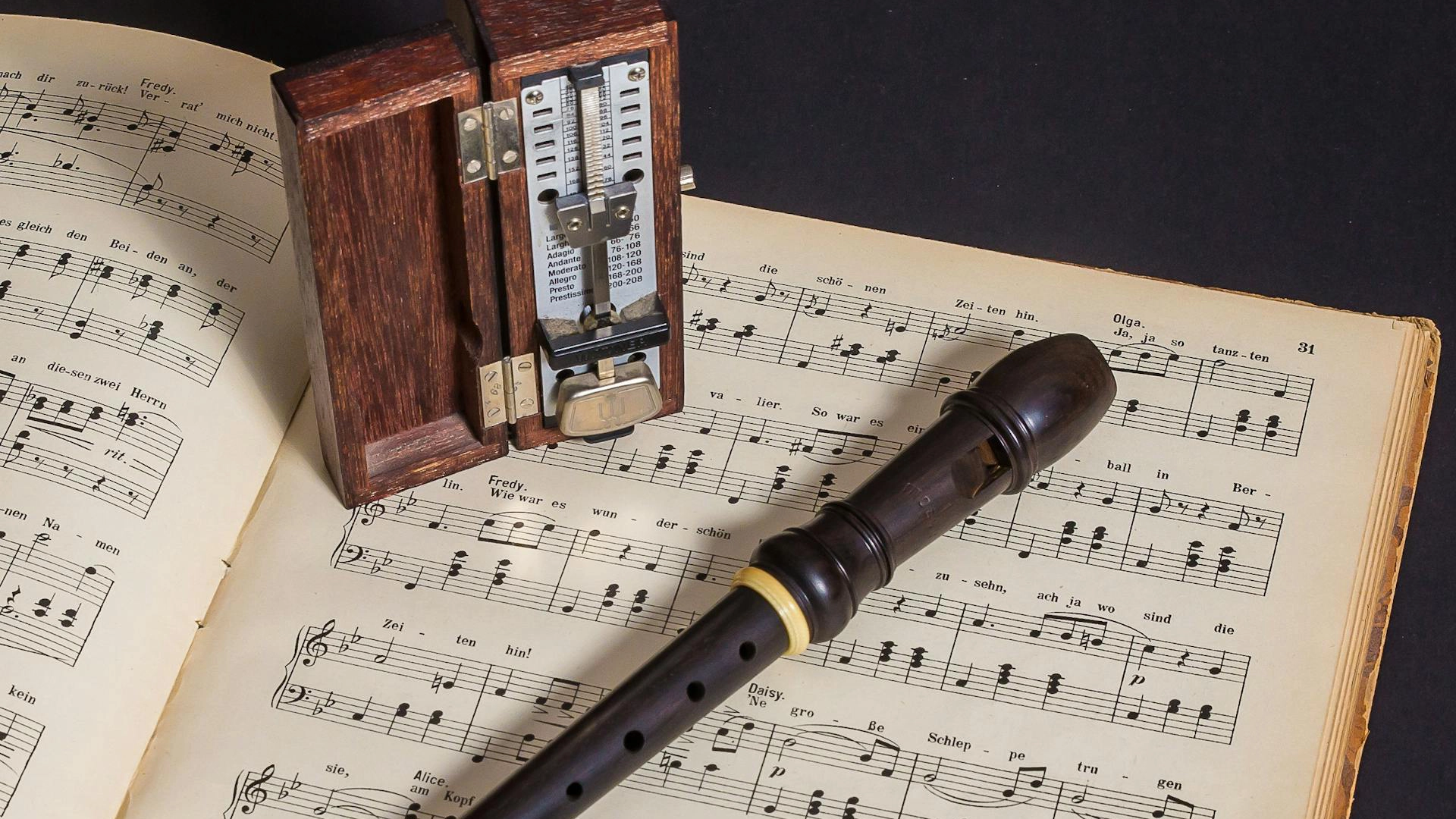
Learning to read music is like learning a new language. It requires consistent practice and patience, but the right approach makes all the difference.
Building Your Reading Skills Step by Step
Start by separating pitch and rhythm when you first encounter a piece. Practice clapping or tapping the rhythm while saying "ta" for each note, ignoring the pitches entirely. This helps you internalize the timing without getting overwhelmed.
Next, practice the pitches without worrying about rhythm. Say the note names out loud or play them very slowly on your instrument. Only after you're comfortable with both elements separately should you combine them.
Start simple and progress gradually. Children's songs like "Twinkle, Twinkle, Little Star" and "Mary Had a Little Lamb" use basic rhythms and small pitch ranges, making them perfect for beginners. "Ode to Joy" by Beethoven is another excellent choice because it moves mostly by steps.
Practice small sections at a time rather than trying to read entire pieces. Master two or three measures before moving on. Your brain needs time to process and retain the visual patterns of notation.
Essential Practice Tools
A metronome is absolutely crucial for developing good reading habits. It keeps you honest about timing and helps prevent the rushed or uneven playing that often develops when reading music slowly. Start with slow tempos and gradually increase speed as your reading improves.
Sight-reading apps like Tenuto or Music Theory Helper provide flashcard-style practice for note recognition. These tools are perfect for building automatic recognition of notes in different clefs and positions.
Consider investing in beginner sight-reading books specific to your instrument. These collections progress logically from simple to complex, giving you structured material that builds your skills systematically.
Making Practice Stick
Set aside dedicated reading time separate from your regular practice routine. Even 10-15 minutes daily of focused sight-reading will yield better results than occasional long sessions.
Read music away from your instrument sometimes. You can practice note recognition, rhythm counting, and understanding musical structure just by studying scores visually. This mental practice reinforces your understanding without the physical challenges of playing.
Conclusion: You Can Read Sheet Music!
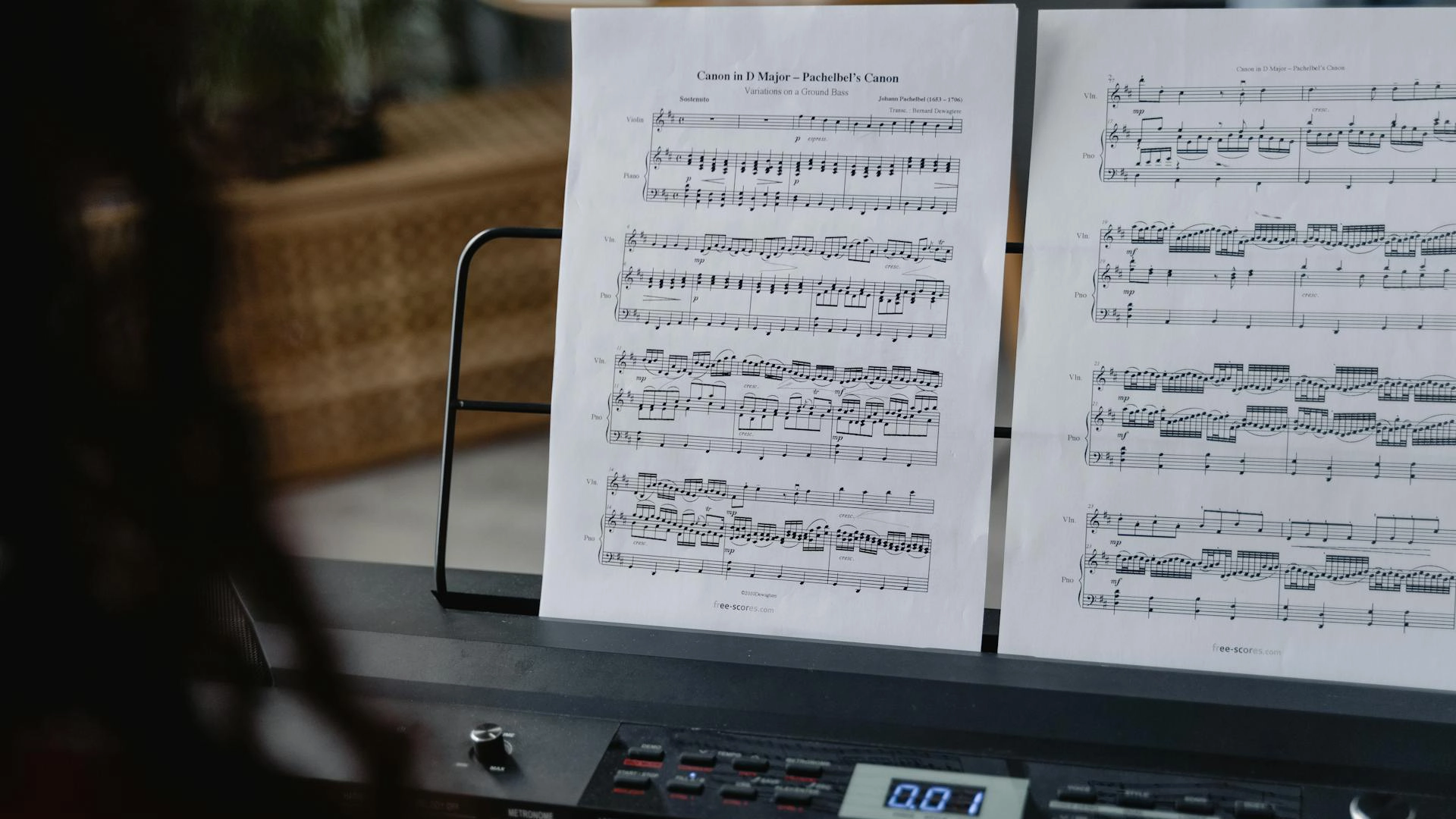
Learning to read music notation transforms you from someone who plays music to someone who truly understands the language of music. This skill connects you to a vast world of musical knowledge and opens up possibilities for growth that extend far beyond just playing notes on a page.
The journey from beginner to confident music reader takes time and patience, but every small step forward builds your musical foundation. Whether you're deciphering a simple folk song or tackling a complex jazz standard, the principles remain the same: understanding pitch, rhythm, and expression as they work together to create meaningful music.
Start with simple pieces and be patient with yourself as these concepts become second nature. The investment you make in learning notation will pay dividends throughout your entire musical journey, making you a more versatile, confident, and well-rounded musician.
About the authors

S. Jino is an accomplished multi-instrumentalist and music producer based in Kolkata, India, distinguished by his self-taught mastery and unique blend of technical acumen and musical performance. His extensive experience was forged through hands-on dedication, starting with the full restoration of a broken guitar. Jino's capabilities span keyboards, pedals, and advanced digital production, reflecting a comprehensive skill set developed independently. As a significant contributor to the music scene, Jino regularly performs with worship bands and college ensembles. He has also established himself as a reliable and authoritative professional in freelance mixing, mastering, and original music creation. Inspired by the innovative sounds of Brian May and David Gilmour, and influenced by Kolkata's vibrant metal community, Jino is committed to the intricate art of vintage gear restoration and the continuous exploration of music and technology fusion. His current professional setup, featuring a meticulously restored nameless guitar, a Fender Player Strat, and a Boss Katana 50. Read more
.webp)









.webp)