By Gear Experts
Table of Contents

Equipboard
Equipboard is the world's largest community of artists and their gear. Read our review process.
We are reader-supported. When you buy through links on our site, we may earn an affiliate commission. Learn more.
Our Picks


-l.webp?v=1784455267)


When vintage delay units come to mind, a few key players such as the Maestro Echoplex EP-3, Roland RE-201 Space Echo, and even Binson Echorec T7E come to mind. Maybe even Digital units such as the TC Electronic 2290 or Korg SDD-3000, but today a growing number of players are discovering the magic of Oil Can Delay, a long forgotten technology, that uses a spinning drum and a conductive liquid to record and create repeats, in a similar fashion to tape units. This is in no way a comprehensive list, but a rough guide to some of the oil can based units on Equipboard, and modern alternatives to achieve that sound.
You’ll see these. They exist, they hardly ever work, no one works on them or knows how to. They’ll kinda kill you if they don’t work right. Fluid, an aluminum can, and 110 volts of electricity, they don’t mix that well. - Josh Scott
Rickenbacker Model A-11 Ek-O-Tone
1963

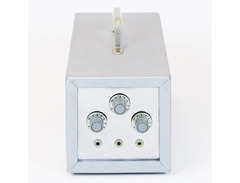
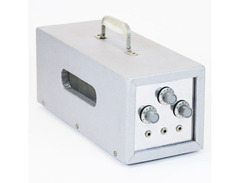
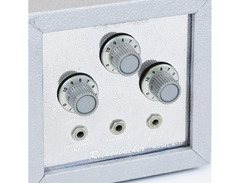




The oil can delay was Invented by Ray Lubow of Tel-Ray, the California based company that would later come to be known as Morley, and patented in 1959. Shortly after, the Rickenbacker Model A-11 Ek-O-Tone would be one of the earliest oil can echo units introduced to market, and was likely produced by Tel-Ray under license. A few years ago one of these units went up for sale on Reverb, dated to 1963, but otherwise very little is known about them. These are simple three knob, tube powered units, but they appear to have a jack for an external footswitch to activate the effect that seems a little ahead of its time.
Standel Reverbalux

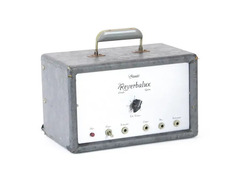
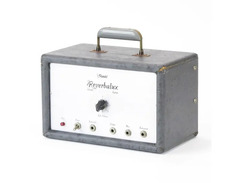
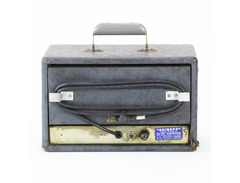
Produced as early as 1963 or 1964, these are seen as both the S40 one knob model and S41 three knob model, but it is unclear how much overlap there was between production of these units.
These are most clear predecessors to the ‘Adineko’, featuring that name on the back plate along with the Tel-Ray patent. The early Tel-Ray branded Adineko model 1001 bears a strong resemblance to these.
Gibson GA-4RE Reverb-Echo
1965-1967

| Analog/Digital | analog |
The Gibson GA-4RE Reverb-Echo appears to be a predecessor to Tel-Ray’s own units, produced by Tel-Ray under license. These are tube driven units that include a full wet/dry control, and their aesthetic perfectly matches the Gibson combo amps of the time.

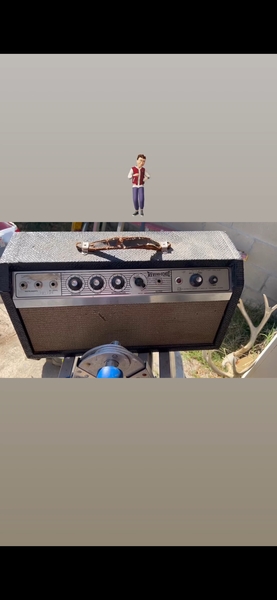
Fender Echo-Reverb

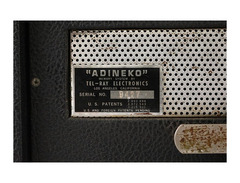
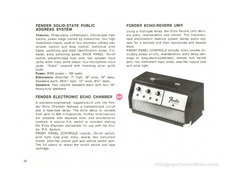

The Fender Echo-Reverb would be the most notable and obvious rebrand of a Tel-Rey unit, produced under license. These even feature the Adineko name on the back, used by Tel-Ray throughout the 60’s and 70’s. These are tube driven and feature two instrument inputs.
Fender Dimension IV Sound Expander

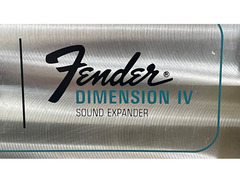
The Fender Dimension IV Sound Expander was a smaller unit produced by Tel-Ray, that included oil can based, vibrato like modulation and a shorter delay with no adjustment. These only include two switches, one to power the unit on and a second to toggle between the two effect types, labed Vibrato and Reverb. I’ve usually seen these in a more narrow housing, but a version with the same footprint as the Echo-Reverb also exists, with the ‘Adineko’ plate on the back, driven by two 12AX7 tubes.
Fender Variable Delay Echo Reverb

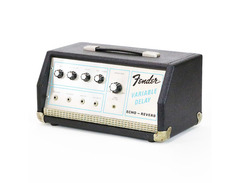
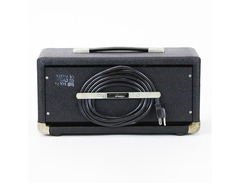
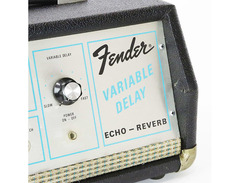
The Variable Delay Echo Reverb was a later oil can delay unit from Fender, also produced by Tel-Rey. This unit features multiple inputs, tone and sustain controls that affect the dry signal and an out for an external footswitch to activate the unit. These would be the most complicated units produced by Tel-Ray at this point, driven by two 12AX7 tubes.
Tel-Ray Ad-N-Echo

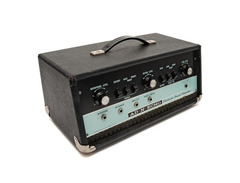
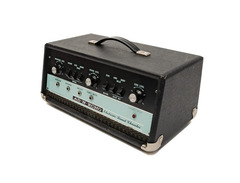
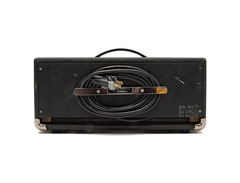
The Tel-Ray Ad-N-Echo, sometimes sold as the ‘Adinkeo’ would be the most well known of all vintage units.
The model 3000A black and teal faceplate is the version pictured on our Ad-N-Echo page. This version includes a variety of controls over delay time and the dry signal, with controls labeled ‘Distort’, Bass Boost, and Bright, it would be unfair to call this simply a delay unit, but more of an early sort of multi-effect.
Tel-Ray Super Organ Tone

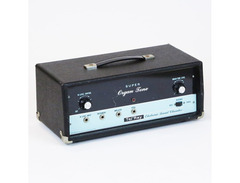
Housed a similar cabinet to the Model 2001 and 3000A Ad-N-Echo, the Tel-Ray Super Organ Tone features a rather sparse in comparison layout, with only two-knobs labeled ‘Hi-Level Control’ and ‘Organ Tone Level’ along with a two way switch for bass and treble response. It’s unclear if this unit was marketed to organ players, but for electric instruments it appears to produce a short delay and Leslie-like vibrato tone similar to other Tel-Ray produced units.


Morley EVO 1 Oil-Echo
2.5 (2)
| Analog/Digital | analog |
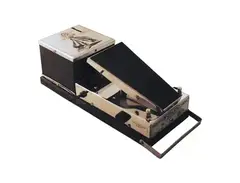
The EVO 1 Oil-Echo was an oil can delay in the form of treadle controlled foot unit. This would be built by Tel-Ray as their Morley pedal line, before they would eventually become the Morley company of today.


Morley 747 Milli-Second Delay Echo Reverb

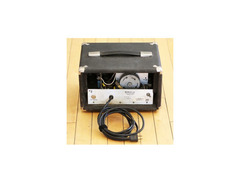
Dropping the Tel Ray name, the Morley 747 Milli-Second Delay Echo Reverb would simplify to a simple four time layout on the front, with the time control being an 8-way rotary knob ranging all the way up to 747 Milli-Seconds.
According a manual released by Morely; “The Morley 747MS Echo Delay incorporates the patented electrostatic memory system owned and used exclusively by Morley. The advantages of this system are many. It is quieter, provides a longer delay and will outperform any competitive unit in its price range: analogue, digital, or magnetic. The design is simple and straightforward. The functions the 747MS performs are those most generally wanted and used by the professional performer. The 747MS may be used with any amplified instrument or microphone with normal range of impedance. Always use good quality shielded cable to minimize interference, noise or hum. The 747MS is AC (Mains) powered for maximum reliability.”
Morley EDL Electrostatic Delay Line

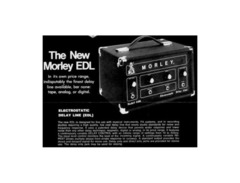
The Morley EDL Electrostatic Delay Line appears to be the final true oil can delay unit, produced up until the late 1970's. It’s unclear whether this unit is the same as the Morley 747 Milli-Second Delay Echo Reverb, but they appear to be incredibly similar apart from the time control on the 747 being an 8-way rotary knob.
In my research many sources have claimed that the liquid in oil can delays can be replaced with Windex, but the most hardcore fans of the Tel-Ray units claim that UCON Lubricant LB-65 is the truest modern day replacement that won’t cause any bodily harm. Just know before you repair, or try to repair one that the original liquid is toxic, and this work is best done by a professional.
Old Blood Noise Endeavors Black Fountain V3



Average Price: $254
High-end/Boutique
$100
$251+
Budget
Standard
High-end
| Bypass | true bypass |
| Analog/Digital | digital |
| Mono/Stereo | mono |
| Power | 9V |
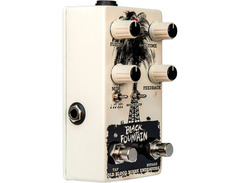
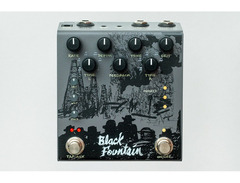
One of the most popular and well regarded Oil Can pedals is the Old Blood Noise Endeavors Black Fountain, introduced in 2014. According to Old Blood Noise Endeavors; "The Modern mode emulates the classic long delay "oil can" units such as the Morley EDL, Tel-Ray Model 10 and Fender Echo-Reverb." This pedal exists in several variations, with the Black Fountain V2 adding an expression pedal input and a soft click footswitch. V3 adds additional circuit revisions, a tap tempo footswitch, and additional toggle for rhythmic subdivisions.


Old Blood Noise Endeavors Black Fountain Stereo
-s.webp?v=1784455267)
| Bypass | true bypass, buffered bypass |
| Analog/Digital | analog, digital, hybrid |
| Mono/Stereo | stereo |
| Power | 9V |
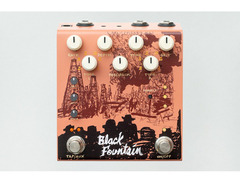
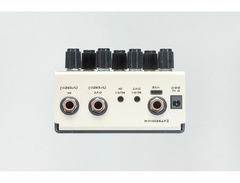
The new for 2025 Old Blood Noise Endeavors Black Fountain Stereo is the ultimate evolution of the Black Fountain, with full midi functionality, expression control over every knob, savable presets, and a new control over the amount of drive in the repeats, labeled ‘grit’. In my opinion the Black Fountain Stereo is the ultimate combination of modern reliability with infinite tweakability.


Greer Amps Black Tiger


Average Price: $164
Standard/Professional
$100
$251+
Budget
Standard
High-end
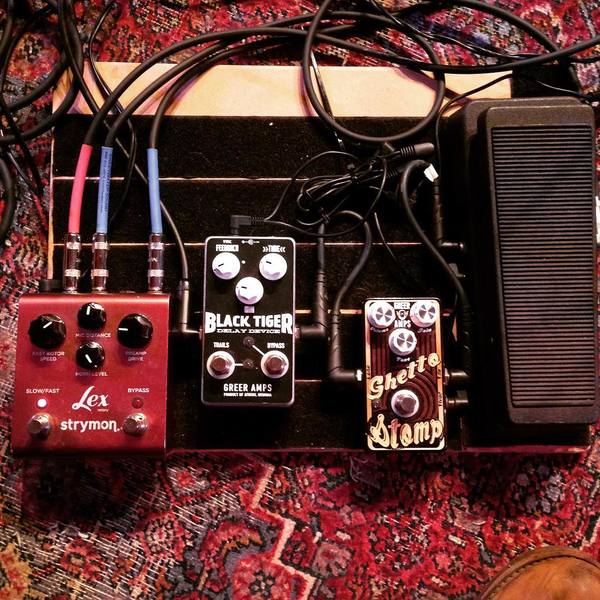
The Greer Black Tiger is a pedal I only recently discovered and have never had the chance to play, but I am a big fan of Nick Greer’s products and design philosophy. Like every pedal here it uses a digital delay section to produce the repeats, with simple controls for feedback, mix, and time, along with a second footswitch to toggle between true bypass and trail operation.
See how artists use this




Source Audio Nemesis ADT Delay Pedal


Average Price: $318
High-end/Boutique
$100
$251+
Budget
Standard
High-end
| Analog/Digital | digital |
| Mono/Stereo | stereo |
| Power | 9V |
| Current Draw | 200ma |
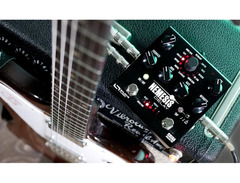
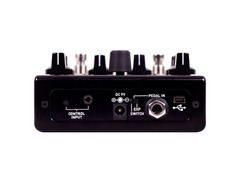
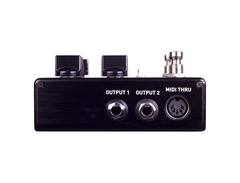
Another multi-mode delay pedal, the Nemesis features a well regarded emulation of an oil can delay among other classic sounds. This same model is featured in the Collider delay/reverb, but does not appear to be a preset on the original Nemesis.
TC Electronic Alter Ego V2 Vintage Echo
4.5 (39)

- Emulates a wide range of vintage echo sounds effectively
- Compact size fits easily on pedalboards
- TonePrint enabled for customizing sounds
- Includes looper function with infinite overdubbing
- See 6 more
- Some modulations may be overbearing for certain settings
- Requires a guitar to set tempo for use with synths
- Powering down reverts to default delay time's setting
- Supplied wall-wart adaptor may be fragile
| Bypass | true bypass, buffered bypass |
| Analog/Digital | digital |
| Mono/Stereo | stereo |
| Power | 9V |
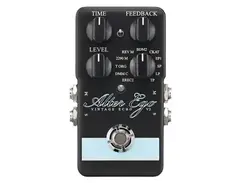
Borrowing its color scheme from the Ad-N-Echo, TC Electronic’s Alter Ego is a multi-mode digital delay that comes loaded with an emulation of the vintage Tel-Ray unit it resembles. The Alter Ego has gone through two main iterations, including the V2, in its standard form, along with the large format X4 version.
See how artists use this

.jpg)

.jpg)


.jpg?v=1784793230)


.jpg)
.jpeg?v=1784474176)

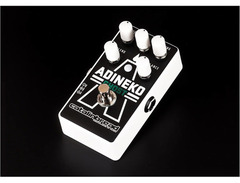
Catalinbread Adineko Ghost Delay Pedal

| Analog/Digital | digital |
| Mono/Stereo | mono |
| Power | 9V |
Adds an octave section to the Adineko’s delay path.
Catalinbread Adineko
5.0 (8)




Average Price: $193
Standard/Professional
$100
$251+
Budget
Standard
High-end
- Unique sound combines reverb, delay, tremolo, and modulation
- Authentic replication of oil can delay's ethereal, lo-fi quality
- Encourages creative use due to its distinct, moody delay sound
- Versatile for various genres like alt-country, jazz, blues, and more
- See 6 more
- Not suitable for those seeking crisp, 'pingy' delays
- Modulation (Viscosity) adds noise at higher settings
- Cannot produce clear slapback or controlled multi-tap repeats
- External DC input design can be problematic for some power supplies
- See 1 more
| Bypass | buffered bypass |
| Analog/Digital | digital |
| Mono/Stereo | mono |
| Power | 9V, 12V, 18V |
| Current Draw | 60ma |
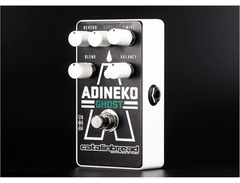
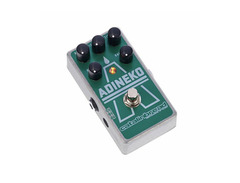
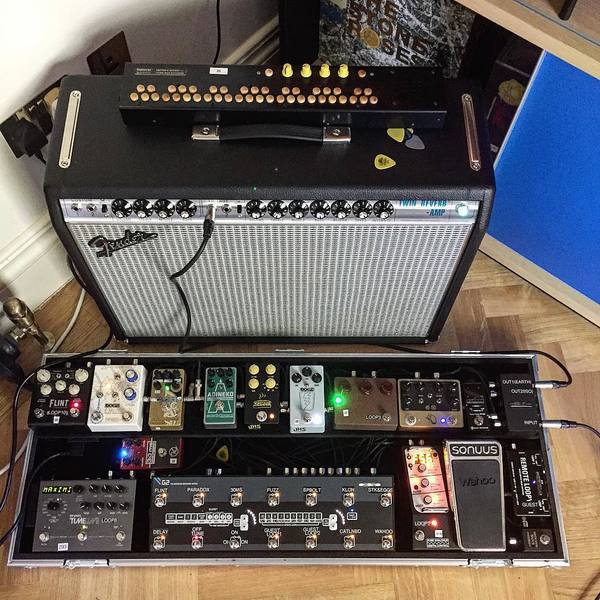
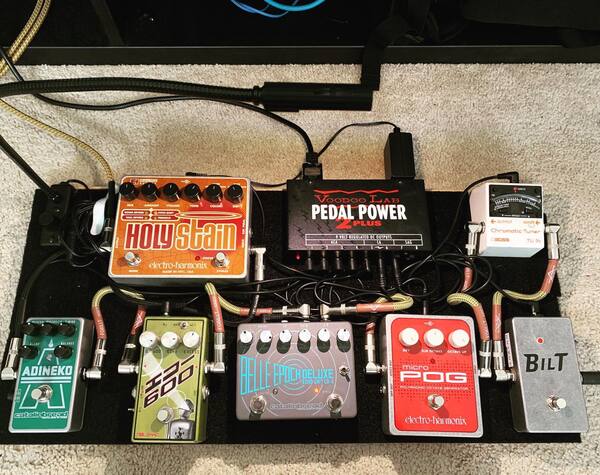
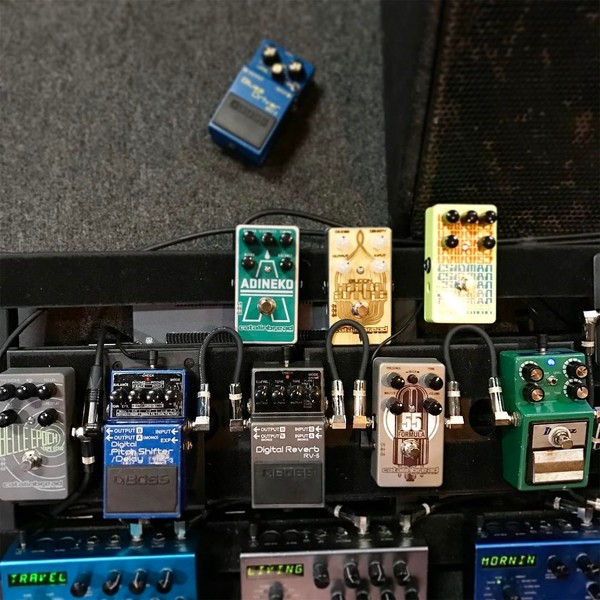
Proudly wearing its influences on its sleeve, the Catalinbread Adineko is a digital emulation of the Tel-Ray Ad-N-Echo oil can delay, in compact pedal form. Despite wearing the name Adineko and emulating it down to the control layout, Catalinbread’s take can also achieve vibrato and modulation sounds similar to the Tel-Ray Deluxe Organ Tone and Fender Dimension IV.
See how artists use this






JHS 3 Series Oil Can Delay Pedal


Average Price: $98
Budget/Beginner
$100
$251+
Budget
Standard
High-end
- Doubles as a versatile chorus pedal with unique sound capabilities
- Features a secret mode with synth-like self-oscillation
- Sensitive to playing dynamics, enhancing expressive performances
- Offers both analog and digital delay sounds in one pedal
- See 5 more
- Limited availability, challenging to find in the market
- Discontinued, unlikely to be part of JHS's regular lineup
| Analog/Digital | digital |
| Mono/Stereo | mono |
| Power | 9V |
| Current Draw | 65ma |
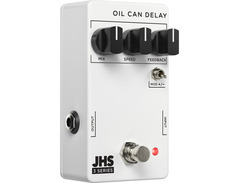
Finally we arrive at the JHS 3 Series Oil Can Delay, described by JHS as a digital pedal emulation of classic oil can echo units produced by Tel-Ray. Originally produced as a limited run for Reverb.com, in its ‘Blackout’ finish, the 3 Series Oil Can Delay was developed with guitarist Nels Cline of Wilco in mind, after complaining about the maintenance of original units to JHS’ own Josh Scott. Now a standard production pedal, the 3 Series is a great option for $99, and even features a ‘secret’ mode that appears to emulate two oil can drums, for double repeats.
Modern Oil Can delays
Many of the original oil can units suffer from a range of reliability issues with the liquid drying out, general disrepair, or scarcity. Many modern pedal companies have sought to rectify this issue, by producing modern day takes on the oil can delay sound, in the form of more compact guitar effects pedals.
Top Ranked Delay Effects Pedals on Equipboard
-m.webp?v=1784818682)


About the authors
Equipboard contributor. I like guitars, amps, and especially pedals, repairing and sometimes building them. Hearing Duane Allman made me want to pick up guitar, but I’m not too great with a slide. My current favorites would be Jimi, Danny Gatton, Peter Green, Magic Sam, Rory Gallagher, and Bill Frisell among many others. I especially like Telecasters and Vox amps and the Nobels ODR-1 overdrive. My username is a play on the first musician I ever remember hearing, The Boss. I am also a Bob Dylan impersonator. Read more
New in Delay Pedals


$259.00 - $288.00


$203.00 - $249.00


$133.00 - $241.99




.jpg)

.jpg)

.jpg)