

By Gear Experts
Table of Contents

Equipboard
Equipboard is the world's largest community of artists and their gear. Read our review process.
We are reader-supported. When you buy through links on our site, we may earn an affiliate commission. Learn more.
Our Picks

Gets high marks for its quality, reliability, and simplicity. 5 mins loop time & friendly price tag make it an indispensable tool.
Read more


-l.webp?v=1785237528)
The RC-1 stands out for its simplicity, stereo input and outputs, and ample 12 minutes of recording time.
Read more
Super simple looper with stereo inputs & outputs and 10 minutes of recording time.
Read more


Unparalled looping features for the price. From computer connectivity, stereo output, click tracks, reverse playback and more this looper has it all at with solid build quality. Expandable memory also gives you virtually unlimited CD-quality audio recording.
Read more


Gives you 24 minutes of recording time plus a whole host of other features. Excellent looper with expandable memory that comes with hundreds of presets, effects, and backing tracks making it stand out as an ideal practice tool.
Read more-l.webp?v=1785216649)
Electro-Harmonix 720 Stereo Looper
Offers 12 minutes of looping split into 10 banks. Tons of features (stereo, 1/2 speed, reverse, fade-out) in a small enclosure. Great value.
Read more
Pricey, but offer studio quality audio, tons of recording time and a myriad of features.
Read moreIf play acoustic or electric guitar, a looper pedal may prove to be one of the most valuable music purchases that you ever make. Loopers can help you practice technique by slowing down or speeding up pieces of songs you are trying to master, help you create elaborate layers to build songs like Ed Sheeran or Damien Rice, or used limitedly as an effect for sonic backdrops. Whether you plan on using your looper alone to practice in your bedroom with an acoustic guitar or in a live performance with an electric and a full band, these are the best loopers pedals on the market.
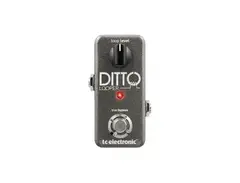
TC Electronic Ditto Looper
4.5 (367)
The Ditto gets high marks for its quality, reliability, and simplicity.









Average Price: $82
Budget/Beginner
$100
$301+
Budget
Standard
High-end
- Compact size fits any pedalboard
- Simple interface, easy for beginners to master
- True bypass ensures clean, unaltered tone
- High quality 24bit recording delivers clear sound
- See 6 more
- Footswitch durability concerns with heavy use
- Limited functionality compared to more advanced loopers
- Volume drop issues with line-level FX loops
- Quick double-tap requirement can be challenging to master
- See 6 more
| Looping Time | 5 minutes |
The TC Electronic Ditto Looper pedal is one of the simplest and best looper pedals on the market today for most guitarists. We are not alone in that opinion, as the Ditto seems to be ubiquitous on pro artists' pedalboards.
The Ditto is outstanding first and foremost because it’s a simple and affordable looper. TC Electronic set out to make a pedal by guitarists, for guitarists, and it shows in how straightforward it is to operate. The sound quality is outstanding due to its 24-bit uncompressed audio fidelity. This is important because it makes for great clarity and distinction between the layers you’re looping. When it’s not on, the true bypass circuitry ensures your guitar signal goes through unaffected. Taking it a step further, the Ditto has analog-dry-through, meaning that even when it’s on, the dry signal comes through the pedal, all analog, unaltered in any way.
The interface on the Ditto couldn’t be much simpler - you have a single volume knob to control the loop volume, and a single footswitch to operate the pedal. You get 5 minutes of looping time and unlimited overdubs , meaning you can record layers upon layers to your heart’s content.
It can take a little practice to get used to using the Ditto seamlessly. Punch the switch once and the light turns red, which is record mode. Punch it again to stop recording, and the light turns green to indicate playback mode. The light conveniently blinks at the start of the loop. When it’s in playback mode, you can press the switch to arm it for recording, and it actually starts recording at the start of the loop, which is super convenient. Don’t like the loop you just recorded? Punch the switch and hold it for a second to undo (or redo). Press switch twice to fully stop the loop.
The TC Electronic Ditto Looper is not completely without flaws. For one, it doesn’t have a battery. You must power it with a 9V power supply providing 100 mA or more. Also, this pedal’s simplicity might not be for everyone. If you are a live performer with complex looping needs when it comes to your layers and arrangements, you might require more options that what the Ditto Looper provides. In that instance, the other pedals from the Ditto line may fit the bill.
If you are interested in playing live, consider upgrading to the Ditto X2 version. The beat sense of the X2 allows the pedal to pick up the tempo of drums. The mics are able to listen to something like a snare and adjust the tempo and be in time. It’s pretty incredible and eliminates the challenge of trying to time your looper perfectly in a live performance. You can always put it in practice mode to eliminate the tempo matching and use time stretching to slow it down or speed it up manually to practice techniques. If you're going to use the pedal in a band environment or live, we recommend the X2, but for bedroom playing and practicing, we recommend the simplicity of and economy of the base Ditto.
Bottom Line: The TC Electronic Ditto Looper is, overall, the best looper pedal out there right now if you are looking for simplicity. Any looper in the Ditto series will give you great sound quality, and the impact to your guitar’s tone is minimal, if not nonexistent. It’s definitely the looper to get if your looping needs are relatively straightforward. It's built like a tank and does exactly what it claims with aplomb. The simple interface is great and the small footprint is very pedalboard friendly.
See how artists use this





Boss RC-1 Loop Station
4.5 (146)
-s.webp?v=1785237528)


Average Price: $104
Standard/Professional
$100
$301+
Budget
Standard
High-end
- Easy to use; intuitive operation
- Visual loop indicator provides helpful feedback
- Solid build quality typical of BOSS pedals
- Good sound quality, maintains clarity between loops
- See 6 more
- Erasing a loop plays back for 2 seconds, problematic for live use
- Limited to single loop storage, no preset capabilities
- No included AC adapter; additional purchase necessary
- Requires precise timing to avoid sync issues in loop layers
- See 1 more
| Looping Time | 12 minutes |
When you look at the Boss RC-1 Loop Station, you'll immediately notice its streamlined design and user-friendly interface. The RC-1 stands out for its simplicity, making it a great choice for both beginners and seasoned musicians who want a straightforward and reliable looping experience. Boss has long been known for its build quality and reliability, and the RC-1 is no exception.
The most noticeable feature of the RC-1 is its newly designed loop indicator. This innovative addition displays the current loop mode with a 24-segment LED indicator, making it easy to see at a glance whether you’re recording, overdubbing, or playing back your loop. This visual aid is especially useful during live performances where quick and clear feedback is crucial.
Operating the RC-1 is incredibly straightforward once you get the hang of it. Check out our review and tutorial video for helpful hints.
As you can hear in our test, the RC-1 delivers the high fidelity you’d expect from Boss. The loops are clear and precise, making the RC-1 suitable for both practice and performance settings. One of the standout features of the RC-1 is the retention of the last recorded phrase even after the pedal is turned off. This means you can develop song ideas over multiple sessions without losing any progress. This feature is particularly valuable for songwriters and performers who build complex arrangements over time.
With up to 12 minutes of stereo recording time, the RC-1 offers more than enough capacity for most performances and practice sessions. The stereo inputs and outputs allow for versatile connection options. The pedal runs on a single 9-volt alkaline battery, providing approximately 4.5 hours of operation time, or you can opt for an AC adaptor (sold separately) for longer sessions.
The RC-1 also supports flexible external footswitch options, such as the FS-7 (sold separately), allowing you expanded control with the ability to start and stop loops seamlessly with an external footswitch.
While the RC-1 may not have the extensive features of more advanced Boss models like the RC-5 or big brother RC-600, its simplicity is its greatest strength. It reduces the learning curve associated with more complex loopers, allowing musicians to focus on creativity rather than technical details.
Bottom Line: The Boss RC-1 Loop Station is a top-tier choice for those seeking a reliable, easy-to-use looper pedal. Its straightforward design, coupled with features like the 12-minute recording time, stereo inputs/outputs, and the innovative loop indicator, make it an excellent addition to any musician’s toolkit. Whether you’re a beginner just starting out with looping or a professional looking for a dependable pedal, the RC-1 offers a great balance of simplicity and functionality. Its ability to retain the last recorded phrase and support for external footswitches further enhances its utility, making it a versatile and valuable tool for a wide range of musical applications.
See how artists use this






.jpg)


DigiTech JamMan Express XT
4.0 (29)
Super simple looper features stereo inputs & outputs and 10 minutes of recording time.

- Stereo input supports Guitar+Bass simultaneously
- Multitrack looper with JamSync for synchronization between pedals
- Compact size, easy to fit on pedalboards
- Simple to use, great for practice and potentially live use
- See 6 more
- Reported unreliability issues
- Volume potentiometer and footswitch functionality inconsistencies
- Needs isolated power supply to avoid hiss when daisy-chained
- JamSync may fail to synchronize correctly
- See 4 more
Loop Time: 10 minutes
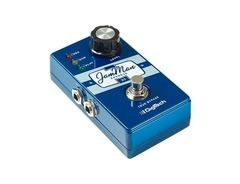
If you prefer a simple looper pedal but want a bit more than what the TC Electronic Ditto offers, the DigiTech JamMan Express XT might be the ideal looper for you.
The JamMan Express XT's chassis feels nice and robust, the footswitch is true bypass, and it features 24-bit/44.1kHz audio quality.
The TC Ditto and DigiTech JamMan Express XT are very similar in that they're both super simple , with only one knob and one switch. However, the JamMan Express XT has a few interesting upgrades:
- It can record up to 10 minutes.
- It has stereo inputs & outputs (you can have that on a Ditto if you get the slightly pricier Ditto Stereo Looper).
- It has separate LED lights to indicate if you are recording, overdubbing, or playing back.
One cool thing is that you can clear your loop silently if you press and hold the footswitch, without the small audible stutter present in some other loopers.
You can use a 9v battery to power the pedal (DigiTech even includes one), but we strongly recommend a power supply, since this pedal drains the battery very quickly.
Bottom Line: When it comes to beautifully simple looper pedals, put the DigiTech JamMan Express XT on your short list. The price is great, you get a whopping 10 minutes of record time, and you can even sync up multiple DigiTech loop pedals using the JamSync feature.
See how artists use this


.jpg)





DigiTech JML2 JamMan Stereo
4.0 (36)
From computer connectivity, stereo output, click tracks, reverse playback and more this looper has it all at with solid build quality.


Average Price: $146
Standard/Professional
$100
$301+
Budget
Standard
High-end
- Easy to load songs with MP3s directly to SD card
- Supports stereo input/output and microphone input
- Expandable storage with SD cards
- Features like metronome/rhythms, tap tempo for enhanced functionality
- See 2 more
- Robs tone of fidelity, affecting sound quality
- Onboard EQ missing, limiting tone control
- Manufacturer's software for loading loops may not work
- Learning curve for new users, not beginner-friendly
- See 1 more
Loop Time: 35 minutes, up to 16+ hours with expandable memory
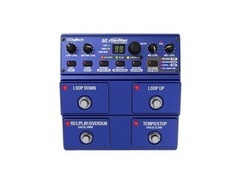
Digitech had a very clear frame of mind when they were designing the Digitech JamMan Stereo pedal - to make one of the most versatile pedals in this price range without unnecessarily complicating the looping process... and they delivered. This looper is very intuitive and becomes easy to use relatively quickly. You can record multiple sections or loops of the song on different banks and then easily cycle through the loops to select your desired one.
A common gripe with many loopers is the limited recording options they offer. The JamMan works around that by supporting an SDHC card that can expand the memory allowing you to record up to 16 hours of high quality music.
The basic design does make it impossible to jump from one bank to another without cycling through all the banks in between but you can start the process of moving up and down the loop banks while the current loop is still playing and select the one you want. The device will wait for the current loop to finish playing before playing the selected loop. The loops can be stopped and started either abruptly or in a fader style. The tempo can also be increased or decreased on the fly. Using an external pedal, you can save the loops with your feet allowing for complete hands-free operation.
The build-quality is impeccable as the all-metal construction feels really sturdy. The footswitches are all heavy duty and can be stomped upon without a worry of breaking them or jamming them. The buttons and knobs do feel a bit flimsy in comparison to the rock solid footswitches but since they're meant to be operated by hand, they're sufficient.
The JamMan, in addition to looping, has rhythm and accompaniment capabilities built in. The JamMan Solo feature allows you to load things like a bass line, drums, and other forms of accompaniment allowing you to create a complex one-man band experience. This is a godsend for musicians who do not have all the necessary instruments and can load these sections using a computer. Using this feature is a bit more complicated than basic looping but once mastered can really help you out. It is also great to use as a practice tool.
As good as this pedal is, it does fall short in a few cases. The first is the lack of true bypass. This would have been fine had this device been a quiet one but it does generate a noticeable amount of noise. The buttons also make an audible noise when pressed without a loop playing which can be annoying. However, this is something you can live with at this price point.
Bottom Line: It is easily the most versatile looper at this price with some really innovative and powerful features. It also has a relatively shallow learning curve. If you're on a tight budget and need a feature-rich looper, it's hard to argue against the DigiTech JamMan Stereo. You get a virtually unlimited amount of recording time with stereo output, computer connectivity and near hands-free operation which typically costs a lot more.
See how artists use this



.jpg)




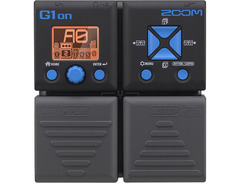
ZOOM G1on
4.0 (33)
Often cited as the best looper under $100, the G1on is also a multi-FX unit.


- Wide selection of modulation effects enhances versatility
- Affordable with a vast array of virtual stomp boxes
- User-friendly interface for customizing and saving effect chains
- Stereo output for expansive sound options
- See 6 more
- Volume levels of presets vary significantly
- Tuner operation can inadvertently mute sound
- Some tones may not meet professional grade expectations
- Durability concerns compared to higher-end models
- See 1 more
Loop Time: 30 seconds
The Zoom G1on Guitar Multi-Effects Processor is actually quite an incredible pedal, and an incredible bargain. The entry level price for a dedicated looper pedal is around $100, and with the G1on Zoom you not only get you a looper for half that price, but also a full-fledged multi-fx processor! Given the price of admission and the many recommendations it receives for people asking for the “best looper pedal under $100” , the G1on earns a solid place on our list. We’ll touch on a lot of its features, but we’ll mostly focus on reviewing it as a looper pedal, since that’s what you came for!
The impressive thing about the Zoom G1on is how good it sounds given its very budget-friendly price tag. It’s one of those rare guitar pedals that makes you wonder how they were able to pull of the price vs quality without sacrificing much. Sure, if you’re an effects pedal purist and have a pedalboard built out with the best of everything, multi-fx pedals might not impress you. For the rest of us, the amp and effects modeling of the G1on sounds fantastic. You get 100 guitar effects (delay, reverb, distortion, amp models, etc), 68 built-in rhythm accompaniment patterns to jam along with, and even a built-in tuner. Trust us, we're not exaggerating when we say this thing has some quality sounds.
On to the looping functionality. The Zoom G1on allows for 30 seconds of loop time, and infinite overdubs. 30 seconds is quite a bit less time than most dedicated loop pedals offer, but that’s one of the tradeoffs you have to make for this price. Still, it’s ample time to record an interesting lick or progression, making this a great practice tool. While having 60 seconds would be better, we’re personally ok with 30 seconds, since we don’t find ourselves needing to loop 5 minute songs very often. Of course, your milage may vary. The audio quality is good, 16-bit 44.1kHz (CD quality). Remember how we mentioned the 68 built-in rhythm patterns? Well, you can play along to any of them in your loops, which lets you get pretty creative with this thing. The drums sound much better and more realistic than the cheesy sounding ones of the Boss RC-3. Operation is simple, with two very easy-to-stomp foot switches (the left one controls play and record, the right one is to stop and clear). Unfortunately, there is no undo function if you messed up your latest overdub. The most fun thing about the loop feature is that you can use it in conjunction with the G1on’s effects. For example, throw on a drum rhythm, put on some delay and chorus, and make a loop with a chord progression. Next, switch to the octave effect, and your guitar suddenly becomes a bass guitar so you can record a bassline. Then, throw on a distortion effect, and play a lead line over your loop. This pedal makes it very easy and fun to be a one-(wo)man-band and do some interesting things.
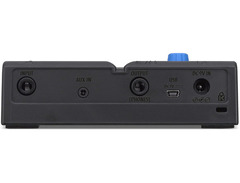
The Zoom G1on comes with 4 AA batteries, but you can also power it via a 9V adapter, or USB, which is a nice feature. Despite the body of the pedal being made of plastic, it actually feels solidly constructed, and has an all-metal base. We haven’t used it for long enough to comment on long-term durability, although what we see is promising.
Bottom Line: The pros and cons of the Zoom G1on Guitar Multi-Effects Processor as a loop pedal are fairly obvious. The most glaring features you will miss are a lack of undo, and the relatively short 30 second loop time. On the plus side, this is as inexpensive as a loop pedal comes , and with it you get a very decent sounding multi-fx unit. With the headphone output, you could take this thing with you anywhere and jam out or practice without bothering anyone else. If you’re on a budget and want a looper that is well-built and user-friendly, perfect for practicing, and has the added bonus of loads of quality effects and amp models, the Zoom G1on is a no brainer.
See how artists use this


Line 6 JM4 Looper
4.0 (4)
24 minutes of recording time plus with expandable memory, hundreds of presets, effects, and backing tracks.


Average Price: $180
Standard/Professional
$100
$301+
Budget
Standard
High-end
- Versatile multi-effects pedal with guitar and microphone inputs
- Quality EQ settings enhance microphone use
- Allows simultaneous use of guitar, microphone, and drum machine
- SD card storage for loops and tracks
- See 6 more
- Built-in reverb quality may not satisfy all users
- Limited to 1 or 2 GB SD cards, which can be pricey
- May not fully preserve low-end frequencies for bass guitars
Loop Time: 24 minutes
Line 6 has to be commended for the JM4 looper. While its primary function is as a looper, it can be so much more than that depending on how you use it.
The JM4 is a classically good looking pedal with features to match. The first thing that you will notice about the JM4 is its golden color scheme. It looks a lot more appealing than the huge number of looper pedals out there. It also goes for the long and slender look instead of the boxy look most pedals possess.
Getting to the features, this is so much more than a looper. Line 6 is an industry giant in the field of multi-effects processors and they have included many effect goodies on this looper. It also has separate inputs for a guitar and a microphone and both get some cool in-built effects to boot. There are over 200 preset sounds created by some of the most well-known music artists out there. It also includes some of the best amp models from the legendary Line 6 line-up. There are effects galore which you can mix and match to create your own sounds and there are 36 banks available where you can store your own styles.
Another handy feature is the collection of 100 realistic jam tracks. Most similar systems on such pedals sound too robotic and while they are great as a practice option, it can never recreate the feeling of playing with a live band. The Line 6 has remedied that somewhat by making its loops from live sessions. Jamming along to these tracks feels a lot more realistic and dynamic. These come in really handy and you can even use them for live performances once you figure out how to use them seamlessly.
All of these awesome features should not distract you from its primary feature, i.e. a looper. The JM4 allows you multiple overlays and has four footswitches dedicated to the looping function allowing for seamless operation. It offers 24 minutes of CD quality recording and this memory can be expanded to almost 6 hours with a memory card that you need to buy separately. You can also use this feature to add your own jam tracks to play over or manipulate by transposing and time stretching the tracks. We found the looping capabilities of this pedal quite satisfactory and using it is pretty straightforward. The footswitches are placed a little close together and can be a problem if you have big feet.
The primary sin of the JM4 is that it tries to do too much and in that regards has become way too complicated for its own good. The sound quality on the default setting isn’t all that great and you need a fair bit of tweaking to get this pedal to sound just right. The looping is pretty great but getting the effects to work just the way you want is pretty difficult. Also, since there are no footswitches dedicated to the effects, it is impossible to change them on the fly.
Bottom Line: The JM4 has made some really ardent followers. The first thing that we would like to get out of the way is that this is not a replacement for your guitar amps and pedals. It is a looper with some additional effects built into it. Buy it for the jam tracks and the looping capabilities. Look at all the effects as an additional feature. It is on the expensive side and whether this price is justified will depend on how much use you can get out of it. This is definitely a unique looper pedal with some great features. It is also one of those pedals that you will either love or hate. So consider everything it offers and see if that justifies the price and the steep learning curve.


Electro-Harmonix 720 Stereo Looper
5.0 (31)
12 minutes of recording time, stereo operation, and interesting FX in competitively-priced pedal.
-s.webp?v=1785216649)

Average Price: $163
Standard/Professional
$100
$301+
Budget
Standard
High-end
- Features like Reverse and 1/2 speed add creative options
- Intuitive and easy to use, even for beginners
- Solid metal construction and durable design
- Ability to store and save 10 different loops
- See 6 more
- Lacks built-in beats or rhythm features
- Some users report timing issues with standard rec-play-overdub flow
- No USB port for direct loop storage or management
- Power switch absent, requiring unplugging to turn off
| Looping Time | 12 minutes |
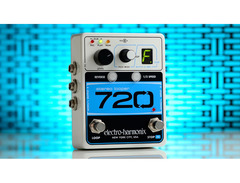
The Electro-Harmonix 720 Stereo Looper is a looper pedal that packs a lot of features in a relatively small enclosure, and whose price tag is extremely fair considering how much it can do.
The 720 in the name means you can record a total of 720 seconds, or 12 minutes of 24-bit/44.1kHz audio. You can split that time up into 10 separate loops which get stored in memory, and are retained even if you unplug the power.
To cover the basics, the 720 Stereo Looper features a rugged enclosure common to EHX pedals and comes with a 9v power supply (or you can use a 9v battery). The inputs and outputs are stereo, so you can loop your stereo synths or two mono instruments at the same time. We tried a guitar and a bass simultaneously and it worked perfectly.
The main looping is done with the LOOP footswitch in the bottom left, which you can use to punch recording in and out (you can also easily undo). REC and PLAY LEDs at the top help tell you what's going on. There are two buttons which let you reverse or 1/2 speed your current loop , so you can get pretty creative.
There's a MODE knob which cycles through three modes when pushed:
- L: Select which loop you want, 0-9.
- P: The display counts the seconds in your loop so you can keep track where you are.
- F: Set the loop to fade out when stopped, which sounds much nicer than an abrupt stop like most loopers.
We wish the number LED display would show more than one digit. On longer loops, the "P" loop progress mode is useful to see where you are, but if the loop is longer than 10 seconds the counter gets to 9 seconds then resets back to 0. Being able to count all the way to 720 (i.e. the max time) would have been great.
Bottom Line: Despite an annoyance or two with the display and the fact that it takes a little time to understand how to use everything, the Electro-Harmonix 720 is a very full-featured looper that doesn't take up a lot of space on your board. It's priced very reasonably considering all it can do and the 12 minute memory.
See how artists use this


.jpg)


.jpg)

.jpg)

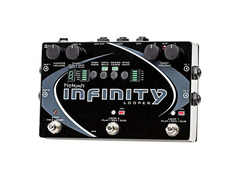
Pigtronix Infinity Looper
5.0 (15)
Pricey, but offer studio quality audio, tons of recording time and a myriad of features.

Average Price: $342
High-end/Boutique
$100
$301+
Budget
Standard
High-end
- Easy to master, reliable functionality
- Excellent MIDI implementation for syncing with other devices
- Stereo capability with two independent loopers for multi-instrument setups
- Separate volume controls for each loop offer great mixing flexibility
- See 6 more
- Misleading manufacturing location information
- Occasional unit lockups, possibly related to SD card issues
- Volume fluctuations with overlaid recordings
- Cannot select different presets via foot control, potentially limiting live use
| Looping Time | 5 minutes |
Loop Time: Limited to size of SD Card
If looping is at the center of your craft, and you demand one of the highest quality looper pedals around, you're going to want to take a close look at the Pigtronix Infinity.
Loop time is not really a limitation; it's limited to the SD card you put in it. The unit's audio is recorded in 24-bit/48kHz , which is a step above most other loopers (you can also export your saved loops via USB at that same quality).
The Pigtronix Infinity can perform all the normal looping functions - record, playback, overdub, undo, redo, etc. What sets it apart is the flexibility you get with the two available loops. You can run them in parallel (which is like most other loopers), or in series, which means you can build different song parts in each loop (verse and chorus for instance).
The routing is pretty intense too. You've got stereo inputs, where the left and right can be split and run to the two different loops, and even go to different outputs. There's even an auxiliary out so you can send the loop elsewhere like your drummer, or stage monitors, etc.
The MIDI sync is useful and lets you lock your loops to other MIDI devices.
On the downside, operating the Pigtronix Infinity has a bit of a steep learning curve because of everything it can do. Also, we strongly recommend buying with it the Pigtronix SPL-R Infinity Looper Remote Switch. It's a bummer that the footswitch is not included given the high price point.
Bottom Line: If you demand studio quality audio from your looper pedal, and want to take advantage of features like rock solid MIDI sync, running your loops in series, and much much more, the Pigtronix Infinity goes above and beyond most other looper pedals out there... provided you can handle the high price of admission.
See how artists use this





What Does a Looper Pedal Do?
For those of you who aren’t already aware, a looper pedal is a device which records the signal from your guitar and then plays it over and over again. A looper pedal differs from a delay because the signal is repeated for as long as the musician requires, whereas a delay will only repeat a signal for a short amount of time. A delay pedal is an effect, whereas a looper pedal is more of a tool.
What’s so great about a looper pedal is that it allows a musician to create their own backing tracks on the fly, giving him/her dramatically more control over their practice routine.
To give an example, let’s assume that you want to practice some jazz improvisation at a medium tempo in the key of C Major. Now you could spend half an hour on the web trying to find a jam track that’ll fit your needs, or you could use a looper pedal to easily lay down a basic chord progression and get to practicing. Having one handy as a practice tool will tremendously improve your guitar playing, timing, rhythm chops, soloing, and creativity.
Some musicians also use looper pedals for live performance, laying down the basic progression of the song and then adding ornamentation on top of it. A good example of an artist who commonly uses this technique is Ed Sheeran.
Here's an inspiring performance from Irish singer-songwriter Damien Rice, who uses looper pedals to not only loop his vocals, but also switches between acoustic and electric guitar to record different parts (the fun starts around 4:10 into the video). He would need four or five other musicians to do the work his one (or perhaps two) looper pedals are doing.
What Should I Look for in a Looper Pedal?
Having demoed a pretty wide variety of loopers, we’ve come to the conclusion that you don’t really need a lot of features in your looper pedal to get a lot of use out of it. Sure having the ability to slow tracks down on the fly or easily transfer them to your computer is handy, but it’s by no means a necessity. At the end of the day, most looper pedals on the market are going to perform basic looping functions fairly well and, provided you purchase a looper with a well built chassis (the case of the pedal), it should serve you well for a long time.
The thing to consider before purchasing one of our recommended loopers is how you are going to use the pedal. Live performances with a looper are very different than playing by yourself in your bedroom because you need more capabilites. These could include tempo matching, stereo output, and more that we'll discuss in detail in reviewing the individual pedals.
How We Tested These Loopers
To bring you the best loopers out there, we keep current and extensively research new products. We periodically review and revise this list as new pedals are released. We also test loopers at different price points to bring the best loopers at any budget.
We tested these loopers through our tube amps, solid-states, and even headphone amplifiers. In terms of electric guitars, we used a variety of single-coil and humbucker pickups, as well as solid body, semi-hollow, and hollow body guitars.
In short, we listened to these looper pedals in as many signal chains as possible while formulating our opinions of them.
Best Looper Pedals Under $100
The best looper under $100 is the TC Electronic Ditto. That said, it's not your only option. Depending on where you look, you can find the DigiTech JamMan Express XT for right around $100. With the DigiTech you get 10 minutes of recording time vs. the Ditto's 5 minutes, and stereo inputs and outputs.
If you look on the used market, there's a chance you can snag an Electro-Harmonix 720 Stereo Looper for around $100. The EHX 720 is a step up in terms of functionality, with 12 minutes of loop time and a memory that stores 10 loops, as well as some other neat features.
Top Ranked Looper Effects Pedals on Equipboard


-m.webp?v=1785236634)
Recent updates
About the authors
Michael R. Pierce is the co-founder of Equipboard and a lifelong musician with over 25 years of experience as a guitarist and gear enthusiast. He blends solid music theory chops (thanks to formal training in guitar, piano, and trumpet) with real-world experience, always exploring and experimenting across genres like rock, blues, and hip-hop. Michael launched Equipboard in 2013 after graduating from The University of Texas at Austin, leveraging his unique blend of musical passion, technological acumen, and community building. His current go-to rig features a Fender American Original ‘50s Telecaster, Analogman King of Tone, Strymon Flint, and a Fender ‘57 Custom Champ. Read more
Giulio Chiarenza is the co-founder of Equipboard and a lifelong multi-instrumentalist with a deep passion for music gear. Born in Italy and raised in the U.S., he holds a Computer Science degree from The University of Texas at Austin and blends technical acumen with decades of hands-on experience across guitar, piano, drums, and electronic production. Early in his career, Giulio was signed to a San Francisco-based EDM label, releasing both remixes and original tracks. These days, he helps steer Equipboard’s vision while personally testing and reviewing gear. He's never too far from his go-to guitar: a vintage 1978 Fender Telecaster Custom. Read more
Comments
Sign Up or Log In to add comments
73
How are these the winners? You've basically just listed a good majority of looper pedals available. Which is fine, but I would like to know which people prefer. I've gone from the RC-20 on to the RC-50 and then wanted to downsize and first got the RC-30. I thought the effects were for the most part cheesy and unusable. I am now with the Digitech JamMan Stereo and like it. When I downsized, I was mainly doing duo shows and now am back to solo shows and wish I had the RC-50 so I could create multiple loops. I am thinking about switching to the Pigtronix but would like to try it out if possible.
I also heard that the Boomerang is the best looper out there but very pricey.
.jpg?v=1785238054)
37855
@jasoncshaw You're exactly right! The old article definitely wasn't cutting it. We put in a LOT more research and just revamped it to truly call out the winners, i.e. the top 5 loopers that musicians all over the web are recommending.
Just to give you an idea of the raw data, the Boomerang III Phrase Sampler didn't quite make the cut for the top 5, getting a handful of recommendations. I suspect the reason for that is the high price tag, about $480 is what I'm currently seeing. That's simply out of reach for most casual looper pedal users. The Pigtronix Infinity Looper placed lower on our master list than the Boomerang. I think at the price range you're looking at, you would fall more in the looper pedal enthusiast camp! :)

3378
Good shout, with the Zoom multi effects, I have one, and used it for bits of looping, before I got my delay pedal, with a looper feature, and I wouldn't have actually considered it for a list like this, so props to Gchiaren/Michael. I would say that the drums aren't incredibly useful as a live tool, or for loops unless you build over them as there's no tap tempo, however I see that It'd only be used for rehearsal, and for that, and a bit of a lark I don't see why not; audio quality is good, inf overdubs, and being a MF it has a tonne of cool built in presets, specifically H bank, with the weird, and atmospheric settings, though no undo/redo is irritating. Its a bit of a bargain, and is immense quality all around for a lot of things, not just the looper.

Hey guys check this out: LOOP PEDAL with "STOP GAP" issue SOLVE https://www.youtube.com/watch?v=UJoRdhirth8
Cheers!

92
I need to get me one ....asap.

4934
New in Looper Pedals

$238.00 - $279.00
in Looper Effects Pedals Rank

-m.webp?v=1785217529)

$89.00 - $119.00
in Looper Effects Pedals Rank

Related Articles
.jpg)


Equipboard Gear Guides
Best Distortion Pedals for Guitar
Michael Pierce + 1 more
Updated August 2025

Equipboard Gear Guides
Best Compressor Pedals for Guitar
Michael Pierce + 1 more
Updated August 2025