Daft Punk
French electronic duo
Daft Punk's Gear



From a 2001 interview with Daft Punk: "We have a really small compressor, the Alesis 3630, which is $300. That's the main one we used on Homework and Discovery. The one we used the most is one of the cheapest ones on the market."
Find it on:


-m.webp?v=1785051086)
Daft Punk "...brought their own synths into the studio, with a modular synth and things like an Oberheim OB8 and a Juno 106 and quite a few old polyphonic analogue synths."
Find it on:

Per the official Mutronics website, Daft Punk are listed as Mutator customers. Good of Mutronics to keep the page alive despite the Mutator being discontinued in 2007.
Find it on:

Several Moog Voyagers can be seen in photos of Daft Punk's pyramid, i.e. their live gear setup.
Find it on:

In this 2001 interview with Daft Punk about Discovery, they list some of their preferred samplers; the 1200 is listed.
Find it on:
-m.webp?v=1784991525)
At 7:26, in this performance video by Daft Punk, one can see the TR-909.
Find it on:

In this 2001 interview with Daft Punk about Discovery, they list some of their preferred samplers, the Roland S-760 being on the list.
Find it on:

In a two-page spread image pulled from Mixmag, Thomas Bangalter says about Daft Punk live shows, "The show revolves around Ableton Live software on custom made super-computers which we remotely access and control with Behringer BCR2000 MIDI controllers."
In an exclusive interview with Ableton, Thomas Bangalter says, "The rule is: There are no rules. That is definitely the case for the freeform piece of software that is Live." Thomas Bangalter also turns to Ableton when he's looking for sonic warmth. "One of the things I prefer in Live is the proprietary Ableton effects plug-ins. They are amongst the warmest software effects. Sometimes I will import a Pro Tools track in Live, just to bounce it down with Ableton effects, to make it sound warmer and crisper, or dirty — I love dirt. I'm not a big ReWire fan, so I do it the old-school way, importing and exporting the sound files."
Find it on:


-m.webp?v=1785051077)
In this 2001 interview with Daft Punk about Discovery, their main synths are listed. The 808 and its cousin the 909 are both mentioned.
Find it on:

In this article on a Daft Punk fan site, it says that the duo used a Boss MT-2 Guitar Pedal with a Juno 106 synth to create the sounds heard on their song "Rollin' And Scratchin'"
Find it on:


Daft Punk is widely reported to have used the DigiTech X-Series Bass Synth Wah throughout their album "Human After All." While the YouTube demo by g3zar highlights the pedal's capabilities, it notably resembles the sounds prevalent in Daft Punk's work.
Find it on:

This 1997 interview with Japanese magazine 'Sound & Recording' contains a list of gear used on their album "Homework," among which is a Roland TB-303.
Find it on:

Daft Punk has a LinnDrum in this image of one of their performances from the 90s.
Find it on:

During an interview, Thomas Bangalter mentions his fondness for Ableton's Operator synth:
While Daft Punk record analog synths for thick melodies and lead lines, they're also fans of Ableton's built-in synthesizer. "Operator is one of the best soft synths out there, and I hate soft synths in general," says Bangalter. "It's great because it's got its own thing, it's not trying to emulate this or that." He adds: "Also, plug-in delay compensation in milliseconds is great. Live is getting better and better with each version."
Find it on:

According to the spectrasonics website, Daft Punk is known to use Spectrasonics products including Omnisphere.
Find it on:


A 1997 interview with Japanese magazine 'Sound & Recording' contains a list of gear Daft Punk used on their album "Homework," among which is a Mackie CR-1604.
Find it on:

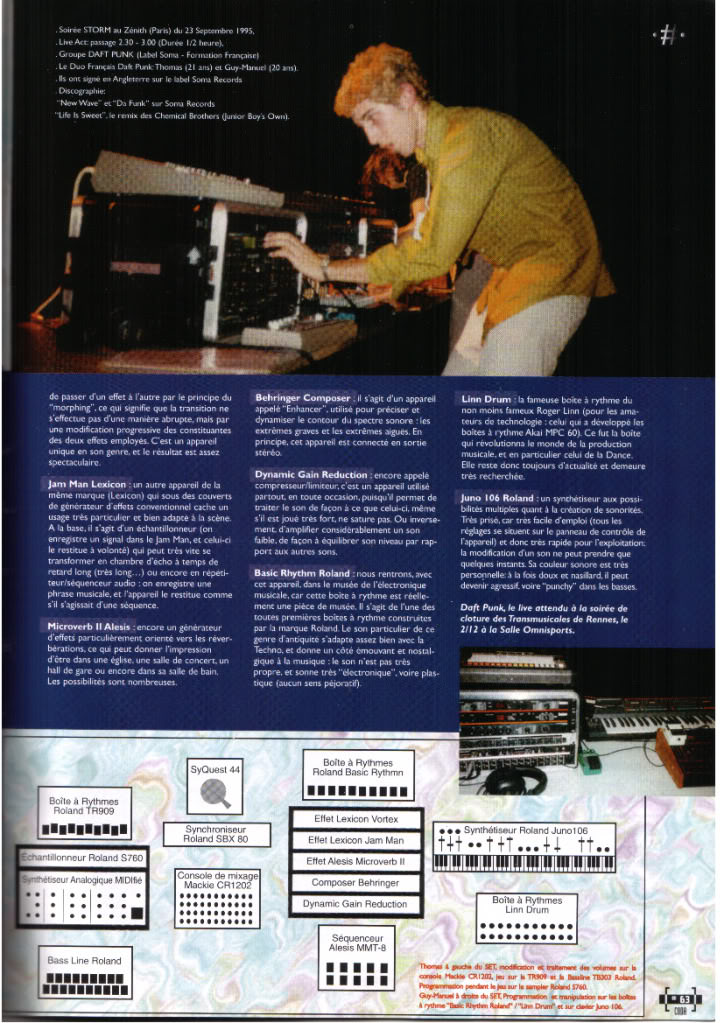
Per this photo dated 23rd of September 1995 and a late-'90s feature in CODA magazine, Daft Punk employed a Studio Electronics MIDIMoog as part of their live performance setup during the Homework era. Note that the rack shown in the CODA magazine diagram features a Roland S-760 rack sampler directly above the 4-unit high analog synth, mirroring the setup shown in the 1995 photograph. While the photo evidence may not be high-res, there were no other rack mounted analog synths of this size on the market in before or during this timeframe.
Find it on:

Used on Discovery, as stated in this May 1, 2001 Remix interview.
You use vocoders and phase shifters on many of your tracks.
Bangalter: People always ask us what vocoder we use, but every one of our vocal tracks uses a different vocoder effect. We have the old Roland one [an SVC-350], Auto-Tune, and a Digitech Vocalist. We take the same approach with phase shifters. Every track on this album uses a different phase shifter. We have a Mu-Tron phaser, a Moogerfooger pedal, an old AMS phaser, and an Ensoniq DP-4. With the older items, you can have several of the same model and they all sound different.
Find it on:

In an interview with Japanese magazine 'Sound & Recording," the Roland MKS-80 can be seen in a list of gear Daft Punk used while recording their album "Homework."
Find it on:

A 1997 interview with Japanese magazine 'Sound & Recording' contains a list of gear Daft Punk used on their album "Homework," among which is an Ensoniq DP/4+.
Find it on:

Used on Discovery, as stated in this May 1, 2001 Remix interview.
You've also broken away from the standard house music instrumentation. For example, you used Oberheim and Linn drum machines on several songs instead of the usual 808 and 909.
Bangalter: We used an Oberheim DMX and a Linn drum a lot. There is a Sequential Circuits Drum Tracks on “Short Circuit.” It's not like we're going against what other people are doing. We're just opening up the music to new ideas. The instrument itself is not as important as the way we use it. Instruments come with certain instructions in the manual, and many people can't look beyond those rules. People ask us why we like to use vocoders or electric keyboards from the '60s, but to us instruments are just tools. The idea is more important than the instrument. One of the cool things about the house music spirit is that it inspired musicians to use instruments for things they weren't designed to do.
Find it on:

Per this March 2001 interview with Keyboards Magazine (FR), Daft Punk employed a Linn 9000 during the recording of Discovery.
Find it on:

In this enlarged photo from a French music publication you can see the familiar black and silver cosmetic and distinctive font of a Valley People Dyna-mite on the piece of gear 2nd from bottom below the Composer. Full CODA magazine page here: https://images.equipboard.com/uploads/source/image/62883/7Tx7Fmq.jpg
I would know the dynamite, I have 3 of them including one of these early ones... apart from the font you can't miss those awful circular Valley power and link buttons on the right of the unit that don't light up but just have a colored piece of paper push forward to indicate they're engaged. The device is on because the yellow paper is showing through the power button on the right but we know daft punk's channels are not linked because the link button on the left is showing black in the clear plastic.
Find it on:

Daft Punk use Pro Tools to record ideas and demos, which they then take into the studio to record properly. Pro Tools was used during all stages of recording the tracks for Random Access Memories.
Find it on:


A Microverb III can clearly be seen in this photo of Daft Punk's late-90s live rig - courtesy CODA magzine. Note: the article cites this as a Microverb II, which was half-rack size, but the photo in question clearly shows a rack-sized Microverb III.
Find it on:

Daft Punk's Thomas and Guy-Manuel used the Prophet-5 in early recording sessions for Random Access Memories.
Find it on:

Daft Punk record bass guitar via a Neve 1081 and Teletronix LA-2A. The LA-2A was also used to record a couple of vocalists, and during the mixing process it was used for parallel compression on the kick and snare.
Find it on:

"Thomas and Guy-Man had a bunch of keyboards during these early [recording] sessions, like the [Sequential Circuits] Prophet 5, [Roland] Jupiter 6, Juno 106, Yamaha CS80."
Find it on:

In a SoundOnSound article, Daft Punk is noted for using the Roland Jupiter-6 synthesizer during the recording sessions for "Random Access Memories."
Find it on:

Some of the recording of Daft Punk's Random Access Memories took place in Studio C of Conway Recording Studios, which contains a Neve 88R desk, "...which is Mad Labs modified and has 24 remote Neve mic pres, consisting of 12 1081s and 12 Air customs."
Find it on:
This is a community-built gear list for Daft Punk.
- Find relevant music gear like Studio Equipment, Software Plugins and VSTs, Headphones, and other instruments and add it to Daft Punk.
- The best places to look for gear usage are typically on the artist's social media, YouTube, live performance images, and interviews.
- To receive email updates when Daft Punk is seen with new gear, follow the artist.
Discography

Homework
1997

Discovery
2001
Alive 1997
2001

Daft Club
2003
Human After All
2005
Human After All (Remixes)
2006

Alive 2007
2007
TRON: Legacy - The Complete Edition (Original Motion Picture Soundtrack)
2010
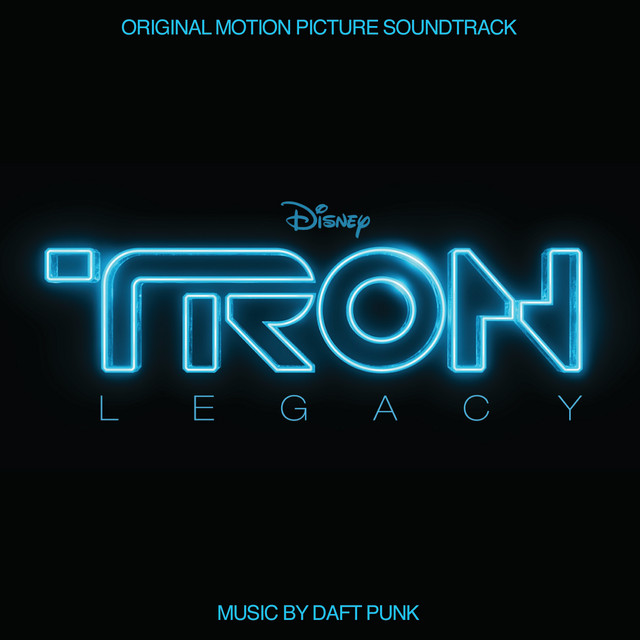
TRON: Legacy
2010
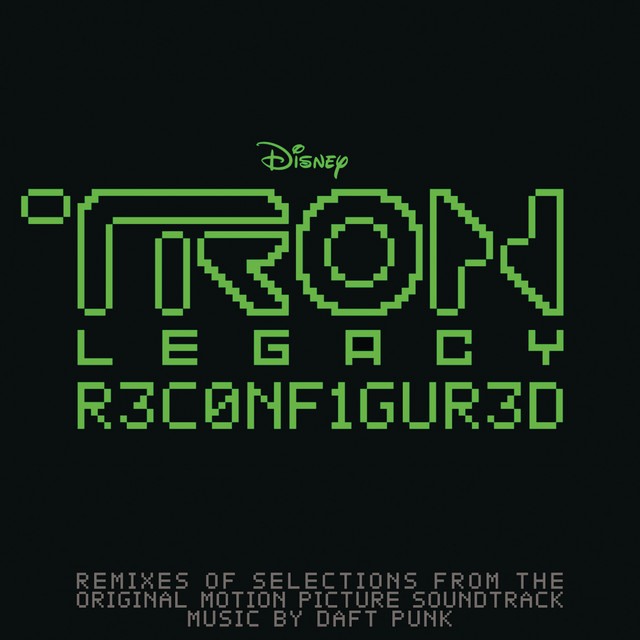
TRON: Legacy Reconfigured
2011

Daft Punk | Random Access Memories | The Collaborators
2013

Random Access Memories
2013


.png?v=1785047567)