


Pricing and availability
We compare 600+ stores and found this item at 9 stores. Prices updated .
Store
Reviews
Price









Average Price: $113
Standard/Professional
$60
$181+
Price Tier
Budget
Standard
High-end
Price History
Based on price data from 6 merchants for "Electro-Harmonix "Op-Amp" Big Muff Pi V5". Prices shown reflect NEW condition. Tracking began Apr 2, 2026.
* Product prices and availability are updated by Equipboard every 24hrs and are subject to change. Equipboard may receive compensation for purchases made at participating retailers linked on this site. This compensation does not affect what products or prices are displayed, or the order of prices listed. For more information, please refer to our affiliate disclosure.
Description
Immerse in the raw, vintage tones with the Electro-Harmonix "Op-Amp" Big Muff Pi V5. An evolution of the V4, this pedal incorporates the same revered op-amp circuitry, seamlessly blending the old and new. Unique to this model is the highly sought-after tone bypass feature, delivering a flatter equalization, more pronounced distortion, and a slight decibel boost. This pedal is not just about nostalgia, it's about capturing the spirit and essence of the late '70s rock scene.
Key Features:
- Op-amp circuitry identical to V4 model
- Tone bypass feature for flatter equalization
- More pronounced distortion and slight decibel boost
- Loved by notable players like Billy Corgan
- Produced between 1978-1980
Product specs
| Pedal Type | Fuzz |
| Analog/Digital | Analog |
| Inputs | 1 x 1/4" (instrument) |
| Outputs | 1 x 1/4" |
| Bypass Switching | True Bypass |
| Power Source | 9V DC power supply required (sold separately) |
| Batteries | 1 x 9V (included) |
| Power Usage | 5mA |
| Height | 2.1" |
| Width | 2.75" |
| Depth | 4.5" |
FAQs
-
What makes the Electro-Harmonix Op-Amp Big Muff Pi unique compared to other fuzz pedals?
-
The Op-Amp Big Muff Pi is known for its distinctive, aggressive fuzz sound, largely due to its use of operational amplifiers instead of transistors. This results in a more pronounced midrange and a sharper tone, making it a favorite for achieving thick, cutting distortion.
-
Is the Electro-Harmonix Op-Amp Big Muff Pi suitable for live performances?
-
Yes, the Op-Amp Big Muff Pi is well-suited for live performances thanks to its true bypass switching, which ensures your signal remains clear when the pedal is not engaged. Its robust build and classic fuzz tones make it a reliable choice on stage.
-
Can the Electro-Harmonix Op-Amp Big Muff Pi be powered by a 9V battery?
-
Yes, the Op-Amp Big Muff Pi can be powered using a 9V battery, which is included with the pedal. It also supports a 9V DC power supply for those who prefer using an adapter.
-
What type of music genres does the Electro-Harmonix Op-Amp Big Muff Pi excel in?
-
The Op-Amp Big Muff Pi is particularly popular in alternative rock and grunge genres, thanks to its thick, saturated fuzz tones. It's ideal for players seeking a sound reminiscent of the '90s rock era.
-
How does the Electro-Harmonix Op-Amp Big Muff Pi handle different guitar pickups?
-
The Op-Amp Big Muff Pi works well with both single-coil and humbucker pickups, delivering consistent fuzz tones. Its design allows it to maintain clarity and definition regardless of the pickup type, making it versatile for various guitar setups.
Videos

1484tv イシバシ楽器公式
【イシバシ楽器】Vintage Effectors「Electro-Harmonix Big Muff」
【イシバシ楽器】Vintage Effectors「Electro-Harmonix Big Muff」
1484tv イシバシ楽器公式
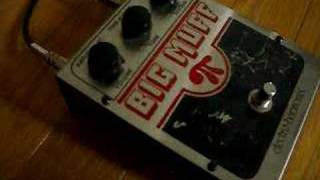
Electro-Harmonix BIG MUFF (w/tone-bypass)

voodoowrench
Electro-Harmonix Bad Stone Phase Shifter

blondegraemey
Vintage Big Muff repair overview

Edward Bradshaw
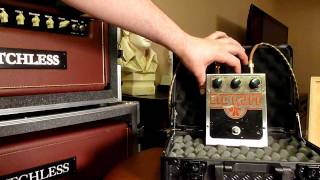
1978 Big Muff V5

TheTurtlehead
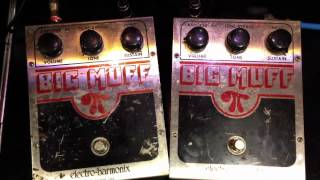
1978 Vintage Big Muff Comparison

shnobel
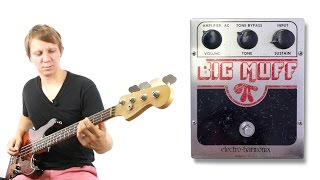
1978 Electro Harmonix Big Muff Bass
shnobel
1979 Big Muff, v5, Op-Amp

devnulljp

Electro Harmonix Op-Amp Reissue vs Original Vintage 1978 V4 Big Muff

Paul Reno
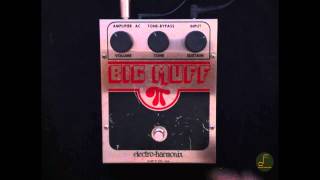
electro harmonix big muff V5

don felipe
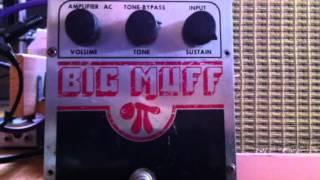
1979 Electro Harmonix Vintage BIG MUFF π 3rd Test

Shin Kondrix (こんちゃん)
Electro Harmonix Big Muff Pi: 1980 V5 Op Amp

analogsystem
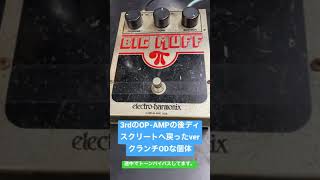
Electro Harmonix Big Muff Pi Guitar Pedal RED&BLACK 1980 EH3034 #SHORT #エフェクター

チバカン楽器
EHX Big Muff 1979 Version 5

Ross Beaton
Electro Harmonix Sovtek NYC Russian green black Mogwai Big Muff

friendofdorothy699
1978 Electro Harmonix Big Muf IC Op Amp Tone Bypass

daCod77
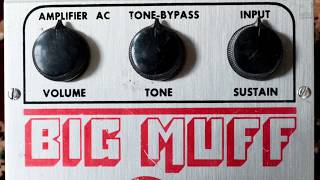
1979 OP AMP BIG MUFF

Jim Jones
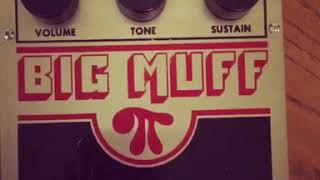
Video demo: vintage Electro-Harmonix opamp ‘tone bypass’ Big Muff

Alchemy Audio
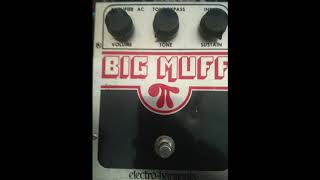
Electro-Harmonix 78' Op Amp Big Muff

Jeff Zampillo
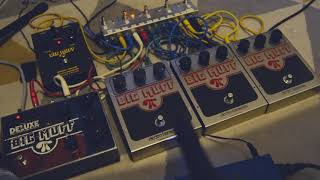
Electro Harmonix Op Amp Big Muff Comparison Vintage V5

OnYourWaveZ
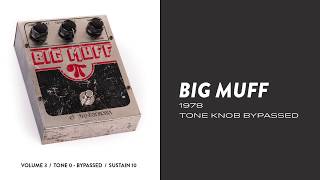
White Wave Fuzz VS Big Muff Vintage 1978 Op Amp

Frana Effects
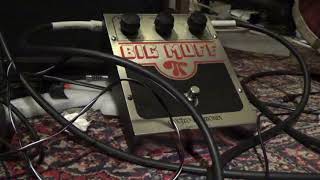
Zach’s Big Muff V5

Marcus Serck
1978 Big Muff Fuzz Jam

Daniel Goodwin
Reviews
PROS
-
Legendary op-amp provides loudness and lots of sustain
-
Tone bypass for increased volume and flat mids
-
Consistency in performance from unit to unit
-
Versatile with different guitars and amplifiers
-
Reissues sound nearly identical to vintage models, offering a cost-effective alternative
-
Can deliver beyond traditional Big Muff sounds, excelling in doom and drone styles
CONS
-
Vintage units may have issues with volume and pedalboard compatibility
-
Prices for vintage models are rising, making them less accessible
-
Requires careful selection from reputable sellers to avoid subpar units
Owner Insights
We analyzed real musician discussions from forums and Reddit to find what players love, question, and tweak about Electro-Harmonix "Op-Amp" Big Muff Pi V5.
Comparisons
-
Some owners find the original 1978 Op-Amp Big Muff V5 to be quieter and superior in sound quality compared to the EHX op-amp reissue.
Source -
The Stomp Under Foot Pumpkin Pi, comparable to the V4, omits the tone switch, aligning it with the original's lack of tone bypass.
Source -
Unlike other Muffs, this pedal is brighter and more aggressive, noted for its ability to cut through a mix, making it less prone to getting lost in a band setting.
Source -
The Tone Wicker offers more top-end when its wicker switch is engaged, compared to the Op-Amp's distinct late '70s V5 inspired sound.
Source -
The Op-Amp Big Muff is known for its distinctive Smashing Pumpkins sound, highlighting its unique auditory signature.
Source
Use cases and applications
-
The 1978 Op-Amp Big Muff V5 is used for Gilmour-ish tones, despite being initially popularized by the Smashing Pumpkins.
Source -
It excels in creating a "wall of sound" ideal for stoner and alternative genres, and enhances solos with long sustain and smoothness, particularly with single-coil pickups.
Source -
When combined with a RAT pedal, it provides a robust foundation for shoegaze and grunge sounds, achieving a thick, creamy tone reminiscent of the early 90s era.
Source
Value and pricing
-
A recent purchase for $300 raises questions about its market value, suggesting potential variability in pricing for this specific vintage model.
Source
Features and functionality
-
The Op-Amp Big Muff V5 can bypass the tone control, offering a raw and organic sound that owners find more usable across various musical styles.
Source -
The Tone Wicker model bypasses two caps in the first three transistor stages, affecting its sound profile compared to the Op-Amp version.
Source -
Bypassing the tone control on both pedals enhances bass response and reduces mid scoop, with the Op-Amp noted for superior performance in this configuration.
Source
User experience
-
Some users report that it can be noisy and hissy, especially with the tone bypass on, which led to it being removed from their setups.
Source
Mods and upgrades
-
Owners have successfully integrated it with sub-octave effects for more diverse soundscapes, enhancing its functionality beyond typical fuzz tones.
Source -
Some modified Big Muffs available on Reverb offer features like tone bypass, mid switches, and alternative tone circuits like Baxandall or Rat.
Source
5.0 out of 5
Based on 0 Reviews and 2 Ratings
Artist usage
Add artist
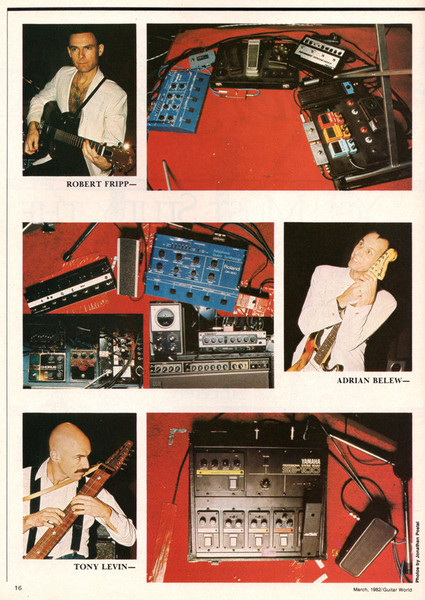
Used with David Bowie and King Crimson, as gathered from multiple sources. Scrutinizing this scan of the March 1982 issue of Guitar World (HUGE props to stalhart of The Gear Page for his January 24, 2019 post), one can make out Daka-Ware knobs, the word "AC" next to "Amplifier", and the phrase "Tone Bypass". This reveals a V5 Big Muff.
Columbia Daily Spectator, Volume CVI, Number 73, 24 February 1982
Like "Elephant Talk." How do you do that?
Belew: I do that with Flanger and a Big Muff, both made by Electro-Harmonix. It's a very simple effect. I set the flanger so it goes dada-dada-dada, so it's wavering up and down. When I turn both of them on it goes (Belew emits a strange groan), real fuzzy, but when I hit a note and slide it up the neck I get the elephant sound. I have a rhinoceros guitar sound.
What kind of sound does a rhinoceros make?
Belew: Well, I wasn't very sure, so I used my imagination a little. It's on my solo album which comes out March 10, called The Lone Rhino. It's (the sound) the main song on the album. The sound of the guitar is pretty...monstrous. It was invented back in 1978, but I haven't put it on a record until now. It's a much more extensive kind of guitar sound where I have to use four or five different effects and so on and so forth I can't even do it live.
Guitar World, March 1982
[https://i.postimg.cc/NGKN9sjJ/kc-1.jpg] / [https://i.postimg.cc/ZYXw6G9T/kc-2.jpg]
Downbeat, December 1986, "Adrian Belew: Twang Bar King" by Gene Santoro
ADRIAN BELEW'S EQUIPMENT
Adrian Belew says, "I'm using four guitars now. First are the two Twang-Bar Wonderbeast guitars with artwork by Mike Goetz. Each has a different tuning — one is normal, the other has the G tuned up to A so I can get different voicings and avoid pentatonic scales. Starting off at the headstock, they have bow-and-tuning heads, thereby eliminating the need for retaining bars which stop you from being able to play in the back of the head or bend strings at the nut. They have Seymour Duncan pickups, Kahler tremolo arms, and all the guts from the Roland synthesizer. The same is true of the third guitar I use, except that the artwork is by Laurie Anderson, and that it's tuned to the same tuning as my dobro, E-B-E-E-B-E, with heavier gauge strings, the low E being a .052 and the high E being a .012. Usually I use medium-light Gibson strings, with the high E being a .010 and the low E a .042 I use Fender medium picks. The fourth guitar is my battered 1967 Stratocaster from the David Bowie period, with a broken bass pickup [laughs] and it feeds back better than any other guitar I have.
"My two amps are Roland JC-120s — I've used one on everything from 1977 on. Right now, my floor situation looks something like this — I have the GR-700, the Roland SDE-3000 delay, an Ibanez harmonizer, a Big Muff fuzztone, a Foxtone fuzztone, the Electro-Harmonix echo-flanger — which makes the wonderful metallic insect sounds on Desire — the new Roland compressor — I always use lots of compression — a Roland pitch-shifter, and the Electro-Harmonix 16-second delay, which I've had converted to do backwards tape loops."
Roland, "Adrian Belew & JC-120", July 8, 2015
In 1979, I made my first trip to Japan as guitarist for David Bowie’s Stage tour. I was given the opportunity to visit one of Roland’s research and development facilities. And there I met the founder of Roland, Mr. Kakehashi, an incredible inventor and a sweet dear man who liked to laugh. The next year, I went back to Japan with Talking Heads, and the year after that with King Crimson. Mr. Kakehashi came to all my shows, and he and I became good friends. At a King Crimson concert in Tokyo, he noticed my tendency to create wild feedback with the JC-120.
I would go back to the JC-120 and wave the guitar in front of it in different ways and it would make a crazy oscillating sound. This was caused by overloading the chorus effect with an Electro Harmonix Big Muff and EQ, then manipulating the chorus parameters. He loved that part of the show and afterwards he asked me, “Is it expensive to do that sound?” I said, “Cheap, if you already have a Roland Jazz Chorus amp”. He laughed and thought that was great. Whenever I saw him from then on he would remind me by imitating someone swinging a guitar around.
When I think of how much Mr. K’s ideas changed modern music (and indeed my music), I am truly amazed. The Roland Jazz Chorus JC-120 has made a huge mark on the music of the last four decades and continues to do so today. There is simply nothing else like it. In my opinion, it has to be considered in the pantheon of the top three amplifiers of all time.
here is the Bowie piece I wrote for the April issue of Guitar Player magazine:
"Right Track Recording was on a typically worn down part of 48th street in manhattan. from the outside it could have been a shoe repair shop. it was there on a cold night in january of 1990 I found myself standing on one side of an AKG C-24 microphone, headphones on, and about to sing the first verse of a song called "Pretty Pink Rose". on the other side of the microphone was another singer with his headphones on. it was at that very moment my mind and body chose to fully realize I was about to sing a duet with David Bowie! blood rushed to my face like an acute case of embarrassment. I felt flushed and momentarily uncertain how to make my voice sound. the long lead-in to the track began and suddenly David launched into his first line. I followed. it didn't take long before we had the song complete and we began working out an idea for backing vocals (take me to the heart, to the heart). phew! I did it.
for me David was an easy person to collaborate with. if he liked something he would be very encouraging, even excited. if he didn't like an idea he would calmly start out saying "I'm not quite sure..." there was no sense of pressure and usually a good dose of humor. we had fun together. after completing the "Pretty Pink Rose" vocals I had the engineer put up another untitled track I had recently recorded. the idea was for David to write words and perhaps record a vocal. I was very hopeful it would work out and did it ever! to my amazement David sat on the studio couch with a yellow legal pad, listening to the track over and over, sometimes instructing the engineer to go back to a certain section, and busily scribbling away. in just 30 minutes he had written the words for "Gunman", our second collaboration. he allowed me to "produce" his performance. at one point I asked if he would mind "talking" through the lyrics. it was probably an uncomfortable idea but he gracefully gave me two takes. "graceful" is a term I would use for everything to do with David Bowie.
I toured the world with David two times; two decades apart. on the first go-round in 1978-79 my guitar rig was a model of simplicity: a pedalboard with a single row of 8 off/on switches which controlled whatever stomp boxes I patched into a mixer. the stomp boxes were an MXR Dynacomp compressor, an ADA Flanger, EHX Echo Flanger, EHX Big Muff run through an MXR 10-band eq, EHX Graphic Fuzz, and a Roland DC-30 Analog Delay. I had one battered Fender Stratocaster which I played through a Roland JC-120 amp.
in 1990 I did the second, much bigger Sound and Vision Tour which included 108 shows in 27 countries. by that time my guitar set up was housed in a rack the size of a refrigerator weighing 500 pounds. there was a duplicate rack as well. the stage was a 60' by 60' metal grid, completely flat. my midigator pedalboard was flushed-mounted into the stage. my two Fender Twin amps and monitor cabinets were hung beneath the stage, facing up at me. each "refrigerator" contained massive amounts of midi-gear that included Roland GR-50 synthesizers, and Korg AC3 multi-effects processors as the main ingredients. I had a bespoke box which housed many of my older stomp boxes including a Foxx Tone Machine and some of the Electro-Harmonix gear. I played 3 Fender Stratocasters made for me by the Custom Shop. they had Lace Sensor pickups, Kahler tremelos, Bowen locking tuning keys, Roland synth pickups, custom finishes, and a ridiculously long midi cable which could stretch the width and depth of the stage.
only David and I were allowed on the huge stage. the band was closeted off in a back corner behind an opera scrim. on our first night of the tour in Quebec during one of my lengthy guitar solos while David stood in the middle of the stage watching, I ran from one side to the other back and forth like a good show-off rock guitarist is supposed to do. only when I stopped did I realize I had roped David legs together with my ridiculous midi cable! he introduced me then as "the Fred Astaire of electric guitar"!
I'd like to think that playfulness and boy-like spirit is what I brought to the Bowie shows. as I said we had a lot of laughs. on his records I was more than willing to be adventurous, which is what he wanted. he never instructed me, but instead gave me free reign to go wild. David Bowie was free-spirited, intellectually curious, utterly unique, wealthy and super-star famous, yet down to earth to those around him: an incredible person to know. I am a lucky boy."
Album Usage
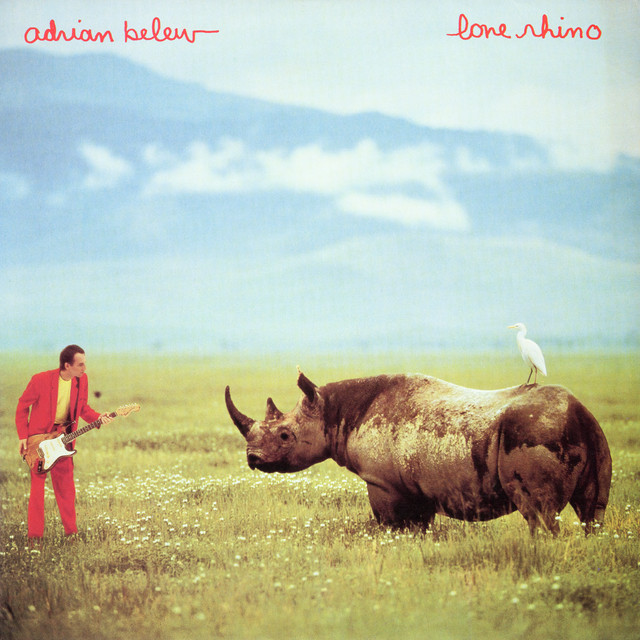
The Electro-Harmonix "Op-Amp" Big Muff Pi V5 has been featured on the following albums:
Genre Usage
Based on how artists on Equipboard use this gear, it is most commonly found in the following genres.
Used With
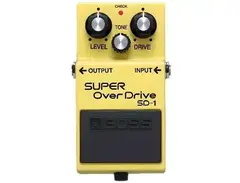
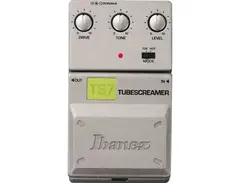
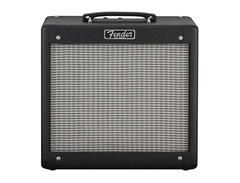
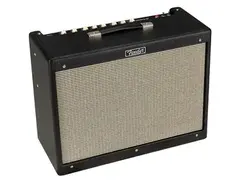
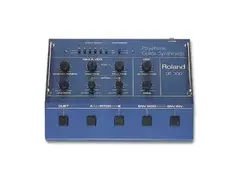
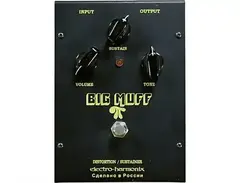
Based on how musicians on Equipboard use Electro-Harmonix "Op-Amp" Big Muff Pi V5, it is most commonly used with the following gear.



-s.webp?v=1784934222)
Community setups
Show yours

Similar
Add recommendation18 alternative and related items for Electro-Harmonix "Op-Amp" Big Muff Pi V5, curated by the Equipboard community.


$162.00 - $199.99
Based on the V5 Big Muff.


$75.00 - $413.00


More Electro-Harmonix Fuzz Effects Pedals

$169.00 - $188.20
in Fuzz Effects Pedals Rank

$189.00
in Fuzz Effects Pedals Rank


$75.00 - $96.20
in Fuzz Effects Pedals Rank


$83.00 - $101.60
in Fuzz Effects Pedals Rank


$85.00 - $108.90
in Fuzz Effects Pedals Rank


$79.00 - $108.90
in Fuzz Effects Pedals Rank


$300.00
in Fuzz Effects Pedals Rank


$75.00 - $87.10
in Fuzz Effects Pedals Rank


$59.00 - $83.50
in Fuzz Effects Pedals Rank


$95.00 - $2,001.63
in Fuzz Effects Pedals Rank


$95.00 - $99.00
in Fuzz Effects Pedals Rank

$111.00 - $150.60
in Fuzz Effects Pedals Rank


$59.57
in Fuzz Effects Pedals Rank


$84.35 - $112.50
in Fuzz Effects Pedals Rank


$95.00 - $114.30
in Fuzz Effects Pedals Rank


$189.00
in Fuzz Effects Pedals Rank


-m.webp?v=1784905176)
$36.30 - $72.60
in Fuzz Effects Pedals Rank


$102.00 - $117.90
in Fuzz Effects Pedals Rank


$75.00 - $96.20
in Fuzz Effects Pedals Rank

-m.webp?v=1784905277)


$39.60 - $99.00


$99.00 - $131.50


$69.00 - $85.30

$139.00 - $174.20


$123.76 - $136.10


$39.60 - $286.00


$81.00 - $116.10


.jpeg?v=1784893208)


Accessories & Related Items




Gear Guides
.jpg)






Most Popular Fuzz Effects Pedals
Most Popular Brands
-
Added to Equipboard on by
 mathiasbex
GearIQ 160
-


