David Gilmour
Pink Floyd
David Gilmour's Gear



Used from 1974 until 2019, when it was auctioned off for $531,000 as part of Christie's The David Gilmour Guitar Collection auction. The listing has the following item description:
C.F. MARTIN & COMPANY, NAZARETH, 1971 AN ACOUSTIC GUITAR, D12-28 Branded internally C.F. MARTIN & Co. / NAZARETH. PA. MADE IN U.S.A. D12-28 / 290452, the headstock bearing the logo C.F. Martin & Co / EST. 1833, with original hardshell case bearing a label inscribed MARTIN N D12-28 1971 #290452 and SERIAL NO. DG 1087; accompanied by a facsimile receipt for repairs carried out by Chandler Guitars, Kew, dated 8th January 2003 Length of back 19.15/16 in. (50.6 cm.)
DAVID GILMOUR’S PRIMARY STUDIO 12-STRING ACOUSTIC, USED TO WRITE AND RECORD WISH YOU WERE HERE Purchased from a friend in 1974, this guitar has served as David Gilmour’s chief 12-string studio acoustic for over forty years. Gilmour told us: It wasn’t my first 12-string. I had a 12-string when I was a teenager and some of those instruments, you know, what happened to them is murky. I didn’t have the funds to just buy another one, so they would often just be sold in order to buy something else, but I did have a 12-string. I always loved the 12-string, I used to listen to Lead Belly a lot, who was a great 12-string player, and there was another guy called Erik Darling who played a 12-string and I learnt some of his stuff. He was an American folk singing guy and he had an album that I was very, very fond of back in those days. He then joined, or formed, a little trio called the Rooftop Singers and had a big hit called Walk Right In, featuring a 12-string. So I always wanted to get another 12-string and I knew a guy who had a Martin 12-string and he wanted to get rid of it. I liked it, I bought it. It gave me Wish You Were Here, which was very generous of it. Playing around with his new guitar at London’s Abbey Road Studios during the making of Pink Floyd’s 1975 album Wish You Were Here between January and July 1975, Gilmour hit upon the notes that would become the enduring title track to the album. When asked by Paul Rappaport in September 2011 how he made the music for Wish You Were Here, Gilmour explained: I had recently bought a Martin 12 string from someone I knew and I was strumming it in the control room at No.3 at Abbey Road and that just started coming out, that riff …I started mildly obsessing with this riff that was slowly developing and, again, people’s ears – Roger’s [Waters] ears – pricked up. Reflecting on the final recording, Gilmour continued …every time I listen to the actual original recording I think God I should have really done that a little bit better, but the idea was that it was like a guitar playing on the radio and someone in their room at home …listening to it and joining in, so the other guitar was kind of supposed to be a kid at home joining in with the guitar he’s listening to on the radio, and therefore it wasn’t supposed to be too slick… and it wasn’t. Contributing to a collage of sound built up with the use of synthesizers, the Martin 12-string was also heavily featured on the album’s second track Welcome To The Machine, a scathing Roger Waters composition reflecting the band's disillusionment with the record industry. After his opening strums, Gilmour continues to accompany himself on the 12-string as he comes in with high pitched lead vocals, introducing an ascending acoustic riff in the instrumental section. The guitar next made an appearance on the band’s 1979 narrative concept album The Wall, recorded at Super Bear Studios in the South of France from April-July 1979 and Producer’s Workshop in Los Angeles from September to November 1979. Displaying his musical range, Gilmour played no less than five different types of guitar on Hey You, the opening song of the third act. Along with his Martin 12-string and Ovation hi-strung (lot 17), he also recorded fretless bass, six-string acoustic and electric lead and rhythm guitar parts. Gilmour next played the D12-28 on the melancholy Waters composition Paranoid Eyes for the band’s 1983 anti-war concept album The Final Cut, which would be the last Pink Floyd record to feature Roger Waters. It is almost certain that the Martin 12-string was employed during recording of the subsequent Gilmour-led Pink Floyd albums A Momentary Lapse of Reason (1987) and The Division Bell (1994) although there are no specific records to confirm its use. More recently, the 12-string appeared in Guitarist magazine, February 2015, photographed at Gilmour’s East Sussex studio for a feature on the instruments, amps and effects that the Pink Floyd legend used to summon up the rich soundscapes of “The Endless River.” Gilmour had used the Martin 12-string to record the track It’s What We Do for the last Pink Floyd album. Released in November 2014 as a tribute to keyboardist Richard Wright, who had passed away in 2008, the predominantly instrumental album The Endless River debuted at number one in the UK, France, Germany, Portugal, Ireland, the Netherlands, Belgium, New Zealand, and Canada.
The D12-28 was also mentioned by guitar tech Phil Taylor in this February 10, 2015 Music Radar interview about the contents of Astoria and Medina.
“David bought this 1971 Martin D-12-28 second-hand off a friend of his. I don’t know exactly when - ’73 or ’74 - but prior to Wish You Were Here, obviously.”
Note that Gilmour played the lead parts of the song Wish You Here on another six-string Martin.
Find it on:


In this video Polly Samson (David's wife) uploaded on twitter, you can see two computer monitors in the background. The left one is running Pro Tools.
Find it on:


David is seen using the EMS Synthi Hi Fli. This was used primarily in "On The Run", although some sources indicates that the auto filter was used to emulate Leslie tones on "Any Colour You Like" also.
Find it on:

David's MXR Digital Delay rack mount is seen in this photograph from the '70's.
"We also have an old MXR DDL digital delay unit built into a rack unit. It has a digital readout, but it's really nowhere close to being accurate. Dave likes it because even though it's a digital unit, it still sounds a little dirty, like a tape unit." - Phil Taylor, David Gilmour's guitar tech.
Find it on:

The Electric Mistress flanger (David used a late 1976 V2 model) is essential for David’s late 70s and early 80s tones. The pedal was heavily featured on the 1977 Animals tour, his 1978 solo album, 1979-81 The Wall album and tour and last on 1983’s The Final Cut.
Find it on:
-m.webp?v=1783177302)
Top of rack – bottom row 2 Free The Tone Flight Time Digital Delays
Find it on:

In the article, we can see that he uses the Hiwatts.
Find it on:

Used for vocals on the Rattle That Lock Tour, as featured in this article by Sound Technology Ltd.
After five decades as a leading live sound engineer Colin Norfield’s roster of acts reads like a who’s who of touring giants.
In 1994 he piloted the sound mix for Pink Floyd’s landmark Divisional Bell tour, and his relationship with band front-man, David Gilmour has endured right up to the five recent performances at the Royal Albert Hall to promote his new album, Rattle That Lock.
Over the years, Colin has become increasingly discerning with his equipment selection, and for the first time on these shows, he introduced the artist to AKG’s D7 dynamic mic. This had originally been brought to his attention by the Austrian company’s Artist & Key Customer Relations Manager, Walter Rührig, with whom he has enjoyed a long relationship.
“Colin and I spoke again before this tour, and I suggested he give the D7 another try,” says the AKG man. The mic was submitted for initial tests several months before full production rehearsals started, and Colin Norfield promptly adopted it, at the same time ensuring that the six backing vocalists were also equipped with the D7.
Explaining his reasons behind the decision, Colin Norfield explains, “It’s a problem to get a big punchy sound in The Albert Hall due to its notoriously difficult acoustics. I needed something that would deliver a clean, robust all round sound.
“Having used the AKG D7 on other artists I have found it to be a good all round microphone, which doesn’t let much in from outside. I know of other artists who have literally screamed into the D7 — with no evidence of distortion.”
Find it on:


Used live from 1968 to 1977, as researched by Bjorn Riis of Gilmourish. One unit was sold on Reverb.com in 2017 via London Vintage Guitars, with the listing revealing that the unit was an OEM "Sound City Echomaster 2".
Gilmourish, "Binson Echorec"
David used the Binson 2 model from 1968 up to the Animals tour in 1977 after which he replaced it with MXR digital units. He later recalled, “I was tired of cleaning it and needed something more reliable”. Although he probably traveled with several backups, the constant touring and not least the outdoor gigs must have been hell for the delicate Binson.
After years of absence, David’s old Binson made a brief cameo on the 2003 BBC Dark Side of the Moon documentary and Richard Wright again used one with his Farfisa organ on David’s last tour in 2006.
A Binson 2 is also featured in David’s new recording studio, Medina, located in Hove outside Brighton. Both Pink Floyd’s Endless River and David Gilmour’s Rattle That Lock was recorded in the studio but it’s not documented if the Binson is featured on the albums.
(...) Between 1968-73 David had a very basic setup layed out on the floor that consisted of a Fuzz Face, a wah wah pedal, DeArmond volume pedal and an on/off foot-switch for the Binson. Later, the 1973-75 board and the 1976 Cornish board had built in on/off switches for the Binson that was connected through send/returns.
David would mainly use the repeat mode for a classic delay sound. The Binson 2 had a maximum time setting around 300-310ms, which was David’s main setting for most Floyd songs (he used the Echo/slap back setting on live versions of the intro on Time). The level and swell were both adjusted for different songs.
One of David’s trademarks in the early days was the sustained violin effect on the intro of Echoes and many other songs. On the beginning of Echoes on Pompeii you can see David using the slide, rubbing it back and forth on the high E string to create this sustained violin effect. This is achieved by drenching the tone with echo and adjusting the guitar volume for a mild ovedrive from the Fuzz Face. The effect is used on countless early Floyd songs from 1968-1971.
2017 Reverb.com listing
We are happy to offer the following original Binson Echorec which was used , owned by one of the worlds most respected of all artists , that is “Pink Floyd” , please see full details , specifications as follows
- Binson / Sound City Echomaster 2
- 1969 ( Circa)
- Green Hammerite Casing
- Pink Floyd Stock Plaque to side
- Service Signature by Pete Cornish to side dated 1979
- Remnants of original Input / Output Labels - Notes
Verification
The above unit comes with the following verification
Original Pink Floyd Stock Number Plaque to side
Email Verification from Pete Cornish that verifies his Signature / Label and confirms that he serviced , checked the unit for Pink Floyd in 1979
Various Photographic Verification - The unit comes complete with various published photographic verification of David Gilmour using a Sound City Echomaster II that has the Pink Floyd Original Stock Serial Number Plate that is affixed in exact same location / position ( The Picture is taken from 1975 Wish You Were here tour)
Please See Picture 6 + 7 for Verification of Stock Label Position
Note - The above unit is a Key Factor in the sound and tone of Pink Floyd
Find it on:

Used on The Endless River, as mentioned by guitar tech Phil Taylor in this February 10, 2015 Music Radar interview about the contents of Astoria and Medina.
Left to right: 1958 FENDER Tweed Twin, 1976 Yamaha RA200 Rotary speaker with Alembic preamp, 1970s Hiwatt SA212, Alessandro Redbone Special, Leslie Model G27 cab
“These were David’s main amps on The Endless River,” comments phil Taylor on the beautiful array of vintage and modern amps in the studio’s live room. “He also used the Leslie Studio 12 cab with the Allesandro Redbone Special 55-watt model.”
(...) The Hiwatt SA212 combo is a staple of Gilmour’s recording rig. powered by a brace of el34s, it is fitted with Fane crescendo drivers.
Find it on:

David has been using this since 1978 when he was recording for The Wall. Even to this day, you can spot the Yamaha in his rig to add the Doppler Effect to his sound.
Find it on:

In this video David appears to be using the Guild F-512 12 string except for in sunburst finish.
Find it on:


"Additional pedals include a Boss CS-2 Sustainer, MXR Dyna Comp, Iba- nez CP9 Compressor-Limiter, Boss Hyperfuzz, Electro-Harmonix Big Muff, two Chandler Industries Tube Drivers and three Boss Graphic Equalizers. He also operates several master volume pedals: one for his 4x12 cabinets, another one for his rotating speakers, another for his voice box and a speed control for the doppolas." - Phil Taylor, David Gilmour's guitar tech.
Find it on:

It is mentioned by jesse that David Gilmour has not one but two lazy 20 combos
Find it on:

-m.webp?v=1777705588)
"Not much is known about the gear used for the About Face sessions. David began making demos in early 1983 then recorded sessions in Paris beginning in July 1983 and later in England. Most of the tracks were cut live with a full band, with additional multi tracking added later. David has stated he used a vibrato pedal for the synthesizer-like rhythm on Until We Sleep, running in time with the drum tempo. He also said he used a Rockman headphone amp for the outro solo on Blue Light, but that was only because they decided in the mixing stage to add a solo. David had no amplifier in the studio, so they plugged the Rockman straight into the mixing board. The Rockman was a miniture solid state amplifier simulator designed by Tom Scholz (of the band Boston) in 1982. It included two clean modes and distortion tones, along with a built in stereo chorus and echo. It could be played using headphones or plugged directly into a mixing board."
Find it on:

Used for the tremolo on "Money", as stated in this March 9, 2012 Premier Guitar article and interview with Dark Side of the Moon sound engineer Alan Parsons. The use of the Kepex has also been supported by the research of Gilmour scholar Kit Rae, who states the following in this page from the David Gilmour Tone Building section of his website.
Gilmour used a similar gated tremolo effect for the sustained chords in the verse sections of Money, using the noise gate from an Allison Research Kepex (Keyable Program Expander) studio module, modulated with an external sine wave generator (according to engineer Alan Parsons).
The presence of the Kepex at Abbey Road, where Dark Side was recorded, is confirmed by Parsons in this June 1998 interview with Media&Marketing. Parsons states that the "heart beat" in "Speak to Me" was a bass drum gated by the Kepex.
The opening [heart beat] was just a gated bass drum. Kepex noise gates or expanders were quite a new technology at the time. It actually explains a lot about the sound of the album, since the Kepex had a sound of its own.
Find it on:

Used for vocals for a time, as mentioned by sound engineer Andy Jackson in this interview from Vol. 6, #7 of Resolution Magazine.
And for vocals? When we did Live 8, I mixed FOH helped by Jon Lemon, and he said: 'Check these out, they're the new Neumann live mic, the condenser that looks like a dynamic.' They're pretty good, and reasonably light directionality, that was good, so that was what went out on the road.
And in the studio? Well David's very easy, he sounds good on anything, he sound pretty good on a 58, but it's the Sony C800G with the heat sink, horribly expensive, but they're fantastic. I've tried lots of things, and it's really good, it has an openness and a size. We've done all sorts of things over the years, 67, 47, I had him on a Brauner for a while — they all work, he's got a good voice and good technique, so it's not that difficult.
Find it on:

Used on The Endless River, as mentioned by guitar tech Phil Taylor in this February 10, 2015 Music Radar interview about the contents of Astoria.
Left to right: 1958 FENDER Tweed Twin, 1976 Yamaha RA200 Rotary speaker with Alembic preamp, 1970s Hiwatt SA212, Alessandro Redbone Special, Leslie Model G27 cab
“These were David’s main amps on The Endless River,” comments phil Taylor on the beautiful array of vintage and modern amps in the studio’s live room. “He also used the Leslie Studio 12 cab with the Allesandro Redbone Special 55-watt model.”
Find it on:

This image shows a guitar from the David Gilmour Guitar Collection, a 1987 Fender Stratocaster Plus in Dusty Rose finish.
Find it on:


-m.webp?v=1771227171)
David Gilmour used the Analog Man Sun Face RCA during his 2006 tour, as noted on the Analog Man website's Sun Face and Fuzz Face page.
Find it on:

"They made a run of only 90 of these particular guitars in 1984/85 and we've now obtained three. Dave just really likes them; they sound great and they're really lovely to play. I've had them modified, they've got EMG acoustic pickups in, but they've also got small Crown microphones in them too. So there are basically two outputs from each guitar, two separate radio transmitters on them with two different signals. Then there's a Gibson Chet Atkins electro-classical which he uses on High Hopes and the two steel guitars which we talked about earlier." - Phil Taylor, David Gilmour's guitar tech.
Find it on:

“David has a 1963 Fender Bass VI. It’s strung relatively light for a baritone. But it’s still a 30-inch scale, so I thought I’d get him a new one made. I wanted it to be more like a guitar, shorter scale, but it also had to have a vibrato on it. I talked to Fender, and they made two."
Find it on:

According to "Gilmourish" website, Gilmour also uses Chandler Tube Driver pedal.
"Additional pedals include a Boss CS-2 Sustainer, MXR Dyna Comp, Iba- nez CP9 Compressor-Limiter, Boss Hyperfuzz, Electro-Harmonix Big Muff, two Chandler Industries Tube Drivers and three Boss Graphic Equalizers. He also operates several master volume pedals: one for his 4x12 cabinets, another one for his rotating speakers, another for his voice box and a speed control for the doppolas." - Phil Taylor, David Gilmour's guitar tech.
Find it on:

David Gilmour used the Gibson Les Paul Traditional Goldtop P90 Bigsby during his "Rattle That Lock" tour, as shown on his official Facebook page.
Find it on:

In the article, it is shown that Gilmour used a Powerbooster during the DSotM years...
Find it on:

"He also uses a Lexicon PCM-70 to store the circular delay sounds you hear in songs like "Shine On" and "Time." Because it has a multi-tap function, it can pretty accurately duplicate the kind of echo Dave used to get from his old Binson echo unit. A t.c. electronic 2290 is his primary delay -- it's what he uses for most things." - Phil Taylor, David Gilmour's guitar tech.
Find it on:

David Gilmour talks about it in an interview with Guitar World Magazine. It appeared on "Take It Back" and "Keep Talking" from the album "The Division Bell."
"Are you using an E-bow on "Take It Back"? Yeah! On a Gibson J-200 acoustic guitar that is processed through a Zoom effects box, then directly injected into the board. That' s a pretty bizarre configuration. Well, I guess I experiment more than I think I do! I had a Zoom in my control room one day and I was mucking about with something. Suddenly, I thought I should stick the E-bow on the strings and see what would happen. It sounded great, so we started writing a little duet for the E-bowed acoustic guitar and a keyboard. We never finished the piece, but [keyboardist] Jon Carin decided to sample the E-bowed guitar part. We kept the sample and ended up using it as a loop on "Take It Back," and again on "Keep Talking."
Find it on:

Mentioned in this February 10, 2015 Music Radar interview with guitar tech Phil Taylor about the contents of Astoria and Medina.
The Conn ST-11 Strobotuner has been a regular fixture of Gilmour’s rig for years.
Find it on:

For the 1987-90 and 1994 world tours David would use a stock 52 Fender Telecaster, with a butterscotch body and maple neck. The guitar was used for Run Like Hell on both tours, with a drop D tuning. A second, identical guitar, was also used for Astronomy Dominé in 1994, with a standard tuning.
Find it on:
This is a community-built gear list for David Gilmour.
- Find relevant music gear like Guitars, Amplifiers, Effects Pedals, and other instruments and add it to David Gilmour.
- The best places to look for gear usage are typically on the artist's social media, YouTube, live performance images, and interviews.
- To receive email updates when David Gilmour is seen with new gear, follow the artist.
Discography
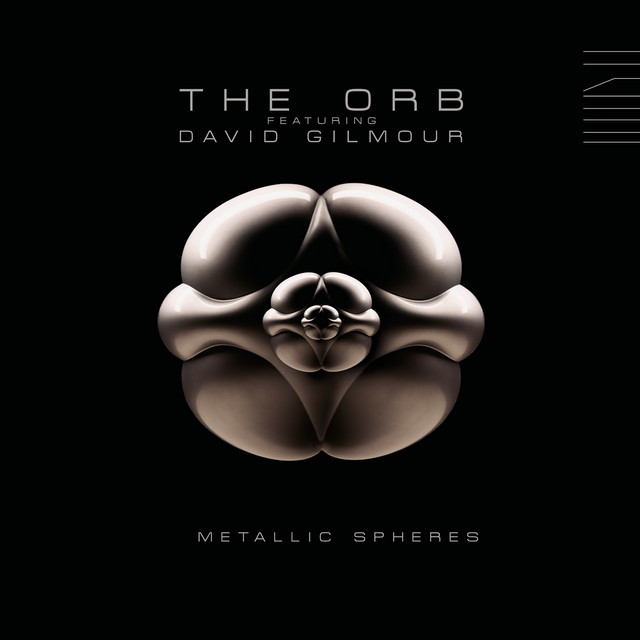
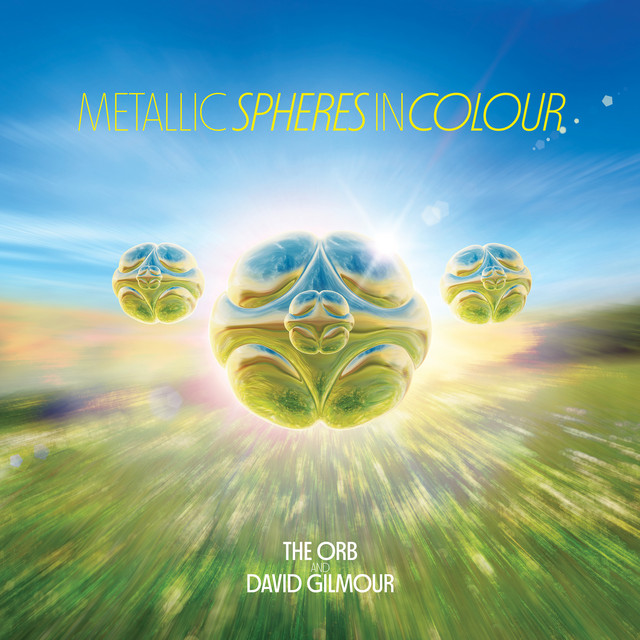
Album Credits
-

Between Two Points (Live from the Luck and Strange Concerts)
David Gilmour · 2025
Mixing Engineer Producer -

Wish You Were Here (Live from the Luck and Strange Concerts)
David Gilmour · 2025
Mixing Engineer Producer -

Luck and Strange (Live from the Luck and Strange Concerts)
David Gilmour · 2025
Mixing Engineer Producer -

Sorrow (Live from the Luck and Strange Concerts)
David Gilmour · 2025
Mixing Engineer Producer -

David Gilmour · 2025
Mixing Engineer Producer -
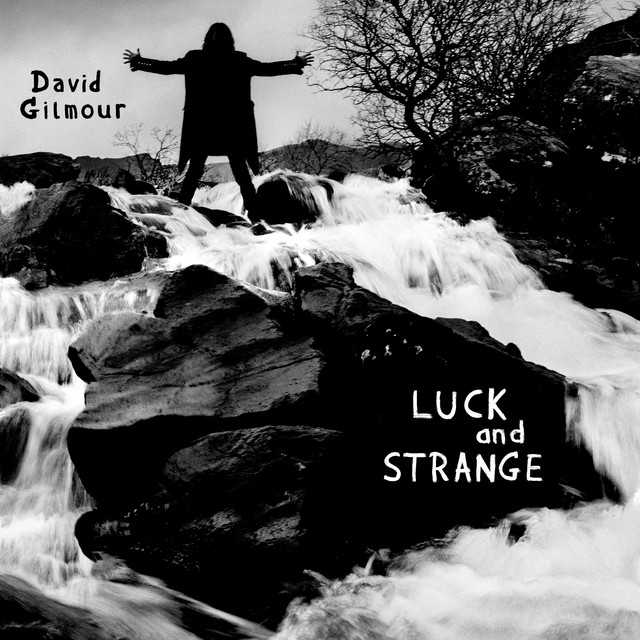
David Gilmour · 2024
Mixing Engineer Producer Programmer -
David Gilmour · 2024
Mixing Engineer Producer -
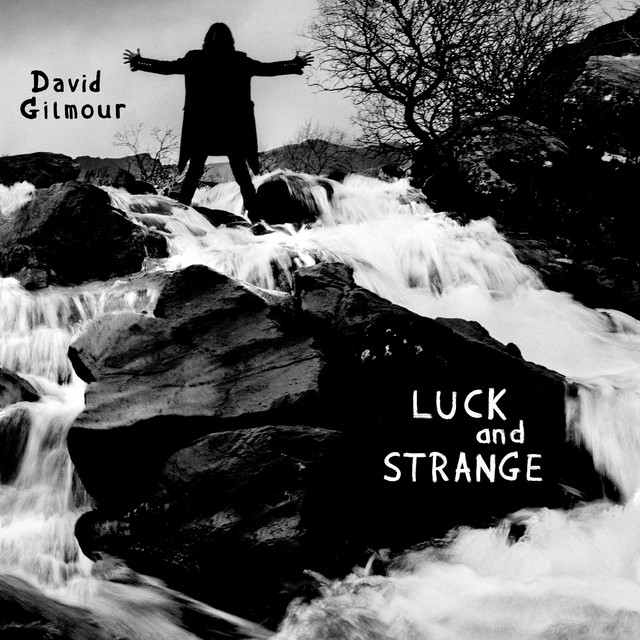
David Gilmour · 2024
Mixing Engineer Producer -
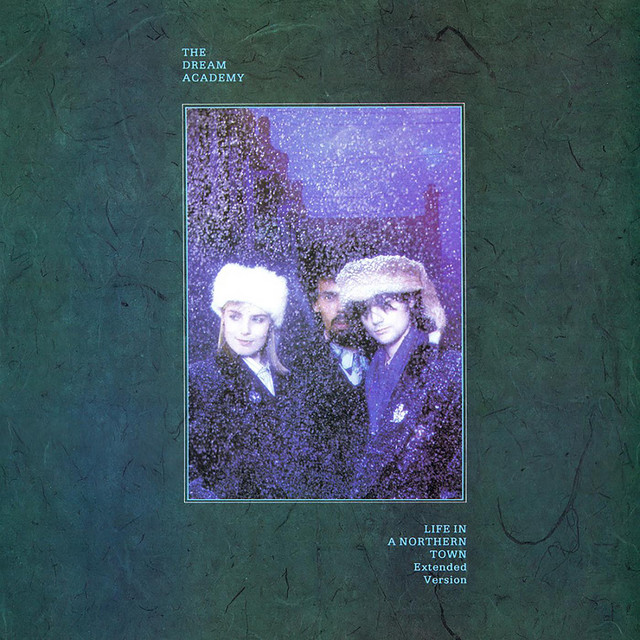
The Dream Academy · 2021
Producer -
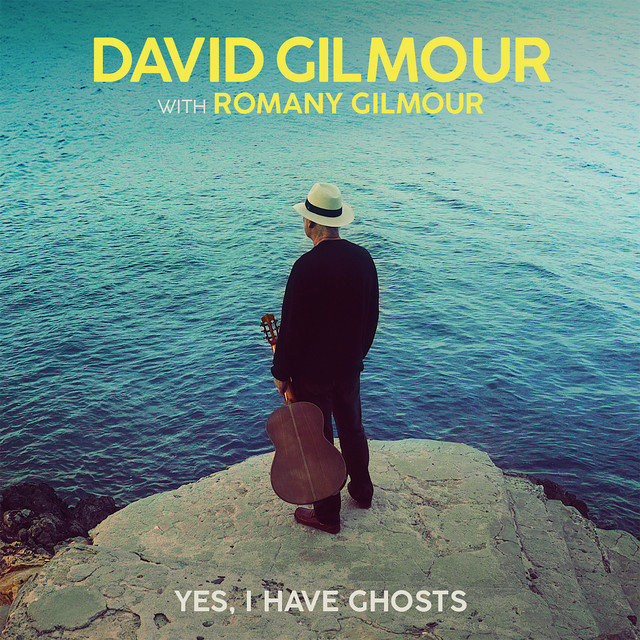
David Gilmour · 2020
Mixing Engineer Programmer -
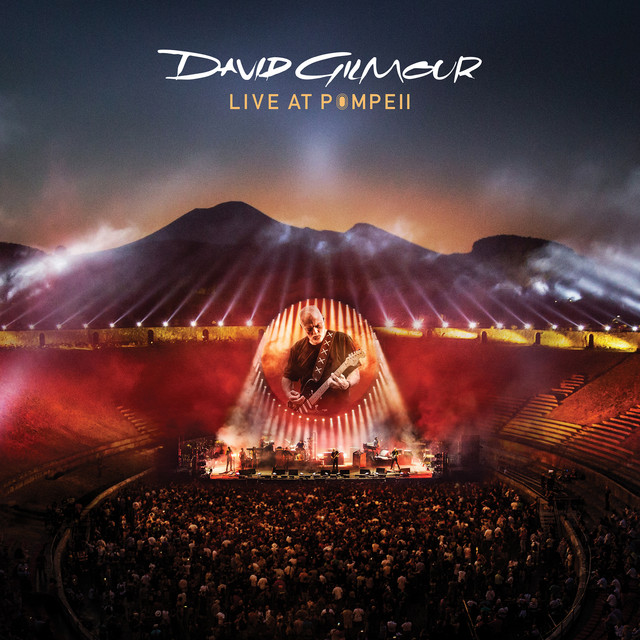
David Gilmour · 2017
Mixing Engineer Producer -
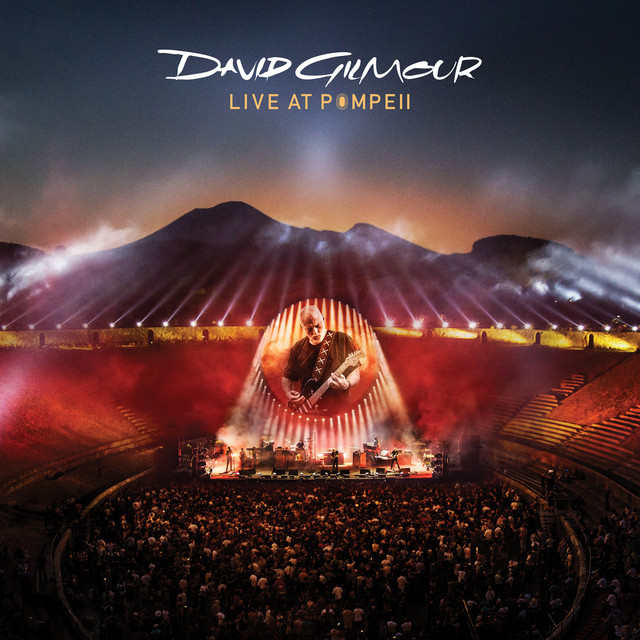
One of These Days (Live At Pompeii 2016)
David Gilmour · 2017
Mixing Engineer Producer
.jpeg?v=1783110732)

.jpeg?v=1783065966)