

Pricing and availability
We compare 600+ stores and found this item at 8 stores. Prices updated .
Store
Reviews
Price





Average Price: $1,548
High-end/Boutique
$400
$1001+
Price Tier
Budget
Standard
High-end
Price History
Based on price data from 5 merchants for "Fender Bass VI". Prices shown reflect NEW condition. Tracking began Apr 2, 2026.
* Product prices and availability are updated by Equipboard every 24hrs and are subject to change. Equipboard may receive compensation for purchases made at participating retailers linked on this site. This compensation does not affect what products or prices are displayed, or the order of prices listed. For more information, please refer to our affiliate disclosure.
Description
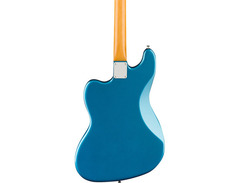
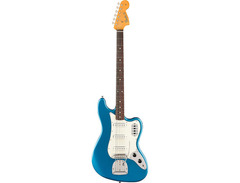
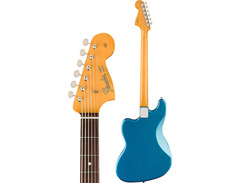
Embrace the retro charm and sonic versatility of the Fender Vintera II '60s Bass VI—a six-string wonder that blends the iconic looks of the past with today's performance demands. This distinctive bass guitar is crafted with an alder body and a maple neck, ensuring a resonant tone with punch and clarity. The mid-'60s "C"-shaped neck offers a comfortably familiar grip, while the 7.25" radius rosewood fingerboard with vintage-tall frets provides ample room for expressive playing.
What truly sets the Bass VI apart is its trio of vintage-style early-'60s single-coil pickups, delivering sweet, sparkling tones that capture the essence of Fender's legendary sound. Adding to its unique flair, the vintage-style floating tremolo invites you to bend and dive with expressive freedom, expanding your musical horizons.
Explore the rich sonic tapestry of the '60s with this versatile instrument, perfect for bass lines, solos, and everything in between. Whether you're a vintage aficionado or an experimental musician, the Fender Vintera II '60s Bass VI offers a timeless sound experience.
Key Features:
- Alder body and maple neck for classic Fender tone
- Rosewood fingerboard with 7.25" radius and vintage-tall frets
- Mid-'60s "C"-shaped neck for comfortable playability
- Trio of vintage-style early-'60s single-coil pickups
- Vintage-style floating tremolo for dynamic expression
- Vintage-style tuning machines for enhanced stability
Product specs
| Brand | Fender |
| Model | Bass VI MIJ |
| Year | 1993 - 1997 |
| Made In | Japan |
| Categories | 5- and 6-String Basses |
| Active / Passive Pickups | Passive Pickups |
| Active Preamp | No Preamp |
| Body Material | Alder |
| Body Shape | Double Cutaway |
| Color Family | Brown |
| Finish Pattern | Sunburst |
| Fretboard Material | Rosewood |
| Model Family | Fender Bass VI |
| Neck Material | Maple |
| Number of Frets | 19 |
| Number of Strings | 6-String |
| Offset Body | Offset Body |
| Pickup Configuration | SSS |
| Right / Left Handed | Right Handed |
| Series | Fender Vintage MIJ / CIJ |
FAQs
-
What tuning is used for the Fender Bass VI?
-
The Fender Bass VI is tuned one octave below a standard guitar, with the tuning EADGBE, similar to a 6-string guitar but in the bass register.
-
What kind of pickups does the Fender Bass VI have?
-
The Fender Bass VI is equipped with passive single-coil pickups in an SSS configuration, providing a versatile range of tones suitable for various music styles.
-
Is the Fender Bass VI suitable for playing both bass and guitar parts?
-
Yes, the Fender Bass VI is designed to function as both a bass and a baritone guitar, thanks to its extended range and six-string configuration.
-
What is the neck profile of the Fender Bass VI like?
-
The Fender Bass VI features a maple neck with a rosewood fretboard, providing a comfortable playing experience with its 19-fret design, suitable for both bassists and guitarists.
-
How does the body shape of the Fender Bass VI affect playability?
-
The Fender Bass VI has an offset body shape, which offers ergonomic comfort and a distinctive look, making it a popular choice for musicians seeking a unique playing experience.
Videos

Kbald
Fender/Squier Bass VI - My honest opinion
Fender/Squier Bass VI - My honest opinion
Kbald
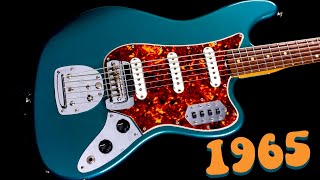
The Rarest Vinage Fender Bass VI?!

Chicago Music Exchange
The Most Underrated Guitar Ever

Rhett Shull
The Mystery of the Fender Bass VI

Philip Conrad

Guitar of the Day: 2016 Fender Custom Shop Bass VI Candy Apple Red | Norman's Rare Guitars

Normans Rare Guitars
Reviews
Owner Insights
We analyzed real musician discussions from forums and Reddit to find what players love, question, and tweak about Fender Bass VI.
Features and functionality
-
Squier's electronics surprisingly perform well, yet swapping pickups can provide more gain and body.
Source -
The Vintera model offers a wide variety of tones through three pickup switches combined with a bass-cut feature, providing versatility for different musical styles.
Source -
The Vintera Bass VI features a locking tremolo switch, which can be used to stabilize tuning when not using the tremolo arm.
Source -
The Squier Bass VI's linear taper pots limit volume control to the last 1/3 of the sweep, recommending an upgrade for smoother volume adjustments.
Source
Build quality
-
There are comments on the aesthetic appeal of the Vintera Bass VI, particularly its vintage look and the use of alder and rosewood materials.
Source
User experience
-
One owner fixed initial intonation issues with simple screwdriver adjustments, highlighting easy setup correction upon receiving the instrument.
Source -
Players who alternate between rhythm guitar and bass find the Bass VI offers familiar chord shapes an octave lower, making it a versatile tool for certain genres like dream pop and psychedelic rock.
Source
Comparisons
-
Owners note that the Vintera Bass VI's 7.5" radius and larger bridge improve intonation and tuning stability compared to the Squier version.
Source -
The Squier neck feels slower compared to the Vintera, but sanding can improve speed.
Source -
The Harley Benton model is noted as a more affordable alternative with dual P90s, requiring additional setup for optimal performance.
Source
Setup and maintenance
-
Some owners find the tiny machine heads challenging for bass strings, requiring additional torque and possibly a string winder.
Source -
Shielding the cavity with copper tape can noticeably reduce noise during studio recordings.
Source -
Owners suggest using heavy gauge strings and performing a professional setup to maximize playability, as the instrument is nearly unplayable out of the box.
Source -
Staytrem bridges are recommended to eliminate intonation issues, especially for E standard tuning.
Source
Use cases and applications
Mods and upgrades
-
Stonewall pickups are favored for creating a true bass sound with tonal variety between three pickups.
Source -
Owners suggest Gotoh locking tuners to maintain tuning stability when using the tremolo.
Source -
Replacing the stock tailpiece with a Fender Jazzmaster tailpiece improves tremolo stability and prevents the arm from falling out.
Source
4.5 out of 5
Based on 1 Review and 34 Ratings

Artist usage
Add artist

John Frusciante uses a Fender Bass VI, according to this "Premier Guitar" interview:
"'Is one of those subtle guitar parts on “Fanfare” a bass?'
"I play a Fender Bass VI on that song—and a Strat, I think. The Bass VI is a bass that feels like a guitar. The strings aren’t wide apart, and it has a guitar-like sound compared to a bass. You can play open chords—anything you can play on guitar sounds nice on it."


At 2:23 and throughout this video you can see Jack playing a Fender Bass VI.


“David has a 1963 Fender Bass VI. It’s strung relatively light for a baritone. But it’s still a 30-inch scale, so I thought I’d get him a new one made. I wanted it to be more like a guitar, shorter scale, but it also had to have a vibrato on it. I talked to Fender, and they made two."

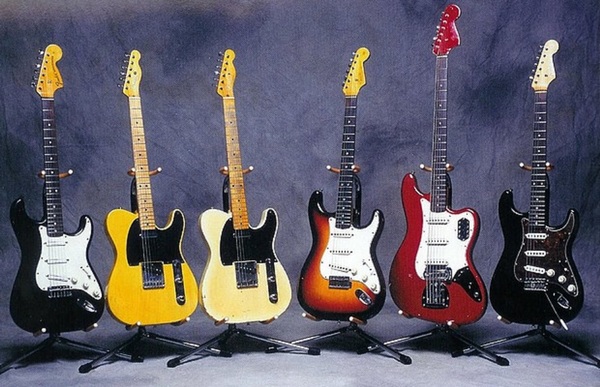
This website states that Slash used a 1962 Fender Bass VI for a small amount of studio work over his career. This includes, but is possibly not limited to:
Solo, Ft. Myles Kennedy & The Conspirators: "Dirty Girl" (World on Fire) 2014
Slash's Snakepit: "Been There Lately" (Ain't Life Grand) 2000
Guns 'n' Roses: "Right Next Door to Hell" (Use Your Illusion I) 1991
As well, in photo #10 of the page, we can see a Red 1965 Fender IV Bass.
Studio guitars
"Guitar is the best form of self-expression I know. Everything else, and I'm just sort of tripping around, trying to figure my way through life." (-Slash)
For studio sessions, Slash almost exclusively uses a 1959 Les Paul Standard replica made by Kris Derrig. It is with this instrument that he recorded almost all parts of Guns N' Roses, Slash's Snakepit, Velvet Revolver and solo albums. However, when he wants a specific sound for some parts, he sometimes plays with other guitars such as Flying V, Explorer, Stratocaster or Telecaster.
Gibson Les Paul Standard 1959 replica (main studio guitar used on almost every song/album)
Gibson Les Paul Goldtop 1956 (rhythm) (Estranged / Fall To Pieces / You Got No Right)
Gibson Slash Les Paul Appetite (rhythm) (Standing In The Sun / Halo / Bad Rain)
Gibson Flying V 1959 (lead) (Live And Let Die / Knockin' On Heaven's Door)
Gibson Explorer 1958 (lead) (Locomotive)
Gibson SG 1961 (My Michelle)
Gibson ES-335 1967 (rhythm) (Back To The Moment / Loving The Alien)
Gibson ES-135 (rhythm) (Wicked Stone / Stone Blind / Beneath The Savage Sun)
Gibson Les Paul Junior (slide) (30 Years To Life)
Gibson Les Paul 12-strings 1990 (rhythm) (You Got No Right / The Dissident)
B.C. Rich Mockingbird (lead) (You Could Be Mine / The Truth / The Alien / Headspace)
B.C. Rich Warlock (Reckless Life / Nice Boys / Move To The City / Mama Kin)
Travis Bean 1000 (slide) (Bad Obsession / The Garden / Beggars And Hangers-On / Shine / Rusted Heroes)
Fender Stratocaster 1965 (lead) (Yesterdays / So Fine / What Do You Want To Be / Back And Forth Again / Sucker Train Blues / Gravedancer)
Fender Telecaster 1956 (rhythm) (Sucker Train Blues)
Fender Bass 6-strings 1962 (rhythm) (Right Next Door To Hell / Been There Lately / Dirty Girl)
Gretsch 6120 Setzer (rhythm) (The Last Fight / Gravedancer)
Guild AJF30 (Patience / Used To Love Her / You're Crazy / One In A Million)
Martin D-18 (rhythm) (Not For Me)
Music Man Baritone (rhythm) (We Will Roam)


Clapton's Bass VI can be seen behind him at 2:00 of this clip.


in this picture you see stevie using it

Auerbach states that he and Patrick Carney used a Fender Bass VI while recording their album, at 0:40 in this video.
.png?v=1784874534)

George Harrison can be seen playing the Fender Bass VI most clearly at 5:50 in this TV performance of "Hey Jude."

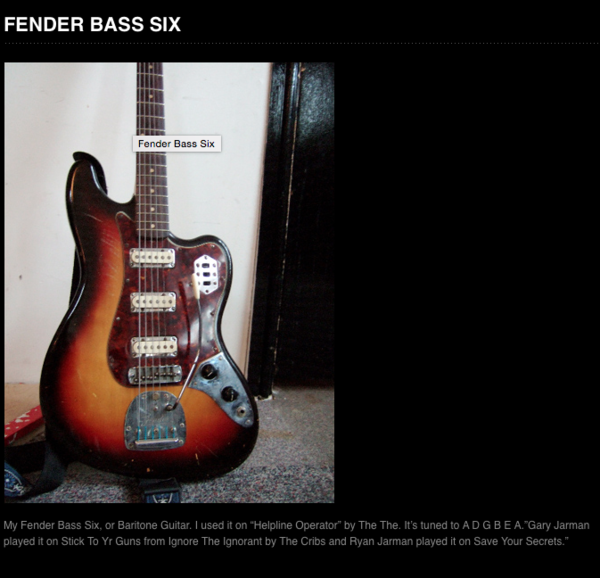
Johnny mentions his Fender Bass VI on his website:
"My Fender Bass Six, or Baritone Guitar. I used it on “Helpline Operator” by The The. It’s tuned to A D G B E A.”Gary Jarman played it on Stick To Yr Guns from Ignore The Ignorant by The Cribs and Ryan Jarman played it on Save Your Secrets.”

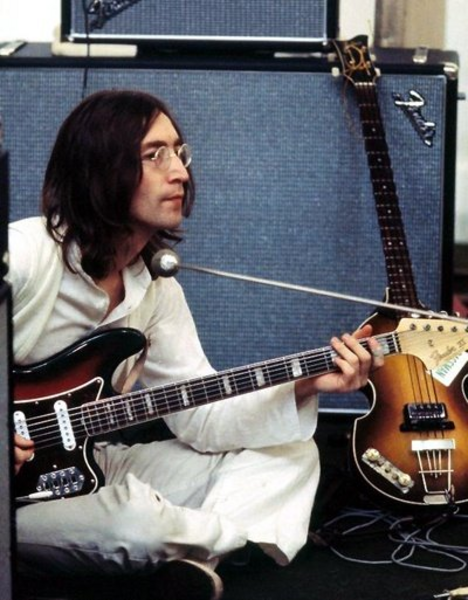
John Played this bass for the "Get Back" sessions, as it shows on the "Beatles Get Back" doccumentary, also is seen on the "Let it be" music video

According to a compiled list of stringed instruments used on "The Fragile" as detailed by NinWiki, Trent Reznor utilized a Fender Bass VI.

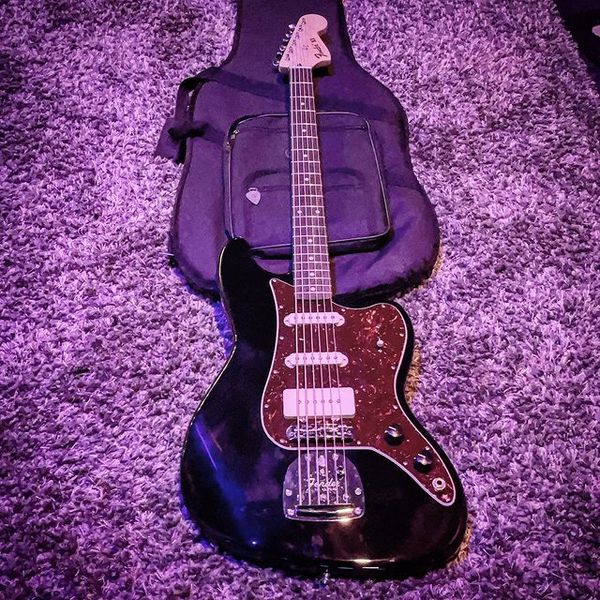
Album Usage
The Fender Bass VI has been featured on the following albums:

Odyssey (Original Motion Picture Soundtrack)
The The (2025)

The End of the Contender
Everything Everything & Everything Everything (2024)
The Final Reunion
The Shadows & Cliff Richard (2024)

Get Back (Rooftop Performance)
The Beatles (2022)

Hyperview
Title Fight (2015)

Pictures of You
The Cure (2014)
Let It Be... Naked (Remastered)
The Beatles (2014)

World On Fire
Slash (2014)

Godless
The Dandy Warhols (2013)

The Last of Us
Gustavo Santaolalla (2013)

I'm Shakin'
Jack White & Jack White (2012)
I'm with You
Red Hot Chili Peppers (2011)

Ignore The Ignorant
The Cribs (2009)

Popular Songs
Yo La Tengo (2009)
Stumble into Grace
Emmylou Harris (2003)
Ain't Life Grand
Slash's Snakepit (2000)
Bloodflowers
The Cure (2000)
Red Dirt Girl
Emmylou Harris (2000)

Western Wall: The Tuscon Sessions
Emmylou Harris (1999)
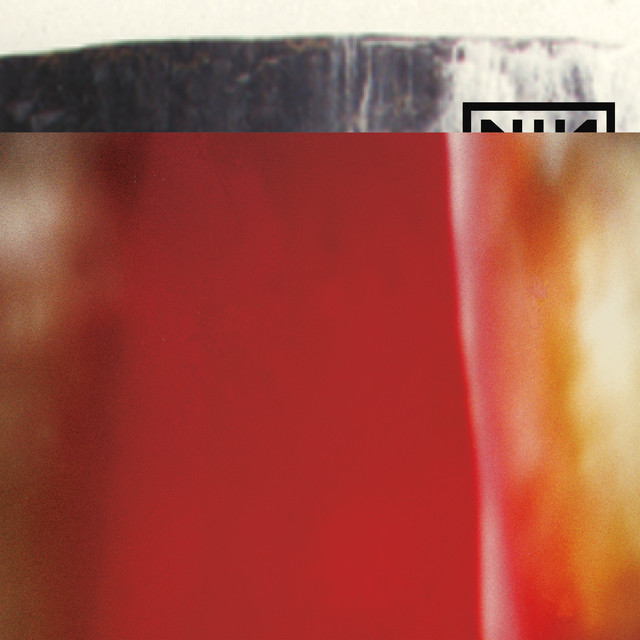
The Fragile
Nine Inch Nails (1999)
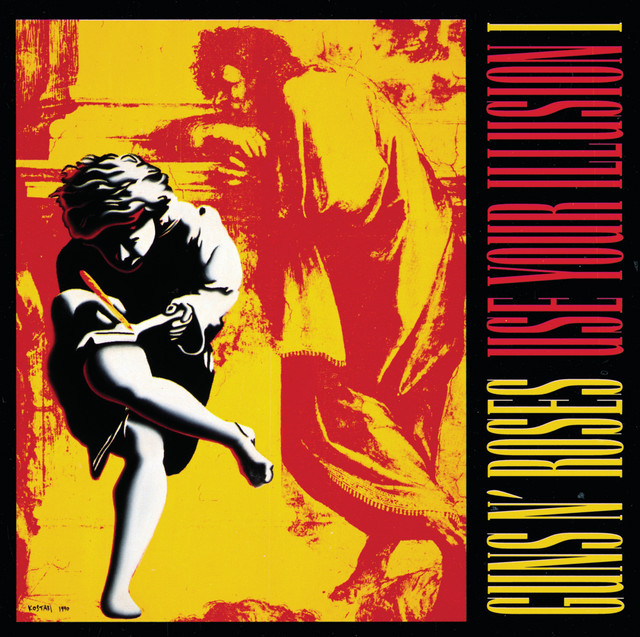
Use Your Illusion I
Guns N' Roses (1991)
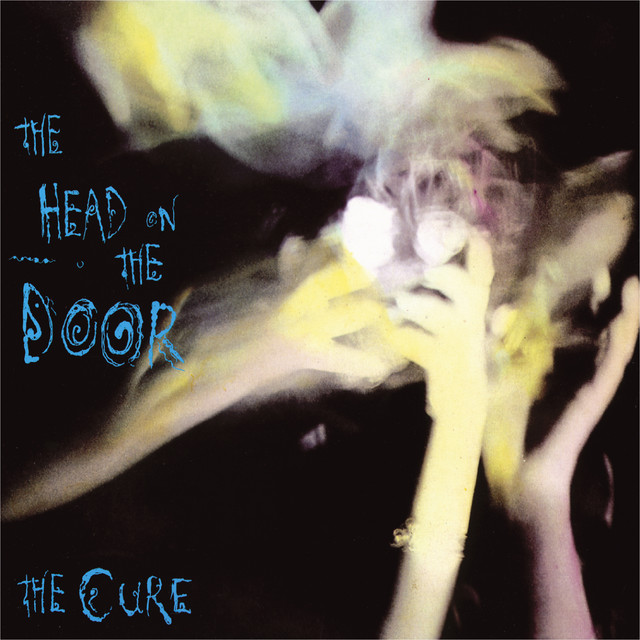
The Head on the Door (Deluxed Edition)
The Cure (1985)
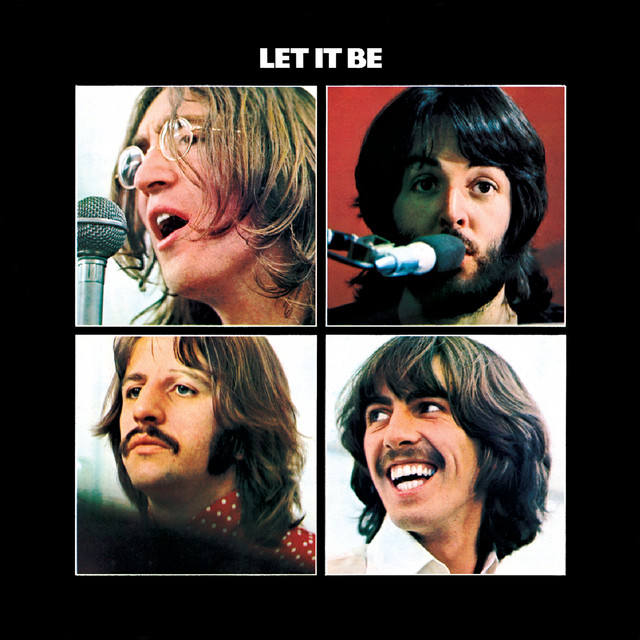
Let It Be (Remastered)
The Beatles (1970)
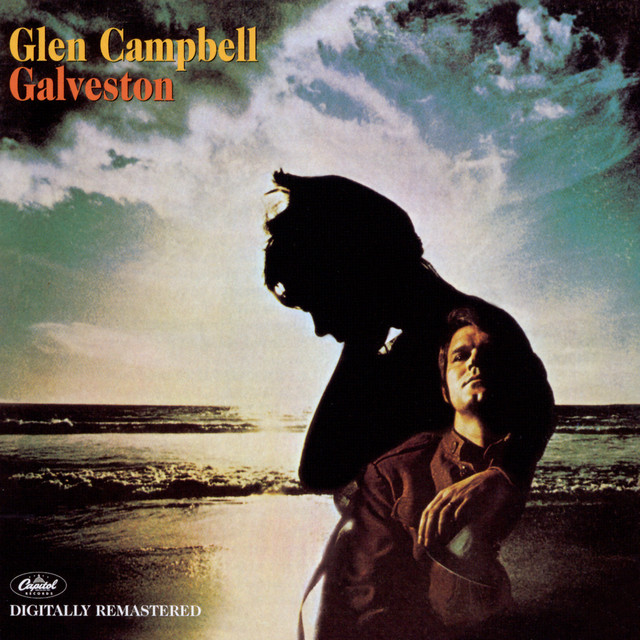
Galveston (Remastered)
Glen Campbell (1969)
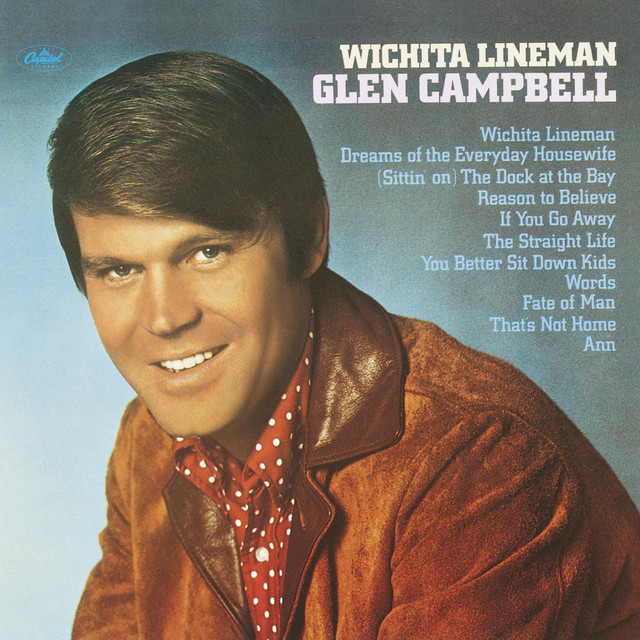
Wichita Lineman (Remastered)
Glen Campbell (1968)
Genre Usage
Based on how artists on Equipboard use this gear, it is most commonly found in the following genres.
Used With
Based on how musicians on Equipboard use Fender Bass VI, it is most commonly used with the following gear.
-s.webp?v=1784818740)




Similar
Add recommendation4 alternative and related items for Fender Bass VI, curated by the Equipboard community.

$406.00 - $569.99
Same instrument and tuning but a much cheaper alternative


$2,799.00
Made in Japan version of the Fender Bass VI. Same radius and hardware.

$406.00 - $569.99
More Fender Electric Basses

$899.99
in Electric Basses Rank


-m.webp?v=1784818817)
$799.00
in Electric Basses Rank


$651.26 - $1,999.99
in Electric Basses Rank


$500.00 - $894.26
in Electric Basses Rank


$649.00 - $1,589.00
in Electric Basses Rank


$655.00 - $779.00
in Electric Basses Rank


$1,158.11 - $1,599.99
in Electric Basses Rank


-m.webp?v=1784891861)
$549.00 - $1,094.69
in Electric Basses Rank

$651.26
in Electric Basses Rank


$477.90 - $679.99
in Electric Basses Rank

$650.00
in Electric Basses Rank


$1,000.00
in Electric Basses Rank


$1,365.00
in Electric Basses Rank


$1,512.10 - $1,999.99
in Electric Basses Rank


$1,250.00
in Electric Basses Rank

-m.webp?v=1784818759)
$1,463.99
in Electric Basses Rank


$606.00 - $679.99
in Electric Basses Rank


$1,469.99 - $1,999.00
in Electric Basses Rank


$1,400.00
in Electric Basses Rank


-m.webp?v=1784895967)
$1,221.12 - $1,579.99
in Electric Basses Rank


$2,988.00
in Electric Basses Rank


$1,449.00 - $1,999.99
in Electric Basses Rank


$606.00 - $679.99
in Electric Basses Rank


$1,094.69
in Electric Basses Rank


$2,407.42
in Electric Basses Rank
.jpeg?v=1784860561)


$1,399.00 - $1,699.99
in Electric Basses Rank


$1,463.99
in Electric Basses Rank


$581.00
in Electric Basses Rank


$1,579.99
in Electric Basses Rank


$549.00 - $679.99
in Electric Basses Rank

-m.webp?v=1784896591)
$1,009.99 - $1,579.99
in Electric Basses Rank


$700.00 - $1,079.00
in Electric Basses Rank


$649.00 - $799.99
in Electric Basses Rank


$1,419.99 - $1,849.99
in Electric Basses Rank


$719.00
in Electric Basses Rank


$1,549.99
in Electric Basses Rank


$699.00
in Electric Basses Rank


$1,449.00 - $1,899.99
-m.webp?v=1784334249)

-m.webp?v=1784818700)
$799.99 - $1,465.39


Accessories & Related Items






Community setups


Gear Guides
.webp)






Most Popular Electric Basses
Most Popular Brands
-
Added to Equipboard on by
 austinmw
GearIQ 5227
-


