This page about Allison Research Kepex Keyable Program Expander is a stub. You can help improve it:


Pricing and availability




* Product prices and availability are updated by Equipboard every 24hrs and are subject to change. Equipboard may receive compensation for purchases made at participating retailers linked on this site. This compensation does not affect what products or prices are displayed, or the order of prices listed. For more information, please refer to our affiliate disclosure.
Description
Unlock the full potential of your studio setup with the Allison Research Kepex Keyable Program Expander, a classic tool revered by sound engineers and producers for its dynamic range expansion capabilities. Originally developed in the 1970s, this iconic effects processor continues to hold its ground in modern studios, delivering precise control over audio dynamics. The Kepex excels at reducing noise floor and enhancing the presence of instruments, making it indispensable for mixing and mastering scenarios. Its keyable feature allows for external triggering, giving you ultimate control over when and how the expansion occurs.
The intuitive design offers straightforward operation, allowing you to effortlessly integrate it into your existing gear setup. Whether you're working with vocals, drums, or any other instrument, the Kepex provides a unique, vintage touch to your sound processing, breathing new life into your recordings. Embrace the legacy of Allison Research and elevate your audio projects with the Kepex Keyable Program Expander.
Key Features:
- Dynamic range expansion for enhanced audio clarity
- Keyable feature for external triggering control
- Ideal for reducing noise floor and improving instrument presence
- Vintage design with straightforward, intuitive operation
- Perfect for mixing and mastering applications
Videos

Daoyi
Kepex Noise Gate Demonstration Reel to Reel Tape
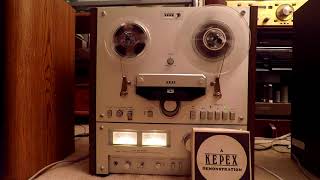
Kepex Noise Gate Demonstration Reel to Reel Tape
Daoyi
Reviews
Based on 0 Reviews and 0 Ratings
Artist usage
Add artist

Used for the tremolo on "Money", as stated in this March 9, 2012 Premier Guitar article and interview with Dark Side of the Moon sound engineer Alan Parsons. The use of the Kepex has also been supported by the research of Gilmour scholar Kit Rae, who states the following in this page from the David Gilmour Tone Building section of his website.
Gilmour used a similar gated tremolo effect for the sustained chords in the verse sections of Money, using the noise gate from an Allison Research Kepex (Keyable Program Expander) studio module, modulated with an external sine wave generator (according to engineer Alan Parsons).
The presence of the Kepex at Abbey Road, where Dark Side was recorded, is confirmed by Parsons in this June 1998 interview with Media&Marketing. Parsons states that the "heart beat" in "Speak to Me" was a bass drum gated by the Kepex.
The opening [heart beat] was just a gated bass drum. Kepex noise gates or expanders were quite a new technology at the time. It actually explains a lot about the sound of the album, since the Kepex had a sound of its own.


Part of Zappa's rack gear, as mentioned in this interview for the May-June 1979 issue of Guitar Player (as transcribed on Zappa Wiki Jawapa).
What's in the large console you use on stage? It looks very complex.
Well, actually it's not all that complex. It's a little rough to maintain. Things can get broken where it's shipped around. It's got a pair of Dynaflangers, a pair of MXR Flangers. It's got one input and four outputs – two dirty outputs and two clean outputs, all stereo. There's also two Big Muffs, Systec Harmonic Energizer – all these things are in pairs – Oberheim ECF, Eventide Harmonizer, MXR DBL, Mutron, DBX 162 compressors, Gain Brains, Kepexes, a Theremin and a Biphase. That's about it, and there's about 24 switches on the floor. I add to it every year. The Dynaflangers are on the newest thing. Oh yes, there's a Mutron Octivider and a DBX Boom Box.


Used on Mason's bass drum to produce the "heart beat" on "Speak to Me", as stated by sound engineer Alan Parsons in this June 1998 interview with Media&Marketing.
The opening [heart beat] was just a gated bass drum. Kepex noise gates or expanders were quite a new technology at the time. It actually explains a lot about the sound of the album, since the Kepex had a sound of its own.

Mentioned in an interview on page 34 of the July 1979 issue of Beat Instrumental.
A friend of his by the name of Beat's new ed Tony Horkins with positive proof that rock stars do wash! Chris Quail, who does bits of work on his gear, also designed a 12 into 2 mini -mixer. All the effects are fed into the mixer, like his Kepex noise gate (especially used on the Hammond), an MXR studio flanger, MXR studio phaser and a Yamaha digital echo. As all these effects are fed into the mixer they can all be used on any piece of equipment.
Album Usage
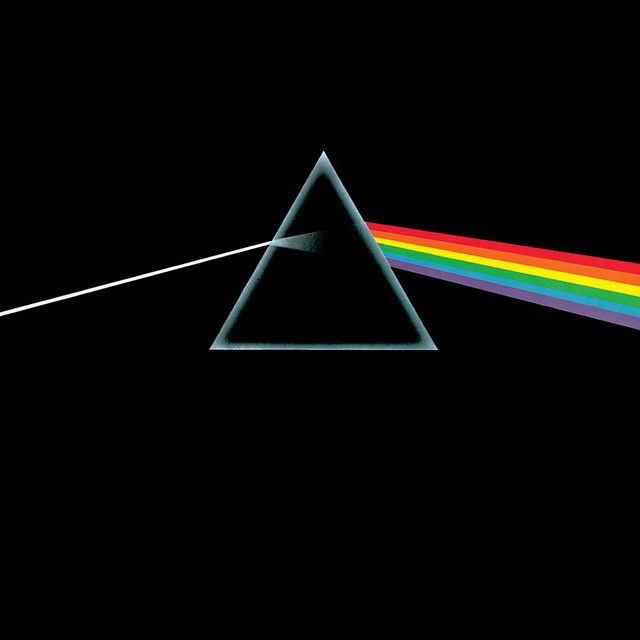
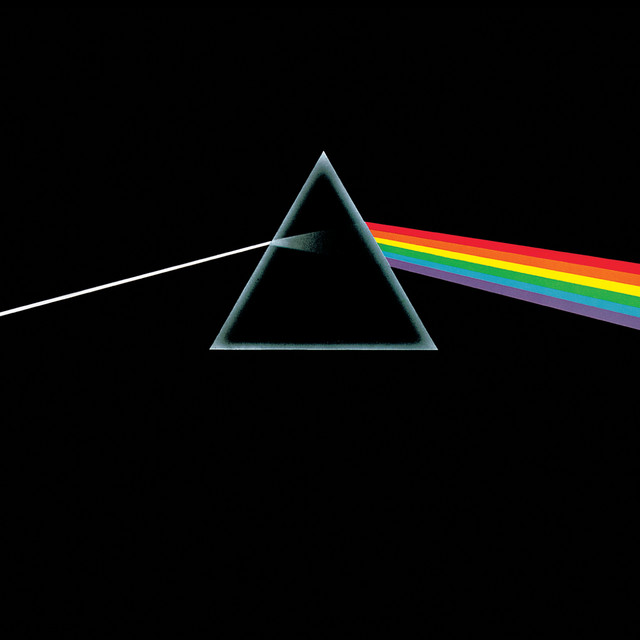
The Allison Research Kepex Keyable Program Expander has been featured on the following albums:

Genre Usage
Based on how artists on Equipboard use this gear, it is most commonly found in the following genres.
Used With
Based on how musicians on Equipboard use Allison Research Kepex Keyable Program Expander, it is most commonly used with the following gear.


Similar
Add recommendation1 alternative for Allison Research Kepex Keyable Program Expander, curated by the Equipboard community.

More Effects Processors

$1,550.00
in Effects Processors Rank


-m.webp?v=1784041063)
$624.00
in Effects Processors Rank


$202.82
in Effects Processors Rank


$1,799.00
in Effects Processors Rank


$1,549.00
in Effects Processors Rank


$1,999.00
in Effects Processors Rank


$749.99 - $833.00
in Effects Processors Rank


$149.00
in Effects Processors Rank


$1,450.00
in Effects Processors Rank


$3,799.00 - $5,075.00
in Effects Processors Rank


-m.webp?v=1784094357)
$40.00 - $2,999.00
in Effects Processors Rank

$5,699.00 - $6,999.00
in Effects Processors Rank

.jpg?v=1783787052)

$1,153.00 - $2,635.00
in Effects Processors Rank


.jpg?v=1784070940)

$894.29 - $1,799.95
in Effects Processors Rank


$4,531.05 - $4,777.00
in Effects Processors Rank


$620.00
in Effects Processors Rank


$250.00
in Effects Processors Rank


$69.95
in Effects Processors Rank


$182.00 - $236.00
in Effects Processors Rank


-m.webp?v=1784041098)
$435.22
in Effects Processors Rank


$419.99 - $1,179.99
in Effects Processors Rank


$749.99 - $4,999.00
in Effects Processors Rank


-m.webp?v=1784041137)
$450.00 - $699.00
in Effects Processors Rank


$1,710.00
in Effects Processors Rank

$629.99 - $849.00
in Effects Processors Rank


$2,999.00 - $3,290.00
in Effects Processors Rank


$35.77 - $199.00
in Effects Processors Rank


$2,555.00 - $2,850.00
in Effects Processors Rank

-m.webp?v=1784041185)
$310.02 - $936.00
in Effects Processors Rank

$4,999.00 - $7,980.67
in Effects Processors Rank

$1,100.00
in Effects Processors Rank

.jpg?v=1784057729)


$162.25
in Effects Processors Rank


$1,341.43
in Effects Processors Rank


$202.50 - $599.99
in Effects Processors Rank


$361.92
in Effects Processors Rank


$66.00
in Effects Processors Rank


$225.00
in Effects Processors Rank

$489.00
in Effects Processors Rank

$149.00 - $638.00
in Effects Processors Rank


$1,135.25 - $1,199.00
in Effects Processors Rank
Community setups


Most Popular Brands
-
Added to Equipboard on by
 eyeseeofficial
GearIQ 161592
-


