Jack White
rock & blues multi‐instrumentalist, The White Stripes, Third Man Records
Genre
Credits
Genre
Credits
Jack White's Gear

-m.webp?v=1782227096)
Used for the solo guitar on "Icky Thump", as stated by by recording and mixing engineer Joe Chiccarelli in this October 2007 Sound on Sound interview.
- Solo guitar: Lexicon Prime Time, room ambience, punch-ins
“I widened the guitar a little because it was a mono track. So I put a short delay on it with the Prime Time and also blended some room ambience back in. The solo guitar sounds deliberately very much like the Univox. The idea was to make people go ‘What is going on? Is that a guitar or a synth?’ Part of the effect was achieved during recording, when Jack asked me to punch in and out as he was playing, so that bits of the solo were clipped, making the notes sound more synthetic. Jack was very specific about how short he wanted the phrases. At first I was puzzled, but as always I trusted him, and sure enough, he was right, it was a really clever effect.”
The lack of specification suggests the original M93.
Find it on:


Part of White's home studio, as stated by recording and mixing engineer Joe Chiccarelli in this October 2007 Sound on Sound interview about the production of Icky Thump.
“Jack and Meg are big supporters of the analogue format, and he’s a big believer in the old-school approach: punch it in, no comping. If you don’t like a vocal take, just erase it and redo it. He has a Studer A80 eight-track recorder at home, and we used a Studer A827 with a 16-track head, and Emtec 900 2-inch tape, 30ips, no Dolby."
Find it on:

Used to record Icky Thump, as stated by recording and mixing engineer Joe Chiccarelli in this October 2007 Sound on Sound interview.
“Jack and Meg are big supporters of the analogue format, and he’s a big believer in the old-school approach: punch it in, no comping. If you don’t like a vocal take, just erase it and redo it. He has a Studer A80 eight-track recorder at home, and we used a Studer A827 with a 16-track head, and Emtec 900 2-inch tape, 30ips, no Dolby. I recorded pretty hot, because I wanted the stuff to have an extra little bit of distortion, and more edge and lots of tape compression. These things became part of the sound. I also had to make sure my levels were consistent, so when I spliced something in, it didn’t become unmixable and out of control.”
Find it on:
-m.webp?v=1783177589)
Used for vocals on Icky Thump, as stated by recording and mixing engineer Joe Chiccarelli in this October 1, 2007 Mix Online interview.
Most of the vocals were recorded on a RCA 77DX ribbon microphone, but a U47 and an old Altec 633 salt shaker mic were also pressed into service. Processing, depending on the track, included a Telefunken V76 tube preamp, an 1176, an LA-3A, a Fairchild and a Chandler Limited EMI TG2 compressor. “Sometimes the vocal went through a guitar amp, sometimes through a Neve module with a preamp turned all the way up,” he says. “He's great about working the distortion, knowing how to sing to a certain microphone. He knows how to back way off and come way in when he needs to. The vocal is different on every single song."
Find it on:

Jack White uses Vater Manhattan 7A drumsticks, as shown in a Pinterest post by SB W featuring a pair of his actual drumsticks.
Find it on:


Its creation was documented in the opening scene of It Might Get Loud.
Find it on:

At 4:41 in this video, Jack White discusses the Third Man x MXR Double Down collaboration.
Find it on:


In this video, a producer who worked with Jim Diamond (producer of Jack White on the first album) says that this latter used Octava MK-219 on guitar amplifier.
Find it on:

On the pic here https://www.reddit.com/r/guitarpedals/comments/pv6nqk/jack_whites_pedalboard_for_tonights_gig_at_third/ from the Live for the Opening of Third Man London, we can see a Dunlop Echoplex on Jack White's pedalboard, next to the EHX Nano Bassballs and behind the Whammy DT.
Find it on:

In the YouTube video "Jack White - Full Amex UNSTAGED Show" by Ocelot529, Jack White is seen using a Fender '63 Reverb Unit. This vintage spring reverb, resting on a Fender amp, is a key component of his sound, adding a distinct vintage quality. The unit is identified as the original '63 model by its handle, distinguishing it from the '90s reissue.
Find it on:


At this video in 2:35 Jack says that inside his Fender Jazzmaster is built in EHX Pitch Fork.
Find it on:

In this video from Fender, Jack White discusses his signature model amp. He says:
I had an amazing time with Fender designing this. We worked on this for four or five years and this was sort of like me shooting for the moon of what the ultimate Fender amplifier could be or just what the ultimate amplifier could be. They allowed me to design a lot of elements and work together with Fender to try and make something really beautiful and unique that Fender has never done before. Stan Cotey put together the first prototype amp of this and we went from there.
I’ll take you to the amp section first. Somewhere in there you got a Fender Vibroverb 1964 is in the heart of this amplifier. That’s my favorite Fender amp and I’ve used it for years but I was thinking you know what are these things that could make it sort of into this dream Fender amp. And one thing was having a drive boost knob. I like drive and preamping but I really like distrotion in amplifiers too much. A lot of modern amps have sort of these distortion knobs. Well this gives you an amazing boost without getting too distorted.
I of course always missed the middle knob in certain Fender amps that I love. They only had treble and bass. It was a bummer for me because I love to cut the mids a little bit in my signal and I think a lot of people obviously love to have the three chouices.
So we have a 15-inch speaker here and a 10-inch speaker here. Two different sized speakers. Not exactly something you’ve ever seen in a Fender amp before, and definitely not in those sizes. The sound of that is outstanding because double micing this you get the deep bassier crunch on the 15, you get the brighter glassier tones in the 10 inch and when you stereo mic these and pan them your stereo image is just outstanding, even before you talk about reverb and tremolo on this amp, which I’ll get to.
The reverb section. You’re going to see me very happy as I talk about this. This is just the dream reverb scenario for a Fender amp in my opinion, or for any amplifier. There was a Fender amp in the early 90s called the Vibro King and I thought that was really cool because what they did was they took a Fender reverb unit like the standard surf box reverb unit, and they put it in a combination amp with a dwell knob, a mix knob, and a tone knob. The difference between our version of that compared to the Vibro King is that in the Vibro King came before the preamp section, this reverb section comes after the preamp section and it’s just beautiful how much energy it has. The decay goes on forever and it’s just so beautiful and long and deep.
And what we’ve done here is instead of having a tone knob we have a treble and bass knob, so you can control just the treble and bass of the reverb signal. Now you’ve never seen that on a Fender amp before, no doubt about that. So if you like a really bassy reverb, you can turn the bass up and the treble down. If you like a really surfy twangy reverb, you turn the treble up on the reverb section. How cool is that? And that really comes in handy live and in the studio.
The switch here on the end is also going to blow your mind. It’s split and full. Full has the reverb coming through both these speakers and split has it coming only through the 10-inch speaker. So, if you have two microphones on a twin reverb say, you’re probably not getting much of a different sound unless there’s a flaw in one of the speakers. If you have two microphones on this Pano Verb, you’re gonna get two different speaker sounds, two different speaker sizes so they both have different characteristics and the ability only to put reverb in the 10-inch side. And the decay on this reverb is just outstanding. It goes on for days and it’s just so beautiful and rolling. I just love it.
Alright we’re going to go to the tremolo section now. This is the first harmonic tremolo that Fender has done in an amplifier since the early ’60s. I had this harmonic tremolo in my ’61 Vibrasonic and I really love the sound of it. Almost like it’s opening up like high and low pass filters rather than just amplitude modulation of volume going up and down. So we wanted to get that sound in here, you know. And you have two modes here; you have a mono and stereo mode. So there’s two amp sections in here that drive this stereo mode. In the mono mode, you’re kind of more like the regular Fender tremolo amplitude modulation, two speakers going up and down in volume but it’s still harmonic tremolo. In stereo mode you have a little bit of delay seperation between these two so you’ve got this stereo image that has this swampy wah-wah-wah going back and forth with left and right. The intensity all the way up and the speed down in this stereo mode you can hear the the movement.
I'd like to take you through some of the small aesthetic details of this amp. One that I'm very proud of is how many times has any Fender player spent a minute looking for the power switch and standby switches? Well, you know exactly where they are in this amp. You have this lightning bolt indicator to show you right where the power switch is. You're welcome. We have this great yellow, white, and black artwork here. Fender's never done this color on an amplifier before. This is a cool little co-brand here with Third Man Hardware. The knobs are pretty interesting. These were like Fender prototype metal knobs in the early 60s. I guess they just used them for a little while and they didn't catch on, but I had it on an old Vibrasonic and I thought it would be nice to bring that back. What's even interesting too here, each section the first knob clicks on and off, so if let's say you you have your reverb turned to zero on a on a Twin Reverb and you assume it's off, you know. This is not the case with this. The first knob in each section clicks off and has a zero spot so you definitely know. In the studio you don't even want to worry about it. You've clicked it off. It's set in stone. So the intensity on the tremolo is turned off, the mix of the Reverb is turned off the drive is turned off.
The input here is only one. The input just has a number three instead of a one or a two. This just a little Third Man Hardware flare to it. The foot switch also unique and you've never seen it before, a yellow foot switch on a Fender amp but that's just a kind of cool aesthetic part, but what I really am proud of is for years I've always wanted to put my switch for the amp up by my pedalboard but the wire always came out of the middle. Well we got this one to come out the side so now you can wrap that cord around and have it right next to your pedal board without it being funky and feeling backwards. That's a tiny Innovation I think is really really cool and I hope Fender keeps that for other amplifiers.
This amp comes with a yellow and black canvas cover instead of naugahyde. I'm an upholsterer by trade you know and I love the feel of certain fabrics and I wanted to have something a little bit different. A yellow jewel light here to make this a little bit special coming the factory standard. Air conditioning and pizza oven also factory standard. Yellow Fender amp logo, which is very cool and to go with the whole collection here the guitar cases also have this exact same yellow logo on them, which I think is a cool little marriage of these products that we collabed together.
Find it on:
-m.webp?v=1783172023)
In this video from Fender, Jack White discusses his signature Triplecaster guitar.
The Fender Triplecaster. How did we get here? It's kind of years and years of road testing guitars and changing and tone chasing and working with the great Chip Ellis and the great Tim Shaw at Fender to try to kind of create something that's a useful tool for all the guitar players and all musicians. It's called a Triplecaster because there's so many threes involved in here. You have three pickups, you have a three position switch, you have these three knobs, this has three dots instead of two at the 12th fret and there's only three dots after that instead of four. This number I use a lot when I'm designing and creating it kind of keeps me boxed in and helps me kind of get to new places by kind of constricting myself.
The three pickups here; so we have a CuNiFe Wide Range Humbucker, we have a JW 90 in the middle position, and in the bridge position is a JW Humbucker we worked closely together, me and Tim Shaw, to find the right voicings for for all of these. And this was all road tested. I took these pickups over the years on the road and played them live around the world and really got down to what sounds I specifically love coming out of this guitar.
The wide range goes back all the way to the first time I played a Telecaster was my brother Eddie had a ’72 Thinline when I was a kid and he had the wide range pickups in there and I loved how creamy they sound, especially in the neck position, so that's been there for a while on my guitars.
Down by the bridge I've been messing around with different things over the years. Finally, when Tim Shaw had made a custom pickup in my wife Olivia Jean’s guitar I heard her play that and I thought that's exactly how I want my humbucker to sound.
This 90s style is so cool because it's got this punk vibe to it right in the middle position. It just feels like you know that extra buzz of a single coil but it's thick. It doesn't sound weak.
I’ll start off with the CuNiFe Wide Range. It's got that just creamy bassier sound that I really love.
Can we switch to that JW 90 here in the middle. It's got kind of that mid-range bite, that kind of punky vibe. Compare that to this humbucker.
This is three totally different voices and to emphasize that I wanted it to be a three position switch, much like the early Telecasters. I wanted to kind of harken back to that where it makes you sort of focus on the the abilities of each pickup. But I'm also interested to see people mod this out and add you know five-position switches and play around with it.
The three knobs here, it's kind of wild, because there actually only two knobs. This third one is a really cool off, on, and straight to jack. I was calling it straight-to-jack switch so that bypasses all the pots and tone and volume knob to go from each pickup directly to the jack if you're pushed all the way down, if you're in the middle when they're all flat like that that's on, and then this is your off situation.
I love this kill switch here, interruptor switch, whatever you'd like to call it. Me and Chip Ellis worked together on a EVH guitar and that's when I first kind of started using the interruptor switch, which I then put on my Telecaster quickly after that and it's stayed with me ever since. I really love that.
Got the drop D switch back here so you can go immediately to open D or drop D.
We went through a bunch of different arms on this over the years as I was road testing this and got to this Chet Atkins bent arm. I really love that a lot. Some people like to flip it the other way. I like it in this spot so that when you push it down it doesn't hit the knobs. All the hardware is powder coated white. A white Bigsby alone is so unique and aesthetically pleasing to me.
The first guitar I had with armest on it was a Gretsch White Penguin had that banjo armrest on. I really loved that. I started putting that on my guitars and we wanted to have a sort of in the Cabronita neighborhood of pick guards. I designed it so would have a straight line so you see a black straight line in between so give the pickups their own little space.
We have the contoured neck heel back here so you get a little bit, just a little more access to these higher frets. 22 frets on this neck and a little white powder coat with the Triplecaster logo on there. We've powder coated white these tuners and the and a lot of these metal Parts. But the parts that are sort of working, you know where they rub against the strings, rub against the bridge, or the Bigsby, we keep those steel and chrome so the powder coating doesn't react well with that kind of a friction.
The neck is maple. That kind of bright white looking maple that I really love. I first saw on those early ‘90s was it Jeff Beck and Eric Clapton Stratocasters that had that really bright wood. I really love that. It didn't have any tint to it, and I consider that sort of the third color of the triple Caster. You have black, white, and natural. You know, the natural things of the world, the wood and the metal.
Got that cool ‘70s logo on there. The way it's written, I love that block lettering. This has got great vibes for all different genres. You play blues or you play punk rock or you play country, I think this guitar is going to really appeal to you.
Find it on:

In the Premier Guitar Rig Rundown video titled "Jack White Rig Rundown Guitar Gear Tour at Third Man Records Nashville," Jack White confirms that he uses the Electro-Harmonix Nano Q-Tron filter pedal as part of his pedalboard setup. The pedal is painted black, as per the aesthetic of the setup. This detail is corroborated during a comprehensive tour of White's gear by Premier Guitar's John Bohlinger, with insights provided by White's technician and collaborator, Dan Mancini.
Find it on:

Used to record Lazaretto, as stated in this October 2014 Sound on Sound interview.
All of Lazaretto was recorded to one or, usually, two of Third Man Studio’s Studer A800 two–inch machines, which have John French’s JFR Magnetic Science’s Ultimate Analogue eight–track headstacks with a proprietary ninth timecode track for link–up, which allows the two eight–track machines to be combined for 16–track recording. In addition, while Pro Tools was barely used in the making of Blunderbuss, it saw extensive mileage during the making of Lazaretto.
Find it on:

Used for the mandolin and vocals on "Prickly Thorn, But Sweetly Worn", as stated by recording and mixing engineer Joe Chiccarelli in this October 1, 2007 Mix Online interview.
On the song “Prickly Thorn, But Sweetly Worn,” the band added bagpipes, mandolin, thigh slaps and hand percussion to the mix. “Meg did two different bass drum tracks, playing the bass drum with a mallet, and then the tracks switch between sections of the song. It started with a dead-er bass drum, then opened up to an almost parade drum sound,” he explains. “That song was interesting, because after we recorded it we decided that it didn't sound like it was done [live] in the studio enough. Jack is very keen on it sounding honest and like people in a room playing, so we took the mandolin and vocals and pumped them back through the studio loudspeakers and miked the room [with a C24 stereo mic].”
Find it on:

Used for the guitar on "Icky Thump", as stated by recording and mixing engineer Joe Chiccarelli in this October 2007 Sound on Sound interview.
“For the song ‘Icky Thump’ I had the Royer and an AEA on Jack’s two guitar amps, and a couple of U67s for room ambience. In a few cases I used the Shure SM7 guide vocal mic. Ribbons are prone to overloading, so we blew out four Coles mics on the guitar amps. Luckily Jack had several Coles 4038’s with him! The guitar mics went through Neve and Chandler preamps, and then always through an API 550A EQ, and then an 1176. The Univox sounded great acoustically in the room and was miked with a U87 across the room, going into a Chandler TG2 preamp and then some slight compression with an LA2A."
Find it on:


Used for vocals on Icky Thump, as stated by recording and mixing engineer Joe Chiccarelli in this October 1, 2007 Mix Online interview.
Most of the vocals were recorded on a RCA 77DX ribbon microphone, but a U47 and an old Altec 633 salt shaker mic were also pressed into service. Processing, depending on the track, included a Telefunken V76 tube preamp, an 1176, an LA-3A, a Fairchild and a Chandler Limited EMI TG2 compressor. “Sometimes the vocal went through a guitar amp, sometimes through a Neve module with a preamp turned all the way up,” he says. “He's great about working the distortion, knowing how to sing to a certain microphone. He knows how to back way off and come way in when he needs to. The vocal is different on every single song."
The lists of compressors on Blackbird Studios' rental website specifies the Urei iteration.
Find it on:

There’s a thing somebody sent me, because I use a Whammy pedal. I’ve always used it since the White Stripes, but this is a new contraption [called a Step Audio Riff-Step] that you can hook up to the Whammy pedal to bounce between four different settings whenever you tap it. That’s going from an octave up to a fourth down to an octave below to a fourth up or something. It just kind of worked out for that song in a cool way. Now I have to do it every time [laughs].
Find it on:

In this video for "Old Enough" by The Raconteurs featuring Ricky Skaggs and Ashley Monroe, Jack White is seen playing a Gretsch Rancher with double pick guards. A close up of the guitar is seen at 0:42 seconds into the video.
Find it on:

Jack White is seen playing a Fender Jazz Bass in a post on his official Instagram account.
Find it on:

In this Picture from pinterest it shows Jack White's pedalboard from an SNL live performance.
Find it on:
-m.webp?v=1769151640)
In this article from Vintage Guitar, it says:
In recent years, the Selmer brand has started to get some of the attention it deserves, partly because of skyrocketing Vox and Marshall prices and collectibility, partly in the wake of Jack White’s use of a Selmer Zodiac 30 to record the White Stripes’ Elephant album, and partly because people have finally realized just how cool these amps are.
Find it on:

He can be seen with a modified Jaco Pastorius Signature Jazz Bass in this promo shot. It was used in studio for Fear Of The Dawn.
Find it on:

Jack White’s EVH Wolfgang guitars have a Lace Sensor Dually Red/Blue in the neck with a cover on it.
Find it on:

In the song "Into The Twilight" off of his album Fear Of The Dawn at time 1:03, Jack White can be heard using the Korg Miku Stomp pedal most clearly, but the Korg Miku Stomp appears throughout the song.
Find it on:


In this instagram post, we can see two guitars and one bass. The first guitar is his Three Wheeler Telecaster refinished in blue, and we can see the middle guitar is a Jazzmaster. It has a whammy circuit integrated in it (https://www.instagram.com/p/CefBYuqJPA0/). The post says it is a Custom Shop one made by Chip Ellis and Dan Mancini.
(The thumbnail for the submission is not correct but as it is a one off guitar, there is no way to purchase it, hencer to add it on this website)
Find it on:
-m.webp?v=1782658580)
He uses this amp live and in the studio very often
Find it on:
-m.webp?v=1783176997)
There are lots of videos online and photos from the 2022 supply chains issues tour indicating he is using a Shure SM58 microphone. He also used it in 2021 at the Third Man Records London performance along with the Warstic Headquarters Opening gig.
In 2012 this was also his main mic setup.
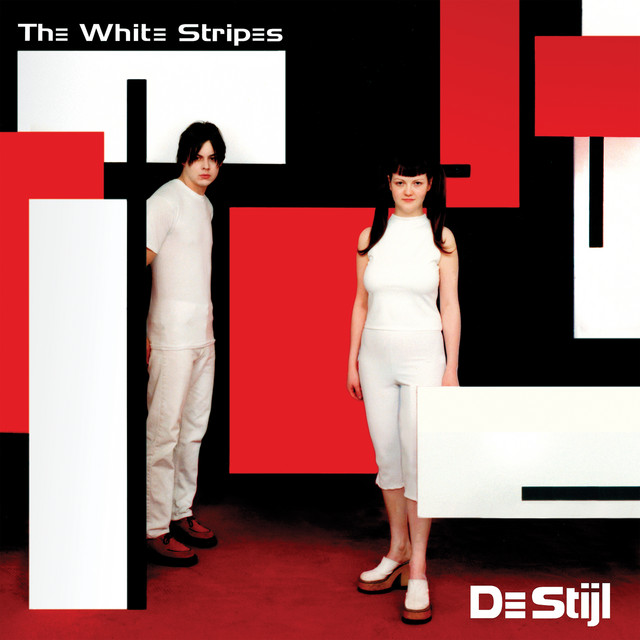
Jack said in an interview that microphone was the only one used for the White Stripes' second album De Stijl.
Find it on:
This is a community-built gear list for Jack White.
- Find relevant music gear like Microphones, Guitars, Amplifiers, Effects Pedals, Drum Sets, Cymbals, Snare Drums, Drumsticks, Pianos, Keyboards and Synthesizers, and other instruments and add it to Jack White.
- The best places to look for gear usage are typically on the artist's social media, YouTube, live performance images, and interviews.
- To receive email updates when Jack White is seen with new gear, follow the artist.
Discography


Album Credits
-

Jack White & Jack White · 2024
Mixing Engineer Producer -

Jack White & Jack White · 2022
Engineer Mixing Engineer Producer -
Jack White & Jack White · 2022
Engineer Mixing Engineer Producer -

Jack White & Jack White · 2018
Engineer Mixing Engineer Producer -
Soledad Brothers · 2017
Recording Engineer -
Killer Diller Blues (Music from The American Epic Sessions)
Alabama Shakes · 2017
Producer -
Jack White & Jack White · 2017
Producer -
Producer
-

Justice League (Original Motion Picture Soundtrack)
Danny Elfman · 2017
Mixing Engineer Producer -

Beyoncé · 2016
Producer -
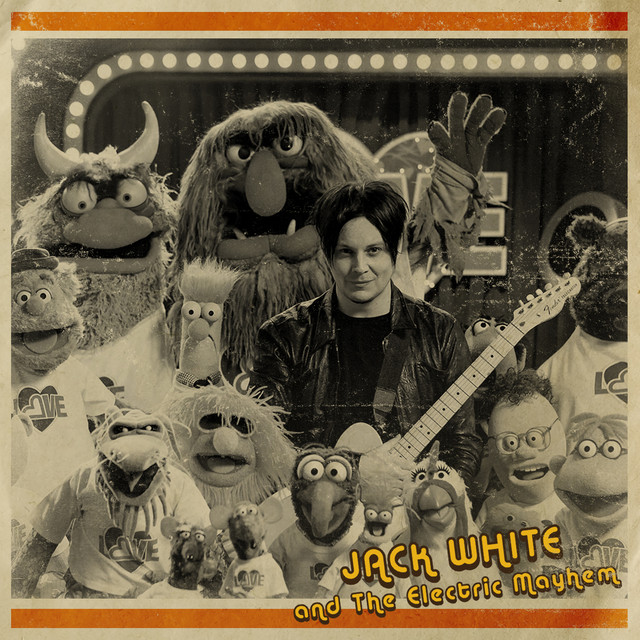
You Are The Sunshine Of My Life
Jack White & Jack White · 2016
Producer -
Jack White & Jack White · 2014
Mixing Engineer Producer