Mick Jones
The Clash/Big Audio Dynamite
Mick Jones' Gear


"Jones relied on a Les Paul Jr. with P-90s plugged into an Ampeg V4 head and 4x12 cabinet." - Premier Guitar.
Find it on:


At 7:44 he can be clearly seen playing a Les Paul Junior Doublecut. Typical punk guitar.
Find it on:


"This tele, and especially the thinline one, is perfect for me"
Find it on:


Mick Jones, guitarist for The Clash, is noted for using the MXR M107 Phase 100 phaser pedal, as documented on his Wikipedia page.
Find it on:


Mick played a Mesa Boogie Mark I in the studio during recording of 'Give Em Enough Rope' (1978). Lots of accounts state that producer Sandy Pearlman introduced Mick to the brand, which he continued to use throughout the Clash's later career. The guitar sound on 'Give Em Enough Rope' is a clear departure from that on 'The Clash' (1977) largely due to the smooth high gain Mesa Boogie combo.
The linked article from Premier Guitar states that "He unloaded the speaker [of the Mark I] and used it to drive a single Marshall 4x12. For a period he even used the Boogie to run two 4x12s, but by the end of 1979 he had added a blonde 100-watt Mark II to drive one of the cabinets. "
Find it on:

Jones can be seen playing an ebony Gibson Les Paul in this photo.
Find it on:
-m.webp?v=1784458969)
According to youremyguitarhero - Mick used a Phase 90 during 1978: " It’s audible in the 'Tommy Gun' live TV footage above, as well as during the Rock Against Racism gig in 'Rude Boy'." It's apparent that Mick scaled up to the MXR Phase 100 pedal for London Calling (1979).
Find it on:

Here's Mick on Fender's Youtube channel talking about how the telecaster is the only guitar he'll ever need! (2011). Seems to have been playing this telecaster exclusively in his band Carbon/Silicon (formed 1992.)
Find it on:


-m.webp?v=1784333902)
Mick used a Mesa Boogie Mark II as part of his rig after 'Give Em Enough Rope' (1978).
From the linked Premier Guitar article: "Jones favored the 100-watt Mark I in combo form. He unloaded the speaker and used it to drive a single Marshall 4x12. For a period he even used the Boogie to run two 4x12s, but by the end of 1979 he had added a blonde 100-watt Mark II to drive one of the cabinets. That dual half-stack setup would be his main rig from then on. "
Find it on:

I'm pretty sure that Mick used his Bond Electraglide throughout Big Audio Dynamite and BAD II and Big Audio. He can be seen playing it in most of their music videos: 'The Bottom Line' from their first album (1984), the 'Rush' video (1991) and 'I turned out a punk (1995). I can vouch for seeing Mick use the Bond live in concert 1989-1992.
He also plays it in the video for 'Good Morning Britain' by Aztec Camera (1990).
Find it on:

According to the linked Premier Guitar article, Mick used the Roland RE-201 Space Echo extensively live and in the studio "for everything from light flanging effects to deep echo." Live bootlegs from 1980 onwards feature extensive use of delay, which I assume is the Space Echo.
Find it on:

at 0:45 of this video you can see mick jones using a fender stratocaster
Find it on:

According to a Premier Guitar article, Jones was given a "late 70s" all-black stratocaster with a maple neck by Fender (Paul Simonon was also given a Precision bass). He apparently favoured using the strat in the studio. I don't believe I've ever seen a photo of Mick playing this particular guitar, possibly because Fender-sponsored David Gilmour was playing one around the same time.
Find it on:


-m.webp?v=1784473124)
This article states that Mick used "a brace of" MXR effects from 1980 onwards, including the MXR Flanger. Can be heard on 'Charlie Don't Surf' (1980).
Find it on:

Mick plays a Melody Maker during a live performance with the Libertines (whose album he produced) at the 2004 Rock Against Racism concert. The guitar likely belongs to Carl Barat.
Find it on:

Youremyguitarhero's excellent page on Mick's gear points out that he is seen playing a Gordon Smith at early Clash shows. The picture in that article appears to be a single cutaway Les Paul Jr-style guitar by Gordon Smith.
Find it on:

Mesa Boogie Artist Relations had the chance to catch Big Audio Dynamite at Coachella Music Festival in Indio, California. Big Audio Dynamite recently reunited their original lineup and headlined the music festival. Guitar legend Mick Jones returned to his Mesa Boogie roots and has been playing a Lone Star 2x12 combo while on tour. Mick was known for using the Mark Series combos during his days with The Clash and still uses Boogie for his tone today. Mick began pushing the boundaries of rock with The Clash in 1976. The British pop/punk band was noted as “The Only Band That Matters”, with politically infused lyrics and a devoted following. Mick went on to form Big Audio Dynamite, incorporating many of the same styles, with the addition of elements like hip-hop, reggae, funk, and dance music. Mick’s work with The Clash and Big Audio Dynamite has influenced the music industry greatly. He played a definitive role in punk rock and continues inspiring the music industry today. We had the chance to catch up with Mick at the festival and talk about his current rig. Mick mentioned that he’s been using Boogie combos for over thirty years, to which he added, the reason he played Boogie with The Clash and still does today is because they are “simply the best”.
Find it on:

The Clash’s eponymous 1977 debut was powered by the driving P-90s of Jones’ Les Paul Jr. By 1979, when the band was recording its third album, London Calling, the Clash became the first of the punk bands to break away from the loud/fast rules and into new styles such as reggae, R&B, and rockabilly.
Find it on:

Not sure if he played it on the track 'Long Island', but the video has a great photo of him playing a vintage ES-140.
Find it on:

youremyguitarhero's page on Mick's gear details a double cutaway Les Paul Jr-style guitar made by Scottish guitar-maker Andrew Bond. Mick played the guitar at The Clash's final show. Jones would later go on to play a Bond Electraglide throughout Big Audio Dynamite/Big Audio/BAD II.
Find it on:

In the "London Calling" video, Mick Jones is seen playing a Gibson ES-175 Electric Guitar.
Find it on:

Mick played one of these in a BBC session for Carbon/Silicon in 2005.
Find it on:

The linked article, along with youremyguitarhero's thorough detective work on Mick's live rig confirm that he used the Chorus Echo extensively during Sandinista (1980).
Find it on:

In the video "Mick Jones - Train in Vain" by Isabela Cordaro, Mick Jones can be seen playing a Fender American Professional Telecaster. The guitar appears new and features the distinctive silver 'spaghetti' Fender logo.
Find it on:


Mick played a '58 Les Paul during 1978, and likely used it while recording 'Give Em Enough Rope'. He can be seen playing it extensively in the Clash movie 'Rude Boy' along with his black Les Paul. Jones is photographed playing the '58 in Sid Vicious' backing band at Max's Kansas in 1978. Most notably the guitar can be seen in the 'Tommy Gun' music video.
(note - the image attached is likely a re-issue of the '58, rather than an original)
Find it on:

The Premier Guitar article and youremyguitarhero both reckon Mick's guitar from the London Calling music video is a rate all-white Gibson ES-295.
Find it on:

Mick plays a white V223 Vox Mark XII in the music video for Big Audio Dynamite's 'Contact' (1989).
Find it on:

In the basement of Mick's house is a small eight-track demo studio/rehearsal room simply equipped with a Fostex A-8 tape machine, a Fostex 350 mixer, a Roland 301 echo unit and a few dynamic mikes.
Find it on:

In the basement of Mick's house is a small eight-track demo studio/rehearsal room simply equipped with a Fostex A-8 tape machine, a Fostex 350 mixer, a Roland 301 echo unit and a few dynamic mikes.
Find it on:

In the basement of Mick's house is a small eight-track demo studio/rehearsal room simply equipped with a Fostex A-8 tape machine, a Fostex 350 mixer, a Roland 301 echo unit and a few dynamic mikes.
Find it on:
This is a community-built gear list for Mick Jones.
- Find relevant music gear like Microphones, Guitars, Amplifiers, Effects Pedals, Studio Equipment, Software Plugins and VSTs, Headphones, and other instruments and add it to Mick Jones.
- The best places to look for gear usage are typically on the artist's social media, YouTube, live performance images, and interviews.
- To receive email updates when Mick Jones is seen with new gear, follow the artist.
Album Credits
-
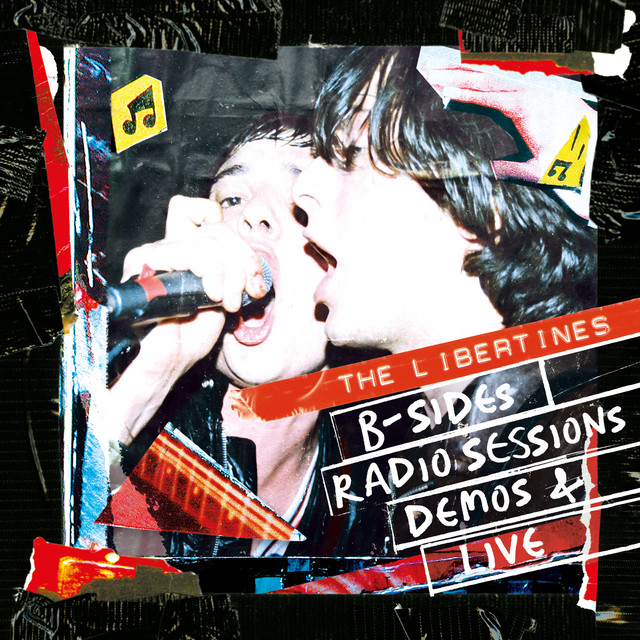
Up the Bracket: Demos, Radio Sessions, B-Sides & Live
The Libertines · 2022
Producer -
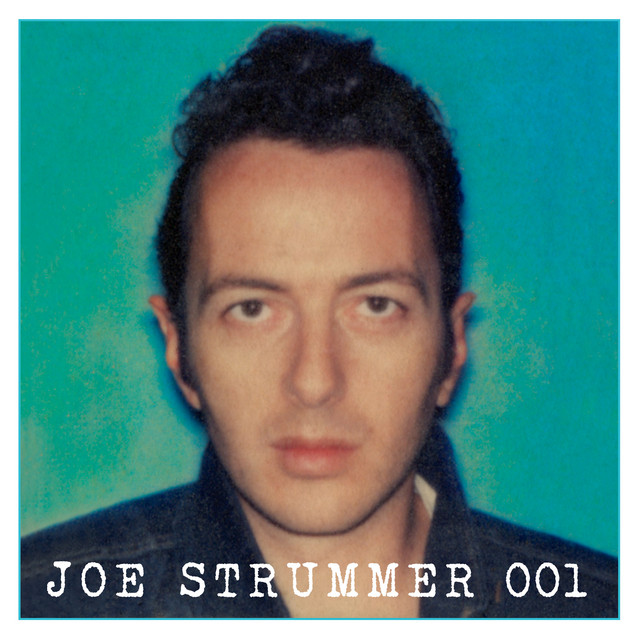
Joe Strummer · 2018
Producer -
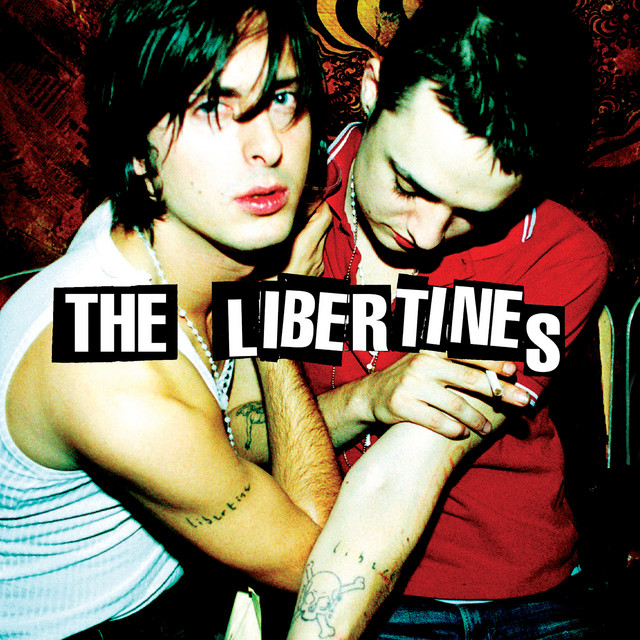
The Libertines · 2004
Producer -
The Libertines · 2004
Producer -
The Libertines · 2003
Producer -
The Libertines · 2002
Producer -
The Libertines · 2002
Producer