-s.webp?v=1784333902)
-xl.webp?v=1784333902)
Pricing and availability
We compare 600+ stores and found this item at 1 store. Prices updated .
Store
Reviews
Price




Average Price: $2,197
High-end/Boutique
$300
$701+
Price Tier
Budget
Standard
High-end
* Product prices and availability are updated by Equipboard every 24hrs and are subject to change. Equipboard may receive compensation for purchases made at participating retailers linked on this site. This compensation does not affect what products or prices are displayed, or the order of prices listed. For more information, please refer to our affiliate disclosure.
Description
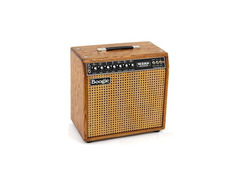
The Mesa/Boogie Mark II is a legendary combo guitar amplifier that embodies the transition from vintage tone to modern rock power. Introduced between 1978 and 1985, this amp retains the classic design and layout of its predecessor, the Mark I, while enhancing your sound with updated circuitry. It’s an icon in the world of amplifiers, favored by renowned artists like Ron Wood, Carlos Santana, and Keith Richards for its ability to deliver both rich, clean tones and roaring overdrive.
With its dual-channel flexibility, the Mark II offers musicians the freedom to seamlessly switch between sparkling cleans and dynamic distortion, catering to a wide range of musical styles. The graphic EQ adds a new layer of tonal customization, allowing for pinpoint precision in sculpting your sound. Whether you're playing in a small club or on a large stage, the Mark II's robust build and versatile nature make it the perfect companion for any gig.
Its enduring legacy is a testament to Mesa/Boogie's commitment to quality and innovation, providing a timeless piece of gear that continues to inspire musicians across generations. The Mark II isn't just an amplifier; it's a cornerstone of tone history.
Key Features:
- Dual-channel design for versatile sound options
- Graphic EQ for precise tone shaping
- Built-in spring reverb for classic ambiance
- Compact combo design for easy transportation
- Legendary tone used by iconic musicians
Product specs
| Brand | Mesa Boogie |
| Model | Mark II 2-Channel 100-Watt 1x12" Guitar Combo |
| Finish | Various |
| Year | 1978 - 1980 |
| Made In | United States |
| Categories | Guitar Combo Amps |
| Built-In Effects | Built-In Effects |
| Direct Output | No Direct Output |
| Electronics | Tube |
| Impedance | 4 ohms, 8 ohms |
| Number of Channels | 2 Channels |
| Number of Inputs | 1 Input |
| Output Power (Watts) | 100 |
| Power Tube Type | 6L6 |
| Reverb | Spring Reverb |
| Speaker Configuration | 1x12" |
FAQs
-
What are the core tonal characteristics of the Mesa/Boogie Mark II amplifier?
-
The Mesa/Boogie Mark II is known for its versatile tone, offering both clean and high-gain sounds. It provides a smooth, creamy overdrive, making it suitable for genres ranging from jazz to rock and metal.
-
Does the Mesa/Boogie Mark II take pedals well?
-
Yes, the Mesa/Boogie Mark II is known for handling pedals effectively, especially overdrive and distortion pedals, enhancing its already rich tonal palette.
-
Is the Mesa/Boogie Mark II loud enough for gigging with a drummer?
-
With its 100-watt power output, the Mesa/Boogie Mark II is more than capable of keeping up with a drummer in live performance settings, providing ample volume and headroom.
-
How does the spring reverb in the Mesa/Boogie Mark II sound?
-
The spring reverb in the Mesa/Boogie Mark II offers a classic, lush reverb sound, adding depth and ambiance to both clean and distorted tones.
-
What type of tubes does the Mesa/Boogie Mark II use?
-
The Mesa/Boogie Mark II uses 6L6 power tubes, known for their robust, warm sound and dynamic response, contributing to the amp's signature tone.
Videos

Elmo Karjalainen
Mesa Boogie Mark II A (Playing a Vintage Mesa)
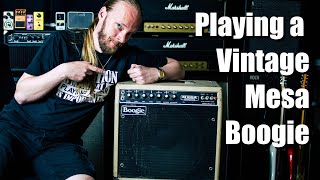
Mesa Boogie Mark II A (Playing a Vintage Mesa)
Elmo Karjalainen
Reviews
Owner Insights
We analyzed real musician discussions from forums and Reddit to find what players love, question, and tweak about Mesa/Boogie Mark II.
Build quality
-
Some owners express concerns about the Mesa/Boogie Mark II C+ reissue's use of underrated capacitors and poor layout, leading to high repair costs.
Source
Features and functionality
Comparisons
-
Owners note that the Mark VII and JP-2C cover similar sonic territory, suggesting the reissue appeals more to collectors.
Source -
The Mark series amps are based on modded/hi-gain Fender-style preamps, contrasting with the Marshall-like Dual Rectifier tone.
Source -
The Mark III's lead tone is highly praised, and its "simulclass" feature is highlighted as exceptional compared to the Mark V 25's fewer modes.
Source
Value and pricing
-
The reissue is priced similarly to the Mark VII, but some argue it offers less value given modern advancements in amplifier technology.
Source -
It's noted that the value of Mesa amps, like the Mark III, is expected to rise quickly now that Gibson owns them, making them a potentially wise investment.
Source
User experience
-
Long-term users of Mesa amps express a desire for custom options like Emerald Green with a Wicker grille, though this extends the wait time significantly.
Source -
The Mark V 25 head paired with a 2x12 Recto or Orange cab provides a versatile and powerful setup for various playing environments.
Source -
The Mark III, while excellent, is expected to require maintenance due to its complex circuitry and aging components.
Source
Use cases and applications
5.0 out of 5
Based on 1 Review and 3 Ratings

Artist usage
Add artist

In this studio footage there appears to be a Mesa Mark II in the left hand side of the screen from 0:06 to 1:17.


Mick used a Mesa Boogie Mark II as part of his rig after 'Give Em Enough Rope' (1978).
From the linked Premier Guitar article: "Jones favored the 100-watt Mark I in combo form. He unloaded the speaker and used it to drive a single Marshall 4x12. For a period he even used the Boogie to run two 4x12s, but by the end of 1979 he had added a blonde 100-watt Mark II to drive one of the cabinets. That dual half-stack setup would be his main rig from then on. "

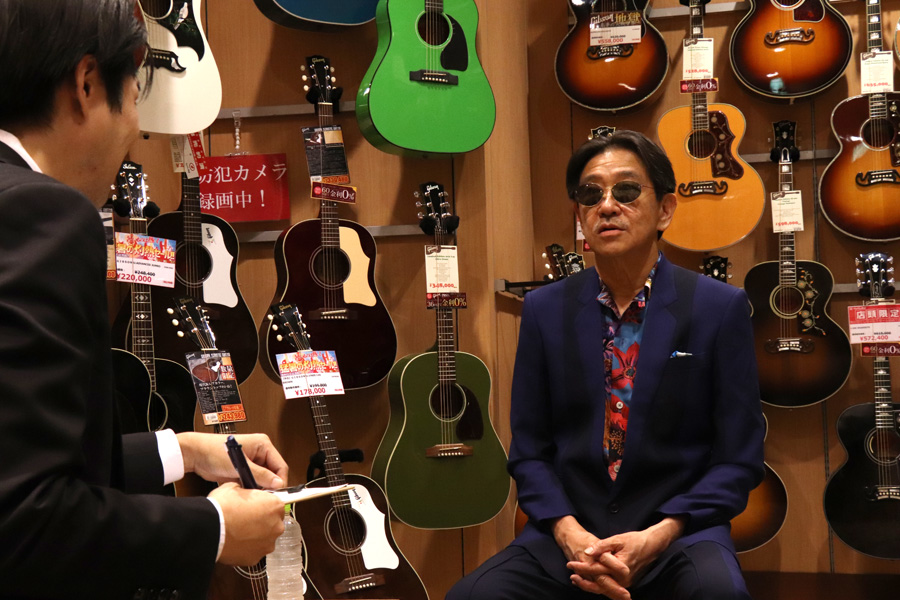
(Part of the article is referenced and translated into English) "I mainly make distortion with MESA BOOGIE's TRIAXIS, before using the TRIAXIS I also used the Mark II, and when recording in LA I used the RECTIFIER and others, although they have a metal-ish image."

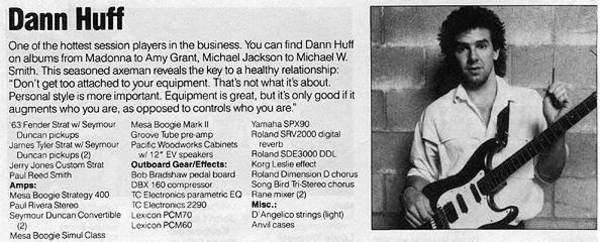
In a 1988 photograph from Photobucket, Dann Huff is shown using a Mesa/Boogie Mark II guitar amplifier.


On this photo Ricky is playing one of his Mosrites through a Mega Boogie Mark II


Mentioned in the June 1999 issue of Guitar Player, particularly pages 31 and 32.
“I find it makes a bigger and fuller sound to always have two amps on,” he says. “The Mesa/Boogie Mark II is great for a big, but not dirty sound, and I use my Vox AC30 for a crunchy sound that just kind of rumbles underneath. Finally, my Marshall 30th Anniversary combo is there for that ballsy effect.”


According to this rig rundown, he praises this amp as it is good for capturing the low tones his baritone guitars give.

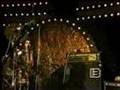
David Lebón used the Mesa/Boogie Mark II amplifier during his time with the band Serú Girán, notably opting for the amplifier's distortion feature instead of external distortion pedals. He also incorporated an ensemble chorus effect. Currently, Lebón uses a Crate amplifier. This information is highlighted in a YouTube video by José Luis Castaño Kan, titled "David Lebon - Tema de Seleste."

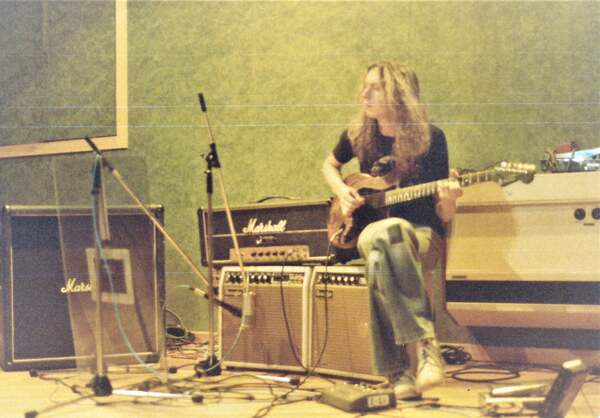
Can be seen in this photo. Used in the recording of "Borrowed Time".


In this article, Viv can be seen playing through a Mesa/Boogie combo amp, in a gig photo from 1980. I'm inclined to believe that it's a Mark II, due to them being more available at the time.

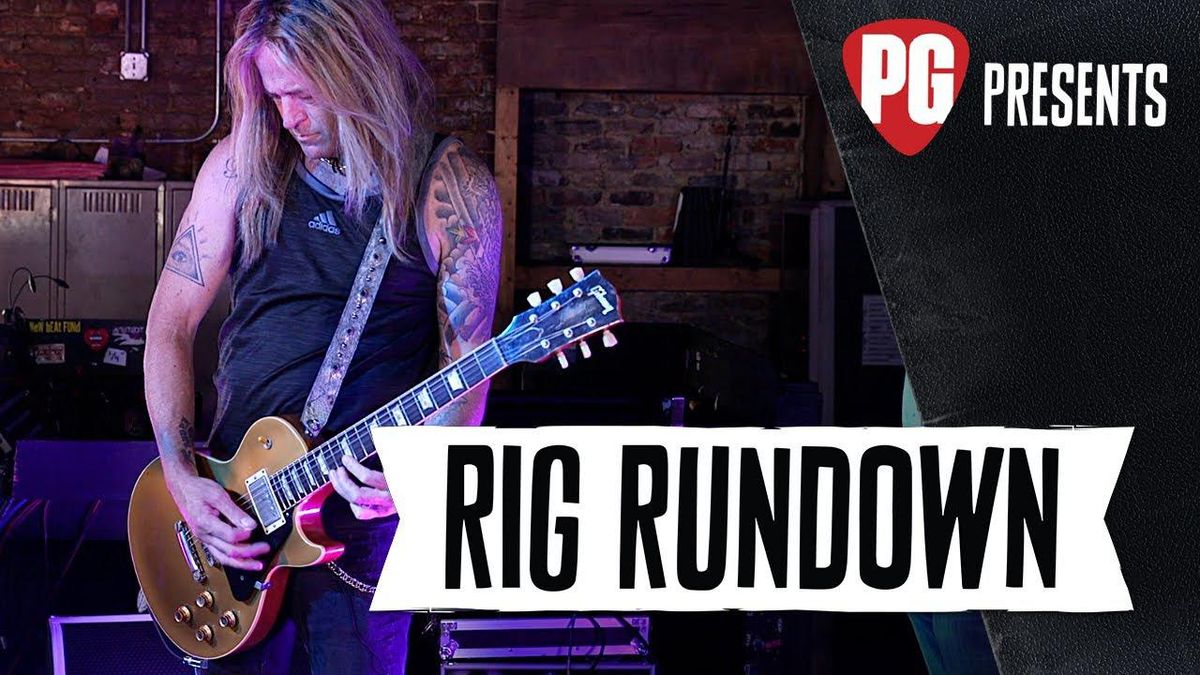
In a Premier Guitar Rig Rundown article, Mike Dimkich discusses using a Mesa/Boogie Mark II combo amplifier, inspired by Clash guitarist Mick Jones. Dimkich modifies the setup by detaching the 12" speaker and connecting the amp to a Marshall 4x12 cabinet.


Dash, as usually happens in life, you came to the solution on your own through deductive reasoning. Or so Sherlock Holmes would say, before sizzling his veins with cocaine. There was no overdrive pedal in use for the Sharona solo. It was the master volume channel of my Mesa Boogie Mark II. As a matter of fact Doug often nags me for not hanging on to that amp: but then, ironically he's much more of a gear head than I am. I'm your basic "Les Paul, good amp, let's go" kind of guy.
Berton
Album Usage
The Mesa/Boogie Mark II has been featured on the following albums:
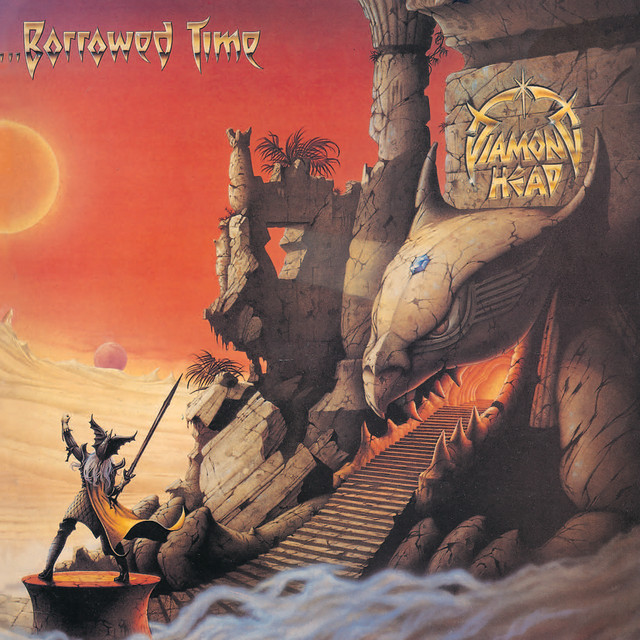
Genre Usage
Based on how artists on Equipboard use this gear, it is most commonly found in the following genres.
Used With
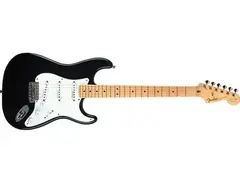
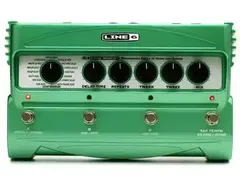
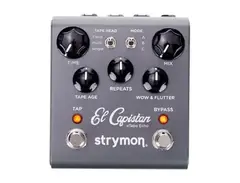
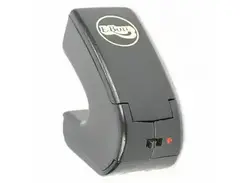
Based on how musicians on Equipboard use Mesa/Boogie Mark II, it is most commonly used with the following gear.




-s.webp?v=1784525826)
Similar
Add recommendation1 alternative for Mesa/Boogie Mark II, curated by the Equipboard community.

An analog amp sim pedal, inspired by the Mesa Boogie Mark II amplifier.
More Mesa/Boogie Combo Guitar Amplifiers

$1,550.00 - $3,069.00
in Combo Guitar Amplifiers Rank


$1,335.13
in Combo Guitar Amplifiers Rank


$2,039.00 - $2,249.00


$1,999.00 - $2,029.00


-m.webp?v=1784473205)


$2,039.00 - $2,249.00


-m.webp?v=1784334390)


-m.webp?v=1784473275)


$1,099.00 - $1,899.00


$1,475.67

.jpg?v=1784409024)


$1,550.00 - $4,068.00


-m.webp?v=1784335053)


-m.webp?v=1784473311)


$2,299.99 - $3,099.00


Accessories & Related Items


Community setups


Gear Guides







Most Popular Combo Guitar Amplifiers
Most Popular Brands
-
Added to Equipboard on by
 kkolar
GearIQ 121523
-


