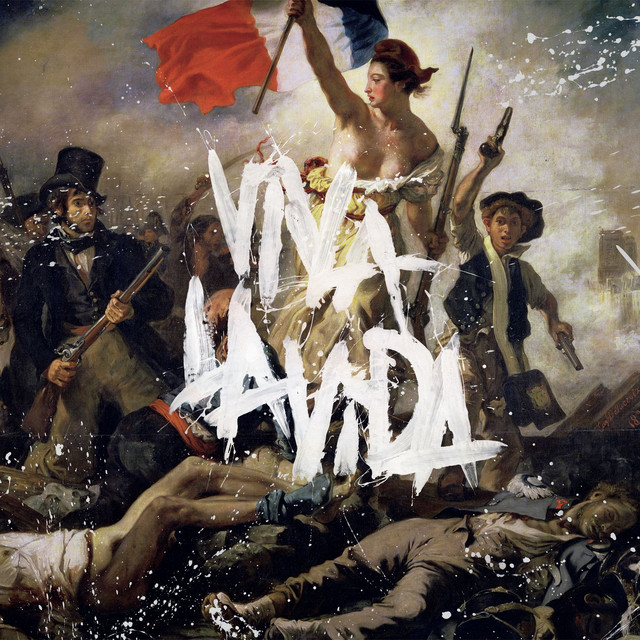
Coldplay – Viva La Vida or Death and All His Friends
The music gear and equipment used by the artists, producers, engineers, and more involved in the making of the 2008 album Viva La Vida or Death and All His Friends.
Music from Viva La Vida or Death and All His Friends
Artists on Viva La Vida or Death and All His Friends


Gear Used On Viva La Vida or Death and All His Friends
Explore the instruments, equipment, software, and production tools used in the making of Coldplay – Viva La Vida or Death and All His Friends (2008). Click more on each item to see exactly how it was used.

Chris Martin
Roles:
Microphones used by Chris Martin on Viva La Vida or Death and All His Friends

Avg price: $1,117.45
In an article found on Universal Audio's site, producer/engineer Rik Simpson is interviewed on what gear he used to record Coldplay for their Viva La Vida album. When asked about the signal chain for Chris Martin's vocals in the studio, he mentions how Chris Martin really likes the AKG C 414 XL II Condenser Microphone. Rik Simpson says, "I don't use any other outboard gear when recording. It depends--Chris is a big fan of the [AKG] 414, so we use that a fair bit. He does a lot of vocals in the control room these days as well, with the monitors on, so I don't always like using a condenser mic for that. I'll use a dynamic, like a Shure SM-7 or something. We did use some other mikes other than the 414 as well, but the 414 generally seems to capture what he's about. It keeps it very organic, and earthy, and simple."
Original article link here.


Guitars used by Chris Martin on Viva La Vida or Death and All His Friends

Gibson Blues King Acoustic Guitar
Avg price: $1,300.00
In this photo, Chris Martin can be seen playing one of his four Gibson Blues King 3 guitars. They were used extensively during the Viva La Vida recording sessions and on tour. The guitars were hand painted by the band's personal assistant, Vicki Taylor. This can be verified in this secondary source, which was originally posted on Coldplay's official site.


Studio Equipment used by Chris Martin on Viva La Vida or Death and All His Friends

Korg KONTROL49 49-Key MIDI/USB Controller
Avg price: $149.00
In this photo Chris can be seen playing Korg KONTROL49. Coldplay used these MIDI controllers extensively throughout the Viva la Vida and Mylo Xyloto tours. The same keyboard can be seen in detail here: http://lucylovesya.com/wp-content/uploads/2012/06/012-Another-lovely-keyboard1.jpg

Urei Teletronix LA-3A Leveling Amplifier
Avg price: $4,100.00
Mentioned by mixing engineer Michael Brauer as being used on "Violet Hill" in this Sound on Sound interview about the production of Viva la Vida & Death and All of His Friends.
Keyboards: Urei LA3A, Focusrite 115 HD, Neve Portico 5014
"The piano had my regular piano insert, which is two Urei LA3As going into my prototype Focusrite stereo 115 HD EQ. For some additional width I sent it to a Neve Portico 5014 Sound Field Editor. No reverb. I left the intro ambience as it was given to me. The keys had nothing on them either, not even EQ, jut flat, panned left and right. A lot of the tracks had hardly any EQ on them. Again, they did their homework and got the sounds that they wanted and didn't leave me to reinvent the song. What they wanted from me was to get their vision out there. That's my job."

Mentioned by mixing engineer Michael Brauer as being used on "Violet Hill" in this Sound on Sound interview about the production of Viva la Vida & Death and All of His Friends.
Keyboards: Urei LA3A, Focusrite 115 HD, Neve Portico 5014
"The piano had my regular piano insert, which is two Urei LA3As going into my prototype Focusrite stereo 115 HD EQ. For some additional width I sent it to a Neve Portico 5014 Sound Field Editor. No reverb. I left the intro ambience as it was given to me. The keys had nothing on them either, not even EQ, jut flat, panned left and right. A lot of the tracks had hardly any EQ on them. Again, they did their homework and got the sounds that they wanted and didn't leave me to reinvent the song. What they wanted from me was to get their vision out there. That's my job."

Rupert Neve Designs Portico 5014 Stereo Field Editor
Mentioned by mixing engineer Michael Brauer as being used on "Violet Hill" in this Sound on Sound interview about the production of Viva la Vida & Death and All of His Friends.
Keyboards: Urei LA3A, Focusrite 115 HD, Neve Portico 5014
"The piano had my regular piano insert, which is two Urei LA3As going into my prototype Focusrite stereo 115 HD EQ. For some additional width I sent it to a Neve Portico 5014 Sound Field Editor. No reverb. I left the intro ambience as it was given to me. The keys had nothing on them either, not even EQ, jut flat, panned left and right. A lot of the tracks had hardly any EQ on them. Again, they did their homework and got the sounds that they wanted and didn't leave me to reinvent the song. What they wanted from me was to get their vision out there. That's my job."

Mentioned by mixing engineer Michael Brauer as being used on "Violet Hill" in this Sound on Sound interview about the production of Viva la Vida & Death and All of His Friends.
Vocals: Waves Renaissance & Digidesign de–essers, AMS reverb, Zoom 1202, Lexicon PCM81, Watkins Copicat, Empirical Labs Distressor, Federal, Gates, Fairchild 666, EAR 660, Neve 1176 & Awa G7201 compressors
"I used two Renaissance de–essers on Chris's voice that were doing different things, and then a stock Digidesign de-esser. That was it for the plug–ins I added on this session. The Sonnox Oxford and the Eoisis were not out yet at the time.
"The analogue things I did on the lead vocal are really interesting. As I said, I initially mixed the songs on my own, because the band was in England re–recording some songs, so I knew I might have to recall each song. But on this song I pretty much nailed it, apart from that Chris wanted the vocals to be more exciting and different. In the end the vocal had some AMS non–linear reverb on it, while the main sound came from an old Zoom 1202 reverb and a Watkins Copicat delay, plus a special patch that I created in the PCM81, which is a much bigger reverb. So it's a combination of things, but you don't really notice them, all you notice is that Chris is in a very present, big room. When I had found that combination 'Violet Hill' really became a song, it really came alive, because his voice was able to fight through all the stuff that was going on and make it personable. There's no reverb on the rest of the track, which is another reason why the lead vocal sounds so huge: it's not fighting another bunch of reverbs. If you send everything to reverb, you don't hear it, but if you send only one thing to reverb, it'll be huge.
"For the main part of the song I had a Distressor on the insert of the lead vocal, and I sent this to another five compressors: the Federal, the Gates, the Fairchild 666, the Neve 1176 and another Distressor in Nuke mode. They're all coming back individually on the board, and it was a matter of blending those compressors. As usual in my way of working, the compressors are there to give attitude and tone, and don't necessarily compress. For the end bit of the song, where it's just Chris and the piano, I used the Awa G7201 limiter/compressor. It's an Australian compressor and it has an incredible air and presence. It's a unique sound that you can clearly hear at the end, as it's the only effect on the vocal on that point. Finally, the church group background vocals are sent to the same combination of reverbs as the main vocals. No other effects, no EQ. It means that all the vocals in the main section blend together."

Avg price: $598.05
Mentioned by mixing engineer Michael Brauer as being used on "Violet Hill" in this Sound on Sound interview about the production of Viva la Vida & Death and All of His Friends.
Vocals: Waves Renaissance & Digidesign de–essers, AMS reverb, Zoom 1202, Lexicon PCM81, Watkins Copicat, Empirical Labs Distressor, Federal, Gates, Fairchild 666, EAR 660, Neve 1176 & Awa G7201 compressors
"I used two Renaissance de–essers on Chris's voice that were doing different things, and then a stock Digidesign de-esser. That was it for the plug–ins I added on this session. The Sonnox Oxford and the Eoisis were not out yet at the time.
"The analogue things I did on the lead vocal are really interesting. As I said, I initially mixed the songs on my own, because the band was in England re–recording some songs, so I knew I might have to recall each song. But on this song I pretty much nailed it, apart from that Chris wanted the vocals to be more exciting and different. In the end the vocal had some AMS non–linear reverb on it, while the main sound came from an old Zoom 1202 reverb and a Watkins Copicat delay, plus a special patch that I created in the PCM81, which is a much bigger reverb. So it's a combination of things, but you don't really notice them, all you notice is that Chris is in a very present, big room. When I had found that combination 'Violet Hill' really became a song, it really came alive, because his voice was able to fight through all the stuff that was going on and make it personable. There's no reverb on the rest of the track, which is another reason why the lead vocal sounds so huge: it's not fighting another bunch of reverbs. If you send everything to reverb, you don't hear it, but if you send only one thing to reverb, it'll be huge.
"For the main part of the song I had a Distressor on the insert of the lead vocal, and I sent this to another five compressors: the Federal, the Gates, the Fairchild 666, the Neve 1176 and another Distressor in Nuke mode. They're all coming back individually on the board, and it was a matter of blending those compressors. As usual in my way of working, the compressors are there to give attitude and tone, and don't necessarily compress. For the end bit of the song, where it's just Chris and the piano, I used the Awa G7201 limiter/compressor. It's an Australian compressor and it has an incredible air and presence. It's a unique sound that you can clearly hear at the end, as it's the only effect on the vocal on that point. Finally, the church group background vocals are sent to the same combination of reverbs as the main vocals. No other effects, no EQ. It means that all the vocals in the main section blend together."

Avg price: $625.87
Mentioned by mixing engineer Michael Brauer as being used on "Violet Hill" in this Sound on Sound interview about the production of Viva la Vida & Death and All of His Friends.
Vocals: Waves Renaissance & Digidesign de–essers, AMS reverb, Zoom 1202, Lexicon PCM81, Watkins Copicat, Empirical Labs Distressor, Federal, Gates, Fairchild 666, EAR 660, Neve 1176 & Awa G7201 compressors
"I used two Renaissance de–essers on Chris's voice that were doing different things, and then a stock Digidesign de-esser. That was it for the plug–ins I added on this session. The Sonnox Oxford and the Eoisis were not out yet at the time.
"The analogue things I did on the lead vocal are really interesting. As I said, I initially mixed the songs on my own, because the band was in England re–recording some songs, so I knew I might have to recall each song. But on this song I pretty much nailed it, apart from that Chris wanted the vocals to be more exciting and different. In the end the vocal had some AMS non–linear reverb on it, while the main sound came from an old Zoom 1202 reverb and a Watkins Copicat delay, plus a special patch that I created in the PCM81, which is a much bigger reverb. So it's a combination of things, but you don't really notice them, all you notice is that Chris is in a very present, big room. When I had found that combination 'Violet Hill' really became a song, it really came alive, because his voice was able to fight through all the stuff that was going on and make it personable. There's no reverb on the rest of the track, which is another reason why the lead vocal sounds so huge: it's not fighting another bunch of reverbs. If you send everything to reverb, you don't hear it, but if you send only one thing to reverb, it'll be huge.
"For the main part of the song I had a Distressor on the insert of the lead vocal, and I sent this to another five compressors: the Federal, the Gates, the Fairchild 666, the Neve 1176 and another Distressor in Nuke mode. They're all coming back individually on the board, and it was a matter of blending those compressors. As usual in my way of working, the compressors are there to give attitude and tone, and don't necessarily compress. For the end bit of the song, where it's just Chris and the piano, I used the Awa G7201 limiter/compressor. It's an Australian compressor and it has an incredible air and presence. It's a unique sound that you can clearly hear at the end, as it's the only effect on the vocal on that point. Finally, the church group background vocals are sent to the same combination of reverbs as the main vocals. No other effects, no EQ. It means that all the vocals in the main section blend together."

Avg price: $1,461.33
Mentioned by mixing engineer Michael Brauer as being used on "Violet Hill" in this Sound on Sound interview about the production of Viva la Vida & Death and All of His Friends. It is visible in this photo from the same interview.
Vocals: Waves Renaissance & Digidesign de–essers, AMS reverb, Zoom 1202, Lexicon PCM81, Watkins Copicat, Empirical Labs Distressor, Federal, Gates, Fairchild 666, EAR 660, Neve 1176 & Awa G7201 compressors
"I used two Renaissance de–essers on Chris's voice that were doing different things, and then a stock Digidesign de-esser. That was it for the plug–ins I added on this session. The Sonnox Oxford and the Eoisis were not out yet at the time.
"The analogue things I did on the lead vocal are really interesting. As I said, I initially mixed the songs on my own, because the band was in England re–recording some songs, so I knew I might have to recall each song. But on this song I pretty much nailed it, apart from that Chris wanted the vocals to be more exciting and different. In the end the vocal had some AMS non–linear reverb on it, while the main sound came from an old Zoom 1202 reverb and a Watkins Copicat delay, plus a special patch that I created in the PCM81, which is a much bigger reverb. So it's a combination of things, but you don't really notice them, all you notice is that Chris is in a very present, big room. When I had found that combination 'Violet Hill' really became a song, it really came alive, because his voice was able to fight through all the stuff that was going on and make it personable. There's no reverb on the rest of the track, which is another reason why the lead vocal sounds so huge: it's not fighting another bunch of reverbs. If you send everything to reverb, you don't hear it, but if you send only one thing to reverb, it'll be huge.
"For the main part of the song I had a Distressor on the insert of the lead vocal, and I sent this to another five compressors: the Federal, the Gates, the Fairchild 666, the Neve 1176 and another Distressor in Nuke mode. They're all coming back individually on the board, and it was a matter of blending those compressors. As usual in my way of working, the compressors are there to give attitude and tone, and don't necessarily compress. For the end bit of the song, where it's just Chris and the piano, I used the Awa G7201 limiter/compressor. It's an Australian compressor and it has an incredible air and presence. It's a unique sound that you can clearly hear at the end, as it's the only effect on the vocal on that point. Finally, the church group background vocals are sent to the same combination of reverbs as the main vocals. No other effects, no EQ. It means that all the vocals in the main section blend together."


Empirical Labs EL8-X Distressor
Avg price: $1,764.10
Mentioned by mixing engineer Michael Brauer as being used on "Violet Hill" in this Sound on Sound interview about the production of Viva la Vida & Death and All of His Friends. It is visible in this photo from the same interview.
Vocals: Waves Renaissance & Digidesign de–essers, AMS reverb, Zoom 1202, Lexicon PCM81, Watkins Copicat, Empirical Labs Distressor, Federal, Gates, Fairchild 666, EAR 660, Neve 1176 & Awa G7201 compressors
"I used two Renaissance de–essers on Chris's voice that were doing different things, and then a stock Digidesign de-esser. That was it for the plug–ins I added on this session. The Sonnox Oxford and the Eoisis were not out yet at the time.
"The analogue things I did on the lead vocal are really interesting. As I said, I initially mixed the songs on my own, because the band was in England re–recording some songs, so I knew I might have to recall each song. But on this song I pretty much nailed it, apart from that Chris wanted the vocals to be more exciting and different. In the end the vocal had some AMS non–linear reverb on it, while the main sound came from an old Zoom 1202 reverb and a Watkins Copicat delay, plus a special patch that I created in the PCM81, which is a much bigger reverb. So it's a combination of things, but you don't really notice them, all you notice is that Chris is in a very present, big room. When I had found that combination 'Violet Hill' really became a song, it really came alive, because his voice was able to fight through all the stuff that was going on and make it personable. There's no reverb on the rest of the track, which is another reason why the lead vocal sounds so huge: it's not fighting another bunch of reverbs. If you send everything to reverb, you don't hear it, but if you send only one thing to reverb, it'll be huge.
"For the main part of the song I had a Distressor on the insert of the lead vocal, and I sent this to another five compressors: the Federal, the Gates, the Fairchild 666, the Neve 1176 and another Distressor in Nuke mode. They're all coming back individually on the board, and it was a matter of blending those compressors. As usual in my way of working, the compressors are there to give attitude and tone, and don't necessarily compress. For the end bit of the song, where it's just Chris and the piano, I used the Awa G7201 limiter/compressor. It's an Australian compressor and it has an incredible air and presence. It's a unique sound that you can clearly hear at the end, as it's the only effect on the vocal on that point. Finally, the church group background vocals are sent to the same combination of reverbs as the main vocals. No other effects, no EQ. It means that all the vocals in the main section blend together."

Urei Universal Audio 1176LN Rev. H Limiting Amplifier
Avg price: $3,034.86
Mentioned by mixing engineer Michael Brauer as being used on "Violet Hill" in this Sound on Sound interview about the production of Viva la Vida & Death and All of His Friends, erroneously transcribed as a Neve 1176. The Urei 1176 is mentioned earlier as having been used on Coldplay drummer Will Champion's drums.
Vocals: Waves Renaissance & Digidesign de–essers, AMS reverb, Zoom 1202, Lexicon PCM81, Watkins Copicat, Empirical Labs Distressor, Federal, Gates, Fairchild 666, EAR 660, Neve 1176 & Awa G7201 compressors
"I used two Renaissance de–essers on Chris's voice that were doing different things, and then a stock Digidesign de-esser. That was it for the plug–ins I added on this session. The Sonnox Oxford and the Eoisis were not out yet at the time.
"The analogue things I did on the lead vocal are really interesting. As I said, I initially mixed the songs on my own, because the band was in England re–recording some songs, so I knew I might have to recall each song. But on this song I pretty much nailed it, apart from that Chris wanted the vocals to be more exciting and different. In the end the vocal had some AMS non–linear reverb on it, while the main sound came from an old Zoom 1202 reverb and a Watkins Copicat delay, plus a special patch that I created in the PCM81, which is a much bigger reverb. So it's a combination of things, but you don't really notice them, all you notice is that Chris is in a very present, big room. When I had found that combination 'Violet Hill' really became a song, it really came alive, because his voice was able to fight through all the stuff that was going on and make it personable. There's no reverb on the rest of the track, which is another reason why the lead vocal sounds so huge: it's not fighting another bunch of reverbs. If you send everything to reverb, you don't hear it, but if you send only one thing to reverb, it'll be huge.
"For the main part of the song I had a Distressor on the insert of the lead vocal, and I sent this to another five compressors: the Federal, the Gates, the Fairchild 666, the Neve 1176 and another Distressor in Nuke mode. They're all coming back individually on the board, and it was a matter of blending those compressors. As usual in my way of working, the compressors are there to give attitude and tone, and don't necessarily compress. For the end bit of the song, where it's just Chris and the piano, I used the Awa G7201 limiter/compressor. It's an Australian compressor and it has an incredible air and presence. It's a unique sound that you can clearly hear at the end, as it's the only effect on the vocal on that point. Finally, the church group background vocals are sent to the same combination of reverbs as the main vocals. No other effects, no EQ. It means that all the vocals in the main section blend together."

Mentioned by mixing engineer Michael Brauer as being used on "Violet Hill" in this Sound on Sound interview about the production of Viva la Vida & Death and All of His Friends.
Vocals: Waves Renaissance & Digidesign de–essers, AMS reverb, Zoom 1202, Lexicon PCM81, Watkins Copicat, Empirical Labs Distressor, Federal, Gates, Fairchild 666, EAR 660, Neve 1176 & Awa G7201 compressors
"I used two Renaissance de–essers on Chris's voice that were doing different things, and then a stock Digidesign de-esser. That was it for the plug–ins I added on this session. The Sonnox Oxford and the Eoisis were not out yet at the time.
"The analogue things I did on the lead vocal are really interesting. As I said, I initially mixed the songs on my own, because the band was in England re–recording some songs, so I knew I might have to recall each song. But on this song I pretty much nailed it, apart from that Chris wanted the vocals to be more exciting and different. In the end the vocal had some AMS non–linear reverb on it, while the main sound came from an old Zoom 1202 reverb and a Watkins Copicat delay, plus a special patch that I created in the PCM81, which is a much bigger reverb. So it's a combination of things, but you don't really notice them, all you notice is that Chris is in a very present, big room. When I had found that combination 'Violet Hill' really became a song, it really came alive, because his voice was able to fight through all the stuff that was going on and make it personable. There's no reverb on the rest of the track, which is another reason why the lead vocal sounds so huge: it's not fighting another bunch of reverbs. If you send everything to reverb, you don't hear it, but if you send only one thing to reverb, it'll be huge.
"For the main part of the song I had a Distressor on the insert of the lead vocal, and I sent this to another five compressors: the Federal, the Gates, the Fairchild 666, the Neve 1176 and another Distressor in Nuke mode. They're all coming back individually on the board, and it was a matter of blending those compressors. As usual in my way of working, the compressors are there to give attitude and tone, and don't necessarily compress. For the end bit of the song, where it's just Chris and the piano, I used the Awa G7201 limiter/compressor. It's an Australian compressor and it has an incredible air and presence. It's a unique sound that you can clearly hear at the end, as it's the only effect on the vocal on that point. Finally, the church group background vocals are sent to the same combination of reverbs as the main vocals. No other effects, no EQ. It means that all the vocals in the main section blend together."

Esoteric Audio Research EAR-660
Avg price: $14,999.00
Mentioned by mixing engineer Michael Brauer as being used on "Violet Hill" in this Sound on Sound interview about the production of Viva la Vida & Death and All of His Friends.
Vocals: Waves Renaissance & Digidesign de–essers, AMS reverb, Zoom 1202, Lexicon PCM81, Watkins Copicat, Empirical Labs Distressor, Federal, Gates, Fairchild 666, EAR 660, Neve 1176 & Awa G7201 compressors
"I used two Renaissance de–essers on Chris's voice that were doing different things, and then a stock Digidesign de-esser. That was it for the plug–ins I added on this session. The Sonnox Oxford and the Eoisis were not out yet at the time.
"The analogue things I did on the lead vocal are really interesting. As I said, I initially mixed the songs on my own, because the band was in England re–recording some songs, so I knew I might have to recall each song. But on this song I pretty much nailed it, apart from that Chris wanted the vocals to be more exciting and different. In the end the vocal had some AMS non–linear reverb on it, while the main sound came from an old Zoom 1202 reverb and a Watkins Copicat delay, plus a special patch that I created in the PCM81, which is a much bigger reverb. So it's a combination of things, but you don't really notice them, all you notice is that Chris is in a very present, big room. When I had found that combination 'Violet Hill' really became a song, it really came alive, because his voice was able to fight through all the stuff that was going on and make it personable. There's no reverb on the rest of the track, which is another reason why the lead vocal sounds so huge: it's not fighting another bunch of reverbs. If you send everything to reverb, you don't hear it, but if you send only one thing to reverb, it'll be huge.
"For the main part of the song I had a Distressor on the insert of the lead vocal, and I sent this to another five compressors: the Federal, the Gates, the Fairchild 666, the Neve 1176 and another Distressor in Nuke mode. They're all coming back individually on the board, and it was a matter of blending those compressors. As usual in my way of working, the compressors are there to give attitude and tone, and don't necessarily compress. For the end bit of the song, where it's just Chris and the piano, I used the Awa G7201 limiter/compressor. It's an Australian compressor and it has an incredible air and presence. It's a unique sound that you can clearly hear at the end, as it's the only effect on the vocal on that point. Finally, the church group background vocals are sent to the same combination of reverbs as the main vocals. No other effects, no EQ. It means that all the vocals in the main section blend together."

Avg price: $49.99
Mentioned by mixing engineer Michael Brauer as being used on "Violet Hill" in this Sound on Sound interview about the production of Viva la Vida & Death and All of His Friends.
Vocals: Waves Renaissance & Digidesign de–essers, AMS reverb, Zoom 1202, Lexicon PCM81, Watkins Copicat, Empirical Labs Distressor, Federal, Gates, Fairchild 666, EAR 660, Neve 1176 & Awa G7201 compressors
"I used two Renaissance de–essers on Chris's voice that were doing different things, and then a stock Digidesign de-esser. That was it for the plug–ins I added on this session. The Sonnox Oxford and the Eoisis were not out yet at the time.
"The analogue things I did on the lead vocal are really interesting. As I said, I initially mixed the songs on my own, because the band was in England re–recording some songs, so I knew I might have to recall each song. But on this song I pretty much nailed it, apart from that Chris wanted the vocals to be more exciting and different. In the end the vocal had some AMS non–linear reverb on it, while the main sound came from an old Zoom 1202 reverb and a Watkins Copicat delay, plus a special patch that I created in the PCM81, which is a much bigger reverb. So it's a combination of things, but you don't really notice them, all you notice is that Chris is in a very present, big room. When I had found that combination 'Violet Hill' really became a song, it really came alive, because his voice was able to fight through all the stuff that was going on and make it personable. There's no reverb on the rest of the track, which is another reason why the lead vocal sounds so huge: it's not fighting another bunch of reverbs. If you send everything to reverb, you don't hear it, but if you send only one thing to reverb, it'll be huge.
"For the main part of the song I had a Distressor on the insert of the lead vocal, and I sent this to another five compressors: the Federal, the Gates, the Fairchild 666, the Neve 1176 and another Distressor in Nuke mode. They're all coming back individually on the board, and it was a matter of blending those compressors. As usual in my way of working, the compressors are there to give attitude and tone, and don't necessarily compress. For the end bit of the song, where it's just Chris and the piano, I used the Awa G7201 limiter/compressor. It's an Australian compressor and it has an incredible air and presence. It's a unique sound that you can clearly hear at the end, as it's the only effect on the vocal on that point. Finally, the church group background vocals are sent to the same combination of reverbs as the main vocals. No other effects, no EQ. It means that all the vocals in the main section blend together."

Avg price: $4,342.71
Mentioned by mixing engineer Michael Brauer as being used on "Violet Hill" in this Sound on Sound interview about the production of Viva la Vida & Death and All of His Friends. It is visible in this photo from the same interview.
"In addition to all the above effects, all tracks went through my ABCD multi–bus compression system [see 'Brauerize TheMix' box]. 'A' consists of a Neve 33609 going into a Pultec P1A3S EQ; 'B' is is almost always a Distressor going into my Avalon E55 EQ; 'C' is the Pendulum ES8 tube limiter; 'D' at the time was my Inward Connection stereo tube limiter (but currently it's the [TF Pro] Edward The Compressor P8). So the bass and drums went through B, the guitars went through C — sometimes I'll send guitars through A and C, or I'll send them to C and then send them to a mono compressor return, whichever excites them the best — the keyboards went through A, and the backing vocals through A and D. I did not put the lead vocals through my multi–bus system. I stopped doing that three years ago. Instead they went through these five compressors, the Federal, Gates, Fairchild, 1176 and Distressor.
Studio Gear used by Chris Martin on Viva La Vida or Death and All His Friends

Universal Audio 6176 Channel Strip
Avg price: $2,800.44
Mentioned by producer Rik Simpson in this interview from the Universal Audio website, dated shortly after Coldplay's nominations for Viva La Vida & Death and All of His Friends for the 51st Annual Grammy Awards.
Yes actually, in the studio we've got a couple of 6176s. Chris' vocals always go through a 6176. (...) It's generally fairly flat, actually. I just like the sound of it. I don't really pump the EQ too much, maybe shave 2 or 3 dB off, and it just gives a lovely character, a full sound. We actually moved around a fair bit during the last album. We did recordings in Barcelona, New York, and in L.A. Wherever I went, I could always find a 6176 wherever I worked, so could always recall my settings. Chris is very much a perfectionist, he'll always get the basic performance right, but there might be a few words that two or six months later, he wants to re-sing. Obviously, if I can't get the same sound that I had initially, it's going to sound off. So it was always great to be able to find the same equipment, and know that it would sound the same, so close. I could just drop in those few lines, and you'd never be able to tell that it wasn't part of the original performance.
It was also used for Mylo Xyloto, as mentioned in this 2011 UA interview.
We've got about eight 6176 Vintage Channel Strips, which cover everything from bass, vocal, piano. Generally I go through the same mic amps every time for the whole project, so I don't have to repatch stuff and everything is always ready to go.
Software Plugins and VSTs used by Chris Martin on Viva La Vida or Death and All His Friends

Avg price: $34.49
Mentioned by mixing engineer Michael Brauer as being used on "Violet Hill" in this Sound on Sound interview about the production of Viva la Vida & Death and All of His Friends.
Vocals: Waves Renaissance & Digidesign de–essers, AMS reverb, Zoom 1202, Lexicon PCM81, Watkins Copicat, Empirical Labs Distressor, Federal, Gates, Fairchild 666, EAR 660, Neve 1176 & Awa G7201 compressors
"I used two Renaissance de–essers on Chris's voice that were doing different things, and then a stock Digidesign de-esser. That was it for the plug–ins I added on this session. The Sonnox Oxford and the Eoisis were not out yet at the time.
"The analogue things I did on the lead vocal are really interesting. As I said, I initially mixed the songs on my own, because the band was in England re–recording some songs, so I knew I might have to recall each song. But on this song I pretty much nailed it, apart from that Chris wanted the vocals to be more exciting and different. In the end the vocal had some AMS non–linear reverb on it, while the main sound came from an old Zoom 1202 reverb and a Watkins Copicat delay, plus a special patch that I created in the PCM81, which is a much bigger reverb. So it's a combination of things, but you don't really notice them, all you notice is that Chris is in a very present, big room. When I had found that combination 'Violet Hill' really became a song, it really came alive, because his voice was able to fight through all the stuff that was going on and make it personable. There's no reverb on the rest of the track, which is another reason why the lead vocal sounds so huge: it's not fighting another bunch of reverbs. If you send everything to reverb, you don't hear it, but if you send only one thing to reverb, it'll be huge.
"For the main part of the song I had a Distressor on the insert of the lead vocal, and I sent this to another five compressors: the Federal, the Gates, the Fairchild 666, the Neve 1176 and another Distressor in Nuke mode. They're all coming back individually on the board, and it was a matter of blending those compressors. As usual in my way of working, the compressors are there to give attitude and tone, and don't necessarily compress. For the end bit of the song, where it's just Chris and the piano, I used the Awa G7201 limiter/compressor. It's an Australian compressor and it has an incredible air and presence. It's a unique sound that you can clearly hear at the end, as it's the only effect on the vocal on that point. Finally, the church group background vocals are sent to the same combination of reverbs as the main vocals. No other effects, no EQ. It means that all the vocals in the main section blend together."


Digidesign Dynamics III De-Esser
Mentioned by mixing engineer Michael Brauer as being used on "Violet Hill" in this Sound on Sound interview about the production of Viva la Vida & Death and All of His Friends.
Vocals: Waves Renaissance & Digidesign de–essers, AMS reverb, Zoom 1202, Lexicon PCM81, Watkins Copicat, Empirical Labs Distressor, Federal, Gates, Fairchild 666, EAR 660, Neve 1176 & Awa G7201 compressors
"I used two Renaissance de–essers on Chris's voice that were doing different things, and then a stock Digidesign de-esser. That was it for the plug–ins I added on this session. The Sonnox Oxford and the Eoisis were not out yet at the time.
"The analogue things I did on the lead vocal are really interesting. As I said, I initially mixed the songs on my own, because the band was in England re–recording some songs, so I knew I might have to recall each song. But on this song I pretty much nailed it, apart from that Chris wanted the vocals to be more exciting and different. In the end the vocal had some AMS non–linear reverb on it, while the main sound came from an old Zoom 1202 reverb and a Watkins Copicat delay, plus a special patch that I created in the PCM81, which is a much bigger reverb. So it's a combination of things, but you don't really notice them, all you notice is that Chris is in a very present, big room. When I had found that combination 'Violet Hill' really became a song, it really came alive, because his voice was able to fight through all the stuff that was going on and make it personable. There's no reverb on the rest of the track, which is another reason why the lead vocal sounds so huge: it's not fighting another bunch of reverbs. If you send everything to reverb, you don't hear it, but if you send only one thing to reverb, it'll be huge.
"For the main part of the song I had a Distressor on the insert of the lead vocal, and I sent this to another five compressors: the Federal, the Gates, the Fairchild 666, the Neve 1176 and another Distressor in Nuke mode. They're all coming back individually on the board, and it was a matter of blending those compressors. As usual in my way of working, the compressors are there to give attitude and tone, and don't necessarily compress. For the end bit of the song, where it's just Chris and the piano, I used the Awa G7201 limiter/compressor. It's an Australian compressor and it has an incredible air and presence. It's a unique sound that you can clearly hear at the end, as it's the only effect on the vocal on that point. Finally, the church group background vocals are sent to the same combination of reverbs as the main vocals. No other effects, no EQ. It means that all the vocals in the main section blend together."

Will Champion
Roles:
Headphones used by Will Champion on Viva La Vida or Death and All His Friends

Mentioned in this article from the official Sensaphonics website.
One of the hottest arena/shed tours on the road this summer was Coldplay’s Viva La Vida. With a large stage set-up for sheds and arenas, in-ear monitoring was a critical element to the band’s success. As they have for the past several years, the band members were all on Sensaphonics custom earphones via Sennheiser wireless systems.
However, there were a few key changes for this year’s tour. All four band members have upgraded from the classic ProPhonic 2X-S to the Sensaphonics 2MAX. “Most of the backline crew also have Sensaphonics IEMs,” says [monitor engineer Chris] Wood. “We have found the drivers to be very reliable. I can’t recall having a problem in the eight years we have used them.” A few wedges can still be seen on stage, but are used mainly for backup.
Studio Equipment used by Will Champion on Viva La Vida or Death and All His Friends
-m.webp?v=1785190068)
Avg price: $2,529.25
Mentioned by producer Rik Simpson in this interview from the Universal Audio website, dated shortly after Coldplay's nominations for Viva La Vida & Death and All of His Friends for the 51st Annual Grammy Awards.
What about mic pres on the drums?
Different things for different applications. I try and use as few mikes as possible on drums. My recent discovery are ribbon mikes. Maybe three, four feet above the snare, right in the middle of the kit. I put a Chandler PG-1 across the board, which is an old, Abbey Road-style compressor, and it just sounds pure Ringo! It's really fat, and full of character. Over that, I like to add a few close mikes, just to add a bit more weight to the kick, a bit more snap to the snare. But generally the main sound is from this one mono mic.
Then there’s the UA 1176s. I use after-processing. I don't like recording with a great deal of compression. It doesn't make you work quite as hard. I try and get the sound as amazing as possible straight through the microphone. That's why plug-ins are so great. Once you've got it well recorded, you can put a digital plug-in across it, and it won't degrade the sound at all, it'll just help it shine.
Urei Universal Audio 1176LN Rev. H Limiting Amplifier
Avg price: $3,034.86
Mentioned by mixing engineer Michael Brauer as being used on "Violet Hill" in this Sound on Sound interview about the production of Viva la Vida & Death and All of His Friends.
Drums: Neve 1083, Urei 1176, ADR Compex, Pye & Chandler EMI compressors
"I put some samples behind the kick and snare. I have built up a collection of a few hundred kicks and snares, so I can try many different types. This is where I spend a lot of time searching for the right sound. I may spend two hours trying to get the drum sound right. This is not to say that the original drum sounds in this track were bad, in fact they were great. So I'm building on top of them, I'm not replacing them. I can't remember the last time I actually replaced a drum sound. I just added a little bit to the kick and snare to enhance them. The snare sound is very important for a song and sometimes I vary it throughout the song, maybe downplaying one of the chorus snares in the verse, but in this particular case the snare sound doesn't change.
"The main drum sound is coming from their snare, which I had up really loud. They had a nice overhead snare sound that already had reverb and stuff on it that was also very important to the sound. The kick and snare both went through my Neve 1083 EQs. I put the room sounds through my great, very vicious, old British Compex compressors. I also put the cymbal room sound through the Compex. The Compex compression makes the sound grainier and more aggressive. The toms, which were really well recorded, went through my stereo Pye compressors to make them more explosive, and were also sent to my stereo 1176 compressors and my Chandler EMI compressors. The 1176 and the Chandler are also explosive, so basically the tom sound was f[***]ing explosive. I maybe added a bit of compression on the hi–hats, and did very little with the mono overheads."

ADR Compex F760X-RS Compressor
Avg price: $2,612.93
Mentioned by mixing engineer Michael Brauer as being used on "Violet Hill" in this Sound on Sound interview about the production of Viva la Vida & Death and All of His Friends. It is visible in this photo from the same interview.
Drums: Neve 1083, Urei 1176, ADR Compex, Pye & Chandler EMI compressors
"I put some samples behind the kick and snare. I have built up a collection of a few hundred kicks and snares, so I can try many different types. This is where I spend a lot of time searching for the right sound. I may spend two hours trying to get the drum sound right. This is not to say that the original drum sounds in this track were bad, in fact they were great. So I'm building on top of them, I'm not replacing them. I can't remember the last time I actually replaced a drum sound. I just added a little bit to the kick and snare to enhance them. The snare sound is very important for a song and sometimes I vary it throughout the song, maybe downplaying one of the chorus snares in the verse, but in this particular case the snare sound doesn't change.
"The main drum sound is coming from their snare, which I had up really loud. They had a nice overhead snare sound that already had reverb and stuff on it that was also very important to the sound. The kick and snare both went through my Neve 1083 EQs. I put the room sounds through my great, very vicious, old British Compex compressors. I also put the cymbal room sound through the Compex. The Compex compression makes the sound grainier and more aggressive. The toms, which were really well recorded, went through my stereo Pye compressors to make them more explosive, and were also sent to my stereo 1176 compressors and my Chandler EMI compressors. The 1176 and the Chandler are also explosive, so basically the tom sound was f[***]ing explosive. I maybe added a bit of compression on the hi–hats, and did very little with the mono overheads."

Chandler Limited EMI TG12413 Zener Limiter
Avg price: $5,312.71
Mentioned by mixing engineer Michael Brauer as being used on "Violet Hill" in this Sound on Sound interview about the production of Viva la Vida & Death and All of His Friends. It is visible in this photo from the same interview.
Drums: Neve 1083, Urei 1176, ADR Compex, Pye & Chandler EMI compressors
"I put some samples behind the kick and snare. I have built up a collection of a few hundred kicks and snares, so I can try many different types. This is where I spend a lot of time searching for the right sound. I may spend two hours trying to get the drum sound right. This is not to say that the original drum sounds in this track were bad, in fact they were great. So I'm building on top of them, I'm not replacing them. I can't remember the last time I actually replaced a drum sound. I just added a little bit to the kick and snare to enhance them. The snare sound is very important for a song and sometimes I vary it throughout the song, maybe downplaying one of the chorus snares in the verse, but in this particular case the snare sound doesn't change.
"The main drum sound is coming from their snare, which I had up really loud. They had a nice overhead snare sound that already had reverb and stuff on it that was also very important to the sound. The kick and snare both went through my Neve 1083 EQs. I put the room sounds through my great, very vicious, old British Compex compressors. I also put the cymbal room sound through the Compex. The Compex compression makes the sound grainier and more aggressive. The toms, which were really well recorded, went through my stereo Pye compressors to make them more explosive, and were also sent to my stereo 1176 compressors and my Chandler EMI compressors. The 1176 and the Chandler are also explosive, so basically the tom sound was f[***]ing explosive. I maybe added a bit of compression on the hi–hats, and did very little with the mono overheads."

Avg price: $1,461.33
Mentioned by mixing engineer Michael Brauer as being used on "Violet Hill" in this Sound on Sound interview about the production of Viva la Vida & Death and All of His Friends. It is visible in this photo from the same interview.
Drums: Neve 1083, Urei 1176, ADR Compex, Pye & Chandler EMI compressors
"I put some samples behind the kick and snare. I have built up a collection of a few hundred kicks and snares, so I can try many different types. This is where I spend a lot of time searching for the right sound. I may spend two hours trying to get the drum sound right. This is not to say that the original drum sounds in this track were bad, in fact they were great. So I'm building on top of them, I'm not replacing them. I can't remember the last time I actually replaced a drum sound. I just added a little bit to the kick and snare to enhance them. The snare sound is very important for a song and sometimes I vary it throughout the song, maybe downplaying one of the chorus snares in the verse, but in this particular case the snare sound doesn't change.
"The main drum sound is coming from their snare, which I had up really loud. They had a nice overhead snare sound that already had reverb and stuff on it that was also very important to the sound. The kick and snare both went through my Neve 1083 EQs. I put the room sounds through my great, very vicious, old British Compex compressors. I also put the cymbal room sound through the Compex. The Compex compression makes the sound grainier and more aggressive. The toms, which were really well recorded, went through my stereo Pye compressors to make them more explosive, and were also sent to my stereo 1176 compressors and my Chandler EMI compressors. The 1176 and the Chandler are also explosive, so basically the tom sound was f[***]ing explosive. I maybe added a bit of compression on the hi–hats, and did very little with the mono overheads."
(...) Finally the basses, like the drums, went through Bus B in my multi–bus compression setup, which consists of Distressors going into my Avalon E55 EQ."
Empirical Labs EL8-X Distressor
Avg price: $1,764.10
Mentioned by mixing engineer Michael Brauer as being used on "Violet Hill" in this Sound on Sound interview about the production of Viva la Vida & Death and All of His Friends. It is visible in this photo from the same interview.
Drums: Neve 1083, Urei 1176, ADR Compex, Pye & Chandler EMI compressors
"I put some samples behind the kick and snare. I have built up a collection of a few hundred kicks and snares, so I can try many different types. This is where I spend a lot of time searching for the right sound. I may spend two hours trying to get the drum sound right. This is not to say that the original drum sounds in this track were bad, in fact they were great. So I'm building on top of them, I'm not replacing them. I can't remember the last time I actually replaced a drum sound. I just added a little bit to the kick and snare to enhance them. The snare sound is very important for a song and sometimes I vary it throughout the song, maybe downplaying one of the chorus snares in the verse, but in this particular case the snare sound doesn't change.
"The main drum sound is coming from their snare, which I had up really loud. They had a nice overhead snare sound that already had reverb and stuff on it that was also very important to the sound. The kick and snare both went through my Neve 1083 EQs. I put the room sounds through my great, very vicious, old British Compex compressors. I also put the cymbal room sound through the Compex. The Compex compression makes the sound grainier and more aggressive. The toms, which were really well recorded, went through my stereo Pye compressors to make them more explosive, and were also sent to my stereo 1176 compressors and my Chandler EMI compressors. The 1176 and the Chandler are also explosive, so basically the tom sound was f[***]ing explosive. I maybe added a bit of compression on the hi–hats, and did very little with the mono overheads."
(...) Finally the basses, like the drums, went through Bus B in my multi–bus compression setup, which consists of Distressors going into my Avalon E55 EQ."

Mentioned by mixing engineer Michael Brauer as being used on "Violet Hill" in this Sound on Sound interview about the production of Viva la Vida & Death and All of His Friends.
Drums: Neve 1083, Urei 1176, ADR Compex, Pye & Chandler EMI compressors
"I put some samples behind the kick and snare. I have built up a collection of a few hundred kicks and snares, so I can try many different types. This is where I spend a lot of time searching for the right sound. I may spend two hours trying to get the drum sound right. This is not to say that the original drum sounds in this track were bad, in fact they were great. So I'm building on top of them, I'm not replacing them. I can't remember the last time I actually replaced a drum sound. I just added a little bit to the kick and snare to enhance them. The snare sound is very important for a song and sometimes I vary it throughout the song, maybe downplaying one of the chorus snares in the verse, but in this particular case the snare sound doesn't change.
"The main drum sound is coming from their snare, which I had up really loud. They had a nice overhead snare sound that already had reverb and stuff on it that was also very important to the sound. The kick and snare both went through my Neve 1083 EQs. I put the room sounds through my great, very vicious, old British Compex compressors. I also put the cymbal room sound through the Compex. The Compex compression makes the sound grainier and more aggressive. The toms, which were really well recorded, went through my stereo Pye compressors to make them more explosive, and were also sent to my stereo 1176 compressors and my Chandler EMI compressors. The 1176 and the Chandler are also explosive, so basically the tom sound was f[***]ing explosive. I maybe added a bit of compression on the hi–hats, and did very little with the mono overheads."
(...) Finally the basses, like the drums, went through Bus B in my multi–bus compression setup, which consists of Distressors going into my Avalon E55 EQ."
Microphones used by Will Champion on Viva La Vida or Death and All His Friends
-m.webp?v=1785192644)
Avg price: $394.87
Mentioned by FOH engineer Dan Green in this article from the d&b audiotechnik website about the Viva la Vida tour.
For Green the challenge is delivery. "There's nothing unusual up on stage at all; guitars on Shure SM57s, vocals on radio SM58s, 421s on the Toms." Will Champion on drums is a renowned heavy hitter. "Inevitably there is a lot of spill from the drums into Chris's mic, so I do spend a lot of time riding that up and down. Getting level from Chris can be tricky, but I know the songs well enough to capture what's needed."
Guitars used by Will Champion on Viva La Vida or Death and All His Friends
Gibson Blues King Acoustic Guitar
Avg price: $1,300.00
In this 2011 late night performance, we see Will playing a heavily decorated Gibson Blues King. These guitars were used extensively by several members of the band throughout Coldplay’s Viva la Vida and Mylo Xyloto tours, from around 2009 to 2012. The guitar can be seen particularly well around 0:59.

Guy Berryman
Roles:
Bass Guitars used by Guy Berryman on Viva La Vida or Death and All His Friends

Fender Jaguar American Standard Bass
Avg price: $2,399.16
In this Coldplay music video, at 0:21 and 2:35, Guy Berryman's Fender Jaguar Bass can be clearly seen.

Studio Equipment used by Guy Berryman on Viva La Vida or Death and All His Friends
Esoteric Audio Research EAR-660
Avg price: $14,999.00
Mentioned by mixing engineer Michael Brauer as being used on "Violet Hill" in this Sound on Sound interview about the production of Viva la Vida & Death and All of His Friends.
Bass: EAR 660, Altec 436B, Dbx 160, Akai S612, Moog MKPE
"The bass was interesting. I had the same bass track coming back on two channels, and on one of them I had the EAR 660 compressor, going into an Altec 436B compressor, going into my Moog MKPE three–band parametric EQ, all going via the inserts. That channel was for the low end, giving the sound its fullness. On the other channel I had a Dbx 160, crushing heavily, with the bottom end taken out. That gave the bass its punch and mid-range. I also sent the basses to an Akai S612 sampler. A friend of mine turned me on to doing this. I don't use it as a sampler, but as a distortion device. If you put the Akai in microphone mode and you overload it, you get really nice warm distortion that you don't really notice, but it sounds good. If I want something more vicious than the Akai, I'll use the [Thermionic Culture] Culture Vulture instead, which I feel is one of the best pieces of equipment for adding some attitude. It's great for when tracks are recorded too cleanly. Finally the basses, like the drums, went through Bus B in my multi–bus compression setup, which consists of Distressors going into my Avalon E55 EQ."

Avg price: $860.00
Mentioned by mixing engineer Michael Brauer as being used on "Violet Hill" in this Sound on Sound interview about the production of Viva la Vida & Death and All of His Friends.
Bass: EAR 660, Altec 436B, Dbx 160, Akai S612, Moog MKPE
"The bass was interesting. I had the same bass track coming back on two channels, and on one of them I had the EAR 660 compressor, going into an Altec 436B compressor, going into my Moog MKPE three–band parametric EQ, all going via the inserts. That channel was for the low end, giving the sound its fullness. On the other channel I had a Dbx 160, crushing heavily, with the bottom end taken out. That gave the bass its punch and mid-range. I also sent the basses to an Akai S612 sampler. A friend of mine turned me on to doing this. I don't use it as a sampler, but as a distortion device. If you put the Akai in microphone mode and you overload it, you get really nice warm distortion that you don't really notice, but it sounds good. If I want something more vicious than the Akai, I'll use the [Thermionic Culture] Culture Vulture instead, which I feel is one of the best pieces of equipment for adding some attitude. It's great for when tracks are recorded too cleanly. Finally the basses, like the drums, went through Bus B in my multi–bus compression setup, which consists of Distressors going into my Avalon E55 EQ."
Mentioned by mixing engineer Michael Brauer as being used on "Violet Hill" in this Sound on Sound interview about the production of Viva la Vida & Death and All of His Friends.
Bass: EAR 660, Altec 436B, Dbx 160, Akai S612, Moog MKPE
"The bass was interesting. I had the same bass track coming back on two channels, and on one of them I had the EAR 660 compressor, going into an Altec 436B compressor, going into my Moog MKPE three–band parametric EQ, all going via the inserts. That channel was for the low end, giving the sound its fullness. On the other channel I had a Dbx 160, crushing heavily, with the bottom end taken out. That gave the bass its punch and mid-range. I also sent the basses to an Akai S612 sampler. A friend of mine turned me on to doing this. I don't use it as a sampler, but as a distortion device. If you put the Akai in microphone mode and you overload it, you get really nice warm distortion that you don't really notice, but it sounds good. If I want something more vicious than the Akai, I'll use the [Thermionic Culture] Culture Vulture instead, which I feel is one of the best pieces of equipment for adding some attitude. It's great for when tracks are recorded too cleanly. Finally the basses, like the drums, went through Bus B in my multi–bus compression setup, which consists of Distressors going into my Avalon E55 EQ."

Avg price: $2,200.00
Mentioned by mixing engineer Michael Brauer as being used on "Violet Hill" in this Sound on Sound interview about the production of Viva la Vida & Death and All of His Friends.
Bass: EAR 660, Altec 436B, Dbx 160, Akai S612, Moog MKPE
"The bass was interesting. I had the same bass track coming back on two channels, and on one of them I had the EAR 660 compressor, going into an Altec 436B compressor, going into my Moog MKPE three–band parametric EQ, all going via the inserts. That channel was for the low end, giving the sound its fullness. On the other channel I had a Dbx 160, crushing heavily, with the bottom end taken out. That gave the bass its punch and mid-range. I also sent the basses to an Akai S612 sampler. A friend of mine turned me on to doing this. I don't use it as a sampler, but as a distortion device. If you put the Akai in microphone mode and you overload it, you get really nice warm distortion that you don't really notice, but it sounds good. If I want something more vicious than the Akai, I'll use the [Thermionic Culture] Culture Vulture instead, which I feel is one of the best pieces of equipment for adding some attitude. It's great for when tracks are recorded too cleanly. Finally the basses, like the drums, went through Bus B in my multi–bus compression setup, which consists of Distressors going into my Avalon E55 EQ."
Avg price: $1,461.33
Mentioned by mixing engineer Michael Brauer as being used on "Violet Hill" in this Sound on Sound interview about the production of Viva la Vida & Death and All of His Friends. It is visible in this photo from the same interview.
Bass: EAR 660, Altec 436B, Dbx 160, Akai S612, Moog MKPE
"The bass was interesting. I had the same bass track coming back on two channels, and on one of them I had the EAR 660 compressor, going into an Altec 436B compressor, going into my Moog MKPE three–band parametric EQ, all going via the inserts. That channel was for the low end, giving the sound its fullness. On the other channel I had a Dbx 160, crushing heavily, with the bottom end taken out. That gave the bass its punch and mid-range. I also sent the basses to an Akai S612 sampler. A friend of mine turned me on to doing this. I don't use it as a sampler, but as a distortion device. If you put the Akai in microphone mode and you overload it, you get really nice warm distortion that you don't really notice, but it sounds good. If I want something more vicious than the Akai, I'll use the [Thermionic Culture] Culture Vulture instead, which I feel is one of the best pieces of equipment for adding some attitude. It's great for when tracks are recorded too cleanly. Finally the basses, like the drums, went through Bus B in my multi–bus compression setup, which consists of Distressors going into my Avalon E55 EQ."
Empirical Labs EL8-X Distressor
Avg price: $1,764.10
Mentioned by mixing engineer Michael Brauer as being used on "Violet Hill" in this Sound on Sound interview about the production of Viva la Vida & Death and All of His Friends. It is visible in this photo from the same interview.
Bass: EAR 660, Altec 436B, Dbx 160, Akai S612, Moog MKPE
"The bass was interesting. I had the same bass track coming back on two channels, and on one of them I had the EAR 660 compressor, going into an Altec 436B compressor, going into my Moog MKPE three–band parametric EQ, all going via the inserts. That channel was for the low end, giving the sound its fullness. On the other channel I had a Dbx 160, crushing heavily, with the bottom end taken out. That gave the bass its punch and mid-range. I also sent the basses to an Akai S612 sampler. A friend of mine turned me on to doing this. I don't use it as a sampler, but as a distortion device. If you put the Akai in microphone mode and you overload it, you get really nice warm distortion that you don't really notice, but it sounds good. If I want something more vicious than the Akai, I'll use the [Thermionic Culture] Culture Vulture instead, which I feel is one of the best pieces of equipment for adding some attitude. It's great for when tracks are recorded too cleanly. Finally the basses, like the drums, went through Bus B in my multi–bus compression setup, which consists of Distressors going into my Avalon E55 EQ."

Mentioned by mixing engineer Michael Brauer as being used on "Violet Hill" in this Sound on Sound interview about the production of Viva la Vida & Death and All of His Friends.
Bass: EAR 660, Altec 436B, Dbx 160, Akai S612, Moog MKPE
"The bass was interesting. I had the same bass track coming back on two channels, and on one of them I had the EAR 660 compressor, going into an Altec 436B compressor, going into my Moog MKPE three–band parametric EQ, all going via the inserts. That channel was for the low end, giving the sound its fullness. On the other channel I had a Dbx 160, crushing heavily, with the bottom end taken out. That gave the bass its punch and mid-range. I also sent the basses to an Akai S612 sampler. A friend of mine turned me on to doing this. I don't use it as a sampler, but as a distortion device. If you put the Akai in microphone mode and you overload it, you get really nice warm distortion that you don't really notice, but it sounds good. If I want something more vicious than the Akai, I'll use the [Thermionic Culture] Culture Vulture instead, which I feel is one of the best pieces of equipment for adding some attitude. It's great for when tracks are recorded too cleanly. Finally the basses, like the drums, went through Bus B in my multi–bus compression setup, which consists of Distressors going into my Avalon E55 EQ."

Moog MKPE Three-Band Parametric EQ
Avg price: $825.00
Mentioned by mixing engineer Michael Brauer as being used on "Violet Hill" in this Sound on Sound interview about the production of Viva la Vida & Death and All of His Friends.
Bass: EAR 660, Altec 436B, Dbx 160, Akai S612, Moog MKPE
"The bass was interesting. I had the same bass track coming back on two channels, and on one of them I had the EAR 660 compressor, going into an Altec 436B compressor, going into my Moog MKPE three–band parametric EQ, all going via the inserts. That channel was for the low end, giving the sound its fullness. On the other channel I had a Dbx 160, crushing heavily, with the bottom end taken out. That gave the bass its punch and mid-range. I also sent the basses to an Akai S612 sampler. A friend of mine turned me on to doing this. I don't use it as a sampler, but as a distortion device. If you put the Akai in microphone mode and you overload it, you get really nice warm distortion that you don't really notice, but it sounds good. If I want something more vicious than the Akai, I'll use the [Thermionic Culture] Culture Vulture instead, which I feel is one of the best pieces of equipment for adding some attitude. It's great for when tracks are recorded too cleanly. Finally the basses, like the drums, went through Bus B in my multi–bus compression setup, which consists of Distressors going into my Avalon E55 EQ."

Jonny Buckland
Roles:
Guitars used by Jonny Buckland on Viva La Vida or Death and All His Friends
Semi-Hollowbody Electric Guitars

Avg price: $1,186.33
At 0:54 in this live Coldplay video, Jonny Buckland can be seen playing his black 1972 Fender Telecaster Thinline.
In 2010, the guitar was actioned off for a charity fundraiser and won by Jason DeBord. This detailed article about the guitar and it's auction says, "This was Jonny’s main guitar all through the X&Y and Viva tours. Drenched, scorched and thoroughly vibed. He hesitated to sell it as it means a lot to him (he literally kissed it goodbye after the photo was taken)."
Studio Equipment used by Jonny Buckland on Viva La Vida or Death and All His Friends

Mentioned by mixing engineer Michael Brauer as being used on "Violet Hill" in this Sound on Sound interview about the production of Viva la Vida & Death and All of His Friends.
Guitars: EMI Chandler TG1, Lexicon PCM42, API 525, API 5502, Roland Dimension D SDD320, Watkins Copicat
"Normally I send each side of a stereo guitar to my EMI Chandler TG1 panned left and right and coming back on the console, but I didn't in this case, so I must have felt that it sounded bad. It might have taken away from the tightness of the guitars. They had already recorded it very tightly. So instead I didn't add anything to their stereo chorus verse guitar. I also had a mono verse guitar, which I sent to a PCM42 delay set at 224ms and panned to the opposite side, and every time the guitar strums it goes over to the right. On the acoustic guitar I did what I normally do, which is to send it through my acoustic patch, an API 525 going into an API 5502. That's a great combo and I have been using that for years. It makes the acoustic guitar very natural and full and gives it great presence without it sounding processed. In this song it's not very evident, because the acoustic guitar isn't very important, but, for example, on Parachutes the acoustic is very important, and I used the patch back then. There was no insert on the solo guitar. I did have a Dimension D SDD320 chorus on it, which spreads the sound naturally, and which went to a Watkins Copicat Echo unit with a fairly short delay. Otherwise it's totally dry, no reverb, hardly any EQ. Again, it was so well recorded that it didn't need a lot of work."

Avg price: $1,840.93
Mentioned by mixing engineer Michael Brauer as being used on "Violet Hill" in this Sound on Sound interview about the production of Viva la Vida & Death and All of His Friends.
Guitars: EMI Chandler TG1, Lexicon PCM42, API 525, API 5502, Roland Dimension D SDD320, Watkins Copicat
"Normally I send each side of a stereo guitar to my EMI Chandler TG1 panned left and right and coming back on the console, but I didn't in this case, so I must have felt that it sounded bad. It might have taken away from the tightness of the guitars. They had already recorded it very tightly. So instead I didn't add anything to their stereo chorus verse guitar. I also had a mono verse guitar, which I sent to a PCM42 delay set at 224ms and panned to the opposite side, and every time the guitar strums it goes over to the right. On the acoustic guitar I did what I normally do, which is to send it through my acoustic patch, an API 525 going into an API 5502. That's a great combo and I have been using that for years. It makes the acoustic guitar very natural and full and gives it great presence without it sounding processed. In this song it's not very evident, because the acoustic guitar isn't very important, but, for example, on Parachutes the acoustic is very important, and I used the patch back then. There was no insert on the solo guitar. I did have a Dimension D SDD320 chorus on it, which spreads the sound naturally, and which went to a Watkins Copicat Echo unit with a fairly short delay. Otherwise it's totally dry, no reverb, hardly any EQ. Again, it was so well recorded that it didn't need a lot of work."
Chandler Limited EMI TG12413 Zener Limiter
Avg price: $5,312.71
Mentioned by mixing engineer Michael Brauer as being used on "Violet Hill" in this Sound on Sound interview about the production of Viva la Vida & Death and All of His Friends.
Guitars: EMI Chandler TG1, Lexicon PCM42, API 525, API 5502, Roland Dimension D SDD320, Watkins Copicat
"Normally I send each side of a stereo guitar to my EMI Chandler TG1 panned left and right and coming back on the console, but I didn't in this case, so I must have felt that it sounded bad. It might have taken away from the tightness of the guitars. They had already recorded it very tightly. So instead I didn't add anything to their stereo chorus verse guitar. I also had a mono verse guitar, which I sent to a PCM42 delay set at 224ms and panned to the opposite side, and every time the guitar strums it goes over to the right. On the acoustic guitar I did what I normally do, which is to send it through my acoustic patch, an API 525 going into an API 5502. That's a great combo and I have been using that for years. It makes the acoustic guitar very natural and full and gives it great presence without it sounding processed. In this song it's not very evident, because the acoustic guitar isn't very important, but, for example, on Parachutes the acoustic is very important, and I used the patch back then. There was no insert on the solo guitar. I did have a Dimension D SDD320 chorus on it, which spreads the sound naturally, and which went to a Watkins Copicat Echo unit with a fairly short delay. Otherwise it's totally dry, no reverb, hardly any EQ. Again, it was so well recorded that it didn't need a lot of work."
The item can be seen in this photo from the same interview.
Five towering racks of outboard gear dominate Michael Brauer's mix room, and contain far too much equipment to list. Notable items used on the mix of Violet Hill include (first rack) Pye compressor, Empirical Labs Distressors, ADR Compex limiter, Chandler EMI TG12413 limiter, EAR 660 compressors and Fairchild 666 compressor; (second rack) Lexicon PCM81, Sony DRE S777, Akai S612, Bricasti M7, Zoom 1202, Rupert Neve Portico 5014; (third rack) Neve 33609, API modules, Moog EQ and Pendulum ES8 compressor; (fifth rack) Chandler EMI TG12345 Curver Bender, Shadow Hills compressor and ADL 670.

Avg price: $1,181.90
Mentioned by mixing engineer Michael Brauer as being used on "Violet Hill" in this Sound on Sound interview about the production of Viva la Vida & Death and All of His Friends.
Guitars: EMI Chandler TG1, Lexicon PCM42, API 525, API 5502, Roland Dimension D SDD320, Watkins Copicat
"Normally I send each side of a stereo guitar to my EMI Chandler TG1 panned left and right and coming back on the console, but I didn't in this case, so I must have felt that it sounded bad. It might have taken away from the tightness of the guitars. They had already recorded it very tightly. So instead I didn't add anything to their stereo chorus verse guitar. I also had a mono verse guitar, which I sent to a PCM42 delay set at 224ms and panned to the opposite side, and every time the guitar strums it goes over to the right. On the acoustic guitar I did what I normally do, which is to send it through my acoustic patch, an API 525 going into an API 5502. That's a great combo and I have been using that for years. It makes the acoustic guitar very natural and full and gives it great presence without it sounding processed. In this song it's not very evident, because the acoustic guitar isn't very important, but, for example, on Parachutes the acoustic is very important, and I used the patch back then. There was no insert on the solo guitar. I did have a Dimension D SDD320 chorus on it, which spreads the sound naturally, and which went to a Watkins Copicat Echo unit with a fairly short delay. Otherwise it's totally dry, no reverb, hardly any EQ. Again, it was so well recorded that it didn't need a lot of work."

Mentioned by mixing engineer Michael Brauer as being used on "Violet Hill" in this Sound on Sound interview about the production of Viva la Vida & Death and All of His Friends.
Guitars: EMI Chandler TG1, Lexicon PCM42, API 525, API 5502, Roland Dimension D SDD320, Watkins Copicat
"Normally I send each side of a stereo guitar to my EMI Chandler TG1 panned left and right and coming back on the console, but I didn't in this case, so I must have felt that it sounded bad. It might have taken away from the tightness of the guitars. They had already recorded it very tightly. So instead I didn't add anything to their stereo chorus verse guitar. I also had a mono verse guitar, which I sent to a PCM42 delay set at 224ms and panned to the opposite side, and every time the guitar strums it goes over to the right. On the acoustic guitar I did what I normally do, which is to send it through my acoustic patch, an API 525 going into an API 5502. That's a great combo and I have been using that for years. It makes the acoustic guitar very natural and full and gives it great presence without it sounding processed. In this song it's not very evident, because the acoustic guitar isn't very important, but, for example, on Parachutes the acoustic is very important, and I used the patch back then. There was no insert on the solo guitar. I did have a Dimension D SDD320 chorus on it, which spreads the sound naturally, and which went to a Watkins Copicat Echo unit with a fairly short delay. Otherwise it's totally dry, no reverb, hardly any EQ. Again, it was so well recorded that it didn't need a lot of work."
Avg price: $625.87
Mentioned by mixing engineer Michael Brauer as being used on "Violet Hill" in this Sound on Sound interview about the production of Viva la Vida & Death and All of His Friends.
Guitars: EMI Chandler TG1, Lexicon PCM42, API 525, API 5502, Roland Dimension D SDD320, Watkins Copicat
"Normally I send each side of a stereo guitar to my EMI Chandler TG1 panned left and right and coming back on the console, but I didn't in this case, so I must have felt that it sounded bad. It might have taken away from the tightness of the guitars. They had already recorded it very tightly. So instead I didn't add anything to their stereo chorus verse guitar. I also had a mono verse guitar, which I sent to a PCM42 delay set at 224ms and panned to the opposite side, and every time the guitar strums it goes over to the right. On the acoustic guitar I did what I normally do, which is to send it through my acoustic patch, an API 525 going into an API 5502. That's a great combo and I have been using that for years. It makes the acoustic guitar very natural and full and gives it great presence without it sounding processed. In this song it's not very evident, because the acoustic guitar isn't very important, but, for example, on Parachutes the acoustic is very important, and I used the patch back then. There was no insert on the solo guitar. I did have a Dimension D SDD320 chorus on it, which spreads the sound naturally, and which went to a Watkins Copicat Echo unit with a fairly short delay. Otherwise it's totally dry, no reverb, hardly any EQ. Again, it was so well recorded that it didn't need a lot of work."

Pendulum ES-8 Remote Cutoff Tube Limiter
Mentioned by mixing engineer Michael Brauer as being used on "Violet Hill" in this Sound on Sound interview about the production of Viva la Vida & Death and All of His Friends.
"In addition to all the above effects, all tracks went through my ABCD multi–bus compression system [see 'Brauerize TheMix' box]. 'A' consists of a Neve 33609 going into a Pultec P1A3S EQ; 'B' is is almost always a Distressor going into my Avalon E55 EQ; 'C' is the Pendulum ES8 tube limiter; 'D' at the time was my Inward Connection stereo tube limiter (but currently it's the [TF Pro] Edward The Compressor P8). So the bass and drums went through B, the guitars went through C — sometimes I'll send guitars through A and C, or I'll send them to C and then send them to a mono compressor return, whichever excites them the best — the keyboards went through A, and the backing vocals through A and D. I did not put the lead vocals through my multi–bus system. I stopped doing that three years ago. Instead they went through these five compressors, the Federal, Gates, Fairchild, 1176 and Distressor.