This page about Digidesign Dynamics III De-Esser is a stub. You can help improve it:


Pricing and availability


* Product prices and availability are updated by Equipboard every 24hrs and are subject to change. Equipboard may receive compensation for purchases made at participating retailers linked on this site. This compensation does not affect what products or prices are displayed, or the order of prices listed. For more information, please refer to our affiliate disclosure.
Description
The Digidesign Dynamics III De-Esser is a crucial tool for audio engineers and musicians who demand precision in their vocal tracks. Known for its ability to seamlessly eliminate harsh sibilance from recordings, this plugin ensures that your vocals remain clear and smooth without compromising on natural tone. Designed for both beginners and seasoned audio professionals, the Dynamics III De-Esser integrates effortlessly into your digital audio workstation, providing user-friendly controls and intuitive functionality.
Featuring a highly responsive frequency selection, this de-esser allows for pinpoint accuracy, ensuring that unwanted sibilance is removed without affecting the warmth and clarity of the original recording. The plugin's interface is straightforward, providing real-time visual feedback to help users make informed adjustments quickly and efficiently.
Whether you're working in a professional studio environment or producing tracks at home, the Digidesign Dynamics III De-Esser offers a reliable solution to enhance vocal quality. Its ability to adapt to various recording conditions makes it a versatile addition to any audio software setup.
Key Features:
- Highly responsive frequency selection for precise sibilance reduction
- User-friendly interface with real-time visual feedback
- Integrates smoothly with major digital audio workstations
- Versatile application suitable for both amateur and professional use
- Maintains the natural warmth and clarity of original recordings


Reviews
Based on 0 Reviews and 0 Ratings
Artist usage
Add artist

Mentioned by mixing engineer Michael Brauer as being used on "Violet Hill" in this Sound on Sound interview about the production of Viva la Vida & Death and All of His Friends.
Vocals: Waves Renaissance & Digidesign de–essers, AMS reverb, Zoom 1202, Lexicon PCM81, Watkins Copicat, Empirical Labs Distressor, Federal, Gates, Fairchild 666, EAR 660, Neve 1176 & Awa G7201 compressors
"I used two Renaissance de–essers on Chris's voice that were doing different things, and then a stock Digidesign de-esser. That was it for the plug–ins I added on this session. The Sonnox Oxford and the Eoisis were not out yet at the time.
"The analogue things I did on the lead vocal are really interesting. As I said, I initially mixed the songs on my own, because the band was in England re–recording some songs, so I knew I might have to recall each song. But on this song I pretty much nailed it, apart from that Chris wanted the vocals to be more exciting and different. In the end the vocal had some AMS non–linear reverb on it, while the main sound came from an old Zoom 1202 reverb and a Watkins Copicat delay, plus a special patch that I created in the PCM81, which is a much bigger reverb. So it's a combination of things, but you don't really notice them, all you notice is that Chris is in a very present, big room. When I had found that combination 'Violet Hill' really became a song, it really came alive, because his voice was able to fight through all the stuff that was going on and make it personable. There's no reverb on the rest of the track, which is another reason why the lead vocal sounds so huge: it's not fighting another bunch of reverbs. If you send everything to reverb, you don't hear it, but if you send only one thing to reverb, it'll be huge.
"For the main part of the song I had a Distressor on the insert of the lead vocal, and I sent this to another five compressors: the Federal, the Gates, the Fairchild 666, the Neve 1176 and another Distressor in Nuke mode. They're all coming back individually on the board, and it was a matter of blending those compressors. As usual in my way of working, the compressors are there to give attitude and tone, and don't necessarily compress. For the end bit of the song, where it's just Chris and the piano, I used the Awa G7201 limiter/compressor. It's an Australian compressor and it has an incredible air and presence. It's a unique sound that you can clearly hear at the end, as it's the only effect on the vocal on that point. Finally, the church group background vocals are sent to the same combination of reverbs as the main vocals. No other effects, no EQ. It means that all the vocals in the main section blend together."


As stated by producer Declan Gaffney, the Digirack De-esser was used for "Get On Your Boots".
"The Digirack De-esser and Echo Boy are on a separate track, because I wanted to hit the De-esser first, so that any kind of sibilance didn't hit the echo."


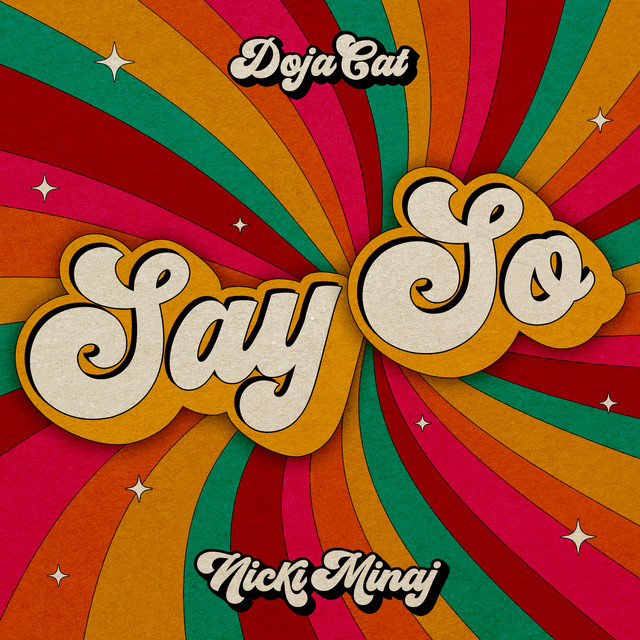
Used for vocals on "Say So", as stated by mix engineer Clint Gibbs in this July 2020 Sound on Sound interview. An image of the settings can be found here.
"All vocal audio tracks have the same signal path: Metric Halo Channel Strip 3, Avid Bomb Factory BF-76, Avid Dyn-3 De-Esser and in the case of the lead vocals, the FabFilter Pro‑Q 3, all on the inserts, plus sends to the quarter- and eighth–note delays and reverb. These are all part of the recording template, and came from Kalani. I am familiar with the settings, because I worked on them, so I didn't change them. The Metric Halo is doing a high-pass, the BF-76 has all buttons in to give it that pop vocal sound. I added the Q 3, cutting 1dB at 279Hz and at 740Hz. I like to do tons of minimal EQ cuts with many plug‑ins.
"The lead vocal audio tracks also have a send called Voc SC, which goes to the side-chain input of the Waves F6 on the Keys bus. It helps make a little extra pocket for the vocal. It creates dynamic dips in the 900Hz and 2kHz range when she is singing. I also have this F6 on the 808 bus of the remix, doing the same thing. All lead vocal audio tracks go to the LD Vocal aux, which has another instance of the Q 3, taking out quite a bit of low end to make space for the bass, and the McDSP AE600 dynamic EQ, taking out problem areas only when they occur. I do a lot of vocal riding on the lead vocal bus, pushing up specific syllables.
"There's also a track called Echo FX Clean. When I have to mute a word, I will take the word before it and will delay it with some reverb to fill the empty space. The additional plug‑in by Vengeance, the VPS philta XL filter, is doing a high and a low cut to give it more of that radio sound. The other vocal tracks are treated in similar ways as the lead vocals, though the BG2 bus has the Valhalla Vintage Verb, with a 2.4s reverb, Mix at 18 percent. I think that came from Kalani, but I added the FabFilter Pro‑DS, because I wanted to take the 's' frequency out of the reverb. All vocals go to the Vocals bus, which has the UAD 1176, switched off, and the JSTClip for some level boosting. The Vocal Rear track is the parallel, with -20dB compression on the 1176. This is where I get my vocal loudness from.

Used for Minaj's feature on Doja Cat's "Say So" remix, as stated by mix engineer Clint Gibbs in this July 2020 Sound on Sound interview.
"All vocal audio tracks have the same signal path: Metric Halo Channel Strip 3, Avid Bomb Factory BF-76, Avid Dyn-3 De-Esser and in the case of the lead vocals, the FabFilter Pro‑Q 3, all on the inserts, plus sends to the quarter- and eighth–note delays and reverb. These are all part of the recording template, and came from Kalani. I am familiar with the settings, because I worked on them, so I didn't change them. The Metric Halo is doing a high-pass, the BF-76 has all buttons in to give it that pop vocal sound. I added the Q 3, cutting 1dB at 279Hz and at 740Hz. I like to do tons of minimal EQ cuts with many plug‑ins.
"The lead vocal audio tracks also have a send called Voc SC, which goes to the side-chain input of the Waves F6 on the Keys bus. It helps make a little extra pocket for the vocal. It creates dynamic dips in the 900Hz and 2kHz range when she is singing. I also have this F6 on the 808 bus of the remix, doing the same thing. All lead vocal audio tracks go to the LD Vocal aux, which has another instance of the Q 3, taking out quite a bit of low end to make space for the bass, and the McDSP AE600 dynamic EQ, taking out problem areas only when they occur. I do a lot of vocal riding on the lead vocal bus, pushing up specific syllables.
"There's also a track called Echo FX Clean. When I have to mute a word, I will take the word before it and will delay it with some reverb to fill the empty space. The additional plug‑in by Vengeance, the VPS philta XL filter, is doing a high and a low cut to give it more of that radio sound. The other vocal tracks are treated in similar ways as the lead vocals, though the BG2 bus has the Valhalla Vintage Verb, with a 2.4s reverb, Mix at 18 percent. I think that came from Kalani, but I added the FabFilter Pro‑DS, because I wanted to take the 's' frequency out of the reverb. All vocals go to the Vocals bus, which has the UAD 1176, switched off, and the JSTClip for some level boosting. The Vocal Rear track is the parallel, with -20dB compression on the 1176. This is where I get my vocal loudness from.
(...) "The Nicki Minaj remix happened very last minute. I got a text from her engineer, Aubry 'Big Juice' Delaine, saying, 'Here's a link for Nicki's vocals.' I opened it up and realised they were for 'Say So'. So I hit up the label and they confirmed that we were doing a remix. As I was mixing, I was getting updated versions of the vocals, verses, and so on. We did the mix, got it mastered, it was all approved, and the day before the remix was supposed to come out, someone wanted to change the beat underneath her vocals. All of a sudden there was an emergency!
"I got an email from Tyson Trax, saying: 'Here are the new beat stems for Nicki.' Among other things they contained some heavy 808s. I had an hour to mix in these new beat stems, because the remix was supposed to be released in Australia a few hours later. I pasted these new beats in just above the vocal VCA of the original session, and in Nicki Minaj's first verse I deactivated the clips from the original beat files for this section. But because the original did not have 808s, they killed my mix bus. I had to automate a new limiter during this part of the remix.
"I put Nicki's vocal at the bottom of the session, and just needed to pair them with the track. I added all plug‑ins on her vocals that you see in the session, but I did not need to do much, because the processed stems Big Juice sent me sounded great! The SoundToys Little Radiator adds a little warmth, and the Metric Halo Channel Strip boosts some top end while also cutting some low end. There are two Waves C6 plug‑ins dynamically suppressing 177Hz and 700Hz, with a -6dB range. There was some build-up in those frequencies that didn't work with the mix. On the inserts of the individual vocal tracks there also is a Waves Q8 doing two sharp 4-6 dB cuts at 10kHz and 11kHz, which was to tame some 's' harshness.
"One of the 808 audio tracks has the FabFilter Pro‑Q 2, with a high pass at 20Hz and a cut around 40Hz, and the Oeksound Soothe on a 'melodic bass control' setting. On the 808s aux bus and 808 parallel bus I have the FabFilter Saturn, Timeless, and the Waves F6. These 808 buses obviously were added for the remix. My approach with them was similar to that of the bass aux. The Saturn is only active on the parallel track, and is a bit dirtier on the 808 than on the bass. The F6 is side-chained to the vocal to suppress the mids of the 808 while Nicki is rapping. The Timeless also is only active on the parallel track, and adds a light chorus that spreads the 808 out slightly."

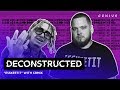
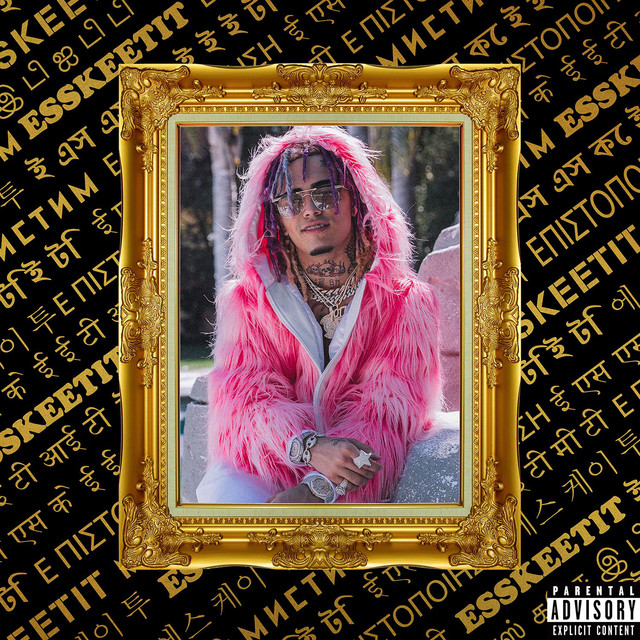
Used for vocals on "ESSKEETIT", as outlined by producer CBMIX in this May 31, 2018 Genius Deconstructed interview at 4:05.
So, the vocals, I actually recorded them through an aux track. The plugin chain for the vocals is the RComp, SSL Channel Strip, and a de-esser [pulls up Dynamics III De-esser]. There's literally, absolutely no EQ on the vocal at all. It was just a proper vocal tone, I had the mic set up right, I had him on the mic right. I'll solo the lead vocal of the hook. That's dry. With the delay and reverb, it kind of makes it a little more spacey, but it's very low and very subtle. Here's my delay setting. It's a H-Delay. Super low feedback, super filtered. My reverb setting is just a D-Verb, 1.7 decay time. I put a one-band EQ to take out some of the mud of the reverb afterwards.
Album Usage
The Digidesign Dynamics III De-Esser has been featured on the following albums:

Genre Usage
Based on how artists on Equipboard use this gear, it is most commonly found in the following genres.
Used With
Based on how musicians on Equipboard use Digidesign Dynamics III De-Esser, it is most commonly used with the following gear.


-s.webp?v=1784872236)


More De-Esser Plugins

$144.00 - $199.00
in De-Esser Plugins Rank


.jpg?v=1784733415)

$29.99 - $34.99
in De-Esser Plugins Rank


$56.00 - $244.00
in De-Esser Plugins Rank


$33.00 - $34.99
in De-Esser Plugins Rank


$29.99 - $34.99
in De-Esser Plugins Rank


$14.99 - $149.00
in De-Esser Plugins Rank

$199.00
in De-Esser Plugins Rank


$0.00
in De-Esser Plugins Rank

$39.99 - $50.00
in De-Esser Plugins Rank

$95.00 - $99.00
in De-Esser Plugins Rank

$119.00 - $129.00
in De-Esser Plugins Rank


$49.00 - $89.99
in De-Esser Plugins Rank

$18.20 - $89.00
in De-Esser Plugins Rank

$99.00
in De-Esser Plugins Rank


$79.00
in De-Esser Plugins Rank


$95.00 - $100.00
in De-Esser Plugins Rank

in De-Esser Plugins Rank


Community setups


Similar


Gear Guides






Most Popular De-Esser Plugins
Most Popular Brands
-
Added to Equipboard on by
 eyeseeofficial
GearIQ 161592
-


