This page about Lexicon Hall is a stub. You can help improve it:


Pricing and availability


* Product prices and availability are updated by Equipboard every 24hrs and are subject to change. Equipboard may receive compensation for purchases made at participating retailers linked on this site. This compensation does not affect what products or prices are displayed, or the order of prices listed. For more information, please refer to our affiliate disclosure.


Videos

OBEDIA
Lexicon Hall Plugin Overview
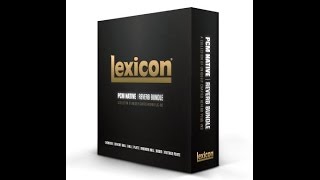
Lexicon Hall Plugin Overview
OBEDIA
Reviews
Owner Insights
We analyzed real musician discussions from forums and Reddit to find what players love, question, and tweak about Lexicon Hall.
Comparisons
-
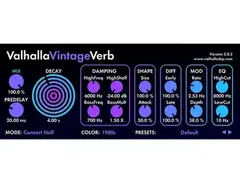
Lexicon PCM plugins are valued for blending seamlessly into mixes, unlike Valhalla, which some find sits on top of the sound.
Source -
Arturia Rev LX-24 and Relab LX-480 are modern alternatives to Lexicon plugins, offering similar functionality with possibly better support.
Source -
Lexicon reverbs are often compared with Valhalla, D-Verb, and H-Delay, which are commonly used in hip hop/pop mixes for their ease of use and integration.
Source -
The Chase Bliss CXM 1978 and Meris Mercury 7 are noted as alternative reverb pedals inspired by the Lexicon 224, with the former being pricier but highly praised for its quality.
Source -
The Digitech Polara, although marketed with Lexicon algorithms, is criticized for its lower sound quality compared to the original Lexicon 224, due to outdated algorithms.
Source -
The Hardwire Supernatural is highlighted for its superior spring and plate reverbs, with Lexicon algorithms, yet not identical to the 224.
Source
Software and compatibility
-
Lexicon and Exponential Audio plugins may need a dedicated older OS due to potential future support issues, highlighting their longevity concerns.
Source
Use cases and applications
-
The Lexicon PCM Hall is particularly praised for its vocal applications, offering a lush and immersive reverb effect.
Source -
The Lexicon Hall is favored for its Large Hall, Random Hall, Fat Plate, Thin Plate, and A Plate settings, which are recommended starting points for vocal processing.
Source -
Lexicon reverbs are noted for their suitability in mixing sessions rather than tracking, particularly in hip hop and pop genres where time constraints favor plugins.
Source -
The Digitech RP360 is mentioned to include Lexicon algorithms, though it's unclear which specific algorithms are incorporated.
Source
Features and functionality
-
UAD and Relab produce plugin versions of Lexicon reverbs that are praised for their comprehensive preset libraries, making them a practical alternative for quick setup.
Source -
The Digitech i-Stomp can emulate the Lexicon 224 with an epic model, requiring a 30-pin adapter for pedal image transfer.
Source
5.0 out of 5
Based on 0 Reviews and 1 Rating
Artist usage
Add artist

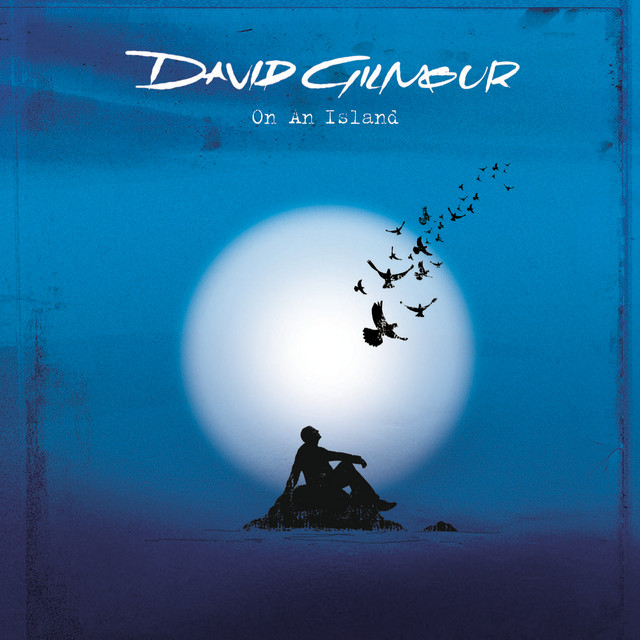
Used for Gilmour's vocals on On An Island, as mentioned by sound engineer Andy Jackson in this July 2006 Sound on Sound article.
"Actually, it's very straightforward — voice — nice microphone, nice mic amp, nice compressor. There you go. For reverbs I tend to be old-school and use an EMT plate. I had a couple of plates and a Lexicon Hall — that was our palette. The vocal chain starts with that Sony tube mic with the heatsink on the side, the C800G, and it is the most fantastic microphone. We have a couple of those, one in the studio and one for David to use at home, which is another reason his demos sounded so good. That feeds an old Neumann V72 mic preamp and then EAR EQs and compressors like the ones I use here in my mastering system. I would compress his voice but only fairly gently with a tickle of 2:1, then maybe do that again on the mix. That's with the exception of the rock songs of course, which were completely mashed in a Fairchild! The thing is, David makes my life easy — stick him on the phone and he sounds great! He is not a difficult person to record — great technique and a great voice."

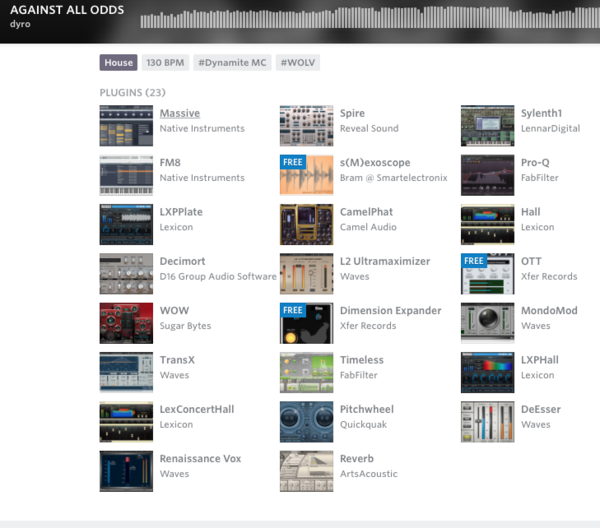
In this Splice project, by Dyro, he lists Lexicon Hall as one of the plugins he used.


Used on "Closer", as stated by producer DJ Swivel in this February 2017 Sound on Sound interview.
“All Halsey’s vocals apart from her hook vocals further down have tons of plug-ins and sends! The insert chain on these tracks is Auto-Tune, Waves Renaissance De-essser, Waves SSL Channel, Waves RVox, Waves RDe-esser and SPL Vitalizer, and on two tracks I add the Waves RVerb, and on the ‘Delay Chop’, which happens just one moment towards the end, the Valhalla Vintage Verb. Each of Halsey’s vocals here is EQ’ed slightly differently, and also the same with the de-essers. The first in the chain usually works as a normal de-esser, and the second functions more as corrective EQ. They each have different frequencies that they act on, with different thresholds and amounts, and they tend to correct small issues in just one word or so. It may be a harsh upper-mid thing, which female vocals can have, and I just carve out those frequencies with the RDe-esser. I don’t want to take it out of the entire performance, because that frequency may add energy to the overall vocals.
“I also like using the RVox as a second compressor, to really tame the vocal. It just brings it right out in front and sticks the vocal in your face. I usually am pretty subtle with the RVox, but every once and a while I’ll slam it and you get this really cool sound. I learned that from Pensado’s Place. Finally, the SPL Vitalizer again adds some sheen to these vocals. The ‘Halsey Delay’ track adds four delays at the end of the song, with the second one pitched down with Auto-Tune. You can get some cool things by pitching down the vocals in Auto-Tune and changing the throat length and things like that.
“In addition, all these tracks have tons of sends, going to the Lexicon plate reverb, in some cases the Lexicon hall reverb as well, and the H-Delay medium delay and the Doubler for more width. The ‘Halsey Lead 1’ track also has a send to the ‘Tape Delay’ track, on which I have a delay from the Waves Kramer Master Tape plug-in, which is set to a 15ips slap with not a lot of feedback. That delay adds a nice tonality and space. I also have several delay throws on certain words she sings, like in her opening line, where it goes ‘you... you’ on the upbeat.
“By comparison, there are very few treatments on Halsey’s hook vocals, which only have Auto-Tune, the SSL Channel, and the Doubler. Similarly, Drew’s backing vocals also have these plug-ins, and some Lexicon plate reverb. I’m using the SSL Channel to get rid of some high end on some of the tracks, because they were a little too bright, and had different effects on each of them to make sure they were not too similar.

Kurstin recorded Sia’s vocals through his Telefunken ELA M 251 into a Chandler TG2, through a Fairchild compressor and into the Apogee Symphony, they only needed minimal processing through a combination of Logic channel EQ, Waves’ CLA-2A compressor and the Lexicon Hall reverb. This was the same vocal chain that he used on his mix of Burn the Pages.

"Chandelier was mixed by Manny Marroquin, but once Kurstin recorded Sia’s vocals through his Telefunken ELA M 251 into a Chandler TG2, through a Fairchild compressor and into the Apogee Symphony, they only needed minimal processing through a combination of Logic channel EQ, Waves’ CLA-2A compressor and the Lexicon Hall reverb. This was the same vocal chain that he used on his mix of Burn the Pages."
Album Usage
The Lexicon Hall has been featured on the following albums:
Genre Usage
Based on how artists on Equipboard use this gear, it is most commonly found in the following genres.
Used With
Based on how musicians on Equipboard use Lexicon Hall, it is most commonly used with the following gear.


-s.webp?v=1783779087)


-s.webp?v=1783778808)


More Lexicon Reverb Plugins

$68.00 - $299.00
in Reverb Plugins Rank


$299.00
in Reverb Plugins Rank


$299.00
in Reverb Plugins Rank


$253.00 - $299.00
in Reverb Plugins Rank

$129.00 - $149.00
in Reverb Plugins Rank


$29.99 - $49.00
in Reverb Plugins Rank


$179.00 - $199.00
in Reverb Plugins Rank


$37.00 - $349.00
in Reverb Plugins Rank


$37.00 - $39.99
in Reverb Plugins Rank


$34.99 - $39.99
in Reverb Plugins Rank


$37.00 - $39.99
in Reverb Plugins Rank


$139.00 - $149.00
in Reverb Plugins Rank


$34.99
in Reverb Plugins Rank


$99.00
in Reverb Plugins Rank


$34.99 - $39.99
in Reverb Plugins Rank


$59.00
in Reverb Plugins Rank

$99.00
in Reverb Plugins Rank


$33.00 - $249.00
in Reverb Plugins Rank


$75.00 - $282.00
in Reverb Plugins Rank


$6.00 - $29.50
in Reverb Plugins Rank


$142.00 - $149.00
in Reverb Plugins Rank


$99.00
in Reverb Plugins Rank


$14.99 - $129.00
in Reverb Plugins Rank

$37.00 - $39.99
in Reverb Plugins Rank


$69.00 - $169.00
in Reverb Plugins Rank

$58.00 - $69.00
in Reverb Plugins Rank


$99.00 - $104.00
in Reverb Plugins Rank

$92.00 - $99.00
in Reverb Plugins Rank


$381.00 - $474.00
in Reverb Plugins Rank


$47.00 - $199.00
in Reverb Plugins Rank


$143.00 - $149.00
in Reverb Plugins Rank

$10.00 - $29.00
in Reverb Plugins Rank
Community setups


Similar


Gear Guides








Most Popular Reverb Plugins
Most Popular Brands
-
Added to Equipboard on by
 austinmw
GearIQ 5227
-


