This page about Lexicon PCM Native Vintage Plate is a stub. You can help improve it:


Pricing and availability


* Product prices and availability are updated by Equipboard every 24hrs and are subject to change. Equipboard may receive compensation for purchases made at participating retailers linked on this site. This compensation does not affect what products or prices are displayed, or the order of prices listed. For more information, please refer to our affiliate disclosure.
Description
Transform your music production with the Lexicon PCM Native Vintage Plate, a reverb plugin meticulously crafted to emulate the lush, dense sound of traditional plate reverbs. Designed for musicians and producers who crave authentic vintage warmth, this plugin offers an unparalleled audio experience by bringing the rich history of reverb into your modern digital setup.
With its ability to deliver a wide range of plate reverb effects, from subtle enhancements to dramatic soundscapes, the PCM Native Vintage Plate is a versatile tool that can elevate any track. Whether you’re working on a tight pop mix or an expansive cinematic score, this plugin provides the depth and dimension your music needs. The user-friendly interface makes it easy to dial in the perfect reverb settings, allowing you to focus on creativity rather than complexity.
The Lexicon PCM Native Vintage Plate integrates seamlessly with your DAW, supporting all major plugin formats. It faithfully replicates the classic plate reverb sound, making it an essential addition to any digital audio workstation. The plugin’s advanced algorithms ensure that every nuance of your performance is preserved, offering you the sound quality that Lexicon is renowned for.
Key Features:
- Authentic emulation of vintage plate reverb
- Compatible with major DAWs and plugin formats
- Intuitive interface for easy operation
- High-quality algorithms for pristine sound
- Versatile reverb effects suitable for various music genres
Videos

Daniel Bijan
Lexicon Native Reverb VS Valhala Plate Room VA Cubase Revelation Vst Plugin 2020 Shootout
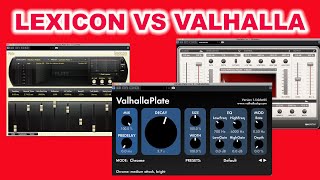
Lexicon Native Reverb VS Valhala Plate Room VA Cubase Revelation Vst Plugin 2020 Shootout
Daniel Bijan
Vintage Plate with Drums/ Audio Examples

LexiconPro
Reviews
Owner Insights
We analyzed real musician discussions from forums and Reddit to find what players love, question, and tweak about Lexicon PCM Native Vintage Plate.
Comparisons
-
The Lexicon PCM is regarded as superior to Valhalla for creating an authentic 80s synthwave sound, offering a more immersive 3D space.
Source -
Lexicon PCM 70, 42, and 80 are highlighted for producing non-realistic reverb sounds, suggesting a unique character compared to other reverb units.
Source -
UAD and Relab offer excellent plug-in versions of the Lexicon reverb, with UAD confirmed to have great presets for easy comparison and settings replication.
Source
Features and functionality
User experience
-
Users find the Lexicon reverb to blend seamlessly into mixes, likening its effect to "hot butter on a steak" for a rich sound.
Source -
Experimentation is emphasized as crucial for discovering the full potential and personalizing the use of Lexicon reverbs.
Source -
Engineers transitioning from analog to digital recall Lexicon's superiority in halls and plates, contrasting with TC Electronics for rooms and Yamahas for drum effects.
Source
Software and compatibility
-
Lexicon's support has been affected by corporate restructuring, possibly impacting future updates and customer service.
Source
Use cases and applications
-
The Lexicon PCM is recommended for its vintage plate reverb, particularly valued by those recreating 80s and 90s music styles.
Source -
The vintage plate reverb is praised for vocals, while tiled or medium rooms are favored for drum tracks.
Source -
Lexicon reverbs like Large Hall, Random Hall, Fat Plate, Thin Plate, and A Plate are recommended starting points for experimenting with vocals.
Source -
Mixing engineers often use Valhalla, D-verb, and H-delay for rap/pop, noting that Lexicon plugins are a preferable alternative for those seeking distinct reverb characteristics.
Source
Based on 0 Reviews and 0 Ratings
Artist usage
Add artist

Used on "Closer", as stated by producer DJ Swivel in this February 2017 Sound on Sound interview.
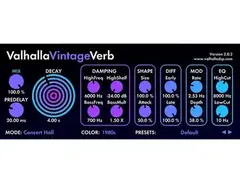
“All Halsey’s vocals apart from her hook vocals further down have tons of plug-ins and sends! The insert chain on these tracks is Auto-Tune, Waves Renaissance De-essser, Waves SSL Channel, Waves RVox, Waves RDe-esser and SPL Vitalizer, and on two tracks I add the Waves RVerb, and on the ‘Delay Chop’, which happens just one moment towards the end, the Valhalla Vintage Verb. Each of Halsey’s vocals here is EQ’ed slightly differently, and also the same with the de-essers. The first in the chain usually works as a normal de-esser, and the second functions more as corrective EQ. They each have different frequencies that they act on, with different thresholds and amounts, and they tend to correct small issues in just one word or so. It may be a harsh upper-mid thing, which female vocals can have, and I just carve out those frequencies with the RDe-esser. I don’t want to take it out of the entire performance, because that frequency may add energy to the overall vocals.
“I also like using the RVox as a second compressor, to really tame the vocal. It just brings it right out in front and sticks the vocal in your face. I usually am pretty subtle with the RVox, but every once and a while I’ll slam it and you get this really cool sound. I learned that from Pensado’s Place. Finally, the SPL Vitalizer again adds some sheen to these vocals. The ‘Halsey Delay’ track adds four delays at the end of the song, with the second one pitched down with Auto-Tune. You can get some cool things by pitching down the vocals in Auto-Tune and changing the throat length and things like that.
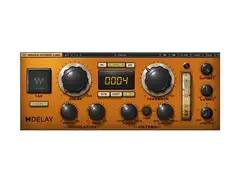
“In addition, all these tracks have tons of sends, going to the Lexicon plate reverb, in some cases the Lexicon hall reverb as well, and the H-Delay medium delay and the Doubler for more width. The ‘Halsey Lead 1’ track also has a send to the ‘Tape Delay’ track, on which I have a delay from the Waves Kramer Master Tape plug-in, which is set to a 15ips slap with not a lot of feedback. That delay adds a nice tonality and space. I also have several delay throws on certain words she sings, like in her opening line, where it goes ‘you... you’ on the upbeat.
“By comparison, there are very few treatments on Halsey’s hook vocals, which only have Auto-Tune, the SSL Channel, and the Doubler. Similarly, Drew’s backing vocals also have these plug-ins, and some Lexicon plate reverb. I’m using the SSL Channel to get rid of some high end on some of the tracks, because they were a little too bright, and had different effects on each of them to make sure they were not too similar.


Mentioned by sound engineer Trevor Muzzy in this Sound on Sound interview about the production of "Starships". An image of the settings can be seen here.
"You can see that the pre-chorus and chorus vocals have a lot of timing and comp edits. They were imported directly from the session I cut the vocals in. I did not merge or consolidate them, they just are the way they are. There's quite a lot going on with the vocals. I tried to create a nice basic vocal sound using the inserts, and once they sat well in the track, most of the sonic variations between the sections came from the sends. There was no tuning on the rapping, but the sung vocals in this track had a fair amount of tuning with the Logic Pitch Corrector plug-in on the inserts. The tuning is part of the sound of the record, with vocals needing to be very, very precise. In some cases, we pitched them up or down for vocal effects. Logic Pitch Corrector is a little harder-sounding than Auto-Tune, but it has its own distinct sound that we liked for the vocals in this track. It really fits the song.
"The other inserts on most of the vocals were all Waves: the C1 compressor, SSL Channel, Renaissance Channel, De-Esser, Renaissance Compressor, API 2500, and the Logic Channel EQ. The C1 compressor is the first in line on several lead vocals, and it does the same Pensado trick I used on the guitars, which is to compress a specific band — in the case of the verse lead vocal, around 2849Hz — focusing on notes that sounded a little harsh. It smooths this problem out more elegantly than using an EQ. Then the signal goes through the R Channel with some basic EQ, cutting significantly at 281Hz. Again, it was a matter of removing some less pleasant things to let the nice aspects shine. I bypassed the compressor in the R Channel. I needed a bit of de-essing, and the Waves De-Esser is a great all-purpose de-esser, in this case working at 5634Hz with the side-chain set to high-pass.
"There were two more compressors on her vocal. There was no science behind this, it was just a matter of experimenting to find a unique sound. The first is the Renaissance Compressor, which I love and which is set to a fast attack time and takes off about 6dB, so quite subtle, not too intense. The API 2500 is set pretty aggressively and you can hear it pumping a little bit on the vocal. It was already in the session — it had been used on the demo vocal. I pulled it over to Nicki's channel and liked what it was doing, so I adjusted it to fit her vocal. Finally, the Channel EQ notches quite a lot around 600Hz and a little bit more around 235Hz, just carving out some low-mids to make the vocal sit better in the track.
"Regarding the sends, there are some really distinct things happening here. The main lead vocal was similar throughout the song, but I tweaked it as it went along. The pre-chorus and chorus vocals all have Bus 1, which went to the same Altiverb effect that I had on the drums, to add some ambience to the vocal. The rap verses are much drier. Bus 35 is the Waves Doubler, which gives a bit of spread to the lead vocal — I used this on the rap as well as on the sung vocals. Bus 4 is the Waves CLA with a drastic telephone effect. That was another effect that was there from the demo version and added a cool quality. Bus 50 is the [Sound Toys] Echo Boy, which is the main plug-in I use for delay throws, whenever I want to repeat a word. In this case it's on a quarter-note Echoplex setting. It's a single, mono echo that I panned a little bit to the side. Bus 7 has the Waves VX1 Maserati Vocal Enhancer, and that was, again, a plug-in I inherited. It is set to a very compressed, bright vocal sound that I brought in and out to add some sparkle to the sound when necessary.
"Bus 6 has the main reverb in the track, which you are hearing in the pre-chorus and chorus, and which is a Lexicon Plate plug-in on the 'VocalPlate2' preset. It's a really bright, over-the-top plate sound that is not trying to blend in but that's actually brightening the vocal up a lot. It's loud and wet. Busses 16 and 29 are different stereo delays: the Waves SuperTap was already in the session and I kept it, and the other is a standard Logic stereo delay that I use all the time on vocals. Bus 3 is the Logic Bitcrusher, which gives the vocals a grainy sound. The vocals already had an aggressive sonic quality to them because of the 251-TG2-1176 chain, and the Bitcrusher enhanced that. It's nasty, there's nothing nice about a bit-crusher, and it adds a bit of attitude. I used it on some of the background vocals as well, like in the second verse, where you have the pitch effects. You can hear it in the very processed harmony vocals that come in. That was something we added when we were doing the final vocal comp and arrangement. It gave that second verse some more life and helped the track build. The background vocals are a very big part of the hook vocal sound as well, and, for example, track 140 has many effects on it. That actually contains the vocals of the demo singers. Nicki's lead and background vocals are dominant, but in the chorus the background vocals from Mohombi and Wayne Hector added to the crowd feeling. The chorus vocals are really big in this track, and they were part of that.”


Album Usage
The Lexicon PCM Native Vintage Plate has been featured on the following albums:



Genre Usage
Based on how artists on Equipboard use this gear, it is most commonly found in the following genres.
Used With
Based on how musicians on Equipboard use Lexicon PCM Native Vintage Plate, it is most commonly used with the following gear.


-s.webp?v=1784872236)


-s.webp?v=1784871993)

More Lexicon Reverb Plugins

$68.00 - $299.00
in Reverb Plugins Rank


$299.00
in Reverb Plugins Rank


$299.00
in Reverb Plugins Rank


$253.00 - $299.00
in Reverb Plugins Rank

$129.00 - $149.00
in Reverb Plugins Rank


$38.00 - $349.00
in Reverb Plugins Rank


$29.99 - $49.00
in Reverb Plugins Rank


$179.00 - $199.00
in Reverb Plugins Rank


$37.00 - $39.99
in Reverb Plugins Rank


$0.00
in Reverb Plugins Rank


$37.00 - $39.99
in Reverb Plugins Rank


$149.00
in Reverb Plugins Rank


$75.00 - $535.00
in Reverb Plugins Rank


-m.webp?v=1783581851)

$29.99 - $30.00
in Reverb Plugins Rank


$58.00 - $69.00
in Reverb Plugins Rank

$139.00 - $149.00
in Reverb Plugins Rank


$62.00 - $69.00
in Reverb Plugins Rank

$0.00
in Reverb Plugins Rank

$49.00 - $199.00
in Reverb Plugins Rank


$47.00 - $49.00
in Reverb Plugins Rank

$0.00
in Reverb Plugins Rank

$37.00 - $39.99
in Reverb Plugins Rank


$95.00 - $99.00
in Reverb Plugins Rank


$34.99
in Reverb Plugins Rank


$37.00 - $39.99
in Reverb Plugins Rank


$99.00
in Reverb Plugins Rank


$29.00 - $38.00
in Reverb Plugins Rank

$95.00 - $99.00
in Reverb Plugins Rank

$93.00 - $99.00
in Reverb Plugins Rank

$69.00 - $169.00
in Reverb Plugins Rank

$47.00 - $199.00
in Reverb Plugins Rank
-m.webp?v=1784689486)


$99.00 - $105.00
in Reverb Plugins Rank

$99.00
in Reverb Plugins Rank


$33.00 - $249.00
in Reverb Plugins Rank


$43.00 - $45.00
in Reverb Plugins Rank
Community setups


Similar


Gear Guides







Most Popular Reverb Plugins
Most Popular Brands
-
Added to Equipboard on by
 eyeseeofficial
GearIQ 161592
-


