

Pricing and availability




* Product prices and availability are updated by Equipboard every 24hrs and are subject to change. Equipboard may receive compensation for purchases made at participating retailers linked on this site. This compensation does not affect what products or prices are displayed, or the order of prices listed. For more information, please refer to our affiliate disclosure.
Description
Introducing the Mosrite Ventures II, an electric guitar that brings vintage vibes into the modern era with its distinct style and sound. Known for its unique design, the Ventures II is a solid body electric guitar offering a blend of iconic Mosrite aesthetics and meticulous craftsmanship. Its double-cutaway profile not only provides easy access to higher frets but also adds a touch of retro flair that harks back to the golden age of rock 'n' roll.
The Ventures II features a proprietary Mosrite single-coil pickups, delivering a crisp, bright tone with plenty of bite, perfect for surf, punk, and garage rock genres. Its slender neck profile ensures comfortable playability, making it a favorite among guitarists who enjoy fast, intricate playing. The Zero fret design contributes to consistent intonation and clear, ringing notes across the fretboard, whether you’re playing rhythm or lead.
Equipped with a vintage-style tremolo system, this guitar offers expressive vibrato effects without compromising tuning stability. A 3-way pickup selector switch and simple volume and tone controls give you the flexibility to shape your sound effortlessly, whether you're on stage or in the studio. The Ventures II is not just an instrument; it's a statement piece that resonates with the legacy of Mosrite guitars.
Key Features:
- Solid body with a double-cutaway design
- Proprietary Mosrite single-coil pickups
- Slim neck profile for enhanced playability
- Zero fret for consistent intonation
- Vintage-style tremolo system
- 3-way pickup selector switch
- Volume and tone control knobs
Videos

Lawman Guitars
Used Guitar For Sale - 1966 Original Mosrite Ventures II White Pro Setup
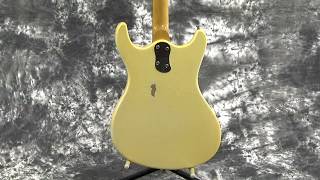
Used Guitar For Sale - 1966 Original Mosrite Ventures II White Pro Setup
Lawman Guitars
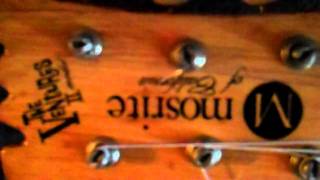
My Mosrite Ventures II 1966

george Williams
![Video thumbnail for Mosrite Ventures Model II [Mark V] 1966, Vintage Guitar Demo by Dillon Shane](https://img.youtube.com/vi/ttWHQKJsgrE/mqdefault.jpg)
Mosrite Ventures Model II [Mark V] 1966, Vintage Guitar Demo

Dillon Shane

Mosrite Ventures II / Mark V Guitar Demo

Austin Lucas
Reviews
Owner Insights
We analyzed real musician discussions from forums and Reddit to find what players love, question, and tweak about Mosrite Ventures II.
Setup and maintenance
-
Removing the neck requires extra care due to the tapered neck pocket; basswood bodies dent easily, demanding caution with screwdrivers.
Source
Comparisons
-
The Ventures II model is noted for having different neck and neck pocket manufacturing dates, similar to other models in the same serial range.
Source
Other
-
Originality of parts like tuners is questioned; Mosrite sometimes used available parts if short, which can affect the guitar's perceived value and authenticity.
Source -
The serial number range for Ventures II Slabs is B001 to B150, although not all numbers may correspond to produced guitars, as some were likely trashed or never documented.
Source
User experience
-
Owners report that the "tiny neck" of the Mosrite Ventures II offers comfort, especially for players who struggle with barre chords, noting the neck depth is 0.855" without tapering until higher frets.
Source
Value and pricing
-
The 1966 Ventures II model, with its serial number range, is valued between $1,500 and $2,000 if all original, considering condition and potential refinishing.
Source
Build quality
-
The clear coat paint on the fretboard near the body end is unusually shiny and fills dot inlays, suggesting potential refinishing which affects value.
Source
4.5 out of 5
Based on 3 Reviews and 7 Ratings

107
Special Tone and Palyability, may take time to get used to. May have fixable Q.C. issues.
First, the company is pronounced as though you would say the last part of this quote: "Curly's on the left, Larry's on the middle, and Moe's Right." It's because the brand name was made by combining the names "Moseley" and "Boatright."
To clear things up about why there are two different Ventures II models:
This specific Mosrite guitar named "the Ventures II model" is an early version of "the Ventures Mark V model," and this early "Ventures II" type replaced the different Mosrite guitar that's also named "the Ventures II model." The original Ventures II is the type of Mosrite Guitar that you normally would see Johnny Ramone playing. John's type was discontinued early, then Mosrite used necks from it on the early Mark V models, but they didn't change to the "Ventures Mark V" name right away even after Ventures II necks mostly ran out.
Now, to the review. And there's a lot to be said here; I wanted to imitate early B-52s songs, and since Ricky Wilson owned two Mosrite Mark V versions of this guitar, this fit the bill very well. I do not play live and I would expect the body to dent very easily, but Ricky played his Mosrites a lot live so it can't be too bad either.
Specs:
Mosrite "Smooth Top" Mark V spec Single Coil Pickups (Mosrite never seemed to name their pickups.) These pickups are normally a higher output single coil like a Gibson but they seem to sound a bit brighter, yet not as clean as a Fender. The reason why they sound brighter is probably because these specific Mosrite pickups have their magnets closer to the strings, like Fender pickups, and not like most Gibson pickups. 500k Potentiometers
Basswood Body (dents very easily) Maple Neck, Indian Rosewood Fretboard Guitar Weight: Roughly 7.3 Pounds (for mine, at least) Strap Holders: These have an oddly big screw size. They're bigger than the screws you'd expect, so if you want Strap Locks, you'll need to either fill the screwholes or use strap locks with larger screws (if those even exist.)
24.50" Scale Length (not a typo.) Early versions of this model (mostly the first 125) may be 24.75", but I haven't confirmed it. Zero Fret Giant Volute behind String Guide & Zero Fret Headstock Tapers from Volute to Headstock End (the Headstock is not perfectly flat from the E strings through to the D and G strings.) Neck Width at Zero Fret: 1.550" or 1.560" (not a typo) Neck Width at Neck End: 2.060" (again, not a typo) Neck Depth at Frets 2 through 13: 0.860" (roughly.) Bolt-on Neck Neck Heel Type: No extra wood under the neck pickup, so, Fender style in that way. However, the neck heel also tapers so the strings are higher from the body than you'd expect on a Fender; this means the guitar has a Neck Angle. I'm not sure how much of an angle it has, though. I'm also not sure how tall the neck heel is, offhand. Neck Plate: 4 Bolt and asymmetrically shaped in spirit of the whole guitar. Looks a bit like an unshelled peanut.
Fret Width: 0.070" (a discontinued width) Fret Height: Tapering from 0.022" (Low E side) down to 0.015" (High E side) - These fret height specs are also not a typo.
Bridge: Mosrite-spec Non-Roller "Circular Brass Saddle" Bridge (not an official name, I'm just describing it.) Bridge Posts' Screw Thread: 0.180" wide, not counting the part where the bridge rests on them which is wider. Tailpiece: Mosrite "Moseley" Vibrato Tailpiece (I'm not calling it a "Tremolo" just because Leo Fender mixed up the words "Vibrato" and "Tremolo" in the 50s.)
Guitar Tone:
Pickups: These stock single coil pickups sound somewhere between a Fender and a Gibson pickup but still not quite the same as either. They're one of Mosrite's designs, and they're the same pickups in the original Ventures II if it's in stock form (they just have wider pickup casing on this guitar.) Since they're normally high ohm single coils, they can overdrive an amp well.
I do note that I have issues with the neck pickup overpowering the volume of the bridge pickup, so maybe I should raise the neck in the neck pocket and use very slightly longer neck screws. (I can't make the neck pickup go any lower.)
Bridge: The bridge, since it has narrow bridge posts, also gives the guitar less sustain than a Tune O Matic. This effects the tone in a slight "bouncy" way that's a bit hard to describe, but vaguely, I feel like it makes the guitar sound just a little more like a Banjo.
Tailpiece: This is more vague, but I can't help but feel like the Moseley Tailpiece gives this guitar a very slight chime to how it sounds.
Acoustic Tone: OK, sure, this is hardly what anyone buys an Electric for but I need to talk about it just to cover it: this Electric Guitar is loud in Acoustic form for an Electric. I'd think this is partly because the electronics cavity is so deep - the whole body is 1.500 inches deep, but the electronics cavity is 1.350" deep. Also, the truss rod somehow acts as a mini acoustic amplifier. Add in how the guitar has a neck angle, and it's just made louder. (Again, I'm not sure how much of a neck angle it has; I haven't measured.)
Playability:
I enjoy this guitar, but it's not one that everyone can just pick up and play without adjusting to it first (which might take a while.)
Neck Width & Depth: The narrow neck makes it easy to thumb wrap with if you want to, but you also may need to re-learn how you think necks should be held because this neck is thinner than most. I had to try different thumb positions until I found what worked, and even then, sometimes I thumb wrap to relieve discomfort anyhow. Maybe my hand also had to get used to this neck over time.
Neck Fitment at Body: When I bought my Ventures II, it wasn't in the best shape. However, when I installed the neck, the neck and strings were off-center. The High E was coming off the fretboard higher on the neck, so I needed to fix that.
Volute: Although not quite a playing feature, I need to mention it. The Volute on this Mosrite is gigantic, and I have a hard time imagining the headstock breaking on this guitar. This does effect how you play the guitar, but only around the 0 fret and 1st fret.
Back of Neck Quality Issue: There's a noticeable amount of chafing on the back of my neck around the 2nd and 3rd fret, although it doesn't effect my playing. This is supposed to have been caused from the original hard case for this guitar model, so if you look for this version, look for this issue; I've seen it on a few Ventures II versions of this guitar. It seems like Mosrite fixed this problem after this model's name turned to "the Ventures Mark V model," though. If there are any Mark V named versions with this neck chafing issue, I haven't seen them.
Frets: Don't expect to bend very easily with these low frets, but do expect to be able to slide up and down the neck easier than with taller frets. Also expect strings to feel like a lighter gauge than you think they are (because low frets do that.)
Body: You're probably not going to hold this guitar just the same as a Stratocaster if you're used to this body. I tend to hold it a little more like a player of a Reverse Firebird would hold their guitar, but I can also have my strumming arm in the section almost above the Neck Pickup; the body, including the German Carve by the edge, is forgiving in that way. I also can hold my strumming arm in an anchored point slightly inside the German Carve.
Bridge: The stock bridge (again, this is not the roller version but the brass rod type) is a great design if you like to palm mute; it's very comfortable to mute on these round saddles that are beveled at the top. However, in the 60s these were not always to the best quality control. Sometimes, you need to shim one or more saddles so they don't rock. The stock screws for the saddles were also a weak metal, so it's recommended to first clean the bridge screws, soak it in penetrating oil overnight, then gently and slowly remove the screws if you even want to risk taking the screws out instead of breaking a screw off inside the saddle.
Moseley Vibrato Tailpiece: This is one of the best vintage Vibrato Tailpieces I've ever played. It's no Floyd Rose for dive bombing (which I wouldn't be using it for,) but it returns the strings to pitch very well. Even the B and High E strings tend to stay in tune with each other as they go down in pitch. However, I have to admit on the tuning stability that I do have a habit of soldering the plain strings' wraps near the ball end, before I install them on a guitar. I've done this for years almost every time I restrung a guitar, I was tired of strings unwinding on me and it works. I got it from a StewMac book, and it was called "Tinning your Strings."
Also, the bridge moves back and forth when you use the Vibrato Tail, that's normal on this model. I've never had tuning issues because of it.
Mosrite Quirks and Tips:
1: The Serial Number is stamped into the fretboard near the neck pickup. This is not the best place to put a Serial Number because sometimes, a fretboard needs to be planed to be flat so you can refret it. When you do that, the serial number will be obliterated unless it's re-stamped. Mosrite kept doing this practice even to Semie Moseley's death in 1992.
2: Mosrite models made (seemingly) from a point in 1965 up to October 26, 1966 tend to have additional manufacturing information stamped on the Neck Heel and in the Neck Pocket. Included are manufacturing dates, and codes of unclear meaning. These dates and numbers can sometimes be damaged in manufacture by the neck pocket screws.
3: If you read the side of an original potentiometer on a Mosrite (or many other vintage guitars) you can find a number code that will tell you the manufacturer, year, and week that the pot was made in. That doesn't mean the guitar is as old as the pot, but it does mean that the guitar cannot be older than the pot.
4: Although I can't say if this is the case with every Mosrite, in my case, the neck and neck pocket seem to be slightly tapered from the bottom of the neck heel to the top, and the neck pocket also is just tight enough that I need to take the neck pickup off and then slide the neck towards the bridge to get the neck out.
5: Mosrites, generally, allow you to take the Truss Rod out by having no tension on the neck and then no tension on the rod, then by pulling the rod out. I've done this twice on this guitar, and it seems like you can also do it with guitars that have the rod adjusted at the headstock instead. However, you can very easily mar and damage the headstock while doing this if you don't take required precautions against it. One way around this is to take the tuners off and then put a big enough piece of plastic down that will protect the headstock, and another way is to drill through the neck heel area precisely and then pull the rod out at the neck heel, but that might be too far if it's not needed.
In Conclusion:
I enjoy and love this guitar model, but it can take time to get used to its neck and also frets unless you refret it. The sound is something I cannot get with another model, being different but close enough to a Fender or Gibson while still being its own thing.
I rated it 4 / 5 partly for old quality control issues. Make sure to not expect a perfect guitar from the get go if you buy one, you might need to work on it or have it worked on. And again, be cautious if you refret it, or you'll ruin the serial number.
If you can get used to this guitar's narrow neck and if you like how it sounds, this can be enjoyable, and there aren't a lot of this model (and its younger and more commonly named "Mark V" sibling) around. Few others will have one of these right now as of Mid-2026 since fewer than 2,000 originals (under all name versions) were built.
Preferred Settings + Usage:
On a Fender Hot Rod DeVille Amp: Treble 5 or 6, Mids 5 or 6, Bass 1 or 2. Set the Volume around 4 to 6 for some light overdrive. This is close to some early B-52s tone if you use thicker strings.

5314
Dream Guitar
GUITAR finally got my dream axe a blue ventures just like the one in the image all stock I dont even care that the guitar is a really a piece of shit as all mosrites are but man that GOOD CARDBOARD speaks to me, let me tell you what i sold for it: Orange OR100, Orange Rockerverb 50, Orange 4x12 and 2x12, 1984 Gibson Explorer. btw I had allot of left over money from selling all this.
BEST MOTHERFUCKING GUITAR EVER!!!!
when i got it i plugged it in into my marshall plexi amp and played pet cementery.BEST guitar ever 100000000000000000 percent buy another 1

7284
Ramones fan?
yes ramones fan 100 percent
7284
Yeah, I'm more of a Misfits guy but Ramones are f***in' cool.
Artist usage
Add artist

In this screenshot from an entry by John Frusciante on his official website, he talks about using his Mosrite Ventures guitar on recordings of unreleased music of his past: "I have put up a 19 minute group of 6 songs recorded on 4-track cassette in May 2010, the instrumentation being 3 guitars and one drum machine. It is a bunch of weird anti-rock star guitar solos, played mainly on a Mosrite Ventures guitar..."

Used throughout Melvins


Johnny is seen in this image playing his Mosrite Ventures II. Rolling Stone writes in this article "John Cummings made his name with an inexpensive Mosrite guitar, on which he hammered out high-speed downstroked barre chords in a slashing, minimalist style that appropriately became known as 'buzzsaw.'"
This article from Premier Guitar writes "Johnny relied on a Mosrite Ventures II model guitar. He often said that he went to 48th Street in Manhattan—music row—looking for the cheapest guitar he could find. This is true, but he was also looking for something that would separate him visually from the soft-rock players of the day. Made only in 1965, the Ventures II model was the company’s entry-level Mosrite guitar, and it had a basswood slab body, a thin and fast neck, plastic trim and knobs, and single-coil pickups."


Ricky Wilson was the first B-52's guitarist. You can see him play on his Blue Mosrite Ventures in the above video clip.
The Mosrite Ventures II could have also been a Mark V and is commonly referred to as such in some circles. Either way, it's the same design. Ricky actually had 3 of these guitars of known - a Sunburst One, a Black One, and a Blue one. The Blue one is his best known guitar as it appeared on the lyrics sheet for the first record, and was used in this video, as well as in concert in the early days of the band pre-first album and until Ricky passed on in 1985.
Photo of the Sunburst One - http://www.stereophile.com/images/imagecache/960-wide/photopost/data/508/293b52s-4-72dpi.jpg
Video of the Black One - https://www.youtube.com/watch?v=n4QSYx4wVQg - up close and personal
Photo of Ricky's Main Blue Ventures II/Mark V guitar where it currently resides - http://31.media.tumblr.com/tumblr_lko0wqFKlT1qfvhmzo1_500.jpg
The Plaque Beneath the Blue one on Exhibit - which I believe is at the Cleveland Rock N' Roll Hall Of Fame....
BLUE MOSRITE GUITAR
B52s guitarist Ricky Wilson played Rock Lobster, Dance This Mess Around and many other of the band's early classics on this guitar as the group toured extensively. This instrument was also featured on the lyric sheet of their 1979 debut album. Ricky's unorthodox approach to the guitar is evidenced by the missing strings. Ricky strung his guitars with either four or five extra thick strings instead of the usual six and he also devised a different tuning for almost every song the band created.
Collection of Linda J. Wilson
Typically, at the early shows, the Ventures II/Mark V was tuned to CFxxFF for Rock Lobster and Dance this Mess Around. It seems later on in his career Ricky switched the guitar to a 5-string setup, most likely DADxBB as that's the most used tuning that the B-52's used (Lava, Moon, Give Me Back My Man, Strobe Light, just to name a few). The main blue one is on exhibit in Athens Georgia these days and has heavy browning around the pickguard screws, what looks like a TV knob for the tone knob, and heavily crazed paintjob.

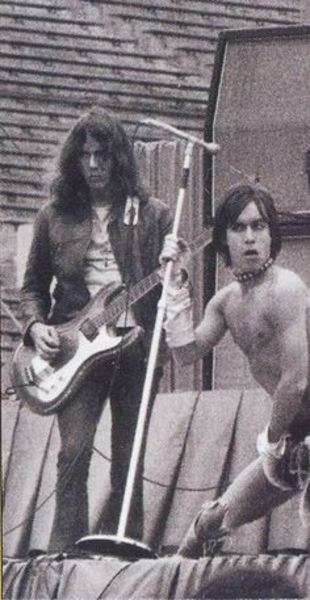
in this photo Dave is seen playing a mosrite bass


Album Usage
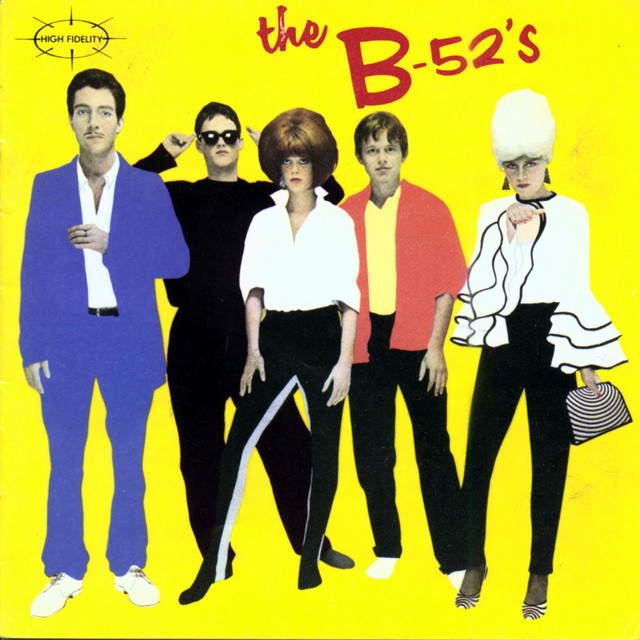
The Mosrite Ventures II has been featured on the following albums:



Genre Usage
Based on how artists on Equipboard use this gear, it is most commonly found in the following genres.
Used With
Based on how musicians on Equipboard use Mosrite Ventures II, it is most commonly used with the following gear.



-s.webp?v=1784554555)
Similar
Add recommendation1 alternative for Mosrite Ventures II, curated by the Equipboard community.

The Hallmark "Gospel" model, although not exactly 1:1 the same as a Mosrite Ventures II (or Mosrite Ventures Mark V model,) is the closest thing to a Vintage Mosrite that you can buy on the market as of Mid 2026.
The Hallmark Gospel has a 24.75" Scale Length comapred to the original 24.50", the Pickups are Wax Potted where originals weren't, and the neck is a bit wider than the original 60s Mosrite so it's easier for some people to get used to, plus it has taller frets than a 60s Mosrite although they're probably considered "middle height frets" compared to taller frets on Gibsons.
Last I checked, the Hallmark Gospel also comes with a hard case when you buy it.
http://hallmarkguitars.com/guitars/gospel.shtml
More Mosrite Solid Body Electric Guitars

.jpeg?v=1784600206)


$799.00
in Solid Body Electric Guitars Rank

.png?v=1784556311)


$666.00 - $929.99
in Solid Body Electric Guitars Rank

$999.99
in Solid Body Electric Guitars Rank


$1,302.06 - $2,199.99
in Solid Body Electric Guitars Rank

$1,792.64 - $2,799.00
in Solid Body Electric Guitars Rank


$2,309.00 - $95,414.84
in Solid Body Electric Guitars Rank


$219.00 - $229.99
in Solid Body Electric Guitars Rank


$2,199.00 - $2,222.00
in Solid Body Electric Guitars Rank


$375.00 - $499.99
in Solid Body Electric Guitars Rank

$4,174.70 - $8,977.21
in Solid Body Electric Guitars Rank

-m.webp?v=1784559790)
$1,499.99
in Solid Body Electric Guitars Rank


$615.93 - $849.99
in Solid Body Electric Guitars Rank


$1,799.99 - $2,550.00
in Solid Body Electric Guitars Rank


$999.99 - $1,152.01
in Solid Body Electric Guitars Rank


$2,165.99 - $3,077.00
in Solid Body Electric Guitars Rank


-m.webp?v=1784559578)
$650.00
in Solid Body Electric Guitars Rank


$1,250.00
in Solid Body Electric Guitars Rank


$1,333.00 - $2,741.79
in Solid Body Electric Guitars Rank


$2,199.00 - $2,599.99
in Solid Body Electric Guitars Rank


$1,124.32 - $3,040.30
in Solid Body Electric Guitars Rank

.jpg?v=1784569320)


$461.00 - $629.99
in Solid Body Electric Guitars Rank


$1,023.17 - $1,099.00
in Solid Body Electric Guitars Rank


$1,236.00 - $2,443.28
in Solid Body Electric Guitars Rank


$619.00 - $719.99
in Solid Body Electric Guitars Rank

$1,834.95 - $2,699.00
in Solid Body Electric Guitars Rank


$484.99 - $679.99
in Solid Body Electric Guitars Rank


$2,099.00 - $2,599.00
in Solid Body Electric Guitars Rank
-m.webp?v=1784549936)
$609.99 - $799.99
in Solid Body Electric Guitars Rank

Community setups


Gear Guides







Most Popular Solid Body Electric Guitars
Most Popular Brands
-
Added to Equipboard on by
 miggityfriggity
GearIQ 5535
-


