
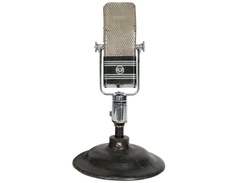

Pricing and availability
We compare 600+ stores and found this item at 1 store. Prices updated .
Store
Reviews
Price




Average Price: $3,450
High-end/Boutique
$499
$1500+
Price Tier
Budget
Standard
High-end
* Product prices and availability are updated by Equipboard every 24hrs and are subject to change. Equipboard may receive compensation for purchases made at participating retailers linked on this site. This compensation does not affect what products or prices are displayed, or the order of prices listed. For more information, please refer to our affiliate disclosure.
Description
Step into the realm of legendary sound with the RCA Type 44-BX, a ribbon microphone that has etched its name in the annals of broadcast and recording history. Its iconic status is complemented by a high-fidelity bi-directional design, capturing the essence of music with unparalleled clarity. The 44-BX boasts a corrugated aluminum ribbon so fine, it whispers the subtleties of sound into your recordings, making it a revered choice among audio professionals and enthusiasts alike. This microphone doesn't just capture sound; it breathes life into your music, ensuring every note and nuance is preserved in its truest form.
Key Features:
- High-fidelity bi-directional ribbon microphone, perfect for music recording and broadcast
- Features a 2" long, 1.8 microns thick corrugated aluminum ribbon
- Flat frequency response from 50Hz - 15kHz at a 3-foot distance, with a steep high-frequency rolloff
- Includes jumpers for two high-pass filter positions (V1, V2) for versatility in voice recording
- Iconic status and design, remaining a staple in studios worldwide since its production years (1932 - 1955)
Product specs
| Brand | RCA |
| Model | 44-BX Ribbon Microphone |
| Finish | Umber Gray |
| Year | 1940s |
| Made In | United States |
| Categories | Microphones |
FAQs
-
What is the primary application of the RCA Type 44-BX ribbon microphone?
-
The RCA Type 44-BX is primarily used for studio recording, particularly excelling in capturing vocals and orchestral instruments due to its smooth, natural sound and figure-8 polar pattern.
-
How does the RCA 44-BX handle sound from different directions?
-
The RCA 44-BX features a bi-directional (figure-8) polar pattern, capturing sound equally from the front and back while rejecting noise from the sides, making it ideal for studio environments with controlled acoustics.
-
What is the frequency response range of the RCA Type 44-BX?
-
The RCA Type 44-BX has a frequency response range from 50 Hz to 15 kHz, offering a warm and smooth sound ideal for a variety of recording applications.
-
Is the RCA Type 44-BX suitable for modern recording setups?
-
While the RCA Type 44-BX is a vintage microphone, it remains highly sought after for its unique sound quality. It can be integrated into modern setups with appropriate preamps and impedance matching transformers.
-
What makes the RCA Type 44-BX unique compared to other ribbon microphones?
-
The RCA Type 44-BX is renowned for its historical significance and unique sound character, featuring a smooth, natural response that has been favored in classic recordings, making it a prized piece for vintage microphone collectors and enthusiasts.
Videos

Cole Picks Vintage
RCA Ribbon Microphone Shootout - RCA 44-BX, RCA 77-DX, RCA 74-B
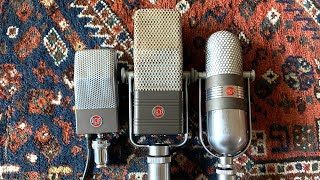
RCA Ribbon Microphone Shootout - RCA 44-BX, RCA 77-DX, RCA 74-B
Cole Picks Vintage
Around The Shop: RCA 44-BX

Vintage King
The RCA 44 | My Favorite Studio Microphone and How I got a killer deal

Matt McQueen
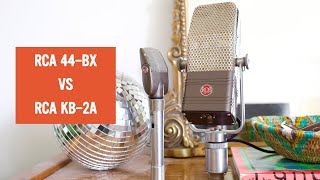
The RCA KB-2A Vs. RCA 44-BX Ribbon Microphones
Cole Picks Vintage
Reviews
PROS
-
Unmatched natural, smooth detail and ambient sound
-
Exceptional with a good preamp, especially tube preamps or Cloud Lifter
-
Versatile across applications; great for room ambience
-
Favored for its performance on vocals and drums
-
Maintains relevance 80+ years after introduction
-
Offers a darker sound with a great bottom end compared to competitors
-
Ideal for mid-side recordings with a dynamic or condenser mic
CONS
-
Requires a high-quality preamp with clean gain for full potential
-
Repair technicians necessary for maintenance, given its age
-
Not readily available; discontinued with only pricey reproductions existing
Owner Insights
We analyzed real musician discussions from forums and Reddit to find what players love, question, and tweak about RCA Type 44-BX.
Setup and maintenance
-
RCA 44-BX models have varying terminal boards and output impedances; the MI-4027-D variant has a 50/250 ohm configuration for positive and negative connections.
Source -
Proper grounding is crucial; the cable shield should connect to the terminal board screws, and the correct screw size is approximately #6, about 1/4" deep.
Source -
Ribbon microphones like the RCA 44-BX should be stored upright to prevent ribbon sag, but can be used horizontally if not left for extended periods.
Source
Features and functionality
-
The RCA 44-BX has a bass roll-off jumper with settings for music (M) and two voice options (V1 and V2), affecting bass response.
Source
Mods and upgrades
-
An on-off-on SPDT switch can replace the bass roll-off jumper, allowing easy switching among M/V1/V2 settings without modifying the mic's original cover.
Source -
The RCA 44-BX can be modified with a transformer upgrade using brands like Lundahl or Cinemag, enhancing frequency balance without drastically changing tonality.
Source
User experience
-
Owners highlight the mic's vulnerability to RFI, suggesting rotating it to minimize hum in environments with high electromagnetic interference.
Source -
Owners have reported memorable experiences, such as drummers being impressed by the pure sound when used as a front-of-kit mic with slight 1176 compression.
Source -
Users note that ribbon microphones, such as the RCA 44-BX, are more serviceable than condenser mics, making them a stable investment despite their perceived fragility.
Source
Use cases and applications
-
Renowned for capturing smooth, natural vocals and instrumental transients, the RCA 44-BX excels with modified ADM preamps for a detailed, euphonic sound.
Source -
The RCA 44-BX is highlighted for its character and vibe, making it a popular choice for drums and vocals in various recording settings.
Source
Build quality
-
Described as a "tank," the RCA 44-BX is notably heavy and requires a robust stand to support its substantial weight.
Source
Comparisons
-
When compared to other ribbons, the RCA 44-BX is praised for its creamy tone and solid bass, standing out among other classic ribbon mics like the Varacoustic and BK-11A.
Source -
Compared to Coles lip microphones, the RCA 44-BX is less fragile, as Coles are regularly used in high-impact environments like European sports broadcasts without issue.
Source
4.5 out of 5
Based on 1 Review and 2 Ratings

111
Yep one of the best vocals naturally natural
Your voice is your voice my singers for get about vocal reverb in a room chamber or overtones yep the best room mic ever if it is working repair technicians will be your key to a happy room
Artist usage
Add artist

Used during Hood's days as a session musician for FAME Studios, as mentioned in this May 17, 2013 Bass Player interview.
Hits by local favorites Sledge, Arthur Alexander, Clarence Carter, and others started to catch the attention of the national music industry, most notably Atlantic Records’ Jerry Wexler. Hood played trombone—not bass—on Aretha Franklin’s “I Never Loved a Man,” but he played bass on sessions for such R&B stalwarts as Wilson Pickett, Johnnie Taylor, and Etta James. He later played bass on Franklin’s “Call Me” and several other tracks.
“FAME had an old [Fender] Bassman amp that had only one speaker in it. We would record it with one of those old RCA 44 mics. When they learned about going direct, they started running me direct and miking me. Inevitably, they’d run out of tracks, so they would lose one of those. Usually the one they would keep was the direct track, so nowadays, I go direct. If I can, I like to have an amp, and they can mic it if they want.”


In this video, Marc is singing into an RCA 44 style microphone. Based on its condition and application, I assume it's not a replica like AEA has released in recent years, and based on the stripes on the lower part of the microphone's casing, I believe this is an RCA 44-BX.

.jpg)
Visible in this photo of Cole. Audio engineer John Palladino of Capitol Records mentioned his use of the 44-BX on Cole in this December 2012 Sound on Sound interview while discussing the Telefunken U47.
"Beforehand, when I'd worked at Radio Recorders, the art of applying equalisation was something we always wanted but couldn't achieve very well,” Palladino recalls. "Whenever something we were recording didn't sound right to us, we'd have to scrounge around for another mic that had the characteristic we were looking for. Then, as soon as we got the equalisers, we were able to get over that hurdle. The microphone we used the most back then — and which was excellent — was the [RCA] 44 [ribbon mic]. I used it for Nat Cole's vocals and all of the early Capitol stuff, but it had a mellow character and we couldn't get the brightest high end out of it."


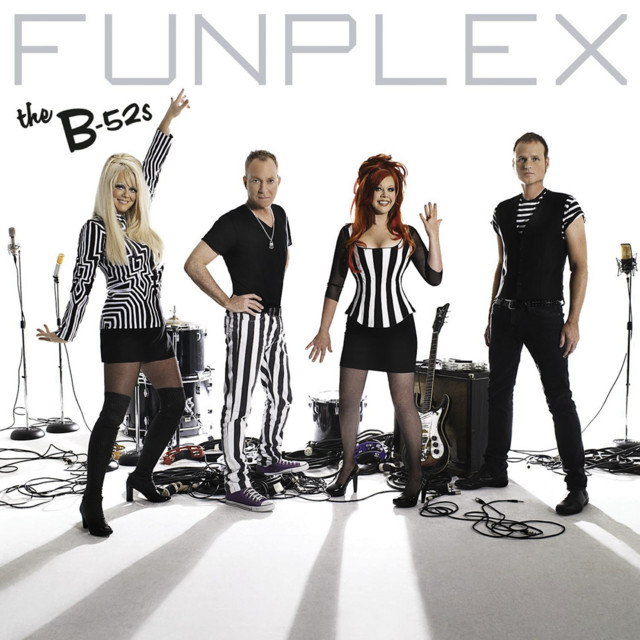
Used for the vocals on Funplex, as state by producer Steve Osborne in this April 2008 Mix Online interview.
What would you say were the key pieces of gear to the sound of this album?
One of the big things was the RCA 44BX on Fred Schneider’s vocal. That was stunning. As far as mixing, we had a Trident desk, so that was a big part of mixing the drum sounds.


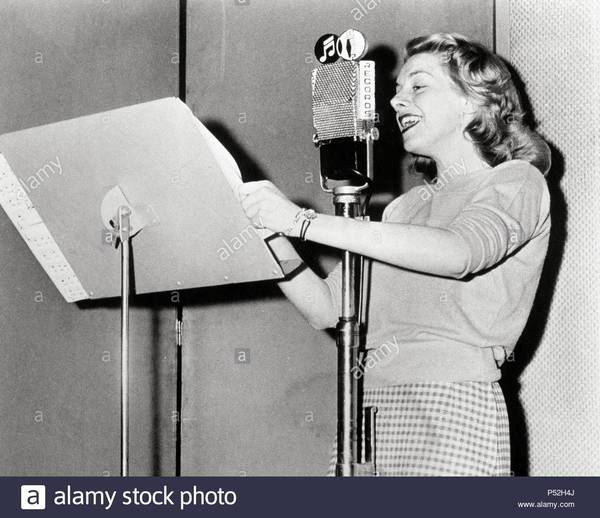
Visible in this photo at Columbia Records, as sourced from Alamy.

Album Usage
The RCA Type 44-BX has been featured on the following albums:

Genre Usage
Based on how artists on Equipboard use this gear, it is most commonly found in the following genres.
Used With
Based on how musicians on Equipboard use RCA Type 44-BX, it is most commonly used with the following gear.

-s.webp?v=1783290620)


-s.webp?v=1783260056)


Similar
Add recommendation1 alternative for RCA Type 44-BX, curated by the Equipboard community.

More RCA Ribbon Microphones

$1,799.99
in Ribbon Microphones Rank


.jpg?v=1783265542)

$1,449.99
in Ribbon Microphones Rank


$3,450.00
in Ribbon Microphones Rank


$895.00
in Ribbon Microphones Rank


$1,357.80
in Ribbon Microphones Rank


$2,200.00
in Ribbon Microphones Rank


$708.00 - $1,049.99
in Ribbon Microphones Rank


$1,499.00 - $1,599.00
in Ribbon Microphones Rank


$1,132.83 - $1,621.00
in Ribbon Microphones Rank


$349.00 - $464.00
in Ribbon Microphones Rank


$1,199.00 - $1,399.00
in Ribbon Microphones Rank


$999.00 - $1,439.00
in Ribbon Microphones Rank


$382.00 - $539.00
in Ribbon Microphones Rank


$2,317.94 - $2,599.00
in Ribbon Microphones Rank


$625.00 - $1,298.00
in Ribbon Microphones Rank


$149.00 - $249.00
in Ribbon Microphones Rank

$189.99 - $193.96
in Ribbon Microphones Rank


$95.00
in Ribbon Microphones Rank


$1,099.00 - $1,258.00
in Ribbon Microphones Rank


$937.55 - $1,599.00
in Ribbon Microphones Rank


$128.65 - $135.00
in Ribbon Microphones Rank

$225.00 - $349.00
in Ribbon Microphones Rank

$95.00 - $159.99
in Ribbon Microphones Rank

$2,589.00 - $4,299.00
in Ribbon Microphones Rank
.png?v=1783256553)


$35.00 - $169.00
in Ribbon Microphones Rank

$279.00 - $318.50
in Ribbon Microphones Rank

$2,159.00 - $3,242.00
in Ribbon Microphones Rank


$275.00
in Ribbon Microphones Rank


$4,149.00 - $5,349.00
in Ribbon Microphones Rank


Accessories & Related Items


-s.webp?v=1783177980)


Community setups


Gear Guides





Most Popular Ribbon Microphones
Most Popular Brands
-
Added to Equipboard on by
 sharlok
Gear IQ 174
-


