

Pricing and availability




Average Price: $2,011
High-end/Boutique
$300
$801+
Price Tier
Budget
Standard
High-end
* Product prices and availability are updated by Equipboard every 24hrs and are subject to change. Equipboard may receive compensation for purchases made at participating retailers linked on this site. This compensation does not affect what products or prices are displayed, or the order of prices listed. For more information, please refer to our affiliate disclosure.
Description
The Rivera Knucklehead II is a powerhouse in the world of guitar amplifier heads, designed for musicians who demand versatility and reliability. This all-tube amplifier delivers a robust sound that can handle everything from crisp cleans to ferocious leads, making it a favorite among rock and metal guitarists. The Knucklehead II is equipped with multiple channels, allowing players to seamlessly switch between rhythm and lead tones without missing a beat.
The amplifier’s responsive EQ controls give you precise command over your sound, while the presence and focus controls provide additional shaping to suit various playing styles and venues. Whether you're performing in a small club or at a large outdoor festival, the Knucklehead II ensures your guitar tone cuts through the mix with clarity and punch.
Moreover, the inclusion of an effects loop offers flexibility for integrating external pedals and processors, ensuring your setup can grow and adapt with your musical journey. Built with durable construction to withstand the rigors of touring, the Knucklehead II is not just an amplifier; it's a trusted companion on stage and in the studio.
Key Features:
- All-tube amplifier for authentic, warm sound
- Multiple channels for versatile tone options
- Responsive EQ with presence and focus controls
- Effects loop for seamless integration of external effects
- Durable construction for reliability in live performance settings
Product specs
| Brand | Rivera |
| Model | Knucklehead II 120-Watt Guitar Amp Head |
| Finish | Black |
| Year | 2000s |
| Categories | Guitar Heads |
| Color Family | Black |
| Electronics | Tube |
| Impedance | 16 ohms, 4 ohms, 8 ohms |
| Number of Channels | 2 Channels |
| Number of Inputs | 2 Inputs |
| Output Power (Watts) | 120 |
| Power Tube Type | 6L6 |
| Reverb | None |
FAQs
-
What kind of tones can I expect from the Rivera Knucklehead II for rock music?
-
The Rivera Knucklehead II is known for its powerful and versatile tones, offering a wide range from sparkling cleans to aggressive overdriven sounds, making it ideal for rock music.
-
Is the Rivera Knucklehead II suitable for live performances?
-
Yes, with its 120-watt output, the Rivera Knucklehead II is more than capable of handling live performances, delivering high volume and clarity even in larger venues.
-
How does the Rivera Knucklehead II handle pedals?
-
The Rivera Knucklehead II is well-regarded for its ability to take pedals, allowing for seamless integration with effects to expand your tonal palette.
-
Does the Rivera Knucklehead II offer a built-in reverb?
-
No, the Rivera Knucklehead II does not include a built-in reverb, so external reverb pedals or units would be necessary for adding reverb effects.
-
Can the Rivera Knucklehead II be used with different speaker cabinets?
-
Yes, the Rivera Knucklehead II supports multiple impedance settings (16 ohms, 4 ohms, 8 ohms), allowing compatibility with a variety of speaker cabinets.
Videos

akrocanth
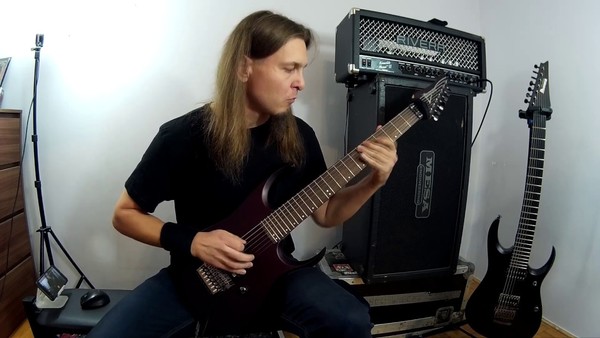
Dimarzio Blaze 7 - Metal (With TH3 & Rivera Knucklehead II)
Dimarzio Blaze 7 - Metal (With TH3 & Rivera Knucklehead II)
akrocanth
Seventh Seal - Save Breathe Shine (guitar playthrough) Rivera Knucklehead II w/ Dimarzio FRED
akrocanth
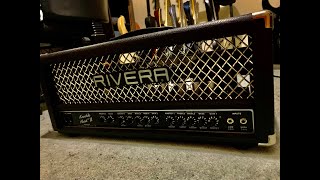
Rivera Knucklehead II

The Abducted
Reviews
Owner Insights
We analyzed real musician discussions from forums and Reddit to find what players love, question, and tweak about Rivera Knucklehead II.
Features and functionality
-
The KR100 model includes a subwoofer out, enhancing depth for drop-tuned guitars, notably useful for achieving a huge sound reminiscent of 90s nu-metal.
Source -
The amp is noted for being excessively loud, with some users finding it unmanageably so even compared to other high-powered amps like the Marshall 2205 and Egnater TOL50.
Source -
The M100 model is noted for its open and less compressed sound, providing clarity with high gain, and sports a distinct 80s metal aesthetic with its rat fur covering and metal front grill.
Source -
The Clubster Royale recording model includes a built-in mini rockcrusher, allowing for direct input to the front of house with cab simulations, enhancing its live performance capability.
Source
Comparisons
-
The KR100 is specifically noted for its connection to Slipknot's "All Hope is Gone" tone, while the Tre Reverb offers a different tonal palette.
Source -
The Knucklehead II is reputed to master the "Fender clean/Marshall dirt" sound more effectively than most other amps, attracting interest from those seeking this tonal versatility.
Source -
Some users prefer Rivera amps over Mesa Boogie for their ability to deliver a less compressed tone while maintaining high gain levels, appealing to those who find Mesas too compressed.
Source
Use cases and applications
-
The KR100 was popular during the rise of nu-metal and 7-string guitars, indicating its strength in handling low-tuned, heavy music styles.
Source -
The Knucklehead models are highlighted for their ability to handle a wide range of genres, from ambient rock to heavy metal, due to their tonal versatility and pedal compatibility.
Source
Build quality
-
Owners describe the Rivera Knucklehead II as "built like a tank" and extremely durable, despite its cumbersome size and weight.
Source
User experience
-
There are reports of a "harsh fizzy sound" on the lead channel when the gain is maxed and volume is down, described as normal due to the amp's gain structuring.
Source -
Owners of the Clubster Royale emphasize its versatility and portability, noting that it offers a huge sound in a smaller, lighter form factor, ideal for both studio and live use.
Source
5.0 out of 5
Based on 1 Review and 1 Rating

302
Incredibly Under-rated
You can read gobs of info online about the KH 100's, 55's, KHR's K-Tre's, etc. But there is scarce info on this sleeping beast, and I can't figure out why.
I'm absolutely stunned at how incredibly versatile this amp is. All of the typical Rivera buzzwords certainly apply in this case - "Fendery Cleans", "Marshall-meets-Mesa distortion", "Clear and quiet operation". I hate to sound like another overly-positive reviewer parroting other user's enthusiastic musisings, but I simply must agree.
I come from the single-channel-Marshall type world, and am used to being able to get all of the gain and clean tones I need from careful volume-pot adjustments on my guitar. Every other high-gain, multi-channel, modern style amp I've tried seems to sacrifice the touch-sensitivity that I've gotten so used to for more options and buttons. From my experience, a guitar which cleans up beautifully through a JMP or JCM800 will get muddy and lifeless through a mega-channel-gain-monster type amp. Sure, a 4-channel Boogie or JVM IS versatile, but to really get the most out of those kinds of amps I find myself tap-dancing all the time, trying to get the varying levels of breakup that other amps can easily achieve with slight volume adjustments. That's not to say you can't operate a Rivera in much the same way - with footswitchable boosts on both channels it's definitely set up for that, but I find that once you get either channel dialed in JUST RIGHT, you'll never want to plug the footswitch in.
I primarily use channel 2, set for a boosted-marshall type tone that honestly sounds better than my '86 JCM800. That was a big surprise. A lot of owners say that Rivera amps are a "jack-of-all-trades..." type situation: "It'll never REALLY sound like a Marshall...". I beg to differ. I think what throws people off is what an immense range the EQ and gain controls have, the voicing of the channel can change much more drastically than on a lot of amps. There is a learning curve when it comes to dialing it in, and as a general rule of thumb, start with everything at about 5 and slowly add or subtract one control at a time. There is a riduculous amount of bass on tap, as the KHII's were made during the nu-metal fad - don't be afraid to dial the bass control back to 3 or 4, any more can be overwhelming. I keep all of the push-pull pots in the "down" position, but even more extreme tone sculpting abounds when you start pulling them. If you want to venture into crushing, scooped mids tones these are the ticket.
Channel 1 is kind of a love-letter to Fender tones, and is probably really similar to some of the circuits Paul Rivera designed while working for them. Keep in mind that when I say "Fender" I don't mean just "sparkling blackface cleans" like most people assume when they hear the "F" word. Utilizing the push-pull controls will yield anything from the aforementioned cleans to tweed-esque breakup and beyond. I used to own a '65 blackface Fender Bassman which sounded godly when cranked up, and the KHII does a really close approximation of that. For me, having this channel is just a bonus - whenever I feel the need to rip some SRV it delivers in spades.
For someone in a cover-band doing multiple genres and styles, the dichotomy between Channels 1 and 2 would be invaluable. It really is like having two amps in a box. Sure, if you choose tubes and speakers to work best with one channel over the other, it might not deliver 100% in all areas. I think this is where the naysayers are drawing their experience from. Obviously, a Fender type circuit run with Tung-Sol 12AX7's into Vintage 30's isn't going to sound as "chime-y, sparkly, lush" etc. Conversely, a hot-rodded Marshall with RCA Long Plate 12AX7's and 12AT7's into alnico Jensens isn't going to have all the "crunch, aggression, brown-ness" etc. It's just a matter of finding a happy medium. For recording, you could have two sets of tubes and a couple cabinets with different speakers set up for either channel, and I'd bet if you did even the most omnipotent cork-sniffers would be hard pressed to tell the difference between it and the "real deal(s)".
Build quality and engineering is second to none. It's "built likea brick sh*thouse" to use the parlance of our times. Head-and-shoulders above what most current big-names are doing. Out of any amp I've owned (Mesa, Marshall, Soldano, Peavey, Vox, Orange, Fender) it has the lowest idling noise BY FAR. At a loud stage volume it has barely any hum or hiss. I don't know how they achieved that and still made this beast as ungodly loud as it is.
The biggest tip I could give with this amp is to use the effects loop as a master volume. I keep the front-panel volumes set to 10, then I run a short patch cable in the Send and Return jacks. Paul Rivera advises starting with the Send and Return levels both at 4 and using the front panel Masters, but through experimentation I found it sounded best when run with the channel masters dimed and setting the "Send" level to 10. Then I use the "Return" level as my master volume, and it works beautifully. In truth, running it without this gives the amp a completely different character. It's a lot more boomy, and is painfully buzzy until you hit about 5 on the channel master volume, which is ridiculously loud for most applications. Running it as I've described with the settings I use sounds really similar to some of the PPIMV modded Plexi clones I've been lucky enough to try.
My settings for an awesome, classic hotrod Marshall tone that's got enough juice for solos and still cleans up:
Pres: 5, Focus: 5.5, Master: 10, Treb: 5, Mid: 5.5, Bass: 3.5, Gain: 7
I run my guitar(s), usually loaded with Duncan Distortions or JB's, straight in with a high quality cable and get everything I need out of one channel and my volume pot.
YMMV, but for me it's just about perfect.
Artist usage
Add artist

This image shows Miguel Rascon playing with this amp.

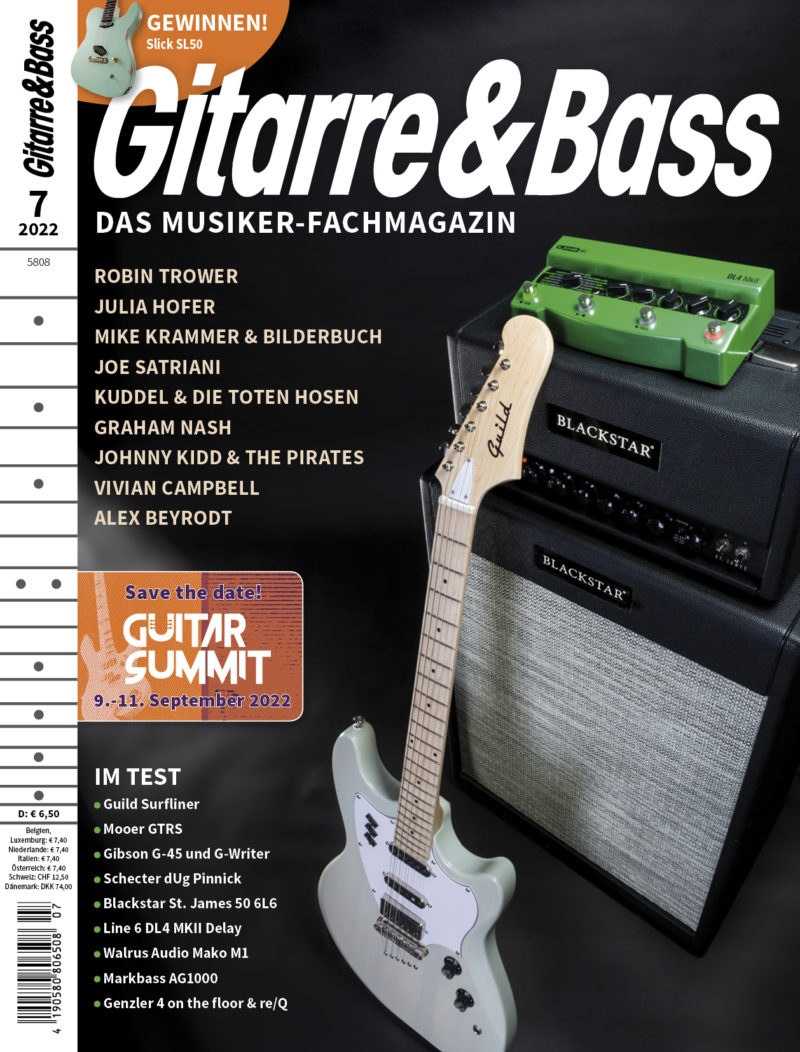
The 07/22 issue of German guitar magazine Gitarre&Bass lists Snacky Mike's Equipment. As opposed to his Axe FX rig on former tours, Mike uses a Wet/Dry/Wet rig with three Rivera Knucklehead 55 tops and three Marshall 1960BX cabinets on 2022s "Gelb ist das Feld" tour.

Genre Usage
Based on how artists on Equipboard use this gear, it is most commonly found in the following genres.
Used With
Based on how musicians on Equipboard use Rivera Knucklehead II, it is most commonly used with the following gear.


More Rivera Guitar Amplifier Heads
-m.webp?v=1784612539)


.jpg?v=1784353662)


$567.43 - $3,421.95
in Guitar Amplifier Heads Rank


$1,282.00 - $1,999.99
in Guitar Amplifier Heads Rank


$1,800.00 - $3,299.00
in Guitar Amplifier Heads Rank


$699.00 - $1,999.99
in Guitar Amplifier Heads Rank


$1,349.00 - $1,848.00
in Guitar Amplifier Heads Rank


$999.00 - $2,398.00
in Guitar Amplifier Heads Rank


$240.00
in Guitar Amplifier Heads Rank

-m.webp?v=1784631798)
$1,699.00 - $2,899.99
in Guitar Amplifier Heads Rank


$775.52 - $2,449.99
in Guitar Amplifier Heads Rank


$600.00 - $949.00
in Guitar Amplifier Heads Rank


$600.00
in Guitar Amplifier Heads Rank


$2,028.29 - $3,199.99
in Guitar Amplifier Heads Rank

$2,999.00 - $3,508.14
in Guitar Amplifier Heads Rank


$1,499.00 - $2,149.99
in Guitar Amplifier Heads Rank


$2,199.99 - $2,299.99
in Guitar Amplifier Heads Rank


$1,659.00 - $3,421.95
in Guitar Amplifier Heads Rank


$729.00 - $1,199.00
in Guitar Amplifier Heads Rank


$1,890.00 - $2,749.00
in Guitar Amplifier Heads Rank


$1,399.99 - $1,519.99
in Guitar Amplifier Heads Rank


$1,399.99 - $1,519.99
in Guitar Amplifier Heads Rank


$1,379.00 - $1,699.00
in Guitar Amplifier Heads Rank


$1,545.94 - $1,699.99
in Guitar Amplifier Heads Rank
.jpeg?v=1784600206)

$715.00 - $1,359.00
in Guitar Amplifier Heads Rank


$149.00 - $309.00
in Guitar Amplifier Heads Rank


$1,999.00 - $3,149.00
in Guitar Amplifier Heads Rank


-m.webp?v=1784631809)
$119.00 - $159.00
in Guitar Amplifier Heads Rank


$1,599.00 - $2,099.00
in Guitar Amplifier Heads Rank


$1,799.00 - $2,499.00
in Guitar Amplifier Heads Rank

Accessories & Related Items

-s.webp?v=1784547877)
-s.webp?v=1784612344)


Community setups


Similar


Gear Guides







Most Popular Guitar Amplifier Heads
Most Popular Brands
-
Added to Equipboard on by
callsign_wontonGearIQ 302
-


