This page about Yamaha SA-70 is a stub. You can help improve it:


Pricing and availability




* Product prices and availability are updated by Equipboard every 24hrs and are subject to change. Equipboard may receive compensation for purchases made at participating retailers linked on this site. This compensation does not affect what products or prices are displayed, or the order of prices listed. For more information, please refer to our affiliate disclosure.
Description
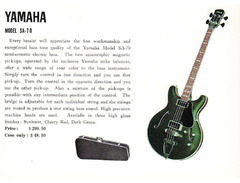
Discover the Yamaha SA-70, a distinctive addition to any bassist's collection. This electric bass guitar is a harmonious blend of vintage design and modern craftsmanship, offering both seasoned musicians and budding bassists a reliable and expressive instrument. Drawing influence from classic semi-hollow body styles, the SA-70 delivers a warm, resonant tone that's perfect for a variety of genres, from jazz and blues to rock and funk.
Crafted with precision, the SA-70 features a semi-hollow body that not only enhances its visual appeal but also contributes to its rich sound. Its dual humbucking pickups provide a versatile range of tones that can be easily adapted to suit your playing style. Whether you’re recording in the studio or performing live, the SA-70 offers a balanced output that ensures your sound is both clear and powerful.
The neck of the SA-70 is designed for comfort, allowing for smooth transitions across frets. This makes it an ideal choice for long jam sessions or live performances where comfort and playability are key. Additionally, its vintage-inspired aesthetics are sure to capture attention, making it not just an instrument, but a statement piece on stage.
Key Features:
- Semi-hollow body design for enhanced resonance and tone
- Dual humbucking pickups for versatile sound options
- Comfortable neck profile for easy playability
- Vintage-inspired aesthetics
Videos

Mateusz Piotrowski
Yamaha SA70 Hollowbody Bass Japan 1966
Yamaha SA70 Hollowbody Bass Japan 1966
Mateusz Piotrowski
A VERY SPECIAL Bass, A Very Special Cause // 1967 Yamaha SA-70 Hollow Body Bass

The Bass Channel

Yamaha SA 70 Original Vintage Bass Guitar Demo (no talking)

Sound Xperience
Reviews
Owner Insights
We analyzed real musician discussions from forums and Reddit to find what players love, question, and tweak about Yamaha SA-70.
User experience
-
Owners emphasize the Yamaha SA-70's beefy, resonant tone with a distinctive midrange growl, outperforming even vintage Fender Coronado II basses.
Source -
After watching Josh Homme play the SA-70, one owner purchased it and shared their satisfaction with its performance.
Source -
Some owners believe the Yamaha SA-70 uses flatwound strings for specific tones, while others hear roundwounds, indicating its versatile tonal capacity.
Source
Comparisons
-
The Yamaha SA-70 is compared to Hofner hollow bodies, noted for superior build quality and tonal clarity, unlike Hofners which can feel fragile.
Source -
The Ibanez Artcore series is recommended as an alternative for those seeking hollow body basses, noted for their quality and affordability.
Source -
The Yamaha SA-70's intonation issues are likened to a detuned sound, setting it apart from the more precise tones of a Fender P-Bass.
Source
Features and functionality
Use cases and applications
Mods and upgrades
-
Owners suggest removing the pickguard for a cleaner look, and some may opt to change the pickups for a personalized sound.
Source
4.5 out of 5
Based on 0 Reviews and 2 Ratings
Artist usage
Add artist
He used it to record 'Mantra' for Dave Grohl's Sound City project (01:38)
He can also be seen playing it with QOTSA in this video https://www.youtube.com/watch?v=VxX5Mj9Fc8A during Burn The Witch (23:43).

.jpg)
Alex Turner can be seen playing a Yamaha SA-70 bass in this photo.
This bass belongs to Josh Homme and was used during the recording sessions for Humbug.

At 1:38 of this mini-documentary, Reznor can be seen playing a Yamaha SA-70.


John Paul Jones can be seen playgng Yamaha SA-70 at 0:01 in this video.


Troy can be seen playing Josh Homme's Yamaha SA-70 bass here.


This photo, from this Sound on Sound article, shows Nick playing a Yamaha SA-70.

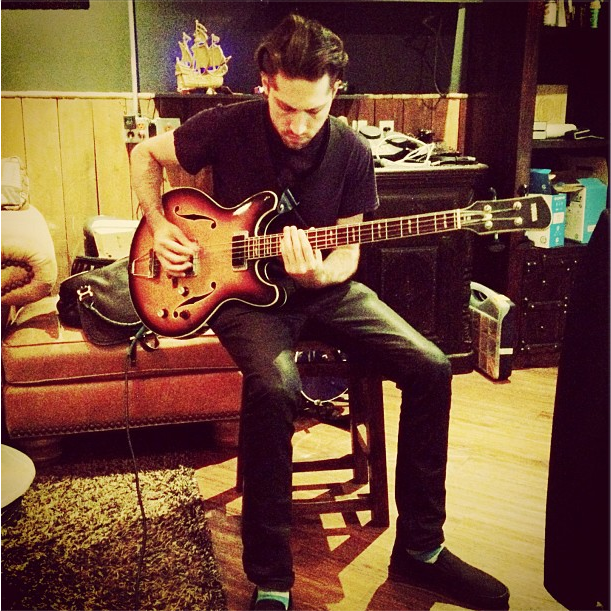
Shuman can be seen playing a Yamaha SA-70 in this photo.

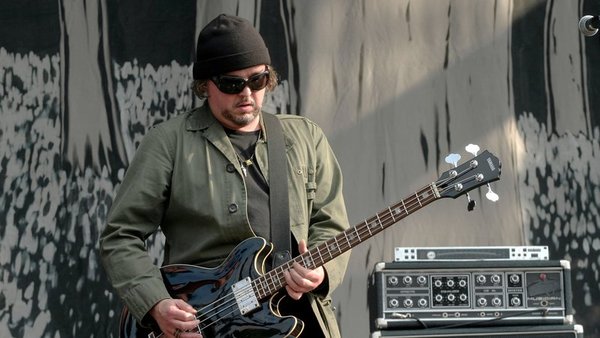
In this photo and in QOTSA concerts when Alain was in the group, he could be seen playing a black Yamaha sa-70


Hughes can be seen playing a Yamaha SA-70 bass in this photo.


In the image, Ahmad Dhani is seen with a red Yamaha SA-70 bass guitar positioned behind a woman.

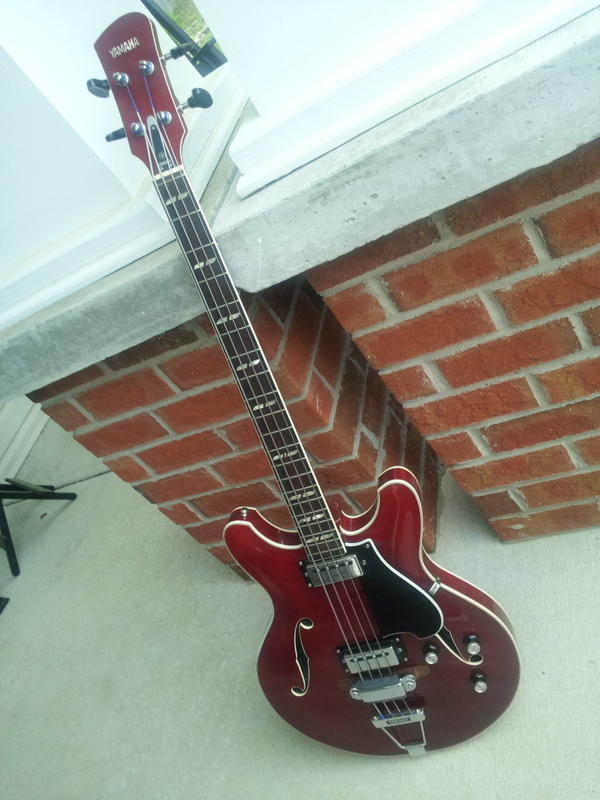
Justin Cary uses a Cherry Yamaha SA-70 bass, which is based on the Gibson ES-335, as evidenced by the image provided.
.jpeg?v=1775761011)
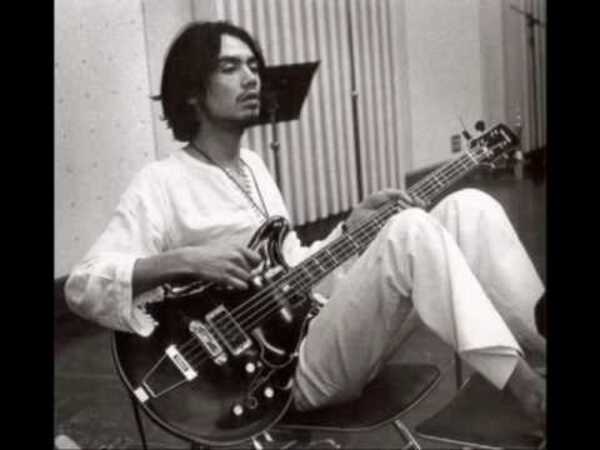
Album Usage
The Yamaha SA-70 has been featured on the following albums:


Genre Usage
Based on how artists on Equipboard use this gear, it is most commonly found in the following genres.
Similar
Add recommendation1 alternative for Yamaha SA-70, curated by the Equipboard community.

The Yamaha SA-70 and SA-75 are vintage semi-acoustic basses manufactured in the late 1960s and 70s. The main differences lie in their internal construction, control layout, and cosmetic details.
Comparison of Key Differences
Internal Construction SA-70: Features a full-hollow (or nearly full-hollow) body design. It is exceptionally lightweight and produces a deep, resonant acoustic tone. SA-75: Built with a semi-hollow structure featuring a wooden center block. This provides more sustain and makes the bass more resistant to feedback compared to the SA-70.
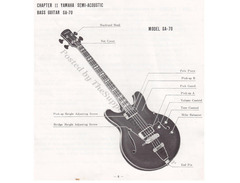
Control Configuration SA-70: Equipped with 1 Volume, 1 Tone, and Yamaha’s unique "Balancer Control" for blending the pickups. SA-75: Uses a more standard 2 Volume, 1 Tone layout. Pickup switching and blending follow a conventional style rather than the balancer system.
Inlay Design SA-70: Features standard rectangular block inlays on the fretboard. SA-75: Adopts the "Chevron" (V-shaped) inlays similar to higher-end models like the SA-90.
Color Variations SA-70: Commonly found in Sunburst, Red, and a distinctive Dark Green. SA-75: Most frequently seen in Natural or Sunburst finishes.
Common Features Both models utilize a 30.5-inch (770mm) short scale, making them easy to play for those with smaller hands. They both deliver that warm, "thumpy" vintage character unique to hollow-body basses. In short, choose the SA-70 if you want a lightweight, acoustic feel, or the SA-75 if you prefer better feedback control and modern playability.
More Yamaha Electric Basses

$294.16 - $299.99
in Electric Basses Rank
.png?v=1784409024)


$319.99 - $661.80
in Electric Basses Rank


-m.webp?v=1784460623)
$429.00 - $477.00
in Electric Basses Rank


$185.96 - $259.99
in Electric Basses Rank


$379.99 - $419.99
in Electric Basses Rank


$3,718.67 - $4,099.99


-m.webp?v=1784462813)
$661.80 - $999.00


$649.00 - $649.99


$699.99 - $779.99


$3,488.00 - $4,099.99
.jpg?v=1770759918)


-m.webp?v=1784440491)
$3,198.69 - $4,099.99
.png?v=1783959101)


$224.99 - $299.99


Community setups


Gear Guides
.webp)


Most Popular Electric Basses
Most Popular Brands
-
Added to Equipboard on by
 miggityfriggity
GearIQ 5535
-


