The Quiet Legend: How the Marshall BluesBreaker Became the Blueprint for Modern Overdrive

By Gear Experts
By Gear Experts
Table of Contents

Equipboard
Equipboard is the world's largest community of artists and their gear. Read our review process.
We are reader-supported. When you buy through links on our site, we may earn an affiliate commission. Learn more.
Our Picks


In the world of guitar pedals, some legends are born from explosive debuts and instant acclaim. Others simmer quietly in the background, only to emerge decades later as the unsung heroes of tone. The Marshall BluesBreaker belongs firmly in the second category. This unassuming gray box spent years collecting dust on music store shelves, only to become one of the most sought-after and influential overdrive circuits in guitar history.
What makes this story particularly fascinating is how a pedal that was initially overlooked has shaped the sound of modern guitar music. From John Mayer's silky blues tones to countless boutique pedal builders who've made careers cloning its circuit, the BluesBreaker's journey from forgotten footnote to holy grail represents one of the most remarkable comebacks in gear history.
Origins of an Icon
The BluesBreaker pedal's story begins not in the 1990s when it was released, but decades earlier with an amplifier that would define a generation of guitar tone.
The Bluesbreaker Amp Legacy
The Marshall Model 1962 combo amplifier earned its "Bluesbreaker" nickname through one of the most legendary recording sessions in rock history. When Eric Clapton plugged his Gibson Les Paul into this 30-watt, 2x12 combo for John Mayall's Bluesbreakers album in 1966, he created what many consider the definitive British blues tone. The warm, singing sustain and rich harmonic content of this setup became the gold standard for blues rock guitar.
This amp established Marshall's reputation for delivering that perfect balance of clean headroom and musical breakup that guitarists crave. The 1962 combo offered something special: it could stay relatively clean at moderate volumes while adding just enough harmonic saturation to make single notes sing and chords bloom with natural compression.
The Pedal's Humble Beginnings
Fast forward to 1991, and Marshall decided to capture this legendary amp tone in pedal form. The BluesBreaker pedal arrived as part of Marshall's "Black Box" series, alongside the ShredMaster and DriveMaster. While its siblings focused on high-gain aggression for the era's metal and grunge trends, the BluesBreaker took a different approach entirely.
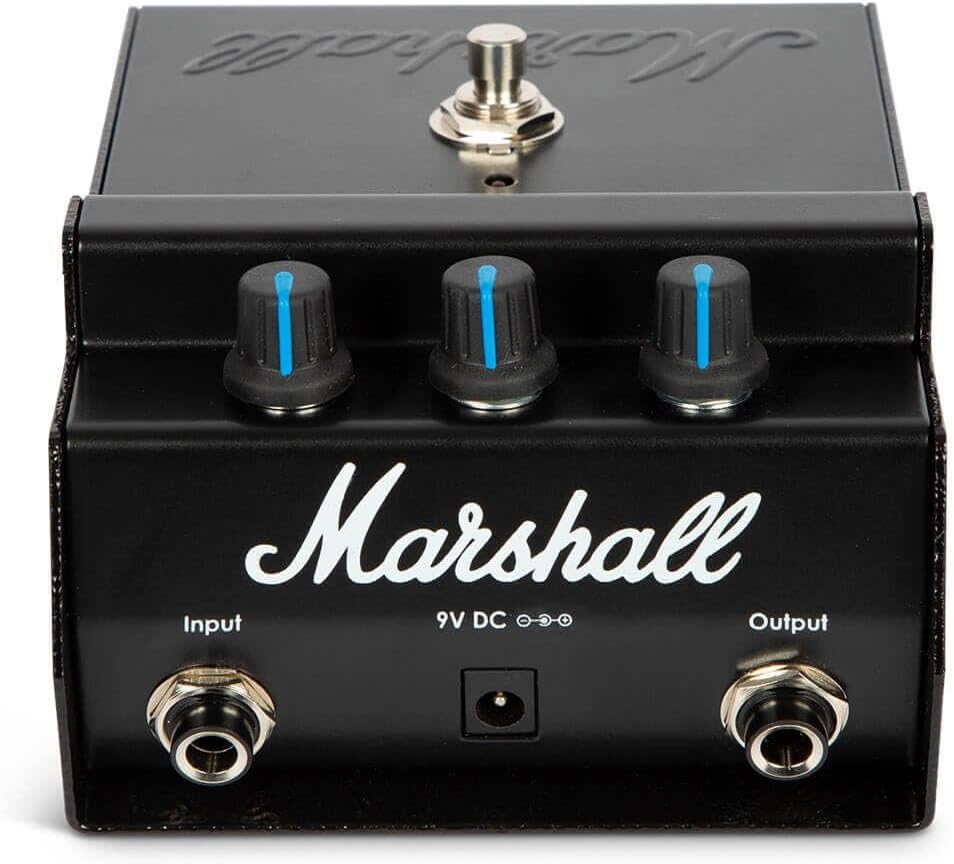
The pedal featured a simple control layout: Level, Tone, and Drive knobs that offered subtle enhancement rather than dramatic transformation. This restraint proved to be both its greatest strength and initial commercial weakness.
The Disappearing Act and Rediscovery
Marshall discontinued the BluesBreaker in the mid-1990s after modest sales, but the internet age would prove to be its salvation. Guitar forums and online communities in the 2000s began buzzing about this forgotten gem. Players who had dismissed it years earlier started digging through closets and hitting up music stores, searching for these gray boxes that suddenly seemed precious.
The pedal's association with John Mayer during his Continuum era sent demand through the stratosphere. Original BluesBreakers that once sold for $50 used were commanding $800 to $1,200 on the vintage market, turning a overlooked effect into one of the most expensive and sought-after overdrives ever made.
The Sound That Changed Overdrive
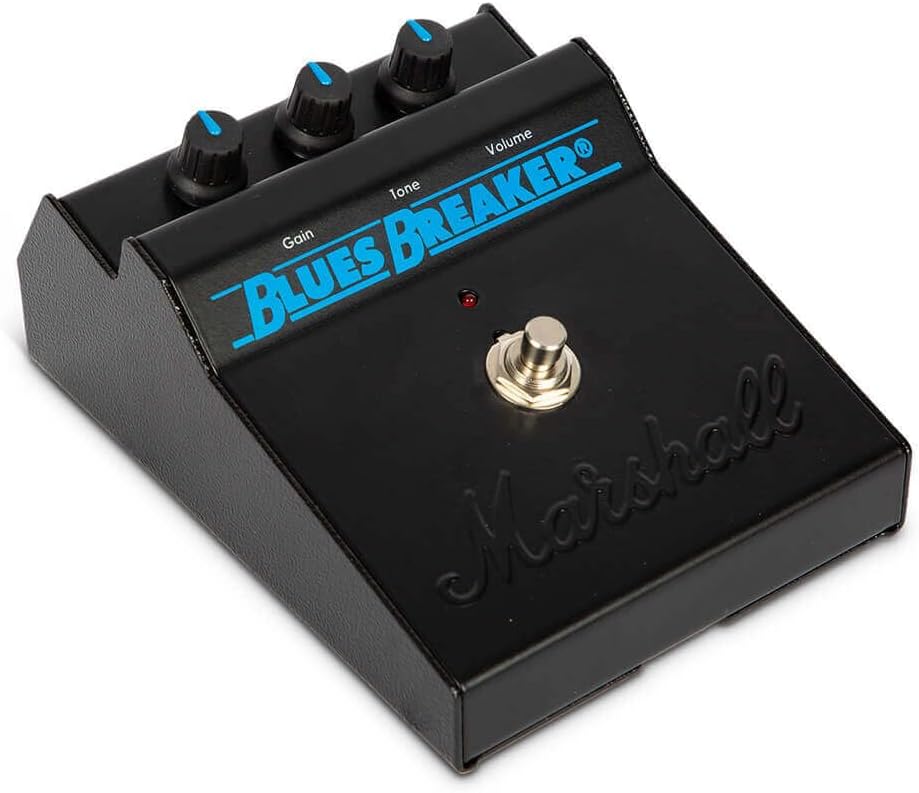
Understanding why the BluesBreaker became so revered requires diving into what makes its sonic character so distinctive and musically useful.
Transparency in Action
When guitarists talk about "transparent" overdrive, they're describing a pedal that enhances your existing tone rather than replacing it with its own character. The BluesBreaker excels at this approach, acting more like a magnifying glass for your guitar and amp combination than a heavy-handed tone sculptor.
Unlike the Ibanez Tube Screamer's pronounced mid-frequency boost and bass cut, the BluesBreaker maintains a relatively flat EQ response. This means your guitar's natural voice comes through clearly, whether you're playing a bright Telecaster or a warm Les Paul. The pedal adds gentle compression and harmonic richness without fundamentally altering your instrument's character.
Dynamic Response and Touch Sensitivity
The BluesBreaker's most beloved characteristic is its incredible sensitivity to your playing dynamics. Light picking yields clean, crystalline tones with just a hint of warmth, while digging in with your pick produces singing sustain and natural compression. This responsiveness makes it feel less like an effect and more like an extension of your playing technique.
Rolling back your guitar's volume knob reveals another layer of the pedal's versatility. At lower volumes, it cleans up beautifully while maintaining that enhanced clarity and presence that makes every note feel more alive and three-dimensional.
Pedalboard Integration and Amp Pairing
The BluesBreaker shines brightest when paired with clean or edge-of-breakup amplifiers. Fender Twin Reverbs, Vox AC30s, and smaller Marshall combos provide the perfect foundation for the pedal's transparent enhancement. Many players use it as an "always-on" effect, setting it for subtle enhancement that makes everything sound more polished and present.
In multi-pedal setups, the BluesBreaker typically works best early in the signal chain, often serving as a foundation for other overdrives and distortions. Its clean low-end response and open midrange make it an ideal platform for stacking additional gain stages without creating muddy or compressed results.
Players and Musical Impact

The BluesBreaker's influence extends far beyond any single genre, shaping the sound of modern guitar across blues, rock, country, and indie music.
John Mayer's Definitive Statement
John Mayer's use of the BluesBreaker during his Continuum period represents perhaps the most influential endorsement any overdrive pedal has ever received. His silky, singing lead tones on tracks like "Slow Dancing in a Burning Room" and "Gravity" demonstrated the pedal's ability to deliver professional-quality results in world-class recordings.
Mayer's approach centered on using the BluesBreaker as a foundation tone, often stacked with other pedals for additional gain or color. His setup proved that transparent overdrive could be just as compelling and musical as more aggressive alternatives, inspiring countless players to seek out similar tones.
Broader Musical Applications
The pedal's influence appears in countless indie rock and modern blues recordings, where its ability to enhance rather than dominate makes it perfect for layered arrangements and subtle tone shaping.
Market Value and Collectibility
The BluesBreaker's transformation from bargain bin find to vintage treasure represents one of the most dramatic value increases in pedal history.
The Vintage Market Explosion
Original 1991 BluesBreakers now command premium prices on the used market, with clean examples selling for $800 to $1,200 or more. This dramatic appreciation reflects not just collector interest, but genuine demand from working musicians who want the original circuit's specific characteristics.
The pedal's rarity adds to its mystique. Marshall's relatively short production run means fewer units exist compared to mass-produced alternatives, creating a supply and demand situation that drives prices ever higher.
Impact of Reissues and Modern Market
Marshall's decision to reissue the BluesBreaker helped stabilize the vintage market somewhat, giving players access to the original circuit at reasonable prices.
The Modern Legacy

The BluesBreaker's influence extends far beyond its original form, spawning an entire generation of inspired designs and boutique interpretations.
The King of Tone Phenomenon
No discussion of BluesBreaker legacy is complete without mentioning Analog Man's King of Tone. This dual-drive pedal takes the basic BluesBreaker circuit and elevates it with careful component selection, modified EQ response, and exceptional build quality. The KoT's legendary waiting list and cult following prove that players will wait years for what they consider the definitive version of this classic circuit.
Mainstream Modern Options
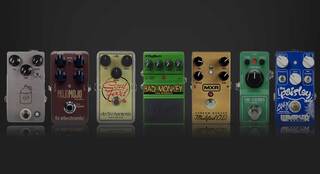
Today's market offers numerous high-quality alternatives for players seeking BluesBreaker-inspired tones. The JHS Morning Glory provides transparent drive with a useful bright cut switch for taming harsh amplifiers. Browne Amplification's Protein offers both BluesBreaker and Tube Screamer circuits in one enclosure, giving players maximum flexibility. MXR's Duke of Tone, created in collaboration with Analog Man, brings King of Tone DNA to the masses at an accessible price point.
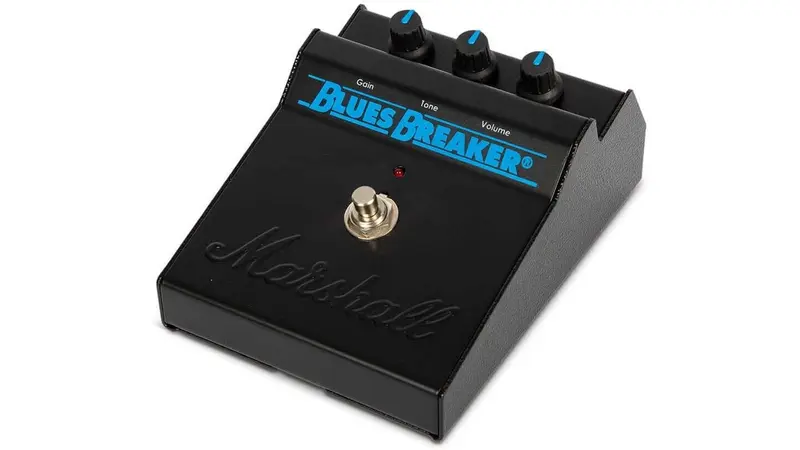
Marshall's own BluesBreaker Reissue offers nostalgic appeal with modern reliability, perfect for players who want the original experience without vintage market prices.
Marshall BluesBreaker Pedal
5.0 (26)




- Warm, punchy drive tone mimics smoothly overdriven tube amps
- Offers substantial value retention over time
- Versatile; enhances both clean boosts and throaty 70s/80s tones
- Compatible with various amps, guitars, and effects for a stable sound
- See 4 more
- Original version praised for better mids, but newer versions seen as more versatile
- Some components, like pots and knobs, can be low quality and noisy
- Can be replicated by many other overdrive pedals on the market
See how artists use this





.jpg)


Marshall BluesBreaker Vintage Reissue



Average Price: $169
Standard/Professional
$50
$176+
Budget
Standard
High-end
- "Key to Tone Heaven," even surpassing YouTube expectations
- Nails John Mayer's Continuum tones effortlessly
- Versatile, from clean boost/EQ to medium gain drive
- Amp-like quality, adds gain and compression without muddiness
- See 5 more
- Requires high volume settings for optimal sound
- Volume level might not be as powerful as expected
- Slightly more compressed than the '90s original
- Some may find the tonal difference from the vintage model less warm
- See 1 more


Frequently Asked Questions
Is the Marshall BluesBreaker still made?
Yes, Marshall currently produces a reissue of the original BluesBreaker pedal. This modern version faithfully recreates the original circuit while offering improved reliability and consistent quality control.
What's the difference between the BluesBreaker and the King of Tone?
The King of Tone began as a modified BluesBreaker circuit but evolved into its own refined design, featuring upgraded components, nuanced EQ tuning, and dual drive sections. It’s widely regarded as a boutique evolution of the classic Marshall concept, offering greater versatility and build quality.
Is the BluesBreaker better than a Tube Screamer?
Neither pedal is objectively "better" since they serve different purposes. The BluesBreaker offers transparent enhancement that preserves your guitar and amp's natural character, while the Tube Screamer provides pronounced midrange boost and tighter bass response. Your choice depends on whether you want subtle enhancement or more dramatic tone shaping.
Conclusion

The Marshall BluesBreaker's journey from overlooked oddity to legendary circuit proves that great tone doesn't always announce itself with fanfare. Sometimes the most influential pieces of gear are the ones that work so naturally, so transparently, that their impact only becomes clear in retrospect.
Today's thriving market of BluesBreaker-inspired pedals stands as testament to the enduring appeal of transparent overdrive. Whether you're chasing John Mayer's singing sustain, building a foundation for complex drive stacks, or simply want your guitar to sound like a better version of itself, the BluesBreaker philosophy offers something timeless and musically satisfying.
The pedal's legacy lives on not just in vintage collector circles, but in the hands and ears of working musicians who understand that sometimes the best effect is the one you don't notice.
Top Ranked Overdrive Effects Pedals on Equipboard
-m.webp?v=1783868161)

-m.webp?v=1783868166)


About the authors
Michael R. Pierce is the co-founder of Equipboard and a lifelong musician with over 25 years of experience as a guitarist and gear enthusiast. He blends solid music theory chops (thanks to formal training in guitar, piano, and trumpet) with real-world experience, always exploring and experimenting across genres like rock, blues, and hip-hop. Michael launched Equipboard in 2013 after graduating from The University of Texas at Austin, leveraging his unique blend of musical passion, technological acumen, and community building. His current go-to rig features a Fender American Original ‘50s Telecaster, Analogman King of Tone, Strymon Flint, and a Fender ‘57 Custom Champ. Read more


.jpg?v=1783828864)






.jpg)



.webp)