Table of Contents

Equipboard
Equipboard is the world's largest community of artists and their gear. Read our review process.
We are reader-supported. When you buy through links on our site, we may earn an affiliate commission. Learn more.
Ever wondered how your favorite guitarists achieve rich, layered tones with endless depth? The secret often lies in a technique called "stacking overdrive pedals." While a single overdrive pedal can transform your tone, combining two or more opens up a world of sonic possibilities that elevate your playing from bedroom jams to professional-sounding leads.
Think of overdrive pedals as different colors on an artist's palette; one color is beautiful, but blending them thoughtfully creates something uniquely yours. Understanding how to stack overdrives will give you the tools to craft your signature sound.
In this guide, we’ll explore everything from the basics of overdrive to advanced stacking techniques, breaking down different types of overdrive pedals, sharing proven combinations, and helping you avoid common pitfalls. Most importantly, we’ll focus on practical, real-world applications that you can start experimenting with right away. This revision condenses the message while maintaining the original intent and clarity.
Understanding Overdrive Basics

When you're just starting your tone-crafting journey, it's crucial to grasp what overdrive actually does to your guitar signal. Consider overdrive as your amp's best friend—it's the gentle push that transforms your clean tone into something with a bit more character and warmth. Unlike distortion pedals that dramatically alter your sound, overdrive pedals enhance what's already there.
Natural Amp-Like Response
The magic of overdrive lies in its ability to simulate what happens when you push a tube amp hard. Think of it like turning up a vintage amp to that sweet spot where notes bloom and chords have extra richness. Your guitar's natural voice stays intact, but with added harmonic content that makes every note more engaging. When you play through an overdrive, you're not just adding gain—you're adding dimension to your tone.
Dynamic Interaction
Your picking intensity matters with overdrive. Play softly, and you'll get subtle warmth; dig in harder, and you'll hear more grit. This natural response is what makes overdrive pedals so musical and inspiring to play through. .
The Art of Stacking
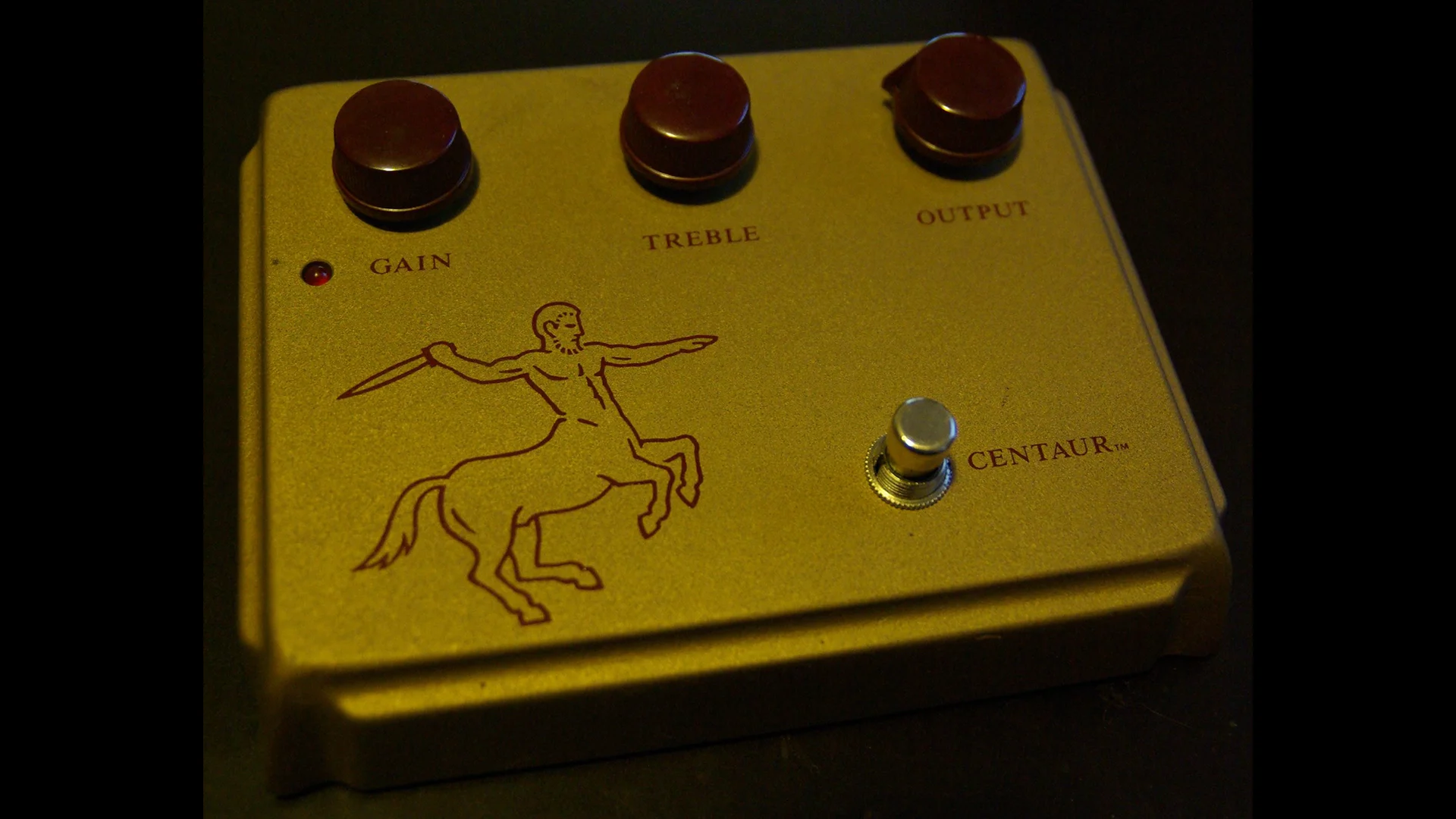
Stacking means using two or more overdrive pedals together in your signal chain. Stacking overdrive pedals isn't just about getting more gain - it's about creating new tonal possibilities. Think of it like cooking: while using more salt won't make a dish better, combining different seasonings creates complex, interesting flavors. The same principle applies to overdrive pedals.
Why Stack Overdrives?
Instead of cranking a single pedal for more gain, stacking lets you combine different pedal characteristics for richer, more complex tones. When you stack overdrives, each pedal contributes its unique flavor to your sound. One pedal might add warmth and sustain, while another brings clarity and presence. This approach gives you more control over your tone than any single pedal could provide.
Signal Chain Fundamentals
Understanding how to order your pedals is crucial for achieving the best results. The order of your overdrives dramatically affects your overall tone - much like how the order of effects in a recording studio shapes the final mix. For instance, placing a transparent overdrive after a mid-focused one gives you a different character than the reverse setup.
Understanding Gain Staging
Think of gain staging like a series of volume controls that each add their own flavor to your sound. When stacking overdrives, the way you set each pedal's gain and volume determines not just how much distortion you get, but how the pedals interact with each other. Much like a cascade of waterfalls, each pedal flows into the next, shaping the final outcome.
The key is finding the sweet spot where each pedal enhances the next without creating unwanted noise or losing dynamics. Start with conservative gain settings on each pedal and gradually increase them until you find the balance that works for your style. To learn more, see our full guide to gain staging.
Types of Overdrive Pedals
Before diving into specific pedal reviews, it's essential to understand the four main categories of overdrive pedals and their unique characteristics. Your choice of pedal type can significantly impact your tone and how well it stacks with other drives.
Transparent Overdrives
Transparent overdrives are designed to enhance your guitar's natural voice without coloring your tone. Think of them as a magnifying glass for your existing sound. They preserve your guitar's fundamental character while adding subtle harmonics and sustain, making them particularly popular among players with high-quality guitars and amps.
Transparent Overdrive Examples
Mid-Boost Overdrives
Mid-boost overdrives are crucial for cutting through dense mixes. These pedals emphasize frequencies around 720-800Hz, where the guitar naturally sits in a band context. This pronounced midrange character has made them a staple for lead guitarists across various genres, from blues to metal.
Mid-Boost Overdrive Examples
Amp-Like Overdrives
Amp-like overdrives recreate the natural compression and harmonic richness of pushed tube amplifiers. These pedals respond to your playing dynamics much like a real tube amp would, allowing you to access classic sounds, whether vintage American tweed tones or British stack roar, at any volume.
Amp-Like Overdrive Examples
High-Gain Distortions
High-gain overdrives are built for maximum saturation while maintaining note definition. Unlike traditional distortion pedals, these overdrives preserve picking dynamics and clarity even at extreme gain settings. They are ideal for modern metal and hard rock tones that demand both aggression and articulation.
High-Gain Distortion Examples
Stacking Strategies
Combining overdrive pedals effectively opens up a world of tonal possibilities. Understanding how different pedal types interact and complement each other is key to crafting your signature sound. Here are some proven approaches to stacking overdrives:
The Clean Boost Approach
Starting with a clean boost into an overdrive pedal creates a versatile combination. Think of the boost as giving your overdrive pedal better "fuel" to work with. For example, using a clean boost like the TC Electronic Spark Mini before a Morning Glory V4 enriches your tone, providing better note definition and dynamic response.
The Classic Stack
A classic combination involves using a mid-focused drive to push into a transparent overdrive. For instance, placing a Tube Screamer before a Tumnus Deluxe results in thick, singing sustain while maintaining clarity. The mid-hump from the first pedal shapes your tone, while the transparent overdrive adds warmth and compression.
The Gain Staging Method
This method focuses on gradually building gain for maximum control. Start with a low-gain pedal as your foundation, then cascade into progressively higher-gain pedals for different voices. For example, set a Blues Driver as your base tone, add a Plumes for rhythm parts, and kick in an OCD for solos. Each pedal contributes its unique character while enhancing the previous one’s tone.
Common Configurations
After learning the basic stacking strategies, let's look at some specific combinations that consistently deliver great results. These setups have been proven on countless stages and recordings, making them perfect starting points for your own tone exploration.
The Blues Stack
Want that singing blues tone that cuts through the mix without overwhelming it? Try a Boss BD-2 Blues Driver into a Morning Glory V4. Set the Blues Driver with moderate gain for rhythm parts, and kick in the Morning Glory for solos. The BD-2 provides a solid foundation with its touch-sensitive drive, while the Morning Glory adds clarity and sustain for lead work.
The Modern Rock Setup
Modern rock demands clarity and punch, even with high gain. Start with a TS9 Tube Screamer into a Friedman BE-OD. The TS9 tightens up the low end and adds focus to your tone, while the BE-OD brings the aggressive character and sustain. This combination excels at both chunky rhythm parts and cutting lead tones.
The Metal Foundation
Heavy music needs definition, especially when using lots of gain. Use a Plumes into an OCD V2. The Plumes' Mode 3 adds grit and tightens the low end, while the OCD in HP mode delivers the saturation and punch. This setup maintains note clarity even with complex chords and fast passages.
What's cool about these configurations is how flexible they are. You can adjust the gain staging between pedals to suit different songs or playing styles.
Practical Tips
Getting great tones from stacked overdrives isn't just about which pedals you choose—it's about how you use them. Here are some practical tips to help you maximize your setup and avoid common issues that can compromise your tone.
Setting Initial Levels
Begin by establishing a solid foundation before making adjustments. Set each pedal to unity gain (the point where a pedal's output volume exactly matches its input volume, neither boosting nor cutting the signal level) with your clean tone, ensuring there’s no change in level when you engage the pedal. Once your levels are matched, you can experiment with gain settings without volume jumps affecting your sound.
Here’s a straightforward method to achieve this:
- Set all gain controls to zero.
- Match the volume with your bypassed signal.
- Gradually increase the gain while adjusting the volume to maintain balance.
- Repeat this process for each pedal in your chain.
Avoiding Common Pitfalls
One of the most common mistakes is using too much gain. When stacking drives, less is often more. Two pedals at moderate gain settings usually yield better results than one pedal cranked to the max. Think of it like seasoning food—you can always add more, but it's hard to take it away once it's too much.
Be mindful of frequency buildup as well. If you're using two mid-focused drives, consider backing off the tone controls on one to prevent a harsh, honky sound that can make your tone feel cramped.
Maintenance Matters
Maintaining a healthy signal chain is essential for optimal results. Using isolated power supplies instead of daisy chains can significantly reduce noise when stacking drives. Regularly check your cables; even a single bad connection can introduce unwanted noise that gets amplified through your drive chain.
Real-World Applications

Let's move beyond theory and explore how to effectively use stacked overdrives in various playing situations. These practical examples will help you apply different combinations to meet specific musical needs.
Clean to Crunch
For versatile rhythm work, stack a transparent overdrive into a mid-focused drive. Set the transparent drive with minimal gain as your 'always-on' tone enhancer, then add the second pedal for power chords and rhythmic passages. This approach allows the first pedal to sweeten your tone while the second adds muscle.
Example Setup:
- Morning Glory V4: Low gain, tone at 11 o'clock
- Tube Screamer: Moderate gain, tone at 1 o'clock
- Guitar's volume knob: Use it to clean up when needed.
Lead Tones
Creating solos that cut through without harshness requires smart gain staging. Start with a mid-focused drive like the Blues Driver to shape your core tone. Then, add a higher-gain option like the OCD for solos that need extra sustain and presence. This combination allows the first pedal to help you cut through the mix while the second adds singing sustain.
Special Effects
Stacked overdrives can also create unique textures beyond traditional drive sounds. Try setting one pedal for extreme gain and another with very low gain and high volume. This setup creates a compressed, saturated tone ideal for ambient leads and textural playing, with the second pedal acting more like a boost to push the first into new territory.
Troubleshooting Guide
Even the best pedal combinations can run into issues. Here's how to solve common problems and get your tone back on track quickly.
Noise Management
Unwanted noise can be a real mood killer when you're stacking drives. The more gain you stack, the more any existing noise gets amplified. If you're hearing excessive hiss or buzz, start by checking your power supply. A quality isolated power supply often solves most noise issues instantly.
Quick noise fixes:
- Buffer pedal at the start of your chain for long cable runs
- Strategic use of your guitar's volume to control gain stages
- Keeping high-gain pedals away from power cables and wireless units
- Using a Noise Gate pedal like the TC Electronic Sentry at the end of the gain pedals but before any time-based effects
Tone Shaping
Sometimes your tone gets muddy or harsh when stacking drives. The secret is treating your pedals like they're working together, not fighting each other. If you're losing definition, try rolling off the bass on one pedal while letting the other handle the low end.
Technical Considerations
Understanding how your pedals interact with your amp makes a huge difference. Tube amps and solid-state amps respond differently to stacked drives. With tube amps, you might want to hit the front end harder with your drives. For solid-state amps, keeping the gain levels moderate usually works better.
Some key technical tips:
- Use higher headroom pedals first in your chain
- Check your cables - even one bad cable can ruin your whole tone
- Consider your amp's headroom when setting gain levels
Advanced Concepts
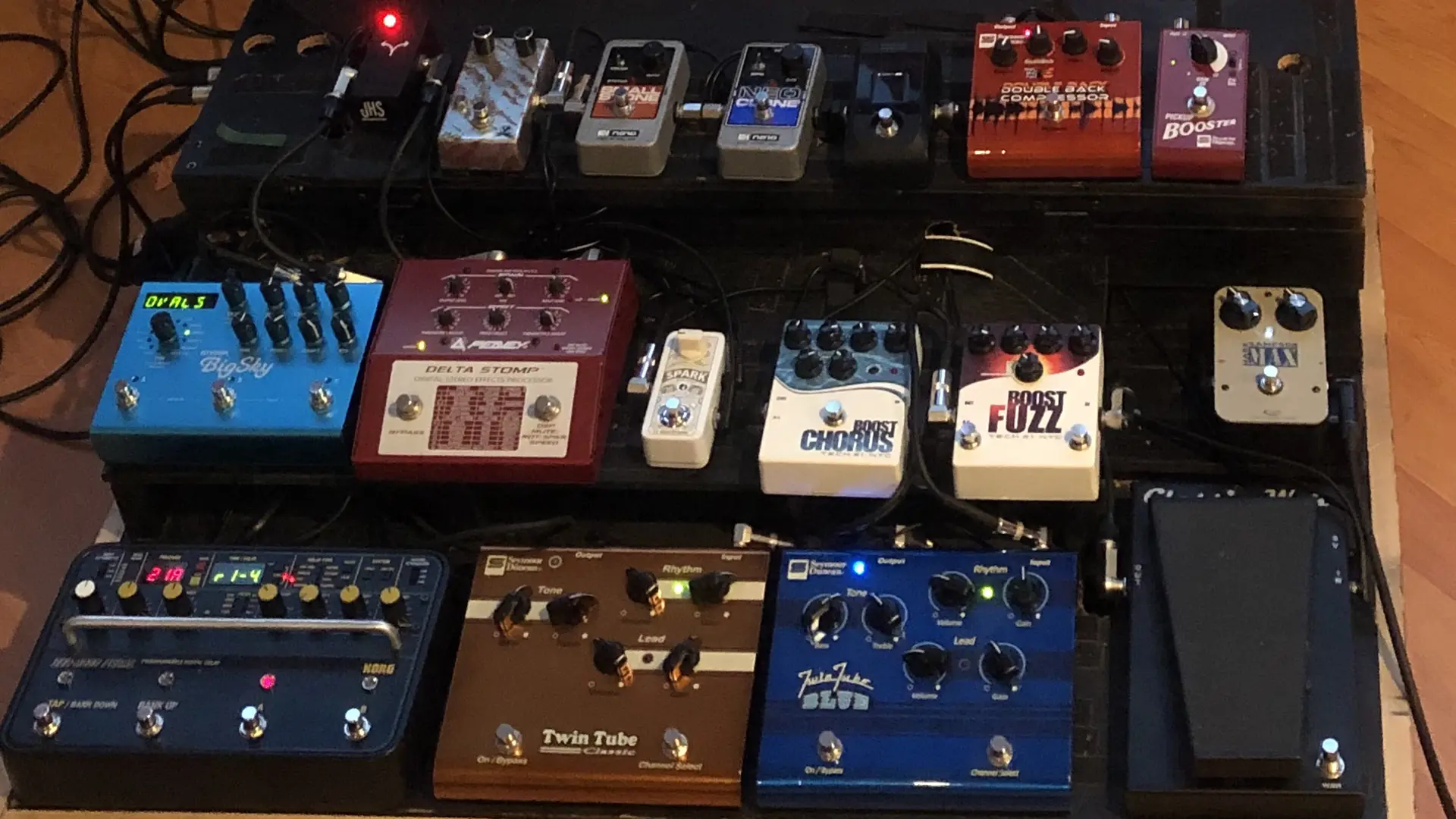
Once you've mastered the basics, you can explore more sophisticated stacking techniques. These advanced approaches can help you create unique tones and solve specific musical challenges.
Three-Pedal Combinations
Adding a third overdrive might seem excessive, but it can be incredibly useful. Think of it like building a custom amp with three distinct channels. Here's how to make it work:
- Start with a transparent drive like the Wampler Tumnus Deluxe as your base tone
- Add a Tube Screamer-style pedal for your crunchy rhythm sounds
- Top it off with an OCD or Wampler Dracarys for high-gain leads
The key is setting each pedal with progressively more gain while keeping the volume balanced. This gives you three distinct voices accessible at the tap of a foot.
Integration with Other Effects
Stacked drives can interact with your other pedals in interesting ways. The placement of modulation and time-based effects becomes crucial when using multiple drives. For modern ambient sounds, try placing a delay before your drives - this creates a washy, textured effect as the delayed signal gets compressed and saturated.
Some creative combinations to try:
- Chorus before stacked drives for a thicker, more aggressive sound
- Reverb after drives to add space without getting muddy
- Compressor at the start of the chain to even out your dynamics
- Phaser before drives to create swirling, saturated textures
- Tremolo after drives for pulsing, dynamic rhythms
- Flanger before drives for an aggressive, metallic character
- Univibe before drives for a thick, psychedelic vibe
- Octave pedal before drives for huge, synthesizer-like leads
- Envelope filter before drives for funky, auto-wah tones
Frequently Asked Questions
Here are some common questions about stacking overdrive pedals, along with concise answers to clarify key concepts without redundancy.
What's the difference between stacking overdrives and using a distortion pedal?
Stacking overdrives provides greater control over gain staging and typically yields a more natural sound. While a distortion pedal delivers its character all at once, stacked overdrives allow you to build your tone in layers, offering enhanced dynamics and tonal options.
Can I stack more than two overdrive pedals?
Absolutely! While two pedals are common, adding a third can be beneficial for creating distinct rhythm and lead tones. The key is careful gain staging, ensuring each pedal serves a specific purpose in your tone stack.
How do stacked overdrives compare to amp distortion?
Stacked overdrives often interact with your amp's natural overdrive in a more musical way than single high-gain pedals. They can gradually push your amp's front end, creating an organic distortion character that responds well to your playing style.
What's the best pedal order for stacking?
There's no universal "right" way, but starting with a lower-gain pedal and building up to higher-gain ones typically yields the best results. Don't hesitate to experiment—reversing the traditional order can produce interesting sounds.
How do I prevent tone loss when stacking multiple pedals?
To maintain your tone, use quality cables, keep your signal chain reasonably short, and consider a buffer pedal at the start of your chain. Additionally, ensure each pedal is set to unity gain when bypassed to avoid level drops.
Conclusion
Stacking overdrive pedals may seem daunting at first, but it ultimately revolves around experimentation and discovering what resonates with your unique style. The beauty of this approach lies in its flexibility—there's no one-size-fits-all solution. Your ideal combination might be a perfect fit for your sound while being less appealing to someone else, and that's perfectly acceptable.
Begin with two pedals that you know and trust. Focus on how they interact and the distinct qualities each brings to your tone. Observe how different combinations influence your playing dynamics and overall style. Remember, achieving great tone often stems from understanding your equipment rather than simply acquiring more.
The most crucial aspect? Trust your ears. While every recommendation in this guide has been tested and proven effective, your specific guitar, amp, and playing style may require a different approach. Don't hesitate to challenge conventional wisdom if you stumble upon a combination that works for you.
Keep in mind that your ideal drive setup may evolve as your playing develops. What suits you during practice sessions might need adjustments for rehearsals or live performances.
About the authors

S. Jino is an accomplished multi-instrumentalist and music producer based in Kolkata, India, distinguished by his self-taught mastery and unique blend of technical acumen and musical performance. His extensive experience was forged through hands-on dedication, starting with the full restoration of a broken guitar. Jino's capabilities span keyboards, pedals, and advanced digital production, reflecting a comprehensive skill set developed independently. As a significant contributor to the music scene, Jino regularly performs with worship bands and college ensembles. He has also established himself as a reliable and authoritative professional in freelance mixing, mastering, and original music creation. Inspired by the innovative sounds of Brian May and David Gilmour, and influenced by Kolkata's vibrant metal community, Jino is committed to the intricate art of vintage gear restoration and the continuous exploration of music and technology fusion. His current professional setup, featuring a meticulously restored nameless guitar, a Fender Player Strat, and a Boss Katana 50. Read more








.webp)


.webp)