
Robert Fripp
Role
Genre
Role
Genre
Robert Fripp's Gear
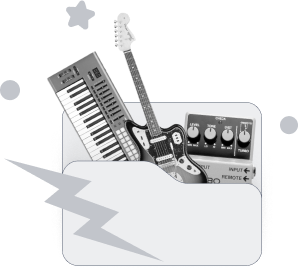


Pedals: Big Muff (Russian), Pro Co The Rat, Fender Blender (vintage), Robotalk (envelope follower/filter), MXR Dynacomp & Dunlop Crybaby.
Find it on:


Part of the Lunar Module Soundscapes System used on all work between 1994 to 2005 (RF Soundscapes, RFSQ, KC, Sylvian & Fripp, Eno's Nerve Net, etc)
Find it on:


48th street custom made Les Paul copy with midi-pickup, built for Robert in 1992
Find it on:

Mentioned in this May 1974 Guitar Player interview, transcribed to the Elephant Talk wiki on November 11, 1997.
What type of volume pedal is it?
It's the cheapest one I found, and the only one I could afford at the time that seemed any good. I think it's a Farfisa [by C.M.I.] pedal. It's still the finest volume pedal I've found anywhere. It's the only one that goes off and still has a wide movement. It's quite incredible. On stage I use three pedals on a pedal board: A volume pedal, fuzz-tone, and wah-wah. The fuzz-tone and wah-wah are pretty rubbishy. I'm not sure what type of wah-wah it is. The best fuzz-box to use is a Burn's Buzz-around which they discontinued making in England about six years ago. I have two of them, but they're not at the moment attached to my pedal board. The more pedals you go through, the longer leads you need, and in turn the less volume you get. You lose gain along the way. To lessen that, the wah-wah and the fuzz are on the knock-off circuit. In other words, when I'm playing, all the time I'm going through the volume, but when I'm using either fuzz or wah-wah, I knock a different pedal which brings in a different circuit for the fuzz and the wah-wah. When I'm not using them I press a button and knock them out of the circuit so that the circuit shortens, and I keep up my gain. I also use a Watkins Kopy Kat echo unit. It's all right, but it's not particularly good. It suffices for what I want, which is not really a lot of echo effects but just a slight edge, because the sound on stage is very dead in a lot of halls I play in. It really doesn't matter what kind of fuzz box you use. It has more to do with the state of mind.
But if somebody wanted to obtain the same sound you got, wouldn't it be important to know what type of fuzz you were using?
No. I can get that same sound with every kind of fuzz box I've ever used. It's not a question of equipment.
Find it on:

In a MusicRadar rig tour article by Matt Parker, Robert Fripp is shown using the Roland US-20, an effects pedal accessory, as part of his guitar setup.
Find it on:





"The 8000s are generally what Robert uses to create those massive loops that go on for days."
"He'll play things and forty seconds later they'll appear in the surround speakers. The 3000s are used for other effects, like the tap delay."
Find it on:
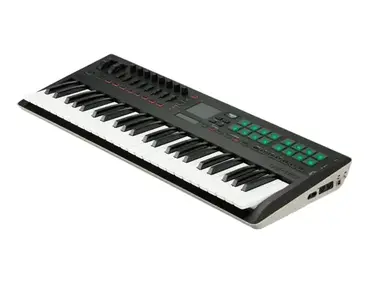
In an interview with MusicRadar, Robert Fripp discusses using the Korg Taktile 49 MIDI keyboard controller alongside the ThumbJam app on his iPad to generate sounds, highlighting the controller's role in his setup.
Find it on:

"It's just a keyboard controller. The sound is from an iPad app called ThumbJam, which reacts to MIDI messages."
Find it on:

In an article by Matt Parker for MusicRadar, it's noted that Robert Fripp uses the BOSS FV 300L volume effects pedal to control the final output levels from his Switchblade system. This setup allows him to manage audio in stereo, quad, or even a six-channel mix, giving him comprehensive control over his sound distribution.
Find it on:

This image from Pinterest shows Robert Fripp’s stage setup from 1999.
Find it on:

This image from Pinterest shows Robert Fripp’s stage setup from 1999.
Find it on:

Pedals: Big Muff (Russian), Pro Co The Rat, Fender Blender (vintage), Robotalk (envelope follower/filter), MXR Dynacomp & Dunlop Crybaby.
Find it on:

Part of the Lunar Module Soundscapes System used on all work between 1994 to 2005 (RF Soundscapes, RFSQ, KC, Sylvian & Fripp, Eno's Nerve Net, etc)
Find it on:

- Yamaha acoustic used on KC Islands (Formentera Lady & into Sailors’ Tale), 1971
Find it on:

In a user-uploaded photo on Innerviews, Robert Fripp is seen using Beyerdynamic DT 250-80 Professional Closed Headphones. Despite the image's poor quality, the distinctive design of these headphones is recognizable, suggesting they are part of his gear collection.
Find it on:


“Today I was at Robert [Fripp]’s place recording the mellotron parts for my new album on his original sixties MK2 mellotron, famously the one used on the debut King Crimson album. Playing a real mellotron is quite an exhausting physical experience, but it sounds amazing….” says Steven Wilson, in this article, about playing Robert Fripp's Mellotron MkII.
Find it on:



At 3:01 of this clip of King Crimson's live performance of "Starless", Fripp can be seen with a black Hohner Pianet situated on top of his black Mellotron M4000.
Find it on:

"The Eclipse is used mainly for additional effects on his standard guitar sounds –for things that are not going through the other Eventides."
Find it on:

This image from Pinterest shows Robert Fripp’s stage setup from 1999.
Find it on:

Used with King Crimson in the 1980s, as known from the following sources:
Guitar World, March 1982 (pictured)
Guitar Player, June 1986, "Interview with Robert Fripp" by Tom Mullen
Since 1981, Robert Fripp has used Roland guitar synthesizers - the GR-300 and recently the GR-700. He recorded with them on King Crimson’s Warner Bros. albums (Discipline, BSK-3629; Beat, 23692-1; and Three Of A Perfect Pair, 925071-1), accompanied by fellow Roland synthesist Adrian Belew. He also played synth on two LPs with Andy Summers (see story beginning on page 113), and employed a GR-700 on the January 86 Guitar Player Sound-page, "Easter Sunday."
After five years with guitar synths, what are your feelings?
I have major reservations about the guitar as an effective synthesizer controller. With the keyboard synth, the response of the "fingerboards" is now developed to a point where a good pianist - or a good electric pianist - is not likely to have any reservations. For example, the original Moogs limited a player’s performing capacity. I don’t think that’s an issue anymore. But if you come to the guitar, there are two difficulties. One has to do with its inherent limitations; the other is the problem of the guitarist’s. Let’s begin with the guitar’s limitations as a device for triggering the synthesizer. If you pick any one string, then there is a likelihood that at least two more are going to vibrate. If the response of the synthesizer is going to be very keen, then you’re going to be getting three notes responding instead of one. On a keyboard, it would be something like every time you played one note, you would "ghost" between two and five more around it, which wouldn't be acceptable.
Then the guitar synth would create strong superfluous notes simply by picking up the sympathetic vibrations of the overtones.
That’s it. So, in other words, one has to find a way of damping the other strings while picking the one. In practice, that’s going to be very, very limiting for right-hand technique. Now let’s look at the performer’s end of it. There’s currently no truly accepted school of picking for the plectrum guitar. We have two approaches: the suspended hand, where the right hand doesn't actually touch the string at all, and the pivotal method, where the hand is pivoted off the ball of the thumb, which rests generally on the bass strings. The problem from both these points of view is, first, the sympathetic responses. Second, if you use the pivotal method, then you’re very likely to rub the strings and set off glitches that way. However, if you find a way of overcoming this - and it’s possible, to a degree, by being very careful - then you find that the tracking response of the synthesizer, even on the best that I've tried, is about a tenth of a second late. If your aim as a player is to be able to work in the area of semi quavers [sixteenth-notes] at 152 beats a minute, say, that’s 10 notes a second. So the response is always behind your picking. And in fact, I don’t believe that a synthesizer can track with that level of accuracy.
How have you dealt with these shortcomings?
I abandon my technique and view it as essentially a new instrument. In other words, I can’t approach it as a guitar player with the emphasis on playing. I use it to extend the tone and pitch ranges of the instrument. For example, I can get an octave higher simply by setting the oscillators. So, if I'm prepared to accept the restrictions on my own performance capacity, I can have an extended range in timbre and in register. That’s the good side of it.
What attracted you to an instrument with apparent shortcomings?
I've worked with the GR-300/G-303 system just about from the day that it came out, and I found it very useful. It's limited, but within its limitations, it’s very broad. It’s quite a good player’s instrument; the response isn't bad, although there is a delay. As with any guitar synthesizer, it’s not good for someone who is very interested in picking. So if one’s approach tends more toward being left-hand active, it’s useful. The next stage, the GR-700, I like to a degree, but the response was so bad in the tradeoff between performance and efficiency, on the one hand, and the extended range that I wasn't prepared to go for it. It would have meant losing too much in the performance ability. I didn't like the new guitar, either. The guitar I'm using at the moment to trigger the 300 is a Tokai Les Paul copy with its electronics modified by an Englishman named Ted Lees He also fitted it with a Kahler tremolo. It’s a very fine guitar, and it’s a useful synthesizer.
[...]
Perhaps it’s not so much a question of enhancing the pitch-to-voltage tracking, but rather of adding artificial intelligence so that the controller can somehow predict what you’re going to play.
I suppose a good example of how Adrian Belew and I used the Roland GR-300 with King Crimson is "The Sheltering Sky." Although it’s available on the Discipline album, it was infinitely better live. When we were in Japan, Roland met with Adrian and told him that we were using their guitar synthesizers in a way that they had never anticipated. I think they expected, if you like, beginner guitarists or less proficient guitarists to play fairly simple things that sounded relatively amazing. Whereas we took them really as new instruments and tried coming up with something that was quite novel.
Did you make any suggestions for improving them?
I made the same comment about the response, and they were aware of the general problem. The guitar itself was quite excellent, and probably the most accessible for players. But it didn’t overcome what I felt needed to be overcome: the immediate response. And the difficulty is that if you come up with a pickup that responds with the sensitivity that I would like as a player, then the glitches, the bad harmonics, the sympathetic notes, and odd resonances that creep in really overwhelm the fundamental. So we’re back to the problem that I don’t think guitar technique and synthesizers really go together. Unless you’re prepared to come up with an entirely new approach to an entirely new instrument.
Is it important for a controller to be able to double as a standard guitar?
For the working musician, yes, it’s very important. For the person in the studio, it’s not quite as important. The other approach is going the analog route, where there are so many effects available to the guitarist and where the control capacity from the guitar is so much better than from a synthesizer. It’s so extended the range of the electric guitar, it’s almost better to go the route of straight electric guitar with effects. The disadvantage is that you have a limited range, because the Harmonizer an octave higher won’t give you the same effect as the oscillator tuned up. I use the synthesizer to power the whole range of normal guitar effects - distortion, flanging, all the bit. For example, heavy chorus works very effectively on what normally passes for a high string sound. Or if you put a very heavy chorus and fuzz on the 300 when the fundamental is tuned to a root and a fifth, you get something very close to heavy ring modulation. It’s a very wonderful ripping, chainsaw sound.
Roland US, "Adrian Belew: Taking Guitar Tone to the VG-99th Power" by Tiffany Schirz (July 22, 2008)
As one of the first guitarists to embrace guitar synthesis in the early ’80s with Roland’s GR-300, Adrian Belew has taken guitar tone to the moon and back.
Guitar World, "“David Bowie and Brian Eno used to laugh at me, saying: ‘You’re not supposed to be able to play that!’” Adrian Belew on Frank Zappa’s lessons, Robert Fripp’s synth guitar, and what’s coming up with Steve Vai" by Andrew Daly (May 14, 2024)
How did you take the rig you used with Bowie and push it forward with King Crimson?
“The main thing that changed from that first period from David to Talking Heads to King Crimson was that I went to Japan. I met the people at Roland and they said, ‘We have a new thing – a guitar synthesizer.’ I’d been dying to have something akin to what keyboard players could do for 10 years, and they gave me one.”
You were one of the earliest adopters of the guitar synth, right?
“I’m not certain but I’m pretty sure I had the first one in New York, as they weren’t available there yet. When I joined King Crimson, Robert had a Roland JC-120 and also the synthesizer; it was actually the second one they made, but it was the first one that anyone ever used.
“The first one has been a bit too much – it was like a big Farfisa organ. The second one is the blue one, the GR-300. So much of the King Crimson sound of the ‘80s came from that one device.
Find it on:

Wrote the foreword for the subsequent editions of the book.
Find it on:
-m.webp?v=1783177437)
Used live with King Crimson, as can be seen on page 16 of the March 1982 issue of Guitar World and as specified on page 17.
ROBERT FRIPP—
Clockwise from left
a—Roland GR-300 control panel
b—Foxx Tone Machine
c—Pete Cornish pedalboard with vintage Electro-Harmonix Big Muff, volume, and Cry Baby Wah
d—A/DA Harmony Synthesizer
e—Proprietary pedalboard with Roland FX (SP-1, DS-1, CE-1)
Find it on:

Used live with King Crimson, as can be seen on page 16 of the March 1982 issue of Guitar World. It is listed erroneously as a CE-1 on page 17.
ROBERT FRIPP—
Clockwise from left
a—Roland GR-300 control panel
b—Foxx Tone Machine
c—Pete Cornish pedalboard with vintage Electro-Harmonix Big Muff, volume, and Cry Baby Wah
d—A/DA Harmony Synthesizer
e—Proprietary pedalboard with Roland FX (SP-1, DS-1, CE-1)
Find it on:

At 5:17 of this live performance of "Starless" by King Crimson, there is a good shot of Fripp's black Mellotron M400, with a black Hohner Pianet sitting on top of it.
Find it on:

"The 8000s are generally what Robert uses to create those massive loops that go on for days.
"He'll play things and forty seconds later they'll appear in the surround speakers. The 3000s are used for other effects, like the tap delay."
Find it on:

"(Korg Taktile) It's just a keyboard controller. The sound is from an iPad app called ThumbJam, which reacts to MIDI messages."
"I've got an IK Multimedia iRig MIDI connecting it, so that Robert can call up Mellotron strings, brass, choir and flute on the Taktile pads and play them live on the keyboard."
Find it on:

In this Music Radar article, Fripp's rig can be seen to include an Apple iPad.
Find it on:

"A 13-pin cable comes out of the guitar and goes into this [AB/Y] splitter, which goes to the Roland GR-1 Guitar Synth and to the Axon AX100 [rack-mounted guitar-to-MIDI controller].
Find it on:

This image from Pinterest shows Robert Fripp’s stage setup from 1999.
Find it on:
This is a community-built gear list for Robert Fripp.
- Find relevant music gear like Guitars, Amplifiers, Effects Pedals, Pianos, Keyboards and Synthesizers, Microphones, and other instruments and add it to Robert Fripp.
- The best places to look for gear usage are typically on the artist's social media, YouTube, live performance images, and interviews.
- To receive email updates when Robert Fripp is seen with new gear, follow the artist.
-
Added to Equipboard on by
 michael
Gear IQ 42641
-
Updated
Discography
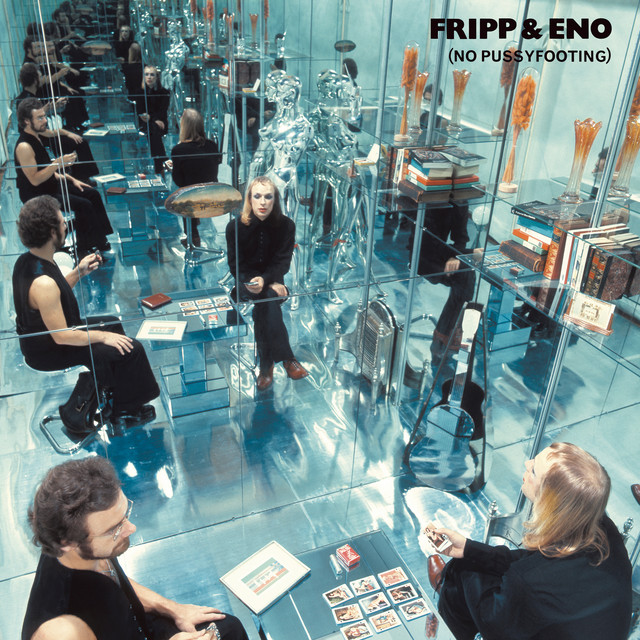
No Pussyfooting
1973
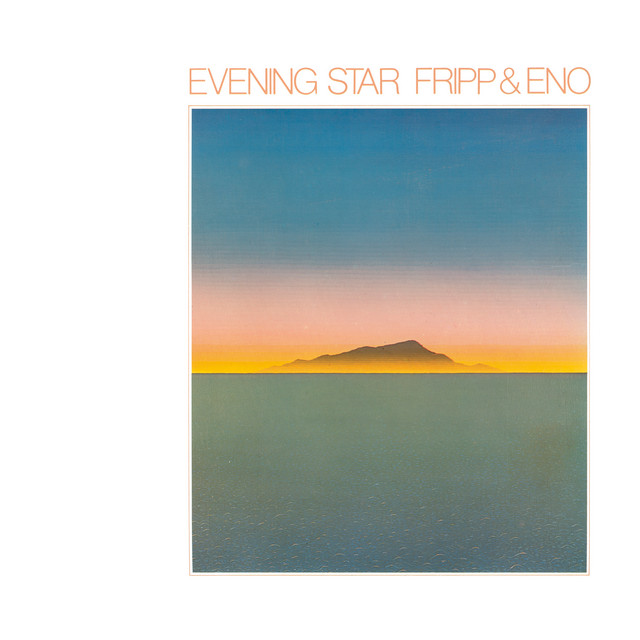
Evening Star
1975
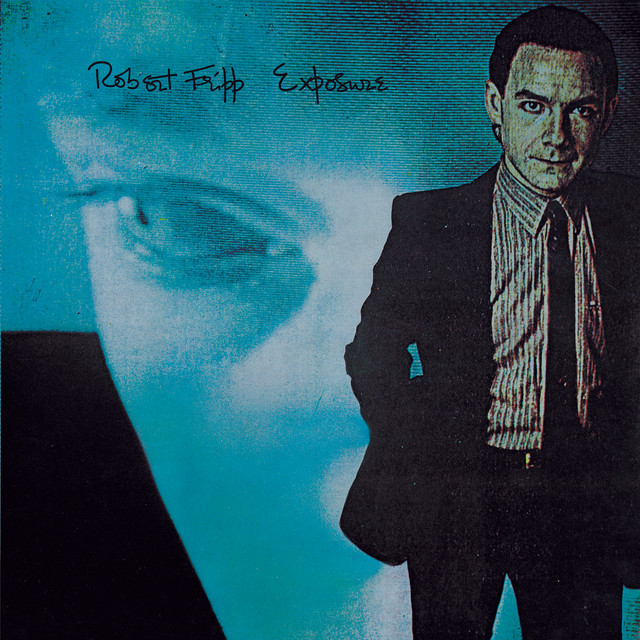
Exposure
1979
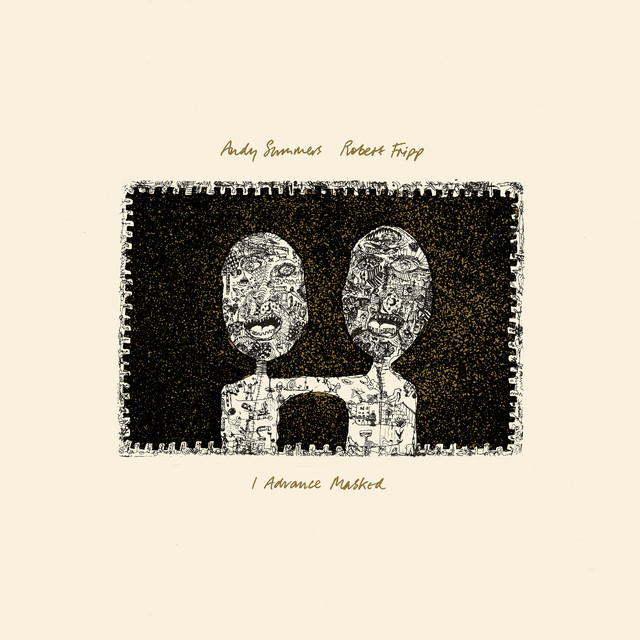
I Advance Masked
1982
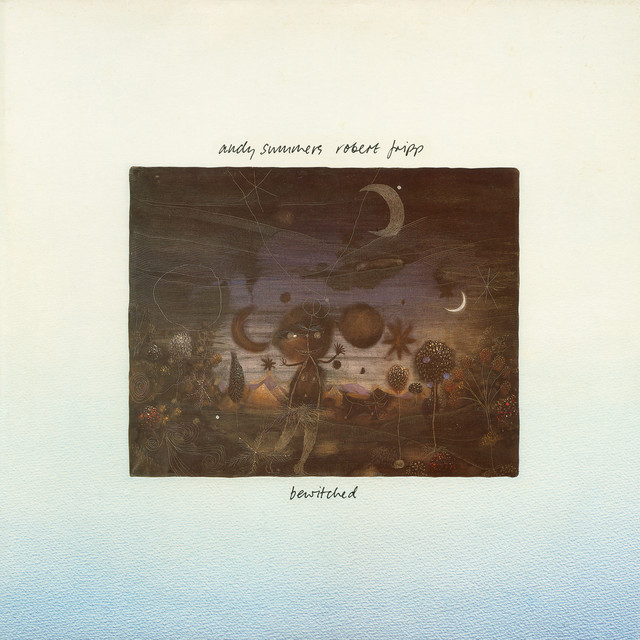
Bewitched
1984
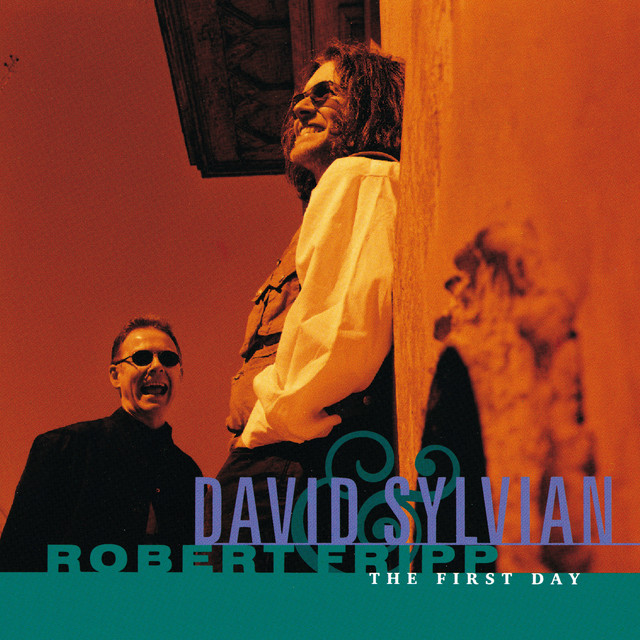
The First Day
1993
Damage
1994
![1999 (Soundscapes - Live In Argentina) [Expanded Edition] album cover](https://images.equipboard.com/uploads/album/image/342445/1999-soundscapes-live-in-argentina-expanded-edition.jpg)
1999 (Soundscapes - Live In Argentina) [Expanded Edition]
1994
The Gates Of Paradise
1998
A Temple In The Clouds
2000
The Equatorial Stars
2005
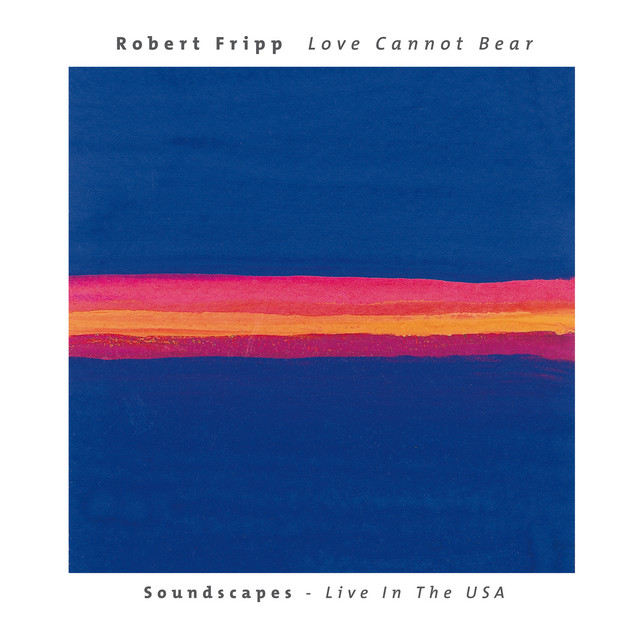
Love Cannot Bear: Soundscapes (Live In The USA)
2005
Album Credits
-
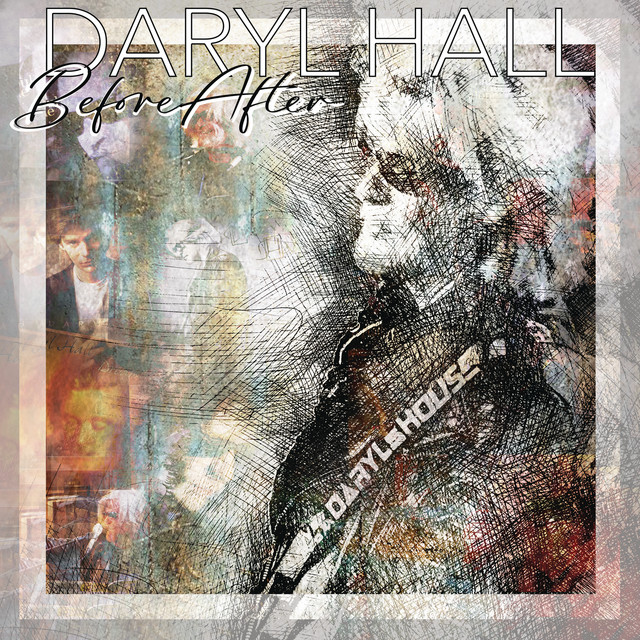
Daryl Hall · 2022
Producer -
Love Cannot Bear: Soundscapes (Live In The USA)
Robert Fripp · 2005
Producer -
Robert Fripp · 2000
Producer -
Robert Fripp & David Sylvian · 1994
Mixing Engineer Producer -
California Guitar Trio · 1993
Mastering Engineer -
Robert Fripp & David Sylvian · 1993
Producer -
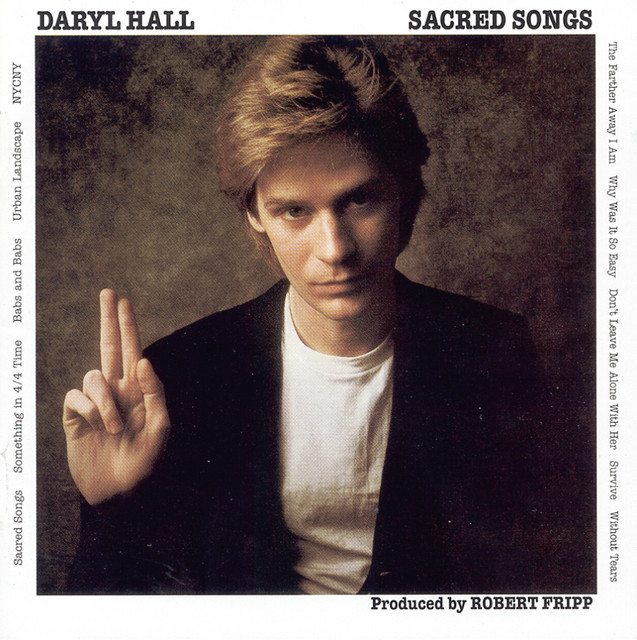
Daryl Hall · 1980
Producer -
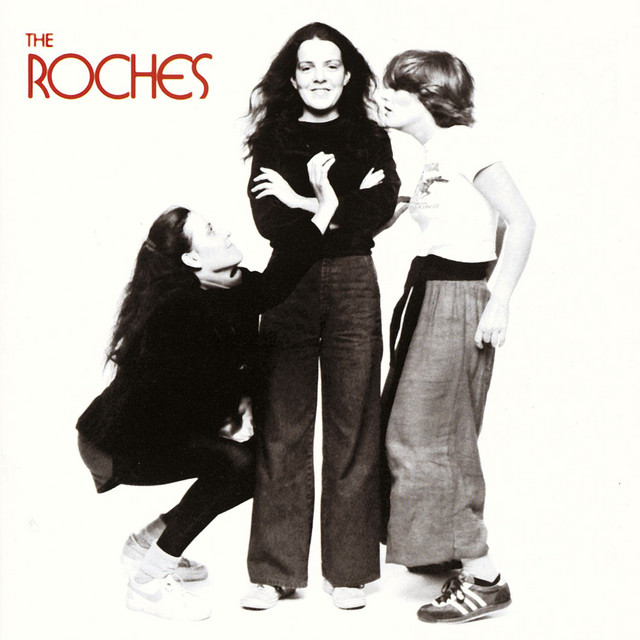
The Roches · 1979
Producer -
Robert Fripp · 1979
Producer







.webp)