

Pricing and availability
We compare 600+ stores and found this item at 7 stores. Prices updated .
Store
Reviews
Price




Average Price: $274
High-end/Boutique
$60
$181+
Price Tier
Budget
Standard
High-end
Price History
Based on price data from 6 merchants for "Fender Blender". Prices shown reflect NEW condition. Tracking began Apr 2, 2026.
* Product prices and availability are updated by Equipboard every 24hrs and are subject to change. Equipboard may receive compensation for purchases made at participating retailers linked on this site. This compensation does not affect what products or prices are displayed, or the order of prices listed. For more information, please refer to our affiliate disclosure.
Description
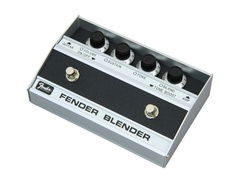
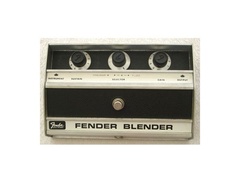
Unleash the raw power of the Fender Blender Fuzz Pedal, a legendary piece of gear that has shaped the sound of music genres like indie and shoegaze since the 1970s. Renowned for its distinctive fuzz and octave capabilities, this pedal gives you control over your tone, volume, sustain, and blend, creating a unique sonic palette that has graced the pedalboards of iconic musicians like Kevin Shields and Billy Corgan. The Fender Blender Fuzz Pedal is not just an effects pedal, it's a conduit for your musical expression.
Key Features:
- Fuzz and octave effect capabilities, offering a wide range of tonal possibilities
- Controls for tone, volume, sustain, and blend, for precise sound shaping
- High-quality build and design from a trusted brand, Fender
- Used by notable musicians such as Kevin Shields of My Bloody Valentine and Billy Corgan of Smashing Pumpkins for its unique sound characteristics
- Iconic pedal, highly recognized in the music industry since the 1970s
Product specs
| Brand | Fender |
| Model | Blender Fuzz |
| Finish | Silver |
| Year | 1968 - 2010 |
| Made In | Korea, Republic of, United States |
| Categories | Fuzz Pedals and Effects |
FAQs
-
What kind of tones can I expect from the Fender Blender fuzz pedal?
-
The Fender Blender fuzz pedal is known for its aggressive, octave-rich fuzz tones that can produce a wide range of sounds from smooth, creamy sustain to harsh, biting distortion, making it ideal for experimental and psychedelic rock music.
-
Is the Fender Blender suitable for use with both guitar and bass?
-
Yes, the Fender Blender can be used with both guitar and bass, providing a unique fuzz effect that enhances the tonal range and adds depth to either instrument.
-
Does the Fender Blender fuzz pedal have true bypass?
-
The Fender Blender does not feature true bypass; it uses a buffered bypass, which helps maintain signal clarity and strength, especially in longer signal chains.
-
How does the Fender Blender differ from other fuzz pedals?
-
The Fender Blender stands out with its octave-up feature and blend control, allowing for a mix of clean and fuzz signals, offering more versatility and a distinctive sound compared to standard fuzz pedals.
-
What are the main controls on the Fender Blender fuzz pedal?
-
The Fender Blender features controls for volume, sustain, tone, and blend, along with a footswitch for engaging a tone boost circuit, allowing for a wide range of sound shaping possibilities.
Videos

Reverb
Funky Vintage: Fender Blender | Reverb Demo Video
Funky Vintage: Fender Blender | Reverb Demo Video
Reverb
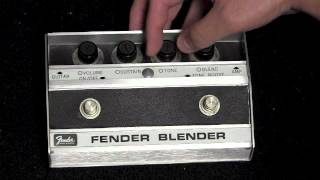
Vintage Fender Blender Fuzz Demo

drowninginguitars
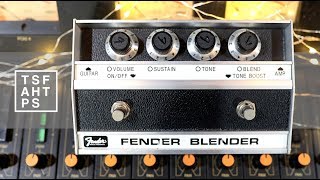
Fender Blender Fuzz/Octave

TheSuperFunAwesomeHappyTimePedalShow
Fender Blender Fuzz Reissue Demo

Parkway Music
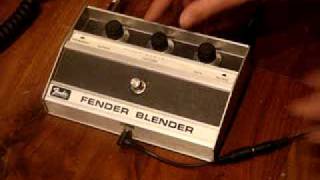
FENDER BLENDER (3knobs ver)

effeken
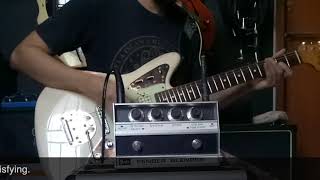
Fender Blender - guitar demo

Achell Suez
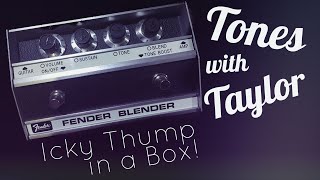
Fender Blender Reissue Fuzz Pedal Demo | Tones with Taylor

Officer Trip
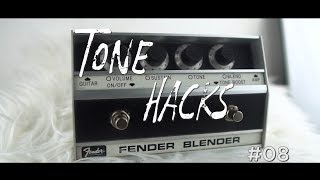
FENDER TONE BLENDER | Tone Hacks #08

Lucas Reis
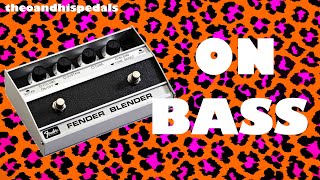
Fender Blender | Fuzz | Bass | Theoandhispedals

Theo And His Pedals
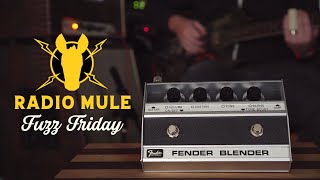
Fuzz Friday - Fender Blender Demo

Radio Mule Effects
Fender Blender - Análise

Irmão Lobo
Reviews
PROS
-
Wide range of sound variations with sustain/tone/blend knobs
-
Unique, ahead-of-its-time harsh fuzz sound for extreme music styles
-
Maintains biting, metallic character even at low settings
-
Blend knob offers dozens of fuzz sounds, enhancing versatility
-
Linked to famous guitarists like Billy Corgan and Kevin Shields, enhancing its legacy
-
Original versions considered irreplaceable, with a distinctive classic mojo
CONS
-
Complicated circuitry makes reissues difficult and expensive
-
Adds significant gain even when disengaged, potentially limiting live use
-
May not pair well with certain amps, affecting versatility
-
Original versions can be rare and expensive, limiting accessibility
Owner Insights
We analyzed real musician discussions from forums and Reddit to find what players love, question, and tweak about Fender Blender.
Features and functionality
Comparisons
-
The Keeley Loomer and Keeley Dark Side pedals are frequently preferred for achieving shoegaze tones, with users praising their versatility and specific effects like auto-glide and tape echo.
Source -
The Zvex Fuzz Factory offers unique experimental tones, while the Fender Shields Blender provides a more traditional Big Muff-like topology, catering to different fuzz preferences.
Source
Value and pricing
-
Concerns about the pedal's pricing are common, with users suggesting it's not worth the $400 price tag unless the sag feature is a must-have.
Source
Use cases and applications
-
The Shields Blender is noted for producing doom sounds rather than shoegaze, often requiring a loud tube amp to achieve its full potential.
Source -
Owners found that combining a Zvex Box of Rock with a Fuzz Factory can effectively replicate the Fender Blender's sound, particularly for shoegaze tones.
Source
User experience
-
Owners report that adjusting volume with the pedal can be challenging when used with other pedals, affecting overall tone consistency.
Source -
The Fender Blender's octave feature may not significantly differ in tone compared to certain pedal combinations, offering an alternative for those who already own similar equipment.
Source
4.0 out of 5
Based on 2 Reviews and 14 Ratings

408
classic octave fuzz w. blend
I have always loved this fuzz and once I started work on my Cthulhu suite I knew just which pedal to get. Unfortunately it didn't work as well with my Vox amp as with the Orange I had before, so I swapped it out for the MXR Brown Acid fuzz. But still the 2003 reissue is a classic in it's own right, all the mojo of the original minus the volume drop
Artist usage
Add artist

CORGAN: The Fender Blender. Kevin Shields [of my Bloody Valentine] told me to get one. It's just the destructo pedal of all time. Listen to the song "Bullet" - at about two-and-a-half minutes there's a part where the key changes and it comes in all loud and thick and the speakers sound real distorty. That's that pedal. There are so many weird harmonics in the thing that if you turn it up a certain way, you get distortion beyond distortion. It makes the guitar sound almost unintelligible.

.jpg)
Kevin Shields has used the Fender Blender fuzz effects pedal and has recently released a reissue featuring his own personal modifications for a signature model. This information is highlighted on the official mbvofficial Instagram account.


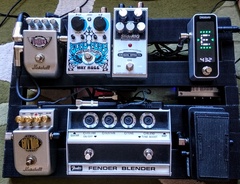
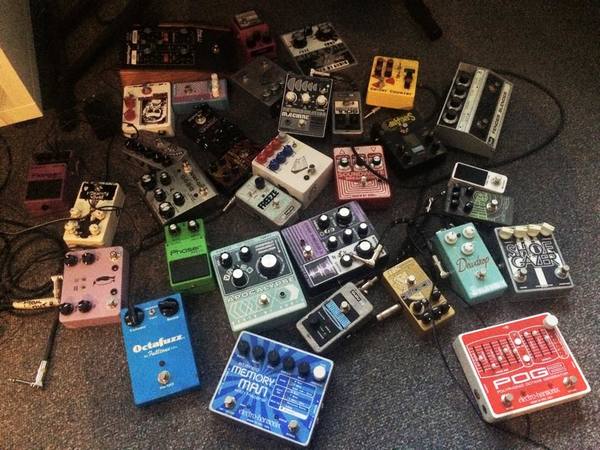
Pedals: Big Muff (Russian), Pro Co The Rat, Fender Blender (vintage), Robotalk (envelope follower/filter), MXR Dynacomp & Dunlop Crybaby.


On Way's Fuzz Wars Instagram series, he shows the Fender Blender off:
Used to achieve the distortion on Action Cat from Hesitant Alien. Played single root notes on the E string as well as single notes on the higher strings to add layers and build the wall of sound. That broken sounding opening guitar is this pedal.

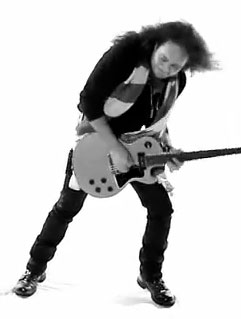
Used on "Bludfuk", as specified in this July 20, 2012 breakdown of a A Fine Pink Mist gear list printed in the October 1996 issue of Young Guitar.


This photo is from the progressive rock band Genesis in their Selling England Tour, March 1974. In the photo we can see that Tony taped a Fender Blender into his RMI Electra Piano.



Mentioned in the July 1980 issue of Guitar Player, with the details summarized in this March 13, 2009 Gibson article.
Guitar Player, July 1980, "British Rock Guitar Veteran"
What other amps and effects have you employed on your solo albums?
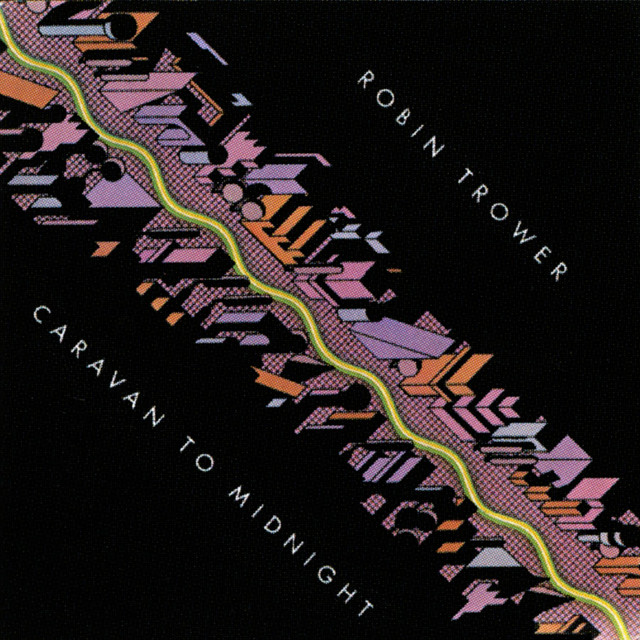
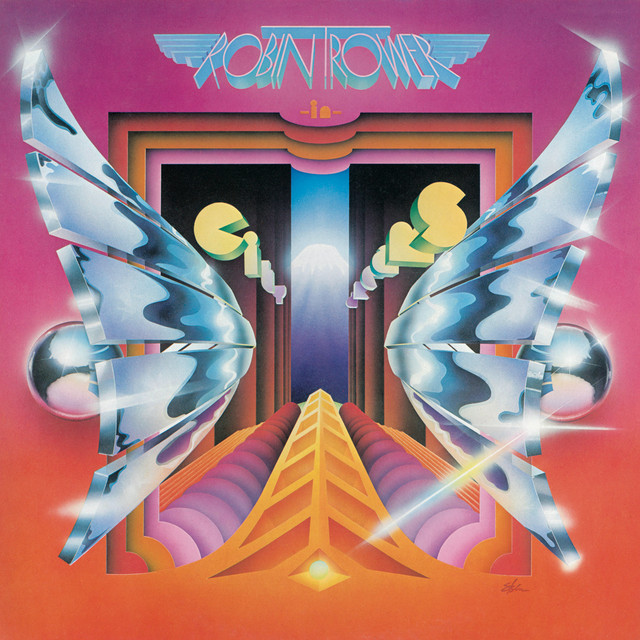
With exception of In City Dreams, there are only one or two tracks on all of my albums that haven't got Marshalls on them. For In City Dreams I used an amp that my electronics guy Mike built for me in the studio: a quarter amp, which would get the same sound as a Marshall. We had a lot of different effects on that album, too. For instance, that's when I started using an [Electro-Harmonix] Electric Mistress flanger. To get say, that rocket ship sound, I ran a Fender Blender [distortion/harmonics/sustain device] through the Mistress. On Caravan To Midnight I used effects in stereo. In other words, I had the output split - one to one amp, one to the other. On each split were different effects, like two or three going to one side, and two or three going to the other, so that you had the same guitar with a different sound coming from both amps. Also around this time Mike and I redid my pedalboard.
Were you having problems with it?
Well, we talked a hell of a lot about what we wanted to get out of the sounds - you know, what the problems were. The problem basically was that if you used more than a couple of pedals, you lost sound: The more pedals connected up, the more the signal died. So he invented a system whereby that wouldn't happen. Now I can have a hundred pedals in the line and there will be no difference at all. Before I got Mike, who also doctors my amps, I used to use a noise gate at the front; that didn't affect the power, but, unfortunately, I lost a lot of top end.
[Ed. Note: Robin preferred to keep the operational details of his pedalboard and amplifiers confidential.]
From your left to right, how is your pedalboard currently set up?
The first effect is a preamp that Mike built, which is on all the time. The second is another volume booster, a Dan Armstrong Red Ranger, which I use for even greater sustain. Third is my Tycobrahe wah-wah. The fourth is the Fender Blender. The fifth is the Univibe, and the sixth is a Mu-tron II. The seventh and eighth are Mistresses with different settings; the one on the left gives a double-tracking effect, while the one on the right provides more of a flanged sound. But I think I've come to a halt as far as effects go. I mean, I can just barely handle what I've got now. There's so much stuff going on that if you just started mixing them there would be a limitless number of combinations you could get.
From your pedalboard, where does the signal go?
Into a splitter box, then to my amps. I don't use a mixing board or anything when I'm live because I like to be very much in control of what's going on. Especially concerning dynamics, that's so much a part of my music that I wouldn't feel happy if someone else were controlling it. I like to be creating the sound.
Gibson, "How To Get That Robin Trower Sound", March 13, 2009
Trower’s hottest rig blasted his array of Strats through a pair of 100-watt Marshall JMP-100 Mark II heads feeding two 1960-B 4x12 cabs and had an impressive effects chain on the floor: custom preamp and clean booster pedals, a Dan Armstrong Red Ranger treble booster, a Tychobrahe wah-wah, an octave/fuzz Fender Blender, a Uni-Vibe chorus/vibrato, Mutron II phase shifter, and two Electro-Harmonix Electric Mistresses.


Charlie Clouser confirmed that a Fender Blender pedal was potentially used to create the 808 sound on the track "Starfuckers Inc" by Nine Inch Nails, as mentioned in a discussion on the Gearspace forum.


"We’ve been experimenting with new stuff lately, but right now my effects include Boss PS-5 Super Shifter and PH-3 Phase Shifter pedals, a Line 6 DL4 Delay Modeler, an Ibanez AD-9 delay, a Hardwire RV-7 reverb, an Electro-Harmonix Electric Mistress flanger, a Fender Blender octave/fuzz…"


Mentioned the gear page of Quine's official website.
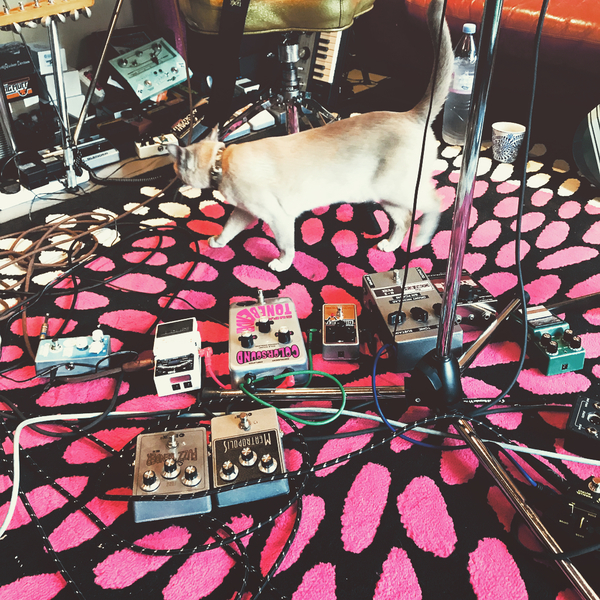
Ever in search of new and strange guitar sounds, Quine owns dozens of fuzz boxes - an original Fender Blender, a Dallas/Arbiter Fuzz Face, and the MXR Distortion+ among them - true classics, each with its own distinct sound. "Prescription Electronics has done a lot of amazing things in the last six years. Their Yardbox is my all-time favorite fuzz, a sound I'd been searching for for about 30 years. I'm a big fan of the Beck/Page Yardbirds sound, and this does it exactly!"

Album Usage
The Fender Blender has been featured on the following albums:


Genre Usage
Based on how artists on Equipboard use this gear, it is most commonly found in the following genres.
Used With
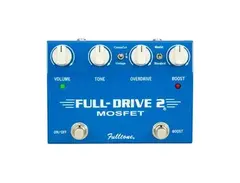
Based on how musicians on Equipboard use Fender Blender, it is most commonly used with the following gear.


-s.webp?v=1784200350)


-s.webp?v=1784199633)
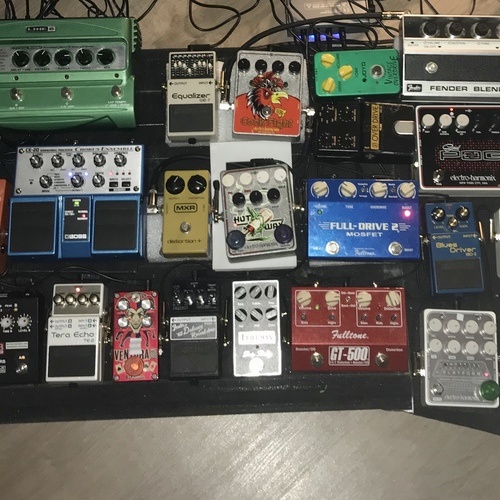
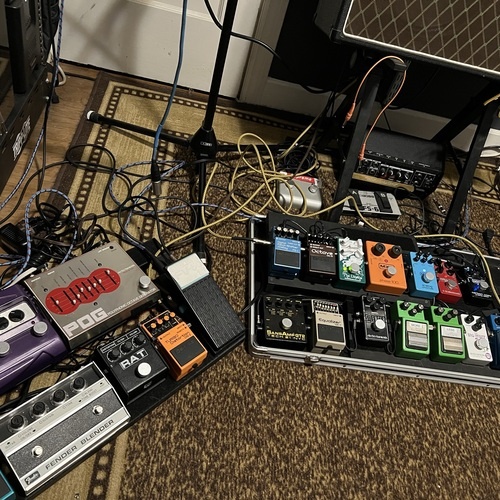
Community setups
Show yours




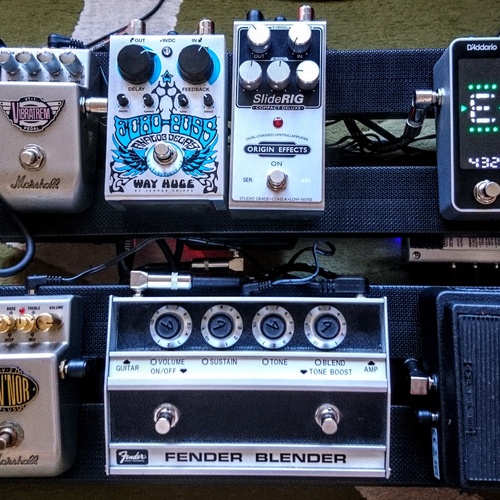

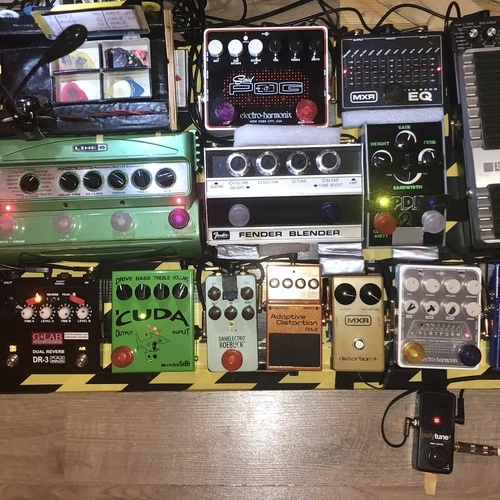
Similar
Add recommendation2 alternative and related items for Fender Blender, curated by the Equipboard community.

$248.00 - $346.99
he Shields Blended is an expanded version of the Fender Blender, created in collaboration with Kevin Shields of My Bloody Valentine.

$248.00 - $346.99
The Shields Blended is an expanded version of the Fender Blender, created in collaboration with Kevin Shields of My Bloody Valentine. The limited edition version is hand signed and numbered by Kevin Shields.
More Fender Fuzz Effects Pedals
-m.webp?v=1784214432)
$109.00 - $143.19
in Fuzz Effects Pedals Rank


$248.00 - $346.99


$66.00 - $109.99

$248.00 - $346.99


$99.99 - $112.66
.jpeg?v=1784159848)


-m.webp?v=1784213982)
$179.00 - $209.00
in Fuzz Effects Pedals Rank


$149.99
in Fuzz Effects Pedals Rank


$75.00 - $96.20
in Fuzz Effects Pedals Rank


$220.00 - $249.00
in Fuzz Effects Pedals Rank


$179.00
in Fuzz Effects Pedals Rank


$296.00
in Fuzz Effects Pedals Rank


$89.00 - $168.00
in Fuzz Effects Pedals Rank


$199.00 - $229.00
in Fuzz Effects Pedals Rank


$95.00 - $99.00
in Fuzz Effects Pedals Rank

$159.00 - $181.00
in Fuzz Effects Pedals Rank


$83.00 - $101.60
in Fuzz Effects Pedals Rank


$179.00 - $220.00
in Fuzz Effects Pedals Rank


$85.00 - $108.90
in Fuzz Effects Pedals Rank


$79.00 - $108.90
in Fuzz Effects Pedals Rank


$300.00
in Fuzz Effects Pedals Rank

$75.00 - $87.10
in Fuzz Effects Pedals Rank


$59.00 - $83.50
in Fuzz Effects Pedals Rank

-m.webp?v=1784200170)
$169.00 - $179.99
in Fuzz Effects Pedals Rank


$249.00 - $299.00
in Fuzz Effects Pedals Rank


$95.00 - $2,009.68
in Fuzz Effects Pedals Rank
-m.webp?v=1784213883)
$88.98 - $111.00
in Fuzz Effects Pedals Rank


$219.00 - $399.00
in Fuzz Effects Pedals Rank


$199.00
in Fuzz Effects Pedals Rank


$98.69 - $129.00
in Fuzz Effects Pedals Rank


$159.49 - $209.00
in Fuzz Effects Pedals Rank


.jpeg?v=1784159848)

$179.00 - $189.00
in Fuzz Effects Pedals Rank


-m.webp?v=1784214158)
$179.00 - $493.03
in Fuzz Effects Pedals Rank


-m.webp?v=1784200272)
$269.00 - $349.00
in Fuzz Effects Pedals Rank


$269.00
in Fuzz Effects Pedals Rank


$20.90 - $105.70
in Fuzz Effects Pedals Rank


$299.99
in Fuzz Effects Pedals Rank

Accessories & Related Items




-s.webp?v=1784179815)


-s.webp?v=1784180869)


Gear Guides



.jpg)



Most Popular Fuzz Effects Pedals
Most Popular Brands
-
Added to Equipboard on by
 dustinsleeping
GearIQ 54
-


