

Pricing and availability
We compare 600+ stores and found this item at 1 store. Prices updated .
Store
Reviews
Price




Average Price: $800
High-end/Boutique
$150
$601+
Price Tier
Budget
Standard
High-end
* Product prices and availability are updated by Equipboard every 24hrs and are subject to change. Equipboard may receive compensation for purchases made at participating retailers linked on this site. This compensation does not affect what products or prices are displayed, or the order of prices listed. For more information, please refer to our affiliate disclosure.
Description
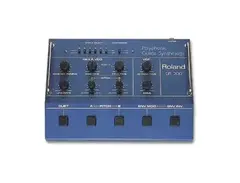
The Roland GR-300 Polyphonic Guitar Synthesizer is a classic gem for guitarists looking to explore new sonic territories. Originally introduced in the early '80s, the GR-300 remains a legendary piece of gear with its distinctive analog synthesizer sound that transforms your guitar into a full-fledged polyphonic synthesizer. Known for its unique ability to track notes in real-time without latency, it delivers a seamless blending of guitar and synth tones. The GR-300 is especially recognized for its six independent oscillators, each corresponding to a string on your guitar, allowing for rich, complex harmonics and textures.
Designed for versatility, the GR-300 offers a variety of tonal possibilities that cater to both experimental musicians and those seeking classic synth sounds. Its interface is straightforward, giving users easy access to a range of controls to fine-tune their sound. The pedal's build quality ensures it withstands the rigors of both studio and stage use. Whether you're looking to add lush synth pads, soaring leads, or intricate soundscapes to your performances, the GR-300 is a reliable tool that continues to inspire creativity among guitarists and synth enthusiasts alike.
Key Features:
- Polyphonic synthesizer capability with six independent oscillators
- Real-time note tracking with no latency
- Intuitive interface for easy sound customization
- Compatible with a range of guitar models
- Durable construction for both studio and live performances
- Ideal for creating a wide array of sounds from classic synth tones to experimental textures
Product specs
| Brand | Roland |
| Model | GR300 Guitar Synthesizer |
| Finish | Blue |
| Year | 1980s |
| Made In | Japan |
FAQs
-
How does the Roland GR-300 differ from modern guitar synthesizers?
-
The Roland GR-300 is an analog guitar synthesizer known for its distinctive polyphonic sound and real-time pitch tracking. Unlike digital synths, it offers a warm, vintage tone and requires a compatible guitar controller, such as the Roland G-303.
-
Can the Roland GR-300 be used with any electric guitar?
-
No, the Roland GR-300 requires a specific guitar controller with a 24-pin connector, such as the Roland G-303 or G-808, to function properly.
-
What type of sounds can the Roland GR-300 produce?
-
The Roland GR-300 is capable of producing rich, analog synth tones, including lush pads and leads, making it ideal for genres that benefit from vintage synth sounds.
-
Is the Roland GR-300 suitable for live performances?
-
Yes, the Roland GR-300 is well-suited for live performances due to its robust build and ability to deliver dynamic, expressive synth sounds in real-time.
-
Does the Roland GR-300 require any special setup or additional equipment?
-
To use the Roland GR-300, you'll need a compatible guitar controller with a 24-pin connector and a suitable amplifier or sound system to output the synthesized sounds.
Videos

WayneJoness
Roland GR-300 G-303 Guitar Synthesizer - Pat Metheny Tone 3
Roland GR-300 G-303 Guitar Synthesizer - Pat Metheny Tone 3
WayneJoness
Is This The Best Synth Guitar EVER?! | Roland GR-300

Chicago Music Exchange
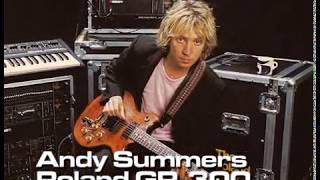
Andy Summers - Roland GR-300 Guitar Synthesizer Demo with Jools Holland - G-808
WayneJoness
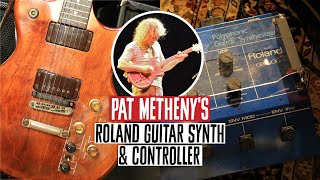
Pat Metheny's Roland GR-300 Guitar Synth & GR-303 Controller

Premier Guitar
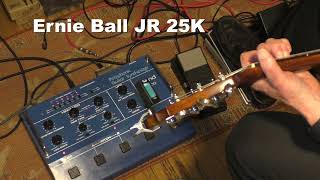
Roland GR-300 Analog Guitar Synthesizer - Filter Pedal Shootout!
WayneJoness
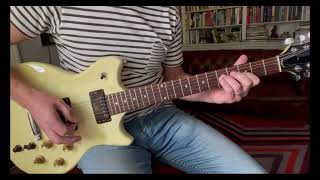
Roland G303/GR-300 Guitar Synth, Don't Stand So Close To Me

God's Own Guitars
Reviews
PROS
-
Fast tracking with the original G303/G300 combination
-
Unique touch vibrato feature on the sides of the bridge pickup
-
Thick analog synth tone, surpassing even a Minimoog
-
Offers a remarkably human and soulful playing experience
-
Real voltage-controlled oscillator (VCO) synth sound
-
Captures the iconic GR 300 synth trumpet sound used by Pat Metheny
-
No reliance on presets or software updates for a pure analog experience
CONS
-
Limited oscillator waveform selection, resulting in a restricted sound palette
-
Known issues with power supply capacitors prone to failure
-
Touch vibrato can be glitchy until mastered
Owner Insights
We analyzed real musician discussions from forums and Reddit to find what players love, question, and tweak about Roland GR-300 Polyphonic Guitar Synthesizer.
Features and functionality
-
The GR-300 allows individual string signals to be managed separately through a multi-pin connection, enabling its polyphonic capabilities.
Source -
The GR-300 includes poly pitch bend presets for gliding to a fifth harmony, which adds a unique dimension to its sound capabilities.
Source -
The GR-300’s touch LFO feature on the guitar allows for dynamic modulation directly from the instrument, enhancing real-time performance control.
Source
Comparisons
-
The GR-300 synthesizer is completely analog, distinguishing it from modern synth pedals that often emulate synth effects rather than producing authentic synth sounds.
Source -
Users prefer the GR-300 over MIDI-based synths due to its superior tracking and analog sound, contrasting with the digital nature of devices like the SY-300.
Source
Value and pricing
-
A third-party vendor offers 24-pin cables for the GR-300 at $100, significantly cheaper than the $250 typically charged for Roland cables.
Source
Build quality
-
The Roland GR-300's associated guitars were manufactured by Fujigen Gakki, a company known for producing high-quality instruments for multiple brands, including Greco.
Source
User experience
Use cases and applications
-
Notable musicians like Pat Metheny and Allan Holdsworth have used the GR-300, showcasing its ability to create unique and complex sounds.
Source
Critic Reviews
5.0 out of 5
Based on 2 Reviews and 8 Ratings

151
The Moog of guitar synths. It's a legend.
The concept of making music with mains voltage is what electric guitar is all about - this is a real vco synth - the sound of electricity tearing the vail to Zone 5 - where the shit happens! The GR300 sings a siren song - it hits the soul in the same way a great tube amp at that magic break-apart volume does. It has no presets. It has no software up dates - no, it has pitch drift. Of my Roland Gr300, I can only and also say this - of all the guitar synths I've ever encountered on my tours, this one is the most... Human.
Artist usage
Add artist

In an interview with Premier Guitar, John Frusciante discusses his affinity for various synthesizers and mentions the Roland GR-300 Polyphonic Guitar Synthesizer among his favored instruments, highlighting its role alongside drum machines, samplers, and computers in his music creation process.


Used with King Crimson in the 1980s, as known from the following sources:
Guitar World, March 1982 (pictured)
Guitar Player, June 1986, "Interview with Robert Fripp" by Tom Mullen
Since 1981, Robert Fripp has used Roland guitar synthesizers - the GR-300 and recently the GR-700. He recorded with them on King Crimson’s Warner Bros. albums (Discipline, BSK-3629; Beat, 23692-1; and Three Of A Perfect Pair, 925071-1), accompanied by fellow Roland synthesist Adrian Belew. He also played synth on two LPs with Andy Summers (see story beginning on page 113), and employed a GR-700 on the January 86 Guitar Player Sound-page, "Easter Sunday."
After five years with guitar synths, what are your feelings?
I have major reservations about the guitar as an effective synthesizer controller. With the keyboard synth, the response of the "fingerboards" is now developed to a point where a good pianist - or a good electric pianist - is not likely to have any reservations. For example, the original Moogs limited a player’s performing capacity. I don’t think that’s an issue anymore. But if you come to the guitar, there are two difficulties. One has to do with its inherent limitations; the other is the problem of the guitarist’s. Let’s begin with the guitar’s limitations as a device for triggering the synthesizer. If you pick any one string, then there is a likelihood that at least two more are going to vibrate. If the response of the synthesizer is going to be very keen, then you’re going to be getting three notes responding instead of one. On a keyboard, it would be something like every time you played one note, you would "ghost" between two and five more around it, which wouldn't be acceptable.
Then the guitar synth would create strong superfluous notes simply by picking up the sympathetic vibrations of the overtones.
That’s it. So, in other words, one has to find a way of damping the other strings while picking the one. In practice, that’s going to be very, very limiting for right-hand technique. Now let’s look at the performer’s end of it. There’s currently no truly accepted school of picking for the plectrum guitar. We have two approaches: the suspended hand, where the right hand doesn't actually touch the string at all, and the pivotal method, where the hand is pivoted off the ball of the thumb, which rests generally on the bass strings. The problem from both these points of view is, first, the sympathetic responses. Second, if you use the pivotal method, then you’re very likely to rub the strings and set off glitches that way. However, if you find a way of overcoming this - and it’s possible, to a degree, by being very careful - then you find that the tracking response of the synthesizer, even on the best that I've tried, is about a tenth of a second late. If your aim as a player is to be able to work in the area of semi quavers [sixteenth-notes] at 152 beats a minute, say, that’s 10 notes a second. So the response is always behind your picking. And in fact, I don’t believe that a synthesizer can track with that level of accuracy.
How have you dealt with these shortcomings?
I abandon my technique and view it as essentially a new instrument. In other words, I can’t approach it as a guitar player with the emphasis on playing. I use it to extend the tone and pitch ranges of the instrument. For example, I can get an octave higher simply by setting the oscillators. So, if I'm prepared to accept the restrictions on my own performance capacity, I can have an extended range in timbre and in register. That’s the good side of it.
What attracted you to an instrument with apparent shortcomings?
I've worked with the GR-300/G-303 system just about from the day that it came out, and I found it very useful. It's limited, but within its limitations, it’s very broad. It’s quite a good player’s instrument; the response isn't bad, although there is a delay. As with any guitar synthesizer, it’s not good for someone who is very interested in picking. So if one’s approach tends more toward being left-hand active, it’s useful. The next stage, the GR-700, I like to a degree, but the response was so bad in the tradeoff between performance and efficiency, on the one hand, and the extended range that I wasn't prepared to go for it. It would have meant losing too much in the performance ability. I didn't like the new guitar, either. The guitar I'm using at the moment to trigger the 300 is a Tokai Les Paul copy with its electronics modified by an Englishman named Ted Lees He also fitted it with a Kahler tremolo. It’s a very fine guitar, and it’s a useful synthesizer.
[...]
Perhaps it’s not so much a question of enhancing the pitch-to-voltage tracking, but rather of adding artificial intelligence so that the controller can somehow predict what you’re going to play.
I suppose a good example of how Adrian Belew and I used the Roland GR-300 with King Crimson is "The Sheltering Sky." Although it’s available on the Discipline album, it was infinitely better live. When we were in Japan, Roland met with Adrian and told him that we were using their guitar synthesizers in a way that they had never anticipated. I think they expected, if you like, beginner guitarists or less proficient guitarists to play fairly simple things that sounded relatively amazing. Whereas we took them really as new instruments and tried coming up with something that was quite novel.
Did you make any suggestions for improving them?
I made the same comment about the response, and they were aware of the general problem. The guitar itself was quite excellent, and probably the most accessible for players. But it didn’t overcome what I felt needed to be overcome: the immediate response. And the difficulty is that if you come up with a pickup that responds with the sensitivity that I would like as a player, then the glitches, the bad harmonics, the sympathetic notes, and odd resonances that creep in really overwhelm the fundamental. So we’re back to the problem that I don’t think guitar technique and synthesizers really go together. Unless you’re prepared to come up with an entirely new approach to an entirely new instrument.
Is it important for a controller to be able to double as a standard guitar?
For the working musician, yes, it’s very important. For the person in the studio, it’s not quite as important. The other approach is going the analog route, where there are so many effects available to the guitarist and where the control capacity from the guitar is so much better than from a synthesizer. It’s so extended the range of the electric guitar, it’s almost better to go the route of straight electric guitar with effects. The disadvantage is that you have a limited range, because the Harmonizer an octave higher won’t give you the same effect as the oscillator tuned up. I use the synthesizer to power the whole range of normal guitar effects - distortion, flanging, all the bit. For example, heavy chorus works very effectively on what normally passes for a high string sound. Or if you put a very heavy chorus and fuzz on the 300 when the fundamental is tuned to a root and a fifth, you get something very close to heavy ring modulation. It’s a very wonderful ripping, chainsaw sound.
Roland US, "Adrian Belew: Taking Guitar Tone to the VG-99th Power" by Tiffany Schirz (July 22, 2008)
As one of the first guitarists to embrace guitar synthesis in the early ’80s with Roland’s GR-300, Adrian Belew has taken guitar tone to the moon and back.
Guitar World, "“David Bowie and Brian Eno used to laugh at me, saying: ‘You’re not supposed to be able to play that!’” Adrian Belew on Frank Zappa’s lessons, Robert Fripp’s synth guitar, and what’s coming up with Steve Vai" by Andrew Daly (May 14, 2024)
How did you take the rig you used with Bowie and push it forward with King Crimson?
“The main thing that changed from that first period from David to Talking Heads to King Crimson was that I went to Japan. I met the people at Roland and they said, ‘We have a new thing – a guitar synthesizer.’ I’d been dying to have something akin to what keyboard players could do for 10 years, and they gave me one.”
You were one of the earliest adopters of the guitar synth, right?
“I’m not certain but I’m pretty sure I had the first one in New York, as they weren’t available there yet. When I joined King Crimson, Robert had a Roland JC-120 and also the synthesizer; it was actually the second one they made, but it was the first one that anyone ever used.
“The first one has been a bit too much – it was like a big Farfisa organ. The second one is the blue one, the GR-300. So much of the King Crimson sound of the ‘80s came from that one device.


In the very early days of Police, Andy was using just the MXR Phase 90 pedal, and a reverb. As he became more successful, he got himself the Pete Cornish pedalboard, which had all kinds of effects programmed into it, including Mutron Envelope filter, wah wahs, fuzz boxes and distortions like EHX Muff Fuzz and Distortion+, MXR Dyna Comp Compressor, Phase 90 and others. He also used the Roland GR-300 Guitar Synthesizer.


seen at 2:26 at Dwyer's feet in this video


"The GR-300 has maintained a unique level of recognition thanks in large part to musical genius of Pat Metheny. Guitar players who see Pat play for the first time want to know how to get 'that sound.' While Pat has continued to embrace new guitar technology, he has maintained a close relationship with his G-303/GR-300 combination." - Wayne Scott Jones.

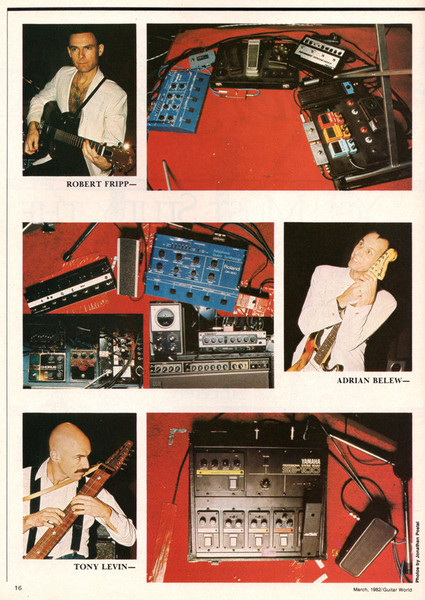
Used from King Crimson onwards, as known from the following sources:
Guitar World, March 1982 (pictured)
Guitar Player, June 1986, "Interview with Robert Fripp" by Tom Mullen
I suppose a good example of how Adrian Belew and I used the Roland GR-300 with King Crimson is "The Sheltering Sky." Although it’s available on the Discipline album, it was infinitely better live. When we were in Japan, Roland met with Adrian and told him that we were using their guitar synthesizers in a way that they had never anticipated. I think they expected, if you like, beginner guitarists or less proficient guitarists to play fairly simple things that sounded relatively amazing. Whereas we took them really as new instruments and tried coming up with something that was quite novel.
Roland US, "Adrian Belew: Taking Guitar Tone to the VG-99th Power" by Tiffany Schirz (July 22, 2008)
As one of the first guitarists to embrace guitar synthesis in the early ’80s with Roland’s GR-300, Adrian Belew has taken guitar tone to the moon and back.
Facebook, Adrian Belew, November 21, 2021 & adrianbelew.net, Discography, "the experimental guitar series volume 1: guitar as orchestra"
trivia points for Guitar As Orchestra:
•having released 4 pop-ish records in a row I was due to make a 180 degree turn. by this time I had worked extensively with 3 different guitar synth models (Roland gr-700, gr-50, and gr-1) and written a library of several hundred sounds. they weren’t samples, they were programs created by long late night experimentation. I felt it was time for someone to build an orchestra using only guitar.
•you can’t imagine the first-time thrill of playing my guitar and having it sound like a piano. a whole new universe appeared!
•having listened to this record for the first time in many years I was surprised at how ahead of its time it truly was. some of the better pieces would still make good film score material today. IMHO
•there really isn’t much in the way of trivia points since the whole record, be it tympani, harp, piano, or bassoon is guitar synthesizer. even the “audience applause” at the beginning was made with a guitar synth. so instead I will reprint here some of the liner notes from the record:
Facebook, Adrian Belew, April 3, 2024 & X, @THEadrianbelew, April 3, 2024
and BEAT begins. the photo, taken in my studio this morning, reunites three of the original tools from my sonic palette of the 80's Crimson: the first Twang Bar King guitar, the Roland GR-300 guitar synth, and the Roland Jazz Chorus JC-120 amp. ❤️
Guitar World, "“David Bowie and Brian Eno used to laugh at me, saying: ‘You’re not supposed to be able to play that!’” Adrian Belew on Frank Zappa’s lessons, Robert Fripp’s synth guitar, and what’s coming up with Steve Vai" by Andrew Daly (May 14, 2024)
How did you take the rig you used with Bowie and push it forward with King Crimson?
“The main thing that changed from that first period from David to Talking Heads to King Crimson was that I went to Japan. I met the people at Roland and they said, ‘We have a new thing – a guitar synthesizer.’ I’d been dying to have something akin to what keyboard players could do for 10 years, and they gave me one.”
You were one of the earliest adopters of the guitar synth, right?
“I’m not certain but I’m pretty sure I had the first one in New York, as they weren’t available there yet. When I joined King Crimson, Robert had a Roland JC-120 and also the synthesizer; it was actually the second one they made, but it was the first one that anyone ever used.
“The first one has been a bit too much – it was like a big Farfisa organ. The second one is the blue one, the GR-300. So much of the King Crimson sound of the ‘80s came from that one device.
“It was a simple instrument: you could only do maybe five or six things with it, and you had to manually tune all the different oscillators. You couldn’t save a sound! It was the era before things got much more digitized.”
You’re primarily known as a Strat guy, so the guitar synth must have been a shock to the system.
“Even if you just put it with the guitar, you had a very unusual sound. The guitar didn’t sound like a normal guitar and that really changed things. So the next thing I did in that period was my first solo record, Lone Rhino, using all the things I had coming from David, Talking Heads and King Crimson.”
What was that setup like?
“The Strat and maybe four, five or six little pedals. But for Twang Bar King, the second solo record, I started using the guitar synth. I had Fender build me a Mustang with all the accoutrements from the guitar synthesizer.
“You had all kinds of things you could operate from the guitar, and you had to have a special pickup. Once that got designed, I started using what became known as the ‘Twang Bar King guitar’ because I made that record with it. I used that in King Crimson from there on.”
Facebook, Adrian Belew, June 23, 2024, reply to a comment on the April, 3 2024 post
Benjamin Lowengard is there a way to play an mg-510 through a gr-300

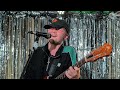
In a video titled "Geordie Greep Plays Synth Guitar Jam Session with American Bassist - Windmill Brixton - 09/12/25" by Amy Archives on YouTube, it is evident that Geordie Greep uses a Roland GR-300 Polyphonic Guitar Synthesizer. The footage clearly shows the device during his performance at Windmill Brixton, and at a later point in the video, he can be seen actively manipulating it.

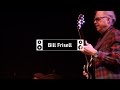
Frisell talked about how he used the Roland GR-300 on his album, “Rambler”.


On Steve Hackett's official website, he lists the Roland GR-300 guitar synthesizer as one of his pedals.


"I’ve been using BOSS pedals for about 15 years, maybe more … maybe closer to 20 years … and I dig ’em a lot. And I also used the guitar synthesizer, the very first blue one [Roland GR-300], then, in the ’80s, I used the GR-50. Now I have the most recent one [GR-20], and that thing is amazing."


"And I’ve been involved in guitar synthesis for most of my guitar career. I had a GR-300, the GR-700, the GR-55, and it’s been fascinating to see how the technology has twisted and changed and become more acceptable."

Album Usage
The Roland GR-300 Polyphonic Guitar Synthesizer has been featured on the following albums:
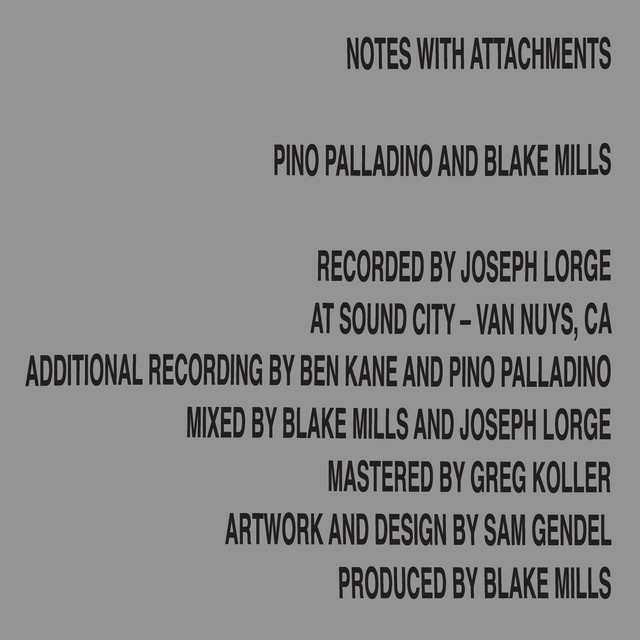
Notes With Attachments
Pino Palladino & Blake Mills (2021)
Just Wrong
Pino Palladino & Blake Mills (2021)
Modern Kosmology
Jane Weaver (2017)
音
Sugizo (2016)
Rambler
Bill Frisell (1985)
Hunting High and Low
A-ha (1985)
Three of a Perfect Pair
King Crimson (1984)

Beat
King Crimson (1982)

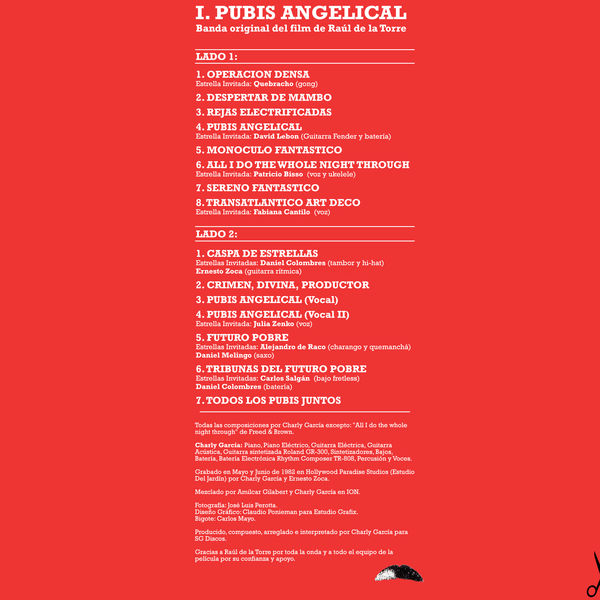
Pubis Angelical / Yendo De La Cama Al Living
Charly García (1982)
Pleasure Point
Jan Akkerman (1982)
Discipline
King Crimson (1981)
Genre Usage
Based on how artists on Equipboard use this gear, it is most commonly found in the following genres.
Used With
Based on how musicians on Equipboard use Roland GR-300 Polyphonic Guitar Synthesizer, it is most commonly used with the following gear.

-s.webp?v=1784386607)
-s.webp?v=1784386999)


Community setups
Show yours
Similar
Add recommendation2 alternative and related items for Roland GR-300 Polyphonic Guitar Synthesizer, curated by the Equipboard community.

$599.99 - $1,044.99

More Roland Guitar Synth Pedals
$599.99 - $1,044.99
in Guitar Synth Pedals Rank


$125.28
in Guitar Synth Pedals Rank


$180.00
in Guitar Synth Pedals Rank


$119.31
in Guitar Synth Pedals Rank


.png?v=1784405829)

$190.00
in Guitar Synth Pedals Rank


$400.00
in Guitar Synth Pedals Rank

$110.00
in Guitar Synth Pedals Rank

in Guitar Synth Pedals Rank


$229.00 - $279.00
in Guitar Synth Pedals Rank


$209.00 - $259.50
in Guitar Synth Pedals Rank


$129.99 - $247.00
in Guitar Synth Pedals Rank


$219.00 - $277.40
in Guitar Synth Pedals Rank


$204.39 - $259.50
in Guitar Synth Pedals Rank


$185.00 - $259.50
in Guitar Synth Pedals Rank


$160.00
in Guitar Synth Pedals Rank

-m.webp?v=1784473471)
$197.00
in Guitar Synth Pedals Rank

.jpeg?v=1784464493)


$184.84 - $259.50
in Guitar Synth Pedals Rank


$178.52 - $199.00
in Guitar Synth Pedals Rank


$259.00 - $395.00
in Guitar Synth Pedals Rank


$564.34 - $989.99
in Guitar Synth Pedals Rank


$299.00 - $336.00
in Guitar Synth Pedals Rank


$299.00 - $336.00
in Guitar Synth Pedals Rank

$189.00
in Guitar Synth Pedals Rank

-m.webp?v=1784473021)
$259.00 - $324.80
in Guitar Synth Pedals Rank

-m.webp?v=1784473457)
$229.00 - $283.80
in Guitar Synth Pedals Rank


$255.00 - $269.00
in Guitar Synth Pedals Rank


$555.55
in Guitar Synth Pedals Rank


$169.00 - $199.00
in Guitar Synth Pedals Rank


$420.00
in Guitar Synth Pedals Rank


.jpg?v=1784409026)

$160.00
in Guitar Synth Pedals Rank


$185.00 - $259.50
in Guitar Synth Pedals Rank


$199.00 - $259.50
in Guitar Synth Pedals Rank


$225.00
in Guitar Synth Pedals Rank


-m.webp?v=1784463291)
$249.00 - $249.99
in Guitar Synth Pedals Rank


$822.00 - $1,319.99
in Guitar Synth Pedals Rank


$106.59 - $151.50
in Guitar Synth Pedals Rank


$180.00 - $248.00
in Guitar Synth Pedals Rank


$165.00 - $199.99
in Guitar Synth Pedals Rank


$562.00 - $846.99
in Guitar Synth Pedals Rank

Accessories & Related Items



Most Popular Guitar Synth Pedals
Most Popular Brands
-
Added to Equipboard on by
 julianwolf2
GearIQ 13060
-


