
Pricing and availability
We compare 600+ stores and found this item at 5 stores. Prices updated .
Store
Reviews
Price





Average Price: $80
Standard/Professional
$75
$251+
Price Tier
Budget
Standard
High-end
Price History
Based on price data from 2 merchants for "Dunlop GCB-95 Original Cry Baby Wah-Wah (silver logo)". Prices shown reflect NEW condition. Tracking began Apr 2, 2026.
* Product prices and availability are updated by Equipboard every 24hrs and are subject to change. Equipboard may receive compensation for purchases made at participating retailers linked on this site. This compensation does not affect what products or prices are displayed, or the order of prices listed. For more information, please refer to our affiliate disclosure.
Description
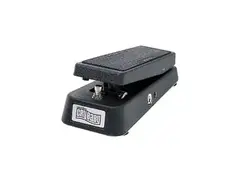
If you're looking to capture the soul of rock 'n' roll in a pedal, the Dunlop Cry Baby Original Wah-Wah is a timeless treasure on any guitarist’s pedalboard. Since its inception in 1966, this pedal has been a mainstay for legends like Jimi Hendrix, Eric Clapton, and David Gilmour, defining the wah sound across genres. Its iconic sweeping effect allows guitarists to morph their tone from treble highs to bass lows, creating funky wah-wah effects that are perfect for rock, blues, funk, and beyond.
Constructed with a robust die-cast housing, the Cry Baby is built to endure the rigors of both stage and studio use, offering reliability that matches its legendary status. The heart of this pedal is the Fasel inductor, which delivers a lush, expressive sweep with focused highs for an aggressive wah effect. This, combined with the 100 Kohm Hot Potz potentiometer, ensures a swift and articulate response with every treadle sweep.
Flexible power options keep you jamming without interruption, as it runs on a 9V battery or an optional Dunlop ECB-003 AC adapter. Whether you’re crafting new sounds or revisiting the classics, the Cry Baby Wah offers endless tonal possibilities to tailor your unique sonic identity.
Key Features:
- Iconic wah pedal used by legends such as Hendrix and Clapton
- Heavy-duty die-cast construction for durability
- Fasel inductor for lush, expressive sweeps
- 100 Kohm Hot Potz potentiometer for quick response
- Powered by 9V battery or optional AC adapter
- Adjustable internal pots for customized frequency and gain settings
Product specs
| Pedal Type | Wah |
| Inputs | 1 x 1/4" |
| Outputs | 1 x 1/4" |
| Power Source | 9V DC power supply (sold separately) |
| Batteries | 1 x 9V battery optional |
| Height | 2.5" |
| Width | 4" |
| Depth | 10" |
| Weight | 3.7 lbs. |
FAQs
-
What power options are available for the Dunlop Cry Baby Original Wah-Wah?
-
The Dunlop Cry Baby Original Wah-Wah can be powered using a 9V DC power supply (sold separately) or a 9V battery, providing flexibility for both stage and studio use.
-
Is the Dunlop Cry Baby Original Wah-Wah pedal suitable for live performances?
-
Yes, the Dunlop Cry Baby Original Wah-Wah is built with ultraheavy-duty durability, making it suitable for the rigors of live performances and frequent use.
-
How does the Dunlop Cry Baby Original Wah-Wah affect my guitar's tone?
-
The Dunlop Cry Baby Original Wah-Wah delivers the classic wah effect, known for its expressive vocal-like tone, enhancing solos and rhythmic playing with dynamic modulation.
-
Can the Dunlop Cry Baby Original Wah-Wah be used with a bass guitar?
-
While primarily designed for electric guitars, some bass players use the Dunlop Cry Baby Original Wah-Wah for its unique tonal effects, though it may not maintain the low-end frequencies as effectively as a bass-specific wah pedal.
-
What are the input and output options on the Dunlop Cry Baby Original Wah-Wah?
-
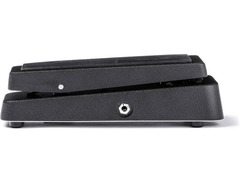
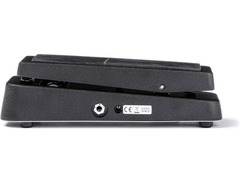
The Dunlop Cry Baby Original Wah-Wah features a straightforward design with one 1/4" input and one 1/4" output, ensuring easy integration into any pedalboard setup.
Videos

Long & McQuade Musical Instruments
Dunlop Crybaby Standard Wah Pedal [Product Demonstration]
![Video thumbnail for Dunlop Crybaby Standard Wah Pedal [Product Demonstration] by Long & McQuade Musical Instruments](https://img.youtube.com/vi/BSCeur90gb0/mqdefault.jpg)
Dunlop Crybaby Standard Wah Pedal [Product Demonstration]
Long & McQuade Musical Instruments
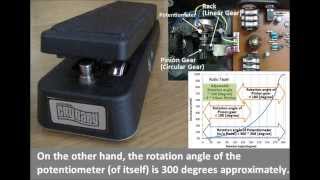
Jim Dunlop Original CRYBABY

Yoshiaki Doi
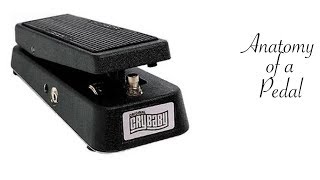
Anatomy of a Pedal: Dunlop CryBaby GCB95 Original Version

Julian Doe
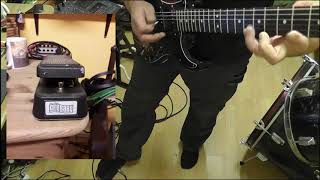
Cry Baby GCB 95

Ace Guitar
Reviews
PROS
-
Solid construction ensures durability
-
Legendary sound that defined the wah-wah effect
-
Versatile, works well with different guitar types and music genres
-
No need for repairs, only minor maintenance even after years
-
Can be modified for personalized sound
CONS
-
Switch is hard to turn on/off, requiring significant force
-
Power input jack design limits compatibility with standard 9V supplies without adapters
-
Lacks dynamic options compared to other pedals
-
Design could be improved for better accessibility
Owner Insights
We analyzed real musician discussions from forums and Reddit to find what players love, question, and tweak about Dunlop GCB-95 Original Cry Baby Wah-Wah (silver logo).
Build quality
-
The felt pad can fall off or compress, but this is easily fixable by adjusting the switch height or replacing the felt.
Source
Setup and maintenance
Features and functionality
-
The rack mechanism that drives the pot is noted for not having the best reputation in terms of reliability.
Source -
Older GCB-95 models lacked an input buffer, a feature added in the early 90s to improve signal integrity.
Source -
The DC jack on the GCB-95 evolved over time from an older design to the now-standard 2.1mm size for compatibility with most pedals.
Source
User experience
Comparisons
-
Owners compare the GCB-95's performance favorably for overdriven sounds versus the Vox V847-A, which is preferred for cleaner tones.
Source
4.5 out of 5
Based on 7 Reviews and 31 Ratings

139
Must have pedal
This was my first pedal. Very solid construction, does what you want it to and nothing else. You will really have to stomp on it to turn it on/off. If you are going to buy just one pedal in your lifetime, buy this one, the wah will change your life.

bookmarked!!, I like your web site!

298
Hard to beat a classic
I would recommend most people to start with something like this, It's your classic wah sound, nothing dynamic. Eventually I went for something with a bit more options, but I still keep this around when I want to keep things simple. My one gripe is the power input jack is sunken too far and I haven't yet found a supply that fits it, So I have to have a separate plug just to fit this


Awesome entry level wah.
This is my first wah pedal and I'm having a ton of fun with it. It sounds great with both my telecaster and my casino. It sounds really great with overdrive or doing clean funk wah.

23
Great starter wah
I love this wahwah pedal... great sound and everything for only 90 euros. I would consider another one of you love it enough however.

153
Excellent
Mine has modifications (led, volume, and modulation). I choose it for its fuller sound in relation to the Vox.
This review has been translated automatically into English. See originalArtist usage
Add artist

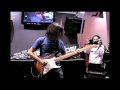
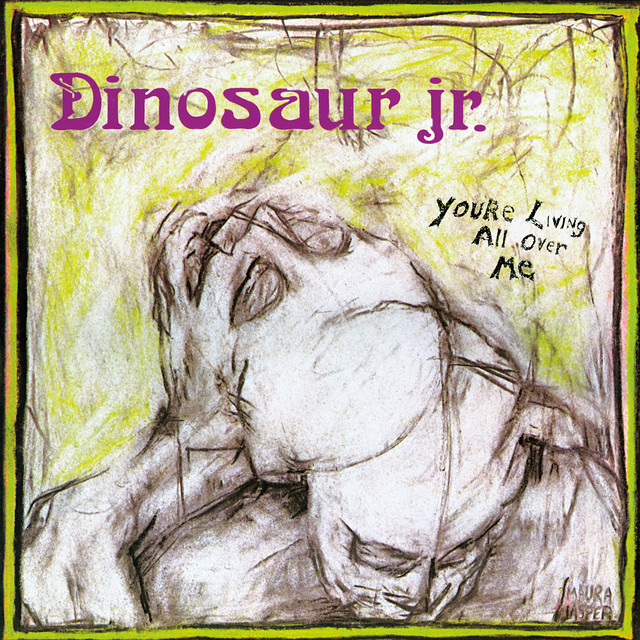
Used during the recording of Dinoasur Jr.'s Farm. In this video, it is used for an in-studio performance of "Tarpit" from You're Living All Over Me, as seen at 19:36.

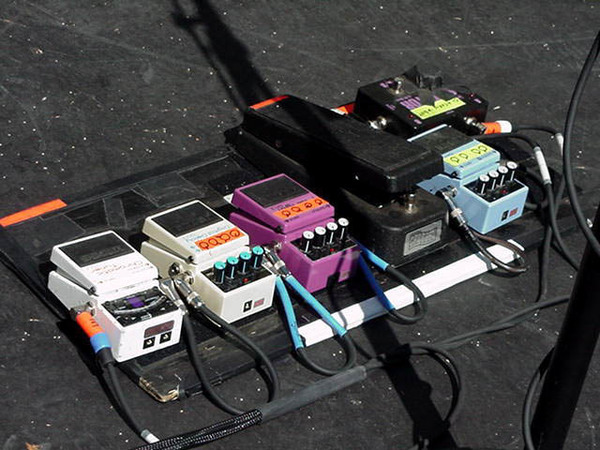


Used live, as stated in the January 1988 Guitar Player interview "Richard Lloyd: The 6 String Alchemy of Richard Lloyd" by Mark Dery.
Switching effects on but not turning the dials up has become something of a Lloyd trademark. "Yeah," he nods, "I'm using a wah-wah pedal now, and when I put the wah on, I don't want to hear the phasing. I just want to use it as a tone control. That way, you can get tenacity, starting a passage in the bass frequencies and slowly moving it toward the treble. A lot of times, I use it to get extra midrange."
Lloyd runs his Strat into a Cry Baby wah-wah and then a Boss Super Overdrive with the tone set at three o'clock and the overdrive at one o'clock. That feeds into a Korg SDD-2000 digital delay set at 400 milliseconds: "I keep it at about eight repeats, to get that old Echoplex-type effect. That goes into the high channel of the Roland JC-120, and there's a small cable going into the Acoustic, which has its own overdrive, preamp thing, which I use. I like to have things so they're just at the point of bursting – just this side of overload – but I get quite a clean signal. The Boss Super Overdrive is not that dirty an effect, and the wah-wah pedal doesn't overdrive. I tried different orders, but the signal-to-noise ratio was the cleanest this way, with the digital delay closest to the amp."


In this frame, Eddie Glass is seen using this wah pedal.

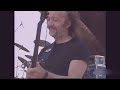
Listed on the back cover of Back Against the Wall among McPhee's equipment and shown up close in Live At Anti WAA Festival 1989 at 12:54.
Cry Baby Wah Wah
.jpg?v=1784985816)
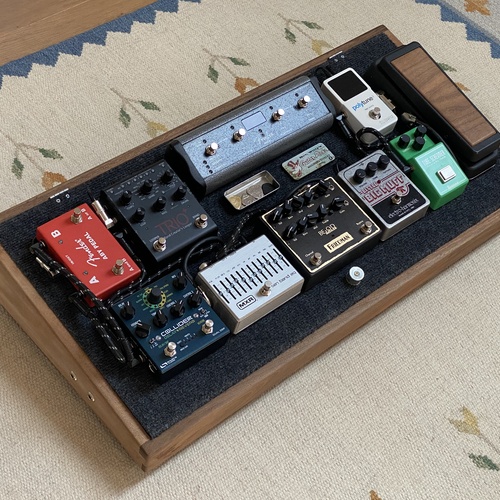
In this Guitar Geek page you can see all the Christopher Thorn's Pedalboard.


Mentioned the September 1990 Guitar Player interview "Gary Lucas' Gods and Monsters" by Mark Dery.
Lucas remains true to Beefheart's aesthetic. Backed by Gods and Monsters – country yodeler Julia Heyward, bassists Paul Now and Jared Nickerson, and alternate drummers Tony "Thunder" Smith and Tony Lewis – he rattles off strings of notes like a turret gunner spitting shells. He runs his sunburst '63 Fender Strat and red '65 Gibson Firebird (both strung with light-gauge D'Addario rock strings) through a maze-like signal chain: "My pedals sit on a percussion stand," he explains. "I go through a [Dunlop] Cry Baby wah into a T.C. Electronic Sustainer/Equalizer, a Boss Digital Metallizer, a Boss Flanger, another equalizer, which I use as gain-stage control, and then into a noise suppressor, a DeArmond volume pedal, a Whirlwind box – an effects loop with a gain stage – and then into a Boss Pitch-Shifter/Delay, a Boss Chorus, and then into another Pitch Shifter – which I manually manipulate – and then into a DigiTech 8-second delay, an Electro-Harmonix 16-second delay, an Alesis Midiverb, and a second Electro-Harmonix delay. At that point, I split the signal, running the direct sound into a Gallien-Krueger 250 ML and the effects into a Roland JC-120."


Listed among Jones' gear in the May 1991 Musician interview "Fishbone Swims Upstream To Spawn Its Punk-Funk Hybrid" by Roy Trakin.
KENDALL REY JONES' "Rack o' Doom" includes two MESA Boogie 2x12 cabinets with EV speakers, a Furman Power Conditioner and Light Module, a Samson Broadcast STD Series channel switcher with 10-channel capacity, a dbx 160X compressor limiter, a 32-band IEQ-ART MIDI-programmable EQ, a t.c. electronics 2290 digital delay and effects controller, two Eventide M-3000s, including the SE with the "real cool crazy psycho-effects." His axes include a '57 Strat reissue he's gutted and rebuit with Seymour Duncan live wire pickups and a Floyd Rose tremolo. He uses a Switch 2 L for all the amp and MIDI switching and running two MESA/Boogie Mark IVs in stereo. His other guitar is a Tom Anderson Pro-Am custom-built in Sylmar, California, with Stay-in-Tune strings. He also uses a Jim Dunlop Cry Baby wah-wah pedal and "various secret stomp boxes I can't tell you about."

Album Usage
The Dunlop GCB-95 Original Cry Baby Wah-Wah (silver logo) has been featured on the following albums:


Genre Usage
Based on how artists on Equipboard use this gear, it is most commonly found in the following genres.
Used With
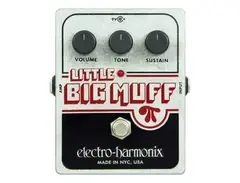
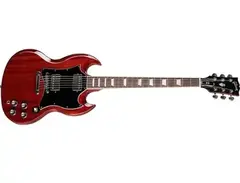
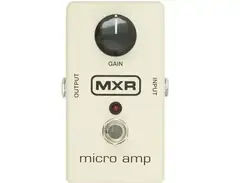
Based on how musicians on Equipboard use Dunlop GCB-95 Original Cry Baby Wah-Wah (silver logo), it is most commonly used with the following gear.



-s.webp?v=1785063785)


-s.webp?v=1785063627)
Community setups
Show yours
Similar
Add recommendation1 alternative for Dunlop GCB-95 Original Cry Baby Wah-Wah (silver logo), curated by the Equipboard community.

Essentially the same pedal, but allows you to adjust the frequency range and has a volume booster.
More Dunlop Wah Pedals
-m.webp?v=1785066061)
$89.00 - $99.99
in Wah Pedals Rank


$147.38 - $220.00
in Wah Pedals Rank


$93.88 - $125.99
in Wah Pedals Rank


-m.webp?v=1785063621)
$89.00 - $109.99
in Wah Pedals Rank


$154.00 - $159.99
in Wah Pedals Rank
.jpeg?v=1784986244)


$209.99 - $258.00
in Wah Pedals Rank


$188.85 - $219.00
in Wah Pedals Rank


$209.99
in Wah Pedals Rank


$59.00 - $190.00
in Wah Pedals Rank

.jpeg?v=1785065168)

$163.93 - $190.00
in Wah Pedals Rank


.jpg?v=1785038939)

$232.78 - $245.99
in Wah Pedals Rank


$169.00 - $179.99
in Wah Pedals Rank


$147.38 - $220.00
in Wah Pedals Rank


$311.00 - $315.99
in Wah Pedals Rank


.jpg?v=1784917540)

$199.00 - $209.99
in Wah Pedals Rank

$89.00 - $99.99
in Wah Pedals Rank
.JPG?v=1784934260)


$129.46 - $159.00
in Wah Pedals Rank


$209.99 - $229.00
in Wah Pedals Rank
.png?v=1785070564)


$69.00 - $179.99
in Wah Pedals Rank


$139.99
in Wah Pedals Rank


$195.50 - $229.99
in Wah Pedals Rank

$149.99 - $198.00
in Wah Pedals Rank


$169.99 - $189.99
in Wah Pedals Rank


$107.00 - $324.99
in Wah Pedals Rank


$269.99 - $295.00
in Wah Pedals Rank


$175.00 - $189.99
in Wah Pedals Rank

$149.99 - $299.99


$249.99 - $950.16


$60.00 - $190.00
Accessories & Related Items


-s.webp?v=1785063627)


-s.webp?v=1785063773)





-s.webp?v=1785077860)


-s.webp?v=1785063621)
Gear Guides



.jpg)



Most Popular Wah Pedals
Most Popular Brands
-
Added to Equipboard on by
 paolovallinari
GearIQ 1127
-


