This page about Arbiter England Add-A-Sound is a stub. You can help improve it:


Pricing and availability




* Product prices and availability are updated by Equipboard every 24hrs and are subject to change. Equipboard may receive compensation for purchases made at participating retailers linked on this site. This compensation does not affect what products or prices are displayed, or the order of prices listed. For more information, please refer to our affiliate disclosure.
Description
Unlock new sonic horizons with the Arbiter England Add-A-Sound, an innovative effects processor designed to enhance your studio recording sessions. This versatile unit is specifically crafted to cater to both amateur and professional musicians who are looking to add depth and dimension to their soundscapes. Seamlessly integrate it into your setup and explore its dynamic capabilities to transform ordinary recordings into extraordinary audio experiences.
The Arbiter England Add-A-Sound stands out with its proprietary modulation engine, which offers a wide range of customizable effects, from subtle tonal shifts to dramatic audio transformations. Its intuitive interface ensures that whether you're a seasoned studio engineer or just starting out, you'll find it easy to dial in the perfect sound. Built with high-quality components, this processor ensures enduring performance and reliability.
Essential for any studio, the Arbiter England Add-A-Sound provides musicians with an essential tool to push the boundaries of creativity. Whether you're layering vocals, enhancing instruments, or experimenting with electronic beats, this effects processor delivers unparalleled audio clarity and precision.
Key Features:
- Proprietary modulation engine for versatile effect customization
- High-quality audio processing components
- Intuitive user interface for easy navigation and control
- Compatible with a wide range of studio setups
- Offers both subtle and dramatic audio transformations


Reviews
Based on 0 Reviews and 0 Ratings
Artist usage
Add artist
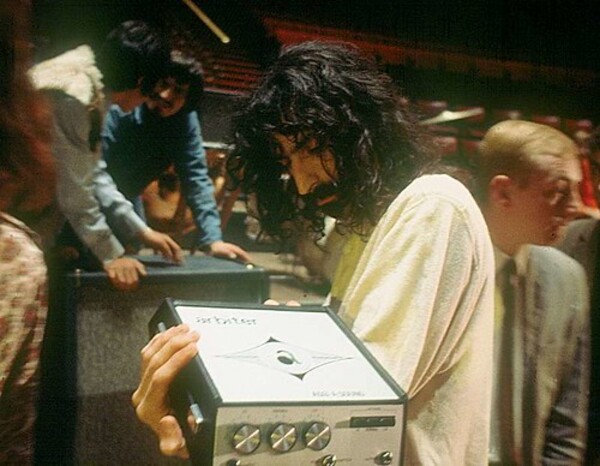
Visible in this photo and in this photo from the inner sleeve of Burnt Weeny Sandwich.


McPhee used an Add-A-Sound that he personally modified, as known from the following sources:
ZigZag, March 1971, "Tony McPhee... Groundhog" by John Tobler
What about records? You’ve never thought of bringing in Moogs and what have you?
No, I’m not really a weird noise freak. I think it’s much better and cleverer to get a strange sound out of an ordinary instrument, which is why I admired Hendrix so much. He could make Moog noises with a guitar, and though I don’t consciously try to copy him, I do sometimes get similar effects.
Yes, and the wah-wah pedal often accentuates the similarity...
Well, a lot of people don’t realise about wah-wahs....I mean, every little step you bring it down is a different tone, and you can get all sorts of noises from it. I’ve also got an octave splitter which sounds great through the Laney gear — it gives you an octave above and an octave below. Hendrix uses one on ‘Machine Gun’ — it gives a sort of modulated note, where you have the note and other frequencies with it which aren’t really related, so you end up with a weird sort of dischordant sound. And I’m just discovering exactly what you can get out of this device.
Melody Maker, June 5, 1971, pg. 34, Any Questions?
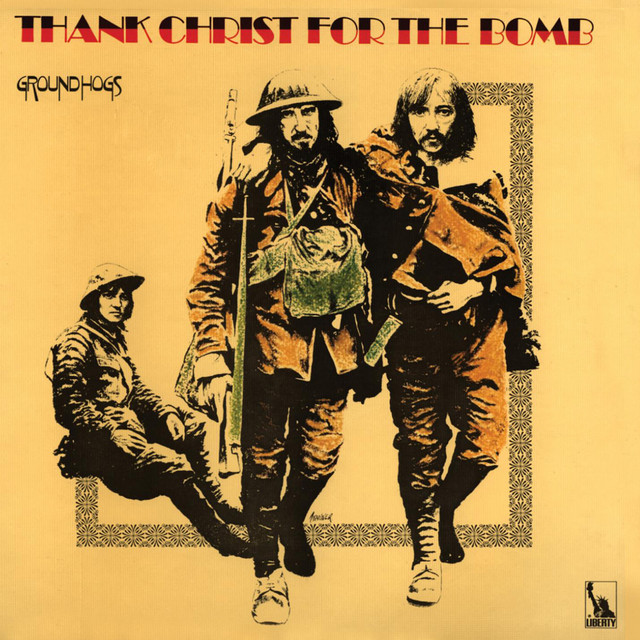
I use a Laney 100-Watt stack, plus an Arbiter Add-A-Sound octave splitter, which adds higher harmonies, producing a "violin" sound and also lower octaves, which used [sic] on "Cherry Red." I modified this unit and built in a pre-amp with high-pass filter which acts as a treble boost. I also use a Shcaller [sic] wah-wah pedal. On "Thank Christ" we had completely different equipment, so the sound is different on "Split", plus the fact that I also used a Fender Stratocaster for many of the numbers on "Split," notably parts 2 and 4, using a combination of wah-wah and tremolo arm to get "whizzing" effects.
Sounds, March 18, 1972, "The Groundhogs: Tony McPhee At The Talk-In" by Jerry Gilbert
Since Thank Christ For The Bomb you've started to get into sounds and effects which you can obtain by using the studios and also by modifying your guitar and amplification.
Yeah definitely. Studios are weird things, you know you can get a sound on stage which suits you but you can't get it in a studio so you have to muck about with it quite a bit and in doing so you get a different sound. I use a wah-wah pedal which I'm using less of now – it got a bit tiresome after a while – then there's a new thing called an octave splitter and that just sort of gives you a rough octave above and below.
You can get sounds like a bass and sustained sounds with a weird quality and in effect it's like an electrical Rory Gallagher – you know this ability he's got of striking harmonics, well in actual fact that's what it does, so you can cheat quite well on those things. Also playing two notes at once it gives you the same effect as a ring modulator which is very trendy these days... notes which are the subtraction and addition of the two frequencies and this sort of thing which gives you a bubbly sort of sound. That's all I get along with really but I do feel now that I want more – not simply from gadgets because I don't use these as gadgets, I use them as separate instruments really.
The whole point is I knew I could imitate things like strings on the new album but I wanted the actual strings sound for some reason otherwise it makes it another freaky album which I didn't want to do. When the mellotron comes on stage we are going to have to re-think quite drastically – not that we do much thinking; we'll probably just slide along like we always do.
July 8, 1972 photos from Carl Dunn of The Groundhogs performing at Concert 10, posted to Facebook by McPhee on September 12, 2011 (Photo 1, Photo 2) (visible)
Dallas Arbiter Octave Splitter
Sounds, May 5, 1973, "Mac’s Home Cooking: The Groundhogs" by Jerry Gilbert
For having exploited the full range of guitar sounds via the various echo and wah-wah pedals and octave splitter, he turned to the electronic keyboard instruments just as a duck turns to water.
"I only want to use a synthesiser to synthesise — nothing more. I synthesised a drum kit and got an amazing brass sound. I want to use a brass sound on the new album, but brass musicians are a pain in the arse so this is ideal. You can never mistake a synthesiser for the real thing, though, because it has characteristics of its own".
Andrew Liles website, Discography, "Split-Up" (2015)
In 1971 when ‘Split’ was originally released, there were {a few} guitar pedals, mainly wah-wah, overdrive & chorus (with a bit of phasing or ‘flanging’). I had an Arbiter and a sound early octave pedal but I was keen to find ‘new’ sounds, like ring modulation. Some of the 70’s bands have re-done their most popular albums but I never thought I could improve on Split, with Martin Birch engineering at De Lane Lea studios, it had it all!
When Andrew Liles (regarded by some to be the funniest man) told me he’d like to re-do Split I thought he was having a laugh, but he has done what I would have IF I’d had the modern pedals.
Andrew has done me a great service by bringing my recordings into the 21st Century.
Tony (T.S.) McPhee – 2015
Album Usage
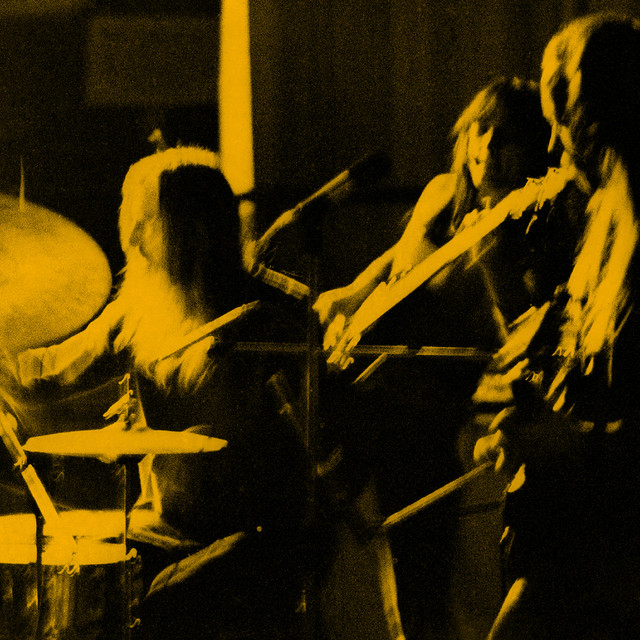
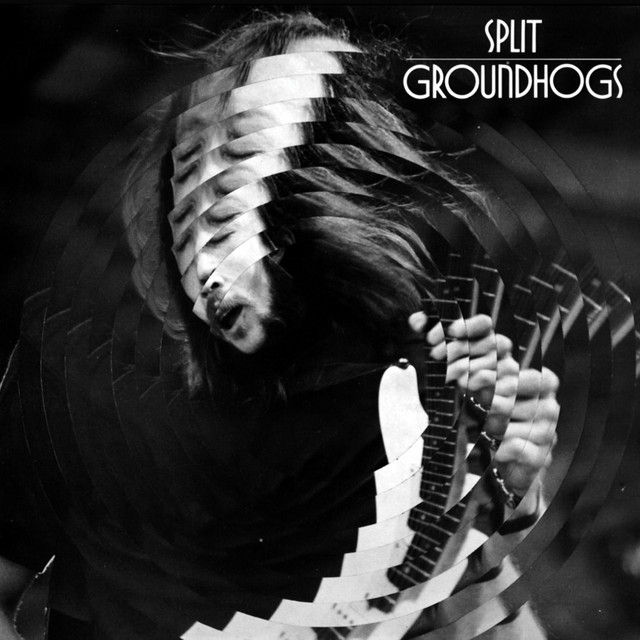
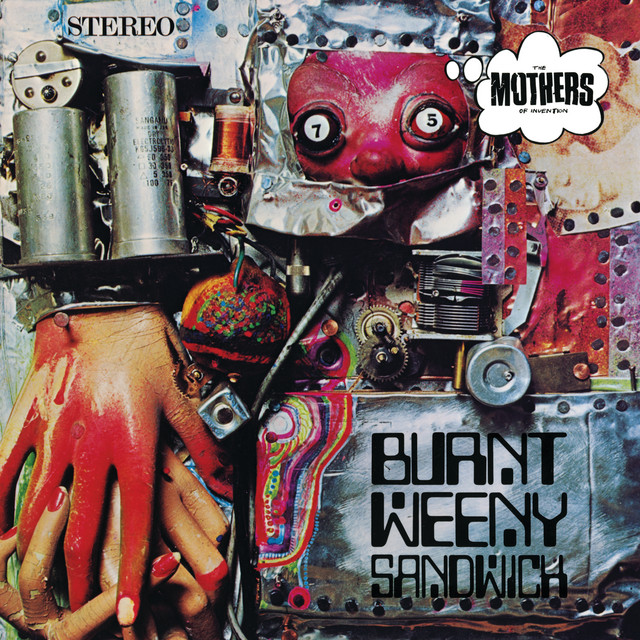
The Arbiter England Add-A-Sound has been featured on the following albums:
Genre Usage
Based on how artists on Equipboard use this gear, it is most commonly found in the following genres.
More Arbiter England Effects Processors

$1,500.00
in Effects Processors Rank


-m.webp?v=1784559394)
$640.00
in Effects Processors Rank


$149.99
in Effects Processors Rank


$1,799.00
in Effects Processors Rank


$1,549.00
in Effects Processors Rank


$1,999.00
in Effects Processors Rank


$749.99 - $833.00
in Effects Processors Rank


$132.00
in Effects Processors Rank


$1,450.00
in Effects Processors Rank


$3,799.00 - $4,999.00
in Effects Processors Rank


-m.webp?v=1784671728)
$40.00 - $2,999.00
in Effects Processors Rank

$5,777.00 - $6,999.00
in Effects Processors Rank

.jpg?v=1784591665)

$1,153.00 - $2,635.00
in Effects Processors Rank


$894.60 - $1,799.95
in Effects Processors Rank


$3,577.20 - $4,750.00
in Effects Processors Rank


$229.00
in Effects Processors Rank


$624.99
in Effects Processors Rank


$69.95
in Effects Processors Rank


$199.99 - $289.99
in Effects Processors Rank


-m.webp?v=1784559423)
$320.00
in Effects Processors Rank


$419.99 - $1,179.99
in Effects Processors Rank


$749.99 - $4,999.00
in Effects Processors Rank


$1,710.00
in Effects Processors Rank

$2,999.00 - $3,250.00
in Effects Processors Rank


$629.99 - $849.00
in Effects Processors Rank


$35.78 - $199.00
in Effects Processors Rank


$2,555.00 - $2,850.00
in Effects Processors Rank


-m.webp?v=1784386736)
$250.00 - $936.00
in Effects Processors Rank
-m.webp?v=1784645967)
$450.00 - $699.00
in Effects Processors Rank


$4,999.00 - $8,040.26
in Effects Processors Rank


$1,275.00
in Effects Processors Rank

.jpg?v=1784640199)


$163.68
in Effects Processors Rank


$1,341.90
in Effects Processors Rank


$202.50 - $599.99
in Effects Processors Rank


$300.00
in Effects Processors Rank


$66.00
in Effects Processors Rank


$175.00
in Effects Processors Rank


$475.00
in Effects Processors Rank


$1,195.00 - $1,199.00
in Effects Processors Rank


$149.00 - $638.00
in Effects Processors Rank

Community setups


Similar


Gear Guides
.jpg)







Most Popular Effects Processors
Most Popular Brands
-
Added to Equipboard on by
 eyeseeofficial
GearIQ 161592
-


