
Pricing and availability




* Product prices and availability are updated by Equipboard every 24hrs and are subject to change. Equipboard may receive compensation for purchases made at participating retailers linked on this site. This compensation does not affect what products or prices are displayed, or the order of prices listed. For more information, please refer to our affiliate disclosure.
Description
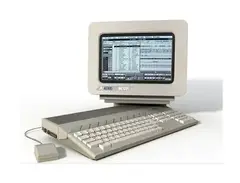
Step back in time and experience the intersection of retro computing and modern music production with the Atari 1040 ST. Originally launched in the mid-1980s, this iconic computer has found a lasting place in the hearts of musicians and tech enthusiasts alike. Known for its role in the evolution of digital music production, the Atari 1040 ST remains a beloved classic due to its built-in MIDI ports, which were revolutionary for its time. This feature made it a pioneer in seamlessly connecting digital instruments and computers, paving the way for the modern music production landscape.
The Atari 1040 ST is equipped with the Motorola 68000 CPU, known for its robust performance and reliability, making it a favorite in studios worldwide. Its graphical interface and ease of use allowed musicians to focus on creativity without getting bogged down in technical details. With a 1MB RAM upgrade from its predecessor, the 1040 ST was more than capable of handling complex music sequences.
Whether you’re a retro computing enthusiast, a musician looking to explore the roots of digital music production, or simply someone who appreciates the synergy of technology and creativity, the Atari 1040 ST delivers a unique experience. Its legacy endures, offering both charm and functionality that continue to inspire new generations of musicians.
Key Features:
- Built-in MIDI ports for direct connectivity with musical instruments
- Motorola 68000 CPU for reliable performance
- 1MB RAM for efficient handling of music sequences
- 3.5-inch floppy disk drive for data storage and software loading
- Classic graphical user interface for intuitive operation
Videos

Espen Kraft
Atari 1040ST & Notator Sequencer | The Perfect Combo | Tutorial & Workflow |
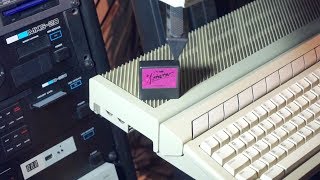
Atari 1040ST & Notator Sequencer | The Perfect Combo | Tutorial & Workflow |
Espen Kraft
TESTING THE OLD ATARI 1040 ST (1985)
Nostalgia Channel
Reviews
Owner Insights
We analyzed real musician discussions from forums and Reddit to find what players love, question, and tweak about Atari 1040 ST.
Features and functionality
Software and compatibility
-
The ST's OS is stored in ROM, making it highly useful with only a floppy drive, offering reliability and convenience.
Source
Comparisons
Use cases and applications
Build quality
-
Some users mention that the ST's keyboards feel mushy compared to the solid hardware of Amigas.
Source
User experience
-
Many older floppy disks for the Atari 1040 ST still function, suggesting robust media longevity if well stored.
Source
Critic Reviews
4.5 out of 5
Based on 5 Reviews and 17 Ratings

147
Timeless and indestructible
My unit is over 35+ years old, and it still runs flawlessly. It is one of the most indestructible pieces of gear I've ever owned. The CPU is programmed to prioritize the MIDI signal over everything, making it more precise (less latency) than any modern computer.
It is THE best and most reliable computer/notator/sequencer I've ever own.
Obviously, you have to deal with floppy disks (one of the least reliable media available), but if you understand the risk and prevent it by making several copies of your saves, you are more than fine!
Preferred Settings + Usage:
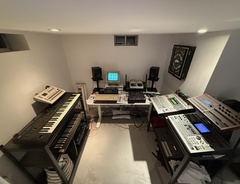
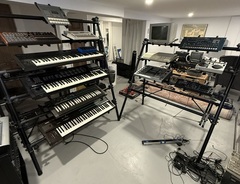
Using Dr. T KCS (Omega) is like using Ableton Live 12.

208
A great Piece of History
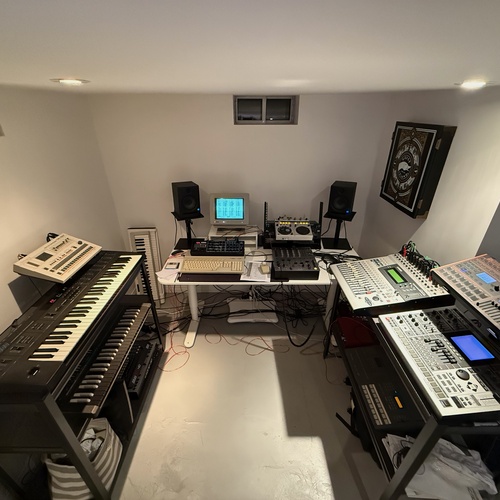
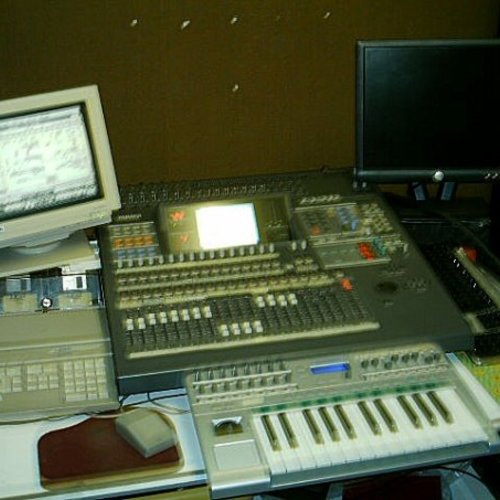
I Acquired an Atari ST 1040 circa 2021, complete with CLAB Notator/Creator Software and Dongle, previously owned by Manuel Göttsching. The Atari runs great and boasts excellent MIDI timing. Ive ensured the Atari's optimal performance by having its power supply unit revised, just as a precaution. Additionally, an ACSI external hard disk emulator has been added for enhanced convenience. I've hooked it up to a compact TFT monitor via a VGA adapter box for easy viewing.
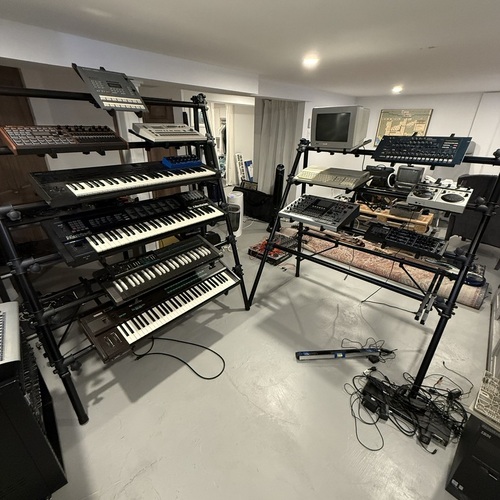
It remains an invaluable tool for MIDI sequencing hardware synthesizers, proving its worth even in 2024. I incorporated it into my hybrid setup, which blends both modern and vintage equipment.

41029
you're making me miss my ST from the 90s :-(

1264
Rock solid and groovy
Yes, I'm apparently a crazy person that added an Atari ST to his home studio for sequencing in 2021.
This Atari has been stable and rock solid for me so far. Learning Steinberg Pro 24, Notator and Cubase 3 on it has been mostly painless. It's really nice having a dedicated machine for sequencing with no distractions.
I have had too many intermittent troubles with modern PCs and midi timing and the Atari has been a great solution.

26904
Impressive. I dreamed about doing this for 20 years, but was always afraid the realities of keeping a 15+ year-old (now 30+ year old) computer alive would bleed the fun out of the experience... and now I mostly work ITB anyway. I'm so glad to hear you're loving it. How'd you get your hands on the original software? Didn't some of those packages require hardware dongles?
1264
Ebay and some Atari forums mainly for the midi/smpte hardware and dongles. I would like to get a backup Atari because it is a 30+ year old computer. But it's also rather simplistic so keeping it running shouldn't really be a huge issue. There's even schematics and drivers out there to make your own midi interface expanders.

120
I don't know how but this is STILL working!
I am so far behind technologically speaking! But I still lobe this machine with Cubase 1989 version. I managed to get hold of a rare hard drive as well so the boot-up and save etc is damn site quicker. Aside from that - it never seems to crash, and the timing is rock solid. No latency issues here! It does what I need. I am not only scared to change it, I actually don't want to!
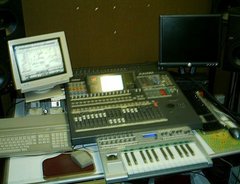

172
With this computer I started making music in the early 90 ...
The Atari ST is a home computer that was announced at Winter CES in January 1985[1][2] and subsequently released by Atari Corporation in June 1985. Development machines were distributed around May 1985[3] and it was available commercially from that summer into the early 1990s. The "ST" officially stands for "Sixteen/Thirty-two",[4] which referred to the Motorola 68000's 16-bit external bus and 32-bit internals. Due to its graphical user interface, it was jokingly referred to as the "Jackintosh", a reference to Jack Tramiel[citation needed].
The Atari ST is part of the 16/32 bit generation of home computers, based on the Motorola 68000 CPU, typically with 512 kB of RAM or more, a graphical user interface, and 3½" microfloppy disks as storage. It was similar to the Apple Macintosh, and its simple design allowed the ST to precede the Commodore Amiga's commercial release by almost two months.[5][6] The Atari ST was also the first personal computer to come with a bit-mapped color GUI,[7] using a version of Digital Research's GEM released that February.[8]
The ST was primarily a competitor to the Macintosh, Amiga, and in certain markets the Acorn Archimedes. Where the Amiga has a graphics accelerator and sample-based synthesis[9] based sound, the ST has a simple frame buffer and a 3 voice synthesizer chip but with a slightly faster CPU, and has a high-resolution monochrome display mode, ideal for business and CAD. In some markets, particularly Germany, the machine gained a strong foothold as a small business machine for CAD and Desktop publishing work. The Atari ST also enjoyed some market popularity in Canada.[citation needed]
The ST was also the first home computer with integrated MIDI support. Thanks to its built-in MIDI, it enjoyed success for running music-sequencer software and as a controller of musical instruments among amateurs and professionals alike, being used in concert by bands and performers such as Jean Michel Jarre, Madonna, Eurythmics, Tangerine Dream, Fatboy Slim, and 1990s UK dance acts Utah Saints[10] & 808 State, as well as naming German digital hardcore band Atari Teenage Riot.
41029
I'm pretty sure Depeche Mode relies on an ST from Construction Time to Black Celebration... maybe beyond.
Artist usage
Add artist

In the Sound on Sound interview linked, Cobain talks through the setup of the Earthbeat studio and mentions that FSOL
"also had an Atari 1040 running Creator" Later in the article Cobain discusses use of the 1040 to trigger other kit.


In his early years, Mr. Oizo used a Korg MS-20, an Akai S1000, and an Atari 1040 computer.[citation needed] Mr. Oizo is known currently for strong use of computers in his music. As he stated in an interview with XLR8R, he started using computers to avoid having to plug in four different appliances, and because the result of music is more or less the same.[citation needed] His first album to switch to all computers was Moustache (Half a Scissor). In Lambs Anger, Mr. Oizo used a Macintosh G5 running Logic Pro to compose all of the songs. During his DJ sets, he uses two CDJs.

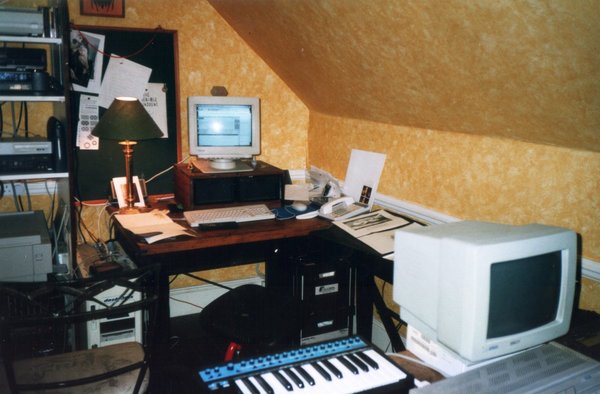
An Atari ST with monitor can be seen in this photo of Coil's home studio

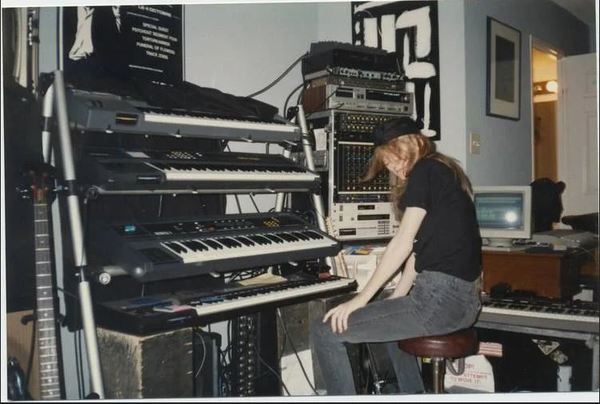
In this photo it shows Dwayne Goettel in their studio with an Ensoniq ESQ-1, Ensoniq Mirage, E-Mu EMAX, Akai S900. There is an effects rack with a Lexicon PCM 41, a pair of Korg SDD-1000s. In the background is an Atari 1040ST running Steinberg Pro 24 sequencing software.


Per Reverb.com:
Geoff Barrow was working as an assistant at Coach House studio while Massive Attack was recording its own debut album, Blue Lines. Seeing a strong aptitude in the young assistant, the group gifted Barrow with an Akai S1000 and an Atari 1040 computer to start him off on his sampling journey.


At around 2:30 Daurde says
We were using an Atari ST with Cubase on a black and white screen and 16 MIDI tracks (...)


Alec Empire, known for his work with Atari Teenage Riot, mentioned on Twitter that the Atari 1040 ST is still used daily in the studio, praising its stability and impact on music production. The computer is also credited in the liner notes of their 1995 album as a key instrument alongside a CASIO FZ-1 sampler and a TR-909 drum machine.


EQUIPMENT LIST
RECORDING Akai S1000 Sampler + Hard Drive Alesis HR16 Drum Machine Atari 1040ST Computer Casio CZ230S Synth E-mu Systems Proteus Sample Reader Korg M1 Workstation Oberheim Matrix 1000 Synth Module Roland D110 Synth Module Roland Super JX Synth Module Steinberg Pro24 v3 Sequencing Software Yamaha RX5 Drum Machine Yamaha TX81Z Synth Module

From about 2:10-2:25, Midge Ure says that he had an Atari 1040ST.


Jens Johansson, in an interview from October 1995, confirmed that he uses an Atari 1040 ST with an Adspeed 16 MHz upgrade, primarily running "Cubase" (2.1). He also mentioned using an HP Omnibook 300 for word processing and spreadsheets.

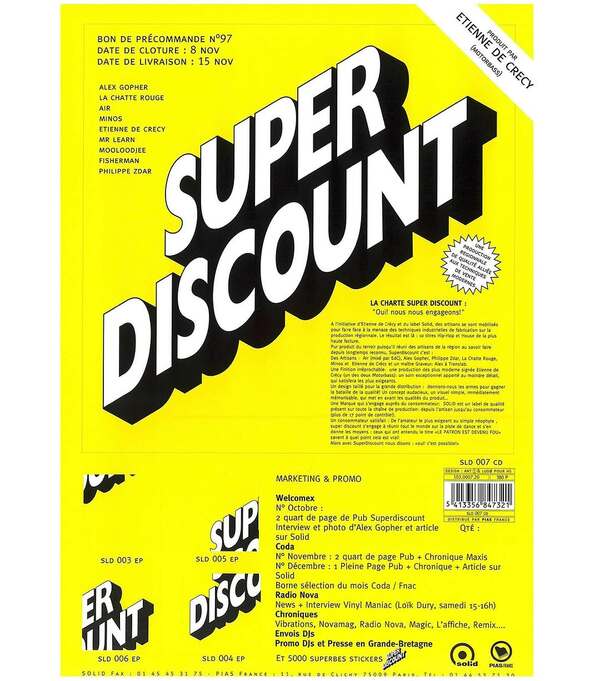
The second image on the Instagram post shows Etienne De Crecy's setup during the making of Super Discount. The Atari 1040ST keyboard can be seen with the mouse under the audio monitors and the monitor on the left facing up.
There are numerous times where De Crecy mentions the 1040ST, in the liner notes of the "Unreleased 1992-2005" sleeve in the compilation "My Contribution To The Global Warming". Liner notes can also be read on the YouTube uploads of the songs from that section of the compilation. In 1997, Lola Da Musica conducted interviews with French Touch figures (Daft Punk, Motorbass, Laurent Garnier), and the Motorbass segment shows the studio setup, and the Atari can be seen with Cubase running while Zdar plays a demo of Ezio (Cassius Remix). Another mention of the Atari 1040ST appears in the Pitchfork interview for Super Discount 3 when Zdar was talking about the creation of Pansoul, which appears at the timestamp 2:22. The caption on the image reads "Le bordel sans nom du studio d'Etienne De Crecy. C'est avec ça qu'on fait des tubes!" translates to “The utter chaos of Etienne De Crecy's studio. That's how we make hits!”
Liner Notes https://youtu.be/ekb2zmrrcHI https://youtu.be/S3H95RnnlOA (Check Description for mentions)
Lola Da Musica Interview Clip https://youtu.be/SFMwhCEL4Co
Pitchfork Interview Clip https://youtu.be/JufW0lqNKcU?t=142


Album Usage
The Atari 1040 ST has been featured on the following albums:
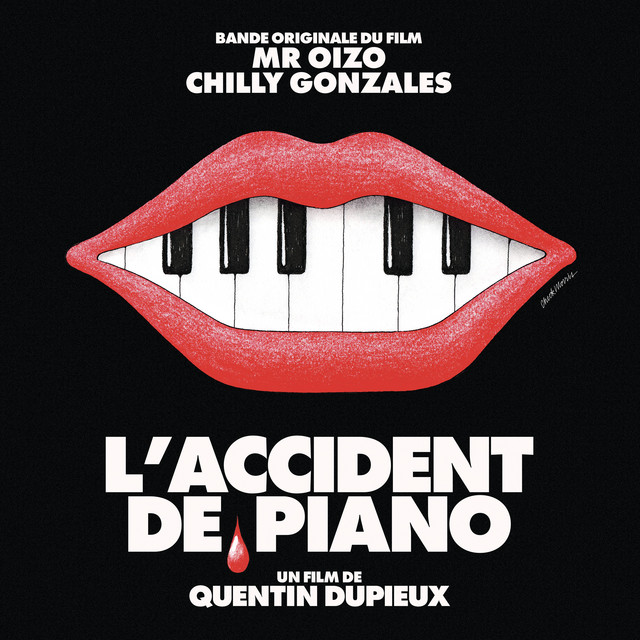
L'Accident de piano
Mr. Oizo (2025)
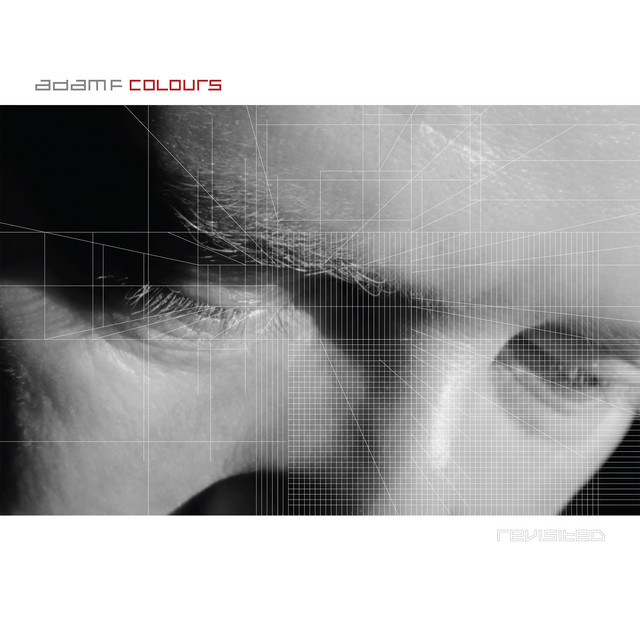
Colours Revisited
Adam F (2025)

Visions (Remastered Edition Sampler)
John B (2016)
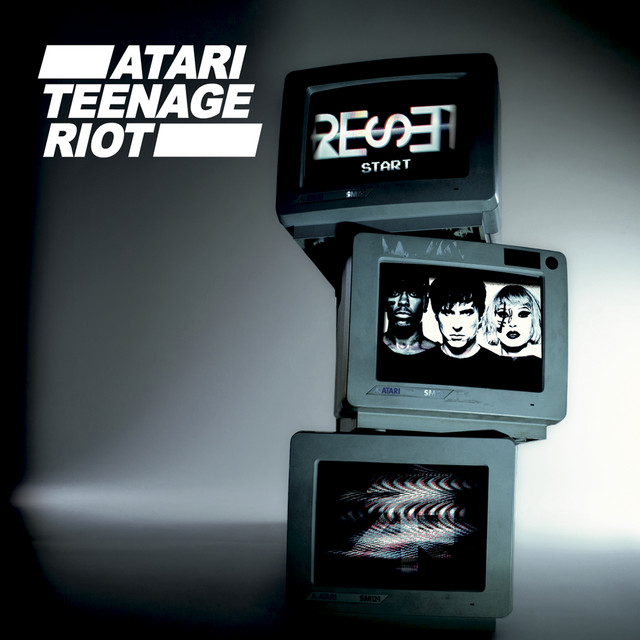
Reset
Atari Teenage Riot (2015)
Syro
Aphex Twin (2014)

Lambs Anger
Mr. Oizo (2008)
Earth Moving
Mike Oldfield (2000)
Selected Ambient Works 85-92
Aphex Twin (1992)
Screamadelica
Primal Scream (1991)
Genre Usage
Based on how artists on Equipboard use this gear, it is most commonly found in the following genres.
Used With
Based on how musicians on Equipboard use Atari 1040 ST, it is most commonly used with the following gear.

-s.webp?v=1782917887)


-s.webp?v=1783090753)
Community setups
Show yoursMore Atari Computers & Peripherals


$1,319.55
in Computers & Peripherals Rank


$69.59 - $79.00
in Computers & Peripherals Rank


$399.15 - $596.86
in Computers & Peripherals Rank


$135.00 - $239.99
in Computers & Peripherals Rank


$579.99 - $799.00
in Computers & Peripherals Rank


$1,192.00 - $1,914.49
in Computers & Peripherals Rank


$54.99
in Computers & Peripherals Rank


$149.95 - $179.99
in Computers & Peripherals Rank

$83.83 - $99.00
in Computers & Peripherals Rank


$109.99 - $129.99
in Computers & Peripherals Rank


$1,299.00
in Computers & Peripherals Rank


$149.99 - $187.99
in Computers & Peripherals Rank


$39.99 - $89.00
in Computers & Peripherals Rank


$365.00
in Computers & Peripherals Rank


$509.00 - $867.00
in Computers & Peripherals Rank

$25.00 - $1,614.91
in Computers & Peripherals Rank

$119.98 - $119.99
in Computers & Peripherals Rank


$115.25
in Computers & Peripherals Rank


$1,369.99 - $1,399.00
in Computers & Peripherals Rank


$210.99 - $379.99
in Computers & Peripherals Rank


$1,488.71 - $1,999.00
in Computers & Peripherals Rank


$87.00 - $199.00
in Computers & Peripherals Rank


$17.91 - $22.80
in Computers & Peripherals Rank


$128.00
in Computers & Peripherals Rank


$32.99 - $189.95
in Computers & Peripherals Rank


$629.99 - $919.99
in Computers & Peripherals Rank


$449.00
in Computers & Peripherals Rank
.png?v=1783050948)


$189.99 - $229.00
in Computers & Peripherals Rank


Similar


Gear Guides







Most Popular Computers & Peripherals
Most Popular Brands
-
Added to Equipboard on by
paoloalibertiGear IQ 172
-


