

Pricing and availability


* Product prices and availability are updated by Equipboard every 24hrs and are subject to change. Equipboard may receive compensation for purchases made at participating retailers linked on this site. This compensation does not affect what products or prices are displayed, or the order of prices listed. For more information, please refer to our affiliate disclosure.
Description
Audio Ease Altiverb 7 is a sonic powerhouse designed for musicians and audio engineers who crave authentic acoustic emulation. As a leading convolution reverb plugin, it offers an immersive experience by replicating real-world acoustic spaces with meticulous detail. Whether you're looking to transport your sound to a grand concert hall or a cozy studio, Altiverb 7 has you covered with its expansive library of impulse responses.
What sets Altiverb 7 apart is its user-friendly interface paired with advanced sound-shaping tools. Adjust parameters such as reverb time, attack, and brightness, while the stage positioning feature allows you to place instruments or vocalists precisely within the acoustic space. This level of control ensures that your mix sounds exactly as you envision it.
For those who love to experiment, Altiverb 7 includes special effects like reverse and modulated reverbs, adding a creative edge to your projects. The built-in mixer and EQ options provide additional flexibility, making it easier than ever to craft the perfect soundscape. Backward compatibility ensures seamless integration with previous sessions, allowing you to build on past work without a hitch.
Key Features:
- Industry-leading convolution reverb plugin
- Extensive library of real-world impulse responses
- Advanced sound-shaping controls: reverb time, attack, brightness, and more
- Stage positioning feature for precise spatial placement
- Special effects: reverse, modulated, and gated reverbs
- User-friendly mixer and EQ for detailed sound crafting
- Backward compatibility with previous plugin versions
Product specs
| Software Type | Reverb |
| Platform | Mac |
| Upgrade/Full | Full |
| Download/Boxed | Download |
| Bit Depth | 64-bit |
| Format | AAX, AU, VST3 |
| Authorization Type | iLok Account Required |
| Hardware Requirements - Mac | Intel Quad-core or higher (Apple Silicon support), 8GB RAM minimum |
| OS Requirements - Mac | OS X 10.15 or later |
FAQs
-
What is Audio Ease Altiverb 7 used for?
-
Audio Ease Altiverb 7 is a convolution reverb plugin that allows users to add the acoustics of real-world spaces to their audio, making it sound as if it was recorded in those environments.
-
Is Audio Ease Altiverb 7 compatible with my DAW on Mac?
-
Altiverb 7 is compatible with Mac DAWs that support AAX, AU, and VST3 plugin formats, such as Logic Pro, Pro Tools, and Ableton Live, provided your system meets the OS and hardware requirements.
-
What are the system requirements for running Altiverb 7 on a Mac?
-
To run Altiverb 7 on a Mac, you need at least a quad-core Intel processor, 8GB of RAM, and macOS 10.15 or later. Apple Silicon support is also included.
-
Does Audio Ease Altiverb 7 require an iLok for authorization?
-
Yes, Altiverb 7 requires an iLok account for authorization, though a physical iLok dongle is not necessary.
-
Can I use Altiverb 7 for live audio processing?
-
Yes, Altiverb 7 can be used for live audio processing, allowing you to apply realistic reverb effects to live sound as if it were played in various acoustical environments.
Videos

audioease
Altiverb 7 guided tour
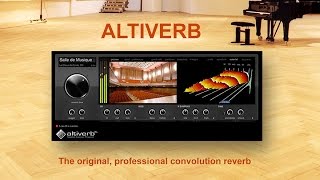
Altiverb 7 guided tour
audioease
Altiverb 7 - Dialogue matching
audioease
Plugin Breakdown! Altiverb 7

Jonathan Roye
Altiverb 7 manual - Automation and presets
audioease
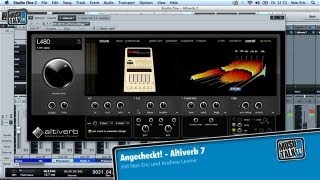
Altiverb 7 der High-End Reverb Review von Audioease - Test

musotalk
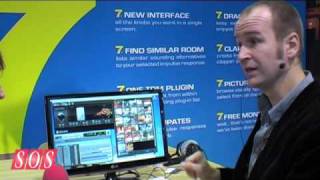
Audio Ease Altiverb 7 - NAMM 2010

Sound On Sound magazine
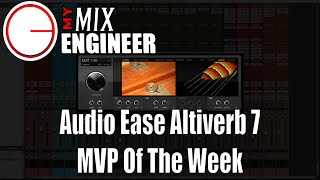
Audio Ease Altiverb 7 - MVP Of The Week

MyMixEngineer
Reviews
Owner Insights
We analyzed real musician discussions from forums and Reddit to find what players love, question, and tweak about Audio Ease Altiverb 7.
Features and functionality
-
Altiverb's strength lies in its vast collection of impulse responses and minimal controls, making it efficient for quick setup without extensive tweaking.
Source -
It’s noted that Altiverb handles multiple reverb treatments efficiently, speeding up workflow compared to other plugins.
Source -
Altiverb's "Nextdoor" convolutions are praised for believability, despite Indoor offering more detailed manipulation for similar effects.
Source
Comparisons
-
Space and Revibe are notable alternatives included with Pro Tools, though they require more effort to match Altiverb's results.
Source -
Exponential Audio Stratus is highlighted for surround and atmos effects, offering a robust alternative to Altiverb for certain applications.
Source -
Altiverb is often used for "through the wall" effects, whereas Indoor excels at natural response and is ideal for dialog and ADR.
Source
Use cases and applications
-
Altiverb is favored for its ability to handle complex reverb needs in movie dialogue and foley with ease.
Source -
Altiverb is favored for use in deeply reverberant spaces like tunnels, while Cinematic Rooms Pro has become a preferred choice for such environments.
Source -
Altiverb sees use for specific interior scenes like ships and emergency vehicles in TV shows like "For All Mankind" and "Chicago Fire".
Source -
Indoor is praised for its ability to maintain dry signal focus while Altiverb provides expansive reverb without retaining the dry anchor.
Source
Value and pricing
-
Altiverb 7XL, used for surround mixing, is priced around $900, reflecting its comprehensive IR library.
Source
User experience
-
Users find Altiverb indispensable in professional mix stages, often citing its absence as a notable gap in other setups.
Source
5.0 out of 5
Based on 1 Review and 21 Ratings

Artist usage
Add artist

Mentioned by sound engineer Trevor Muzzy in this Sound on Sound interview about the production of "Starships".
"You can see that the pre-chorus and chorus vocals have a lot of timing and comp edits. They were imported directly from the session I cut the vocals in. I did not merge or consolidate them, they just are the way they are. There's quite a lot going on with the vocals. I tried to create a nice basic vocal sound using the inserts, and once they sat well in the track, most of the sonic variations between the sections came from the sends. There was no tuning on the rapping, but the sung vocals in this track had a fair amount of tuning with the Logic Pitch Corrector plug-in on the inserts. The tuning is part of the sound of the record, with vocals needing to be very, very precise. In some cases, we pitched them up or down for vocal effects. Logic Pitch Corrector is a little harder-sounding than Auto-Tune, but it has its own distinct sound that we liked for the vocals in this track. It really fits the song.
"The other inserts on most of the vocals were all Waves: the C1 compressor, SSL Channel, Renaissance Channel, De-Esser, Renaissance Compressor, API 2500, and the Logic Channel EQ. The C1 compressor is the first in line on several lead vocals, and it does the same Pensado trick I used on the guitars, which is to compress a specific band — in the case of the verse lead vocal, around 2849Hz — focusing on notes that sounded a little harsh. It smooths this problem out more elegantly than using an EQ. Then the signal goes through the R Channel with some basic EQ, cutting significantly at 281Hz. Again, it was a matter of removing some less pleasant things to let the nice aspects shine. I bypassed the compressor in the R Channel. I needed a bit of de-essing, and the Waves De-Esser is a great all-purpose de-esser, in this case working at 5634Hz with the side-chain set to high-pass.
"There were two more compressors on her vocal. There was no science behind this, it was just a matter of experimenting to find a unique sound. The first is the Renaissance Compressor, which I love and which is set to a fast attack time and takes off about 6dB, so quite subtle, not too intense. The API 2500 is set pretty aggressively and you can hear it pumping a little bit on the vocal. It was already in the session — it had been used on the demo vocal. I pulled it over to Nicki's channel and liked what it was doing, so I adjusted it to fit her vocal. Finally, the Channel EQ notches quite a lot around 600Hz and a little bit more around 235Hz, just carving out some low-mids to make the vocal sit better in the track.
"Regarding the sends, there are some really distinct things happening here. The main lead vocal was similar throughout the song, but I tweaked it as it went along. The pre-chorus and chorus vocals all have Bus 1, which went to the same Altiverb effect that I had on the drums, to add some ambience to the vocal. The rap verses are much drier. Bus 35 is the Waves Doubler, which gives a bit of spread to the lead vocal — I used this on the rap as well as on the sung vocals. Bus 4 is the Waves CLA with a drastic telephone effect. That was another effect that was there from the demo version and added a cool quality. Bus 50 is the [Sound Toys] Echo Boy, which is the main plug-in I use for delay throws, whenever I want to repeat a word. In this case it's on a quarter-note Echoplex setting. It's a single, mono echo that I panned a little bit to the side. Bus 7 has the Waves VX1 Maserati Vocal Enhancer, and that was, again, a plug-in I inherited. It is set to a very compressed, bright vocal sound that I brought in and out to add some sparkle to the sound when necessary.
"Bus 6 has the main reverb in the track, which you are hearing in the pre-chorus and chorus, and which is a Lexicon Plate plug-in on the 'VocalPlate2' preset. It's a really bright, over-the-top plate sound that is not trying to blend in but that's actually brightening the vocal up a lot. It's loud and wet. Busses 16 and 29 are different stereo delays: the Waves SuperTap was already in the session and I kept it, and the other is a standard Logic stereo delay that I use all the time on vocals. Bus 3 is the Logic Bitcrusher, which gives the vocals a grainy sound. The vocals already had an aggressive sonic quality to them because of the 251-TG2-1176 chain, and the Bitcrusher enhanced that. It's nasty, there's nothing nice about a bit-crusher, and it adds a bit of attitude. I used it on some of the background vocals as well, like in the second verse, where you have the pitch effects. You can hear it in the very processed harmony vocals that come in. That was something we added when we were doing the final vocal comp and arrangement. It gave that second verse some more life and helped the track build. The background vocals are a very big part of the hook vocal sound as well, and, for example, track 140 has many effects on it. That actually contains the vocals of the demo singers. Nicki's lead and background vocals are dominant, but in the chorus the background vocals from Mohombi and Wayne Hector added to the crowd feeling. The chorus vocals are really big in this track, and they were part of that.”


In this list of Lustmord's software, he has Logic Pro X, Addictive Drums, Alitverb, XILS3, and ReCycle.


Used for Quavo and Offest's features on Beyoncé and Jay-Z's "Apeshit", as stated by producer Stuart White in this September 2018 Sound on Sound interview.
The first four aux tracks feature SoundToys effects, namely Little Microshift, two EchoBoy delays, and a delay from the Little PrimalTap. Next are a Hall Reverb aux and a Church Reverb aux, both using Waves’ RVerb, an EMT plate from Audio Ease’s Altiverb, four aux tracks with the Waves H-Delay and various other plug-ins on them as well, and four more reverb auxes with the Avid Revibe II, two Avid D-Verbs and another RVerb.
White: “I use the Little Microshift in pretty much every mix, with the left-right micro pitch-shift effect that’s similar to the classic effect in the Eventide H3000 shift where you pitch one side down six cents and one side up six cents to create width. It’s a good way to get your vocals wider without them being out of phase. It thickens up vocals, and is kind of like a doubler. I do quite a lot of filtering on some of the EchoBoy delays, for example with the Waves REQ, and I am adding colour with the SoundToys Devil-Loc, which is great if you want to colour the delay so it is separate from the main vocal, and compress it with the UAD LA3A and mix that in to taste.”
(...) “The Migos vocals came in as seven audio tracks, with the Avid D-Verb on each of them. Putting a D-Verb on a track before EQ is not something I normally do, but it sounded great. So I adjusted them a bit, but otherwise left them as they were. The tracks also came in with the Aux track above, and the EQ3, with a high pass at 60Hz and notches at 430Hz and 1.41kHz and a high boost, the Waves API 2500 compressor, the RComp, the Waves Q10 EQ, following a slightly similar curve to the EQ3, the Waves De-esser, the Waves Aphex Aural Exciter, and the Avid Dyn3 expander/gate. I added the EQ3, with another high-pass filter at 144Hz, and the RComp, with a ratio of 10:1.”



Altiverb for reverb (seriously insanely good sounding reverb)


Altiverb was used for the vocals on Third, as mentioned in this November 2008 Sound on Sound interview with bandmate Adrian Utley.
A lot of the echo on Beth's vocals on Third comes from a Great British Spring, the spring reverb from the late '70s housed in a 120cm–long plastic drainpipe, which is suspended horizontally underneath one of the studio shelves; and at the other extreme, some other reverbs and spaces came from Pro Tools and Altiverb. "Altiverb is amazing," says Adrian. "It's got some brilliant spaces in it, incredible springs, and reverb chambers from the LA studios the Beach Boys used to use."


"His other six PCs are used for Tascam Gigastudio. He uses his G5 for running Mac-specific music software (such as Audio Ease Altiverb 5), and his G4 for his Digidesign Pro Tools|HD system (he's currently running v. 6.7)" (Page 60).


Used for Quavo and Offest's features on Beyoncé and Jay-Z's "Apeshit", as stated by producer Stuart White in this September 2018 Sound on Sound interview.
The first four aux tracks feature SoundToys effects, namely Little Microshift, two EchoBoy delays, and a delay from the Little PrimalTap. Next are a Hall Reverb aux and a Church Reverb aux, both using Waves’ RVerb, an EMT plate from Audio Ease’s Altiverb, four aux tracks with the Waves H-Delay and various other plug-ins on them as well, and four more reverb auxes with the Avid Revibe II, two Avid D-Verbs and another RVerb.
White: “I use the Little Microshift in pretty much every mix, with the left-right micro pitch-shift effect that’s similar to the classic effect in the Eventide H3000 shift where you pitch one side down six cents and one side up six cents to create width. It’s a good way to get your vocals wider without them being out of phase. It thickens up vocals, and is kind of like a doubler. I do quite a lot of filtering on some of the EchoBoy delays, for example with the Waves REQ, and I am adding colour with the SoundToys Devil-Loc, which is great if you want to colour the delay so it is separate from the main vocal, and compress it with the UAD LA3A and mix that in to taste.”
(...) “The Migos vocals came in as seven audio tracks, with the Avid D-Verb on each of them. Putting a D-Verb on a track before EQ is not something I normally do, but it sounded great. So I adjusted them a bit, but otherwise left them as they were. The tracks also came in with the Aux track above, and the EQ3, with a high pass at 60Hz and notches at 430Hz and 1.41kHz and a high boost, the Waves API 2500 compressor, the RComp, the Waves Q10 EQ, following a slightly similar curve to the EQ3, the Waves De-esser, the Waves Aphex Aural Exciter, and the Avid Dyn3 expander/gate. I added the EQ3, with another high-pass filter at 144Hz, and the RComp, with a ratio of 10:1.”


Used on Bocelli's vocals for Cinema, as mentioned by sound engineer Justin Cortelyou in this February 2019 Sound on Sound interview.
At the bottom are three aux effect tracks, with Valhalla Plate, Audio Ease Altiverb (on the Haydn Hall preset), and UAD EMT 140 reverbs. Notable in the session is that by far the most plug-ins are used on the two vocal tracks. (...) "All three aux reverbs were used on Andrea's main vocal track, as well as on Matteo's vocal tracks, because the reverbs each have different characteristics and it was all about getting the right blend. The Haydn Hall makes it sound a bit more like in the big hall at AIR, and the Valhalla Plate is a little brighter and not as dense. The EMT adds some warmth. We always played around with these three to get the right combination of colours. I had this vocal chain on Andrea's vocal in every song on the album, though there will have been slight differences in settings."

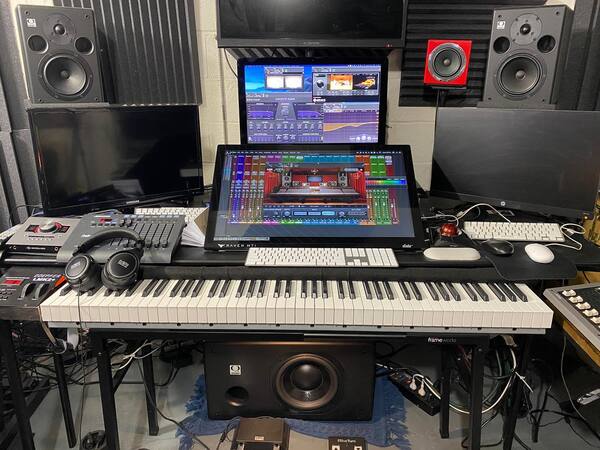
24:44 - When discussing a vocal mix, Kove pulls up this plugin and says "I've got this which is one of my favourite plugins, this is altiverb and it's a convolation reverb rather then a alrhythmical whatever. It's got a whole host of classic reverbs and it's got absolutly loads on hear and it's got fantastic springs, old school digital reverbs, plate reverbs and really good stuff. It's very CPU heavy but if you're looking to get that older school sound and classic sound this is fantastic"

Album Usage
The Audio Ease Altiverb 7 has been featured on the following albums:
Echoes
Ben Duffy & Kove (2019)
Moon River
Jacob Collier (2019)
All The Stars (with SZA)
Kendrick Lamar & SZA (2018)
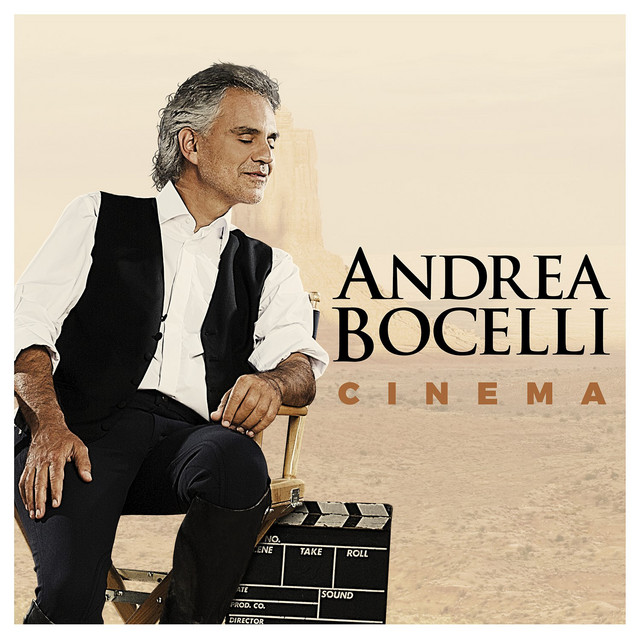
Cinema
Andrea Bocelli (2015)
Take Me to Church EP
Hozier (2013)
Pink Friday ... Roman Reloaded
Nicki Minaj (2011)
The Fall
Norah Jones (2009)
Sex On Fire
Kings of Leon (2009)
Professor Satchafunkilus and the Musterion of Rock
Joe Satriani (2008)
Only By The Night
Kings of Leon (2008)
Third
Portishead (2008)
Genre Usage
Based on how artists on Equipboard use this gear, it is most commonly found in the following genres.
Used With
Based on how musicians on Equipboard use Audio Ease Altiverb 7, it is most commonly used with the following gear.
-s.webp?v=1783260085)





More Audio Ease Reverb Plugins


$29.99 - $99.00
in Reverb Plugins Rank


$179.00 - $199.00
in Reverb Plugins Rank


$34.00 - $349.00
in Reverb Plugins Rank


$33.00 - $39.99
in Reverb Plugins Rank


$33.00 - $39.99
in Reverb Plugins Rank


$33.00 - $39.99
in Reverb Plugins Rank


$141.00 - $149.00
in Reverb Plugins Rank


$34.99
in Reverb Plugins Rank


$99.00
in Reverb Plugins Rank


$33.00 - $39.99
in Reverb Plugins Rank


$59.00
in Reverb Plugins Rank

$49.00 - $99.00
in Reverb Plugins Rank


$33.00 - $249.00
in Reverb Plugins Rank


$77.00 - $282.00
in Reverb Plugins Rank


$6.00 - $29.50
in Reverb Plugins Rank

$68.00 - $299.00
in Reverb Plugins Rank


$299.00
in Reverb Plugins Rank


$299.00
in Reverb Plugins Rank


$144.00 - $149.00
in Reverb Plugins Rank

$253.00 - $299.00
in Reverb Plugins Rank

$99.00
in Reverb Plugins Rank


$129.00 - $149.00
in Reverb Plugins Rank

$14.99 - $129.00
in Reverb Plugins Rank

$33.00 - $39.99
in Reverb Plugins Rank


$69.00 - $169.00
in Reverb Plugins Rank

$58.00 - $69.00
in Reverb Plugins Rank

$74.25 - $99.00
in Reverb Plugins Rank

$94.00 - $99.00
in Reverb Plugins Rank

$381.00 - $474.00
in Reverb Plugins Rank


$43.00 - $199.00
in Reverb Plugins Rank


$144.00 - $149.00
in Reverb Plugins Rank

$10.00 - $29.00
in Reverb Plugins Rank

$96.00 - $99.00
in Reverb Plugins Rank
Accessories & Related Items


Community setups


Similar


Gear Guides








Most Popular Reverb Plugins
Most Popular Brands
-
Added to Equipboard on by
 shaunwinston
Gear IQ 646
-


