Nicki Minaj
Role
Genre
Credits
Role
Genre
Credits
Nicki Minaj's Gear


Nicki Minaj used the Sennheiser SKM 5200-II microphone starting in 2012. After 2016, she switched to a custom-made silver Sennheiser mic, as evidenced by a photo on Nymag.
Find it on:


Nicki Minaj uses the Sennheiser ME 5005 e capsule on both her pink and silver microphones, as shown in a photo from Billboard.
Find it on:

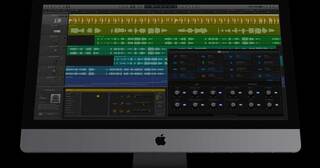
In "I Get Crazy" from the "Beam Me Up Scotty" mixtape Nicki Minaj mentions using Pro Tools, presumably Pro Tools 8, the latest version at the time of the mixtape's release.
Find it on:


Visible in Nicki Minaj: My Truth at 3:05. It was also mentioned by sound engineer Trevor Muzzy in this August 2012 Sound on Sound interview about the production of "Starships".
All Nicki's vocal tracking was done at Conway Studios in LA, where she had a lockout and was working with her engineer, Ariel Chobaz. I did not want to assume that how he was recording her wasn't working, so I asked him what he had set up, and he told me that there were two vocal signal chains, one being a Telefunken ELAM 251 going into a Chandler TG2 mic pre and then through an Urei 1176 [compressor]. The other was a more traditional Neumann-Neve chain. The 251 chain sounded amazing and worked really well with the 1176, which I don't typically use for cutting vocals. It gave her voice a unique character with a cool edge that wasn't there with the other chain. We cut Nicki's vocals in a day, and I came back and we redid a few things, so you could say it was a two-day process.
Find it on:


Used for Minaj's feature on Doja Cat's "Say So" remix, as stated by mix engineer Clint Gibbs in this July 2020 Sound on Sound interview.
"All vocal audio tracks have the same signal path: Metric Halo Channel Strip 3, Avid Bomb Factory BF-76, Avid Dyn-3 De-Esser and in the case of the lead vocals, the FabFilter Pro‑Q 3, all on the inserts, plus sends to the quarter- and eighth–note delays and reverb. These are all part of the recording template, and came from Kalani. I am familiar with the settings, because I worked on them, so I didn't change them. The Metric Halo is doing a high-pass, the BF-76 has all buttons in to give it that pop vocal sound. I added the Q 3, cutting 1dB at 279Hz and at 740Hz. I like to do tons of minimal EQ cuts with many plug‑ins.
"The lead vocal audio tracks also have a send called Voc SC, which goes to the side-chain input of the Waves F6 on the Keys bus. It helps make a little extra pocket for the vocal. It creates dynamic dips in the 900Hz and 2kHz range when she is singing. I also have this F6 on the 808 bus of the remix, doing the same thing. All lead vocal audio tracks go to the LD Vocal aux, which has another instance of the Q 3, taking out quite a bit of low end to make space for the bass, and the McDSP AE600 dynamic EQ, taking out problem areas only when they occur. I do a lot of vocal riding on the lead vocal bus, pushing up specific syllables.
"There's also a track called Echo FX Clean. When I have to mute a word, I will take the word before it and will delay it with some reverb to fill the empty space. The additional plug‑in by Vengeance, the VPS philta XL filter, is doing a high and a low cut to give it more of that radio sound. The other vocal tracks are treated in similar ways as the lead vocals, though the BG2 bus has the Valhalla Vintage Verb, with a 2.4s reverb, Mix at 18 percent. I think that came from Kalani, but I added the FabFilter Pro‑DS, because I wanted to take the 's' frequency out of the reverb. All vocals go to the Vocals bus, which has the UAD 1176, switched off, and the JSTClip for some level boosting. The Vocal Rear track is the parallel, with -20dB compression on the 1176. This is where I get my vocal loudness from.
(...) "The Nicki Minaj remix happened very last minute. I got a text from her engineer, Aubry 'Big Juice' Delaine, saying, 'Here's a link for Nicki's vocals.' I opened it up and realised they were for 'Say So'. So I hit up the label and they confirmed that we were doing a remix. As I was mixing, I was getting updated versions of the vocals, verses, and so on. We did the mix, got it mastered, it was all approved, and the day before the remix was supposed to come out, someone wanted to change the beat underneath her vocals. All of a sudden there was an emergency!
"I got an email from Tyson Trax, saying: 'Here are the new beat stems for Nicki.' Among other things they contained some heavy 808s. I had an hour to mix in these new beat stems, because the remix was supposed to be released in Australia a few hours later. I pasted these new beats in just above the vocal VCA of the original session, and in Nicki Minaj's first verse I deactivated the clips from the original beat files for this section. But because the original did not have 808s, they killed my mix bus. I had to automate a new limiter during this part of the remix.
"I put Nicki's vocal at the bottom of the session, and just needed to pair them with the track. I added all plug‑ins on her vocals that you see in the session, but I did not need to do much, because the processed stems Big Juice sent me sounded great! The SoundToys Little Radiator adds a little warmth, and the Metric Halo Channel Strip boosts some top end while also cutting some low end. There are two Waves C6 plug‑ins dynamically suppressing 177Hz and 700Hz, with a -6dB range. There was some build-up in those frequencies that didn't work with the mix. On the inserts of the individual vocal tracks there also is a Waves Q8 doing two sharp 4-6 dB cuts at 10kHz and 11kHz, which was to tame some 's' harshness.
"One of the 808 audio tracks has the FabFilter Pro‑Q 2, with a high pass at 20Hz and a cut around 40Hz, and the Oeksound Soothe on a 'melodic bass control' setting. On the 808s aux bus and 808 parallel bus I have the FabFilter Saturn, Timeless, and the Waves F6. These 808 buses obviously were added for the remix. My approach with them was similar to that of the bass aux. The Saturn is only active on the parallel track, and is a bit dirtier on the 808 than on the bass. The F6 is side-chained to the vocal to suppress the mids of the 808 while Nicki is rapping. The Timeless also is only active on the parallel track, and adds a light chorus that spreads the 808 out slightly."
Find it on:



In this image, you can see Nicki Minaj is using the Sennheiser digital 9000 and has been using this since 2018. She is also using the mm 445 super-cardioid capsule by Sennheiser which she loved because it rejects background noise.
Find it on:
-m.webp?v=1784642432)

Mentioned by sound engineer Trevor Muzzy in this Sound on Sound interview about the production of "Starships".
All Nicki's vocal tracking was done at Conway Studios in LA, where she had a lockout and was working with her engineer, Ariel Chobaz. I did not want to assume that how he was recording her wasn't working, so I asked him what he had set up, and he told me that there were two vocal signal chains, one being a Telefunken ELAM 251 going into a Chandler TG2 mic pre and then through an Urei 1176 [compressor]. The other was a more traditional Neumann-Neve chain. The 251 chain sounded amazing and worked really well with the 1176, which I don't typically use for cutting vocals. It gave her voice a unique character with a cool edge that wasn't there with the other chain. We cut Nicki's vocals in a day, and I came back and we redid a few things, so you could say it was a two-day process.
Find it on:

Mentioned by sound engineer Trevor Muzzy in this Sound on Sound interview about the production of "Starships".
"You can see that the pre-chorus and chorus vocals have a lot of timing and comp edits. They were imported directly from the session I cut the vocals in. I did not merge or consolidate them, they just are the way they are. There's quite a lot going on with the vocals. I tried to create a nice basic vocal sound using the inserts, and once they sat well in the track, most of the sonic variations between the sections came from the sends. There was no tuning on the rapping, but the sung vocals in this track had a fair amount of tuning with the Logic Pitch Corrector plug-in on the inserts. The tuning is part of the sound of the record, with vocals needing to be very, very precise. In some cases, we pitched them up or down for vocal effects. Logic Pitch Corrector is a little harder-sounding than Auto-Tune, but it has its own distinct sound that we liked for the vocals in this track. It really fits the song.
"The other inserts on most of the vocals were all Waves: the C1 compressor, SSL Channel, Renaissance Channel, De-Esser, Renaissance Compressor, API 2500, and the Logic Channel EQ. The C1 compressor is the first in line on several lead vocals, and it does the same Pensado trick I used on the guitars, which is to compress a specific band — in the case of the verse lead vocal, around 2849Hz — focusing on notes that sounded a little harsh. It smooths this problem out more elegantly than using an EQ. Then the signal goes through the R Channel with some basic EQ, cutting significantly at 281Hz. Again, it was a matter of removing some less pleasant things to let the nice aspects shine. I bypassed the compressor in the R Channel. I needed a bit of de-essing, and the Waves De-Esser is a great all-purpose de-esser, in this case working at 5634Hz with the side-chain set to high-pass.
"There were two more compressors on her vocal. There was no science behind this, it was just a matter of experimenting to find a unique sound. The first is the Renaissance Compressor, which I love and which is set to a fast attack time and takes off about 6dB, so quite subtle, not too intense. The API 2500 is set pretty aggressively and you can hear it pumping a little bit on the vocal. It was already in the session — it had been used on the demo vocal. I pulled it over to Nicki's channel and liked what it was doing, so I adjusted it to fit her vocal. Finally, the Channel EQ notches quite a lot around 600Hz and a little bit more around 235Hz, just carving out some low-mids to make the vocal sit better in the track.
"Regarding the sends, there are some really distinct things happening here. The main lead vocal was similar throughout the song, but I tweaked it as it went along. The pre-chorus and chorus vocals all have Bus 1, which went to the same Altiverb effect that I had on the drums, to add some ambience to the vocal. The rap verses are much drier. Bus 35 is the Waves Doubler, which gives a bit of spread to the lead vocal — I used this on the rap as well as on the sung vocals. Bus 4 is the Waves CLA with a drastic telephone effect. That was another effect that was there from the demo version and added a cool quality. Bus 50 is the [Sound Toys] Echo Boy, which is the main plug-in I use for delay throws, whenever I want to repeat a word. In this case it's on a quarter-note Echoplex setting. It's a single, mono echo that I panned a little bit to the side. Bus 7 has the Waves VX1 Maserati Vocal Enhancer, and that was, again, a plug-in I inherited. It is set to a very compressed, bright vocal sound that I brought in and out to add some sparkle to the sound when necessary.
"Bus 6 has the main reverb in the track, which you are hearing in the pre-chorus and chorus, and which is a Lexicon Plate plug-in on the 'VocalPlate2' preset. It's a really bright, over-the-top plate sound that is not trying to blend in but that's actually brightening the vocal up a lot. It's loud and wet. Busses 16 and 29 are different stereo delays: the Waves SuperTap was already in the session and I kept it, and the other is a standard Logic stereo delay that I use all the time on vocals. Bus 3 is the Logic Bitcrusher, which gives the vocals a grainy sound. The vocals already had an aggressive sonic quality to them because of the 251-TG2-1176 chain, and the Bitcrusher enhanced that. It's nasty, there's nothing nice about a bit-crusher, and it adds a bit of attitude. I used it on some of the background vocals as well, like in the second verse, where you have the pitch effects. You can hear it in the very processed harmony vocals that come in. That was something we added when we were doing the final vocal comp and arrangement. It gave that second verse some more life and helped the track build. The background vocals are a very big part of the hook vocal sound as well, and, for example, track 140 has many effects on it. That actually contains the vocals of the demo singers. Nicki's lead and background vocals are dominant, but in the chorus the background vocals from Mohombi and Wayne Hector added to the crowd feeling. The chorus vocals are really big in this track, and they were part of that.”
Find it on:

Mentioned by sound engineer Trevor Muzzy in this Sound on Sound interview about the production of "Starships".
"You can see that the pre-chorus and chorus vocals have a lot of timing and comp edits. They were imported directly from the session I cut the vocals in. I did not merge or consolidate them, they just are the way they are. There's quite a lot going on with the vocals. I tried to create a nice basic vocal sound using the inserts, and once they sat well in the track, most of the sonic variations between the sections came from the sends. There was no tuning on the rapping, but the sung vocals in this track had a fair amount of tuning with the Logic Pitch Corrector plug-in on the inserts. The tuning is part of the sound of the record, with vocals needing to be very, very precise. In some cases, we pitched them up or down for vocal effects. Logic Pitch Corrector is a little harder-sounding than Auto-Tune, but it has its own distinct sound that we liked for the vocals in this track. It really fits the song.
"The other inserts on most of the vocals were all Waves: the C1 compressor, SSL Channel, Renaissance Channel, De-Esser, Renaissance Compressor, API 2500, and the Logic Channel EQ. The C1 compressor is the first in line on several lead vocals, and it does the same Pensado trick I used on the guitars, which is to compress a specific band — in the case of the verse lead vocal, around 2849Hz — focusing on notes that sounded a little harsh. It smooths this problem out more elegantly than using an EQ. Then the signal goes through the R Channel with some basic EQ, cutting significantly at 281Hz. Again, it was a matter of removing some less pleasant things to let the nice aspects shine. I bypassed the compressor in the R Channel. I needed a bit of de-essing, and the Waves De-Esser is a great all-purpose de-esser, in this case working at 5634Hz with the side-chain set to high-pass.
"There were two more compressors on her vocal. There was no science behind this, it was just a matter of experimenting to find a unique sound. The first is the Renaissance Compressor, which I love and which is set to a fast attack time and takes off about 6dB, so quite subtle, not too intense. The API 2500 is set pretty aggressively and you can hear it pumping a little bit on the vocal. It was already in the session — it had been used on the demo vocal. I pulled it over to Nicki's channel and liked what it was doing, so I adjusted it to fit her vocal. Finally, the Channel EQ notches quite a lot around 600Hz and a little bit more around 235Hz, just carving out some low-mids to make the vocal sit better in the track.
"Regarding the sends, there are some really distinct things happening here. The main lead vocal was similar throughout the song, but I tweaked it as it went along. The pre-chorus and chorus vocals all have Bus 1, which went to the same Altiverb effect that I had on the drums, to add some ambience to the vocal. The rap verses are much drier. Bus 35 is the Waves Doubler, which gives a bit of spread to the lead vocal — I used this on the rap as well as on the sung vocals. Bus 4 is the Waves CLA with a drastic telephone effect. That was another effect that was there from the demo version and added a cool quality. Bus 50 is the [Sound Toys] Echo Boy, which is the main plug-in I use for delay throws, whenever I want to repeat a word. In this case it's on a quarter-note Echoplex setting. It's a single, mono echo that I panned a little bit to the side. Bus 7 has the Waves VX1 Maserati Vocal Enhancer, and that was, again, a plug-in I inherited. It is set to a very compressed, bright vocal sound that I brought in and out to add some sparkle to the sound when necessary.
"Bus 6 has the main reverb in the track, which you are hearing in the pre-chorus and chorus, and which is a Lexicon Plate plug-in on the 'VocalPlate2' preset. It's a really bright, over-the-top plate sound that is not trying to blend in but that's actually brightening the vocal up a lot. It's loud and wet. Busses 16 and 29 are different stereo delays: the Waves SuperTap was already in the session and I kept it, and the other is a standard Logic stereo delay that I use all the time on vocals. Bus 3 is the Logic Bitcrusher, which gives the vocals a grainy sound. The vocals already had an aggressive sonic quality to them because of the 251-TG2-1176 chain, and the Bitcrusher enhanced that. It's nasty, there's nothing nice about a bit-crusher, and it adds a bit of attitude. I used it on some of the background vocals as well, like in the second verse, where you have the pitch effects. You can hear it in the very processed harmony vocals that come in. That was something we added when we were doing the final vocal comp and arrangement. It gave that second verse some more life and helped the track build. The background vocals are a very big part of the hook vocal sound as well, and, for example, track 140 has many effects on it. That actually contains the vocals of the demo singers. Nicki's lead and background vocals are dominant, but in the chorus the background vocals from Mohombi and Wayne Hector added to the crowd feeling. The chorus vocals are really big in this track, and they were part of that.”
Find it on:

Mentioned by sound engineer Trevor Muzzy in this Sound on Sound interview about the production of "Starships".
"You can see that the pre-chorus and chorus vocals have a lot of timing and comp edits. They were imported directly from the session I cut the vocals in. I did not merge or consolidate them, they just are the way they are. There's quite a lot going on with the vocals. I tried to create a nice basic vocal sound using the inserts, and once they sat well in the track, most of the sonic variations between the sections came from the sends. There was no tuning on the rapping, but the sung vocals in this track had a fair amount of tuning with the Logic Pitch Corrector plug-in on the inserts. The tuning is part of the sound of the record, with vocals needing to be very, very precise. In some cases, we pitched them up or down for vocal effects. Logic Pitch Corrector is a little harder-sounding than Auto-Tune, but it has its own distinct sound that we liked for the vocals in this track. It really fits the song.
"The other inserts on most of the vocals were all Waves: the C1 compressor, SSL Channel, Renaissance Channel, De-Esser, Renaissance Compressor, API 2500, and the Logic Channel EQ. The C1 compressor is the first in line on several lead vocals, and it does the same Pensado trick I used on the guitars, which is to compress a specific band — in the case of the verse lead vocal, around 2849Hz — focusing on notes that sounded a little harsh. It smooths this problem out more elegantly than using an EQ. Then the signal goes through the R Channel with some basic EQ, cutting significantly at 281Hz. Again, it was a matter of removing some less pleasant things to let the nice aspects shine. I bypassed the compressor in the R Channel. I needed a bit of de-essing, and the Waves De-Esser is a great all-purpose de-esser, in this case working at 5634Hz with the side-chain set to high-pass.
"There were two more compressors on her vocal. There was no science behind this, it was just a matter of experimenting to find a unique sound. The first is the Renaissance Compressor, which I love and which is set to a fast attack time and takes off about 6dB, so quite subtle, not too intense. The API 2500 is set pretty aggressively and you can hear it pumping a little bit on the vocal. It was already in the session — it had been used on the demo vocal. I pulled it over to Nicki's channel and liked what it was doing, so I adjusted it to fit her vocal. Finally, the Channel EQ notches quite a lot around 600Hz and a little bit more around 235Hz, just carving out some low-mids to make the vocal sit better in the track.
"Regarding the sends, there are some really distinct things happening here. The main lead vocal was similar throughout the song, but I tweaked it as it went along. The pre-chorus and chorus vocals all have Bus 1, which went to the same Altiverb effect that I had on the drums, to add some ambience to the vocal. The rap verses are much drier. Bus 35 is the Waves Doubler, which gives a bit of spread to the lead vocal — I used this on the rap as well as on the sung vocals. Bus 4 is the Waves CLA with a drastic telephone effect. That was another effect that was there from the demo version and added a cool quality. Bus 50 is the [Sound Toys] Echo Boy, which is the main plug-in I use for delay throws, whenever I want to repeat a word. In this case it's on a quarter-note Echoplex setting. It's a single, mono echo that I panned a little bit to the side. Bus 7 has the Waves VX1 Maserati Vocal Enhancer, and that was, again, a plug-in I inherited. It is set to a very compressed, bright vocal sound that I brought in and out to add some sparkle to the sound when necessary.
"Bus 6 has the main reverb in the track, which you are hearing in the pre-chorus and chorus, and which is a Lexicon Plate plug-in on the 'VocalPlate2' preset. It's a really bright, over-the-top plate sound that is not trying to blend in but that's actually brightening the vocal up a lot. It's loud and wet. Busses 16 and 29 are different stereo delays: the Waves SuperTap was already in the session and I kept it, and the other is a standard Logic stereo delay that I use all the time on vocals. Bus 3 is the Logic Bitcrusher, which gives the vocals a grainy sound. The vocals already had an aggressive sonic quality to them because of the 251-TG2-1176 chain, and the Bitcrusher enhanced that. It's nasty, there's nothing nice about a bit-crusher, and it adds a bit of attitude. I used it on some of the background vocals as well, like in the second verse, where you have the pitch effects. You can hear it in the very processed harmony vocals that come in. That was something we added when we were doing the final vocal comp and arrangement. It gave that second verse some more life and helped the track build. The background vocals are a very big part of the hook vocal sound as well, and, for example, track 140 has many effects on it. That actually contains the vocals of the demo singers. Nicki's lead and background vocals are dominant, but in the chorus the background vocals from Mohombi and Wayne Hector added to the crowd feeling. The chorus vocals are really big in this track, and they were part of that.”
Find it on:

Mentioned by sound engineer Trevor Muzzy in this Sound on Sound interview about the production of "Starships".
"You can see that the pre-chorus and chorus vocals have a lot of timing and comp edits. They were imported directly from the session I cut the vocals in. I did not merge or consolidate them, they just are the way they are. There's quite a lot going on with the vocals. I tried to create a nice basic vocal sound using the inserts, and once they sat well in the track, most of the sonic variations between the sections came from the sends. There was no tuning on the rapping, but the sung vocals in this track had a fair amount of tuning with the Logic Pitch Corrector plug-in on the inserts. The tuning is part of the sound of the record, with vocals needing to be very, very precise. In some cases, we pitched them up or down for vocal effects. Logic Pitch Corrector is a little harder-sounding than Auto-Tune, but it has its own distinct sound that we liked for the vocals in this track. It really fits the song.
"The other inserts on most of the vocals were all Waves: the C1 compressor, SSL Channel, Renaissance Channel, De-Esser, Renaissance Compressor, API 2500, and the Logic Channel EQ. The C1 compressor is the first in line on several lead vocals, and it does the same Pensado trick I used on the guitars, which is to compress a specific band — in the case of the verse lead vocal, around 2849Hz — focusing on notes that sounded a little harsh. It smooths this problem out more elegantly than using an EQ. Then the signal goes through the R Channel with some basic EQ, cutting significantly at 281Hz. Again, it was a matter of removing some less pleasant things to let the nice aspects shine. I bypassed the compressor in the R Channel. I needed a bit of de-essing, and the Waves De-Esser is a great all-purpose de-esser, in this case working at 5634Hz with the side-chain set to high-pass.
"There were two more compressors on her vocal. There was no science behind this, it was just a matter of experimenting to find a unique sound. The first is the Renaissance Compressor, which I love and which is set to a fast attack time and takes off about 6dB, so quite subtle, not too intense. The API 2500 is set pretty aggressively and you can hear it pumping a little bit on the vocal. It was already in the session — it had been used on the demo vocal. I pulled it over to Nicki's channel and liked what it was doing, so I adjusted it to fit her vocal. Finally, the Channel EQ notches quite a lot around 600Hz and a little bit more around 235Hz, just carving out some low-mids to make the vocal sit better in the track.
"Regarding the sends, there are some really distinct things happening here. The main lead vocal was similar throughout the song, but I tweaked it as it went along. The pre-chorus and chorus vocals all have Bus 1, which went to the same Altiverb effect that I had on the drums, to add some ambience to the vocal. The rap verses are much drier. Bus 35 is the Waves Doubler, which gives a bit of spread to the lead vocal — I used this on the rap as well as on the sung vocals. Bus 4 is the Waves CLA with a drastic telephone effect. That was another effect that was there from the demo version and added a cool quality. Bus 50 is the [Sound Toys] Echo Boy, which is the main plug-in I use for delay throws, whenever I want to repeat a word. In this case it's on a quarter-note Echoplex setting. It's a single, mono echo that I panned a little bit to the side. Bus 7 has the Waves VX1 Maserati Vocal Enhancer, and that was, again, a plug-in I inherited. It is set to a very compressed, bright vocal sound that I brought in and out to add some sparkle to the sound when necessary.
"Bus 6 has the main reverb in the track, which you are hearing in the pre-chorus and chorus, and which is a Lexicon Plate plug-in on the 'VocalPlate2' preset. It's a really bright, over-the-top plate sound that is not trying to blend in but that's actually brightening the vocal up a lot. It's loud and wet. Busses 16 and 29 are different stereo delays: the Waves SuperTap was already in the session and I kept it, and the other is a standard Logic stereo delay that I use all the time on vocals. Bus 3 is the Logic Bitcrusher, which gives the vocals a grainy sound. The vocals already had an aggressive sonic quality to them because of the 251-TG2-1176 chain, and the Bitcrusher enhanced that. It's nasty, there's nothing nice about a bit-crusher, and it adds a bit of attitude. I used it on some of the background vocals as well, like in the second verse, where you have the pitch effects. You can hear it in the very processed harmony vocals that come in. That was something we added when we were doing the final vocal comp and arrangement. It gave that second verse some more life and helped the track build. The background vocals are a very big part of the hook vocal sound as well, and, for example, track 140 has many effects on it. That actually contains the vocals of the demo singers. Nicki's lead and background vocals are dominant, but in the chorus the background vocals from Mohombi and Wayne Hector added to the crowd feeling. The chorus vocals are really big in this track, and they were part of that.”
Find it on:

Used for Minaj's feature on Doja Cat's "Say So" remix, as stated by mix engineer Clint Gibbs in this July 2020 Sound on Sound interview.
"The Nicki Minaj remix happened very last minute. I got a text from her engineer, Aubry 'Big Juice' Delaine, saying, 'Here's a link for Nicki's vocals.' I opened it up and realised they were for 'Say So'. So I hit up the label and they confirmed that we were doing a remix. As I was mixing, I was getting updated versions of the vocals, verses, and so on. We did the mix, got it mastered, it was all approved, and the day before the remix was supposed to come out, someone wanted to change the beat underneath her vocals. All of a sudden there was an emergency!
"I got an email from Tyson Trax, saying: 'Here are the new beat stems for Nicki.' Among other things they contained some heavy 808s. I had an hour to mix in these new beat stems, because the remix was supposed to be released in Australia a few hours later. I pasted these new beats in just above the vocal VCA of the original session, and in Nicki Minaj's first verse I deactivated the clips from the original beat files for this section. But because the original did not have 808s, they killed my mix bus. I had to automate a new limiter during this part of the remix.
"I put Nicki's vocal at the bottom of the session, and just needed to pair them with the track. I added all plug‑ins on her vocals that you see in the session, but I did not need to do much, because the processed stems Big Juice sent me sounded great! The SoundToys Little Radiator adds a little warmth, and the Metric Halo Channel Strip boosts some top end while also cutting some low end. There are two Waves C6 plug‑ins dynamically suppressing 177Hz and 700Hz, with a -6dB range. There was some build-up in those frequencies that didn't work with the mix. On the inserts of the individual vocal tracks there also is a Waves Q8 doing two sharp 4-6 dB cuts at 10kHz and 11kHz, which was to tame some 's' harshness.
"One of the 808 audio tracks has the FabFilter Pro‑Q 2, with a high pass at 20Hz and a cut around 40Hz, and the Oeksound Soothe on a 'melodic bass control' setting. On the 808s aux bus and 808 parallel bus I have the FabFilter Saturn, Timeless, and the Waves F6. These 808 buses obviously were added for the remix. My approach with them was similar to that of the bass aux. The Saturn is only active on the parallel track, and is a bit dirtier on the 808 than on the bass. The F6 is side-chained to the vocal to suppress the mids of the 808 while Nicki is rapping. The Timeless also is only active on the parallel track, and adds a light chorus that spreads the 808 out slightly."
Find it on:

Used for Minaj's feature on Doja Cat's "Say So" remix, as stated by mix engineer Clint Gibbs in this July 2020 Sound on Sound interview.
"The Nicki Minaj remix happened very last minute. I got a text from her engineer, Aubry 'Big Juice' Delaine, saying, 'Here's a link for Nicki's vocals.' I opened it up and realised they were for 'Say So'. So I hit up the label and they confirmed that we were doing a remix. As I was mixing, I was getting updated versions of the vocals, verses, and so on. We did the mix, got it mastered, it was all approved, and the day before the remix was supposed to come out, someone wanted to change the beat underneath her vocals. All of a sudden there was an emergency!
"I got an email from Tyson Trax, saying: 'Here are the new beat stems for Nicki.' Among other things they contained some heavy 808s. I had an hour to mix in these new beat stems, because the remix was supposed to be released in Australia a few hours later. I pasted these new beats in just above the vocal VCA of the original session, and in Nicki Minaj's first verse I deactivated the clips from the original beat files for this section. But because the original did not have 808s, they killed my mix bus. I had to automate a new limiter during this part of the remix.
"I put Nicki's vocal at the bottom of the session, and just needed to pair them with the track. I added all plug‑ins on her vocals that you see in the session, but I did not need to do much, because the processed stems Big Juice sent me sounded great! The SoundToys Little Radiator adds a little warmth, and the Metric Halo Channel Strip boosts some top end while also cutting some low end. There are two Waves C6 plug‑ins dynamically suppressing 177Hz and 700Hz, with a -6dB range. There was some build-up in those frequencies that didn't work with the mix. On the inserts of the individual vocal tracks there also is a Waves Q8 doing two sharp 4-6 dB cuts at 10kHz and 11kHz, which was to tame some 's' harshness.
"One of the 808 audio tracks has the FabFilter Pro‑Q 2, with a high pass at 20Hz and a cut around 40Hz, and the Oeksound Soothe on a 'melodic bass control' setting. On the 808s aux bus and 808 parallel bus I have the FabFilter Saturn, Timeless, and the Waves F6. These 808 buses obviously were added for the remix. My approach with them was similar to that of the bass aux. The Saturn is only active on the parallel track, and is a bit dirtier on the 808 than on the bass. The F6 is side-chained to the vocal to suppress the mids of the 808 while Nicki is rapping. The Timeless also is only active on the parallel track, and adds a light chorus that spreads the 808 out slightly."
Find it on:

Used for Minaj's feature on Doja Cat's "Say So" remix, as stated by mix engineer Clint Gibbs in this July 2020 Sound on Sound interview.
"All vocal audio tracks have the same signal path: Metric Halo Channel Strip 3, Avid Bomb Factory BF-76, Avid Dyn-3 De-Esser and in the case of the lead vocals, the FabFilter Pro‑Q 3, all on the inserts, plus sends to the quarter- and eighth–note delays and reverb. These are all part of the recording template, and came from Kalani. I am familiar with the settings, because I worked on them, so I didn't change them. The Metric Halo is doing a high-pass, the BF-76 has all buttons in to give it that pop vocal sound. I added the Q 3, cutting 1dB at 279Hz and at 740Hz. I like to do tons of minimal EQ cuts with many plug‑ins.
"The lead vocal audio tracks also have a send called Voc SC, which goes to the side-chain input of the Waves F6 on the Keys bus. It helps make a little extra pocket for the vocal. It creates dynamic dips in the 900Hz and 2kHz range when she is singing. I also have this F6 on the 808 bus of the remix, doing the same thing. All lead vocal audio tracks go to the LD Vocal aux, which has another instance of the Q 3, taking out quite a bit of low end to make space for the bass, and the McDSP AE600 dynamic EQ, taking out problem areas only when they occur. I do a lot of vocal riding on the lead vocal bus, pushing up specific syllables.
"There's also a track called Echo FX Clean. When I have to mute a word, I will take the word before it and will delay it with some reverb to fill the empty space. The additional plug‑in by Vengeance, the VPS philta XL filter, is doing a high and a low cut to give it more of that radio sound. The other vocal tracks are treated in similar ways as the lead vocals, though the BG2 bus has the Valhalla Vintage Verb, with a 2.4s reverb, Mix at 18 percent. I think that came from Kalani, but I added the FabFilter Pro‑DS, because I wanted to take the 's' frequency out of the reverb. All vocals go to the Vocals bus, which has the UAD 1176, switched off, and the JSTClip for some level boosting. The Vocal Rear track is the parallel, with -20dB compression on the 1176. This is where I get my vocal loudness from.
(...) "The Nicki Minaj remix happened very last minute. I got a text from her engineer, Aubry 'Big Juice' Delaine, saying, 'Here's a link for Nicki's vocals.' I opened it up and realised they were for 'Say So'. So I hit up the label and they confirmed that we were doing a remix. As I was mixing, I was getting updated versions of the vocals, verses, and so on. We did the mix, got it mastered, it was all approved, and the day before the remix was supposed to come out, someone wanted to change the beat underneath her vocals. All of a sudden there was an emergency!
"I got an email from Tyson Trax, saying: 'Here are the new beat stems for Nicki.' Among other things they contained some heavy 808s. I had an hour to mix in these new beat stems, because the remix was supposed to be released in Australia a few hours later. I pasted these new beats in just above the vocal VCA of the original session, and in Nicki Minaj's first verse I deactivated the clips from the original beat files for this section. But because the original did not have 808s, they killed my mix bus. I had to automate a new limiter during this part of the remix.
"I put Nicki's vocal at the bottom of the session, and just needed to pair them with the track. I added all plug‑ins on her vocals that you see in the session, but I did not need to do much, because the processed stems Big Juice sent me sounded great! The SoundToys Little Radiator adds a little warmth, and the Metric Halo Channel Strip boosts some top end while also cutting some low end. There are two Waves C6 plug‑ins dynamically suppressing 177Hz and 700Hz, with a -6dB range. There was some build-up in those frequencies that didn't work with the mix. On the inserts of the individual vocal tracks there also is a Waves Q8 doing two sharp 4-6 dB cuts at 10kHz and 11kHz, which was to tame some 's' harshness.
"One of the 808 audio tracks has the FabFilter Pro‑Q 2, with a high pass at 20Hz and a cut around 40Hz, and the Oeksound Soothe on a 'melodic bass control' setting. On the 808s aux bus and 808 parallel bus I have the FabFilter Saturn, Timeless, and the Waves F6. These 808 buses obviously were added for the remix. My approach with them was similar to that of the bass aux. The Saturn is only active on the parallel track, and is a bit dirtier on the 808 than on the bass. The F6 is side-chained to the vocal to suppress the mids of the 808 while Nicki is rapping. The Timeless also is only active on the parallel track, and adds a light chorus that spreads the 808 out slightly."
Find it on:

The Rev E emulation was used without compression for Minaj's feature on Doja Cat's "Say So" remix, as stated by mix engineer Clint Gibbs in this July 2020 Sound on Sound interview and as visible in this screenshot of the Pro Tools project. A larger version of the image can be downloaded here.
"All vocal audio tracks have the same signal path: Metric Halo Channel Strip 3, Avid Bomb Factory BF-76, Avid Dyn-3 De-Esser and in the case of the lead vocals, the FabFilter Pro‑Q 3, all on the inserts, plus sends to the quarter- and eighth–note delays and reverb. These are all part of the recording template, and came from Kalani. I am familiar with the settings, because I worked on them, so I didn't change them. The Metric Halo is doing a high-pass, the BF-76 has all buttons in to give it that pop vocal sound. I added the Q 3, cutting 1dB at 279Hz and at 740Hz. I like to do tons of minimal EQ cuts with many plug‑ins.
"The lead vocal audio tracks also have a send called Voc SC, which goes to the side-chain input of the Waves F6 on the Keys bus. It helps make a little extra pocket for the vocal. It creates dynamic dips in the 900Hz and 2kHz range when she is singing. I also have this F6 on the 808 bus of the remix, doing the same thing. All lead vocal audio tracks go to the LD Vocal aux, which has another instance of the Q 3, taking out quite a bit of low end to make space for the bass, and the McDSP AE600 dynamic EQ, taking out problem areas only when they occur. I do a lot of vocal riding on the lead vocal bus, pushing up specific syllables.
"There's also a track called Echo FX Clean. When I have to mute a word, I will take the word before it and will delay it with some reverb to fill the empty space. The additional plug‑in by Vengeance, the VPS philta XL filter, is doing a high and a low cut to give it more of that radio sound. The other vocal tracks are treated in similar ways as the lead vocals, though the BG2 bus has the Valhalla Vintage Verb, with a 2.4s reverb, Mix at 18 percent. I think that came from Kalani, but I added the FabFilter Pro‑DS, because I wanted to take the 's' frequency out of the reverb. All vocals go to the Vocals bus, which has the UAD 1176, switched off, and the JSTClip for some level boosting. The Vocal Rear track is the parallel, with -20dB compression on the 1176. This is where I get my vocal loudness from.
(...) "The Nicki Minaj remix happened very last minute. I got a text from her engineer, Aubry 'Big Juice' Delaine, saying, 'Here's a link for Nicki's vocals.' I opened it up and realised they were for 'Say So'. So I hit up the label and they confirmed that we were doing a remix. As I was mixing, I was getting updated versions of the vocals, verses, and so on. We did the mix, got it mastered, it was all approved, and the day before the remix was supposed to come out, someone wanted to change the beat underneath her vocals. All of a sudden there was an emergency!
"I got an email from Tyson Trax, saying: 'Here are the new beat stems for Nicki.' Among other things they contained some heavy 808s. I had an hour to mix in these new beat stems, because the remix was supposed to be released in Australia a few hours later. I pasted these new beats in just above the vocal VCA of the original session, and in Nicki Minaj's first verse I deactivated the clips from the original beat files for this section. But because the original did not have 808s, they killed my mix bus. I had to automate a new limiter during this part of the remix.
"I put Nicki's vocal at the bottom of the session, and just needed to pair them with the track. I added all plug‑ins on her vocals that you see in the session, but I did not need to do much, because the processed stems Big Juice sent me sounded great! The SoundToys Little Radiator adds a little warmth, and the Metric Halo Channel Strip boosts some top end while also cutting some low end. There are two Waves C6 plug‑ins dynamically suppressing 177Hz and 700Hz, with a -6dB range. There was some build-up in those frequencies that didn't work with the mix. On the inserts of the individual vocal tracks there also is a Waves Q8 doing two sharp 4-6 dB cuts at 10kHz and 11kHz, which was to tame some 's' harshness.
"One of the 808 audio tracks has the FabFilter Pro‑Q 2, with a high pass at 20Hz and a cut around 40Hz, and the Oeksound Soothe on a 'melodic bass control' setting. On the 808s aux bus and 808 parallel bus I have the FabFilter Saturn, Timeless, and the Waves F6. These 808 buses obviously were added for the remix. My approach with them was similar to that of the bass aux. The Saturn is only active on the parallel track, and is a bit dirtier on the 808 than on the bass. The F6 is side-chained to the vocal to suppress the mids of the 808 while Nicki is rapping. The Timeless also is only active on the parallel track, and adds a light chorus that spreads the 808 out slightly."
Find it on:

Used for Minaj's feature on Doja Cat's "Say So" remix, as stated by mix engineer Clint Gibbs in this July 2020 Sound on Sound interview.
"All vocal audio tracks have the same signal path: Metric Halo Channel Strip 3, Avid Bomb Factory BF-76, Avid Dyn-3 De-Esser and in the case of the lead vocals, the FabFilter Pro‑Q 3, all on the inserts, plus sends to the quarter- and eighth–note delays and reverb. These are all part of the recording template, and came from Kalani. I am familiar with the settings, because I worked on them, so I didn't change them. The Metric Halo is doing a high-pass, the BF-76 has all buttons in to give it that pop vocal sound. I added the Q 3, cutting 1dB at 279Hz and at 740Hz. I like to do tons of minimal EQ cuts with many plug‑ins.
"The lead vocal audio tracks also have a send called Voc SC, which goes to the side-chain input of the Waves F6 on the Keys bus. It helps make a little extra pocket for the vocal. It creates dynamic dips in the 900Hz and 2kHz range when she is singing. I also have this F6 on the 808 bus of the remix, doing the same thing. All lead vocal audio tracks go to the LD Vocal aux, which has another instance of the Q 3, taking out quite a bit of low end to make space for the bass, and the McDSP AE600 dynamic EQ, taking out problem areas only when they occur. I do a lot of vocal riding on the lead vocal bus, pushing up specific syllables.
"There's also a track called Echo FX Clean. When I have to mute a word, I will take the word before it and will delay it with some reverb to fill the empty space. The additional plug‑in by Vengeance, the VPS philta XL filter, is doing a high and a low cut to give it more of that radio sound. The other vocal tracks are treated in similar ways as the lead vocals, though the BG2 bus has the Valhalla Vintage Verb, with a 2.4s reverb, Mix at 18 percent. I think that came from Kalani, but I added the FabFilter Pro‑DS, because I wanted to take the 's' frequency out of the reverb. All vocals go to the Vocals bus, which has the UAD 1176, switched off, and the JSTClip for some level boosting. The Vocal Rear track is the parallel, with -20dB compression on the 1176. This is where I get my vocal loudness from.
(...) "The Nicki Minaj remix happened very last minute. I got a text from her engineer, Aubry 'Big Juice' Delaine, saying, 'Here's a link for Nicki's vocals.' I opened it up and realised they were for 'Say So'. So I hit up the label and they confirmed that we were doing a remix. As I was mixing, I was getting updated versions of the vocals, verses, and so on. We did the mix, got it mastered, it was all approved, and the day before the remix was supposed to come out, someone wanted to change the beat underneath her vocals. All of a sudden there was an emergency!
"I got an email from Tyson Trax, saying: 'Here are the new beat stems for Nicki.' Among other things they contained some heavy 808s. I had an hour to mix in these new beat stems, because the remix was supposed to be released in Australia a few hours later. I pasted these new beats in just above the vocal VCA of the original session, and in Nicki Minaj's first verse I deactivated the clips from the original beat files for this section. But because the original did not have 808s, they killed my mix bus. I had to automate a new limiter during this part of the remix.
"I put Nicki's vocal at the bottom of the session, and just needed to pair them with the track. I added all plug‑ins on her vocals that you see in the session, but I did not need to do much, because the processed stems Big Juice sent me sounded great! The SoundToys Little Radiator adds a little warmth, and the Metric Halo Channel Strip boosts some top end while also cutting some low end. There are two Waves C6 plug‑ins dynamically suppressing 177Hz and 700Hz, with a -6dB range. There was some build-up in those frequencies that didn't work with the mix. On the inserts of the individual vocal tracks there also is a Waves Q8 doing two sharp 4-6 dB cuts at 10kHz and 11kHz, which was to tame some 's' harshness.
"One of the 808 audio tracks has the FabFilter Pro‑Q 2, with a high pass at 20Hz and a cut around 40Hz, and the Oeksound Soothe on a 'melodic bass control' setting. On the 808s aux bus and 808 parallel bus I have the FabFilter Saturn, Timeless, and the Waves F6. These 808 buses obviously were added for the remix. My approach with them was similar to that of the bass aux. The Saturn is only active on the parallel track, and is a bit dirtier on the 808 than on the bass. The F6 is side-chained to the vocal to suppress the mids of the 808 while Nicki is rapping. The Timeless also is only active on the parallel track, and adds a light chorus that spreads the 808 out slightly."
Find it on:

Used on the vocal censor echoes for the clean edit of Doja Cat's "Say So" remix, as stated by mix engineer Clint Gibbs in this July 2020 Sound on Sound interview.
"There's also a track called Echo FX Clean. When I have to mute a word, I will take the word before it and will delay it with some reverb to fill the empty space. The additional plug‑in by Vengeance, the VPS philta XL filter, is doing a high and a low cut to give it more of that radio sound.
(...) "The Nicki Minaj remix happened very last minute. I got a text from her engineer, Aubry 'Big Juice' Delaine, saying, 'Here's a link for Nicki's vocals.' I opened it up and realised they were for 'Say So'. So I hit up the label and they confirmed that we were doing a remix. As I was mixing, I was getting updated versions of the vocals, verses, and so on. We did the mix, got it mastered, it was all approved, and the day before the remix was supposed to come out, someone wanted to change the beat underneath her vocals. All of a sudden there was an emergency!
"I got an email from Tyson Trax, saying: 'Here are the new beat stems for Nicki.' Among other things they contained some heavy 808s. I had an hour to mix in these new beat stems, because the remix was supposed to be released in Australia a few hours later. I pasted these new beats in just above the vocal VCA of the original session, and in Nicki Minaj's first verse I deactivated the clips from the original beat files for this section. But because the original did not have 808s, they killed my mix bus. I had to automate a new limiter during this part of the remix.
"I put Nicki's vocal at the bottom of the session, and just needed to pair them with the track. I added all plug‑ins on her vocals that you see in the session, but I did not need to do much, because the processed stems Big Juice sent me sounded great! The SoundToys Little Radiator adds a little warmth, and the Metric Halo Channel Strip boosts some top end while also cutting some low end. There are two Waves C6 plug‑ins dynamically suppressing 177Hz and 700Hz, with a -6dB range. There was some build-up in those frequencies that didn't work with the mix. On the inserts of the individual vocal tracks there also is a Waves Q8 doing two sharp 4-6 dB cuts at 10kHz and 11kHz, which was to tame some 's' harshness.
"One of the 808 audio tracks has the FabFilter Pro‑Q 2, with a high pass at 20Hz and a cut around 40Hz, and the Oeksound Soothe on a 'melodic bass control' setting. On the 808s aux bus and 808 parallel bus I have the FabFilter Saturn, Timeless, and the Waves F6. These 808 buses obviously were added for the remix. My approach with them was similar to that of the bass aux. The Saturn is only active on the parallel track, and is a bit dirtier on the 808 than on the bass. The F6 is side-chained to the vocal to suppress the mids of the 808 while Nicki is rapping. The Timeless also is only active on the parallel track, and adds a light chorus that spreads the 808 out slightly."
Find it on:

Mentioned by sound engineer Trevor Muzzy in this Sound on Sound interview about the production of "Starships".
All Nicki's vocal tracking was done at Conway Studios in LA, where she had a lockout and was working with her engineer, Ariel Chobaz. I did not want to assume that how he was recording her wasn't working, so I asked him what he had set up, and he told me that there were two vocal signal chains, one being a Telefunken ELAM 251 going into a Chandler TG2 mic pre and then through an Urei 1176 [compressor]. The other was a more traditional Neumann-Neve chain. The 251 chain sounded amazing and worked really well with the 1176, which I don't typically use for cutting vocals. It gave her voice a unique character with a cool edge that wasn't there with the other chain. We cut Nicki's vocals in a day, and I came back and we redid a few things, so you could say it was a two-day process.
Find it on:


Mentioned by sound engineer Trevor Muzzy in this Sound on Sound interview about the production of "Starships". An image of the settings can be seen here.
"You can see that the pre-chorus and chorus vocals have a lot of timing and comp edits. They were imported directly from the session I cut the vocals in. I did not merge or consolidate them, they just are the way they are. There's quite a lot going on with the vocals. I tried to create a nice basic vocal sound using the inserts, and once they sat well in the track, most of the sonic variations between the sections came from the sends. There was no tuning on the rapping, but the sung vocals in this track had a fair amount of tuning with the Logic Pitch Corrector plug-in on the inserts. The tuning is part of the sound of the record, with vocals needing to be very, very precise. In some cases, we pitched them up or down for vocal effects. Logic Pitch Corrector is a little harder-sounding than Auto-Tune, but it has its own distinct sound that we liked for the vocals in this track. It really fits the song.
"The other inserts on most of the vocals were all Waves: the C1 compressor, SSL Channel, Renaissance Channel, De-Esser, Renaissance Compressor, API 2500, and the Logic Channel EQ. The C1 compressor is the first in line on several lead vocals, and it does the same Pensado trick I used on the guitars, which is to compress a specific band — in the case of the verse lead vocal, around 2849Hz — focusing on notes that sounded a little harsh. It smooths this problem out more elegantly than using an EQ. Then the signal goes through the R Channel with some basic EQ, cutting significantly at 281Hz. Again, it was a matter of removing some less pleasant things to let the nice aspects shine. I bypassed the compressor in the R Channel. I needed a bit of de-essing, and the Waves De-Esser is a great all-purpose de-esser, in this case working at 5634Hz with the side-chain set to high-pass.
"There were two more compressors on her vocal. There was no science behind this, it was just a matter of experimenting to find a unique sound. The first is the Renaissance Compressor, which I love and which is set to a fast attack time and takes off about 6dB, so quite subtle, not too intense. The API 2500 is set pretty aggressively and you can hear it pumping a little bit on the vocal. It was already in the session — it had been used on the demo vocal. I pulled it over to Nicki's channel and liked what it was doing, so I adjusted it to fit her vocal. Finally, the Channel EQ notches quite a lot around 600Hz and a little bit more around 235Hz, just carving out some low-mids to make the vocal sit better in the track.
"Regarding the sends, there are some really distinct things happening here. The main lead vocal was similar throughout the song, but I tweaked it as it went along. The pre-chorus and chorus vocals all have Bus 1, which went to the same Altiverb effect that I had on the drums, to add some ambience to the vocal. The rap verses are much drier. Bus 35 is the Waves Doubler, which gives a bit of spread to the lead vocal — I used this on the rap as well as on the sung vocals. Bus 4 is the Waves CLA with a drastic telephone effect. That was another effect that was there from the demo version and added a cool quality. Bus 50 is the [Sound Toys] Echo Boy, which is the main plug-in I use for delay throws, whenever I want to repeat a word. In this case it's on a quarter-note Echoplex setting. It's a single, mono echo that I panned a little bit to the side. Bus 7 has the Waves VX1 Maserati Vocal Enhancer, and that was, again, a plug-in I inherited. It is set to a very compressed, bright vocal sound that I brought in and out to add some sparkle to the sound when necessary.
"Bus 6 has the main reverb in the track, which you are hearing in the pre-chorus and chorus, and which is a Lexicon Plate plug-in on the 'VocalPlate2' preset. It's a really bright, over-the-top plate sound that is not trying to blend in but that's actually brightening the vocal up a lot. It's loud and wet. Busses 16 and 29 are different stereo delays: the Waves SuperTap was already in the session and I kept it, and the other is a standard Logic stereo delay that I use all the time on vocals. Bus 3 is the Logic Bitcrusher, which gives the vocals a grainy sound. The vocals already had an aggressive sonic quality to them because of the 251-TG2-1176 chain, and the Bitcrusher enhanced that. It's nasty, there's nothing nice about a bit-crusher, and it adds a bit of attitude. I used it on some of the background vocals as well, like in the second verse, where you have the pitch effects. You can hear it in the very processed harmony vocals that come in. That was something we added when we were doing the final vocal comp and arrangement. It gave that second verse some more life and helped the track build. The background vocals are a very big part of the hook vocal sound as well, and, for example, track 140 has many effects on it. That actually contains the vocals of the demo singers. Nicki's lead and background vocals are dominant, but in the chorus the background vocals from Mohombi and Wayne Hector added to the crowd feeling. The chorus vocals are really big in this track, and they were part of that.”
Find it on:

Mentioned by sound engineer Trevor Muzzy in this Sound on Sound interview about the production of "Starships". An image of the settings can be seen here.
"You can see that the pre-chorus and chorus vocals have a lot of timing and comp edits. They were imported directly from the session I cut the vocals in. I did not merge or consolidate them, they just are the way they are. There's quite a lot going on with the vocals. I tried to create a nice basic vocal sound using the inserts, and once they sat well in the track, most of the sonic variations between the sections came from the sends. There was no tuning on the rapping, but the sung vocals in this track had a fair amount of tuning with the Logic Pitch Corrector plug-in on the inserts. The tuning is part of the sound of the record, with vocals needing to be very, very precise. In some cases, we pitched them up or down for vocal effects. Logic Pitch Corrector is a little harder-sounding than Auto-Tune, but it has its own distinct sound that we liked for the vocals in this track. It really fits the song.
"The other inserts on most of the vocals were all Waves: the C1 compressor, SSL Channel, Renaissance Channel, De-Esser, Renaissance Compressor, API 2500, and the Logic Channel EQ. The C1 compressor is the first in line on several lead vocals, and it does the same Pensado trick I used on the guitars, which is to compress a specific band — in the case of the verse lead vocal, around 2849Hz — focusing on notes that sounded a little harsh. It smooths this problem out more elegantly than using an EQ. Then the signal goes through the R Channel with some basic EQ, cutting significantly at 281Hz. Again, it was a matter of removing some less pleasant things to let the nice aspects shine. I bypassed the compressor in the R Channel. I needed a bit of de-essing, and the Waves De-Esser is a great all-purpose de-esser, in this case working at 5634Hz with the side-chain set to high-pass.
"There were two more compressors on her vocal. There was no science behind this, it was just a matter of experimenting to find a unique sound. The first is the Renaissance Compressor, which I love and which is set to a fast attack time and takes off about 6dB, so quite subtle, not too intense. The API 2500 is set pretty aggressively and you can hear it pumping a little bit on the vocal. It was already in the session — it had been used on the demo vocal. I pulled it over to Nicki's channel and liked what it was doing, so I adjusted it to fit her vocal. Finally, the Channel EQ notches quite a lot around 600Hz and a little bit more around 235Hz, just carving out some low-mids to make the vocal sit better in the track.
"Regarding the sends, there are some really distinct things happening here. The main lead vocal was similar throughout the song, but I tweaked it as it went along. The pre-chorus and chorus vocals all have Bus 1, which went to the same Altiverb effect that I had on the drums, to add some ambience to the vocal. The rap verses are much drier. Bus 35 is the Waves Doubler, which gives a bit of spread to the lead vocal — I used this on the rap as well as on the sung vocals. Bus 4 is the Waves CLA with a drastic telephone effect. That was another effect that was there from the demo version and added a cool quality. Bus 50 is the [Sound Toys] Echo Boy, which is the main plug-in I use for delay throws, whenever I want to repeat a word. In this case it's on a quarter-note Echoplex setting. It's a single, mono echo that I panned a little bit to the side. Bus 7 has the Waves VX1 Maserati Vocal Enhancer, and that was, again, a plug-in I inherited. It is set to a very compressed, bright vocal sound that I brought in and out to add some sparkle to the sound when necessary.
"Bus 6 has the main reverb in the track, which you are hearing in the pre-chorus and chorus, and which is a Lexicon Plate plug-in on the 'VocalPlate2' preset. It's a really bright, over-the-top plate sound that is not trying to blend in but that's actually brightening the vocal up a lot. It's loud and wet. Busses 16 and 29 are different stereo delays: the Waves SuperTap was already in the session and I kept it, and the other is a standard Logic stereo delay that I use all the time on vocals. Bus 3 is the Logic Bitcrusher, which gives the vocals a grainy sound. The vocals already had an aggressive sonic quality to them because of the 251-TG2-1176 chain, and the Bitcrusher enhanced that. It's nasty, there's nothing nice about a bit-crusher, and it adds a bit of attitude. I used it on some of the background vocals as well, like in the second verse, where you have the pitch effects. You can hear it in the very processed harmony vocals that come in. That was something we added when we were doing the final vocal comp and arrangement. It gave that second verse some more life and helped the track build. The background vocals are a very big part of the hook vocal sound as well, and, for example, track 140 has many effects on it. That actually contains the vocals of the demo singers. Nicki's lead and background vocals are dominant, but in the chorus the background vocals from Mohombi and Wayne Hector added to the crowd feeling. The chorus vocals are really big in this track, and they were part of that.”
Find it on:

Mentioned by sound engineer Trevor Muzzy in this Sound on Sound interview about the production of "Starships".
"You can see that the pre-chorus and chorus vocals have a lot of timing and comp edits. They were imported directly from the session I cut the vocals in. I did not merge or consolidate them, they just are the way they are. There's quite a lot going on with the vocals. I tried to create a nice basic vocal sound using the inserts, and once they sat well in the track, most of the sonic variations between the sections came from the sends. There was no tuning on the rapping, but the sung vocals in this track had a fair amount of tuning with the Logic Pitch Corrector plug-in on the inserts. The tuning is part of the sound of the record, with vocals needing to be very, very precise. In some cases, we pitched them up or down for vocal effects. Logic Pitch Corrector is a little harder-sounding than Auto-Tune, but it has its own distinct sound that we liked for the vocals in this track. It really fits the song.
"The other inserts on most of the vocals were all Waves: the C1 compressor, SSL Channel, Renaissance Channel, De-Esser, Renaissance Compressor, API 2500, and the Logic Channel EQ. The C1 compressor is the first in line on several lead vocals, and it does the same Pensado trick I used on the guitars, which is to compress a specific band — in the case of the verse lead vocal, around 2849Hz — focusing on notes that sounded a little harsh. It smooths this problem out more elegantly than using an EQ. Then the signal goes through the R Channel with some basic EQ, cutting significantly at 281Hz. Again, it was a matter of removing some less pleasant things to let the nice aspects shine. I bypassed the compressor in the R Channel. I needed a bit of de-essing, and the Waves De-Esser is a great all-purpose de-esser, in this case working at 5634Hz with the side-chain set to high-pass.
"There were two more compressors on her vocal. There was no science behind this, it was just a matter of experimenting to find a unique sound. The first is the Renaissance Compressor, which I love and which is set to a fast attack time and takes off about 6dB, so quite subtle, not too intense. The API 2500 is set pretty aggressively and you can hear it pumping a little bit on the vocal. It was already in the session — it had been used on the demo vocal. I pulled it over to Nicki's channel and liked what it was doing, so I adjusted it to fit her vocal. Finally, the Channel EQ notches quite a lot around 600Hz and a little bit more around 235Hz, just carving out some low-mids to make the vocal sit better in the track.
"Regarding the sends, there are some really distinct things happening here. The main lead vocal was similar throughout the song, but I tweaked it as it went along. The pre-chorus and chorus vocals all have Bus 1, which went to the same Altiverb effect that I had on the drums, to add some ambience to the vocal. The rap verses are much drier. Bus 35 is the Waves Doubler, which gives a bit of spread to the lead vocal — I used this on the rap as well as on the sung vocals. Bus 4 is the Waves CLA with a drastic telephone effect. That was another effect that was there from the demo version and added a cool quality. Bus 50 is the [Sound Toys] Echo Boy, which is the main plug-in I use for delay throws, whenever I want to repeat a word. In this case it's on a quarter-note Echoplex setting. It's a single, mono echo that I panned a little bit to the side. Bus 7 has the Waves VX1 Maserati Vocal Enhancer, and that was, again, a plug-in I inherited. It is set to a very compressed, bright vocal sound that I brought in and out to add some sparkle to the sound when necessary.
"Bus 6 has the main reverb in the track, which you are hearing in the pre-chorus and chorus, and which is a Lexicon Plate plug-in on the 'VocalPlate2' preset. It's a really bright, over-the-top plate sound that is not trying to blend in but that's actually brightening the vocal up a lot. It's loud and wet. Busses 16 and 29 are different stereo delays: the Waves SuperTap was already in the session and I kept it, and the other is a standard Logic stereo delay that I use all the time on vocals. Bus 3 is the Logic Bitcrusher, which gives the vocals a grainy sound. The vocals already had an aggressive sonic quality to them because of the 251-TG2-1176 chain, and the Bitcrusher enhanced that. It's nasty, there's nothing nice about a bit-crusher, and it adds a bit of attitude. I used it on some of the background vocals as well, like in the second verse, where you have the pitch effects. You can hear it in the very processed harmony vocals that come in. That was something we added when we were doing the final vocal comp and arrangement. It gave that second verse some more life and helped the track build. The background vocals are a very big part of the hook vocal sound as well, and, for example, track 140 has many effects on it. That actually contains the vocals of the demo singers. Nicki's lead and background vocals are dominant, but in the chorus the background vocals from Mohombi and Wayne Hector added to the crowd feeling. The chorus vocals are really big in this track, and they were part of that.”
Find it on:


Mentioned by sound engineer Trevor Muzzy in this Sound on Sound interview about the production of "Starships".
"You can see that the pre-chorus and chorus vocals have a lot of timing and comp edits. They were imported directly from the session I cut the vocals in. I did not merge or consolidate them, they just are the way they are. There's quite a lot going on with the vocals. I tried to create a nice basic vocal sound using the inserts, and once they sat well in the track, most of the sonic variations between the sections came from the sends. There was no tuning on the rapping, but the sung vocals in this track had a fair amount of tuning with the Logic Pitch Corrector plug-in on the inserts. The tuning is part of the sound of the record, with vocals needing to be very, very precise. In some cases, we pitched them up or down for vocal effects. Logic Pitch Corrector is a little harder-sounding than Auto-Tune, but it has its own distinct sound that we liked for the vocals in this track. It really fits the song.
"The other inserts on most of the vocals were all Waves: the C1 compressor, SSL Channel, Renaissance Channel, De-Esser, Renaissance Compressor, API 2500, and the Logic Channel EQ. The C1 compressor is the first in line on several lead vocals, and it does the same Pensado trick I used on the guitars, which is to compress a specific band — in the case of the verse lead vocal, around 2849Hz — focusing on notes that sounded a little harsh. It smooths this problem out more elegantly than using an EQ. Then the signal goes through the R Channel with some basic EQ, cutting significantly at 281Hz. Again, it was a matter of removing some less pleasant things to let the nice aspects shine. I bypassed the compressor in the R Channel. I needed a bit of de-essing, and the Waves De-Esser is a great all-purpose de-esser, in this case working at 5634Hz with the side-chain set to high-pass.
"There were two more compressors on her vocal. There was no science behind this, it was just a matter of experimenting to find a unique sound. The first is the Renaissance Compressor, which I love and which is set to a fast attack time and takes off about 6dB, so quite subtle, not too intense. The API 2500 is set pretty aggressively and you can hear it pumping a little bit on the vocal. It was already in the session — it had been used on the demo vocal. I pulled it over to Nicki's channel and liked what it was doing, so I adjusted it to fit her vocal. Finally, the Channel EQ notches quite a lot around 600Hz and a little bit more around 235Hz, just carving out some low-mids to make the vocal sit better in the track.
"Regarding the sends, there are some really distinct things happening here. The main lead vocal was similar throughout the song, but I tweaked it as it went along. The pre-chorus and chorus vocals all have Bus 1, which went to the same Altiverb effect that I had on the drums, to add some ambience to the vocal. The rap verses are much drier. Bus 35 is the Waves Doubler, which gives a bit of spread to the lead vocal — I used this on the rap as well as on the sung vocals. Bus 4 is the Waves CLA with a drastic telephone effect. That was another effect that was there from the demo version and added a cool quality. Bus 50 is the [Sound Toys] Echo Boy, which is the main plug-in I use for delay throws, whenever I want to repeat a word. In this case it's on a quarter-note Echoplex setting. It's a single, mono echo that I panned a little bit to the side. Bus 7 has the Waves VX1 Maserati Vocal Enhancer, and that was, again, a plug-in I inherited. It is set to a very compressed, bright vocal sound that I brought in and out to add some sparkle to the sound when necessary.
"Bus 6 has the main reverb in the track, which you are hearing in the pre-chorus and chorus, and which is a Lexicon Plate plug-in on the 'VocalPlate2' preset. It's a really bright, over-the-top plate sound that is not trying to blend in but that's actually brightening the vocal up a lot. It's loud and wet. Busses 16 and 29 are different stereo delays: the Waves SuperTap was already in the session and I kept it, and the other is a standard Logic stereo delay that I use all the time on vocals. Bus 3 is the Logic Bitcrusher, which gives the vocals a grainy sound. The vocals already had an aggressive sonic quality to them because of the 251-TG2-1176 chain, and the Bitcrusher enhanced that. It's nasty, there's nothing nice about a bit-crusher, and it adds a bit of attitude. I used it on some of the background vocals as well, like in the second verse, where you have the pitch effects. You can hear it in the very processed harmony vocals that come in. That was something we added when we were doing the final vocal comp and arrangement. It gave that second verse some more life and helped the track build. The background vocals are a very big part of the hook vocal sound as well, and, for example, track 140 has many effects on it. That actually contains the vocals of the demo singers. Nicki's lead and background vocals are dominant, but in the chorus the background vocals from Mohombi and Wayne Hector added to the crowd feeling. The chorus vocals are really big in this track, and they were part of that.”
Find it on:
-m.webp?v=1784642521)
Used for "Starships" and the vocal censor echoes for the clean edit of Doja Cat's "Say So" remix, as respectively stated by sound engineer Trevor Muzzy in this August 2012 Sound on Sound and mix engineer Clint Gibbs in this July 2020 Sound on Sound interview (which includes in this specifying screenshot of the Pro Tools project. A larger version of the image can be downloaded here).
"Starships", August 2012 Sound on Sound
"You can see that the pre-chorus and chorus vocals have a lot of timing and comp edits. They were imported directly from the session I cut the vocals in. I did not merge or consolidate them, they just are the way they are. There's quite a lot going on with the vocals. I tried to create a nice basic vocal sound using the inserts, and once they sat well in the track, most of the sonic variations between the sections came from the sends. There was no tuning on the rapping, but the sung vocals in this track had a fair amount of tuning with the Logic Pitch Corrector plug-in on the inserts. The tuning is part of the sound of the record, with vocals needing to be very, very precise. In some cases, we pitched them up or down for vocal effects. Logic Pitch Corrector is a little harder-sounding than Auto-Tune, but it has its own distinct sound that we liked for the vocals in this track. It really fits the song.
"The other inserts on most of the vocals were all Waves: the C1 compressor, SSL Channel, Renaissance Channel, De-Esser, Renaissance Compressor, API 2500, and the Logic Channel EQ. The C1 compressor is the first in line on several lead vocals, and it does the same Pensado trick I used on the guitars, which is to compress a specific band — in the case of the verse lead vocal, around 2849Hz — focusing on notes that sounded a little harsh. It smooths this problem out more elegantly than using an EQ. Then the signal goes through the R Channel with some basic EQ, cutting significantly at 281Hz. Again, it was a matter of removing some less pleasant things to let the nice aspects shine. I bypassed the compressor in the R Channel. I needed a bit of de-essing, and the Waves De-Esser is a great all-purpose de-esser, in this case working at 5634Hz with the side-chain set to high-pass.
"There were two more compressors on her vocal. There was no science behind this, it was just a matter of experimenting to find a unique sound. The first is the Renaissance Compressor, which I love and which is set to a fast attack time and takes off about 6dB, so quite subtle, not too intense. The API 2500 is set pretty aggressively and you can hear it pumping a little bit on the vocal. It was already in the session — it had been used on the demo vocal. I pulled it over to Nicki's channel and liked what it was doing, so I adjusted it to fit her vocal. Finally, the Channel EQ notches quite a lot around 600Hz and a little bit more around 235Hz, just carving out some low-mids to make the vocal sit better in the track.
"Regarding the sends, there are some really distinct things happening here. The main lead vocal was similar throughout the song, but I tweaked it as it went along. The pre-chorus and chorus vocals all have Bus 1, which went to the same Altiverb effect that I had on the drums, to add some ambience to the vocal. The rap verses are much drier. Bus 35 is the Waves Doubler, which gives a bit of spread to the lead vocal — I used this on the rap as well as on the sung vocals. Bus 4 is the Waves CLA with a drastic telephone effect. That was another effect that was there from the demo version and added a cool quality. Bus 50 is the [Sound Toys] Echo Boy, which is the main plug-in I use for delay throws, whenever I want to repeat a word. In this case it's on a quarter-note Echoplex setting. It's a single, mono echo that I panned a little bit to the side. Bus 7 has the Waves VX1 Maserati Vocal Enhancer, and that was, again, a plug-in I inherited. It is set to a very compressed, bright vocal sound that I brought in and out to add some sparkle to the sound when necessary.
"Bus 6 has the main reverb in the track, which you are hearing in the pre-chorus and chorus, and which is a Lexicon Plate plug-in on the 'VocalPlate2' preset. It's a really bright, over-the-top plate sound that is not trying to blend in but that's actually brightening the vocal up a lot. It's loud and wet. Busses 16 and 29 are different stereo delays: the Waves SuperTap was already in the session and I kept it, and the other is a standard Logic stereo delay that I use all the time on vocals. Bus 3 is the Logic Bitcrusher, which gives the vocals a grainy sound. The vocals already had an aggressive sonic quality to them because of the 251-TG2-1176 chain, and the Bitcrusher enhanced that. It's nasty, there's nothing nice about a bit-crusher, and it adds a bit of attitude. I used it on some of the background vocals as well, like in the second verse, where you have the pitch effects. You can hear it in the very processed harmony vocals that come in. That was something we added when we were doing the final vocal comp and arrangement. It gave that second verse some more life and helped the track build. The background vocals are a very big part of the hook vocal sound as well, and, for example, track 140 has many effects on it. That actually contains the vocals of the demo singers. Nicki's lead and background vocals are dominant, but in the chorus the background vocals from Mohombi and Wayne Hector added to the crowd feeling. The chorus vocals are really big in this track, and they were part of that.”
"Say So ft. Nicki Minaj", July 2020 Sound on Sound
"There's also a track called Echo FX Clean. When I have to mute a word, I will take the word before it and will delay it with some reverb to fill the empty space. The additional plug‑in by Vengeance, the VPS philta XL filter, is doing a high and a low cut to give it more of that radio sound.
(...) "The Nicki Minaj remix happened very last minute. I got a text from her engineer, Aubry 'Big Juice' Delaine, saying, 'Here's a link for Nicki's vocals.' I opened it up and realised they were for 'Say So'. So I hit up the label and they confirmed that we were doing a remix. As I was mixing, I was getting updated versions of the vocals, verses, and so on. We did the mix, got it mastered, it was all approved, and the day before the remix was supposed to come out, someone wanted to change the beat underneath her vocals. All of a sudden there was an emergency!
"I got an email from Tyson Trax, saying: 'Here are the new beat stems for Nicki.' Among other things they contained some heavy 808s. I had an hour to mix in these new beat stems, because the remix was supposed to be released in Australia a few hours later. I pasted these new beats in just above the vocal VCA of the original session, and in Nicki Minaj's first verse I deactivated the clips from the original beat files for this section. But because the original did not have 808s, they killed my mix bus. I had to automate a new limiter during this part of the remix.
"I put Nicki's vocal at the bottom of the session, and just needed to pair them with the track. I added all plug‑ins on her vocals that you see in the session, but I did not need to do much, because the processed stems Big Juice sent me sounded great! The SoundToys Little Radiator adds a little warmth, and the Metric Halo Channel Strip boosts some top end while also cutting some low end. There are two Waves C6 plug‑ins dynamically suppressing 177Hz and 700Hz, with a -6dB range. There was some build-up in those frequencies that didn't work with the mix. On the inserts of the individual vocal tracks there also is a Waves Q8 doing two sharp 4-6 dB cuts at 10kHz and 11kHz, which was to tame some 's' harshness.
"One of the 808 audio tracks has the FabFilter Pro‑Q 2, with a high pass at 20Hz and a cut around 40Hz, and the Oeksound Soothe on a 'melodic bass control' setting. On the 808s aux bus and 808 parallel bus I have the FabFilter Saturn, Timeless, and the Waves F6. These 808 buses obviously were added for the remix. My approach with them was similar to that of the bass aux. The Saturn is only active on the parallel track, and is a bit dirtier on the 808 than on the bass. The F6 is side-chained to the vocal to suppress the mids of the 808 while Nicki is rapping. The Timeless also is only active on the parallel track, and adds a light chorus that spreads the 808 out slightly."
Find it on:

Mentioned by sound engineer Trevor Muzzy in this Sound on Sound interview about the production of "Starships".
"You can see that the pre-chorus and chorus vocals have a lot of timing and comp edits. They were imported directly from the session I cut the vocals in. I did not merge or consolidate them, they just are the way they are. There's quite a lot going on with the vocals. I tried to create a nice basic vocal sound using the inserts, and once they sat well in the track, most of the sonic variations between the sections came from the sends. There was no tuning on the rapping, but the sung vocals in this track had a fair amount of tuning with the Logic Pitch Corrector plug-in on the inserts. The tuning is part of the sound of the record, with vocals needing to be very, very precise. In some cases, we pitched them up or down for vocal effects. Logic Pitch Corrector is a little harder-sounding than Auto-Tune, but it has its own distinct sound that we liked for the vocals in this track. It really fits the song.
"The other inserts on most of the vocals were all Waves: the C1 compressor, SSL Channel, Renaissance Channel, De-Esser, Renaissance Compressor, API 2500, and the Logic Channel EQ. The C1 compressor is the first in line on several lead vocals, and it does the same Pensado trick I used on the guitars, which is to compress a specific band — in the case of the verse lead vocal, around 2849Hz — focusing on notes that sounded a little harsh. It smooths this problem out more elegantly than using an EQ. Then the signal goes through the R Channel with some basic EQ, cutting significantly at 281Hz. Again, it was a matter of removing some less pleasant things to let the nice aspects shine. I bypassed the compressor in the R Channel. I needed a bit of de-essing, and the Waves De-Esser is a great all-purpose de-esser, in this case working at 5634Hz with the side-chain set to high-pass.
"There were two more compressors on her vocal. There was no science behind this, it was just a matter of experimenting to find a unique sound. The first is the Renaissance Compressor, which I love and which is set to a fast attack time and takes off about 6dB, so quite subtle, not too intense. The API 2500 is set pretty aggressively and you can hear it pumping a little bit on the vocal. It was already in the session — it had been used on the demo vocal. I pulled it over to Nicki's channel and liked what it was doing, so I adjusted it to fit her vocal. Finally, the Channel EQ notches quite a lot around 600Hz and a little bit more around 235Hz, just carving out some low-mids to make the vocal sit better in the track.
"Regarding the sends, there are some really distinct things happening here. The main lead vocal was similar throughout the song, but I tweaked it as it went along. The pre-chorus and chorus vocals all have Bus 1, which went to the same Altiverb effect that I had on the drums, to add some ambience to the vocal. The rap verses are much drier. Bus 35 is the Waves Doubler, which gives a bit of spread to the lead vocal — I used this on the rap as well as on the sung vocals. Bus 4 is the Waves CLA with a drastic telephone effect. That was another effect that was there from the demo version and added a cool quality. Bus 50 is the [Sound Toys] Echo Boy, which is the main plug-in I use for delay throws, whenever I want to repeat a word. In this case it's on a quarter-note Echoplex setting. It's a single, mono echo that I panned a little bit to the side. Bus 7 has the Waves VX1 Maserati Vocal Enhancer, and that was, again, a plug-in I inherited. It is set to a very compressed, bright vocal sound that I brought in and out to add some sparkle to the sound when necessary.
"Bus 6 has the main reverb in the track, which you are hearing in the pre-chorus and chorus, and which is a Lexicon Plate plug-in on the 'VocalPlate2' preset. It's a really bright, over-the-top plate sound that is not trying to blend in but that's actually brightening the vocal up a lot. It's loud and wet. Busses 16 and 29 are different stereo delays: the Waves SuperTap was already in the session and I kept it, and the other is a standard Logic stereo delay that I use all the time on vocals. Bus 3 is the Logic Bitcrusher, which gives the vocals a grainy sound. The vocals already had an aggressive sonic quality to them because of the 251-TG2-1176 chain, and the Bitcrusher enhanced that. It's nasty, there's nothing nice about a bit-crusher, and it adds a bit of attitude. I used it on some of the background vocals as well, like in the second verse, where you have the pitch effects. You can hear it in the very processed harmony vocals that come in. That was something we added when we were doing the final vocal comp and arrangement. It gave that second verse some more life and helped the track build. The background vocals are a very big part of the hook vocal sound as well, and, for example, track 140 has many effects on it. That actually contains the vocals of the demo singers. Nicki's lead and background vocals are dominant, but in the chorus the background vocals from Mohombi and Wayne Hector added to the crowd feeling. The chorus vocals are really big in this track, and they were part of that.”
Find it on:

Mentioned by sound engineer Trevor Muzzy in this Sound on Sound interview about the production of "Starships".
"You can see that the pre-chorus and chorus vocals have a lot of timing and comp edits. They were imported directly from the session I cut the vocals in. I did not merge or consolidate them, they just are the way they are. There's quite a lot going on with the vocals. I tried to create a nice basic vocal sound using the inserts, and once they sat well in the track, most of the sonic variations between the sections came from the sends. There was no tuning on the rapping, but the sung vocals in this track had a fair amount of tuning with the Logic Pitch Corrector plug-in on the inserts. The tuning is part of the sound of the record, with vocals needing to be very, very precise. In some cases, we pitched them up or down for vocal effects. Logic Pitch Corrector is a little harder-sounding than Auto-Tune, but it has its own distinct sound that we liked for the vocals in this track. It really fits the song.
"The other inserts on most of the vocals were all Waves: the C1 compressor, SSL Channel, Renaissance Channel, De-Esser, Renaissance Compressor, API 2500, and the Logic Channel EQ. The C1 compressor is the first in line on several lead vocals, and it does the same Pensado trick I used on the guitars, which is to compress a specific band — in the case of the verse lead vocal, around 2849Hz — focusing on notes that sounded a little harsh. It smooths this problem out more elegantly than using an EQ. Then the signal goes through the R Channel with some basic EQ, cutting significantly at 281Hz. Again, it was a matter of removing some less pleasant things to let the nice aspects shine. I bypassed the compressor in the R Channel. I needed a bit of de-essing, and the Waves De-Esser is a great all-purpose de-esser, in this case working at 5634Hz with the side-chain set to high-pass.
"There were two more compressors on her vocal. There was no science behind this, it was just a matter of experimenting to find a unique sound. The first is the Renaissance Compressor, which I love and which is set to a fast attack time and takes off about 6dB, so quite subtle, not too intense. The API 2500 is set pretty aggressively and you can hear it pumping a little bit on the vocal. It was already in the session — it had been used on the demo vocal. I pulled it over to Nicki's channel and liked what it was doing, so I adjusted it to fit her vocal. Finally, the Channel EQ notches quite a lot around 600Hz and a little bit more around 235Hz, just carving out some low-mids to make the vocal sit better in the track.
"Regarding the sends, there are some really distinct things happening here. The main lead vocal was similar throughout the song, but I tweaked it as it went along. The pre-chorus and chorus vocals all have Bus 1, which went to the same Altiverb effect that I had on the drums, to add some ambience to the vocal. The rap verses are much drier. Bus 35 is the Waves Doubler, which gives a bit of spread to the lead vocal — I used this on the rap as well as on the sung vocals. Bus 4 is the Waves CLA with a drastic telephone effect. That was another effect that was there from the demo version and added a cool quality. Bus 50 is the [Sound Toys] Echo Boy, which is the main plug-in I use for delay throws, whenever I want to repeat a word. In this case it's on a quarter-note Echoplex setting. It's a single, mono echo that I panned a little bit to the side. Bus 7 has the Waves VX1 Maserati Vocal Enhancer, and that was, again, a plug-in I inherited. It is set to a very compressed, bright vocal sound that I brought in and out to add some sparkle to the sound when necessary.
"Bus 6 has the main reverb in the track, which you are hearing in the pre-chorus and chorus, and which is a Lexicon Plate plug-in on the 'VocalPlate2' preset. It's a really bright, over-the-top plate sound that is not trying to blend in but that's actually brightening the vocal up a lot. It's loud and wet. Busses 16 and 29 are different stereo delays: the Waves SuperTap was already in the session and I kept it, and the other is a standard Logic stereo delay that I use all the time on vocals. Bus 3 is the Logic Bitcrusher, which gives the vocals a grainy sound. The vocals already had an aggressive sonic quality to them because of the 251-TG2-1176 chain, and the Bitcrusher enhanced that. It's nasty, there's nothing nice about a bit-crusher, and it adds a bit of attitude. I used it on some of the background vocals as well, like in the second verse, where you have the pitch effects. You can hear it in the very processed harmony vocals that come in. That was something we added when we were doing the final vocal comp and arrangement. It gave that second verse some more life and helped the track build. The background vocals are a very big part of the hook vocal sound as well, and, for example, track 140 has many effects on it. That actually contains the vocals of the demo singers. Nicki's lead and background vocals are dominant, but in the chorus the background vocals from Mohombi and Wayne Hector added to the crowd feeling. The chorus vocals are really big in this track, and they were part of that.”
Find it on:

Mentioned by sound engineer Trevor Muzzy in this Sound on Sound interview about the production of "Starships".
"You can see that the pre-chorus and chorus vocals have a lot of timing and comp edits. They were imported directly from the session I cut the vocals in. I did not merge or consolidate them, they just are the way they are. There's quite a lot going on with the vocals. I tried to create a nice basic vocal sound using the inserts, and once they sat well in the track, most of the sonic variations between the sections came from the sends. There was no tuning on the rapping, but the sung vocals in this track had a fair amount of tuning with the Logic Pitch Corrector plug-in on the inserts. The tuning is part of the sound of the record, with vocals needing to be very, very precise. In some cases, we pitched them up or down for vocal effects. Logic Pitch Corrector is a little harder-sounding than Auto-Tune, but it has its own distinct sound that we liked for the vocals in this track. It really fits the song.
"The other inserts on most of the vocals were all Waves: the C1 compressor, SSL Channel, Renaissance Channel, De-Esser, Renaissance Compressor, API 2500, and the Logic Channel EQ. The C1 compressor is the first in line on several lead vocals, and it does the same Pensado trick I used on the guitars, which is to compress a specific band — in the case of the verse lead vocal, around 2849Hz — focusing on notes that sounded a little harsh. It smooths this problem out more elegantly than using an EQ. Then the signal goes through the R Channel with some basic EQ, cutting significantly at 281Hz. Again, it was a matter of removing some less pleasant things to let the nice aspects shine. I bypassed the compressor in the R Channel. I needed a bit of de-essing, and the Waves De-Esser is a great all-purpose de-esser, in this case working at 5634Hz with the side-chain set to high-pass.
"There were two more compressors on her vocal. There was no science behind this, it was just a matter of experimenting to find a unique sound. The first is the Renaissance Compressor, which I love and which is set to a fast attack time and takes off about 6dB, so quite subtle, not too intense. The API 2500 is set pretty aggressively and you can hear it pumping a little bit on the vocal. It was already in the session — it had been used on the demo vocal. I pulled it over to Nicki's channel and liked what it was doing, so I adjusted it to fit her vocal. Finally, the Channel EQ notches quite a lot around 600Hz and a little bit more around 235Hz, just carving out some low-mids to make the vocal sit better in the track.
"Regarding the sends, there are some really distinct things happening here. The main lead vocal was similar throughout the song, but I tweaked it as it went along. The pre-chorus and chorus vocals all have Bus 1, which went to the same Altiverb effect that I had on the drums, to add some ambience to the vocal. The rap verses are much drier. Bus 35 is the Waves Doubler, which gives a bit of spread to the lead vocal — I used this on the rap as well as on the sung vocals. Bus 4 is the Waves CLA with a drastic telephone effect. That was another effect that was there from the demo version and added a cool quality. Bus 50 is the [Sound Toys] Echo Boy, which is the main plug-in I use for delay throws, whenever I want to repeat a word. In this case it's on a quarter-note Echoplex setting. It's a single, mono echo that I panned a little bit to the side. Bus 7 has the Waves VX1 Maserati Vocal Enhancer, and that was, again, a plug-in I inherited. It is set to a very compressed, bright vocal sound that I brought in and out to add some sparkle to the sound when necessary.
"Bus 6 has the main reverb in the track, which you are hearing in the pre-chorus and chorus, and which is a Lexicon Plate plug-in on the 'VocalPlate2' preset. It's a really bright, over-the-top plate sound that is not trying to blend in but that's actually brightening the vocal up a lot. It's loud and wet. Busses 16 and 29 are different stereo delays: the Waves SuperTap was already in the session and I kept it, and the other is a standard Logic stereo delay that I use all the time on vocals. Bus 3 is the Logic Bitcrusher, which gives the vocals a grainy sound. The vocals already had an aggressive sonic quality to them because of the 251-TG2-1176 chain, and the Bitcrusher enhanced that. It's nasty, there's nothing nice about a bit-crusher, and it adds a bit of attitude. I used it on some of the background vocals as well, like in the second verse, where you have the pitch effects. You can hear it in the very processed harmony vocals that come in. That was something we added when we were doing the final vocal comp and arrangement. It gave that second verse some more life and helped the track build. The background vocals are a very big part of the hook vocal sound as well, and, for example, track 140 has many effects on it. That actually contains the vocals of the demo singers. Nicki's lead and background vocals are dominant, but in the chorus the background vocals from Mohombi and Wayne Hector added to the crowd feeling. The chorus vocals are really big in this track, and they were part of that.”
Find it on:

Mentioned by sound engineer Trevor Muzzy in this Sound on Sound interview about the production of "Starships".
"You can see that the pre-chorus and chorus vocals have a lot of timing and comp edits. They were imported directly from the session I cut the vocals in. I did not merge or consolidate them, they just are the way they are. There's quite a lot going on with the vocals. I tried to create a nice basic vocal sound using the inserts, and once they sat well in the track, most of the sonic variations between the sections came from the sends. There was no tuning on the rapping, but the sung vocals in this track had a fair amount of tuning with the Logic Pitch Corrector plug-in on the inserts. The tuning is part of the sound of the record, with vocals needing to be very, very precise. In some cases, we pitched them up or down for vocal effects. Logic Pitch Corrector is a little harder-sounding than Auto-Tune, but it has its own distinct sound that we liked for the vocals in this track. It really fits the song.
"The other inserts on most of the vocals were all Waves: the C1 compressor, SSL Channel, Renaissance Channel, De-Esser, Renaissance Compressor, API 2500, and the Logic Channel EQ. The C1 compressor is the first in line on several lead vocals, and it does the same Pensado trick I used on the guitars, which is to compress a specific band — in the case of the verse lead vocal, around 2849Hz — focusing on notes that sounded a little harsh. It smooths this problem out more elegantly than using an EQ. Then the signal goes through the R Channel with some basic EQ, cutting significantly at 281Hz. Again, it was a matter of removing some less pleasant things to let the nice aspects shine. I bypassed the compressor in the R Channel. I needed a bit of de-essing, and the Waves De-Esser is a great all-purpose de-esser, in this case working at 5634Hz with the side-chain set to high-pass.
"There were two more compressors on her vocal. There was no science behind this, it was just a matter of experimenting to find a unique sound. The first is the Renaissance Compressor, which I love and which is set to a fast attack time and takes off about 6dB, so quite subtle, not too intense. The API 2500 is set pretty aggressively and you can hear it pumping a little bit on the vocal. It was already in the session — it had been used on the demo vocal. I pulled it over to Nicki's channel and liked what it was doing, so I adjusted it to fit her vocal. Finally, the Channel EQ notches quite a lot around 600Hz and a little bit more around 235Hz, just carving out some low-mids to make the vocal sit better in the track.
"Regarding the sends, there are some really distinct things happening here. The main lead vocal was similar throughout the song, but I tweaked it as it went along. The pre-chorus and chorus vocals all have Bus 1, which went to the same Altiverb effect that I had on the drums, to add some ambience to the vocal. The rap verses are much drier. Bus 35 is the Waves Doubler, which gives a bit of spread to the lead vocal — I used this on the rap as well as on the sung vocals. Bus 4 is the Waves CLA with a drastic telephone effect. That was another effect that was there from the demo version and added a cool quality. Bus 50 is the [Sound Toys] Echo Boy, which is the main plug-in I use for delay throws, whenever I want to repeat a word. In this case it's on a quarter-note Echoplex setting. It's a single, mono echo that I panned a little bit to the side. Bus 7 has the Waves VX1 Maserati Vocal Enhancer, and that was, again, a plug-in I inherited. It is set to a very compressed, bright vocal sound that I brought in and out to add some sparkle to the sound when necessary.
"Bus 6 has the main reverb in the track, which you are hearing in the pre-chorus and chorus, and which is a Lexicon Plate plug-in on the 'VocalPlate2' preset. It's a really bright, over-the-top plate sound that is not trying to blend in but that's actually brightening the vocal up a lot. It's loud and wet. Busses 16 and 29 are different stereo delays: the Waves SuperTap was already in the session and I kept it, and the other is a standard Logic stereo delay that I use all the time on vocals. Bus 3 is the Logic Bitcrusher, which gives the vocals a grainy sound. The vocals already had an aggressive sonic quality to them because of the 251-TG2-1176 chain, and the Bitcrusher enhanced that. It's nasty, there's nothing nice about a bit-crusher, and it adds a bit of attitude. I used it on some of the background vocals as well, like in the second verse, where you have the pitch effects. You can hear it in the very processed harmony vocals that come in. That was something we added when we were doing the final vocal comp and arrangement. It gave that second verse some more life and helped the track build. The background vocals are a very big part of the hook vocal sound as well, and, for example, track 140 has many effects on it. That actually contains the vocals of the demo singers. Nicki's lead and background vocals are dominant, but in the chorus the background vocals from Mohombi and Wayne Hector added to the crowd feeling. The chorus vocals are really big in this track, and they were part of that.”
Find it on:

Mentioned by sound engineer Trevor Muzzy in this Sound on Sound interview about the production of "Starships".
"You can see that the pre-chorus and chorus vocals have a lot of timing and comp edits. They were imported directly from the session I cut the vocals in. I did not merge or consolidate them, they just are the way they are. There's quite a lot going on with the vocals. I tried to create a nice basic vocal sound using the inserts, and once they sat well in the track, most of the sonic variations between the sections came from the sends. There was no tuning on the rapping, but the sung vocals in this track had a fair amount of tuning with the Logic Pitch Corrector plug-in on the inserts. The tuning is part of the sound of the record, with vocals needing to be very, very precise. In some cases, we pitched them up or down for vocal effects. Logic Pitch Corrector is a little harder-sounding than Auto-Tune, but it has its own distinct sound that we liked for the vocals in this track. It really fits the song.
"The other inserts on most of the vocals were all Waves: the C1 compressor, SSL Channel, Renaissance Channel, De-Esser, Renaissance Compressor, API 2500, and the Logic Channel EQ. The C1 compressor is the first in line on several lead vocals, and it does the same Pensado trick I used on the guitars, which is to compress a specific band — in the case of the verse lead vocal, around 2849Hz — focusing on notes that sounded a little harsh. It smooths this problem out more elegantly than using an EQ. Then the signal goes through the R Channel with some basic EQ, cutting significantly at 281Hz. Again, it was a matter of removing some less pleasant things to let the nice aspects shine. I bypassed the compressor in the R Channel. I needed a bit of de-essing, and the Waves De-Esser is a great all-purpose de-esser, in this case working at 5634Hz with the side-chain set to high-pass.
"There were two more compressors on her vocal. There was no science behind this, it was just a matter of experimenting to find a unique sound. The first is the Renaissance Compressor, which I love and which is set to a fast attack time and takes off about 6dB, so quite subtle, not too intense. The API 2500 is set pretty aggressively and you can hear it pumping a little bit on the vocal. It was already in the session — it had been used on the demo vocal. I pulled it over to Nicki's channel and liked what it was doing, so I adjusted it to fit her vocal. Finally, the Channel EQ notches quite a lot around 600Hz and a little bit more around 235Hz, just carving out some low-mids to make the vocal sit better in the track.
"Regarding the sends, there are some really distinct things happening here. The main lead vocal was similar throughout the song, but I tweaked it as it went along. The pre-chorus and chorus vocals all have Bus 1, which went to the same Altiverb effect that I had on the drums, to add some ambience to the vocal. The rap verses are much drier. Bus 35 is the Waves Doubler, which gives a bit of spread to the lead vocal — I used this on the rap as well as on the sung vocals. Bus 4 is the Waves CLA with a drastic telephone effect. That was another effect that was there from the demo version and added a cool quality. Bus 50 is the [Sound Toys] Echo Boy, which is the main plug-in I use for delay throws, whenever I want to repeat a word. In this case it's on a quarter-note Echoplex setting. It's a single, mono echo that I panned a little bit to the side. Bus 7 has the Waves VX1 Maserati Vocal Enhancer, and that was, again, a plug-in I inherited. It is set to a very compressed, bright vocal sound that I brought in and out to add some sparkle to the sound when necessary.
"Bus 6 has the main reverb in the track, which you are hearing in the pre-chorus and chorus, and which is a Lexicon Plate plug-in on the 'VocalPlate2' preset. It's a really bright, over-the-top plate sound that is not trying to blend in but that's actually brightening the vocal up a lot. It's loud and wet. Busses 16 and 29 are different stereo delays: the Waves SuperTap was already in the session and I kept it, and the other is a standard Logic stereo delay that I use all the time on vocals. Bus 3 is the Logic Bitcrusher, which gives the vocals a grainy sound. The vocals already had an aggressive sonic quality to them because of the 251-TG2-1176 chain, and the Bitcrusher enhanced that. It's nasty, there's nothing nice about a bit-crusher, and it adds a bit of attitude. I used it on some of the background vocals as well, like in the second verse, where you have the pitch effects. You can hear it in the very processed harmony vocals that come in. That was something we added when we were doing the final vocal comp and arrangement. It gave that second verse some more life and helped the track build. The background vocals are a very big part of the hook vocal sound as well, and, for example, track 140 has many effects on it. That actually contains the vocals of the demo singers. Nicki's lead and background vocals are dominant, but in the chorus the background vocals from Mohombi and Wayne Hector added to the crowd feeling. The chorus vocals are really big in this track, and they were part of that.”
Find it on:

Mentioned by sound engineer Trevor Muzzy in this Sound on Sound interview about the production of "Starships".
"You can see that the pre-chorus and chorus vocals have a lot of timing and comp edits. They were imported directly from the session I cut the vocals in. I did not merge or consolidate them, they just are the way they are. There's quite a lot going on with the vocals. I tried to create a nice basic vocal sound using the inserts, and once they sat well in the track, most of the sonic variations between the sections came from the sends. There was no tuning on the rapping, but the sung vocals in this track had a fair amount of tuning with the Logic Pitch Corrector plug-in on the inserts. The tuning is part of the sound of the record, with vocals needing to be very, very precise. In some cases, we pitched them up or down for vocal effects. Logic Pitch Corrector is a little harder-sounding than Auto-Tune, but it has its own distinct sound that we liked for the vocals in this track. It really fits the song.
"The other inserts on most of the vocals were all Waves: the C1 compressor, SSL Channel, Renaissance Channel, De-Esser, Renaissance Compressor, API 2500, and the Logic Channel EQ. The C1 compressor is the first in line on several lead vocals, and it does the same Pensado trick I used on the guitars, which is to compress a specific band — in the case of the verse lead vocal, around 2849Hz — focusing on notes that sounded a little harsh. It smooths this problem out more elegantly than using an EQ. Then the signal goes through the R Channel with some basic EQ, cutting significantly at 281Hz. Again, it was a matter of removing some less pleasant things to let the nice aspects shine. I bypassed the compressor in the R Channel. I needed a bit of de-essing, and the Waves De-Esser is a great all-purpose de-esser, in this case working at 5634Hz with the side-chain set to high-pass.
"There were two more compressors on her vocal. There was no science behind this, it was just a matter of experimenting to find a unique sound. The first is the Renaissance Compressor, which I love and which is set to a fast attack time and takes off about 6dB, so quite subtle, not too intense. The API 2500 is set pretty aggressively and you can hear it pumping a little bit on the vocal. It was already in the session — it had been used on the demo vocal. I pulled it over to Nicki's channel and liked what it was doing, so I adjusted it to fit her vocal. Finally, the Channel EQ notches quite a lot around 600Hz and a little bit more around 235Hz, just carving out some low-mids to make the vocal sit better in the track.
"Regarding the sends, there are some really distinct things happening here. The main lead vocal was similar throughout the song, but I tweaked it as it went along. The pre-chorus and chorus vocals all have Bus 1, which went to the same Altiverb effect that I had on the drums, to add some ambience to the vocal. The rap verses are much drier. Bus 35 is the Waves Doubler, which gives a bit of spread to the lead vocal — I used this on the rap as well as on the sung vocals. Bus 4 is the Waves CLA with a drastic telephone effect. That was another effect that was there from the demo version and added a cool quality. Bus 50 is the [Sound Toys] Echo Boy, which is the main plug-in I use for delay throws, whenever I want to repeat a word. In this case it's on a quarter-note Echoplex setting. It's a single, mono echo that I panned a little bit to the side. Bus 7 has the Waves VX1 Maserati Vocal Enhancer, and that was, again, a plug-in I inherited. It is set to a very compressed, bright vocal sound that I brought in and out to add some sparkle to the sound when necessary.
"Bus 6 has the main reverb in the track, which you are hearing in the pre-chorus and chorus, and which is a Lexicon Plate plug-in on the 'VocalPlate2' preset. It's a really bright, over-the-top plate sound that is not trying to blend in but that's actually brightening the vocal up a lot. It's loud and wet. Busses 16 and 29 are different stereo delays: the Waves SuperTap was already in the session and I kept it, and the other is a standard Logic stereo delay that I use all the time on vocals. Bus 3 is the Logic Bitcrusher, which gives the vocals a grainy sound. The vocals already had an aggressive sonic quality to them because of the 251-TG2-1176 chain, and the Bitcrusher enhanced that. It's nasty, there's nothing nice about a bit-crusher, and it adds a bit of attitude. I used it on some of the background vocals as well, like in the second verse, where you have the pitch effects. You can hear it in the very processed harmony vocals that come in. That was something we added when we were doing the final vocal comp and arrangement. It gave that second verse some more life and helped the track build. The background vocals are a very big part of the hook vocal sound as well, and, for example, track 140 has many effects on it. That actually contains the vocals of the demo singers. Nicki's lead and background vocals are dominant, but in the chorus the background vocals from Mohombi and Wayne Hector added to the crowd feeling. The chorus vocals are really big in this track, and they were part of that.”
Find it on:
This is a community-built gear list for Nicki Minaj.
- Find relevant music gear like Microphones, Headphones, Studio Gear, and other instruments and add it to Nicki Minaj.
- The best places to look for gear usage are typically on the artist's social media, YouTube, live performance images, and interviews.
- To receive email updates when Nicki Minaj is seen with new gear, follow the artist.
Discography
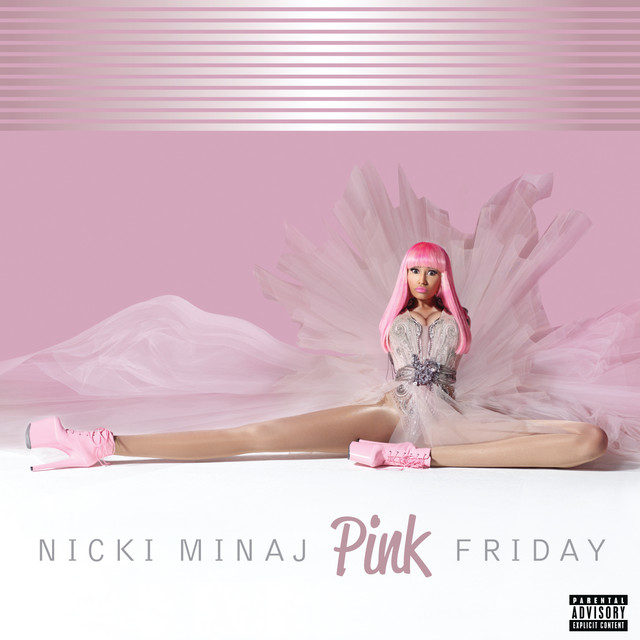
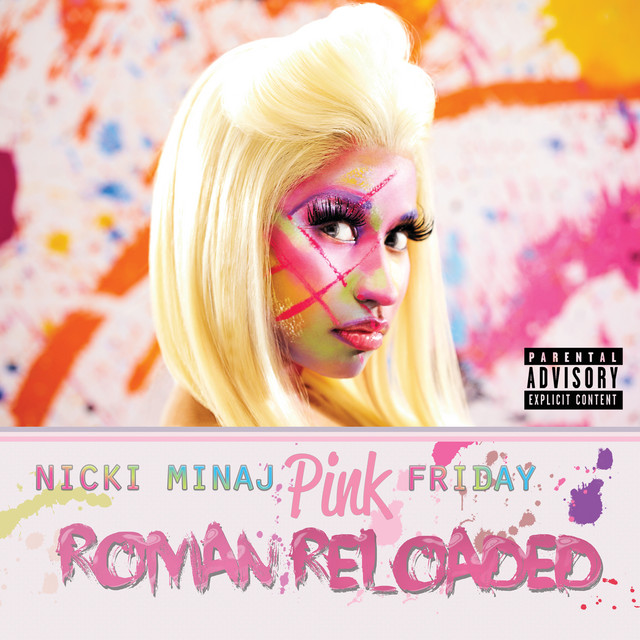
Album Credits
-
Nicki Minaj · 2022
Producer -
Nicki Minaj · 2014
Producer


.jpg?v=1784328016)