

Pricing and availability
We compare 600+ stores and found this item at 3 stores. Prices updated .
Store
Reviews
Price


Price History
Based on price data from 3 merchants for "Universal Audio Teletronix LA-3A Classic Audio Leveler Plugin". Prices shown reflect NEW condition. Tracking began Apr 2, 2026.
* Product prices and availability are updated by Equipboard every 24hrs and are subject to change. Equipboard may receive compensation for purchases made at participating retailers linked on this site. This compensation does not affect what products or prices are displayed, or the order of prices listed. For more information, please refer to our affiliate disclosure.
Description
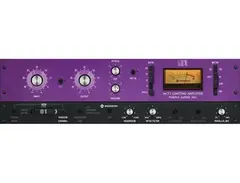
Step into the world of elite audio engineering with the Universal Audio Teletronix LA-3A Classic Audio Leveler Plugin. This meticulously modeled plugin captures the essence of the legendary LA-3A, combining the solid-state dynamics of the 1176 with the smooth optical compression of the LA-2A. It's like having a piece of audio history in your DAW, delivering that distinctive sonic character that has made the LA-3A a studio staple for decades.
The plugin faithfully reproduces the original's opto-electronic T4 compressor circuitry and transistor stages, providing you with the same intuitive controls for Gain and Peak Reduction. But it doesn't stop there. Universal Audio has enhanced this classic with modern features like an HF Emphasis sidechain filter, allowing you to tailor your compression without bass-heavy signals overwhelming your mix. Plus, the parallel Dry/Wet Mix control offers you seamless integration of the original signal, adding depth to your soundscapes.
From vocals to guitars, and even your drum bus, the LA-3A plugin proves its versatility, delivering precise and warm compression that brings your tracks to life. With artist presets from renowned musicians, this plugin not only embodies the past but also embraces the future of audio production.
Key Features:
- Faithful emulation of the iconic LA-3A Compressor/Limiter
- Exact reproduction of opto-electronic T4 compressor circuitry
- Switchable limiter and compressor function
- HF Emphasis sidechain filter for customized compression
- Parallel Dry/Wet Mix control for enhanced audio blending
- Versatile application for vocals, guitars, synthesizers, and drums
- VU meter for output level or gain reduction display
- Includes artist presets from renowned musicians
Product specs
| Software Type | Teletronix LA-3A Leveler |
| Platform | Mac, PC |
| Upgrade/Full | Full |
| Download/Boxed | Download |
| Bit Depth | 64-bit |
| Format | AAX, AU, VST3 (UAD Native), UAD DSP |
| Authorization Type | iLok Account Required (UADx Native version) |
| Hardware Requirements - Mac | Intel Core 2 Duo or higher, 4GB RAM minimum |
| Hardware Requirements - PC | Intel Core 2 Duo / AMD Athlon 64 X2 or higher, 4GB RAM minimum |
| OS Requirements - Mac | macOS 10.15 or later |
| OS Requirements - PC | Windows 10 or later |
FAQs
-
What type of compression does the Universal Audio Teletronix LA-3A Plugin provide?
-
The Universal Audio Teletronix LA-3A Plugin offers optical compression, known for its smooth and natural sound, making it ideal for a variety of audio sources like vocals and guitars.
-
Is the Universal Audio Teletronix LA-3A Plugin compatible with all major DAWs?
-
Yes, the plugin supports AAX, AU, and VST3 formats, ensuring compatibility with most major DAWs like Pro Tools, Logic Pro, and Ableton Live.
-
What are the system requirements for the Universal Audio Teletronix LA-3A Plugin on Mac?
-
The plugin requires macOS 10.15 or later, with an Intel Core 2 Duo processor or higher and a minimum of 4GB RAM.
-
Does the Universal Audio Teletronix LA-3A Plugin require any specific authorization?
-
Yes, the plugin requires an iLok account for authorization, particularly for the UADx Native version.
-
What are the standout features of the Universal Audio Teletronix LA-3A Plugin?
-
The plugin features a classic optical compression design, offering transparent leveling with a fast response, ideal for dynamic control in mixing and mastering.
Videos

Universal Audio
Teletronix LA-3A Sound Examples | UAD Native & UAD-2
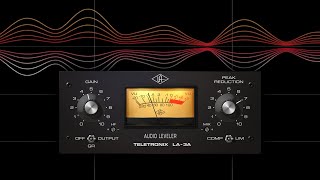
Teletronix LA-3A Sound Examples | UAD Native & UAD-2
Universal Audio
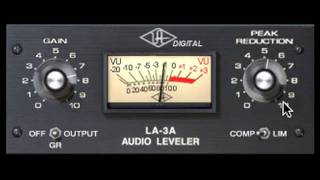
UAD LA-3A Powered Plug-In Demo Video
Universal Audio
UAD LA-3A Classic Audio Leveler

JRRShop
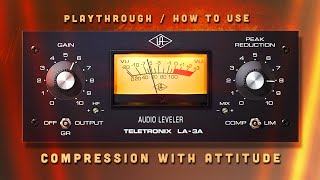
Universal Audio – Teletronix LA-3A – How To Use – Playthrough (no voiceover)

Colorful Tones Studio
Reviews
Owner Insights
We analyzed real musician discussions from forums and Reddit to find what players love, question, and tweak about Universal Audio Teletronix LA-3A Classic Audio Leveler Plugin.
Comparisons
-
The LA-3A is noted for imparting significant low-mid tightness compared to the more transparent CL-1B.
Source -
While both the LA-3A and LA-2A use the same gain reduction circuit, the LA-3A's solid-state amplifier provides a distinct tonal flavor.
Source -
The Black Rooster Audio emulation is described as smoother and truer to the original LA-3A than Overloud's, which is considered more aggressive and suited for room mics.
Source -
Apogee's Opto-3A plugin is highlighted for its exceptional quality, with recommendations to try its demo for comparison against other LA-3A emulations.
Source
Features and functionality
-
The LA-3A has a faster attack (1.5ms or less) than the LA-2A, which affects its application in music production.
Source
Software and compatibility
Use cases and applications
-
The LA-3A plugin is frequently favored for its coloration on synths and bass tracks, differing from the clearer CL-1B.
Source -
The Purafied VU Compressor, with an LA-3A setting, is favored for its effectiveness on electric guitars, particularly due to its THD feature.
Source -
The UAD LA-3A plugin is praised for its ability to produce desirable distortion when driven hard, especially useful for enhancing bass DI tracks.
Source
5.0 out of 5
Based on 0 Reviews and 2 Ratings
Artist usage
Add artist

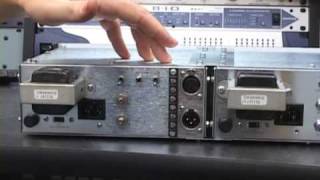
You can see two LA-3A compressors in the rack left-behind Mac at the 2:27 mark


Diplo talks about how he used the Teletronix LA-3A plugin on his album "Free The Universe": "On the track, 'Get Free' for instance, the hard sounding kick/snare sound was ran through the Teletronix LA-3A compressor plug-in once or twice, in between being processed with other layers."


In this inteview, Steve Aoki gives us a look to the main gear he use to produce records in both of his studios : The ''Neon Future Cave'' in Las Vegas, NV and the ''Dim Mak Studio'' in Los Angeles, CA.
Then I’m adding some inbox compression with the Universal Audio 1176LN compressor and the Teletronix LA-3A Classic Audio Leveler. The LA-3A helps keep levels at a good place, while still giving the vocals enough room for dynamics.


Used on "Apeshit", as stated by producer Stuart White in this September 2018 Sound on Sound interview.
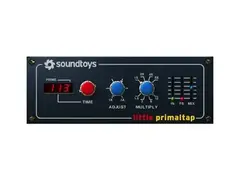
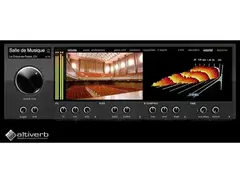
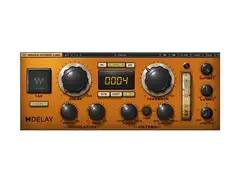
The first four aux tracks feature SoundToys effects, namely Little Microshift, two EchoBoy delays, and a delay from the Little PrimalTap. Next are a Hall Reverb aux and a Church Reverb aux, both using Waves’ RVerb, an EMT plate from Audio Ease’s Altiverb, four aux tracks with the Waves H-Delay and various other plug-ins on them as well, and four more reverb auxes with the Avid Revibe II, two Avid D-Verbs and another RVerb.
White: “I use the Little Microshift in pretty much every mix, with the left-right micro pitch-shift effect that’s similar to the classic effect in the Eventide H3000 shift where you pitch one side down six cents and one side up six cents to create width. It’s a good way to get your vocals wider without them being out of phase. It thickens up vocals, and is kind of like a doubler. I do quite a lot of filtering on some of the EchoBoy delays, for example with the Waves REQ, and I am adding colour with the SoundToys Devil-Loc, which is great if you want to colour the delay so it is separate from the main vocal, and compress it with the UAD LA3A and mix that in to taste.”
(...) Beyoncé’s lead vocal tracks consist of three aux tracks, four ‘dirty’ and eight ‘clean’ audio tracks. The audio tracks only have the EQ3 on the inserts and a few of them have a send to the Church Reverb. All White’s processing is done on the three aux tracks. “All lead vocals are sent to the ‘B Aux’ track and the ‘B Parra Aux’ tracks. On the former I have the McDSP DS 555 de-esser. I use the Waves de-esser the most, but in this particular track, because I wanted to compress her voice really hard, I felt that the 555 would work the best. I am rolling off until 6144Hz into what it is detecting; it’s like a side-chain filter. The FabFilter Pro-DS is doing a little more gentle look-ahead de-essing.
“After that there’s some pretty heavy EQ from the EQ3, with a high-pass at 142Hz, a 9dB cut at 244Hz and a 2dB cut at 3kHz. My cut at 244Hz is because she is singing in this husky, low voice, so there’s not a lot of energy in that. I get the energy from the RComp compression, and the EQs, including from the SSL E-Channel, are there to make her sit in the track, rather than making it sound filtered. I love the RComp, mainly because it doesn’t sound like compression to me. The SSL E-Channel adds a bit more compression, and the [Crane Song] Phoenix II Tape Emulation is really cool because while it doesn’t actually sound like tape, it smoothes out transients in a signal just like much analogue equipment does. It enables me to get a fatter vocal sound that again makes the vocal sit in the mix. The final EQ3 has a notch at 3.2kHz to take out some harshness. I also have sends to the Verb aux track, which are the D-Verb and [Waves] H-Reverb, and the Delay 1-4 aux, with the EchoBoy.
The other aux track, ‘B Parra Aux’, is a parallel compression track, with the RCompressor and the CLA 76, which I mixed in low. Both these aux tracks then go to the ‘LD ALL Aux’, on which I’m doing some more surgery with the McDSP AE400 [dynamic EQ], which allows you to set a threshold, just like on a compressor. It’s like turning a volume knob down on a frequency the moment it gets out of control. Finally, there’s the Waves C4, for some control, to keep the vocal even. This track has a lot of energy, so this is an example of using compression for energy, mood and attitude. I also worked a long time to get the compression on Bey’s breaths to pump on the beat. I wanted her breaths to be another percussive element in the track, and getting the attack and release on the compressor right was key to getting that feel and pumping effect.”
Five of the 22 Beyoncé ad lib, backing and harmony vocals below her lead vocals also go to the above-mentioned aux tracks, while the rest have their own signal chains. These audio tracks are sent to several aux tracks, often with tons of plug-ins, and all aux vocal tracks in the end get sent to the ‘Voc All’ group aux right at the top of the session, which has an RCompressor, with ratio at 10:1. There are more group aux tracks, like ‘TrackAux’, ‘FX Voc Aux’, ‘FX’ and ‘Music Aux’, which all get sent to the ‘All Aux’. This in turn gets sent to the ‘no limiter’ mix print track, and finally there’s a Stereo Master track.


Used on "APESHIT", as stated by producer Stuart White in this September 2018 Sound on Sound interview.
The first four aux tracks feature SoundToys effects, namely Little Microshift, two EchoBoy delays, and a delay from the Little PrimalTap. Next are a Hall Reverb aux and a Church Reverb aux, both using Waves’ RVerb, an EMT plate from Audio Ease’s Altiverb, four aux tracks with the Waves H-Delay and various other plug-ins on them as well, and four more reverb auxes with the Avid Revibe II, two Avid D-Verbs and another RVerb.
White: “I use the Little Microshift in pretty much every mix, with the left-right micro pitch-shift effect that’s similar to the classic effect in the Eventide H3000 shift where you pitch one side down six cents and one side up six cents to create width. It’s a good way to get your vocals wider without them being out of phase. It thickens up vocals, and is kind of like a doubler. I do quite a lot of filtering on some of the EchoBoy delays, for example with the Waves REQ, and I am adding colour with the SoundToys Devil-Loc, which is great if you want to colour the delay so it is separate from the main vocal, and compress it with the UAD LA3A and mix that in to taste.”
(...) Jay-Z’s part consists of just two tracks, one lead, and one ad-lib, with an additional ‘reverse’ track, and a ‘jay clean’ track. White: “The main lead vocal track has the SSL E0-channel, Waves C4 multiband compressor for some control, FabFilter Pro-Q2 EQ, with a few notches, and McDSP AE400. Where Jay raps ‘Tell the Grammy’s fuck that 0 for 8 shit / have you ever seen a crowd goin’ apeshit?’, you can hear some stuff in the background, which is another example of me adding flair and energy. That actually comes from the third ‘Voice Sample’ track further up the session, on which I have some automated plug-ins, the ReVibe, Waves S1 Imager, and filter sweep from the EQ3. It’s subtle, but it gives you a little ear candy.”

Used for Quavo and Offest's features on Beyoncé and Jay-Z's "Apeshit", as stated by producer Stuart White in this September 2018 Sound on Sound interview.
The first four aux tracks feature SoundToys effects, namely Little Microshift, two EchoBoy delays, and a delay from the Little PrimalTap. Next are a Hall Reverb aux and a Church Reverb aux, both using Waves’ RVerb, an EMT plate from Audio Ease’s Altiverb, four aux tracks with the Waves H-Delay and various other plug-ins on them as well, and four more reverb auxes with the Avid Revibe II, two Avid D-Verbs and another RVerb.
White: “I use the Little Microshift in pretty much every mix, with the left-right micro pitch-shift effect that’s similar to the classic effect in the Eventide H3000 shift where you pitch one side down six cents and one side up six cents to create width. It’s a good way to get your vocals wider without them being out of phase. It thickens up vocals, and is kind of like a doubler. I do quite a lot of filtering on some of the EchoBoy delays, for example with the Waves REQ, and I am adding colour with the SoundToys Devil-Loc, which is great if you want to colour the delay so it is separate from the main vocal, and compress it with the UAD LA3A and mix that in to taste.”
(...) “The Migos vocals came in as seven audio tracks, with the Avid D-Verb on each of them. Putting a D-Verb on a track before EQ is not something I normally do, but it sounded great. So I adjusted them a bit, but otherwise left them as they were. The tracks also came in with the Aux track above, and the EQ3, with a high pass at 60Hz and notches at 430Hz and 1.41kHz and a high boost, the Waves API 2500 compressor, the RComp, the Waves Q10 EQ, following a slightly similar curve to the EQ3, the Waves De-esser, the Waves Aphex Aural Exciter, and the Avid Dyn3 expander/gate. I added the EQ3, with another high-pass filter at 144Hz, and the RComp, with a ratio of 10:1.”

Used for Quavo and Offest's features on Beyoncé and Jay-Z's "Apeshit", as stated by producer Stuart White in this September 2018 Sound on Sound interview.
The first four aux tracks feature SoundToys effects, namely Little Microshift, two EchoBoy delays, and a delay from the Little PrimalTap. Next are a Hall Reverb aux and a Church Reverb aux, both using Waves’ RVerb, an EMT plate from Audio Ease’s Altiverb, four aux tracks with the Waves H-Delay and various other plug-ins on them as well, and four more reverb auxes with the Avid Revibe II, two Avid D-Verbs and another RVerb.
White: “I use the Little Microshift in pretty much every mix, with the left-right micro pitch-shift effect that’s similar to the classic effect in the Eventide H3000 shift where you pitch one side down six cents and one side up six cents to create width. It’s a good way to get your vocals wider without them being out of phase. It thickens up vocals, and is kind of like a doubler. I do quite a lot of filtering on some of the EchoBoy delays, for example with the Waves REQ, and I am adding colour with the SoundToys Devil-Loc, which is great if you want to colour the delay so it is separate from the main vocal, and compress it with the UAD LA3A and mix that in to taste.”
(...) “The Migos vocals came in as seven audio tracks, with the Avid D-Verb on each of them. Putting a D-Verb on a track before EQ is not something I normally do, but it sounded great. So I adjusted them a bit, but otherwise left them as they were. The tracks also came in with the Aux track above, and the EQ3, with a high pass at 60Hz and notches at 430Hz and 1.41kHz and a high boost, the Waves API 2500 compressor, the RComp, the Waves Q10 EQ, following a slightly similar curve to the EQ3, the Waves De-esser, the Waves Aphex Aural Exciter, and the Avid Dyn3 expander/gate. I added the EQ3, with another high-pass filter at 144Hz, and the RComp, with a ratio of 10:1.”
Album Usage
The Universal Audio Teletronix LA-3A Classic Audio Leveler Plugin has been featured on the following albums:


Genre Usage
Based on how artists on Equipboard use this gear, it is most commonly found in the following genres.
Used With
Based on how musicians on Equipboard use Universal Audio Teletronix LA-3A Classic Audio Leveler Plugin, it is most commonly used with the following gear.




-s.webp?v=1784872236)
Similar
Add recommendation1 alternative for Universal Audio Teletronix LA-3A Classic Audio Leveler Plugin, curated by the Equipboard community.

$4,100.00
More Universal Audio Limiter Plugins

$47.00 - $199.00
in Limiter Plugins Rank


$49.00
in Limiter Plugins Rank
.jpeg?v=1784891088)


in Limiter Plugins Rank


in Limiter Plugins Rank


$179.00 - $199.00
in Limiter Plugins Rank


$63.00 - $264.00
in Limiter Plugins Rank


$36.00 - $399.00
in Limiter Plugins Rank
.jpg?v=1784891692)


-m.webp?v=1784871223)
$83.50 - $99.00
in Limiter Plugins Rank


$34.99
in Limiter Plugins Rank


-m.webp?v=1784871769)
$33.00 - $35.99
in Limiter Plugins Rank


$43.00
in Limiter Plugins Rank


$34.99 - $39.99
in Limiter Plugins Rank


$0.00
in Limiter Plugins Rank


$0.00
in Limiter Plugins Rank


$19.00 - $52.00
in Limiter Plugins Rank


$15.00 - $69.00
in Limiter Plugins Rank

$35.99 - $39.99
in Limiter Plugins Rank


$59.00
in Limiter Plugins Rank


$19.99 - $149.00
in Limiter Plugins Rank


$105.00 - $109.00
in Limiter Plugins Rank

$39.99 - $40.00
in Limiter Plugins Rank

$191.00 - $199.00
in Limiter Plugins Rank


$191.00 - $199.00
in Limiter Plugins Rank


$49.99
in Limiter Plugins Rank


$9.99 - $89.00
in Limiter Plugins Rank

$54.00 - $55.00
in Limiter Plugins Rank


$43.00
in Limiter Plugins Rank


$79.00 - $149.00
in Limiter Plugins Rank

$47.00 - $99.99
in Limiter Plugins Rank

$99.99 - $124.99
in Limiter Plugins Rank

$59.00 - $129.00
in Limiter Plugins Rank


$40.00 - $124.00
in Limiter Plugins Rank


$299.00
in Limiter Plugins Rank
Accessories & Related Items






-s.webp?v=1784871993)


Community setups


Gear Guides






Most Popular Limiter Plugins
Most Popular Brands
-
Added to Equipboard on by
 equipboard
GearIQ 4934
-


