


Pricing and availability
We compare 600+ stores and found this item at 4 stores. Prices updated .
Store
Reviews
Price




Average Price: $370
High-end/Boutique
$149
$350+
Price Tier
Budget
Standard
High-end
Price History
Based on price data from 3 merchants for "Make Noise QPAS". Prices shown reflect NEW condition. Tracking began Apr 2, 2026.
* Product prices and availability are updated by Equipboard every 24hrs and are subject to change. Equipboard may receive compensation for purchases made at participating retailers linked on this site. This compensation does not affect what products or prices are displayed, or the order of prices listed. For more information, please refer to our affiliate disclosure.
Description
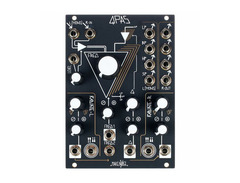
Dive into the world of modular synthesis with the Make Noise QPAS, a quad-core stereo analog filter module that seamlessly integrates into your Eurorack setup. Designed for the adventurous sound designer, QPAS offers a range of sonic possibilities with its four distinct filter outputs: lowpass, bandpass, highpass, and the uniquely crafted Smile Pass. The Smile Pass filter is particularly special, morphing its response across the frequency spectrum while maintaining consistent volume, ensuring your patches stay vivid and alive in the mix.
The QPAS isn't just about variety; it's about depth and movement. The dual Radiate controls let you manipulate stereo width and movement by spreading the filter peaks, creating intricate and evolving soundscapes. Whether you're crafting ambient textures or rhythmic sequences, the QPAS’s fast response and stereo VCA make it ideal for FM synthesis and melodic pinging, adding a dynamic edge to your compositions.
With its ability to operate in various stereo configurations, QPAS adapts to your creative needs, whether you're working in mono or stereo environments. Its intuitive interface and CV inputs for cutoff, resonance, and filter spread ensure you can mold your sound with precision and creativity.
Key Features:
- Quad-core stereo analog filter module for Eurorack
- Individual outputs for lowpass, bandpass, highpass, and Smile Pass
- Smile Pass filter morphs throughout cutoff range with consistent volume
- Stereo VCA with fast response, ideal for FM synthesis
- Versatile stereo connectivity: stereo to stereo, stereo to mono, mono to stereo, or mono to mono
- Dual Radiate controls for stereo sound design
- Size: 18HP wide, 30mm deep
- Power usage: 166mA (+12 volts), 190mA (-12 volts)
Product specs
| Type | Quad Peak Combining System Eurorack |
| Analog/Digital | Analog |
| Effects Types | Stereo Multi-peak Interaction, Quad Core Variable Filtering |
| Analog Inputs | 2 x 1/8" (audio) |
| Depth | 1.18" (30mm) |
| HP Size | 18HP |
| Power Supply | Requires Eurorack case and power supply |
FAQs
-
What is the Make Noise QPAS used for in a modular synth setup?
-
The Make Noise QPAS is a quad peak animation system designed for stereo filtering. It allows for complex sound sculpting by manipulating multiple filter peaks, making it ideal for creating dynamic and evolving textures in a modular synth setup.
-
Is the Make Noise QPAS compatible with all Eurorack systems?
-
Yes, the Make Noise QPAS is designed to be compatible with any standard Eurorack system. It requires an 18HP space and a suitable power supply within your Eurorack case.
-
What type of sound effects can the Make Noise QPAS produce?
-
The Make Noise QPAS can produce a variety of stereo multi-peak interaction effects, including complex filtering and modulation that can create rich, evolving soundscapes and textures.
-
How many audio inputs does the Make Noise QPAS have?
-
The Make Noise QPAS features 2 x 1/8" audio inputs, allowing for stereo signal processing and manipulation within your modular setup.
-
Does the Make Noise QPAS require a specific power supply?
-
The Make Noise QPAS requires a Eurorack case with a suitable power supply to operate, as it is designed to integrate seamlessly into existing modular systems.
Videos

loopop
Make Noise QPAS Review (smile pass and mystery wildcard inputs explained)
Make Noise QPAS Review (smile pass and mystery wildcard inputs explained)
loopop
Make Noise QPAS // Quad Peak Animation System & Stereo Eurorack Filter

DivKid
Make Noise QPAS

MAKEN0ISE
Make Noise QPAS Stereo Modular Synth Wonderpanel Demo

mylarmelodies
Make Noise QPAS Module Demo And Q&A

Perfect Circuit
Make Noise QPAS is the most unique filter!!

The Unperson
NAMM 2019: Make Noise QPAS - Stereo Filtering On The Floor....

sonicstate
My favorite sounds from QPAS

Stazma
FIVE MINUTES WITH 42HP Featuring Make Noise QPAS
sonicstate
Reviews
PROS
-
Four resonance points provide unique timbral options
-
Offers sounds not found in other filters
-
Compatible with Moog modular synthesizers
-
Binaural capabilities for immersive sound experiences
-
Multiple outputs and true stereo operation enhance sonic potential
-
Facilitates transformation of mono signals into stereo
-
Can produce a wide variety of sounds, including a mean kick drum
-
Possibility to automate movements in the stereo field with external modulation
CONS
-
Build quality and component choice feel cheap for the price
-
Knobs feel feeble and not durable
-
Resonance and stereo effect can be unsatisfactory
Owner Insights
We analyzed real musician discussions from forums and Reddit to find what players love, question, and tweak about Make Noise QPAS.
Features and functionality
-
The QPAS excels in subtle stereo animation, particularly effective when using audio rate modulation and its multiple outputs for dynamic sound placement.
Source -
The "smile pass" mode and multiple outputs enable unique signal processing, like isolating frequencies for specific effects.
Source -
The built-in VCA in the QPAS is particularly useful in compact setups, eliminating the need for additional modules to blend signals.
Source -
The QPAS cannot self-oscillate, which is a key consideration for those seeking specific filter features.
Source
Use cases and applications
-
Ideal for ambient and atmospheric sounds, the QPAS may disappoint in more aggressive contexts due to its lack of inherent grit and dirtiness.
Source -
It pairs well with Morphagene and Rings in ambient setups, highlighting its strength in filtering and phasing complex sources.
Source -
The QPAS excels as a percussion source, producing bongo, mallet, woodblock, and electric piano-like sounds when pinged.
Source -
It excels at filtering stereo tracks and processed sounds, such as pads or granular material, rather than basic waveform filtering.
Source -
Despite its size, the QPAS can effectively function as a standard filter when knobs are set to zero, suggesting versatility in patch design.
Source
Comparisons
-
Compared to the Bastl x Casper Ikarie, the QPAS is tamer; Ikarie offers quick transitions from subtle to intense.
Source -
The QPAS is described as lush but not suitable as a typical filter due to its weak slope and quirky resonance, contrasting with the SSF Dipole's potential.
Source -
The SSF Stereo Dipole offers quad-peak filtering like the QPAS but functions as two independent filters, making it versatile for both creative and conventional uses.
Source
User experience
-
Users note that the QPAS can become harsh with excessive modulation, suggesting more restrained use for optimal results.
Source -
Owners appreciate the QPAS for modulation, though some find its colorful character limiting for end-of-chain stereo filtering without additional mixers.
Source -
Owners often incorporate the QPAS into every patch due to its unique sound character, even when initially intending not to use it.
Source
Critic Reviews
5.0 out of 5
Based on 0 Reviews and 4 Ratings
Artist usage
Add artist

James Blake uses the Make Noise QPAS Eurorack module, as evidenced by its appearance in the video "Structuring Robots Into Heaven," directed by The Reids and presented by Bowers & Wilkins.


Specified in this September 8, 2019 video at 2:56.


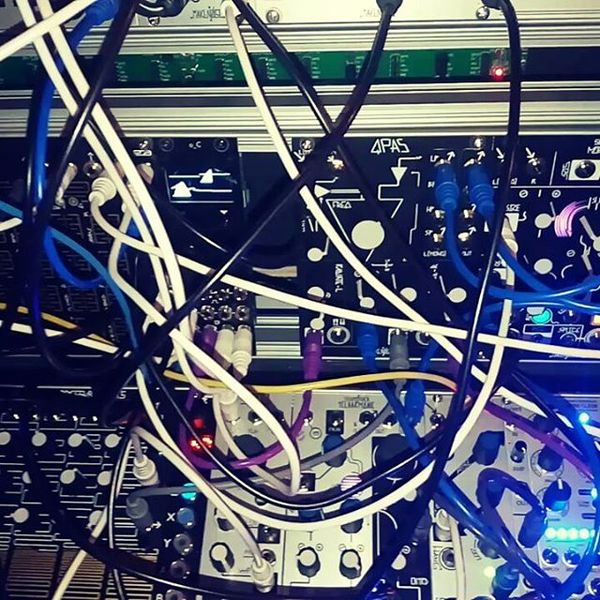
Mebitek, known for crafting dark ambient cinematic atmospheres, showcases his use of the Make Noise QPAS modular synthesizer in a recent Instagram post. This piece is part of his exploration into the electronic underground, blending elements of anger and melancholy with Sardinia's natural beauty to create a unique sonic experience.
Album Usage
The Make Noise QPAS has been featured on the following albums:

Genre Usage
Based on how artists on Equipboard use this gear, it is most commonly found in the following genres.
Used With
Based on how musicians on Equipboard use Make Noise QPAS, it is most commonly used with the following gear.


Community setups
Show yours
More Make Noise Modular Synthesizers

$290.00 - $311.00
in Modular Synthesizers Rank


$1.29 - $3,421.95
in Modular Synthesizers Rank


$599.00
in Modular Synthesizers Rank


$489.00 - $681.89
in Modular Synthesizers Rank

$572.95
in Modular Synthesizers Rank


$381.00 - $399.00
in Modular Synthesizers Rank


$94.76 - $235.00
in Modular Synthesizers Rank


$290.00
in Modular Synthesizers Rank

$199.00 - $216.00
in Modular Synthesizers Rank


$399.00 - $429.00
in Modular Synthesizers Rank


$322.03
in Modular Synthesizers Rank


$259.00 - $277.00
in Modular Synthesizers Rank

$322.03
in Modular Synthesizers Rank


$215.00 - $279.27
in Modular Synthesizers Rank


$312.00
in Modular Synthesizers Rank

$300.21
in Modular Synthesizers Rank

$249.00
in Modular Synthesizers Rank
.jpg?v=1783457091)

$259.00 - $3,421.95
in Modular Synthesizers Rank

$9.00 - $4,495.00
in Modular Synthesizers Rank


$257.09
in Modular Synthesizers Rank


$249.00 - $275.00
in Modular Synthesizers Rank


$90.00
in Modular Synthesizers Rank


$105.77 - $165.00


$140.00 - $190.00

-m.webp?v=1783523540)


$2,220.00 - $3,421.95


Accessories & Related Items


Similar


Most Popular Modular Synthesizers
Most Popular Brands
-
Added to Equipboard on by
 gabaid
Gear IQ 74
-


