


Pricing and availability
We compare 600+ stores and found this item at 5 stores. Prices updated .
Store
Reviews
Price






Average Price: $909
High-end/Boutique
$149
$350+
Price Tier
Budget
Standard
High-end
Price History
Based on price data from 3 merchants for "Make Noise Morphagene". Prices shown reflect NEW condition. Tracking began Apr 2, 2026.
* Product prices and availability are updated by Equipboard every 24hrs and are subject to change. Equipboard may receive compensation for purchases made at participating retailers linked on this site. This compensation does not affect what products or prices are displayed, or the order of prices listed. For more information, please refer to our affiliate disclosure.
Description
Unlock new realms of sound with the Make Noise Morphagene, a versatile Eurorack module designed for the adventurous synth enthusiast. Created in collaboration with Tom Erbe of Soundhack fame, this module is a playground for both traditional and avant-garde sound manipulation. Inspired by the musique concrète movement, the Morphagene allows you to splice, morph, and warp audio in innovative ways, seamlessly blending the tactile nature of tape manipulation with modern digital techniques.
Dive deep into your sonic explorations with up to 87 seconds of stereo audio recording that can be divided into 99 individual samples. Whether you're crafting the next EDM hit or experimenting in your home studio, this module offers full voltage control over all musical parameters, giving you the power to reshape audio landscapes with precision. The Morphagene's independent playback and recording heads, along with its Vari-Speed functionality, provide a rich canvas for creating unique textures and rhythms.
Perfect for live performances or studio sessions, the Morphagene is equipped with a 24-bit codec that generates high-quality 48kHz/32-bit WAV files. Plus, with the included SD card, you can easily manage your audio files and explore complex layering capabilities. This module is not just a tool; it's an invitation to redefine your musical journey.
Key Features:
- Designed with Tom Erbe (Soundhack)
- 20HP, 30mm Eurorack module
- Up to 87 seconds of stereo audio with 99 sample divisions
- Sound-on-sound recording, independent playback and recording heads
- Full voltage control over all parameters
- Vari-Speed range: 12 semitones up, 26 down
- 24-bit codec, creating 48kHz/32-bit WAV files
- Includes blank SD card for storage and file management
Owner's manual
Make Noise Morphagene User ManualProduct specs
| Type | Sample Manipulation Eurorack Module |
| Sampling | 87 seconds |
| Storage | SD card slot |
| Depth | 1.18" (30mm) |
| HP Size | 20HP |
| Power Supply | Requires Eurorack case and power supply |
FAQs
-
How does the Make Noise Morphagene differ from traditional tape splicing?
-
The Make Noise Morphagene uses a 4GB MicroSD card to store up to 32 reels, allowing for digital tape splicing and microsound exploration, as opposed to using physical tape. This modern approach offers expanded creative possibilities in a modular synth setup.
-
What is the maximum sampling time for the Make Noise Morphagene?
-
The Make Noise Morphagene provides a maximum sampling time of 87 seconds per sample, enabling extensive manipulation and layering of audio within your modular synth system.
-
What are the power requirements for the Make Noise Morphagene?
-
The Make Noise Morphagene requires a Eurorack case and power supply to operate, as it is designed as a Eurorack module with a depth of 1.18 inches (30mm) and a width of 20HP.
-
Can the Make Noise Morphagene be used for live performances?
-
Yes, the Make Noise Morphagene is well-suited for live performances, offering real-time sample manipulation and creative sound design capabilities, making it a versatile tool for dynamic audio exploration on stage.
-
What storage options are available for the Make Noise Morphagene?
-
The Make Noise Morphagene includes an SD card slot and comes with a 4GB MicroSD card, providing ample storage for up to 32 reels, allowing you to manage and manipulate multiple samples effectively.
Videos

loopop
Morphagene Tutorial: 20 ways to use it (includes firmware v155)
Morphagene Tutorial: 20 ways to use it (includes firmware v155)
loopop
Make Noise Morphagene Demo

mylarmelodies
Modular Monday: The Make Noise Morphagene

Red Means Recording
MAKE NOISE MORPHAGENE TUTORIAL ~ Eurorack sample module

once upon a synth
MAKE NOISE MORPHAGENE + MATHS UNBOXING AND SETUP
once upon a synth
Make Noise Morphagene // The ULTIMATE Sample Mangler and Tangler for Eurorack

JAde Wii
Is this module better than Morphagene?

Jameson Nathan Jones
Make Noise Morphagene Demo

Intelligent Boys
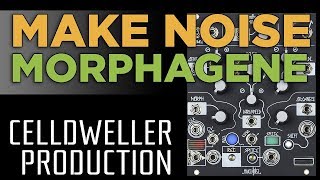
Celldweller Production: Make Noise - Morphagene

celldweller
Reviews
PROS
-
Inspires creativity with the ability to generate unique sounds from acoustic instruments
-
Fun and engaging, especially for those with a sample-based background
-
Adds a new level of modulation and texture to sound, enhancing musical compositions
-
Allows for on-the-fly recording and manipulation of samples in innovative ways
-
Offers deep, intricate texture loops and tape-like oddities for sound design
-
Voltage control over every parameter for dynamic audio buffering in modular synthesizers
-
Facilitates exploration of Musique Concrète and Microsound with real-time sound manipulation
-
Capable of producing a wide range of sounds, from glitches to ambient pads
-
Encourages discovery with endless variations of sounds through tweaking
-
High build quality and considered one of the best eurorack modules for sampling
CONS
-
Steep learning curve and requires careful reading of the manual to fully understand
-
Button combinations for accessing features can be overwhelming and fiddly
-
Loading samples can occasionally be confusing and tricky
-
Requires additional modules for full functionality, limiting standalone use
Owner Insights
We analyzed real musician discussions from forums and Reddit to find what players love, question, and tweak about Make Noise Morphagene.
Features and functionality
-
Combining Morphagene with a Doepfer 3D joystick allows for expressive control by assigning joystick outputs to Morphagene's Organize, Gene Size, and Slide CV inputs.
Source -
Morphagene allows live sampling with a sound-on-sound capability, enabling real-time audio manipulation and creative exploration with CV inputs.
Source -
Morphagene lacks precision for traditional looping tasks; getting it to play in tune can be challenging, requiring experimentation for effective modulation.
Source
Other
-
Morphagene might produce digital noise when used in certain setups; moving it to a separate powered pod can reduce interference with other modules.
Source
Mods and upgrades
Use cases and applications
-
Importing samples using the SD card rather than live sampling can result in cleaner sound quality for the Morphagene.
Source -
Sampling melodic content and manipulating it via the v/oct input turns Morphagene into a playable synth, expanding its utility beyond sample playback.
Source -
Recording vocals from a Roland E4 into Morphagene, then patching through QPAS and Mimeophon, creates a rich vocal processing chain.
Source -
Morphagene excels in creating dynamic drum sounds by using it as a drum module with sequenced triggers, exploiting gene size and slide controls for rhythmic variations.
Source -
Owners report using Morphagene with a stereo send on a hardware mixer, sending audio to a "sample buss" for versatile routing options.
Source -
Utilizing Morphagene as a live processing effect can be achieved by triggering sample/resample functions, allowing for real-time audio manipulation.
Source -
Morphagene is ideal for those interested in creative microsound exploration and experimental sample mangling rather than traditional sample playback.
Source
Setup and maintenance
-
Using a ground loop isolator, such as the $10 BESIGN Bluetooth Ground Loop Noise Isolator, can effectively reduce noise in the signal chain.
Source -
Switching to a linear power supply, such as L-1, is suggested to reduce noise issues, especially if power usage is close to limits.
Source -
Noise issues can often be mitigated by reseating power cables, as digital modules like Morphagene can benefit from a periodic physical disconnection.
Source
User experience
-
Owners find Morphagene excels as a "happy accident machine," offering unique, unplanned sound explorations rather than precise sample playback.
Source -
The Morphagene is more suited for creating organic, evolving soundscapes rather than being a straightforward sample player, which aligns with the experimental ethos of modular synthesis.
Source
Critic Reviews
5.0 out of 5
Based on 2 Reviews and 9 Ratings

5453
YES. A thousand times yes.
This is a glorious and damn near bottomless instrument. It's rare to find a piece of kit that takes you back to the wide eyed days of 1st exploring playing or recording music...and that's exactly what this does.
For everything it does? WAY too much to fit in a review however:
If you'd like to hear about it's origin you can do that here:
http://cdm.link/2017/12/the-story-of-early-tape-music-microsound-and-a-eurorack-resurrection/
For more on what the Morphongene is you can read that here. The Morphagene is a next generation Tape and Microsound music module that uses Reels, Splices, and Genes to create new sounds from those that already exist. It is informed by the worlds of Musique Concrète, where speed and direction variation were combined with creative tape splicing to pioneer new sounds, and Microsound, where computers allow for sound to be divided into pieces smaller than 1/10 of a second and manipulated like sub-atomic particles.
Having voltage control over every parameter, the Morphagene is most dynamic as a digital audio bu er for the modular synthesist. The Morphagene is comprised of a pair of tool-sets, which work well together: Tape Music Tools allow for sounds to be recorded on the y, layered using the internal Sound On Sound (S.O.S) function, manually cut into pieces using the Splice function, and re-organized with the Organize control. Once it is spliced up, it is possible to create nearly in nite variations of the original loop by modulating the Organize parameter. Vari-Speed allows for the speed and direction of playback to be controlled continuously with one control signal.
Gene-Size and Slide make up the Microsound Tools. Gene-Size shrinks the Splice’s “playback window” into gradually smaller pieces called Genes (aka particles, grains, granules). A control signal, such as the Wogglebug Smooth CV applied to Slide, moves through those pieces in a nonlinear fashion. Using Slide, random access of the audio bu er is possible. Morph allows additional textural control via the staggering or layering of successive Genes and, at extreme settings, randomized pitch up and panning. This yields interesting sonic results, particularly when combined with Functions such as Vari-Speed and Organize. It is possible to record Tape and Microsound manipulations into brand new Splices as if using two independent machines: one for playback and one to record. The Morphagene also allows for the storage and recall of multiple sound bu ers in the form of Reels, stored as .wav les on a microSD card. Each Reel can be up to 2.9 minutes long and may consist of up to 300 Splices. The end result is a sampler/ looper/audio bu er that is able to exist within a modular synthesizer system, and o er a vast amount of Real-Time sound manipulation in a fast and tactile way.
.jpg?v=1767833554)
564
the best eurorack sampler module
In my modest opinion, the Make Noise Morphagene is the best eurorack sample-based module ever. It's a sort of mini-studio able to manipulate the samples in every form possible. I think it's a must have for everybody wants play ambient atmospheres and sample-based sonic textures. And more...
Artist usage
Add artist
can be seen on the KB37 throughout the video

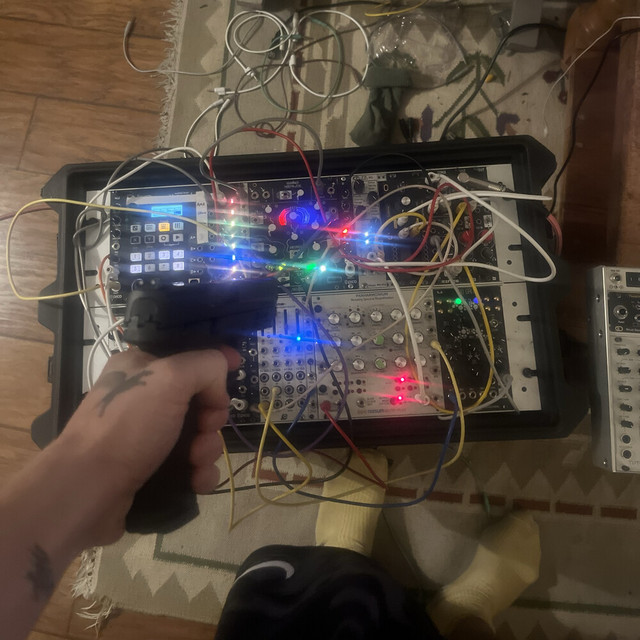
The Make Noise Morphagene module is confirmed to be part of Mk.gee's equipment, as it can be seen in his setup on the cover of the "ROCKMAN" album on Spotify.


In the bottom row you can see a Make Noise Morphagene in his rack.


Avey Tare, a versatile artist known for his contributions across various music genres, has confirmed his use of the Make Noise Morphagene modular synthesizer. Specifically, he mentions utilizing this piece of equipment in the creation of his song "Lips at Night." This information is corroborated by an interview featured on Synth History, with the article titled "Avey Tare Recommends," authored by Danz.



In this September 24, 2020 Music Radar article, Sylvan Esso discusses using the Morphagene. Nick notes that they use more modular on Free Love.
"A lot of the Make Noise stuff. They’re here in North Carolina with us. When I got into modular I really wanted to focus the instrument on experimental sampling, so right out the gate I was using the Phonogene.
That was the basis for a bunch of tracks – Frequency, What If – which came from Phonogene and OP-1 sampling sessions. Then when they came out with the Morphogene that opened up a whole other layer around the same ideas.
The Mannequins/Whimsical Raps Just Friends module, that was a big thing on this record too. All the Monome stuff too, I’m a big user of that. Those three companies were probably the ones that opened the most doors on this record and helped me think about things in a new, freeing way."

Visible in their video by Splice in their studio in Berlin (second 25).


In this 2021 Reddit AMA Jenn talks about gear on the Head of Roses album:
And of course Sandy's modular rig was highly involved--I'm a eurorack baby and he's a full wizard but I use the Make Noise Morphagene a lot for weird pads/glitches/sounds...

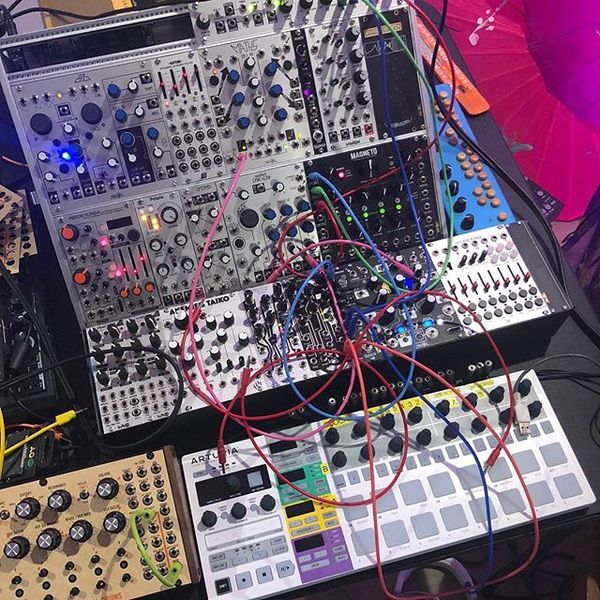


In the article "MAGICK & MUSIC: COIL’S DREW MCDOWALL EXPLAINS RITUAL AND THE CREATIVE PROCESS" on Zero Equals Two, Drew McDowall's use of the Make Noise Morphagene in his studio is discussed.

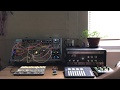
In this YouTube video the Morphagene can be seen in the bottom right of Emily's rack and in the description she gives a description of how it is being patched in:
Frames / Out 1 - Morphagene gene size
Clouds / L + R out to Morphagene
Morphagene / Reverse real speed / settings change throughout video / L + R out to mixer - reverb from BAM

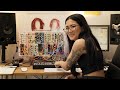
Album Usage
The Make Noise Morphagene has been featured on the following albums:
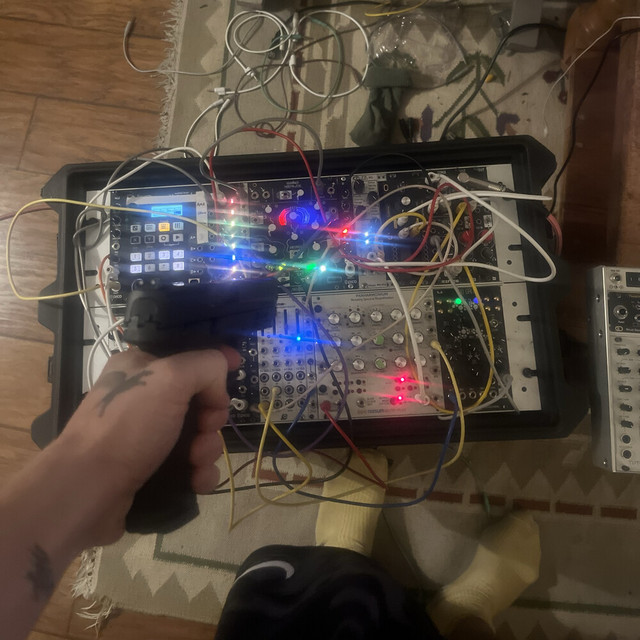

Genre Usage
Based on how artists on Equipboard use this gear, it is most commonly found in the following genres.
Used With
Based on how musicians on Equipboard use Make Noise Morphagene, it is most commonly used with the following gear.




Community setups
Show yours

More Make Noise Modular Synthesizers

$290.00 - $315.00
in Modular Synthesizers Rank


$599.00
in Modular Synthesizers Rank


$489.00 - $499.00
in Modular Synthesizers Rank

$580.02
in Modular Synthesizers Rank


$383.00 - $399.00
in Modular Synthesizers Rank


$95.93 - $234.00
in Modular Synthesizers Rank


$290.00
in Modular Synthesizers Rank

$199.00 - $215.00
in Modular Synthesizers Rank


$379.00 - $399.00
in Modular Synthesizers Rank


$399.00 - $431.00
in Modular Synthesizers Rank


$260.00
in Modular Synthesizers Rank


$269.00 - $277.00
in Modular Synthesizers Rank


$310.52
in Modular Synthesizers Rank


$200.00 - $215.00
in Modular Synthesizers Rank


$279.00
in Modular Synthesizers Rank


$303.46
in Modular Synthesizers Rank

$249.00
in Modular Synthesizers Rank
.jpg?v=1784328262)

$259.00 - $3,421.95
in Modular Synthesizers Rank

$9.00 - $4,495.00
in Modular Synthesizers Rank


$299.99
in Modular Synthesizers Rank


$249.00 - $276.00
in Modular Synthesizers Rank


$90.00
in Modular Synthesizers Rank


$107.08 - $165.00


$140.00 - $190.00


-m.webp?v=1784332819)


$2,220.00 - $3,421.95


Accessories & Related Items


Similar


Most Popular Modular Synthesizers
Most Popular Brands
-
Added to Equipboard on by
xaqaryGearIQ 5453
-


