

Pricing and availability
We compare 600+ stores and found this item at 3 stores. Prices updated .
Store
Reviews
Price




Average Price: $280
Standard/Professional
$149
$350+
Price Tier
Budget
Standard
High-end
Price History
Based on price data from 2 merchants for "Make Noise Maths (Classic)". Prices shown reflect NEW condition. Tracking began Apr 2, 2026.
* Product prices and availability are updated by Equipboard every 24hrs and are subject to change. Equipboard may receive compensation for purchases made at participating retailers linked on this site. This compensation does not affect what products or prices are displayed, or the order of prices listed. For more information, please refer to our affiliate disclosure.
Description
The Make Noise Maths (Classic) module is more than just a synthesizer; it's a versatile analog computer for your Eurorack setup. Designed to push the boundaries of modular synthesis, this quad-channel function generator offers endless possibilities for sound design and experimentation. Channels one and four are particularly powerful, capable of scaling, inverting, and integrating incoming signals, while channels two and three can also amplify and invert. Whether you're working with external inputs or generating functions independently, Maths delivers linear, logarithmic, and exponential outputs with precision.
One of the standout features is its ability to create voltage-controlled envelopes or LFOs with a range from a slow 20+ minute cycle to a rapid 1kHz frequency. This makes it ideal for everything from subtle modulation to frenetic rhythms. The upgraded LED indicators provide clear feedback for both positive and negative voltages, ensuring you always have a visual reference for your soundscapes. Additionally, the module includes an inverted Sum output and a Unity signal output, offering even more flexibility in crafting your sonic universe.
This module is a staple for both seasoned synth enthusiasts and those just getting started with modular setups. Whether you're applying portamento to control voltages for slurred effects or combining control signals for complex modulations, Make Noise Maths is your go-to tool for expanding your creative horizons.
Key Features:
- 20HP Eurorack module designed as an analog function generator
- Generates linear, logarithmic, and exponential functions
- Create voltage-controlled envelopes or LFOs with cycle range from 20+ minutes to 1kHz
- Amplify, attenuate, integrate, or invert incoming signals
- Apply lag, slew, or portamento for unique effects
- Combine up to 4 control voltages for complex modulations
- EOR and EOC pulses with upgraded LED indicators for visual feedback
- Made in Asheville, N.C., USA
Note: Requires a Eurorack case and power supply (sold separately).
Product specs
| Brand | Make Noise |
| Model | Maths Module |
| Finish | Black & Gold, Silver |
| Year | 2019 - 2025 |
| Made In | United States |
| Categories | Eurorack Modules and Cases, Synth Modules |
| Horizontal Pitch | 20HP |
| Modular Synth Format | Eurorack |
| Synth Module Function | Attenuator, CV Modulation, Envelope, LFO |
FAQs
-
What is the primary function of the Make Noise Maths module?
-
The Make Noise Maths module is a versatile Eurorack synthesizer module used for generating and processing control voltages, functioning as an envelope generator, LFO, and more.
-
Is Make Noise Maths suitable for beginners in modular synthesis?
-
While Make Noise Maths offers complex functionality, it is user-friendly enough for beginners to explore basic modulation and envelope generation, making it a valuable learning tool in modular synthesis.
-
How does the Make Noise Maths module integrate with other Eurorack systems?
-
The Make Noise Maths module is designed to seamlessly integrate with other Eurorack systems, offering 20HP space and standard Eurorack power requirements for easy addition to existing setups.
-
Can the Make Noise Maths module be used as an LFO?
-
Yes, the Make Noise Maths module can function as a low-frequency oscillator (LFO), providing a range of modulation possibilities for other modules within a Eurorack system.
-
What are the power requirements for the Make Noise Maths module?
-
The Make Noise Maths module requires 60mA of +12V and 60mA of -12V regulated power, compatible with standard Eurorack power distribution systems.
Videos

MAKEN0ISE
MATHS Bouncing Ball w/ no VCA
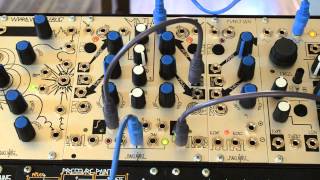
MATHS Bouncing Ball w/ no VCA
MAKEN0ISE

Patch from Scratch: MATHS Drums
MAKEN0ISE

Maths Sample & Hold patches!
MAKEN0ISE
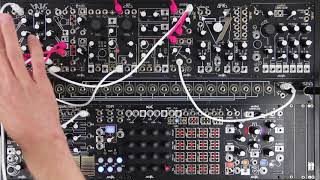
MATHS Bouncing Ball!!!
MAKEN0ISE
Eurorack Modern Classics: Maths, Dual Prismatic Oscillator (DPO), and ModDemix by Make Noise

Patchwerks
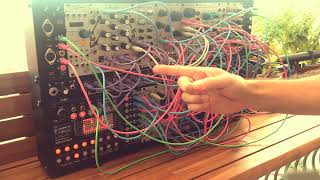
Make Noise Maths Bouncing Ball With A Twist

A Proper Measure
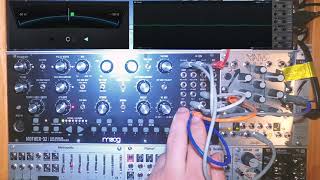
Moog Mother-32 & Make Noise Maths - 4 VCO

Robe Music
Reviews
PROS
-
Versatile tool kit for complex modulations
-
Offers trigger/cycling/attenuation features
-
Functions as an envelope, slew, or LFO
-
Saves rack space with its multi-utility
-
Referred to as the "CV Swiss Army Knife"
-
Essential for generating complex waveshapes and VCA compression
-
Highly popular and considered indispensable in Eurorack systems
-
Useful in both small and expanding setups
CONS
-
Steep learning curve, requiring time and resources to fully understand
Owner Insights
We analyzed real musician discussions from forums and Reddit to find what players love, question, and tweak about Make Noise Maths (Classic).
Features and functionality
-
The Maths module's exponential envelopes are highly praised, rivaling dedicated envelopes for their quality despite being part of a multipurpose utility module.
Source -
Maths includes attenuverters on each channel, allowing for inversion and offsetting of envelopes, which can be particularly useful for sidechaining effects.
Source -
Maths can lock up when looping at high speeds, an issue not commonly faced with simpler modules.
Source
Use cases and applications
-
Owners frequently use Maths for creating snappy drum envelopes, modulating decay for varied note lengths, and achieving audio-rate ratchets for percussive effects.
Source -
Maths can function as a subharmonic generator when set up correctly, offering audio-rate transformations that enrich a modular synth setup.
Source -
The module is often utilized for voltage-controlled envelopes and LFOs, with EOC and EOR gates employed for clocking and triggering diverse modular interactions.
Source -
Users often employ channels 2/3 for offsets and attenuation, highlighting Maths' flexibility to serve multiple roles simultaneously in a patch.
Source
Comparisons
-
Stages, another modular, is noted for being too fast on one-stage envelopes compared to Maths, which offers more control over envelope curves.
Source -
The Cosmotronic Delta V offers similar functionality to Maths in 10hp but faces issues like short triggers and cramping, highlighting Maths' superior usability.
Source -
Alternatives like the Endorphins Airstreamer 4 paired with a 3xMIA can replicate Maths' functionality in 14hp, though lacking some features like the end-of-rise output.
Source
5.0 out of 5
Based on 1 Review and 2 Ratings

2532
You'll want at least one.
Maths was one of my first module purchases when I got into Eurorack. It's a very useful module, especially in a small system, as it can be used for so many different functions. When my rack size inevitably expands, I'll likely add the 2013 updated version of Maths to my setup.
Artist usage
Add artist

As he shows off his eurorack module setup, he moves the camera to the left, showing off his modulaes. The classicly-colored MATHS by Make Noise, can be seen at 0:32


First visible in this video at 5:16.

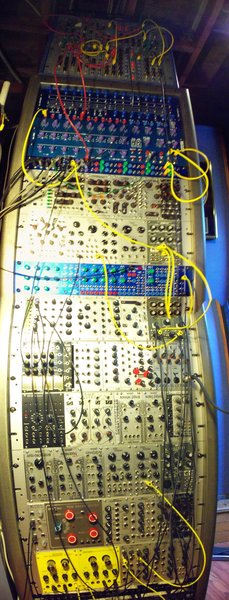
can be seen in this post from November 22, 2010


Album Usage
The Make Noise Maths (Classic) has been featured on the following albums:

Genre Usage
Based on how artists on Equipboard use this gear, it is most commonly found in the following genres.
Used With
Based on how musicians on Equipboard use Make Noise Maths (Classic), it is most commonly used with the following gear.


Similar
Add recommendation1 alternative for Make Noise Maths (Classic), curated by the Equipboard community.

$290.00 - $315.00
More Make Noise Modular Synthesizers
$290.00 - $315.00
in Modular Synthesizers Rank


$1.29 - $3,421.95
in Modular Synthesizers Rank


$599.00
in Modular Synthesizers Rank


$489.00 - $499.00
in Modular Synthesizers Rank


$580.23
in Modular Synthesizers Rank


$383.00 - $399.00
in Modular Synthesizers Rank


$95.96 - $234.00
in Modular Synthesizers Rank


$199.00 - $215.00
in Modular Synthesizers Rank


$379.00 - $399.00
in Modular Synthesizers Rank


$399.00 - $431.00
in Modular Synthesizers Rank


$260.00
in Modular Synthesizers Rank


$269.00 - $277.00
in Modular Synthesizers Rank

$309.19
in Modular Synthesizers Rank


$200.00 - $215.00
in Modular Synthesizers Rank

$279.00
in Modular Synthesizers Rank

$302.16
in Modular Synthesizers Rank

$249.00
in Modular Synthesizers Rank
.jpg?v=1784328262)

$259.00 - $3,421.95
in Modular Synthesizers Rank

$9.00 - $4,495.00
in Modular Synthesizers Rank


$299.99
in Modular Synthesizers Rank


$249.00 - $276.00
in Modular Synthesizers Rank


$90.00
in Modular Synthesizers Rank


$107.12 - $165.00


$140.00 - $190.00


-m.webp?v=1784332819)


$2,220.00 - $3,421.95


Accessories & Related Items


Community setups


Most Popular Modular Synthesizers
Most Popular Brands
-
Added to Equipboard on by
simfonikGearIQ 2532
-


