

Pricing and availability




* Product prices and availability are updated by Equipboard every 24hrs and are subject to change. Equipboard may receive compensation for purchases made at participating retailers linked on this site. This compensation does not affect what products or prices are displayed, or the order of prices listed. For more information, please refer to our affiliate disclosure.
Description
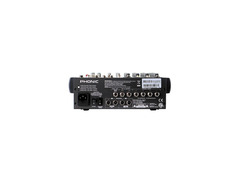
Unleash your sonic creativity with the Phonic Powerpod 820, the powerhouse mixer that's as versatile as it is compact. This 200W, 12-input powered mixer is designed for musicians and sound engineers who demand clarity and control in their audio productions. Featuring four mono mic/line channels, each with individual phantom power, and two paired stereo inputs, this mixer is perfect for both live performances and studio sessions.
Equipped with ultra-low noise preamps and 75Hz low-cut filters, the Phonic Powerpod 820 ensures your sound is pristine, free from unwanted noise like stage rumble or P-pops. The intuitive 3-band EQ on every channel allows you to sculpt your sound with precision, while the onboard DFX—a 32-bit digital effects processor—offers 16 preset programs to enhance your mixes with ease.
Flexibility is a hallmark of the Phonic Powerpod 820. With two aux sends per channel and two stereo aux returns, you can seamlessly integrate it with other equipment. The dual 10-segment LED level meters and high-volume headphone output make monitoring a breeze, ensuring you always have a clear picture of your mix. The additional Mini Stereo I/O makes it a cinch to connect MP3 players, MD, or computer audio devices, making this mixer an ideal choice for project studios, clubs, and more. Whether you're using it as a keyboard mixer, sub-mixer, or monitor desk, the Phonic Powerpod 820 delivers exceptional performance wherever you need it.
Key Features:
- 200W (@ 4 ohms) power output
- 12-input powered mixer with 4 mono mic/line channels
- Individual phantom power for each mic channel
- Ultralow-noise preamps with 75Hz low-cut filters
- Onboard 32-bit DFX processor with 16 preset effects
- 3-band EQ on every channel
- Two aux sends per channel
- Two stereo aux returns
- Dual 10-segment LED level meters
- High-volume headphone output
- Mini Stereo I/O for versatile connectivity
FAQs
-
What are the power output specifications of the Phonic Powerpod 820?
-
The Phonic Powerpod 820 features a built-in 100W + 100W stereo power amplifier at 4 ohms, providing ample power for small to medium-sized live sound applications.
-
Does the Phonic Powerpod 820 have built-in effects?
-
Yes, the Phonic Powerpod 820 includes a 32-bit digital multi-effects processor with 16 programs and a main parameter control, allowing for a variety of sound customization options.
-
How many input channels does the Phonic Powerpod 820 offer?
-
The mixer provides a total of 12 inputs, including four balanced Mic/Line channels with inserts and two stereo Line channels, making it versatile for different audio sources.
-
Is the Phonic Powerpod 820 suitable for live performances?
-
Yes, with its built-in power amplifier, multiple input channels, and digital effects processor, the Phonic Powerpod 820 is well-suited for live performances and small venue setups.
-
Does the Phonic Powerpod 820 support phantom power for microphones?
-
The mixer is equipped with global +48V phantom power, which is essential for powering condenser microphones and ensuring optimal sound quality.


Reviews
Owner Insights
We analyzed real musician discussions from forums and Reddit to find what players love, question, and tweak about Phonic Powerpod 820.
Features and functionality
-
The Phonic Powerpod 820's speaker outputs default to mono if connected to both L outputs without using R, as per the manual.
Source -
Incorrect connections to the AUX outputs can result in dual mono sound; ensure speakers connect to MAIN L/R for proper stereo.
Source -
The Phonic Powerpod 820 is paired with an 80watt Phonic S710 speaker, which may be designed with limited bass response to protect drivers at high volumes.
Source
Setup and maintenance
User experience
-
Green tape on the mixer could indicate previous user guidance for correct cable placement.
Source
Mods and upgrades
-
Owners recommend using a parametric or graphic equalizer to boost bass frequencies between 40-60Hz, ensuring to adjust overall gain to prevent clipping.
Source -
Building a custom subwoofer, like using a JBL GTO 1514, is suggested for improved bass response, providing high efficiency and potential for lower frequency tuning.
Source
5.0 out of 5
Based on 0 Reviews and 1 Rating
More Phonic Mixers


$28.00 - $415.00
in Mixers Rank


$677.00 - $989.00
in Mixers Rank


$1,462.00 - $1,999.00
in Mixers Rank


$215.75 - $250.74
in Mixers Rank


$120.00 - $449.99
in Mixers Rank


-m.webp?v=1784646045)
$342.23 - $379.00
in Mixers Rank


$219.00 - $329.99
in Mixers Rank


$45.30 - $89.00
in Mixers Rank


$180.25 - $219.99
in Mixers Rank


$1,754.41 - $3,299.99
in Mixers Rank


$200.00 - $573.74
in Mixers Rank


$129.00 - $209.00
in Mixers Rank


$310.00 - $479.99
in Mixers Rank


$188.00 - $309.00
in Mixers Rank


$75.00 - $329.99
in Mixers Rank


$141.35 - $169.00
in Mixers Rank


$65.00 - $219.50
in Mixers Rank


$277.00 - $382.00
in Mixers Rank


$244.00 - $399.99
in Mixers Rank


$35.00 - $295.00
in Mixers Rank


$205.00 - $329.00
in Mixers Rank


$667.12 - $1,271.95
in Mixers Rank


$99.00 - $179.00
in Mixers Rank


Artist usage


Community setups


Similar


Gear Guides





Most Popular Mixers
Most Popular Brands


