

Pricing and availability
We compare 600+ stores and found this item at 9 stores. Prices updated .
Store
Reviews
Price









Average Price: $664
Standard/Professional
$200
$1001+
Price Tier
Budget
Standard
High-end
Price History
Based on price data from 6 merchants for "Yamaha MG20 20-channel Analog Mixer". Prices shown reflect NEW condition. Tracking began Apr 2, 2026.
* Product prices and availability are updated by Equipboard every 24hrs and are subject to change. Equipboard may receive compensation for purchases made at participating retailers linked on this site. This compensation does not affect what products or prices are displayed, or the order of prices listed. For more information, please refer to our affiliate disclosure.
Description
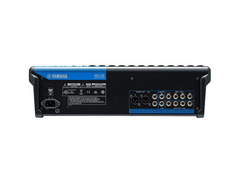
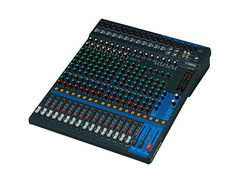
Dive into the heart of your music with the Yamaha MG20 20-channel Analog Mixer, a powerhouse engineered for the meticulous musician and astute audio engineer alike. Whether you're orchestrating a live performance, setting up a studio recording session, or crafting the perfect mix for your next hit, the MG20 brings unparalleled clarity and control to your fingertips. With its robust construction and intuitive design, this mixer stands as a testament to Yamaha's relentless pursuit of audio excellence, blending high-end professional features with the reliability you've come to expect.
From its studio-quality D-PRE preamps that ensure your mixes are imbued with depth and detail, to the seamless operation afforded by its one-knob compressors, every aspect of the MG20 is designed to elevate your sound. The mixer's comprehensive EQ and highpass filters offer precise sound-shaping capabilities, allowing you to fine-tune your audio with surgical precision. Moreover, its solid metal chassis promises years of reliable performance, ensuring that the MG20 will be a cornerstone of your gear setup for gigs and sessions to come.
Key Features: - 20-Channel Mixing Console with maximum 16 Mic / 20 Line Inputs (12 mono + 4 stereo), providing extensive connectivity. - D-PRE mic preamps deliver clean, transparent, and natural sound, ensuring your mixes are rich and full of life. - Comprehensive 3-band EQ on all mono channels for advanced sound shaping. - 1-knob compressors for easy dynamics control, making it simpler to dial in the perfect sound. - PAD switch on mono inputs caters to loud sources, offering greater flexibility in managing input levels. - Robust metal chassis for enhanced durability and reliability, ready to withstand the rigors of the road.
Owner's manual
Yamaha MG20 20-channel Analog Mixer User ManualProduct specs
| Type | Analog |
| Channels | 20 |
| Faders | 19 |
| Inputs - Mic Preamps | 12 x TRS/XLR Combo, 4 x XLR |
| Phantom Power | Global |
| Inputs - Line | 4 x TRS, 4 x RCA |
| Outputs - Main | 2 x XLR, 2 x TRS |
| Outputs - Direct | 2 x TRS (Monitor) |
| Outputs - Other | 4 x TRS (Bus) |
| Aux Sends | 2 x Pre/Post, 2 x Post |
| Send/Return I/O | 4 x TRS (Send) |
| Busses/Groups | 4 x Bus |
| Headphones | 1 x 1/4" |
| EQ Bands | 3-Band, Sweepable Mid |
| Effects | Yes |
| Rackmountable | Yes |
| Height | 5.1" |
| Width | 17.5" |
| Depth | 19.7" |
| Weight | 15.7 lbs. |
FAQs
-
How many microphone inputs does the Yamaha MG20 mixer have?
-
The Yamaha MG20 mixer features 12 TRS/XLR combo inputs and 4 additional XLR inputs, providing a total of 16 microphone preamp inputs.
-
Does the Yamaha MG20 mixer provide phantom power for condenser microphones?
-
Yes, the Yamaha MG20 mixer offers global phantom power, which can be engaged to supply the necessary voltage for condenser microphones.
-
Can the Yamaha MG20 mixer be rack-mounted?
-
Yes, the Yamaha MG20 mixer is designed to be rack-mountable, making it suitable for both studio and live sound applications.
-
What type of EQ is available on the Yamaha MG20 mixer?
-
The Yamaha MG20 mixer features a 3-band EQ with a sweepable mid-frequency, allowing for detailed tonal adjustments on each channel.
-
Does the Yamaha MG20 mixer include built-in effects?
-
Yes, the Yamaha MG20 mixer includes built-in effects, providing users with a range of processing options for enhancing audio signals.
-
How many aux sends does the Yamaha MG20 mixer have?
-
The Yamaha MG20 mixer is equipped with four aux sends: two pre/post and two post, allowing for flexible routing of audio signals to external processors or monitors.
-
What are the main output options on the Yamaha MG20 mixer?
-
The Yamaha MG20 mixer provides main outputs via 2 XLR and 2 TRS connections, ensuring compatibility with a variety of professional audio systems.


Reviews
PROS
-
Exceptional sound clarity and purity, comparable to top brands
-
Offers significant headroom for dynamic audio handling
-
Lightweight and easy to operate, enhancing portability
-
Compatible with external processors for expanded effects options
-
Built-in compressors on first 8 channels for dynamic control
-
Illuminated on/off switches for easy visual tracking of active channels
-
Versatile routing options with the capability to manage complex setups
-
Solid build quality typical of Yamaha products
CONS
-
Speaker mounting and feedback issues reported in specific setups
-
USB interface issues with noise and data stream dropouts on some models
-
Stereo channels may have slightly less headroom than mono channels
-
Channel faders can feel wobbly and too light, affecting precise adjustments
-
Stereo inputs are offset from their corresponding channel controls, causing confusion
-
Routing switches are not illuminated, complicating the operation in low light
-
Absence of a dedicated mono sum output for certain audio routing needs
-
Some ergonomic design choices can hinder quick, intuitive use
Owner Insights
We analyzed real musician discussions from forums and Reddit to find what players love, question, and tweak about Yamaha MG20 20-channel Analog Mixer.
Features and functionality
-
The Yamaha MG20's Aux 4 serves dual purposes: a post-fader effects send to onboard effects or a post-fader external send, complicating simultaneous use for both.
Source -
The Yamaha MG20XU offers onboard FX like reverb and delay, plus a 2-channel USB interface for recording and playback, which can free up additional channels.
Source -
The Yamaha MG series is noted for having broad-stroke EQs that are effective as long as preamps are not overloaded, which can happen before the peak lights activate.
Source
Setup and maintenance
Use cases and applications
-
For setups with limited aux outs, combining instruments into shared mixes (e.g., bass and drums) is a common workaround to maximize monitor capabilities.
Source -
Using the Glyn Johns technique for drum miking (kick, snare, and two overheads) can efficiently cover a full drum kit with fewer mics on the Yamaha MG20.
Source -
For electric guitars, using a mic on the amp rather than a DI box often yields a more authentic tone, especially in church settings.
Source -
A user noted that the Yamaha MG20 is particularly suitable for venues where different people frequently operate the mixer due to its intuitive analog controls.
Source
Comparisons
-
Transitioning to a digital mixer like the Allen and Heath CQ18T is advised for more monitor mixes and enhanced user-friendly features, such as quick channels and auto gain.
Source -
Compared to the Mackie 1604VLZ and Mixwizard3 16:2, the Yamaha MG series is noted for its onboard FX and USB capabilities, making it versatile for small setups.
Source -
The Yamaha MG20 is considered more reliable than Behringer analog mixers, which have a reputation for channels and outputs failing over time.
Source
User experience
Based on 0 Reviews and 0 Ratings
Genre Usage
Based on how artists on Equipboard use this gear, it is most commonly found in the following genres.
More Yamaha Mixers

$214.78 - $250.74
in Mixers Rank


-m.webp?v=1785078113)
$340.69 - $379.00
in Mixers Rank


$200.00 - $573.74
in Mixers Rank


$140.72 - $169.00
in Mixers Rank


$129.99 - $176.99
in Mixers Rank


$190.00 - $229.99
in Mixers Rank


$340.69 - $365.49
in Mixers Rank


$711.02 - $758.00
in Mixers Rank


$279.99 - $325.00
in Mixers Rank


$459.00 - $479.00
in Mixers Rank


.jpg?v=1783959930)


Accessories & Related Items


-s.webp?v=1785078137)


Artist usage


Community setups


Similar


Gear Guides








Most Popular Mixers
Most Popular Brands
-
Added to Equipboard on by
 freezeetch
GearIQ 1536
-


