.webp)
Table of Contents

Equipboard
Equipboard is the world's largest community of artists and their gear. Read our review process.
We are reader-supported. When you buy through links on our site, we may earn an affiliate commission. Learn more.
Looping is no longer about novelty or showing off. In 2026, it's about writing faster, practicing smarter, and performing with more control. The shift from bedroom looping videos to real-world use on stages, in studios, and at writing desks reflects a fundamental change in how musicians approach their craft. Walk into any professional guitarist's studio today and you'll likely find a looper pedal sitting somewhere in the signal chain, not as a party trick device, but as essential infrastructure. Loopers have quietly become workflow tools that externalize ideas, build arrangements in real time, and bridge the gap between improvisation and composition.
The cultural transformation is complete. What once defined a niche genre of solo performers now serves as compositional scaffolding for songwriters who never loop live, producers who sketch ideas before opening their DAW, and worship guitarists building atmospheric layers during extended worship sets.
Looping Is No Longer a Genre. It's a Workflow.
Looping used to be a performance trick, a way to prove you could stack harmonies and rhythms on the fly while an audience watched in real time. Today, it's a writing tool that helps musicians externalize ideas quickly without waiting for a band, a producer, or even a second take. Modern loopers prioritize control over spectacle. They offer scene-based organization, MIDI synchronization, and independent track manipulation that turns looping into an arrangement process rather than a linear recording stunt.
This workflow-first mentality changes everything. You're no longer performing for the looper; the looper is performing for you. It holds your ideas in place while you explore alternatives. It lets you audition chord progressions, test melodies against basslines, and hear how a guitar part interacts with percussive elements before committing anything to a recording session. The looper becomes a second set of hands that never gets tired and never forgets what you played three minutes ago.
This is why you'll find loopers on the pedalboards of singer-songwriters, and in the home studios of producers who use them to sketch ideas before opening a DAW. The tool has migrated from the stage to the writing desk because it solves a fundamental creative problem: how to hear your ideas in context immediately, without technical friction or collaboration dependencies. When Ed Sheeran builds entire songs around loop-based arrangements or when Justin Bieber uses a Boss RC-600 to create atmospheric layers during his stripped-down "Yukon" performance at the 2026 Grammy Awards, they're demonstrating looping as infrastructure, not as spectacle.
A Brief History of Guitar Looping (And Why It Matters Now)
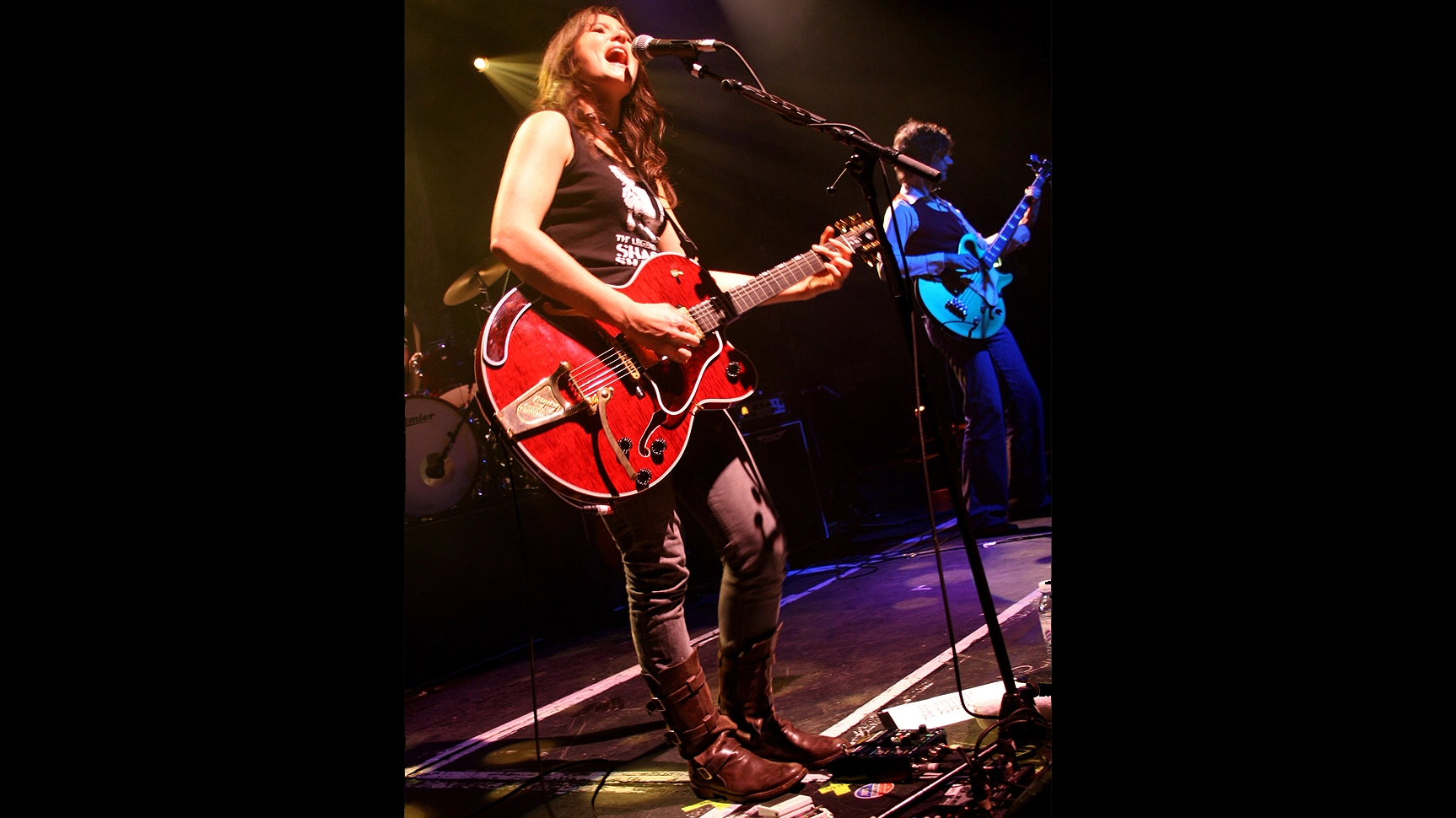
Looping feels like modern magic, but its roots are actually quite "analog." Back in the 1950s and 60s, pioneers like Les Paul and Terry Riley weren't using sleek digital pedals; they were literally cutting and splicing magnetic tape to create repeating patterns. Then came the Frippertronics era in the 70s, where Robert Fripp used two reel-to-reel tape recorders to create those ethereal, washed-out soundscapes.
The game changed in the 90s when digital technology caught up. Suddenly, we had the Lexicon JamMan, which shrank an entire room of tape machines into a box the size of a paperback. Guitarists weren’t just players anymore; they became "one-man bands." Think of Howie Day or KT Tunstall - suddenly, a solo acoustic act could sound like a full production in real-time.
Why It Matters Now
So, why is this more relevant today than ever? Two words: Creative Independence.
- The Bedroom Producer Era: In a world where studio time is expensive, looping allows you to layer harmonies and percussion without needing a band or a laptop.
- Genre-Bending: Modern icons like Ed Sheeran or Tash Sultana have proven that looping isn't just a gimmick; it’s a virtuosic skill. It bridges the gap between organic performance and electronic production.
- Practice Tool: Beyond the stage, it’s the ultimate teacher. Nothing exposes a timing issue faster than a loop that’s slightly out of sync!
The Four Real-World Ways Guitarists Use Loopers Today
Understanding looping in theory means nothing until you see how it functions in practice. Here are the four ways loopers actually integrate into modern guitar workflows, from the writing desk to the stage.
1. Songwriting and Idea Capture
Loopers replace voice memos for musicians who think in layers. You sketch a verse progression, loop it, then explore counter-melodies or harmonic ideas over the top. This process reveals what works and what doesn't faster than notation or memory alone. The looper becomes a second set of hands, holding the foundation while you experiment with embellishments or alternate progressions.
The practical advantage is speed. Traditional songwriting methods require you to either remember an idea long enough to notate it, record it into your phone, or open your favorite DAW and set up a session. Loopers eliminate that friction. You play an idea, hit a footswitch, and it's captured in context immediately. You can audition three different chorus melodies in two minutes, then save the winner and move on.
Many guitarists use loopers specifically to work out transitions between song sections. Record your verse, then experiment with different pre-chorus approaches while the verse loop plays. The looper holds the musical context steady while you explore possibilities. This process is especially valuable for solo writers who don't have a band to jam ideas with.
2. Practice and Time Feel
Practicing over static backing tracks develops vocabulary, but looping your own rhythm creates dynamic context. You're forced to lock into your own groove, which reveals timing inconsistencies immediately. If your loop is even slightly off, every repetition compounds the error until it's painfully obvious. This makes loopers excellent rhythm trainers; they expose bad timing instantly and without mercy.
Soloing over self-generated loops also forces you to think about arrangement rather than just note choice. When do you drop out? When do you build? How do you avoid oversaturating the sonic space? These are arranging questions, not just technical ones. A looper turns practice time into arrangement education because you're constantly making decisions about density, dynamics, and space.
The advantage over backing tracks is ownership. You're not practicing to someone else's groove; you're practicing to your own. This develops internal rhythm in a way that following pre-recorded tracks can't match. You have to create the pocket before you can play in it, which builds timing discipline from the ground up.
Additionally, loopers help guitarists practice transitions and builds. Record a simple two-chord progression, then practice adding complexity gradually: first a bassline, then a percussive element, then harmonic fills. This mirrors how arrangements actually develop in real songs and helps you understand how each element contributes to the overall texture.
3. Solo and Duo Performance
The technical difference between amateur and professional solo looping is arrangement discipline. Amateurs add layers constantly. Professionals add and subtract strategically. They know when to strip the arrangement down to a single loop, when to bring everything back in, and how to create tension through absence rather than addition.
Multi-track loopers enable this by giving you independent control over each loop layer. You can mute your bass loop during a verse, then bring it back for the chorus. You can drop everything except rhythm guitar for a bridge, then build back up layer by layer. This transforms looping from a stacking exercise into an actual performance medium with dynamics, contrast, and intentional structure.
For duo performers, loopers often serve as the third band member, holding down bass, rhythm, or percussion loops while two live musicians handle melody, harmony, and lead parts. This requires tight MIDI sync if you're running click tracks or external drum machines, but when executed well, it lets small ensembles sound significantly larger without relying on backing tracks.
4. Live Rig Glue
Loopers increasingly function as the glue between pedals, modelers, and DAWs. MIDI clock sync keeps loops aligned with drum machines or software. Scene-based performance thinking means you can recall specific loop configurations, effects settings, and track assignments instantly, turning the looper into a setlist manager that responds to your feet.
The workflow looks like this: your looper receives MIDI clock from your modeler or DAW, which means any loop you record automatically quantizes to the master tempo. If you're running a click track through in-ear monitors, your loops lock perfectly to that grid. If you change tempo mid-set, your looper either stretches the loop to match or forces you to re-record, depending on your settings and pedal model.
This integration matters most in hybrid rigs where analog pedals, digital modelers, and software instruments coexist. The looper becomes the central hub that captures everything after it's been processed, then feeds that loop back through the chain for additional layers.
A Modern Reference Point: The Boss RC-500 Workflow
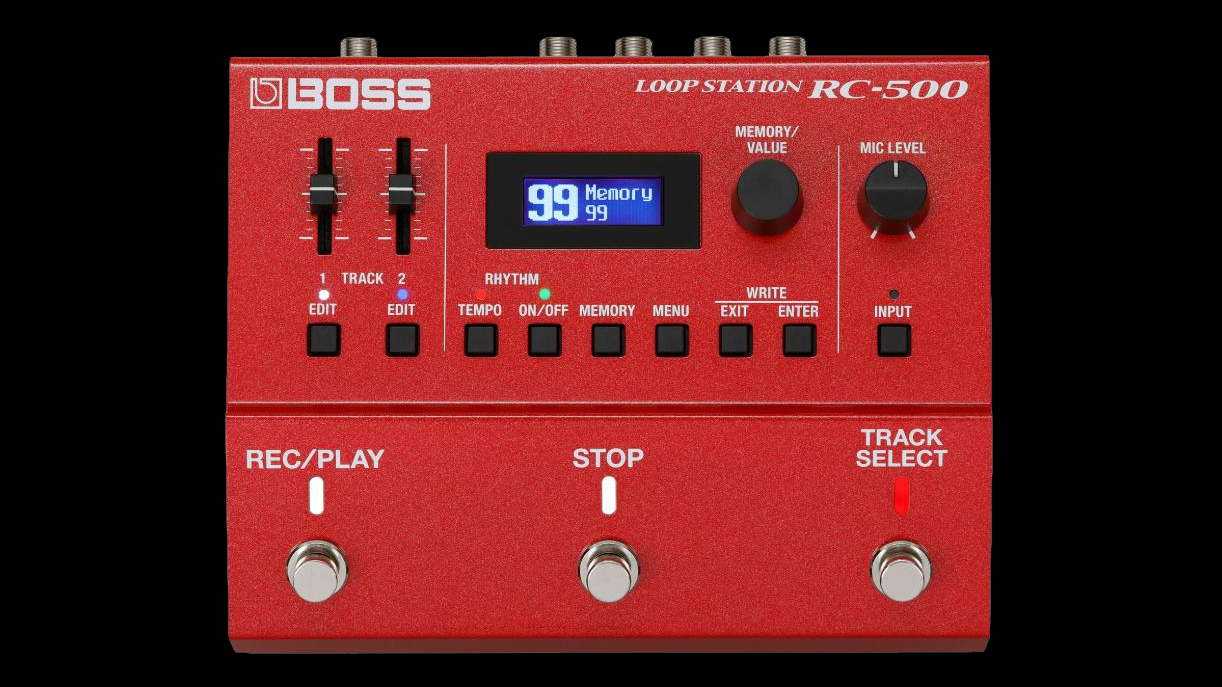
The Boss RC-500 is the dual-track sweet spot that balances power and practicality without requiring an engineering degree to operate. It offers independent loop control, preset-based setlists, and MIDI integration while maintaining a footprint small enough for realistic pedalboards. Stereo signal chains stay intact through independent left and right inputs, and the ability to store custom loop arrangements means you can treat it like a digital sketchpad with pages you can flip between mid-performance.
What makes the RC-500 representative rather than exceptional is its positioning. It's not the simplest looper; single-button Dittos are simpler. It's not the most powerful; the RC-600 and high-end rack loopers offer more tracks and routing options. But it occupies the middle ground where most serious musicians actually operate: enough features to handle complex arrangements, but not so many that you need a manual open on a music stand during rehearsal.
The dual-track architecture matters specifically because it mirrors how most guitarists think about arrangements: foundation and embellishment. Track one holds your rhythm, bassline, or chord progression. Track two handles melody, lead lines, or percussion. You can mute either track independently, which creates instant arrangement variation without stopping the performance. This is the minimum viable structure for dynamic looping; anything less feels limiting, anything more starts requiring dedicated practice to master the footwork.
The RC-500 also includes onboard rhythm patterns, which some guitarists use as metronomes during loop recording, while others use them as actual performance elements. The ability to store nine presets means you can organize loops by song or by setlist position, and the expression pedal input allows real-time control over loop volume or effects parameters.
The Looper Reality Check: What No One Tells You
Looper pedal demos show you the magic; they rarely show you the friction. Here are the practical realities that separate working loopers from frustrated ones, including the physical problems that nobody mentions in product reviews.
Timing Discipline
Loopers expose bad timing instantly. There's no grid quantization to hide behind unless you're running MIDI clock sync with quantize enabled. If your loop start or stop is off by even a fraction of a beat, every subsequent layer compounds the error. By the fourth overdub, you're playing against a loop that drifts noticeably from the tempo you intended.
This makes loopers excellent practice tools but unforgiving performance partners until you develop tight internal rhythm. Many guitarists discover their timing issues only after attempting to loop seriously. What felt "close enough" when playing with a drummer or backing track becomes painfully obvious when you're looping yourself. The looper doesn't adjust or compensate; it plays back exactly what you recorded, timing flaws included.
Volume Management
Each loop layer adds gain. Without careful volume control, your fifth layer will either disappear under the mix or overpower everything else. Modern loopers offer track-level volume controls for this reason, but managing levels in real time requires deliberate footwork and pre-planning.
The technical challenge is that each overdub combines with existing loops rather than replacing them. If you record five guitar layers at the same input level, you've essentially created a five-times-louder guitar signal. Your looper has to manage this internally through automatic gain reduction, or you have to manage it manually by adjusting input levels as you layer.
Professional loopers develop a mental model for level management before they start recording. They know their bass loop needs to be louder than their harmonic loops. They know their rhythm layer forms the foundation and everything else sits on top at progressively lower volumes.
Memory Organization Before Gigs
Setlist-based loopers mean you need to organize your presets before you arrive at the venue. Scrolling through factory patches mid-set kills momentum and looks unprofessional. Successful looping performances require the same preparation as setlists; you need to know what's in each memory slot, how to access it without looking down, and which preset comes next in your running order.
This organizational work happens during rehearsal, not during soundcheck. You map out which songs need loops, whether those loops are pre-recorded or built live, and what order you'll access them in. Then you program your looper's memory banks to match your setlist exactly. This means song one lives in preset one, song two in preset two, and so forth. The footwork becomes predictable because the structure is consistent.
Cables and Board Stability
Mini and lightweight loopers introduce a real physical issue: cable tension. Once power, inputs, outputs, and MIDI are connected, the combined pull can lift the unit off your pedalboard or twist it mid-performance. This is especially problematic with stereo loopers that require four cable connections minimum (two inputs, two outputs) plus power and potentially MIDI.
Musicians solve this with weighted bases, risers, or simple cable-management clips that anchor cables to the board rather than the pedal. Some players prefer heavier loopers for this reason; they stay planted under cable load. Others use adhesive cable clamps on the underside of the board to distribute tension away from the pedal itself. Velcro alone isn't always sufficient when six cables are pulling in different directions.
The unglamorous truth is that cable management determines reliability. A looper that shifts position every time you hit a footswitch isn't usable in a live context, regardless of how good its features are. This is why many professional boards use either extremely short patch cables with 90-degree connectors, or cable routing systems that keep tension off individual pedals.
Board builders often use cable ties underneath the board to anchor everything before it reaches the pedal. This distributes mechanical stress across the board structure rather than concentrating it on the looper's jacks. It's the difference between a rig that survives a tour and one that requires constant adjustment between songs.
Where the Looper Lives in the Signal Chain (And Why)

Most guitarists place the looper at the end of their signal chain, after drive, modulation, and delay. This captures your entire processed sound, loop by loop. Everything you hear during the initial recording becomes part of the loop permanently. If you have delay tails on your initial pass, those delay tails loop. If you have reverb wash, that reverb wash loops.
The advantage is simplicity and consistency. Your looped sound matches your live sound exactly because the looper captures everything after processing. The disadvantage is inflexibility. You can't change the drive tone of a loop after recording it. You can't add reverb to only the looped parts. Everything is baked in. Placing the looper in your amp's effects loop offers more flexibility but requires more planning. In this configuration, drive pedals come before the amp input, the looper sits in the effects loop, and time-based effects come after the looper. This means you can record loops dry, then play over them with effects, or reverse the process. You get independent control over loop texture and overdub processing.
The trade-off is complexity. Effects loop placement requires more cables, more planning, and more mental overhead during performance. But it rewards you with architectural possibilities that end-of-chain placement can't match. You can record a clean loop, then switch to a high-gain sound for lead playing over that loop. Or record a heavily effected loop, then play dry rhythm guitar underneath it.
Stereo considerations matter here too. If you're running stereo reverbs or delays, the looper needs to preserve that width, which means stereo inputs and outputs throughout the chain. Any mono point in your signal path collapses the stereo image, which defeats the purpose of stereo effects. This is why serious stereo rig builders obsess over cable routing; every connection point has to maintain left and right channels independently.
Common mistakes include placing the looper before drive pedals (which colors every loop identically regardless of your current drive settings) or after time-based effects that drift out of sync with your loop tempo. Both configurations work for specific creative purposes, but they're rarely what guitarists actually want when they complain their loops "don't sound right."
Is Looping Right for You?
Looping is ideal for songwriters who think in layers, solo performers who need arrangement control, and players who approach music structurally rather than improvisationally. It rewards preparation, discipline, and intentionality. If you enjoy building arrangements, thinking about song sections, and controlling dynamics through addition and subtraction, looping will feel natural and empowering.
Looping may frustrate players who prefer spontaneous, unstructured playing, or guitarists who dislike foot choreography and preset management. If you think of your pedalboard as a set of immediate textures rather than a compositional instrument, a simple delay or reverb might serve you better than a looper's complexity. There's no shame in this; looping is a specific tool for specific approaches, not a universal upgrade.
The honest assessment: if you've never wished you could hold a chord progression in place while you experiment with melody ideas, you probably don't need a looper. If you've never played solo and thought "this would sound better with bass and rhythm underneath," you probably don't need a looper. But if either of those scenarios describes your creative process, a looper stops being optional and starts being essential infrastructure.
Conclusion: Looping Has Grown Up
Loopers stopped being experimental gear years ago. By 2026, they've become standard infrastructure for guitarists who think in arrangements rather than just riffs. The shift from novelty to necessity happened quietly, but it's irreversible. Modern loopers offer MIDI integration, setlist management, and multi-track control because musicians demanded workflow tools, not performance gimmicks.
The barrier to entry isn't cost or complexity anymore. It's conceptual. Loopers reward players who think structurally, who understand that subtraction matters as much as addition, and who approach music as something built rather than simply played. If that describes your creative process, a looper stops being optional gear and starts being foundational workflow. If it doesn't, no amount of features will make looping feel natural.
Why We're Giving Away a Boss RC-500
The RC-500 fits real rigs, not just demos. It's a practical example of modern looping, a tool that rewards learning and intention without requiring an engineering degree. It handles stereo signals, stores setlists, and syncs with MIDI, which makes it a genuine workflow tool rather than a novelty. That's why we're using it for this giveaway: it represents how loopers function in 2026, as infrastructure for musicians who build arrangements rather than just stack sounds. It's not about owning the "best" looper; it's about understanding how modern guitarists actually use these tools to write, practice, and perform more effectively.
Top Ranked Looper Effects Pedals on Equipboard


-m.webp?v=1784818710)
About the authors

S. Jino is an accomplished multi-instrumentalist and music producer based in Kolkata, India, distinguished by his self-taught mastery and unique blend of technical acumen and musical performance. His extensive experience was forged through hands-on dedication, starting with the full restoration of a broken guitar. Jino's capabilities span keyboards, pedals, and advanced digital production, reflecting a comprehensive skill set developed independently. As a significant contributor to the music scene, Jino regularly performs with worship bands and college ensembles. He has also established himself as a reliable and authoritative professional in freelance mixing, mastering, and original music creation. Inspired by the innovative sounds of Brian May and David Gilmour, and influenced by Kolkata's vibrant metal community, Jino is committed to the intricate art of vintage gear restoration and the continuous exploration of music and technology fusion. His current professional setup, featuring a meticulously restored nameless guitar, a Fender Player Strat, and a Boss Katana 50. Read more
New in Looper Pedals

$238.00 - $279.00
in Looper Effects Pedals Rank

-m.webp?v=1784815143)

$89.00 - $119.00
in Looper Effects Pedals Rank








.jpg)

.jpg)

.jpg)