

Pricing and availability
We compare 600+ stores and found this item at 9 stores. Prices updated .
Store
Reviews
Price









Average Price: $344
High-end/Boutique
$60
$181+
Price Tier
Budget
Standard
High-end
Price History
Based on price data from 7 merchants for "Electro-Harmonix "Ram's Head" Big Muff Pi V2". Prices shown reflect NEW condition. Tracking began Apr 2, 2026.
* Product prices and availability are updated by Equipboard every 24hrs and are subject to change. Equipboard may receive compensation for purchases made at participating retailers linked on this site. This compensation does not affect what products or prices are displayed, or the order of prices listed. For more information, please refer to our affiliate disclosure.
Description
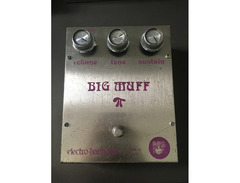
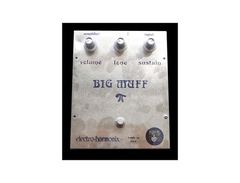
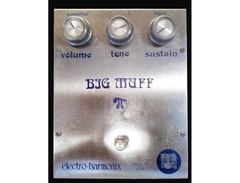
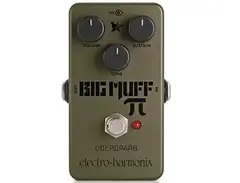
Introducing the spectacular Electro-Harmonix "Ram's Head" Big Muff Pi V2, a part of the esteemed lineage of Big Muff Pi pedals. This fuzz effect pedal stands apart, boasting a unique circuit design distinct from its "Triangle" predecessor. It embodies the classic Big Muff Pi control knobs for Volume, Tone, and Sustain, offering an unparalleled sound experience. The "Ram's Head" is available in variants including "47", "73", and the ever-popular "Violet" models.
Key Features:
- Unique circuit design distinct from the first "Triangle" version
- Traditional Big Muff Pi knobs for Volume, Tone, and Sustain
- Available in "47", "73", and "Violet" models
Owner's manual
Electro-Harmonix "Ram's Head" Big Muff Pi V2 User ManualProduct specs
| Pedal Type | Fuzz |
| Analog/Digital | Analog |
| Inputs | 1 x 1/4" |
| Outputs | 1 x 1/4" |
| Bypass Switching | True Bypass |
| Power Source | 9V DC negative center power supply (sold separately) |
| Batteries | 1 x 9V |
| Power Usage | 2mA |
| Height | 2.1" |
| Width | 2.75" |
| Depth | 4.5" |
| Weight | 0.63 lbs. |
FAQs
-
What kind of tones can I expect from the Electro-Harmonix Ram's Head Big Muff Pi V2?
-
The Ram's Head Big Muff Pi V2 is known for its creamy, sustaining fuzz tones with a pronounced mid-scoop, making it ideal for classic rock and lead guitar solos.
-
Is the Electro-Harmonix Ram's Head Big Muff Pi V2 suitable for bass guitar?
-
Yes, the Ram's Head Big Muff Pi V2 can be used with bass guitars, providing a thick and powerful fuzz that enhances low-end frequencies without losing clarity.
-
Does the Electro-Harmonix Ram's Head Big Muff Pi V2 have true bypass switching?
-
Yes, the Ram's Head Big Muff Pi V2 features true bypass switching, ensuring that your signal remains unaffected when the pedal is not engaged.
-
What power supply does the Electro-Harmonix Ram's Head Big Muff Pi V2 require?
-
The Ram's Head Big Muff Pi V2 requires a 9V DC negative center power supply, which is sold separately, and it can also be powered by a 9V battery.
-
How does the Electro-Harmonix Ram's Head Big Muff Pi V2 differ from other Big Muff models?
-
The Ram's Head version is known for its smoother sustain and more articulate response compared to other Big Muff models, making it favored for its vintage tones and versatility.
Videos

digimartnet
【English Sub】BIG MUFF “RAM'S HEAD” 〜もう一度、ラムズヘッドの音を知る【デジマート DEEPER’S VIEW 〜経験と考察〜 Vol 12】
【English Sub】BIG MUFF “RAM'S HEAD” 〜もう一度、ラムズヘッドの音を知る【デジマート DEEPER’S VIEW 〜経験と考察〜 Vol 12】
digimartnet
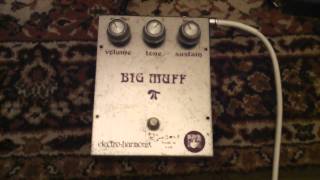
Electro Harmonix "Violet Ram's Head" Big Muff

Vintage Stompboxes
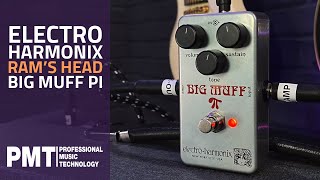
Electro-Harmonix Ram's Head Big Muff Pi Fuzz Pedal - Demo & Sounds

PMTVUK
Electro Harmonix "Ram's Head" Big Muff (with FS36999 transistors)
Vintage Stompboxes
EHX Big Muff Ram's Head 2N5133

elswan64

'73-'74 Guild Foxey Lady

Ásgeir Þrastarson
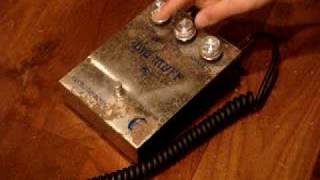
Electro Harmonix BIG MUFF 2nd (Ramshead)

effeken
1973 BIG MUFF Ram’s head “Violet 2nd ” BLUE ver

mmnr.jp
Mustang Bass & Foxey Lady, Spitfire Stratus & Digitakt

CATTANEO
Big Muff Ram's Head - 2N0588.avi
Vintage Stompboxes
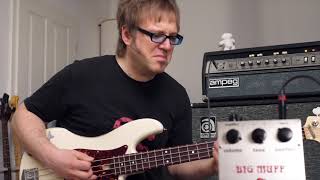
Electro-Harmonix Big Muff v2 Rams Head on Bass

Gregor Fris
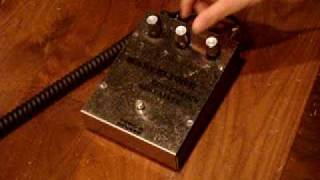
TRAG&DINNER MARVELTONE DISTORTION SUSTAINER
effeken
![Video thumbnail for ]Kalimba & Foxey Lady, Piano Steingraeber & Hologram Microcosm and, of course, a little bit of OB-6[ by CATTANEO](https://img.youtube.com/vi/KhihSQFCuVE/mqdefault.jpg)
]Kalimba & Foxey Lady, Piano Steingraeber & Hologram Microcosm and, of course, a little bit of OB-6[
CATTANEO
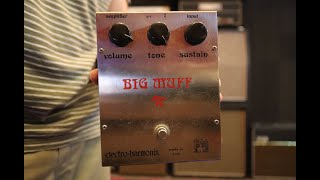
1976 Electro Harmonix Rams Head Big Muff Vintage Effect Demo (Telly Savalas Cover)

Bakesale
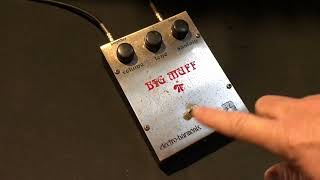
Electro Harmonix Big Muff Pi V2 3003 Circuit Board FS3699 Transistors

Pacific Drive - Vintage Guitars and Pedals
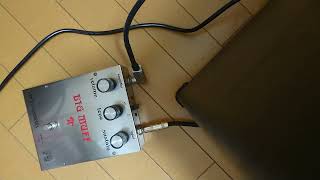
1974年製 ELECTROHARMONIX BIGMUFF PiV2(47マフかな?)で 1978年製 MATSUMOKU ジャパンビンテージ AriaPro2Stagecaster を出力した✨

デルちゃんネル
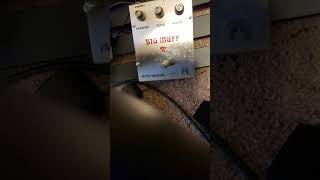
V2 big muff rams head 73

Brad Beaver
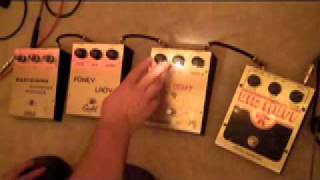
ramhead and friends.mov

jermsfuzz

Vintage Big Muff Pi Bass Ram's Head Electro Harmonix

The Tone Unknown
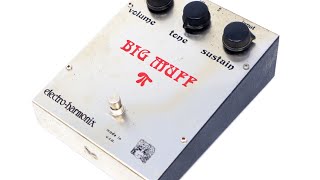
Vintage 1974-1975 Electro-Harmonix (EHX) Rams Head White Can FS36999 Big Muff Fuzz Demo

Long Island Sounds Pedals
Reviews
PROS
-
Unique harmonics and feedback tones not found in other pedals
-
Maintains clarity of single notes despite heavy distortion
-
Versatile sound range from fuzzy/sludgy to sharp and edgy
-
Suitable for various music genres including stoner rock/metal and punk
CONS
-
Durability concerns due to age and potential previous misuse
-
Repairing can compromise its originality, particularly the transistors
-
Some users find Big Muffs overrated and too similar to each other
-
Disappointing for some users compared to other distortion/fuzz pedals
Owner Insights
We analyzed real musician discussions from forums and Reddit to find what players love, question, and tweak about Electro-Harmonix "Ram's Head" Big Muff Pi V2.
Features and functionality
-
The Ram's Head is noted for its loud and gainy profile, with more mids than other Big Muff versions, making it effective for cutting through in band settings.
Source -
The tone control offers a distinct range without fizzing out, while the sustain control provides complex articulation, surpassing the standard Big Muff Pi in lead clarity.
Source
Comparisons
-
The Ram's Head Big Muff, when stacked with a midrange/treble boosted overdrive, can achieve heavy tones, rivaling more versatile fuzz pedals like the Fuzz Bender and Carcosa.
Source -
Compared to the Big Muff Pi, the Ram's Head is noisier but remains unnoticeable during play, offering a middle ground in fuzz circuit noise levels.
Source -
The J Mascis Signature Ram's Head is essentially the same as the standard reissue, just with a unique white and violet finish.
Source -
The Tym Fuzz Munchkin and W&C Garbage Face/Garbage Face Jr are suggested for those seeking a tone closer to J Mascis' original Ram's Head sound.
Source
Use cases and applications
-
It's been highlighted that the Ram's Head can easily handle 90s alt/grunge sounds, making it suitable for players aiming for that specific genre.
Source -
Users report the Ram's Head excels in achieving Fripp-like sustain tones and performs well with a Vox clean channel near breakup, showcasing its versatility.
Source -
When paired with a Boss Blues Driver, the pedal gains additional grit, enhancing its versatility in sound sculpting.
Source -
Owners enjoy stacking the pedal with other Big Muff variants, like the Op Amp and Standard Nano, for diverse fuzz tones.
Source
User experience
-
Owners note that the Ram's Head maintains its appeal even when compared side-by-side with other fuzz pedals, emphasizing the importance of in-person trials.
Source -
Owners highlight the Ram's Head's ability to handle chords with clarity, making it one of the most articulate fuzz pedals in the Big Muff style.
Source
Value and pricing
4.5 out of 5
Based on 2 Reviews and 15 Ratings

41031
ugh
big muff fans do NOT get excited and start asking me to sell you this.... I've had this forever and its super-broken. If I did fix it, it would not be original. All the transistors are shot. It looks like a previous owner immersed it in a swimming pool. Big muffs are pretty overrated anyway and one sounds much like another. I'll bet some dude got sick of the mid scoop and flushed it down the toilet. I really intended to fix this up back when iw as into muffs but a friend of mine has a very similar ram's ehad that works and I was really underwhelmed by it and I pretty much then switched over to tonebenders and rats then.

Artist usage
Add artist

Kurt Cobain is associated with using the Electro-Harmonix Big Muff Pi fuzz pedal, particularly in the studio at the Nevermind Sessions on the track "Lithium" and likely "Endless Nameless" which stemmed from a failed take of "Lithium." Although sources often debate which Big Muff version he specifically used, comparisons suggest that either the Triangle or the Ram's Head Big Muff sounded closest to his tone. However, the first version of the Ram's Head, featuring similar internal components, is likely the model he used, as noted on www.kurtsequipment.com.


In an interview with Phil Taylor, David's guitar technician. He is quoted in the article as saying : "PT: It think it's just pretty much him. He is obviously using a couple of effects, like a Big Muff and a delay, but it really is just his fingers, his vibrato, his choice of notes and how he sets his effects."
David Gilmour has been known to use the Big Muff on one of the most renowned guitar solos of all time, the solo from Comfortably Numb.


At 9:58 in this video interview, J Mascis talks about his Big Muff Pi Pedal, saying, “I got it in '87 on our first tour. Before that, I was using a Deluxe Big Muff and then I got that on tour and then I started using both of them, but I really like that one. From then on, I just used that.” He provides more detail at 10:34 saying, “It seems a bit clearer. It's really easy to play rhythm. That’s my main distortion for rhythm sounds and lead. Some Big Muffs kind of get really mushy when you're playing rhythm, it's hard to articulate the notes. That’s the main thing I notice about it.”
The Big Muff is demonstrated by J at 21:34.

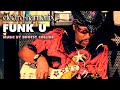
Used with Parliament and Funkadelic, as mentioned by Collins in this June 24, 1978 Sounds interview, this excerpt from a 1979 Guitar Player interview, this May 1991 Musician interview, this November 1, 2010 Bass Player interview and this November 15, 2011 Funk U video.
Sounds, June 24, 1978, "Bootsy Collins: 'Don't Leave Home Without Your F.U.N.K!'" by Vivien Goldman
What are your favourite toys, really. I mean, apart from that joke buzzer and the toy gun...
Bootsy: "Apart from that..." (waves his dark red almond-toed boot in the air,) "It's gadgets. I've got a new thing that looks like R2D2, the Space Case. It's a bunch of different gadgets, a 3 way system, instead of one straight bass thing I got it set up – you'll be funked all the way up – with an MXR Digital Delay, an Eventide Harmoniser, a multi divider, there's three Big Muffs, Moreley fuzz, wah, three Mutrons, a coupla Space Echoes.
"It all comes out separately, I got 12 speakers so you might hear one thing out of this side and something else talking to ya on the other. In the middle of the concert hall I got this thing called the Space Station, so your ears will be going WAAAAANG. It's all in the space. I got the space spex, the space bass, the space case and the space station."
Guitar Player 1979, as transcribed on TalkBass here and here from a reprint in Bass Heroes: Styles, Stories & Secrets of 30 Great Bass Players
What kind of amps do you use in your setup?
The entire system is divided into three different parts - high, mid, and low. But we're not just talking about amplification, we're talking about the effects in each part. On my highs I use a Big Muff fuzz, a Mu-tron III [envelope-following filter], an MXR digital delay, a Morley Fuzz/Wah, a Morley Power Wah, and an Eventide Harmonizer. The Harmonizer sits in a case that looks like R2D2 from Star Wars. It looks just like a little robot, so I call it R2FunkU. There's a sign hanging on it that says, "Can I Play?" Inside of it, there's also a keyboard for the Harmonizer that enables me to preset harmonized intervals to what I'm playing. That way I can play a note and have a fifth or a third coming out at the same time.
All of that equipment just for the highs?
Right. For the mids, I have a Big Muff fuzz, a Mu-tron III, and an MXR digital delay. On the lows, I use a Mu-tron Octave Divider, two Roland Space Echos, a Big Muff fuzz, and a Mu-tron III. I keep all my effects in one box called the Space Case. The highs and mids each have an Alembic preamp, two Crown DC-300A amps, and four Cerwin-Vega speaker cabinets.
What's in each cabinet?
The cabinets used for the highs are called V-32s. They have two 12s, one midrange horn, and two tweeters. The midrange cabinets are basically the same, except there's one 15" speaker instead of two 12s. Those are called V-34s. On the bottom end are three Acoustic 370 heads and six Cerwin-Vega cabinets. Two have one 18" speaker and one 12", two more have an 18 and a 10, and two have one 18" and an 8.
Isn't that a lot of equipment for onstage?
I don't play it that loud. I've just got it there so that I don't have to strain the equipment and everybody can hear. As a matter of fact, the whole stage is set up like that. The guitar player, the keyboard player, everybody is set up like that so there is no real strain.
Musician, May 1991, "Bootsy Collins Effects the Funk" by Gene Santoro
"My role was pretty fluid in P-Funk. I got to play all the things I'd been thinking about: bass, drums, guitar lines, joking with the voice. I got a chance to experiment. I was always in Manny's [music store] checking out new stuff. Today, the things all sound the same. Back then, different gadgets had different sounds. But the Mutron was the one. I use it for talking without opening my mouth — letting the speakers speak for me. It's about the way you hit the string, the mood you're in. It's a conversation going on between me and it and the world. And then there was the Big Muff: It was raw and rowdy and loud, it'd irritate anybody — gnnnahhh! It got back my momma and everybody else who always told me to turn that damn guitar down.
"I had 18 speaker cabinets on the set then, with four super-clean Crown amps, three Alembic tube preamps and all that shit on the floor to give me the dirt. It was a big wall of sound, and I got off on it. Black bands at the time would have the cheapest equipment onstage; the singers'd be singing and the band'd be real hush-hush. I was so tired of that, I figured I was on a mission: Seek out and deploy emblems of the funk." Working now with a revived Rubber Band and rappers like Deee-Lite, he's still scouting hyper-space with that goal in mind. •
MUFFS 'N' MUTES
BOOTSY'S RIG is far from simple. "On the pedalboard I've got all the old stuff: three Mutrons, one Big Muff, a Yamaha distortion, an old rackmount digital MXR, the small Boss DD-3. I've got a few new Digi-Techs for rackmount: the Time Machine 4000, the Smartshift Bass Harmonizer, a stereo Rat, an FX-500B. I'm using Roland Space Echo — of course. I've only got two Electro-Harmonix Bass-micro synths left, and I can't find no more. At least I've got a million Mutrons and Big Muffs!
"My amps are the QSC 4000: They run my two sets of subwoofers, which are four 18"s in each cabinet. On the mids I've got four cabinets, each with two 15"s, two 12"s and a horn; the highs are four 12"s and a horn. All my speakers are Celestions. The amps running the mids and highs are two Yamaha 2000As and one QSC 4000. I'm still going with three old Alembic preamps, which gives me that warm, clean sound; they're running my highs, mids and lows. I use that for the Bootsy Rubber Band; for Deee-Lite I lighten up. Oh yeah — always the Space Bass. But I'm starting to get into five- and six-string basses, and even fretless, since I've been working with Bill Laswell."
Bass Player, "In Session With Professor Bootsy Collins" by Jimmy Leslie (November 1, 2010)
Generally speaking, how would you compare old pedals to new ones?
The old Mu-Trons and Big Muffs were all slightly different, so you had to work with them. To me, that was fun. It helped push you creatively. Pedals are so preset and consistent now that they all sound the same. At F.U., we’re trying to get away from the domestication of sound. I’m not knocking manufacturers, but I want musicians to avoid getting locked in on a particular sound that everybody’s using. Find your own.
Electro-Harmonix YouTube channel - "Electro-Harmonix Bootsy Collins Funk U" (November 15, 2011)
You know, back in the day, like, in the '70s I was using, like, the Big Muff on all those old records we used to do with Parliament-Funkadelic.
Collins did not start using fuzz with Parliament until 1975's Chocolate City, evincing a Ram's Head as the unit he purchased.

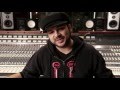
At 1:10 in the video, Ian is auditioning a Big Muff Pi Ram's Head. The pedal is distinctively a third edition Ram's Head Big Muff because of the red text and black knobs.
.jpg?v=1784889614)
.jpg)
Visible on pedalboard in Instagram photo.

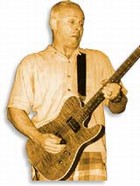
I used a Big Muff distortion pedal and used that during the “Kick Out the Jams” era, since the wah-wah pedal hadn’t been perfected yet.


A Ram's Head was famously used on "That Lady", in addition to "Climbing Up The Ladder" and "Voyage to Atlantis". This is documented on the Big Muff Users section of Kit Rae's Big Muff Page.
A year after that, the funk/soul scene was hammered with the famous solo from the Isley Brothers hit, (Who's) That Lady, played to perfection by Ernie Isley. There are various accounts of what was actually used in the studio, some sources state it was recorded directly into the mixing board with a Strat and Roger Mayer Octavia, but other sources state it was a Big Muff and Maestro Phase Shifter, and Ernie also used a Big Muff and a Maestro Phase Shifter when playing it live throughout the 1970's (the modulation on the record actually sounds identical to the Maestro too).
(the signal) goes through a Cry Baby wah-wah, a Big Muff fuzz, a Maestro Phase Shifter, and an Octavia made by Roger Mayer. - Ernie isley from Guitar Player, September 1981
“On ‘That Lady’ there was a Big Muff, a Maestro Phase Shifter, and a Fender Twin. That was pretty much it.” - Ernie isley from Vintage Guitar magazine, February 2018
The Isley Brothers songs Climbing Up the Ladder and Voyage to Atlantis from 1977 are other examples of Ernie playing lead with the Big Muff. A V2 Big Muff is pictured on the Isley Brothers stage in the photo below, circa 1975, along with the Maestro to the left.


This pedal can be seen in one of Paul's Instagram posts.


Wheeler posted multiple photographs of his pedalboard on his Instagram with the caption "I’ve been rebuilding this spaceship over the last few months. Anyone want to go to outer space?". One of the pedals that are part of his pedal collection is the EHX Ram's Head Big Muff Pi, although there is no graphics on the pedal.

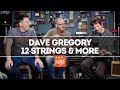
On the Big Muff, Dave says "I bought that new in 1974. but it still sounds like, you know, a real... "Satisfaction" [Maestro-type fuzz]" (01:13:32), and V2 Ram's Heads were Muff circuits being built at the time. He eventually got a Dallas Arbiter Rangemaster built into it.


"I used a Ram’s Head Big Muff for maximum distortion. I generally play clean or totally fuzzed out. The Dumble Overdrive Special amp introduced me to a wider spectrum of distortion and I pretty much stuck with the amp’s distortion and clean sounds."
Album Usage
The Electro-Harmonix "Ram's Head" Big Muff Pi V2 has been featured on the following albums:
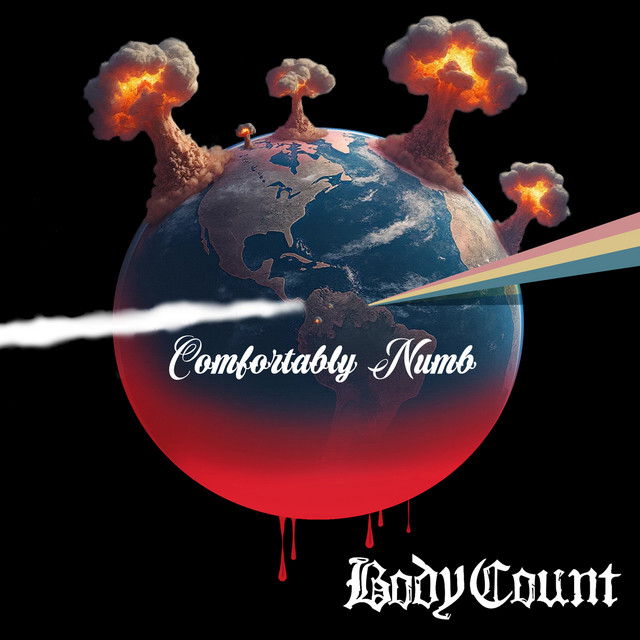
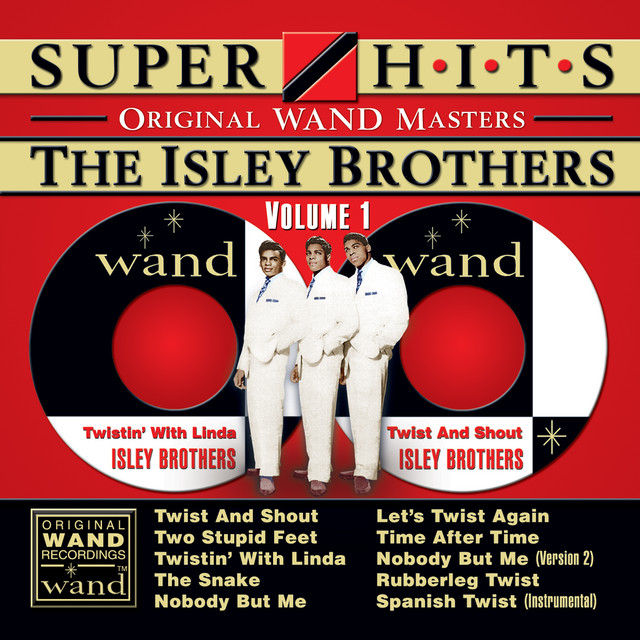
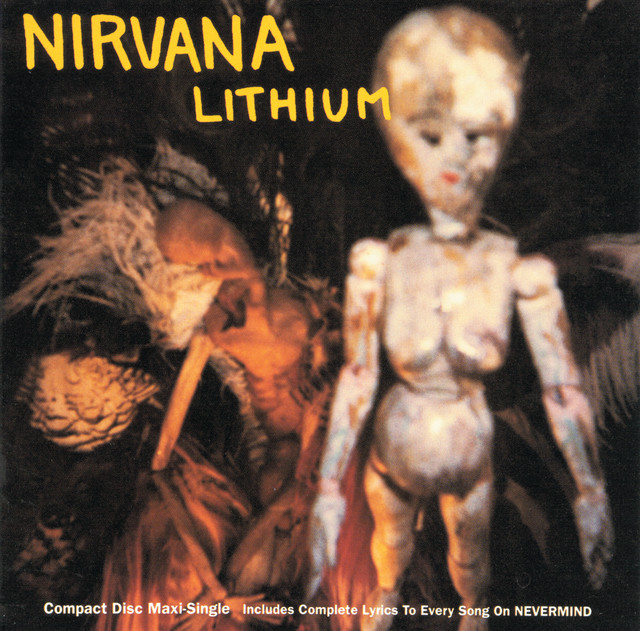


Genre Usage
Based on how artists on Equipboard use this gear, it is most commonly found in the following genres.
Used With
Based on how musicians on Equipboard use Electro-Harmonix "Ram's Head" Big Muff Pi V2, it is most commonly used with the following gear.




Community setups
Show yours
Similar
Add recommendation73 alternative and related items for Electro-Harmonix "Ram's Head" Big Muff Pi V2, curated by the Equipboard community.

A rare and obscure fuzz, that despite the earlier FM-1 and FM-2 being octave fuzzes, is a clone of the Big Muff, with an additional boost section.

$417.26


More Electro-Harmonix Fuzz Effects Pedals

$169.00 - $188.20
in Fuzz Effects Pedals Rank

$189.00
in Fuzz Effects Pedals Rank


$75.00 - $96.20
in Fuzz Effects Pedals Rank


$83.00 - $101.60
in Fuzz Effects Pedals Rank


$85.00 - $108.90
in Fuzz Effects Pedals Rank


$79.00 - $108.90
in Fuzz Effects Pedals Rank


$300.00
in Fuzz Effects Pedals Rank


$75.00 - $87.10
in Fuzz Effects Pedals Rank


$59.00 - $83.50
in Fuzz Effects Pedals Rank


$95.00 - $99.00
in Fuzz Effects Pedals Rank

$111.00 - $150.60
in Fuzz Effects Pedals Rank


$59.57
in Fuzz Effects Pedals Rank


$84.35 - $112.50
in Fuzz Effects Pedals Rank


$95.00 - $114.30
in Fuzz Effects Pedals Rank


$189.00
in Fuzz Effects Pedals Rank


-m.webp?v=1784905176)
$36.30 - $72.60
in Fuzz Effects Pedals Rank


$102.00 - $117.90
in Fuzz Effects Pedals Rank


$75.00 - $96.20
in Fuzz Effects Pedals Rank

-m.webp?v=1784905277)


$39.60 - $99.00


$99.00 - $131.50


$75.00 - $250.00


$69.00 - $85.30

$139.00 - $174.20


$123.76 - $136.10


$39.60 - $286.00


$81.00 - $116.10


.jpeg?v=1784893208)


Accessories & Related Items







Gear Guides
.jpg)






Most Popular Fuzz Effects Pedals
Most Popular Brands
-
Added to Equipboard on by
 michael
GearIQ 43648
-


