
Pricing and availability




* Product prices and availability are updated by Equipboard every 24hrs and are subject to change. Equipboard may receive compensation for purchases made at participating retailers linked on this site. This compensation does not affect what products or prices are displayed, or the order of prices listed. For more information, please refer to our affiliate disclosure.
Description
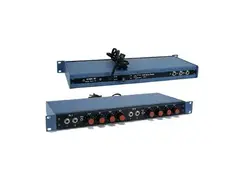
The Alembic F-2B Preamp stands as a timeless classic in the world of guitar amplification, designed to bring the rich, warm tones of yesteryear into today's musical landscape. Initially inspired by the preamp circuitry of the Fender Dual Showman, this unit is revered for its simplicity and ability to provide a pure, clean sound that's both transparent and musical. The F-2B is a favorite among professional musicians and recording studios for its reliability and impeccable audio quality.
Featuring a dual-channel design, the F-2B allows guitarists to shape their sound with precision, offering independent control over Bass, Middle, and Treble for each channel. This versatility makes it suitable for a wide range of musical styles, from the cleanest jazz chords to the grittiest rock riffs. Its all-tube configuration ensures that your tone remains warm and responsive, providing that coveted tube saturation at any volume level.
The Alembic F-2B is not just about performance; it’s also built to last. Crafted with high-quality components, this preamp promises durability and long-term reliability, making it a wise investment for any serious musician.
Key Features:
- Dual-channel design for versatile sound shaping
- Independent Bass, Middle, Treble controls for each channel
- All-tube configuration for warm, responsive tones
- Inspired by the Fender Dual Showman preamp circuitry
- High-quality components for durability and longevity
Videos

circuitfx
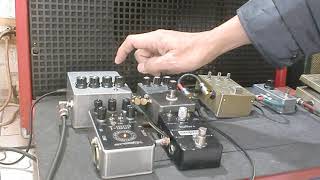
Tube Preamp Alembic F2B
Tube Preamp Alembic F2B
circuitfx
Reviews
Owner Insights
We analyzed real musician discussions from forums and Reddit to find what players love, question, and tweak about Alembic F-2B Preamp.
Features and functionality
-
The Alembic F-2B offers a rich, creamy bass tone with bass settings around 4 or 5, but settings higher can become too overwhelming.
Source -
The preamp's EQ is unique; for a "flat" tone, bass should be nearly off, mids cranked, and treble nearly off.
Source -
DeadAstronaut FX Astrosim offers a DIY solution with multiple output options including headphones out, XLR, and 6.3mm jack, enhancing versatility for users preferring analog setups.
Source
User experience
-
Users highlight that the Alembic F-2B's bass knob adds more thickness compared to other preamps, where 12 o'clock is like 4 o'clock on others.
Source -
Engaging the deep and bright switches on the preamp can result in a huge tone with substantial lows and crisp highs, enhancing its versatility.
Source -
Transitioning to an ampless setup with an Alembic F-2B can significantly reduce physical strain compared to transporting a Deluxe Reverb amp.
Source
Use cases and applications
-
Owners using active basses with Nordstrand pickups report achieving a big, warm tone that punches through mixes without being harsh when paired with the F-2B.
Source -
Simplifier OG is recommended for its stereo capabilities and routing options, particularly effective when paired with a brighter tube preamp before it.
Source
4.5 out of 5
Based on 2 Reviews and 4 Ratings

655
Warm Tube Preamp Sound!
Using this Preamp in conjunction with the Yamaha RA-200R was a match made in heaven. With a warm, tube analog sound, the Alembic F2-B works perfectly to replace the preamp/tone stage of the Yamaha and open it to a new sonic level! In this case, the Alembic had to be modified with an additional tube to help signal loss from extending the location of the preamp to the Yamaha. Tone capacitors had to be replaced in order to cut lower frequencies from passing through to the large cabinets of the Yamaha RA-200R. Overall key element in the quest for the Gilmour Sound!

41028
not reinventing the wheel, but totally sweet
The preamp from a blackface fender showman with the opto trem circuit removed from channel 2. Sounds great. Tried replacing my showman with this and some stereo effects into an H&H but I missed the output section.
Artist usage
Add artist
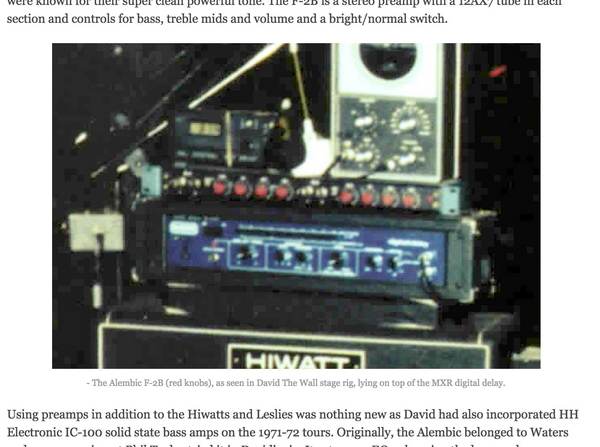
This tube preamp was based on the early silverface Fender Dual Showman Preamp stage that provides a clean sound. David has used this in conjunction with his early Leslie 144, but soon replaced it as his go-to preamp for his Yamaha RA-200R to bypass the solid-state preamp built in. This preamp is discussed in detail here on a well-known site about David's gear.
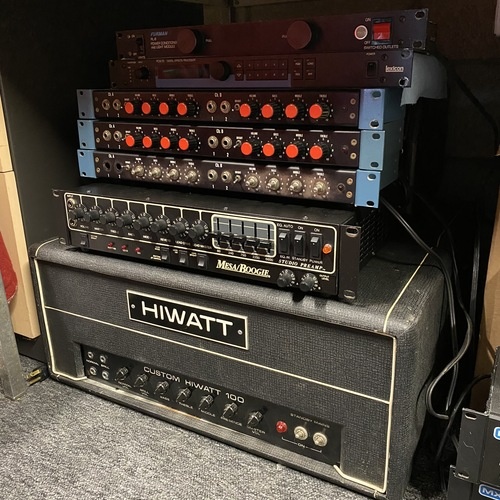
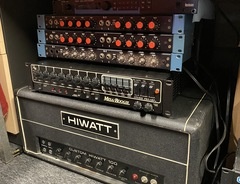
"As I mentioned, he likes his initial signal to be very clean. To achieve this he uses a mid-Seventies Alembic F2-B bass preamp and the power stage of six 100-watt Hiwatt heads. The Alembic F2-B is a very straightforward unit -- it has a bright switch, volume, bass, middle and treble controls. We, however, have altered it just a little bit. We put an extra tube in the preamp secton to give it a little more drive, lowered the impedance in the output and changed the capacitor in the bottom end to eliminate some of the lows, because it was very boomy through closed-back cabinets." - Phil Taylor, David Gilmour's guitar tech

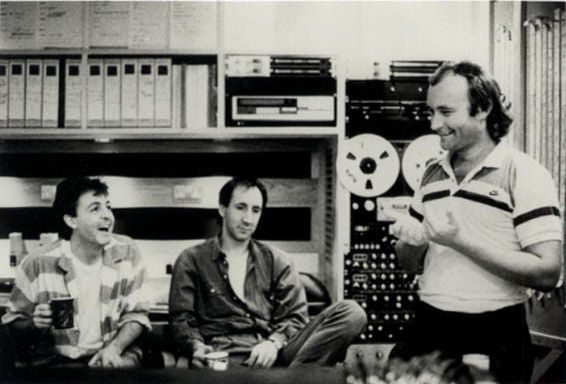
In the Hog Hill Mill Blog, it is mentioned that Paul McCartney uses the Alembic F-2B Tube Instrument Preamp.


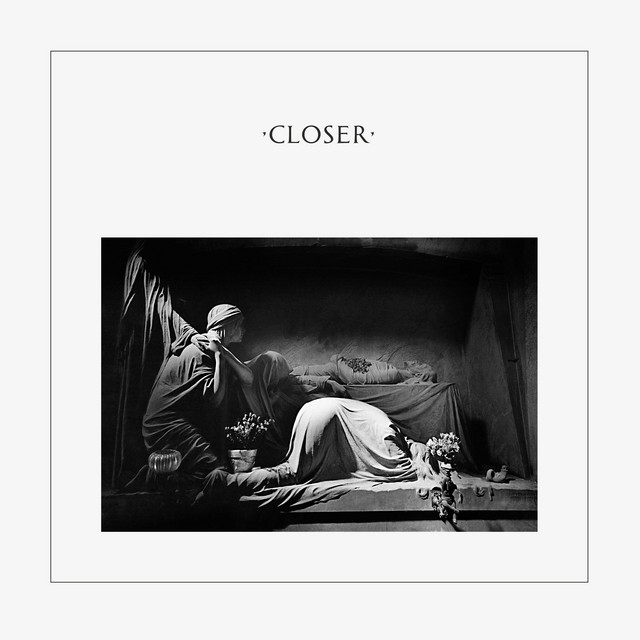
... He said to me when we were in the studio doing Closer “what you need is the best fucking bass amp in the world and you need to be as loud as fuck,” so he went out and showed me an Alembic FB2 preamp into an Amcron (Crown) DC300A...
Original article here


Known from the following interviews:
Guitar Player, 1979, as transcribed on TalkBass here and here from a reprint in Bass Heroes: Styles, Stories & Secrets of 30 Great Bass Players
What kind of amps do you use in your setup?
The entire system is divided into three different parts - high, mid, and low. But we're not just talking about amplification, we're talking about the effects in each part. On my highs I use a Big Muff fuzz, a Mu-tron III [envelope-following filter], an MXR digital delay, a Morley Fuzz/Wah, a Morley Power Wah, and an Eventide Harmonizer. The Harmonizer sits in a case that looks like R2D2 from Star Wars. It looks just like a little robot, so I call it R2FunkU. There's a sign hanging on it that says, "Can I Play?" Inside of it, there's also a keyboard for the Harmonizer that enables me to preset harmonized intervals to what I'm playing. That way I can play a note and have a fifth or a third coming out at the same time.
All of that equipment just for the highs?
Right. For the mids, I have a Big Muff fuzz, a Mu-tron III, and an MXR digital delay. On the lows, I use a Mu-tron Octave Divider, two Roland Space Echos, a Big Muff fuzz, and a Mu-tron III. I keep all my effects in one box called the Space Case. The highs and mids each have an Alembic preamp, two Crown DC-300A amps, and four Cerwin-Vega speaker cabinets.
What's in each cabinet?
The cabinets used for the highs are called V-32s. They have two 12s, one midrange horn, and two tweeters. The midrange cabinets are basically the same, except there's one 15" speaker instead of two 12s. Those are called V-34s. On the bottom end are three Acoustic 370 heads and six Cerwin-Vega cabinets. Two have one 18" speaker and one 12", two more have an 18 and a 10, and two have one 18" and an 8.
Isn't that a lot of equipment for onstage?
I don't play it that loud. I've just got it there so that I don't have to strain the equipment and everybody can hear. As a matter of fact, the whole stage is set up like that. The guitar player, the keyboard player, everybody is set up like that so there is no real strain.
Musician, May 1991, "Bootsy Collins Effects the Funk" by Gene Santoro
His twangy, rubbery, butt-thumping bottom can suddenly zoom into the stratosphere and turn vocalic or spacey or both, in a way that recalls tone-painting pioneer Jimi Hendrix.
That's no accident, according to Bootsy: "He changed the way everybody heard. He influenced my whole idea of the Mutron and all, because he was gadgetized. He had this magic thing — the look, the sound, all that kept pulling me. Black radio was only telling you about the Temptations. The whole message about Hendrix — the look, the sound, 'this is a guy who's got airplanes in his music' — was that you can't be flying that high. For me it was like, Damn, why're they telling us this magic's no good? I'm looking around and people are getting off, but radio's saying naaah. Once P-Funk got going and they started telling us naaah, I figured, 'This is the way they go.' I never was looking to get play from radio, so I wasn't surprised — until I did get some. We were way off to the left, but the world needs something this off-centered. They're trying to make us all straight, but that'll never work. Even a robot's gonna go nuts on you."
[...]
"My role was pretty fluid in P-Funk. I got to play all the things I'd been thinking about: bass, drums, guitar lines, joking with the voice. I got a chance to experiment. I was always in Manny's [music store] checking out new stuff. Today, the things all sound the same. Back then, different gadgets had different sounds. But the Mutron was the one. I use it for talking without opening my mouth — letting the speakers speak for me. It's about the way you hit the string, the mood you're in. It's a conversation going on between me and it and the world. And then there was the Big Muff: It was raw and rowdy and loud, it'd irritate anybody — gnnnahhh! It got back my momma and everybody else who always told me to turn that damn guitar down.
"I had 18 speaker cabinets on the set then, with four super-clean Crown amps, three Alembic tube preamps and all that shit on the floor to give me the dirt. It was a big wall of sound, and I got off on it. Black bands at the time would have the cheapest equipment onstage; the singers'd be singing and the band'd be real hush-hush. I was so tired of that, I figured I was on a mission: Seek out and deploy emblems of the funk." Working now with a revived Rubber Band and rappers like Deee-Lite, he's still scouting hyper-space with that goal in mind. •
MUFFS 'N' MUTES
BOOTSY'S RIG is far from simple. "On the pedalboard I've got all the old stuff: three Mutrons, one Big Muff, a Yamaha distortion, an old rackmount digital MXR, the small Boss DD-3. I've got a few new Digi-Techs for rackmount: the Time Machine 4000, the Smartshift Bass Harmonizer, a stereo Rat, an FX-500B. I'm using Roland Space Echo — of course. I've only got two Electro-Harmonix Bass-micro synths left, and I can't find no more. At least I've got a million Mutrons and Big Muffs!
"My amps are the QSC 4000: They run my two sets of subwoofers, which are four 18"s in each cabinet. On the mids I've got four cabinets, each with two 15"s, two 12"s and a horn; the highs are four 12"s and a horn. All my speakers are Celestions. The amps running the mids and highs are two Yamaha 2000As and one QSC 4000. I'm still going with three old Alembic preamps, which gives me that warm, clean sound; they're running my highs, mids and lows. I use that for the Bootsy Rubber Band; for Deee-Lite I lighten up. Oh yeah — always the Space Bass. But I'm starting to get into five- and six-string basses, and even fretless, since I've been working with Bill Laswell."
Guitar Center, Artist Interviews, "Bootsy Collins: Bring on the Funk" (2007)
I have a certain setting for each amp and output from the bass. It's pretty simple but hard to explain... Hughes and Kettner amps is what I use for recording and also on the road. But on the road I need some additional power for which I add Alembic pre-amps and two Crown Macro Tech 5000 and two Macro Tech 3600's...that's the Bootzilla monster sound.
Bass Player, "In Session With Professor Bootsy Collins" by Jimmy Leslie (November 1, 2010)
STUDIO GEAR
Bass Warwick Bootsy Collins Infinity Signature Bass
Rig SWR Mo’Bass, Hughes & Kettner BassBase 600, Warwick Hellborg preamps and power amps, four custom-made 4x15 cabinets with Electro-Voice speakers
Effects Electro-Harmonix Bass Micro Synthesizer, Musitronics Mu-Tron III, Gig-FX SubWah, MXR Bass Envelope Filter, Chunk Systems Octavius Squeezer, Akai SB-1 Deep Impact, MXR Bass Blowtorch, ModTone Extreme Metal, Boss RE-20 Space Echo. “I used all these pedals on the new record, although I never use a single pedal by itself. I always use a combination of pedals in order to create my own unique sounds,” says Bootsy.
STAGE GEAR
Basses Space Bass, custom F Bass
Rig Alembic F2B preamp, two Crown Micro 5000 power amps, two Crown Micro 3600 power amps, eight custom-made cabinets with Electro-Voice speakers: two 4x18s, two 4x15s, and four 8x10s
Effects, Alembic Super Filter, Roland Space Echo, MXR Digital Delay, Pro Co Rat II, Electro- Harmonix Big Muff distortion, DOD Thrash, DigiTech Grunge, DigiTech Whammy Pedal, Boss BF-3 Flanger, DOD Envelope, two Mu-Tron IIIs, Electro-Harmonix Bass Micro Synthesizer

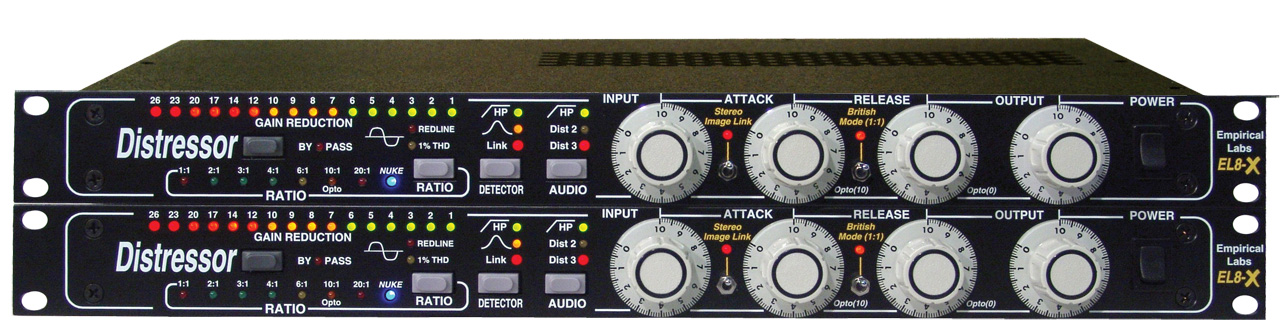
Alembic F-2B bass pre-amp. It has tubes in it. I bought this originally to run two sides of the Chapman Stick through it. Hadn't used it for about a decade when I pulled it out to sell three years ago. I actually did sell it, but the guy who bought it had reservations about really wanting it and I had reservations about wishing I had it back. So we did an unsell and I got it back. Now it sits as one of my main ways to bring guitar or bass into Logic Audio. I'm replacing it's tubes this week.
Album Usage
The Alembic F-2B Preamp has been featured on the following albums:
Genre Usage
Based on how artists on Equipboard use this gear, it is most commonly found in the following genres.
Used With
Based on how musicians on Equipboard use Alembic F-2B Preamp, it is most commonly used with the following gear.


-s.webp?v=1784818712)


-s.webp?v=1784818705)
Community setups
Show yoursSimilar
Add recommendation1 alternative for Alembic F-2B Preamp, curated by the Equipboard community.

The Eclipsa, along with modeling the Yamaha RA-200 Rotary Cabinet, features a fully analog recreation of the Alembic F-2B Preamp.
More Guitar Preamps

$594.94
in Guitar Preamps Rank


$1,653.94
in Guitar Preamps Rank


$219.00 - $1,046.91
in Guitar Preamps Rank


$750.00
in Guitar Preamps Rank


$508.00 - $799.99
in Guitar Preamps Rank


$899.00 - $899.99
in Guitar Preamps Rank


$379.99 - $1,046.91
in Guitar Preamps Rank


$1,189.88
in Guitar Preamps Rank


-m.webp?v=1784818909)
$815.07
in Guitar Preamps Rank


$333.00 - $399.99
in Guitar Preamps Rank


$333.17
in Guitar Preamps Rank


$599.00 - $599.99
in Guitar Preamps Rank


$399.00 - $425.00
in Guitar Preamps Rank


$399.99 - $1,459.99
in Guitar Preamps Rank

$399.99 - $411.00
in Guitar Preamps Rank

$233.22
in Guitar Preamps Rank


$439.07
in Guitar Preamps Rank


$355.00 - $1,459.99
in Guitar Preamps Rank


$339.99 - $399.99
in Guitar Preamps Rank

$399.99 - $411.00
in Guitar Preamps Rank


$363.00 - $399.99
in Guitar Preamps Rank

$199.99 - $488.46
in Guitar Preamps Rank


$1,245.00
in Guitar Preamps Rank


$399.99 - $479.00
in Guitar Preamps Rank

$383.00 - $1,459.99
in Guitar Preamps Rank


$70.00 - $99.95
in Guitar Preamps Rank


$995.00
in Guitar Preamps Rank


$151.00
in Guitar Preamps Rank


$654.44
in Guitar Preamps Rank


$399.99 - $2,059.99
in Guitar Preamps Rank

$359.95 - $1,459.94
in Guitar Preamps Rank

$163.19 - $199.99
in Guitar Preamps Rank

$2,299.00 - $2,499.99
in Guitar Preamps Rank


$363.00 - $1,459.99
in Guitar Preamps Rank

$399.00 - $1,459.99
in Guitar Preamps Rank


$343.00 - $399.99
in Guitar Preamps Rank

$399.99 - $411.00
in Guitar Preamps Rank

$363.00 - $1,459.99
in Guitar Preamps Rank

$363.00 - $399.99
in Guitar Preamps Rank
Gear Guides








Most Popular Guitar Preamps
Most Popular Brands
-
Added to Equipboard on by
IitisleeannGearIQ 1371
-


