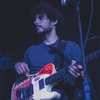
Vince Clarke
member of Erasure, Depeche Mode, Yazoo,…
Genre
Group
Genre
Group
Vince Clarke's Studio Equipment

-m.webp?v=1783318437)
"The MC4 came in very useful when I left Depeche Mode and formed Yazoo, because I used it in place of other musicians. The only problem was that the Jupiter 4 hasn't got Gate or CV In, so I had to get a Pro One to work in conjunction with the MC4. That was more or less all I had when I came to do the first Yazoo album: the JP-4, the Pro One, the MC4, and a TR808 to provide any percussion sounds the Pro One couldn't generate!"
Find it on:


Vince Clarke using the MC-4 - Vince Clarke began using the MC-4 on Yazoo's debut album Upstairs at Eric's in 1982.
Find it on:

Depeche Mode album gear discussion on 1981 album: "I SPOKE TO VINCE CLARKE A COUPLE OF YEARS AGO AND HE TOLD ME THE DRUM MACHINE USED ON SPEAK AND SPELL WAS A KORG KR55 PRESET MACHINE .THE BAND USED JUST THE SNARE AND HIGH HATS SOUNDS FROM. THE BASS DRUM WAS GENERATED FROM AN ARP 2600 SYNTH WHICH WAS SYNCHED TO THE MACHINE AND AN OLD ROLAND MC4 MICROCOMPOSER SEQUENCER. SO THERE THE ANSWER IS!"
Find it on:

The live Erasure set-up - excluding the human beings - runs to an Oberheim Xpander module, a Yamaha TX rack with three modules (equivalent to DX9s in a small box, reckons Vince), a Sequential Pro-One synth, plus two Casios, the CZ1000 and CZ101, all driven by a BBC computer using the almost universally praised UMI-2B MIDI sequencer. A Yamaha RX11 and Roland TR727 (latin) supply the drums.
Find it on:

The live Erasure set-up - excluding the human beings - runs to an Oberheim Xpander module, a Yamaha TX rack with three modules (equivalent to DX9s in a small box, reckons Vince), a Sequential Pro-One synth, plus two Casios, the CZ1000 and CZ101, all driven by a BBC computer using the almost universally praised UMI-2B MIDI sequencer. A Yamaha RX11 and Roland TR727 (latin) supply the drums.
Find it on:

Kenton Pro Solo Mk2 MIDI to CV converters are essential to triggering the older instruments.
Find it on:

"We use the same basic gear for live work and recording: an Oberheim Xpander, Juno 106, MKS80, Prophet VS, D550, S550, all run off UMI."
Find it on:
-m.webp?v=1783263600)
Vince Clarke is listed as an artist associated with the Roland TR-505 Drum Machine on Vintage Synth Explorer.
Find it on:

"With Depeche, we were using the ARP 16-step sequencer. Then it was a Roland MC-4, and then a 16-step sequencer make by a company called Umi, which was made to be used with the BBC Micro. They all did what we needed them to do."
Find it on:

An Akai MPK 25 can be seen in Vince Clarke's studio (second photo).
Find it on:

Vince Clarke can be seen playing an Akai MPK 61 at 1:23.
Find it on:

"When I got the LinnDrum, I forgot about my TR808 totally. But the other day we decided we'd like to sync it to the Fairlight, and we realised we'd have to do a lot of internal fiddling around to make it work properly, so in the end we just sampled each of the sounds, which was really quite interesting. I don't really like any of the sounds themselves; they're not much use unless you actually want to use sounds that are obviously electronically created. The difference between the 808 and the Linn is simply that one sounds like a drum-machine while the other sounds like a real drummer, or at least that's how I see it."
Find it on:

In this photo, Vince is playing an M-Audio Oxygen V2 MIDI keyboard.
Find it on:

"Mind you, the thing I want to get into even more, and I'm doing already, is collecting old drum machines. I've got this thing called a CR78, an early Roland Compurhythm, and an Electro Harmonix thing which is like a disco beatbox with preset rhythms. All disco beats, and wicked sounds!"
Find it on:

Always an advocate of cheap technology, Vince has been pictured playing a Casio DH100 MIDI horn recently, an instrument he describes as "brilliant", and admits to being quite a fan of Casio products.
Find it on:

Photo of Vince Clarke playing an M-Audio Oxygen 8.
Find it on:

A Mac G5 tower can be seen in Vince Clarke's studio at 12:25.
Find it on:

Auction for Vince Clarke's Yamaha DM2000.
Find it on:

Vince Clarke utilizes the Apple Mac Pro (2006-2012) in his basement studio, as seen in a photo shared by Tracy Martin on Instagram.
Find it on:

In the makeshift living room somewhere round the back of the Odeon, Vince has a few home comforts. TV, video, fridge full of cold drinks, and something which says more about his musical standpoint than anything else I can think of. Whereas a guitarist might have a trusty old acoustic propped up against the sofa, Vince has got a small workstation consisting of Mini-Moog, Akai Linn MPC-60 and Roland MC-4 sequencer, handy for those moments of inspiration and last-minute adjustments to the live set. He points enthusiastically to the Akai Linn.
"This is really good. We use this for all the drum sounds live. All the drum sounds on the last album were generated from synths, so I had to regenerate them for the tour. Obviously I couldn't take an ARP 2600 on the road and start messing about with bass drum sounds for every song, and there's lots and lots of percussion sounds, so they were regenerated and sampled into that thing. I must admit it was a real life-saver, it's so simple. You just hit Record, press the pad and it's down. Only 16-bit recording inside, but the resolution's quite high. Eight outs, 32 drum sounds. So it's in my tank!"
Find it on:

"We've got a Lexicon 224, a Lexicon 224X, a Quantec Room Simulator and an AMS system. So really that's four very good quality reverbs. We also use quite a bit of natural echo, because there's a long corridor that still has the original church stonework intact, and above Blackwing Studio there is a natural echo chamber which lies under the main roof of the church. When I originally designed Blackwing, I left the area under the roof as a natural echo room, really because it seemed too good to waste. I think nowadays the selection and application of reverb has become the most difficult - and at the same time, the most productive - area of the recording process, because that is where a lot of the new production work is going on, particularly with things like drum sounds. I spend a lot of time adding reverb to the LinnDrum and the Fairlight, because it is very difficult to get it absolutely right, though when you do of course, the results can be very impressive."
Find it on:

"We've got a Lexicon 224, a Lexicon 224X, a Quantec Room Simulator and an AMS system. So really that's four very good quality reverbs. We also use quite a bit of natural echo, because there's a long corridor that still has the original church stonework intact, and above Blackwing Studio there is a natural echo chamber which lies under the main roof of the church. When I originally designed Blackwing, I left the area under the roof as a natural echo room, really because it seemed too good to waste. I think nowadays the selection and application of reverb has become the most difficult - and at the same time, the most productive - area of the recording process, because that is where a lot of the new production work is going on, particularly with things like drum sounds. I spend a lot of time adding reverb to the LinnDrum and the Fairlight, because it is very difficult to get it absolutely right, though when you do of course, the results can be very impressive."
Find it on:

"We've got a Lexicon 224, a Lexicon 224X, a Quantec Room Simulator and an AMS system. So really that's four very good quality reverbs. We also use quite a bit of natural echo, because there's a long corridor that still has the original church stonework intact, and above Blackwing Studio there is a natural echo chamber which lies under the main roof of the church. When I originally designed Blackwing, I left the area under the roof as a natural echo room, really because it seemed too good to waste. I think nowadays the selection and application of reverb has become the most difficult - and at the same time, the most productive - area of the recording process, because that is where a lot of the new production work is going on, particularly with things like drum sounds. I spend a lot of time adding reverb to the LinnDrum and the Fairlight, because it is very difficult to get it absolutely right, though when you do of course, the results can be very impressive."
Find it on:

"We've got a Lexicon 224, a Lexicon 224X, a Quantec Room Simulator and an AMS system. So really that's four very good quality reverbs. We also use quite a bit of natural echo, because there's a long corridor that still has the original church stonework intact, and above Blackwing Studio there is a natural echo chamber which lies under the main roof of the church. When I originally designed Blackwing, I left the area under the roof as a natural echo room, really because it seemed too good to waste. I think nowadays the selection and application of reverb has become the most difficult - and at the same time, the most productive - area of the recording process, because that is where a lot of the new production work is going on, particularly with things like drum sounds. I spend a lot of time adding reverb to the LinnDrum and the Fairlight, because it is very difficult to get it absolutely right, though when you do of course, the results can be very impressive."
Find it on:

As listed in this 1984 interview on the Music Magazine Archive
Find it on:

As listed in this 1993 interview on the Music Magazine Archive
Find it on:

at 2:52, Vince can be seen playing on the Novation ReMOTE 25SL
Find it on:
This is a community-built gear list for Vince Clarke.
- Find relevant music gear like Pianos, Keyboards and Synthesizers, Microphones, Software Plugins and VSTs, Instruments, Studio Equipment, Headphones, and other instruments and add it to Vince Clarke.
- The best places to look for gear usage are typically on the artist's social media, YouTube, live performance images, and interviews.
- To receive email updates when Vince Clarke is seen with new gear, follow the artist.
Discography
Album Credits
-

Saint Etienne · 2025
Engineer Programmer -
Robert Marlow · 2012
Mixing Engineer Producer -
Martyn Ware · 2001
Programmer Recording Engineer