

Pricing and availability
We compare 600+ stores and found this item at 1 store. Prices updated .


Price History
Based on price data from 1 merchant for "Avid Audio ReVibe II". Prices shown reflect NEW condition. Tracking began Apr 2, 2026.
* Product prices and availability are updated by Equipboard every 24hrs and are subject to change. Equipboard may receive compensation for purchases made at participating retailers linked on this site. This compensation does not affect what products or prices are displayed, or the order of prices listed. For more information, please refer to our affiliate disclosure.
Description
Step into a world of immersive soundscapes with the Avid Audio ReVibe II, an advanced reverb plugin that pushes the boundaries of room modeling. This tool is a must-have for audio professionals seeking the perfect blend of precision and creativity. Engineered to excel with multichannel support up to 5.1 formats, ReVibe II offers a dynamic range of sound-shaping capabilities, ensuring your audio projects resonate with depth and clarity.
Dive into an ocean of possibilities with the plugin's 200 meticulously crafted reflection models and 9 unique reverb algorithms, including lush spring and plate reverbs. Whether you're aiming for a subtle ambiance or a cavernous echo, ReVibe II's intuitive interface and real-time visualizer make it easy to tailor your sound with precision. The streamlined controls offer effortless navigation, allowing you to focus on creativity without getting lost in complexity.
Compatible with the robust DSP processing of Pro Tools | HDX, HD Accel, and Avid VENUE systems, ReVibe II guarantees high-fidelity results with sessions processing up to 192kHz. This ensures every nuance of your audio is preserved, delivering unparalleled richness and depth. Whether you're mixing for film, music, or broadcast, the Avid Audio ReVibe II is your ticket to crafting stunningly realistic and engaging soundscapes.
Key Features:
- Multichannel reverb plugin with support for up to 5.1 formats
- 9 reverb algorithms including spring and plate styles
- 200 reflection models for precise space sculpting
- Seamless mono and stereo instance support within multichannel controls
- Intuitive interface with real-time visualizer for effortless sound shaping
- Compatible with DSP processing on Pro Tools | HDX, HD Accel, and Avid VENUE systems
Product specs
| Software Type | Room Modeling Reverb |
| Platform | Mac, PC |
| Upgrade/Full | Full |
| Download/Boxed | Download |
| Format | AAX Native, AAX DSP |
| Hardware Requirements - Mac | Intel Core 2 Duo, 1GB RAM |
| Hardware Requirements - PC | Intel Core 2 Duo, 1GB RAM |
| OS Requirements - Mac | OS X 10.7 or later |
| OS Requirements - PC | Windows 7 SP1 or later |
FAQs
-
What type of reverb does the Avid Audio ReVibe II provide?
-
The Avid Audio ReVibe II is a room modeling reverb plugin, designed to simulate the acoustics of various room environments with high precision.
-
Is the Avid ReVibe II compatible with my DAW?
-
The ReVibe II is compatible with AAX Native and AAX DSP formats, making it suitable for use with Pro Tools on both Mac and PC platforms.
-
What are the system requirements for running the Avid Audio ReVibe II?
-
For Mac, it requires OS X 10.7 or later and an Intel Core 2 Duo processor with at least 1GB RAM. For PC, it requires Windows 7 SP1 or later and similar hardware specifications.
-
Can I use the Avid ReVibe II on both Mac and PC?
-
Yes, the Avid ReVibe II is compatible with both Mac and PC platforms, supporting OS X 10.7 or later and Windows 7 SP1 or later.
-
Does the Avid ReVibe II come as a standalone product?
-
The Avid ReVibe II is available as a downloadable plugin and does not come in a boxed version. It is part of Avid's Complete Plugin Bundle.


Reviews
PROS
-
Exceptional sound quality, makes it a top choice among various reverb plugins
-
Highly flexible, suitable for both film scoring and music mixing
-
Excellent for ADR matching, ensuring seamless audio integration
-
Easy to automate, streamlining workflow in complex projects
-
Versatile enough to achieve a wide range of desired sounds
CONS
-
Not compatible with VST 3, limiting use outside Pro Tools
-
Requires a powerful computer to run efficiently
Owner Insights
We analyzed real musician discussions from forums and Reddit to find what players love, question, and tweak about Avid Audio ReVibe II.
Software and compatibility
Comparisons
-
Valhalla reverb plugins are highly praised for value and versatility, though some find them overly complex for audio post-production compared to simpler alternatives.
Source
Use cases and applications
-
Melda's free convolution reverb is recommended for post-production with downloaded real room impulses, offering flexibility at no cost.
Source -
Trueverb is favored for its ability to integrate seamlessly into mixes without heavy CPU usage, making it ideal for post-production environments.
Source -
The Avid Plugin Bundle, including ReVibe II, is preferred by some users for projects that are passed around, ensuring compatibility without assuming others have third-party plugins.
Source
Value and pricing
-
Exponential Audio reverbs, like PhoenixVerb, often receive significant discounts, sometimes as low as $9, offering great value for detailed organic space simulations.
Source -
The Avid Plugin Bundle is often seen as a worthwhile addition for those with Pro Tools subscriptions due to its inclusion in the overall package at no extra charge.
Source
Features and functionality
-
ReVibe II is frequently used for its unique reverb sound that many find hard to replicate with other plugins, making it a valued part of the Avid Plugin Bundle.
Source
Critic Reviews
Based on 0 Reviews and 0 Ratings
Artist usage
Add artist

In this video at 2:00 the protools analysis of her unreleased song "Fantasize" shows the use of this plugin


Used on "When the Curtain Falls", as stated by mix engineer Al Sutton in this January 2019 Sound on Sound interview.
"I also had the Opticom in the bass for parallel compression. In this case I'll run that really dirty and blend it back in. I did this with one of the guitar tracks as well, the 'Guitar SC' track, but in this case I used the plug-in version of the Opticom. I'll really drive the plug-in and mix the result in underneath for some harmonic enhancement. I added some reverb on some of the guitars with the Avid ReVibe and added some additional effect with the SoundToys Crystallizer, but that was it. I didn't use outboard on the guitars, it was just straight into the board and then to the mix bus."


Used on "Apeshit", as stated by producer Stuart White in this September 2018 Sound on Sound interview.
The first four aux tracks feature SoundToys effects, namely Little Microshift, two EchoBoy delays, and a delay from the Little PrimalTap. Next are a Hall Reverb aux and a Church Reverb aux, both using Waves’ RVerb, an EMT plate from Audio Ease’s Altiverb, four aux tracks with the Waves H-Delay and various other plug-ins on them as well, and four more reverb auxes with the Avid Revibe II, two Avid D-Verbs and another RVerb.
White: “I use the Little Microshift in pretty much every mix, with the left-right micro pitch-shift effect that’s similar to the classic effect in the Eventide H3000 shift where you pitch one side down six cents and one side up six cents to create width. It’s a good way to get your vocals wider without them being out of phase. It thickens up vocals, and is kind of like a doubler. I do quite a lot of filtering on some of the EchoBoy delays, for example with the Waves REQ, and I am adding colour with the SoundToys Devil-Loc, which is great if you want to colour the delay so it is separate from the main vocal, and compress it with the UAD LA3A and mix that in to taste.”
(...) Beyoncé’s lead vocal tracks consist of three aux tracks, four ‘dirty’ and eight ‘clean’ audio tracks. The audio tracks only have the EQ3 on the inserts and a few of them have a send to the Church Reverb. All White’s processing is done on the three aux tracks. “All lead vocals are sent to the ‘B Aux’ track and the ‘B Parra Aux’ tracks. On the former I have the McDSP DS 555 de-esser. I use the Waves de-esser the most, but in this particular track, because I wanted to compress her voice really hard, I felt that the 555 would work the best. I am rolling off until 6144Hz into what it is detecting; it’s like a side-chain filter. The FabFilter Pro-DS is doing a little more gentle look-ahead de-essing.
“After that there’s some pretty heavy EQ from the EQ3, with a high-pass at 142Hz, a 9dB cut at 244Hz and a 2dB cut at 3kHz. My cut at 244Hz is because she is singing in this husky, low voice, so there’s not a lot of energy in that. I get the energy from the RComp compression, and the EQs, including from the SSL E-Channel, are there to make her sit in the track, rather than making it sound filtered. I love the RComp, mainly because it doesn’t sound like compression to me. The SSL E-Channel adds a bit more compression, and the [Crane Song] Phoenix II Tape Emulation is really cool because while it doesn’t actually sound like tape, it smoothes out transients in a signal just like much analogue equipment does. It enables me to get a fatter vocal sound that again makes the vocal sit in the mix. The final EQ3 has a notch at 3.2kHz to take out some harshness. I also have sends to the Verb aux track, which are the D-Verb and [Waves] H-Reverb, and the Delay 1-4 aux, with the EchoBoy.
The other aux track, ‘B Parra Aux’, is a parallel compression track, with the RCompressor and the CLA 76, which I mixed in low. Both these aux tracks then go to the ‘LD ALL Aux’, on which I’m doing some more surgery with the McDSP AE400 [dynamic EQ], which allows you to set a threshold, just like on a compressor. It’s like turning a volume knob down on a frequency the moment it gets out of control. Finally, there’s the Waves C4, for some control, to keep the vocal even. This track has a lot of energy, so this is an example of using compression for energy, mood and attitude. I also worked a long time to get the compression on Bey’s breaths to pump on the beat. I wanted her breaths to be another percussive element in the track, and getting the attack and release on the compressor right was key to getting that feel and pumping effect.”
Five of the 22 Beyoncé ad lib, backing and harmony vocals below her lead vocals also go to the above-mentioned aux tracks, while the rest have their own signal chains. These audio tracks are sent to several aux tracks, often with tons of plug-ins, and all aux vocal tracks in the end get sent to the ‘Voc All’ group aux right at the top of the session, which has an RCompressor, with ratio at 10:1. There are more group aux tracks, like ‘TrackAux’, ‘FX Voc Aux’, ‘FX’ and ‘Music Aux’, which all get sent to the ‘All Aux’. This in turn gets sent to the ‘no limiter’ mix print track, and finally there’s a Stereo Master track.


Used on "APESHIT", as stated by producer Stuart White in this September 2018 Sound on Sound interview.
The first four aux tracks feature SoundToys effects, namely Little Microshift, two EchoBoy delays, and a delay from the Little PrimalTap. Next are a Hall Reverb aux and a Church Reverb aux, both using Waves’ RVerb, an EMT plate from Audio Ease’s Altiverb, four aux tracks with the Waves H-Delay and various other plug-ins on them as well, and four more reverb auxes with the Avid Revibe II, two Avid D-Verbs and another RVerb.
White: “I use the Little Microshift in pretty much every mix, with the left-right micro pitch-shift effect that’s similar to the classic effect in the Eventide H3000 shift where you pitch one side down six cents and one side up six cents to create width. It’s a good way to get your vocals wider without them being out of phase. It thickens up vocals, and is kind of like a doubler. I do quite a lot of filtering on some of the EchoBoy delays, for example with the Waves REQ, and I am adding colour with the SoundToys Devil-Loc, which is great if you want to colour the delay so it is separate from the main vocal, and compress it with the UAD LA3A and mix that in to taste.”
(...) Jay-Z’s part consists of just two tracks, one lead, and one ad-lib, with an additional ‘reverse’ track, and a ‘jay clean’ track. White: “The main lead vocal track has the SSL E0-channel, Waves C4 multiband compressor for some control, FabFilter Pro-Q2 EQ, with a few notches, and McDSP AE400. Where Jay raps ‘Tell the Grammy’s fuck that 0 for 8 shit / have you ever seen a crowd goin’ apeshit?’, you can hear some stuff in the background, which is another example of me adding flair and energy. That actually comes from the third ‘Voice Sample’ track further up the session, on which I have some automated plug-ins, the ReVibe, Waves S1 Imager, and filter sweep from the EQ3. It’s subtle, but it gives you a little ear candy.”

Used for Quavo and Offest's features on Beyoncé and Jay-Z's "Apeshit", as stated by producer Stuart White in this September 2018 Sound on Sound interview.
The first four aux tracks feature SoundToys effects, namely Little Microshift, two EchoBoy delays, and a delay from the Little PrimalTap. Next are a Hall Reverb aux and a Church Reverb aux, both using Waves’ RVerb, an EMT plate from Audio Ease’s Altiverb, four aux tracks with the Waves H-Delay and various other plug-ins on them as well, and four more reverb auxes with the Avid Revibe II, two Avid D-Verbs and another RVerb.
White: “I use the Little Microshift in pretty much every mix, with the left-right micro pitch-shift effect that’s similar to the classic effect in the Eventide H3000 shift where you pitch one side down six cents and one side up six cents to create width. It’s a good way to get your vocals wider without them being out of phase. It thickens up vocals, and is kind of like a doubler. I do quite a lot of filtering on some of the EchoBoy delays, for example with the Waves REQ, and I am adding colour with the SoundToys Devil-Loc, which is great if you want to colour the delay so it is separate from the main vocal, and compress it with the UAD LA3A and mix that in to taste.”
(...) “The Migos vocals came in as seven audio tracks, with the Avid D-Verb on each of them. Putting a D-Verb on a track before EQ is not something I normally do, but it sounded great. So I adjusted them a bit, but otherwise left them as they were. The tracks also came in with the Aux track above, and the EQ3, with a high pass at 60Hz and notches at 430Hz and 1.41kHz and a high boost, the Waves API 2500 compressor, the RComp, the Waves Q10 EQ, following a slightly similar curve to the EQ3, the Waves De-esser, the Waves Aphex Aural Exciter, and the Avid Dyn3 expander/gate. I added the EQ3, with another high-pass filter at 144Hz, and the RComp, with a ratio of 10:1.”


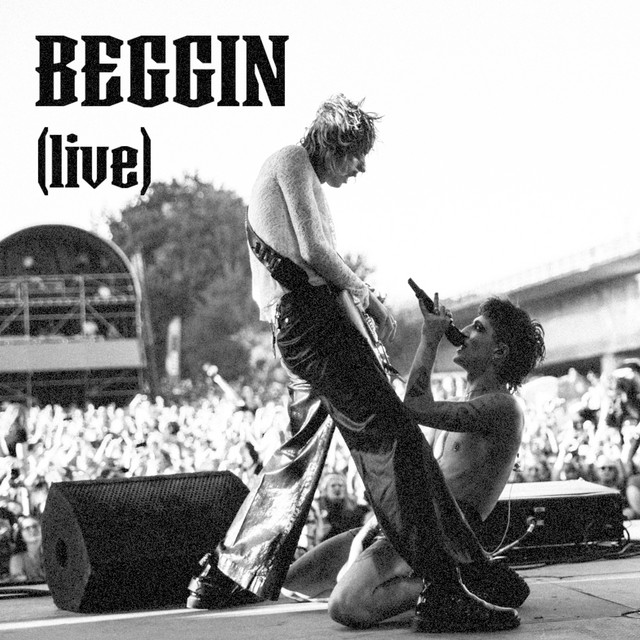
Used for the vocal tracks on "Beggin", as described by as described by Alessandro Marcantoni in this October 2021 Sound on Sound interview.
“All vocal tracks have the same inserts: Avid EQ3 7‑band, UAD 1176 LN, Mäag EQ4, and again the 7‑band. The main difference is in the plug‑in settings and in the sends. The a cappella at the beginning of the song is sent to the Very Large Hall aux with the Avid ReVibe II, as well as the Hall aux with the UAD Precision Delay Mod, and the V Hall which has another instance of the Lexicon 224. I wanted the a cappella to sound larger than the other vocals, which have only the 224 and a send to the V Slap aux, with a delay from the UAD Galaxy Tape Echo.
“The main vocal tracks also have a send to the V Amp track, on which I had the SansAmp, for some more edge. The singer has a very raspy voice, which I think sounds great, and the SansAmp enhances this. All vocal tracks go to the Group track, on which I have two EQs and the UAD Precision De‑Esser. I use volume automation a lot on individual tracks, so if I use de‑essers on them, it can emphasise the esses. For that reason I prefer to have the de‑esser on the subgroup at the end of the chain. It makes it easier to control things.”

Used for Quavo and Offest's features on Beyoncé and Jay-Z's "Apeshit", as stated by producer Stuart White in this September 2018 Sound on Sound interview.
The first four aux tracks feature SoundToys effects, namely Little Microshift, two EchoBoy delays, and a delay from the Little PrimalTap. Next are a Hall Reverb aux and a Church Reverb aux, both using Waves’ RVerb, an EMT plate from Audio Ease’s Altiverb, four aux tracks with the Waves H-Delay and various other plug-ins on them as well, and four more reverb auxes with the Avid Revibe II, two Avid D-Verbs and another RVerb.
White: “I use the Little Microshift in pretty much every mix, with the left-right micro pitch-shift effect that’s similar to the classic effect in the Eventide H3000 shift where you pitch one side down six cents and one side up six cents to create width. It’s a good way to get your vocals wider without them being out of phase. It thickens up vocals, and is kind of like a doubler. I do quite a lot of filtering on some of the EchoBoy delays, for example with the Waves REQ, and I am adding colour with the SoundToys Devil-Loc, which is great if you want to colour the delay so it is separate from the main vocal, and compress it with the UAD LA3A and mix that in to taste.”
(...) “The Migos vocals came in as seven audio tracks, with the Avid D-Verb on each of them. Putting a D-Verb on a track before EQ is not something I normally do, but it sounded great. So I adjusted them a bit, but otherwise left them as they were. The tracks also came in with the Aux track above, and the EQ3, with a high pass at 60Hz and notches at 430Hz and 1.41kHz and a high boost, the Waves API 2500 compressor, the RComp, the Waves Q10 EQ, following a slightly similar curve to the EQ3, the Waves De-esser, the Waves Aphex Aural Exciter, and the Avid Dyn3 expander/gate. I added the EQ3, with another high-pass filter at 144Hz, and the RComp, with a ratio of 10:1.”


Used for vocals on "Gum Body", as stated by mix engineer Jesse Ray Ernster in this June 12, 2020 MusicTech interview.
BURNA’S VOCAL: “A big part of the job of a mixer is knowing when not to change things,” insists Ernster, “Burna’s vocal usually doesn’t require much work, and this song was no exception! His vocal stem arrived with all processing and effects printed into the track, and it sounded identical to the approved reference mix that he had grown accustomed to hearing, so my job was to enhance subtly, without changing the vibe too much!”
The first plug-in on the vocal chain was the Metric Halo Transient Control, with the sustain knob turned down to tame some of the effects and cut down room reverberation that had bled into the microphone, for a closer, more up-front vocal. Next, Ernster deployed the trusty bx_SSL E channel plug-in to boost 4.3khz and 13.5khz to help emphasize some of the consonants of Burna’s vocal, for better intelligibility.
Not one to believe in magic frequencies, Ernster’s technique is to “sweep around until the sound feels better to my ears.” Liking where the vocal was sitting against the track, but with certain phrases poking out unevenly, Ernster reached for a compressor. But his favourites – Rev E 1176, CLA-76 – all altered the ratio between vocals and effects too much, making the voice sound washed out. “I ended up rolling with a combo of clip-gain automation and some subtle compression on the Metric Halo Channel Strip. That glued the vocal into place without changing the character that we all loved from the reference mix.”
“After that, I used an instance of Soothe to tame a few whistley resonances that were poking through and causing harshness at 2.9khz and 5.3khz. The final step in the vocal processing sees the Acustica Amber3 (which emulates the Avalon AD2055) boosted at 25khz for some “silky air”. “I usually reach for the Crane Song Phoenix as a final touch to pull a bit of grit forward, and in this scenario, I used the Luster/Sapphire setting with a 68% mix. Finally, I used a FabFilter ProQ3 to cut 0.73dB at 490hz to dial back a resonance.”
VOCAL FX & DEPTH: “Lately, I’ve been focusing on depth within my mixes,” says Ernster. “It’s crucial to me that the singer is glued into a similar sonic environment as the rest of the arrangement.”
“I sent Burna’s vocal to a series of effects busses that I used to fuse the vocal into the metaphorical space of the song. On this song, I used a few different simple Waves H-Delay tracks set at 1/2, 1/4, 1/8th, 1/16th note, and a quick slap setting. All of these fed into reverb tracks with Revibe II, Valhalla VintageVerb (Dirty Plate), and Lexicon Medium Hall. I adjusted the blend of these multiple effects auxes until the blend felt glued, but also still similar enough to the reference mix – just better and deeper.”
Album Usage
The Avid Audio ReVibe II has been featured on the following albums:

Genre Usage
Based on how artists on Equipboard use this gear, it is most commonly found in the following genres.
Used With
Based on how musicians on Equipboard use Avid Audio ReVibe II, it is most commonly used with the following gear.




More Avid Reverb Plugins


$38.00 - $349.00
in Reverb Plugins Rank


$29.99 - $49.00
in Reverb Plugins Rank


$179.00 - $199.00
in Reverb Plugins Rank


$37.00 - $39.99
in Reverb Plugins Rank


$0.00
in Reverb Plugins Rank


$37.00 - $39.99
in Reverb Plugins Rank


$149.00
in Reverb Plugins Rank


$75.00 - $535.00
in Reverb Plugins Rank


-m.webp?v=1783581851)

$29.99 - $30.00
in Reverb Plugins Rank

$58.00 - $69.00
in Reverb Plugins Rank


$139.00 - $149.00
in Reverb Plugins Rank


$62.00 - $69.00
in Reverb Plugins Rank

$0.00
in Reverb Plugins Rank

$49.00 - $199.00
in Reverb Plugins Rank


$47.00 - $49.00
in Reverb Plugins Rank

$0.00
in Reverb Plugins Rank

$37.00 - $39.99
in Reverb Plugins Rank


$95.00 - $99.00
in Reverb Plugins Rank

$34.99
in Reverb Plugins Rank


$37.00 - $39.99
in Reverb Plugins Rank


$99.00
in Reverb Plugins Rank


$29.00 - $38.00
in Reverb Plugins Rank

$95.00 - $99.00
in Reverb Plugins Rank

$93.00 - $99.00
in Reverb Plugins Rank

$69.00 - $169.00
in Reverb Plugins Rank

$47.00 - $199.00
in Reverb Plugins Rank
-m.webp?v=1784689486)


$99.00 - $105.00
in Reverb Plugins Rank

$99.00
in Reverb Plugins Rank


$33.00 - $249.00
in Reverb Plugins Rank


$43.00 - $45.00
in Reverb Plugins Rank


$59.00
in Reverb Plugins Rank

$59.00
in Reverb Plugins Rank

$29.99 - $95.00
in Reverb Plugins Rank

$68.00 - $299.00
in Reverb Plugins Rank

Accessories & Related Items


-s.webp?v=1784785078)


Community setups


Similar


Gear Guides






Most Popular Reverb Plugins
Most Popular Brands
-
Added to Equipboard on by
 eyeseeofficial
GearIQ 161592
-

