
Pricing and availability
We compare 600+ stores and found this item at 8 stores. Prices updated .
Store
Reviews
Price









Average Price: $383
Standard/Professional
$300
$801+
Price Tier
Budget
Standard
High-end
Price History
Based on price data from 4 merchants for "Boss Katana 100 MKII Amp Head". Prices shown reflect NEW condition. Tracking began Apr 2, 2026.
* Product prices and availability are updated by Equipboard every 24hrs and are subject to change. Equipboard may receive compensation for purchases made at participating retailers linked on this site. This compensation does not affect what products or prices are displayed, or the order of prices listed. For more information, please refer to our affiliate disclosure.
Description
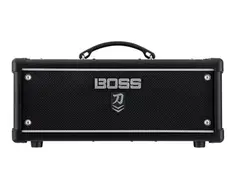
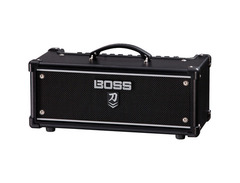
Unleash your sonic potential with the Boss Katana 100 MKII Amp Head, a modern amplifier marvel that takes your guitar tone to new heights. If you’re after an amp that combines versatility with power, the Katana MKII is your ideal companion. This powerhouse delivers the authentic, responsive feel of a tube amp, thanks to Boss’s renowned Tube Logic design, ensuring your sound remains punchy and precise from stage to studio.
Building on the success of its predecessor, the Katana MKII offers five distinct amp characters—Clean, Crunch, Lead, Brown, and Acoustic—each with newly voiced variations, providing ten unique tones to explore. Whether you're diving into vintage warmth or modern high-gain territory, this amp head has you covered. Plus, with five simultaneous effects sections, you can craft your signature sound right within the amp itself. From modulation to reverb, the tone-shaping possibilities are endless.
Designed for both the gigging musician and the home enthusiast, the Katana MKII features an integrated 5" monitor speaker for hassle-free practice without needing a cab. The innovative Power Control allows you to achieve rich, cranked-amp tones at any volume, perfect for intimate settings or full-blown gigs. And with the BOSS Tone Studio software, customize your sound further with over 60 effects, EQs, and routing options.
Key Features:
- 100-watt guitar amp head with integrated 5” monitor speaker
- Five unique amp characters with newly voiced variations
- Five independent effects sections with three selectable variations each
- Tube Logic design for genuine tube amp feel
- Power Amp In for use with preamps and multi-effects
- Eight Tone Setting memories for quick recall
- Stereo Expand capability for dual amp setups
- Mic’d cabinet emulation on line, USB, and phones/recording outputs
- Optional GA-FC foot controller for seamless amp control
Product specs
| Brand | Boss |
| Model | Katana-Head MkII 100-Watt Digital Modeling Guitar Amp Head |
| Finish | Black |
| Year | 2019 - 2025 |
| Categories | Guitar Heads, Guitar Modeling Amps |
| Built-In Effects | Built-In Effects |
| Color Family | Black |
| Electronics | Solid State |
| Impedance | 8 ohms |
| Number of Channels | 4 Channels |
| Number of Inputs | 1 Input |
| Output Power (Watts) | 100 |
| Power Tube Type | None |
| Reverb | Digital Reverb |
FAQs
-
What are the amp models available on the Boss Katana 100 MKII Amp Head?
-
The Boss Katana 100 MKII Amp Head offers five unique amp characters: Clean, Crunch, Lead, Brown, and Acoustic, each with newly voiced variations.
-
Can I use the Boss Katana 100 MKII Amp Head without an external speaker cabinet?
-
Yes, the Boss Katana 100 MKII Amp Head features an integrated 5" monitor speaker, allowing you to practice without needing an external cab.
-
Does the Boss Katana 100 MKII Amp Head have built-in effects?
-
Yes, it includes five independent effects sections: Booster, Mod, FX, Delay, and Reverb, with three selectable variations for each, totaling over 60 different BOSS effects.
-
Is the Boss Katana 100 MKII Amp Head suitable for live performances?
-
Absolutely, it is a 100-watt amp head with powerful, gig-ready sound, making it ideal for live performances.
-
How does the Power Control feature on the Boss Katana 100 MKII Amp Head work?
-
The Power Control allows you to achieve cranked-amp tone and response at lower volumes, making it perfect for home practice without sacrificing sound quality.
-
Can I connect multiple Boss Katana 100 MKII Amp Heads together?
-
Yes, the Stereo Expand feature allows you to link a second Katana MKII head for a wider stereo sound, available on 100-watt models only.
-
What connectivity options are available on the Boss Katana 100 MKII Amp Head?
-
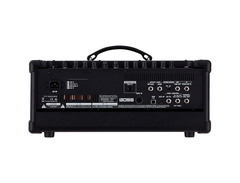
It offers a range of connectivity options, including Power Amp In for preamps, modelers, and multi-effects, as well as MIDI input, USB, and line outputs with mic’d cabinet emulation.
Videos

Reverb
Boss Katana-Head 100W Head | Reverb Demo Video
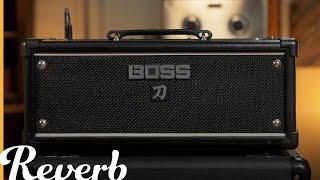
Boss Katana-Head 100W Head | Reverb Demo Video
Reverb
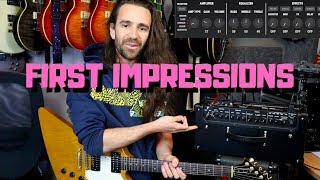
BOSS KATANA-HEAD MKII - First Impressions

Leon Todd
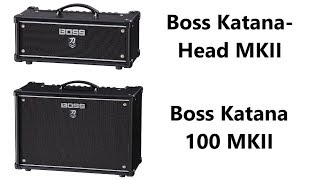
Boss Katana 100 MKII i Boss Katana Head MKII - Guitar Center

TVGuitarCenter
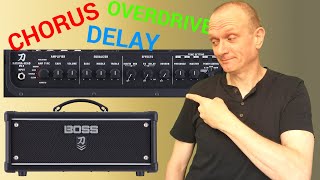
Boss Katana 100 Head Mk2 - How to use effects out-of-the-box

Paul Douglas
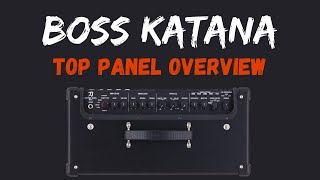
Boss Katana 100 Head MKII Panel Overview

Doctor McFarland Studios
Reviews
PROS
-
Unmatched value in its price range
-
Versatile, sounds great with both 212 and 412 cabs
-
User-friendly controls, easy PC connectivity
-
Definitive proof digital can rival traditional tube amps
-
Loaded with features: effects loop, MIDI, direct recording, built-in IRs
-
Boss Tone Studio compatibility enhances sound customization
-
Supported by big names in the guitar world, boosting credibility
-
Ideal for a broad range of players, from beginners to pros
CONS
-
May not satisfy users comparing it to high-end models like Kemper or Helix
Owner Insights
We analyzed real musician discussions from forums and Reddit to find what players love, question, and tweak about Boss Katana 100 MKII Amp Head.
Mods and upgrades
Comparisons
-
Custom open-back cabinets with Eminence RWB speakers have been reported to complement the amp's sound, differing from the out-of-the-box experience.
Source -
Owners have compared its sound quality favorably against the Bugera 333XL tube amp combo, though acknowledging the Bugera's issues with overheating and reliability.
Source -
The Artist Head lacks an internal speaker, making the 100 MKII more suitable for users without a cabinet.
Source
Use cases and applications
-
The amp excels in providing clear, non-muddy tones at low volumes, useful even with 7 and 8-string guitars.
Source -
Owners report that despite initial concerns, the amp is loud enough for gigging with a loud punk rock band, requiring only a 9 o'clock setting on the master volume at 100 watts.
Source -
The 100 MKII head is suitable for bedroom practice due to its low volume capabilities, yet powerful enough for future gigging with a cabinet.
Source
User experience
-
Owners find that the amp's tonal character emerges when accepting it as its own entity rather than emulating tube amps.
Source -
The global EQ can be adjusted to roll off frequencies below 80Hz, helping to tighten the bass response, especially beneficial when using smaller cabinets.
Source -
Owners emphasize the utility of two volume knobs; one for "cranked amp" sound and the other for actual output control.
Source
Features and functionality
-
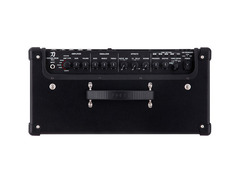
The panel EQ is flat when all settings are at maximum, allowing users to start with a neutral baseline before adjusting further.
Source -
Multiple built-in graphic and parametric EQs allow precise customization for various guitar tones, from thick and heavy to bright and flat.
Source -
The 100 MKII head has a built-in speaker, making it a versatile practice amp without needing an external cabinet.
Source -
Footswitchability is highlighted as a key feature for the 100 MKII, enhancing live performance flexibility.
Source -
The power selection switch allows for .5w mode, providing full amp sound even at low volumes.
Source
Software and compatibility
Critic Reviews
5.0 out of 5
Based on 1 Review and 5 Ratings

2937
This is close to what I envision for the future of guitar amplifiers...
The Boss Katana MkII head was a major draw for me after my Bugera 333XL started giving me problems again and I talked to some musician friends about what everyone is using live these days. "A lot of modeling amps" seemed to be a big part of the concensus.
So I started looking at modeling amps - modern ones. I looked at everything I could find from Line6 Spiders, Marshall Codes, Behringer V-Amp products, Fender Mustangs, and then the BOSS Katana. This particular amplifier line started to check all the marks the more I read about it.
In years past, I had to have at least TWO rigs...
One rig was usually a digital effects modeler plugged into a computer used for multi-track recording. In this case, it'd be the Line6 HD500 plugged into a late 2015 iMac 21.5".
The other rig would be the one I would use in a live situation. In this case, it was a Bugera 333XL into a Peavey 412M 4x12 with Celestion GK85 speakers in it, and a SKB PS-45 powered pedalboard with a mix of analog and digital pedals, including a couple home built ones.
And both rigs shared the same stable of guitars which ranged from 5K ohm single coils to a 17K humbucker. And I wanted to get the same amount of distortion out of both without bending the character of the guitar's sound too much.
What appealed to me right off the bat was consolidation - I could remove several pedals, and basically use ONE amplifier for everything. The next thing was I knew I wanted a head. I love the sound of that Peavey 4x12 cabinet that I found at a rinky dink Seattle pawn shop for $114 in the fall of 2008. So I wanted to keep that for the "big volume" part of the equation. Lucky me the heads were 100 Watts across the generations, across the board. I could record with it at home (more on that later), I could practice on it and rock out in the house without blowing the roof off the place or precariously keeping the volume at 3 or under, and I could definatley go out and play a live show with it cranked up.
What lead me to the mkII head was a couple of things. First off, a good Gen 3 Artist or Gen 3 head would cost me about $500 - about the same as the Bugera. Sure, I'd get Bluetooth and the new "Bloom" feature, but that never was a big part of my sound or overall technological style anyway. A Mk1 is fine, and I compared the Mk1 and MkII to each other and found I'd probably be fine with either.
So I looked at our local Guitar Center and as luck would have it they had the MkII head there used for about $264-ish. So I went over, tried out a quartet of similar guitars to mine through it (J.Mascius Jazzmaster, the worst setup Squier Tele in the world, a $1000 Snakebite James Hetfield model, and a Squier Mustang). Within 2 minutes I had my sound dialed in, and I tried out the 5" speaker on it which sounds surprisingly great considering it's jammed inside of a amp head. So basically, these are a 0.5w/30w combo that also doubles as a 0.5w/50w/100w head. Nice.
The built in effects have me currently testing and tweaking and deciding which pedals go, and which pedals stay.
Among the real jewels of the built-in effects are of course the Chorus, Delay, and Reverb effects, as well as the EVH style Phase 90 effect. So that took a Small Clone, Behringer PH9, and a BOSS DD7 Digital Delay off my board already, as well as a Behringer Noise Gate.
The Pitch Shifter, however, in typical BOSS Fashion, was not something I'd be using the same way, so the EHX Pitch Fork stays put. I use my Pitch Fork like I did my old WH4 Whammy pedal, 5ths usually (ie single string power chords that I can layer over each other using power chords, or add 5ths to regular chords for some big, pretty sounding stuff). However, it has it's own purpose in the setup that matches will with the Pitch Fork as I remember trying a BOSS PS-2 pitch shifter in the 90's and loving the whole feedback knob effect I got from it back then. That said, it is a downside I can't really remove that pedal from the board and have one MIDI Floorboard, but you can't have everything.
I don't really have a need for Fuzzes or Overdrives since I use my own home-made Fuzz pedals which are on my equip board. But it's nice to know I have more options.
One big feature is the "Boost" feature. My 333XL had an Effects Loop with adjustable gain so I used to use that as a booster for solos. This has that as well. It requires a separate foot switch except I think some MIDI Pedals allow for control of 1/4" phone jack which is in my future plans.
Being able to control via MIDI was important because I looked at the footswitch options. While the GA FC and GA FC EX are both nice looking footswitches in their own right, they seem a bit limited compared to the functionality that this amplifier is capable of. Lucky me I have the MIDI Controller port so I can pick from one of many various MIDI Controllers for it which is a source of research to improve the QOL of my guitar-life.
Through the 5" speaker, yes, you will get some "blat" with bass-heavy tones, but that's to be expected, this is a high-wattage, high gain amplifier with a 5" built-in speaker intended as a quiet late-night jamming option. It's not meant to be a tonal marvel, meant to be a tool for practice and jamming out for fun.
Recording through the computer is a bit of an interesting scenario. See, I'm an I.T. guy by trade, I work with Windows, Linux, and MacOS and am familiar with all three...here's my view of the landscape...
The BOSS Katana has pretty decent support across all three but has some caveats I think people need to be aware of...
First off, the headphones are MONO only. So you don't get that cool stereo separation you'll get over USB. However, recording, you WILL Get stereo and it sounds spatial and awesome when dialed in right.
For Mac and Windows you can edit patches on the amplifier using Boss Tone Studio which is downloadable via their website. It requires downloading a driver. That said, it does have one downside in that you are limited to one of eight signal chains, and those signal chains might not be to your liking....or fit what you want necessarily....
Which brings me to Linux. Linux has FxFloorBoard, an unofficial program that allows you to do more in-depth editing of patches including changing up the signal chain in any order you choose. This make it somewhat incompatible with BTS and means you might need to choose one or the other as patches might get corrupted by the official software.
Some of the smaller models might not allow for as many stored patches as the head does, which allows for eight + a "panel" button that allows it to be used like a regular guitar amplifier via the adjustments on the top. Which is 5 more "channels" than my old Bugera has. However, having limited patches is an advantage because one problem I learned through having eight setlists of 16 banks of four patches each on the HD500, or the Behringer V-Amp pro with it's crazy total of 100 patches (or more), was I would sometimes get a form of "option paralysis", or wonder why I'm only using 2 banks of patches 90% of the time with so much space. Because my use-case is my own sound, and my own sound only. I'm not looking to copy famous people anymore. I found my own tone long ago.
So the pros of this unit is that it can indeed be a consolidation of your musical gear needs into one head that can do it all acting as a digital recording device for your PC, a home practice amp, and then take it to a gig with a 4x12 and melt faces with it. Also the chorus, delay, reverb, and having a lot of other stuff prewired into the amp helps a lot with reducing pedal board sizes, which with the reducing sizes of local stages these days is a real plus to not need to navigate 10 stompboxes that take up the space of a toilet stall.
The cons are that the headphone jack isn't stereo, and in order to monitor the stereo output you need to use a program like Ardour or GarageBand with the monitor on. This is somewhat negated in that there's no latency even on my ancient iMac, but it is kind of a pain to need to open up a DAW just to hear the amp in it's full stereo glory. The footswitch is separate and costs about $140 - which is kinda' expensive considering it only has five buttons and you still need to purchase separate footswitches and expression pedals for other functions like boost, wah, or volume. However, for about the same price or less you could buy a cheap FCB1010 Behringer MIDI board and run the whole amp if your programming skills are up to it (one of the options I'm seriously considering). Linux support is spotty at best, with me spending a lot of time in Pulse and Alsa dicking around with the settings to get a sound, while Mac is probably the best platform for adjusting the outputs on it (we all know how wacky modern Windows audio can be).
But overall, it checks on average 9-10 marks from someone like me who demands a lot from his equipment at a price lower than some Squiers, and at $264 used that's a friggin steal. It's small, it's light, it's loud, I can practice or record with it, and then go down the street and terrorize the open Jam Night with a thumping monster guitar tone. 100% what I was looking for. And the fact it has MIDI Negates a lot of the negatives about the footswitch.
Preferred Settings + Usage:
The Brown Sound is probably my favorite sound on the whole amp. I use it with the gain at 2 o'clock for crunch, and all the way up for lead. It turns even the brightest, tinniest old budget guitar into a shred monster. I just bought a Squier CV 70's Jaguar and I'm using that thing for Metallica on this amp and it does the whole Chugga Chugga on a 5.91K Single Coil like a champ.
Artist usage
Add artist
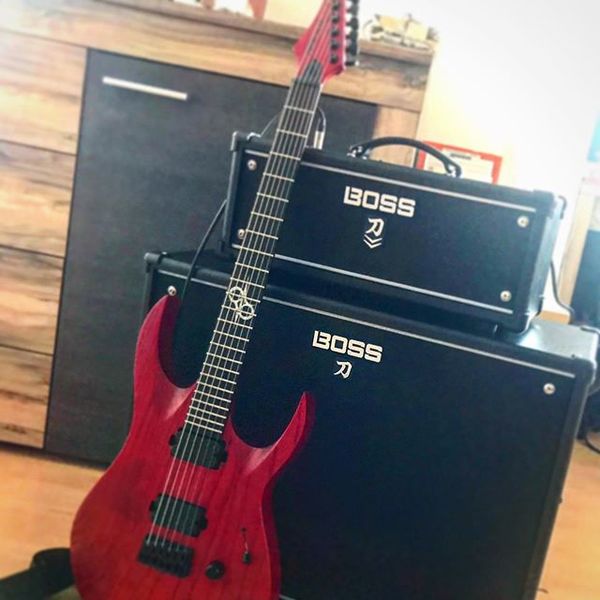
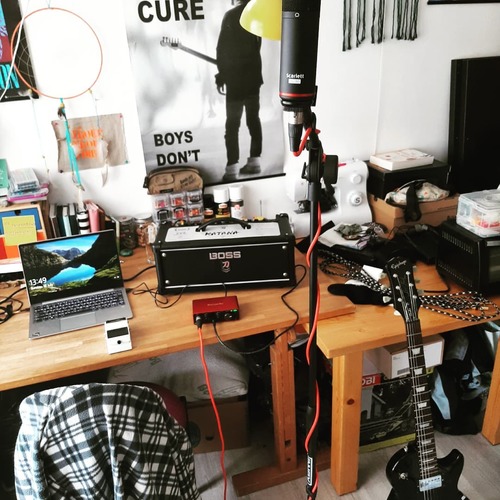
Markus Georg te Heesen uses the Boss Katana 100 MKII Amp Head, paired with a 212 Boss Katana Cabinet, as part of his live rig. This setup is showcased in a post on Instagram, highlighting his integration of the amp with his Solar Guitars superstrat for his melodic death metal performances.
Genre Usage
Based on how artists on Equipboard use this gear, it is most commonly found in the following genres.
Used With
Based on how musicians on Equipboard use Boss Katana 100 MKII Amp Head, it is most commonly used with the following gear.


Community setups
Show yours

Similar
Add recommendation2 alternative and related items for Boss Katana 100 MKII Amp Head, curated by the Equipboard community.

$191.99

$392.54 - $419.99
More Boss Guitar Amplifier Heads

$369.99 - $540.00
in Guitar Amplifier Heads Rank


$769.99 - $1,429.99


$349.99 - $569.99
$392.54 - $419.99

$349.99 - $369.99


$1,050.00 - $3,229.99


$560.00 - $3,421.95
in Guitar Amplifier Heads Rank


$1,282.00 - $1,999.99
in Guitar Amplifier Heads Rank


$1,800.00 - $3,299.00
in Guitar Amplifier Heads Rank


$850.00 - $1,999.99
in Guitar Amplifier Heads Rank


$1,349.00 - $1,848.00
in Guitar Amplifier Heads Rank


$999.00 - $2,398.00
in Guitar Amplifier Heads Rank


$240.00
in Guitar Amplifier Heads Rank


-m.webp?v=1784991529)
$1,699.00 - $2,899.99
in Guitar Amplifier Heads Rank


$720.00 - $2,449.99
in Guitar Amplifier Heads Rank


$600.00 - $949.00
in Guitar Amplifier Heads Rank


$600.00
in Guitar Amplifier Heads Rank


$2,019.08 - $3,199.99
in Guitar Amplifier Heads Rank

$2,999.00 - $3,492.21
in Guitar Amplifier Heads Rank


$1,499.00 - $2,149.99
in Guitar Amplifier Heads Rank


$2,199.99 - $2,299.99
in Guitar Amplifier Heads Rank


$1,659.00 - $3,421.95
in Guitar Amplifier Heads Rank


$729.00 - $1,199.00
in Guitar Amplifier Heads Rank


$831.39 - $1,399.99
in Guitar Amplifier Heads Rank


$831.39 - $1,399.99
in Guitar Amplifier Heads Rank


$1,890.00 - $2,749.00
in Guitar Amplifier Heads Rank


$1,379.00 - $1,699.00
in Guitar Amplifier Heads Rank


$1,529.90 - $1,699.99
in Guitar Amplifier Heads Rank
.jpeg?v=1784984769)

$715.00 - $1,359.00
in Guitar Amplifier Heads Rank


$149.00 - $309.00
in Guitar Amplifier Heads Rank


$1,799.00 - $3,149.00
in Guitar Amplifier Heads Rank


-m.webp?v=1784991531)
$119.00 - $159.00
in Guitar Amplifier Heads Rank


$1,599.00 - $2,099.00
in Guitar Amplifier Heads Rank


$1,799.00 - $2,499.00
in Guitar Amplifier Heads Rank


$1,216.00 - $1,999.99
in Guitar Amplifier Heads Rank


$1,074.00 - $2,199.00
in Guitar Amplifier Heads Rank


Gear Guides








Most Popular Guitar Amplifier Heads
Most Popular Brands
-
Added to Equipboard on by
 oddorocket
GearIQ 54002
-


