

Pricing and availability
We compare 600+ stores and found this item at 8 stores. Prices updated .
Store
Reviews
Price









Average Price: $176
Standard/Professional
$75
$201+
Price Tier
Budget
Standard
High-end
Price History
Based on price data from 5 merchants for "RODE Podmic USB Digital Dynamic Microphone". Prices shown reflect NEW condition. Tracking began Apr 2, 2026.
* Product prices and availability are updated by Equipboard every 24hrs and are subject to change. Equipboard may receive compensation for purchases made at participating retailers linked on this site. This compensation does not affect what products or prices are displayed, or the order of prices listed. For more information, please refer to our affiliate disclosure.
Description
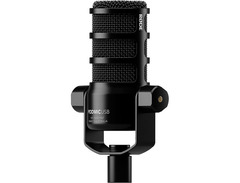
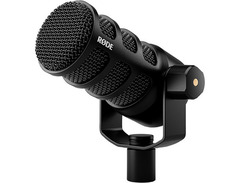
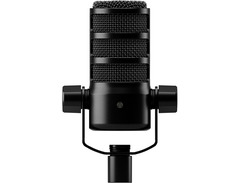
Unlock a world of sound potential with the RODE PodMic USB Digital Dynamic Microphone. Perfect for podcasters, streamers, and content creators, this microphone is engineered to offer both versatility and high-quality audio capture. With dual connectivity options—XLR and USB-C—the PodMic USB adapts seamlessly to any recording setup, whether you're working in a professional studio or recording on-the-go with mobile devices.
The USB-C connection is more than just a plug-and-play feature; it provides access to a suite of enhancements, including the Revolution preamp and APHEX DSP, which ensure your voice is captured with studio-grade clarity and depth. Whether you're speaking softly or belting out your message, this microphone delivers a warm, dynamic sound that feels as natural as a face-to-face conversation. The built-in internal pop filter and robust construction further enhance your recording by minimizing plosives and reducing unwanted noise.
Moreover, the PodMic USB is fully compatible with RODE's software suite, including RODE Central and RODE Connect, providing additional tools for processing and mixing your audio. With zero-latency headphone monitoring, you can keep your recordings on point, adjusting levels on the fly for a streamlined production experience.
Key Features:
- Dynamic microphone with cardioid polar pattern
- Dual connectivity: XLR and USB-C outputs
- Revolution preamp and APHEX DSP for superior sound quality
- Zero-latency 3.5mm headphone output with level control
- Built-in pop filter and robust metal housing
- Compatible with RODE software and mobile devices (iOS and Android)
Product specs
| Microphone Type | Dynamic |
| Mono/Stereo | Mono |
| Polar Pattern | Cardioid |
| Frequency Range | 20Hz-20kHz |
| Output Impedance | 320 ohms |
| Sensitivity | -57 dBV/Pa |
| Connector | 1 x 3-pin XLR (analog out), 1 x UBC-C (digital out), 1 x 1/8" (headphones) |
| Dimensions | 6.77" x 4.29" x 2.44" |
| Weight | 2.06 lbs. |
FAQs
-
Is the RODE Podmic USB suitable for podcasting and streaming?
-
Yes, the RODE Podmic USB is ideal for podcasting, streaming, and other speech applications, offering broadcast-quality sound with its dynamic cardioid design.
-
What types of connectivity does the RODE Podmic USB offer?
-
The RODE Podmic USB provides both analog XLR and digital USB-C connectivity, making it versatile for various recording setups.
-
Can the RODE Podmic USB be used with mobile devices?
-
Yes, the RODE Podmic USB is compatible with Windows, Mac, iOS, and Android devices, allowing for flexible use across different platforms.
-
Does the RODE Podmic USB have built-in audio processing features?
-
The RODE Podmic USB includes on-board DSP with APHEX audio processing, enhancing sound quality with features like compression and EQ.
-
What is the polar pattern of the RODE Podmic USB?
-
The RODE Podmic USB has a cardioid polar pattern, which focuses on capturing sound from the front while minimizing background noise.


Reviews
PROS
-
Built-in DSP allows for customizable sound settings and easy adjustments
-
Durable, all-metal construction stands up to heavy use and travel
-
Plug-and-play functionality with USB-C for easy setup
-
Excellent software support with RØDE Connect for sound control
-
Includes a high-quality pop filter to reduce plosives
-
Offers both USB and XLR connectivity for versatile use
-
Small size and portability make it ideal for travel and remote setups
-
Rich sound quality with superior sibilance and plosive control
-
Ideal for podcasters, content creators, and gamers seeking a flexible mic solution
-
No need for additional mixers or audio interfaces for recording
CONS
-
Notoriously low levels on XLR connection, common issue with this model
-
High sensitivity to handling noise, affects recording quality
-
Lacks EQ function in RØDE Central software for extra sound control
-
Expensive compared to original Podmic, features may not justify cost
-
USB and XLR outputs do not deliver the same sound quality
-
Potentially fragile electronic components may not withstand long-term use
-
Cannot record to XLR and USB simultaneously, limiting some use cases
-
Indicator light and mute knob functionality issues reported
Owner Insights
We analyzed real musician discussions from forums and Reddit to find what players love, question, and tweak about RODE Podmic USB Digital Dynamic Microphone.
Build quality
-
The PodMic USB's build quality is praised as premium, but some users report performance issues inconsistent with its robust construction.
Source
Software and compatibility
-
Users report that testing on Mac devices often resolves issues experienced on Windows, suggesting potential compatibility problems with Windows systems.
Source -
Users find Izotope RX11 Standard effective for cleaning up PodMic USB recordings, though it requires a learning curve and investment.
Source
Features and functionality
-
Despite Rode's claims, the PodMic USB's Revolution Preamp™ and APHEX® processing features do not seem to eliminate noise effectively on all devices.
Source -
The PodMic has a sensitivity of approximately -57 dBV, which requires careful gain management to avoid excessive noise amplification.
Source -
The PodMic USB includes an earphone port, allowing users to monitor their sound in real-time through headphones.
Source
User experience
Setup and maintenance
-
The PodMic often requires 80-100% gain on Scarlett interfaces to achieve optimal levels, with at least 50-55 dB of gain recommended for dynamic waveforms.
Source -
Users recommend recording peaks at -12 dB on meters to avoid clipping, especially with a 24-bit interface like Scarlett, allowing room for post-production adjustments.
Source
Mods and upgrades
-
Using an inline preamp like a Fethead can slightly lower the noise floor by 2-3 dB, but isn't necessary with modern interfaces like the 3rd gen Scarlett.
Source
Use cases and applications
Critic Reviews
Based on 0 Reviews and 0 Ratings
More Røde Dynamic Microphones

$150.12 - $239.00
in Dynamic Microphones Rank


$76.00 - $109.00
in Dynamic Microphones Rank


$69.00 - $99.00
in Dynamic Microphones Rank


$566.00 - $859.00


-m.webp?v=1784905105)
$129.00 - $938.03
in Dynamic Microphones Rank


$95.61 - $219.99
in Dynamic Microphones Rank


$335.00 - $439.00
in Dynamic Microphones Rank


$149.19 - $179.00
in Dynamic Microphones Rank
-m.webp?v=1784905105)
$327.50 - $449.00
in Dynamic Microphones Rank

$399.00 - $609.00
in Dynamic Microphones Rank


$181.00 - $219.00
in Dynamic Microphones Rank

-m.webp?v=1784905087)
$95.61 - $111.00
in Dynamic Microphones Rank

$145.00 - $199.95
in Dynamic Microphones Rank


$132.57 - $159.00
in Dynamic Microphones Rank


$122.00 - $149.00
in Dynamic Microphones Rank


$238.00 - $279.00
in Dynamic Microphones Rank


$138.00 - $219.00
in Dynamic Microphones Rank


$85.00 - $99.95
in Dynamic Microphones Rank

-m.webp?v=1784891497)
$215.00 - $259.00
in Dynamic Microphones Rank


$973.00 - $1,249.00
in Dynamic Microphones Rank


$77.40 - $167.00
in Dynamic Microphones Rank


$75.00 - $429.00
in Dynamic Microphones Rank


$170.00 - $220.00
in Dynamic Microphones Rank


$80.50 - $105.00
in Dynamic Microphones Rank


$249.00 - $259.00
in Dynamic Microphones Rank


$59.99 - $669.99
in Dynamic Microphones Rank


$439.00 - $1,499.99
in Dynamic Microphones Rank


$148.00 - $259.00
in Dynamic Microphones Rank


$75.00 - $139.00
in Dynamic Microphones Rank


$161.63 - $189.00
in Dynamic Microphones Rank


$155.00 - $339.00
in Dynamic Microphones Rank

.jpeg?v=1784138439)


$139.75 - $189.00
in Dynamic Microphones Rank


Accessories & Related Items


Artist usage


Community setups


Similar


Gear Guides





.webp)

Most Popular Dynamic Microphones
Most Popular Brands
-
Added to Equipboard on by
 equipboard
GearIQ 4934
-


