Capturing the Thunder: Our 7 Top Picks for Best Kick Drum Microphones in 2026

By Gear Experts
.webp)
By Gear Experts
Table of Contents

Equipboard
Equipboard is the world's largest community of artists and their gear. Read our review process.
We are reader-supported. When you buy through links on our site, we may earn an affiliate commission. Learn more.
Our Picks

Audix D6X Dynamic Kick Drum Mic
Best All-Rounder: The Audix D6X delivers exceptional versatility with its revolutionary 3-way voicing switch, allowing engineers to instantly adapt to different musical genres without swapping microphones or extensive EQ adjustments.
Read more


Best Internal Option: The Shure Beta 91A redefines what's possible when recording from inside the kick drum, delivering pristine clarity and articulation that makes it the go-to choice for engineers seeking definition without sacrificing low-end authority.
Read more
Best Classic Option: The AKG D112 MKII carries forward the legendary status of the original D112 while introducing subtle refinements that keep it relevant in modern recording environments, delivering the authoritative punch that has made it a studio standard for decades.
Read more
Best Live Sound Choice: The Shure Beta 52A represents the pinnacle of live sound engineering for kick drums, with unmatched SPL handling and a supercardioid pattern that provides exceptional isolation in the most challenging stage environments.
Read more
Best for Balanced Tone: The Sennheiser e902 delivers exceptional neutrality across the frequency spectrum, making it perfect for engineers seeking a versatile kick drum microphone that captures the drum's natural sound while still providing the necessary weight and definition.
Read more

Earthworks DM6 SeisMic Kick Drum Microphone
Best for Transient Detail: The Earthworks DM6 redefines what's possible in kick drum microphone technology, delivering unprecedented transient accuracy and extended frequency response that reveals every nuance of the instrument with scientific precision.
Read more
Best Dual-Purpose Option: The Electro-Voice RE20 transcends its broadcast origins to deliver a uniquely natural kick drum sound, making it the perfect choice for engineers seeking vintage warmth and authenticity rather than hyped modern tones.
Read moreThe kick drum forms the rhythmic backbone of almost every modern music production. It's the heartbeat that drives your track forward, the foundation upon which your entire mix is built. When that kick drum sound is right, everything else falls into place. When it's wrong, even the most expertly played and mixed instruments above it will suffer.
Capturing that perfect kick drum sound starts with selecting the right microphone. This critical decision influences everything from the initial attack and punch to the low-end extension and overall character of your drums. Whether you're a seasoned recording engineer, a live sound professional, or a drummer setting up your first home studio, the microphone you choose can mean the difference between a powerful, professional-sounding production and a thin, amateur mix.
In this comprehensive guide, we'll explore everything you need to know about selecting the ideal kick drum mic for your specific needs.
Understanding the Kick Drum
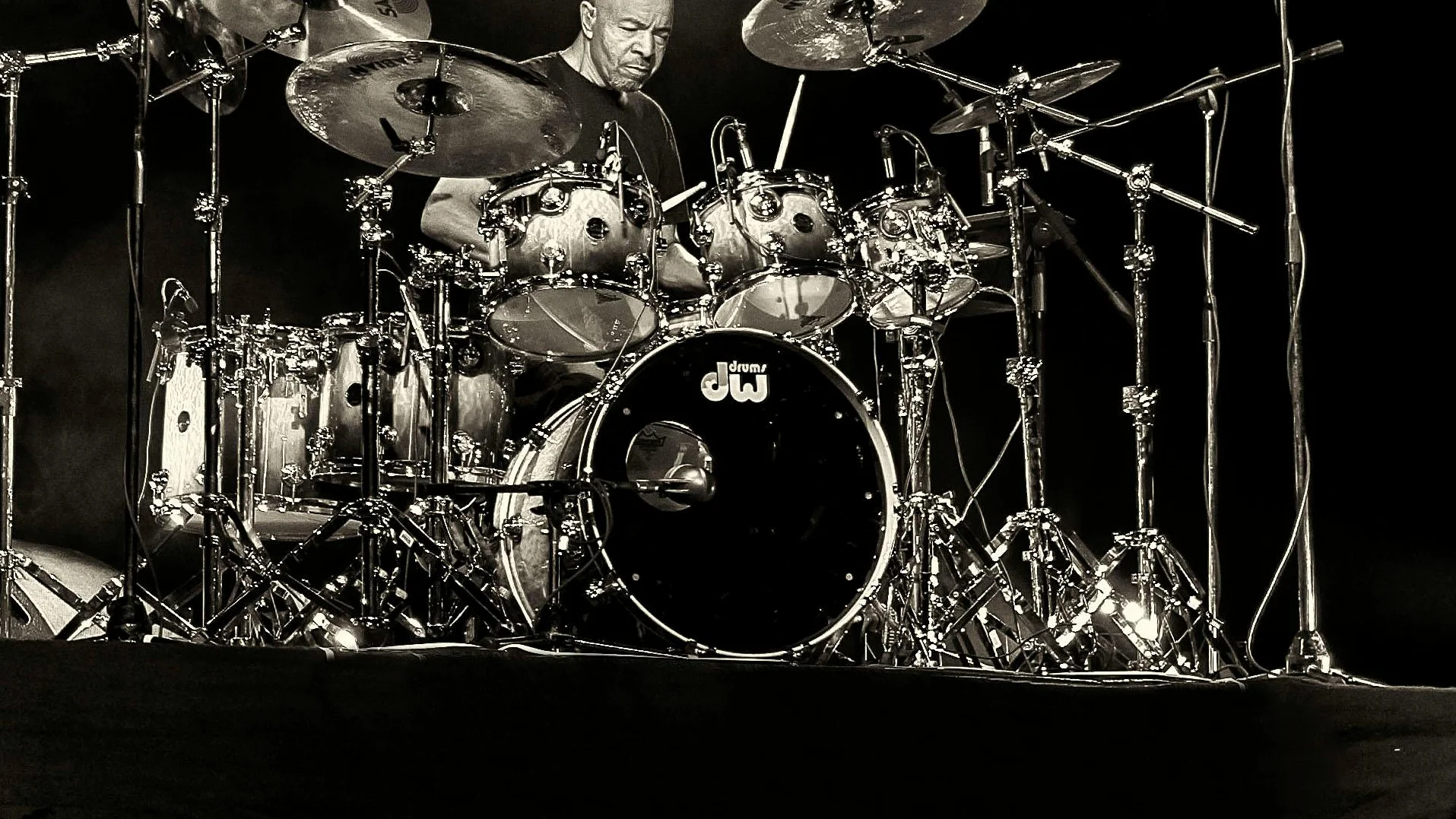
Before looking at microphone recommendations, it's essential to understand what we're trying to capture. The kick drum (also called a bass drum) produces a wide frequency range, typically spanning from around 40Hz up to 6kHz.
This frequency spectrum can be broken down into three main components:
The Low-End Thump
The foundation of a kick drum is its low-end energy, generally ranging from 40Hz to 100Hz. This is where you feel the kick rather than hear it, providing that chest-thumping sensation that gives music its physical impact. Getting this right is critical for genres where the kick needs to move air and create a visceral response from listeners.
The Midrange Punch
Between 100Hz and 800Hz lies the "punch" of the kick drum. This frequency range provides definition and helps the kick cut through a mix without relying solely on low-end boom. The midrange is where the kick drum establishes its place in relation to the bass guitar and other low-frequency instruments.
Different genres emphasize various parts of this range. For example, jazz recordings often feature a more natural, balanced midrange, while rock productions might emphasize the upper mids for more attack and presence.
The High-End Attack
From 800Hz up to around 6kHz, we find the "click" or "attack" of the kick drum, often produced by the beater hitting the drumhead. This high-frequency content helps define the kick's articulation and makes it audible even on smaller speakers that can't reproduce low frequencies.
The attack is particularly important in dense mixes where definition is needed to prevent the kick from getting lost. Metal productions, for instance, often emphasize this range to ensure the kick remains audible amid distorted guitars and aggressive vocals.
Genre Considerations
Rock and metal productions typically favor a pronounced attack combined with substantial low-end weight, creating that characteristic "click and boom" sound.
Jazz and acoustic music generally aim for a more natural representation, with balanced frequency response and less extreme processing.
Electronic and pop music often feature highly sculpted kick sounds, sometimes blending acoustic drums with samples for maximum impact and consistency.
Hip-hop productions frequently emphasize extreme low-end extension, sometimes dropping below the 40Hz threshold for that subsonic rumble.
Recording Challenges
The intense air pressure created by the drum can overwhelm many microphones, causing unwanted distortion. Fast transients require microphones with quick response times to accurately capture the initial attack.
In live settings or full-kit recordings, isolation becomes crucial to prevent excessive bleed from other drums and instruments.
Types of Microphones for Kick Drum Recording
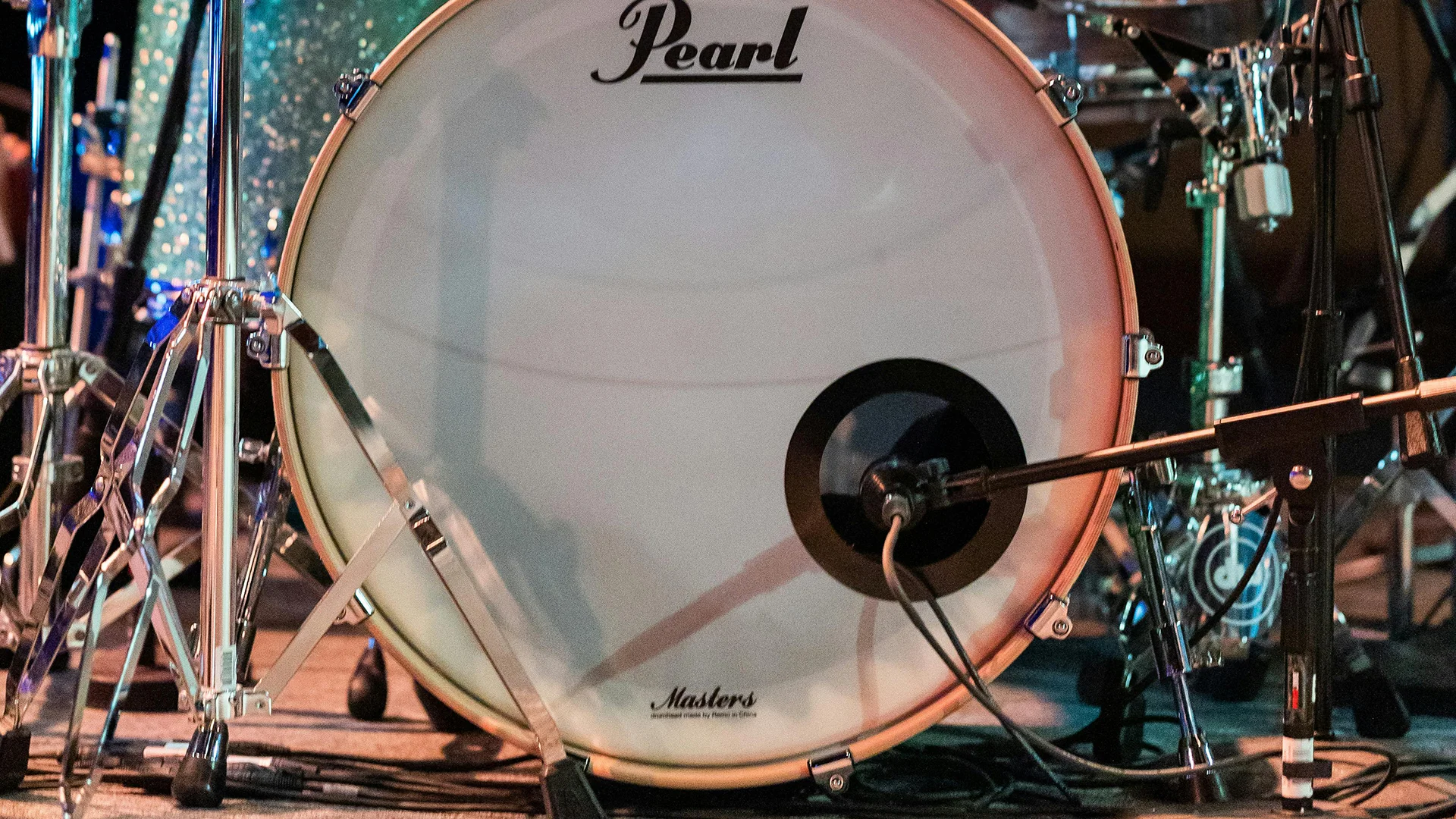
Not all microphones are created equal when it comes to recording kick drums. Let's explore the most common types used for this specific application and what makes them suitable for the task.
Dynamic Microphones
Dynamic microphones are the most popular choice for kick drum recording, and for good reason. Their robust construction and ability to handle extreme sound pressure levels (SPL) make them ideal for close-miking a powerful kick drum.
These microphones operate using a simple electromagnetic system consisting of a diaphragm, voice coil, and magnet. When sound waves hit the diaphragm, it moves the attached coil within the magnetic field, generating an electrical signal.
The inherent ruggedness of dynamic microphones makes them virtually indestructible in high-SPL applications like kick drums. Many models are specifically designed with tailored frequency responses that complement kick drums, often featuring a scooped midrange and boosted lows and highs.
Condenser Microphones
While less common for kick drum applications, condenser microphones offer certain advantages that make them suitable for specific kick drum recording scenarios.
Condenser mics generally provide more detailed sound reproduction and faster transient response than dynamic microphones. This makes them excellent at capturing the nuanced articulation and overtones of a kick drum, especially in controlled studio environments.
However, their increased sensitivity comes with limitations. Many standard condenser microphones cannot handle the extreme SPLs produced by kick drums, though specialized models designed for this purpose do exist.
Condenser microphones require phantom power to operate, so they're less convenient in some situations compared to dynamic mics that work without external power.
Boundary Microphones
Boundary (or pressure zone) microphones represent a specialized option that has gained popularity for inside-kick drum placement.
These microphones are designed to be mounted on a flat surface, using phase coherence principles to capture sound with minimal comb filtering. When placed inside a kick drum, they can deliver consistent results without the need for precise positioning.
Boundary mics typically offer excellent low-frequency response and can handle high SPLs, making them well-suited for modern kick drum recording techniques.
Pickup Patterns and Their Significance
Cardioid patterns capture sound from the front while rejecting sound from the rear. This helps isolate the kick drum from other elements in the drum kit, reducing bleed and providing a cleaner signal.
Supercardioid patterns offer even tighter directionality, with maximum rejection at 120 degrees off-axis. This can be beneficial in live sound applications or when recording in less-than-ideal acoustic spaces.
Omnidirectional patterns, which capture sound equally from all directions, are rarely used for close-miking kick drums due to their lack of isolation. However, they might be employed as room microphones to capture the overall ambiance of a drum kit, including the kick's interaction with the space.
Top Kick Drum Mics
After extensive research and consideration of real-world applications, we've identified the seven best kick drum microphones available. Each offers unique characteristics suited to different recording scenarios and musical styles.
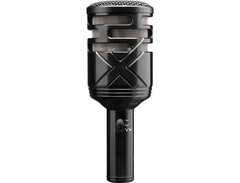
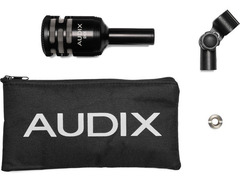
Audix D6X Dynamic Kick Drum Mic
The Versatile Tone Sculptor










Average Price: $286
High-end/Boutique
$75
$201+
Budget
Standard
High-end
- Offers three distinct filter settings for versatile sound shaping
- Retains the classic D6 sound with enhanced presence in new settings
- Durable construction with aluminum body and steel mesh
- Excellent for kick drums, providing a powerful rock thump
- See 5 more
- Switch clicks when moving between filter settings
- Low end may need adjustment to reduce boominess on bass cabs
- Not a general-purpose microphone, limited to specific applications
Design and Build
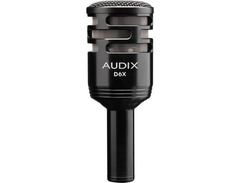
The Audix D6X builds upon the renowned D6 legacy with significant enhancements. This dynamic cardioid microphone features a machined aluminum body that strikes an excellent balance between durability and weight. The distinctive blue finish makes it instantly recognizable in any setup.
The most notable physical feature is the 3-way voicing switch, a new addition that sets it apart from its predecessor. This switch allows engineers to select between three distinct EQ curves optimized for different applications without external processing.
The microphone's compact dimensions make it easy to position inside or outside a kick drum, even in cramped setups where space is at a premium.
Sound Characteristics
The D6X covers an impressive frequency range from 30Hz to 15kHz and handles sound pressure levels up to 144dB without distortion. The microphone's natural frequency response varies depending on the selected voicing:
Position 1 provides a flat, uncolored response ideal for jazz, acoustic, and situations where natural reproduction is desired.
Position 2 offers the classic D6 sound with emphasized lows and highs, perfect for rock and pop applications.
Position 3 delivers an aggressive modern profile with substantial low-end extension and enhanced attack, tailored for metal, electronic, and heavily produced genres.
The microphone's cardioid pattern provides excellent isolation from other drums in the kit, making it particularly effective in live sound environments or when bleed is a concern.
Placement Techniques
The D6X excels in traditional front-of-kick placements, typically positioned a few inches from the resonant head. In this configuration, it captures a balanced blend of low-end power and beater attack.
For more attack and less boom, placing it inside the drum pointed at the beater spot yields excellent results, especially with the Position 2 or 3 voicing options.
The microphone's versatility truly shines when used as part of a two-microphone setup, where the D6X can handle the outside-kick duties while pairing with an internal boundary mic for maximum flexibility during mixing.

.jpg?v=1783959784)

Shure Beta 91A
4.5 (7)
The Detail Revealer


Average Price: $254
Standard/Professional
$100
$401+
Budget
Standard
High-end
- Enhances kick drum sound with clarity and punch
- Versatile for both live and studio applications, also suitable for pianos and stage
- Built-in preamp and EQ switch for optimal sound adjustment
- Convenient internal placement reduces stage clutter
- See 6 more
- Prone to feedback on smaller live stages
- May require a high pass filter for increased punchiness
- External mounting options limited without third-party accessories
Design Philosophy
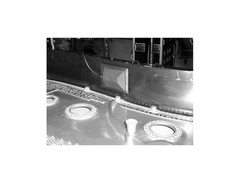
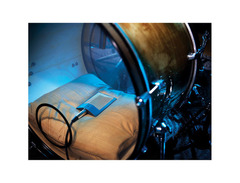
The Beta 91A represents a specialized approach to kick drum miking. This half-cardioid condenser boundary microphone features a low-profile design specifically engineered for placement inside bass drums.
Its integrated preamplifier and XLR connection eliminate the need for external phantom power adaptors, streamlining the recording chain. The microphone's contoured frequency response is pre-tailored for kick drum applications, reducing the need for extensive equalization.
The rugged metal chassis provides excellent protection for the sensitive internal components, ensuring reliability even under demanding touring conditions.
Sonic Signature
With a frequency response spanning from 20Hz to 20kHz, the Beta 91A captures the full spectrum of kick drum tones. Its high SPL handling capability of 155dB ensures clean reproduction even with aggressive playing styles.
The microphone excels at capturing clear transients and articulation, revealing subtle details like beater texture and drumhead resonance that other microphones might miss.
Its half-cardioid pattern minimizes phase issues when used inside the drum while providing natural rejection of cymbal bleed and other unwanted sounds.
Practical Applications
The Beta 91A thrives when placed inside the kick drum, typically on a blanket or padding to minimize unwanted resonances. This placement captures a controlled, focused sound with excellent isolation.
For modern production styles, pairing the Beta 91A with an outside kick microphone creates the classic "inside/outside" technique that offers maximum flexibility during mixing.
The microphone's consistent performance across various kick drum sizes and tunings makes it particularly valuable in studio settings where different drum kits might be used for various projects.
See how artists use this





AKG D112 MkII
4.5 (43)
The Industry Staple



Average Price: $200
Standard/Professional
$75
$201+
Budget
Standard
High-end
- Exceptionally durable, lasting for years
- Superior sound quality for bass drums and bass guitars
- Easy to find the "sweet spot" in positioning
- Clear and punchy sound without needing post-processing
- See 6 more
- Clip design can obstruct placement inside kick drum port holes
- XLR cable placement can be cumbersome, especially on mic stands
Legacy and Evolution
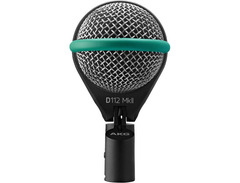
The D112 MKII continues the tradition of its iconic predecessor, which has been a recording studio staple since the 1980s. This dynamic cardioid microphone maintains the distinctive egg-shaped design that has become instantly recognizable to audio engineers worldwide.
The MKII version introduces improved internal shock mounting to reduce handling noise and mechanical vibrations, addressing one of the few criticisms of the original model.
The humbucking coil design effectively rejects electromagnetic interference, making it suitable for use near lighting rigs, power supplies, and other potential sources of noise in live or studio environments.
Tonal Qualities
With a frequency range of 20Hz to 17kHz and the ability to handle SPLs up to 160dB, the D112 MKII delivers the authoritative low-end and punchy midrange that made the original famous.
The microphone features a carefully tailored frequency response with a presence boost around 4kHz that emphasizes beater attack, helping the kick drum cut through dense mixes without requiring aggressive EQ.
Its cardioid pattern offers excellent rejection of off-axis sounds, providing good isolation even in full-kit recording scenarios.
In Use
The D112 MKII performs exceptionally well in traditional front-of-kick placements, typically positioned a few inches from the resonant head centered on the beater spot.
For more contemporary sounds, placing it just inside the sound hole of the resonant head captures a balance of attack and body that requires minimal processing to sit well in a mix.
The microphone's proven track record across countless professional recordings gives engineers a reliable reference point, making it an excellent choice for those seeking consistent, predictable results.
See how artists use this







Shure Beta 52A
5.0 (42)
The Stage Performer

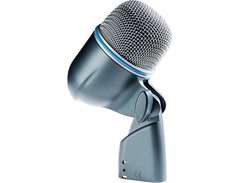

Average Price: $203
High-end/Boutique
$75
$201+
Budget
Standard
High-end
- Superior sound quality with enhanced low and high ends
- Ideal for recording bass amps, kick drums, and electric bass cabinets
- Durable and robust construction, built to last
- Provides full, thick sounds without coloration for easier mixing
- See 6 more
- Heavier than expected, putting more load on mic stands
- May require heavy EQ to shape the sound to your liking
- Some users found it initially challenging to achieve the desired punch with kick drums
- Might need additional mics for a fuller sound in high-end frequencies depending on music style
Construction and Durability
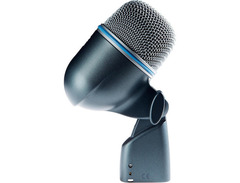
The Beta 52A features a rugged die-cast metal body with a hardened steel grille, designed to withstand the rigors of touring and frequent setup/breakdown cycles. The built-in stand adapter with integrated XLR connector minimizes potential failure points in live applications.
This dynamic supercardioid microphone is purpose-built for kick drum applications, with physical dimensions and mounting options optimized for typical live sound placements.
The pneumatic shock mount system effectively isolates the capsule from mechanical vibrations, reducing unwanted stage rumble and handling noise that could compromise performance.
Performance Profile
The Beta 52A covers a frequency range from 20Hz to 10kHz with exceptional SPL handling of up to 174dB, making it virtually impossible to overload even with the most powerful drummers.
Its supercardioid pattern provides maximum isolation from nearby sound sources, making it ideal for crowded stages where bleed between instruments is a constant challenge.
The tailored frequency response features significant bass presence and a distinct upper midrange peak that combines substantial low-end impact with the necessary articulation to cut through a live mix.
Deployment Strategies
In live sound applications, the Beta 52A typically excels when positioned inside the kick drum, either mounted on the included stand adapter or suspended using the integrated mounting thread.
For touring scenarios where consistency is paramount, the Beta 52A's predictable performance across different drum kits and venues provides front-of-house engineers with a reliable foundation for their mix.
The microphone's exceptional gain-before-feedback characteristics make it particularly valuable for smaller venues where stage volume and monitor proximity can create challenging acoustic environments.
See how artists use this




Sennheiser e902
4.5 (4)
The Balanced Performer

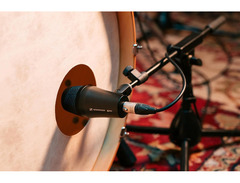
Average Price: $206
High-end/Boutique
$75
$201+
Budget
Standard
High-end
- Handles low frequencies well, along with mids and highs
- Excellent for capturing fast, intricate bass drum patterns
- Delivers a punchy, chest-thumping sound for live performances
- Versatile, also serves as a great mic for bass cabs and toms
- See 5 more
- Mounting apparatus design is not user-friendly
- Material inside the microphone clip prone to stripping
- Requires additional accessories for optimal positioning
Engineering Approach
The e902 represents Sennheiser's focused approach to kick drum recording. This dynamic cardioid microphone features a lightweight aluminum body with a compact footprint that facilitates easy positioning in tight spaces.
The hum-compensating coil provides effective rejection of electromagnetic interference, particularly valuable in environments with numerous power cables and lighting systems.
The microphone's quick-release stand mount enables rapid setup and position adjustments, streamlining workflow in fast-paced recording or live sound scenarios.
Sonic Character
With a frequency response of 40Hz to 18kHz and SPL handling of 150dB, the e902 offers a balanced representation of the kick drum's fundamental tone and articulation.
Unlike some competitors that impose a dramatic "scooped" sound, the e902 provides a more natural frequency response while still offering the necessary emphasis in key ranges to make the kick drum translate well in a mix.
Its cardioid polar pattern delivers consistent off-axis rejection, helping to isolate the kick from nearby sound sources like floor toms and bass amplifiers.
Application Scenarios
The e902 performs admirably in both inside and outside kick drum placements, making it versatile for various recording techniques.
For genres requiring natural, uncolored drum sounds like jazz or acoustic music, the e902's balanced response captures the kick drum's authentic character without imposing an artificial sonic signature.
The microphone's ability to handle both subtle dynamics and aggressive playing makes it particularly suitable for session drummers who might need to cover multiple musical styles within a single recording session.
See how artists use this



Earthworks DM6 SeisMic Kick Drum Microphone
The Precision Instrument

Average Price: $415
High-end/Boutique
$75
$201+
Budget
Standard
High-end
- Captures kick drum sound authentically, reflecting true acoustic qualities
- Provides a rich, raw signal ideal for post-processing
- Slightly boosts and cuts ideal kick frequencies for enhanced sound
- Sturdy and robust construction ensures durability and reliability
- See 5 more
- Price is considered high, though justified by quality
- Reveals any imperfections in drum tuning and head quality
Technical Innovation
The DM6 represents Earthworks' precision-focused approach to microphone design. This dynamic cardioid microphone features the company's proprietary extended-range capsule technology in a form factor optimized for kick drum recording.
Unlike conventional dynamic microphones, the DM6 achieves a frequency response extending from 20Hz to 20kHz, matching many high-end condenser microphones while maintaining the ruggedness needed for kick drum applications.
The microphone's lightning-fast impulse response captures transients with microscopic accuracy, revealing textural details that conventional dynamic microphones might miss.
Sonic Performance
The DM6 handles SPLs up to 150dB without compression or distortion, maintaining linear response even with aggressive playing styles.
Its ruler-flat frequency response provides an exceptionally natural representation of the kick drum, allowing engineers to shape the sound precisely according to their creative vision rather than working around microphone-imposed colorations.
The tight cardioid pattern minimizes off-axis coloration, ensuring consistent tonality regardless of the microphone's orientation relative to the sound source.
Real-World Applications
The DM6 excels in situations where capturing the authentic character of a high-quality kick drum is the primary goal, such as recording vintage or rare drums where preserving the natural tone is essential.
For drummers with exceptional technique and nuanced playing styles, the DM6's ability to capture subtle dynamic variations ensures that performance details translate faithfully to the recording.
The microphone's extended frequency response makes it particularly valuable for genres like progressive rock, jazz fusion, and modern acoustic music where clarity and detail across the entire frequency spectrum are prioritized.
Electro-Voice RE20
5.0 (36)
The Versatile Classic

Average Price: $448
High-end/Boutique
$75
$201+
Budget
Standard
High-end
- Exceptional sound quality with dynamic clarity and deep bass
- Maintains consistent tonal color even at high volumes
- Great for spoken word, broadcasting, and music recording
- Effective noise rejection, ideal for non-soundproof environments
- See 6 more
- Requires significant gain, necessitating a good preamp
- May not suit all vocal types, depending on individual needs
- The original "putty" color and design may not appeal to everyone
- Internal foam prone to deterioration over time in vintage units
- See 1 more
Design Heritage
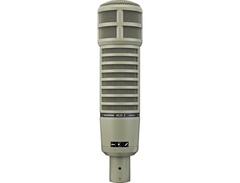
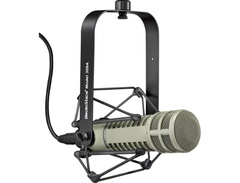
The RE20 comes from a broadcast background but has found a devoted following among music recording engineers. This dynamic cardioid microphone features the innovative Variable-D design that minimizes proximity effect, allowing for consistent bass response regardless of distance from the sound source.
Its internal pop filter and shock mounting system effectively reduce both plosives and mechanical vibrations without requiring external accessories.
The microphone's robust metal construction ensures decades of reliable service, as evidenced by the many vintage units still in daily use at professional studios worldwide.
Tonal Characteristics
With a frequency range of 45Hz to 18kHz and SPL handling of 140dB, the RE20 provides a smooth, natural representation of the kick drum with a warm midrange character that sets it apart from purpose-built kick drum microphones.
Unlike heavily tailored alternatives, the RE20's relatively flat frequency response captures the kick drum's intrinsic sound, making it particularly well-suited for genres where authenticity is valued over hyped low end or exaggerated attack.
Its cardioid pattern features uncommonly consistent off-axis response, maintaining tonal quality even when the drum is struck off-center or when capturing room ambiance.
Creative Applications
The RE20 excels as an outside kick drum microphone, typically positioned a few inches from the resonant head to capture a balanced blend of fundamental tone and room interaction.
For jazz, blues, indie rock, and other genres seeking a more vintage character, the RE20 provides a distinctive alternative to the aggressive modern kick drum sound.
The microphone's versatility extends beyond kick drum applications, making it a valuable studio investment that can serve equally well on bass cabinets, brass instruments, and vocals when not being used on drums.
See how artists use this





How to Choose Your Best Kick Drum Mic
Selecting the right kick drum microphone involves considering several factors beyond simply picking from a list of recommended models. Here's how to make an informed decision based on your specific needs.
Matching Mic to Drum and Genre
Different kick drums produce vastly different sounds based on their size, shell material, head selection, and tuning. A 26-inch vintage bass drum requires a different miking approach than a modern 22-inch kick with a port in the resonant head.
The beater material significantly impacts the attack characteristics of the drum, with felt beaters producing a softer sound compared to wood or plastic alternatives. Your microphone choice should complement these factors.
Genre expectations also play a crucial role in microphone selection just as we discussed earlier.
Room Acoustics and Placement Considerations
The acoustic properties of your recording space significantly impact microphone selection and placement. In rooms with problematic low-frequency characteristics, microphones with tailored bass response might be preferred to minimize the need for corrective EQ.
Standard placement options include:
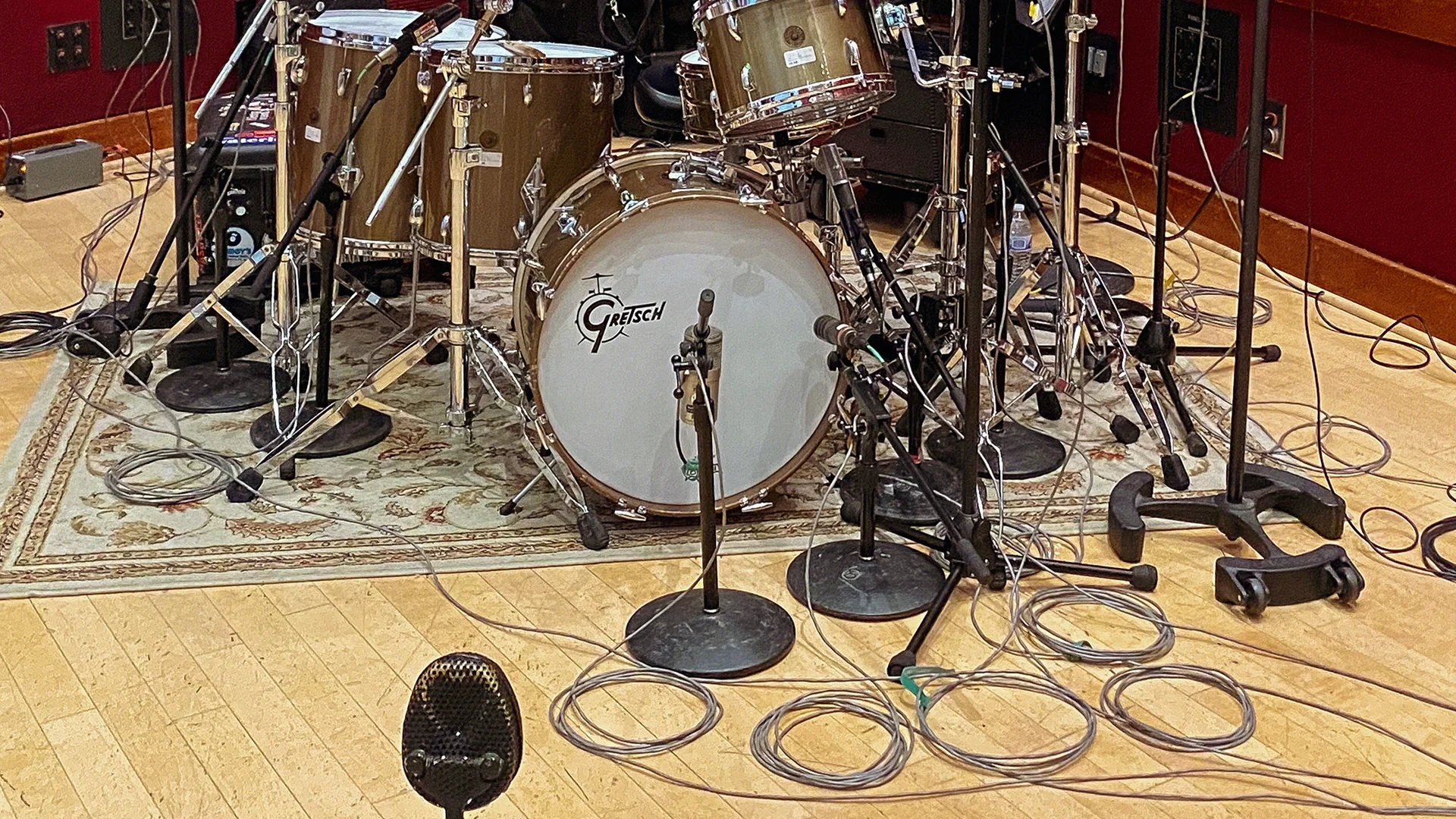
Outside the resonant head (front head), which generally captures more of the drum's natural tone and resonance.
Inside the drum, which provides maximum isolation and often emphasizes attack over resonance.
Partial insertion through a port or sound hole, which offers a blend of both approaches.
The distance between the microphone and the drum head dramatically affects the captured sound. Closer placement generally results in more proximity effect (bass boost) and less room sound, while greater distances introduce more ambiance but potentially less definition.
Budget Considerations
Kick drum microphones range from affordable options under $200 to premium models exceeding $500. While higher-priced microphones often offer enhanced build quality and performance, the law of diminishing returns applies.
For those just starting out, investing in a versatile all-around performer like the AKG D112 MKII or Shure Beta 52A provides excellent value and reliable results across various applications.
Kick Drum Miking Techniques
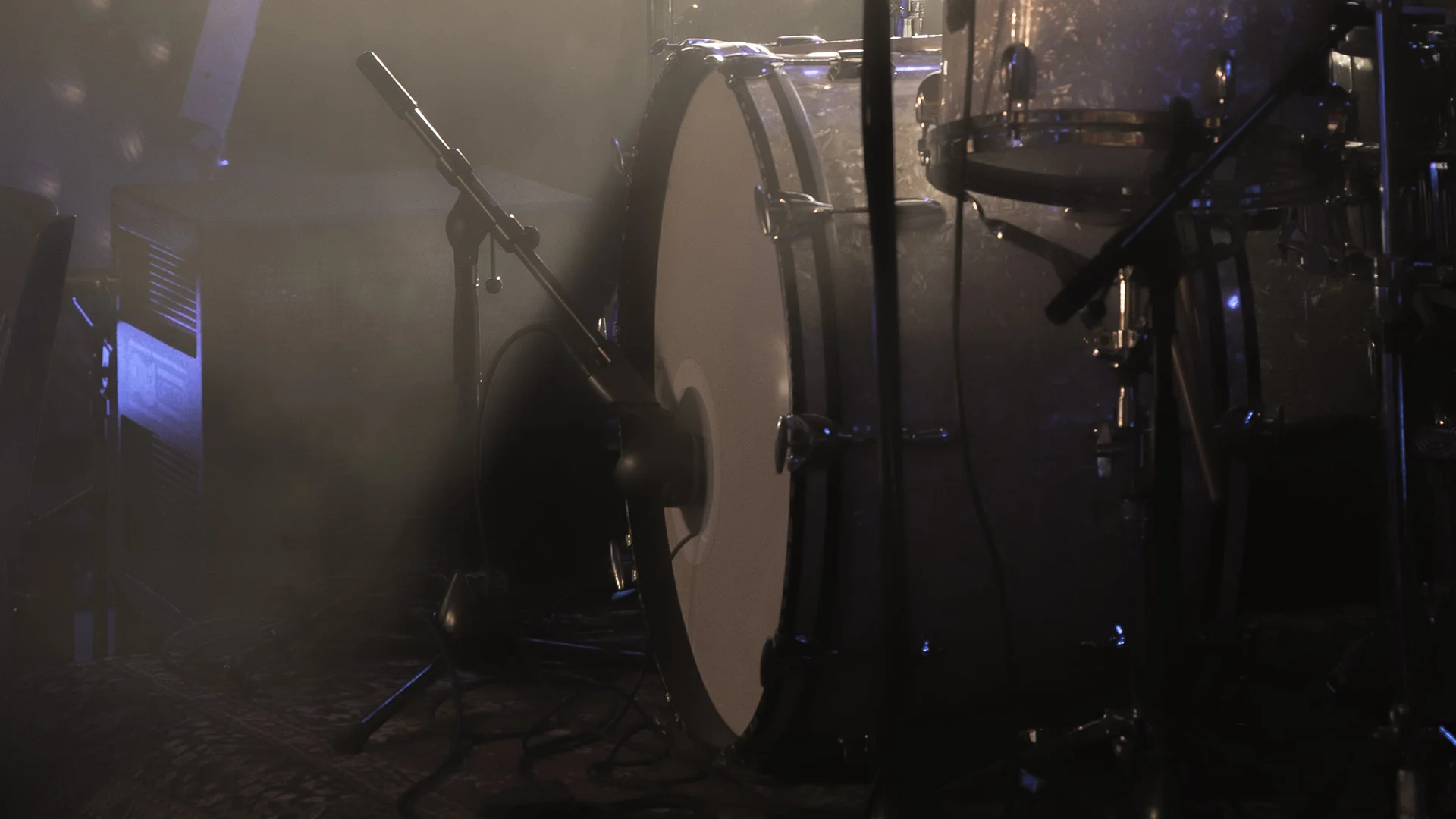
Beyond selecting the right microphone, how you position it plays a crucial role in capturing the perfect kick drum sound. Let's explore some proven techniques used by professional engineers.
Inside vs. Outside Placement
Inside placement provides maximum isolation and often emphasizes attack over resonance. This approach works particularly well with boundary microphones like the Shure Beta 91A or purpose-built dynamic mics with tailored frequency responses.
Typical inside positions include:
- On a small blanket or padding inside the shell, pointing toward the beater
- Mounted on a short stand inside the drum
- Attached to the inside shell using specialized mounts
Outside placement captures more of the drum's natural tone and resonance. This technique often uses dynamic microphones like the AKG D112 MKII or Electro-Voice RE20 positioned a few inches from the resonant head.
Common outside positions include:
- Centered on the resonant head, aligned with the beater
- Slightly off-center to capture a blend of fundamental tone and overtones
- At varying distances to balance direct sound with room ambiance
Layering Techniques
Many professional engineers use multiple microphones to capture different aspects of the kick drum sound, which can later be blended during mixing. Some effective combinations include:
RE20 outside + Beta 91A inside: This pairing balances the natural warmth of the RE20 with the articulation and attack of the Beta 91A, creating a full-spectrum kick drum sound suitable for various genres.
D112 MKII + boundary mic: The classic D112 sound combined with a boundary microphone's internal capture provides the punchy attack needed for rock and pop productions.
Subkick + traditional mic: Some engineers supplement conventional microphones with specialized "subkick" devices (essentially speakers used as microphones) to capture extreme low frequencies below 60Hz.
When using multiple microphones, phase alignment becomes crucial. Microphones capturing the same sound source from different positions will inevitably have timing differences that can cause phase cancellation when combined.
Phase Alignment Best Practices
Phase issues can make or break a multi-microphone drum recording. Here are some techniques to ensure your kick drum microphones work together harmoniously:
Check phase at the source by listening to all microphones together versus individually. If the combined sound has less low end than the individual microphones, you likely have phase problems.
Use the polarity inversion switch (often incorrectly called a "phase" switch) on your preamp, mixer, or DAW to see if flipping one microphone's polarity improves the combined sound.
Fine-tune alignment by subtly adjusting microphone distances or using delay compensation in your DAW to time-align the signals precisely.
Caring for Your Kick Drum Mic
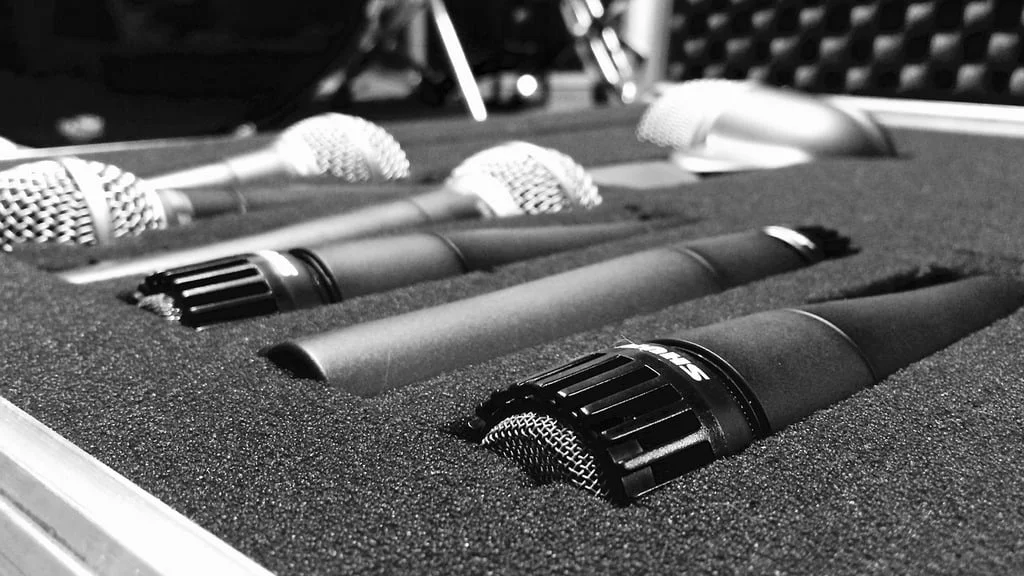
Quality microphones represent significant investments that can last decades with proper care. Protect yours from extreme SPLs by using appropriate pads when recording aggressive drummers and positioning to avoid direct air blasts. Monitor signal levels carefully to prevent overloading preamps, which can mask microphone issues and cause permanent damage. Store microphones in their original cases between sessions to prevent dust accumulation, and use windscreens when working with new or damp drum heads to protect against moisture. Temperature stability during transportation matters too, as fluctuations gradually affect sensitive components.
Physical mounting deserves attention as well. Store microphones upright to prevent internal shifting, and use proper shock mounting to isolate from damaging vibrations. Regularly inspect elastics and rubber components, which naturally deteriorate over time. For touring situations, consider specialized mounts that attach directly to drum hardware, maintaining consistent positioning while protecting against accidental impacts during performances.
Evolving Trends in Kick Drum Miking
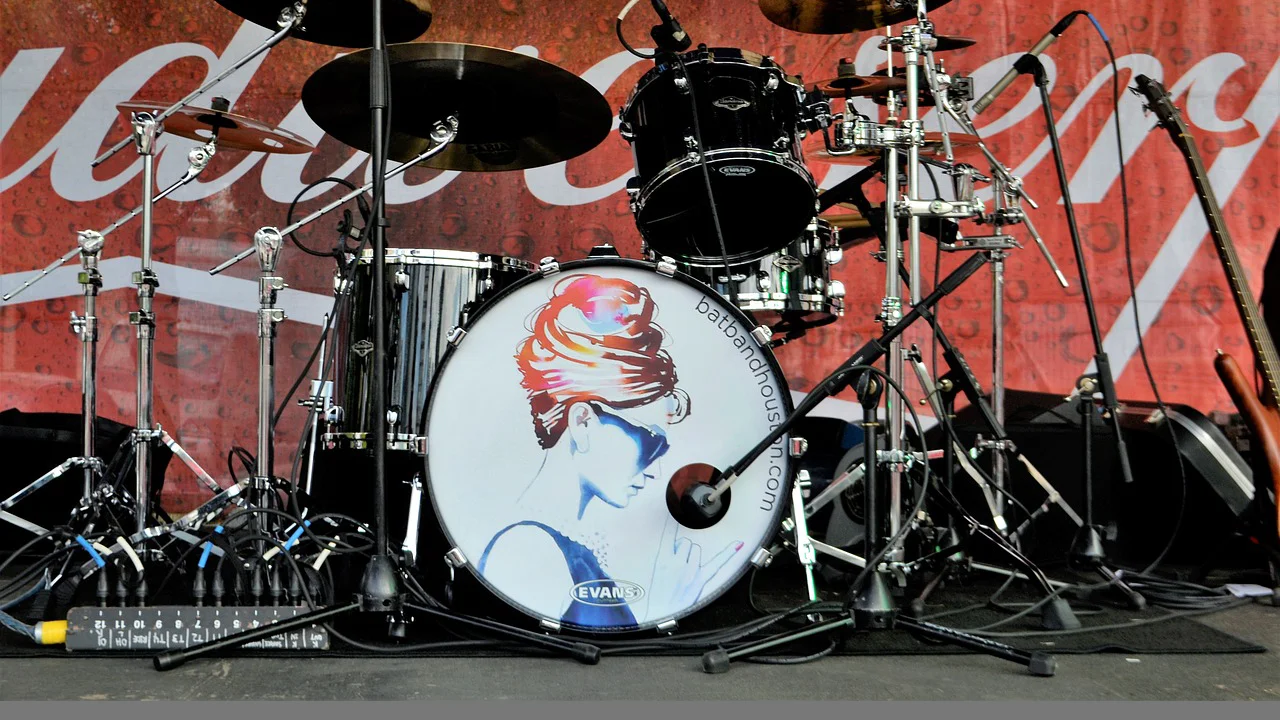
Kick drum recording evolves constantly with technological advances and shifting preferences. Today's specialized microphones feature integrated shock mounting and low-profile designs perfect for heavily dampened modern drums. Innovative mounting hardware attaches directly to drum shells, ensuring consistent positioning without traditional stands. Meanwhile, hybrid technologies blur traditional boundaries with dual-capsule designs combining characteristics of different microphone types. Modeling microphones now digitally emulate vintage classics while adding modern capabilities like remote pattern switching. Even condenser microphones have evolved with dramatically increased SPL handling, bringing their detail to applications once dominated by dynamics.
Digital tools further transform the landscape. Sophisticated EQ plugins reshape tonal characteristics while impulse response technology applies premium microphone qualities to more affordable recordings. The rise of sample augmentation in modern productions has prioritized clean, isolated signals over perfect full-frequency capture. These digital advances complement rather than replace physical microphones, with forward-thinking engineers embracing both worlds to create distinctive kick drum sounds that define modern productions.
Conclusion
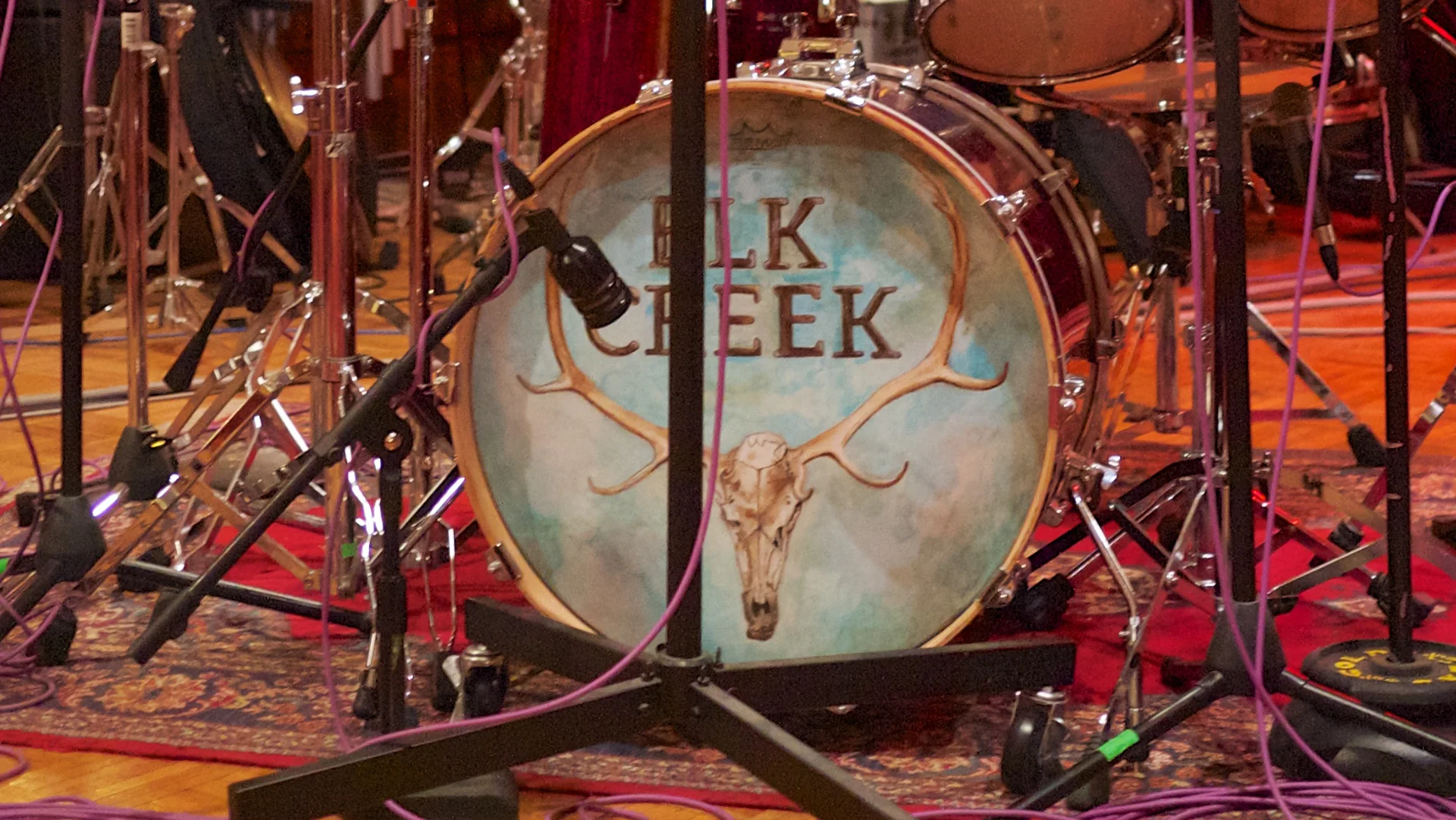
Selecting the right kick drum microphone is a critical decision that impacts the foundation of your entire mix. By understanding the unique characteristics of different microphone types and models, you can make an informed choice that serves your specific musical needs.
The microphones we've covered represent the best options available:
For maximum versatility, the Audix D6X with its innovative 3-way voicing switch adapts to virtually any musical context.
When clarity and definition are paramount, the Shure Beta 91A boundary microphone delivers unmatched articulation from inside the kick drum.
The legendary AKG D112 MKII continues to set the standard for professional kick drum recording with its characteristic punchy sound.
For challenging live sound environments, the Shure Beta 52A provides exceptional isolation and SPL handling capabilities.
The Sennheiser e902 offers a balanced, natural response that works beautifully across various musical styles.
When ultimate precision is required, the Earthworks DM6 captures every nuance with scientific accuracy.
For a vintage-inspired alternative, the Electro-Voice RE20 brings broadcast-quality sound to kick drum applications.
Remember that there's no universally "best" kick drum microphone, only the one that best serves your specific musical vision, recording environment, and budget. By considering the factors we've discussed and perhaps trying several options, you'll discover the perfect microphone to capture your ideal kick drum sound.
About the authors
Michael R. Pierce is the co-founder of Equipboard and a lifelong musician with over 25 years of experience as a guitarist and gear enthusiast. He blends solid music theory chops (thanks to formal training in guitar, piano, and trumpet) with real-world experience, always exploring and experimenting across genres like rock, blues, and hip-hop. Michael launched Equipboard in 2013 after graduating from The University of Texas at Austin, leveraging his unique blend of musical passion, technological acumen, and community building. His current go-to rig features a Fender American Original ‘50s Telecaster, Analogman King of Tone, Strymon Flint, and a Fender ‘57 Custom Champ. Read more









.webp)